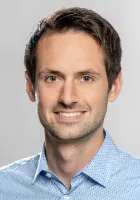
Roland Reitberger is a Research Fellow at the Chair of Energy Efficient and Sustainable Design and Building at the Technical University of Munich . His work focuses on Life Cycle Assessment , thermal-dynamic building simulation , and parametric methods for analyzing the built environment. He investigates interactions in urban systems and synergy effects in sustainable construction. Research interests include climate-resilient urban planning, integration of green infrastructure with building systems, and data-driven optimization of building energy performance. His recent publications demonstrate expertise in multi-objective decision support for neighborhoods, GIS-based urban tree analysis , and holistic climate assessments of construction projects. Reitberger contributes to urban climate resilience research through parametric modeling of building density-vegetation relationships and develops frameworks for circular economy strategies in building densification and refurbishment. His methodological innovations combine machine learning with building simulation for explainable AI applications in office energy management.
Martin Slepicka is a researcher at the Chair of Computing in Civil and Building Engineering at the Technical University of Munich. His work focuses on bridging Building Information Modeling (BIM) with additive manufacturing and digital twinning technologies. Department: Civil and Building Engineering Research Group: Digital Twinning, Construction Robotics Research Highlights: Slepicka specializes in: Integrating BIM with digital fabrication workflows Developing closed-loop systems for additive manufacturing Real-time data exchange in construction robotics Automated parameter calibration using machine learning Semantic enrichment of BIM through multi-sensor platforms Academic Contributions: Recent publications demonstrate expertise in: Extrusion-based additive manufacturing control Non-planar path planning for 3D-printed components Autonomous robot grasping solutions From fabrication models to simulation frameworks Laboratories: Active in: BIM-Lab Robotic Fabrication Lab Mobile Machinery development
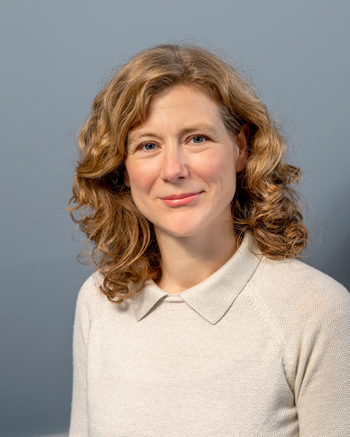
Prof. Dr. Anette Fasang is a full-time Professor of Microsociology at the Department of Social Sciences, Humboldt University in Berlin. She serves as Director of the Department and Principal Investigator for the Research Unit Temporality at the Berlin Graduate School for Global and Transregional Studies (BGTS). Her research focuses on demography, family dynamics, life course analysis, and quantitative methods. Education: PhD in Sociology (Jacobs University Bremen), MA/BA in Sociology (LMU Munich) Her research interests span life course-sensitive analysis of social inequality, work-family trajectories, sequence analysis methodologies, and comparative social policy across Germany, Israel, Italy, and the US. Recent publications examine temporal dimensions of parental employment, economic vulnerability, and group inequalities through advanced sequence techniques. Scientific awards include: Elected Fellow, European Academy of Sociology (2024) Rosabeth-Moss-Kanter Prize (2023, 2018) Honorary Doctorate, University of Turku (2022) She has held visiting positions at institutions including WZB Berlin, Stockholm University, Oxford University, and Columbia University. Her work combines empirical rigor with theoretical innovation in life course studies.
Peiman Shah Nazar is a Researcher at the Institute for Medical Device Technology, University of Stuttgart, Germany. He holds an M.Sc. in Mechatronics and Robotic System Design from Azad University, Ahar Branch, Iran, and is currently pursuing his Dr. Ing. at the University of Stuttgart. Research focus: Rehabilitation robotics for ankle, hip, and knee joints Expertise in intelligent control systems and biomedical signal processing His work emphasizes sustainable medical device design and optimization of robotic rehabilitation systems using neural networks and genetic algorithms. Recent publications highlight advancements in home-care physiotherapy robotics and chaotic control methodologies. At the Institute for Medical Device Technology, he contributes to reprocessing procedures and sustainable device development in laboratory settings.
Katta Spiel is an Assistant Professor for Critical Access in Embodied Computing at the HCI Group of Vienna University of Technology (TU Wien), where they lead research under the ERC Starting Grant ACCESSTECH. They also hold membership in the Young Academy of the Austrian Academy of Sciences (2024-present) and will serve on Austria's UN Disability Rights Monitoring Committee (2025-2029). Their academic foundation includes: Bachelor of Arts in Media Culture from Bauhaus Universität Weimar Bachelor of Science in Media Systems from Bauhaus Universität Weimar Master of Science in Computer Science and Media from Bauhaus Universität Weimar Spiel's research critically examines technology through marginalized lenses, merging Computer Science, Design, and Cultural Studies. They develop participatory methodologies that center disabled, neurodivergent, and nonbinary experiences to challenge normative assumptions in Human-Computer Interaction. Key contributions include reimagining accessibility beyond compliance, transforming empathy-based design into justice-oriented co-creation, and developing frameworks for evaluating technology through lived experience rather than deficit models. Major recognitions include: SIGCHI Outstanding Dissertation Award (2020) for pioneering work on neurodivergent digital experiences Förderungspreis Mathematik, Informatik, Naturwissenschaft, Technik of Vienna (2022) Spiel's grant portfolio demonstrates sustained funding success, currently leading the €1.5M ERC Starting Grant ACCESSTECH (2025-2029) after securing FWF Hertha Firnberg and project funding for 'Exceptional Norms', 'Social Play Technologies', and 'OutsideTheBox'. These projects collectively advance participatory design with autistic children, neurodivergent youth, and nonbinary communities, producing methodological innovations like their co-developed Participatory Evaluation framework. Their research environment fosters radical collaboration through the ACCESSTECH project team, which operates as a community of practice where academic researchers and marginalized technology users co-design both methodologies and artifacts. This model rejects traditional lab hierarchies in favor of equitable knowledge production, with outcomes spanning interactive computing systems, critical design patterns, and transformative HCI theory.
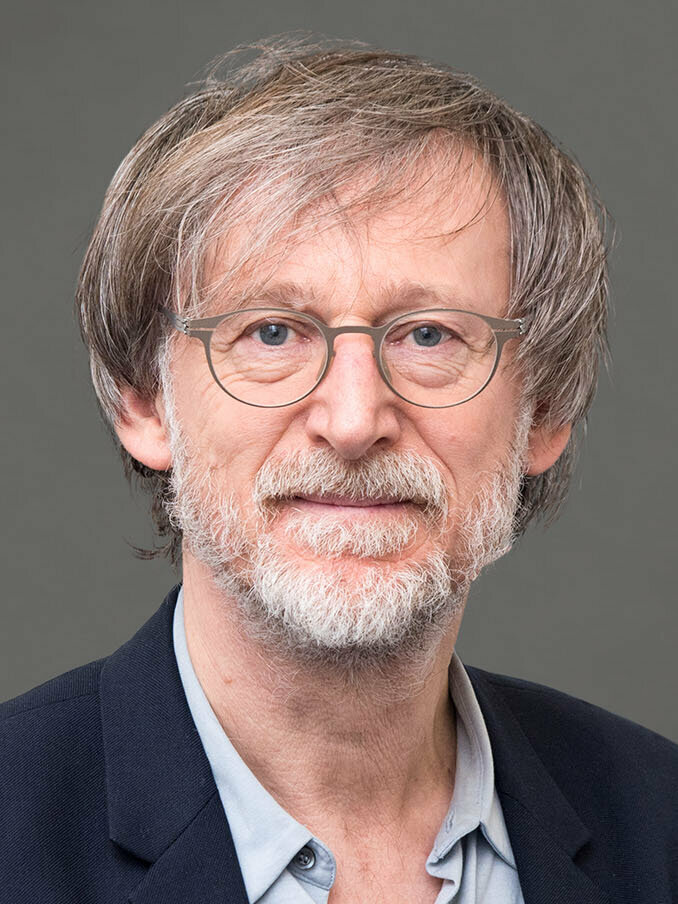
Dieter Hofmann is a Professor of Industrial Design and Product and Systems Design at the Burg Giebichenstein Art Academy (BURG) in Halle, Germany, where he has been teaching since 2003. He served as the rector of BURG from 2014 to 2022. His academic background includes mechanical engineering studies at the Nuremberg University of Applied Sciences (1988-1993) and capital goods design at the Stuttgart State Academy of Fine Arts (1993-1996). He has international experience as a visiting professor at IDAS Seoul, Korea (1996-1997) and as a professor at the National University of Tsukuba, Japan (1999-2001). His research and teaching focus spans multiple areas of industrial design with particular emphasis on: Human-centered design for everyday objects and spaces Intercultural design approaches Medical device and assistive technology design Sustainable product development Surface and material innovation Hofmann's current work explores unconventional design contexts, most notably his 2025 Summer Semester course "Restroom - Design for the culture of relieving oneself," which examines the cultural, ergonomic, and sustainability aspects of sanitation design. His approach integrates historical, philosophical, psychological, and cross-cultural perspectives to address design challenges that are often overlooked in mainstream product design. His recent publications reflect a trend toward addressing socially relevant design challenges with innovative solutions, particularly in public spaces and healthcare contexts. Hofmann emphasizes the importance of material innovation, user experience, and cultural sensitivity in creating products that serve diverse populations. Hofmann has received recognition through numerous industry collaborations with partners including Toi Toi Dixi (portable sanitation), Medi (medical technology), and GERA Leuchten (lighting design). His work often bridges academic research with practical industry applications. As an advisor, Hofmann has mentored numerous students through complex design projects, guiding them through research, concept development, and prototyping phases. His teaching methodology emphasizes experiential learning through excursions, workshops, and direct industry engagement. Hofmann also operates eDesign, a consultancy that advises companies on intercultural design issues and develops capital goods and products across multiple sectors including public communication, machine tools, medical and laboratory technology, sports equipment, household appliances, and personal care products.
Beke Hansen is a postdoctoral researcher and lecturer in English Linguistics at Kiel University since 2021, following her role as Assistant Professor at the University of Freiburg (2018-2021) and multiple research/teaching positions at Kiel University from 2012-2018. Her educational background includes: PhD in Linguistics from Kiel University (2013-2017), awarded Faculty Prize of the Faculty of Arts Master of Education with Teaching Certificate for Gymnasia (English & Latin) in 2012 Bachelor of Arts in Teaching (English/North American Studies & Latin Philology) in 2010 Studies at University of Bristol (2011-2012) in English Linguistics and Classical Studies Dr. Hansen specializes in sociolinguistics with research foci on language variation/change, sociophonetics, World Englishes, and Indigenous Englishes—particularly First Nations Englishes in British Columbia. Her current postdoctoral project documents historical First Nations Englishes, examining negation and discourse features through sociolinguistic frameworks. She investigates modality, language contact, and discourse-pragmatic variation across global English varieties using corpus methodologies. Her publications (2017-2024) reveal consistent corpus-based analysis of World Englishes, emphasizing modal systems, quotative structures, and gender-related variation. Key contributions include her 2018 monograph on variation in modal systems and survey chapters in Year's Work in English Studies, demonstrating methodological innovation through ICE corpus applications and interdisciplinary approaches to sociolinguistic change. Her scientific recognition includes: Faculty Prize of the Faculty of Arts, University of Kiel DAAD Post-Doctoral Research Fellowship Short-term Research Fellowship from Foundation for Canadian Studies Scholarship from German Academic Scholarship Foundation As Deputy Academic Advisor, she provides student counseling while securing competitive research funding including Kiel University's habilitation grant for female researchers, DAAD Post-Doc support, and Digital Humanities funding for the Linguistic Data Café project co-organized with Dr. Robert Daugs. She is affiliated with the Hermann Paul School of Linguistics, actively participates in the 'New Englishes, New Methods' research network, and contributes to R Ladies Freiburg. Her departmental role includes managing equipment rental for linguistic data analysis and teaching courses spanning Acoustic Phonetics to World Englishes.
Dr. Claudia Wegener is a Researcher at the Department of Linguistics, University of Cologne, specializing in General Linguistics. Her work focuses on language documentation, speech-gesture interaction, and Papuan/Austronesian languages like Savosavo and Gela. She holds a PhD from Radboud University Nijmegen (2008) and has conducted extensive fieldwork in the Solomon Islands and Malaysia. Previous Positions: Research Assistant, University of Cologne (2017–present) Postdoctoral Researcher at MPI for Psycholinguistics, Radboud University (2002–2011) DoBeS Project Leader for Savosavo documentation Research Interests Her research spans: Socio-linguistic aspects of gesture systems Morphosyntactic typology of Papuan languages Lexical semantics and kinship terminology Documentation methodologies for endangered languages Publications Her work includes a landmark grammar of Savosavo (2012), co-edited volumes on language documentation (2011), and influential articles on gesture studies (2022) and motion event encoding (2022). Projects Leading the Savosavo-Gela Documentation Project (DoBeS-funded) Contributions to MPI's Endangered Languages Documentation Archive Collaborations with Australian National University and University of Manchester Her research bridges linguistic theory with applied documentation, emphasizing community-driven preservation strategies.
Elias Carayannis is an Instructor at the George Washington University School of Business in Washington, D.C. He holds a Doctor of Engineering degree and is verified through institutional email affiliation. With 478 publications and over 20,000 citations, he is a prominent scholar in innovation systems, entrepreneurship, and technology policy. Dr. Carayannis's research centers on the Quintuple Helix Innovation Framework , which integrates policy, economy, science, society, and environment with AI as a transformative enabler. His work on Public Interest Technology (PIT) examines how technologies can be developed to benefit the public rather than solely for corporate profit. He has made significant contributions to understanding Industry 5.0/Society 5.0 transitions, fusion energy development , and AI applications for sustainable development. His scholarship consistently addresses the intersection of technology with democratic values and environmental sustainability. His recent publications reveal a clear trajectory toward integrating AI with sustainable development frameworks. Dr. Carayannis has developed the Quintuple Innovation Helix Plus AI (QIH + AI) framework as essential for addressing global challenges through dynamic knowledge flows. His work on fusion energy as a public interest technology represents a significant contribution to energy policy, emphasizing socio-technical co-design approaches. His research spans from theoretical innovation frameworks to practical applications in smart cities, SME development, and digital government services. Dr. Carayannis has established a robust international research network with numerous collaborators across different institutions. His work shows a consistent pattern of interdisciplinary collaboration, particularly with researchers specializing in sustainability, technology policy, and economic development. His academic contributions focus on how academic institutions can function as 'entrepreneurial universities' within broader innovation ecosystems, exploring the 'Academic Firm' concept and its role in knowledge production and technology transfer processes.
Manuel Hoffmann is a Postdoctoral Fellow at Harvard Business School's Laboratory for Innovation Science within the Digital, Data, and Design Institute. He maintains dual affiliation with Stanford University's Center for Population Health Sciences and recently served as a visiting researcher at CESifo in October 2023. His educational credentials include: PhD in Economics from Texas A&M University Integrated M.Sc. degrees in Economics, Business, and Statistics from University of Trier Hoffmann's research bridges open innovation, labor economics, and health economics through rigorous empirical methods. His landmark study on television consumption—using West Germany's terrestrial broadcast expansion as a natural experiment—revealed no adverse health effects and positive life satisfaction impacts, challenging conventional wisdom. Current work investigates labor market cartels and organizational innovation dynamics via field experiments. He leads the Laboratory for Innovation Science, which focuses on digital transformation, data-driven decision systems, and innovation ecosystems. His methodological toolkit combines experimental economics with structural modeling to address real-world welfare challenges across business and public policy domains.
Georg Groth serves as Professor at the Institute of Biochemical Plant Physiology, Heinrich Heine University Düsseldorf. His research integrates structural biology, biochemistry, and plant physiology to address global food security challenges through innovative approaches to weed management. His primary research focuses on developing targeted inhibitors against key enzymes in C4 photosynthesis—specifically pyruvate phosphate dikinase (PPDK) and phosphoenol-pyruvate carboxylase (PEPC)—to protect C3 crops from climate-change-advantaged weeds. This work bridges fundamental enzyme mechanism studies with practical agricultural applications. Analysis of his publication record (2002-2023) reveals consistent thematic focus on enzyme inhibition strategies, with recent work emphasizing delivery mechanisms (2023), protein-protein interaction interference (2021), and advanced screening methods (2019). His research spans structural characterization, inhibitor design, and physiological testing across multiple plant systems. His laboratory maintains active research programs in: C4 photosynthesis enzyme inhibition Plant hormone signaling modulation Structural basis of enzyme regulation Climate-resilient crop development Current methodological approaches combine computational modeling, structural biology, and plant physiological testing to develop sustainable agricultural solutions addressing climate change impacts on food production.
Philipp Berendes serves as Professor and Head of Lightweight Design at the Institute for Engineering Design and Industrial Design, University of Stuttgart, holding a senior academic position within Germany's prominent technical university. His research expertise centers on lightweight structural systems, integrating engineering design principles with industrial applications to advance mechanical efficiency and material innovation. This work spans sustainable manufacturing, structural optimization, and cross-disciplinary product development methodologies critical to modern engineering challenges. As departmental leader, Professor Berendes directs specialized research initiatives in lightweight construction while maintaining active industry collaborations. His operational base is the university's Pfaffenwaldring campus (Room 1.120), with primary contact via telephone at +49 711 685 - 66098 / +49 711 685 - 66083.
Dr. Markus Klapper is a Project Leader in the Department of Synthetic Chemistry at the Max Planck Institute for Polymer Research. With over three decades of research experience since receiving his doctorate in 1990, he has established himself as a leading expert in polymer chemistry and materials science. His work bridges fundamental polymer science with practical applications in energy, nanotechnology, and biomedicine. Dr. Klapper received his chemistry education at the University of Mainz, where he completed his doctorate in 1990 under the supervision of Prof. R.C. Schulz. His doctoral research focused on the synthesis and topochemical polymerization of aminodiacetylenes. Following his doctoral studies, he joined the Max Planck Institute for Polymer Research, where he has remained throughout his career, advancing to his current position as Project Leader. Dr. Klapper's research program centers on innovative polymer synthesis methodologies and their applications. His primary interests include developing new polycondensation and polymerization processes, creating functional polymers and block copolymers through polymer-analogous reactions, and engineering materials for specific applications. Much of his recent work focuses on polymerization of olefins in heterogeneous phases, where he has developed novel organic supports and investigated their polymerization behavior. He has also pioneered the development of non-aqueous emulsions suitable for polymerizing water-sensitive monomers, opening new avenues for creating specialized polymer materials. His research on hydrophobization of inorganic nanoparticles has led to materials with applications in water-repellent coatings and surfaces. His recent publication record demonstrates a strong trajectory of impactful research, with publications spanning nanotechnology, polymer science, materials engineering, and biomedical applications. The research themes evident in his recent work include nanoparticle-polymer hybrid systems, advanced polymer architectures like bottlebrush polymers and triblock terpolymers, and the development of materials for energy applications such as fuel cells. His collaborative work extends across multiple disciplines, with publications in high-impact journals across chemistry, materials science, and nanotechnology. Dr. Klapper's research has significant implications for multiple fields, particularly in developing advanced materials for energy applications (particularly fuel cells), creating novel nanoparticle systems for biomedical applications, and advancing fundamental understanding of polymerization processes. His work on hydrophobization of inorganic nanoparticles has potential applications in creating water-repellent surfaces and coatings, while his research on non-aqueous emulsions opens new possibilities for synthesizing sensitive polymer systems.
Philip Taranto is a Lecturer (Assistant Professor) at The University of Manchester's Physics & Astronomy department, where he leads the Quantum Information & Spatiotemporal Phenomena (QuISP) research group. He also serves as an editor for the Quantum journal. Originally from Melbourne, Australia, Taranto completed his undergraduate studies and Masters at Monash University under Dr. Kavan Modi and Dr. Felix A. Pollock, focusing on memory effects in open quantum systems. He then earned his PhD at the University of Vienna under Dr. Marcus Huber, studying quantum thermodynamics and complex temporal correlations. Following this, he held a JSPS Postdoctoral Fellowship at the University of Tokyo in Dr. Mio Murao's group before joining the University of Manchester. Taranto's research centers on quantum complexity, exploring how quantum systems' intricate behaviors can be harnessed for computational advantages. His primary focus areas include quantum information theory, open quantum dynamics, quantum thermodynamics, quantum foundations, correlations & entanglement, stochastic & complex processes, and quantum computation & simulation. His methodological approach heavily relies on the framework of higher-order quantum operations—transformations that act upon transformations themselves—which has proven valuable for developing optimal quantum interactive strategies, clarifying memory effects in open quantum processes, and analyzing foundational notions like causality. He also employs tensor networks, graphical calculus, and semidefinite programming in his research. His recent publications reveal a strong focus on quantum thermodynamics, higher-order quantum operations, and quantum memory effects. Taranto has made significant contributions to understanding the relationship between Landauer's principle and Nernst's unattainability principle in quantum cooling, developing protocols for efficient quantum system cooling with finite resources, and characterizing multi-time quantum processes with classical memory. His work on the quantum switch and higher-order quantum operations has advanced our understanding of quantum causality and indefinite causal order. JSPS Postdoctoral Fellowship (2022-2025) Editor of Quantum Journal (since June 2024) Taranto actively collaborates with multiple research groups globally, including the Murao group at the University of Tokyo, the Huber group at TU Wien, and the Modi group at SUTD Singapore and Monash University. He has worked with prominent researchers such as Simon Milz, Jessica Bavaresco, Marco Túlio Quintino, Felix Binder, Martí Perarnau-Llobet, Patryk Lipka-Bartosik, and Andrea Smirne. He is currently accepting PhD students and encourages collaboration with researchers sharing similar interests. Taranto is also committed to social responsibility, advocating for open science, climate justice, and empowering historically excluded and marginalized groups.
Gregory Gay is an Associate Professor in the Interaction Design and Software Engineering division within the Department of Computer Science and Engineering at Chalmers University of Technology and the University of Gothenburg, Sweden. His academic profile spans numerous software engineering conferences where he has served as committee member, program chair, and active researcher since at least 2018. Dr. Gay's research focuses on the intersection of software engineering and artificial intelligence, with particular emphasis on: Software Testing and Analysis Search-Based Software Engineering AI for Software Engineering (AI4SE) AI Engineering Automation of development tasks Software Carbon Footprint and sustainability His recent publications demonstrate a strong trend toward applying AI and optimization techniques to software testing challenges, with increasing focus on sustainability aspects of software development. Many studies take an industrial perspective, examining real-world applications in automotive software systems. His work blends theoretical foundations with practical applications, making significant contributions to both academic research and industrial practice in software engineering. Dr. Gay has been actively involved in numerous top software engineering conferences including ASE, ICSE, ESEC/FSE, ISSTA, and ICST, serving on program committees and organizing tracks. His research methodology typically combines optimization, artificial intelligence, and machine learning to help developers deliver complex systems in a safe, secure, and efficient manner.