Conor Ryan is a Professor in the Department of Computer Science & Information Systems at the University of Limerick. He is a Science Foundation Ireland-funded Investigator since 2002 and a member of multiple research centres including Lero – the Irish Software Research Centre and the Limerick Digital Cancer Research Centre. His research focuses on Genetic Programming, Grammatical Evolution, and their applications in domains like healthcare analytics, digital circuit design, and financial modeling. He has authored over 250 publications, with recent work emphasizing automated feature selection in medical diagnostics, neural architecture search, and blockchain ecosystems. Teaching includes courses on Foundations of Computer Science and Computer Games Programming. Research interests span evolutionary computation, machine learning, and interdisciplinary applications. Collaborations involve global institutions, reflecting his work's impact across computer science, engineering, and healthcare. His research has addressed challenges in breast cancer diagnosis via genetic algorithms, cryptocurrency volatility prediction using random forests, and automated generation of digital circuits. Ongoing projects explore interpretability in AI, energy-efficient computing, and sustainable transport systems through predictive analytics. Professional memberships include roles in the Centre for Research Training in Foundations of Data Science and the Data-Driven Computer Engineering Research Centre, underscoring his commitment to interdisciplinary innovation.
Andreas Lööw is a Lecturer at Royal Holloway, University of London , focusing on hardware and software verification. Previously, he was a postdoctoral researcher at Imperial College London under Philippa Gardner , contributing to the Gillian Platform . He completed his PhD at Chalmers University of Technology under Magnus Myreen , specializing in interactive theorem proving and hardware verification. His research explores symbolic execution, separation logic, and formal verification of hardware/software systems. Key projects include Betterlog (Verilog semantics reformulation) and foundational work on the Gillian Platform . 2025 : Compositional Symbolic Execution for Memory Models 2025 : Simulation Semantics of Synthesisable Verilog 2024 : Compositional Symbolic Execution for Correctness/Incorrectness 2023 : Exact Separation Logic (Distinguished Paper at ECOOP'24) 2023 : Hardware Verification of Pipelined Processors 2022 : Verilog Concurrency Analysis 2021 : Verified Verilog Compiler (Lutsig) Scientific Awards : Distinguished Paper at ECOOP 2024 He maintains the vv Verilog visualization tool and collaborates on the Gillian Platform . Contact: andreas.loow@rhul.ac.uk
Amanda Morris is a Research Professor and Director at the CDU Academy of the Arts within Charles Darwin University's Faculty of Arts and Society, specializing in Creative Industries and Innovation. She holds a PhD from The University of Sydney (1989) and a Graduate Diploma in Direction from The National Institute of Dramatic Art (1984). Her research integrates performing arts, interdisciplinary studies, and emerging technologies, focusing on pedagogical systems design, screen-based drama, and ecological arts. She has supervised postgraduate research and led innovative projects such as CellF, a neuron-driven synthesiser in performance. Education: PhD (University of Sydney), Graduate Diploma in Direction (NIDA) Key Roles: Editorial board member for The New Platform Papers , Member of Creative Industries Ministerial Advisory Council Notable Activities: Organised Voice and Speech Teachers Association (VASTA) conference (2017), delivered invited talks on online learning design (2021) Her awards include multiple Gold Medals for interactive multimedia (1998–2000) and recognition for educational technology innovations. Morris’s work bridges arts, technology, and pedagogy, emphasizing interdisciplinary collaboration in higher education.
Professor Eddie Ball is a Professor of Radio Frequency Engineering at the University of Sheffield's School of Electrical and Electronic Engineering, and a UKRI Future Leaders Fellow (2021-2028). He leads the Electromagnetics, Wireless Hardware & RF Devices research theme and directs the EPSRC Millimetre Wave Measurement Laboratory. His expertise spans RF circuit/system design, SDR, and millimeter-wave technologies, with a focus on IoT applications and hardware manufacturing. Qualifications: Ph.D., University of Sheffield (2024) M.Eng (1st class), University of York (1996) Chartered Engineer Research Interests: Novel RF circuit/system design Millimeter-wave transceivers and antennas RF-MMIC and SiGe design IoT radio systems and blockchain integration Low-cost, high-performance wireless protocols Teaching: Creator and instructor for EEE6239: Radio Transceiver System & Circuit Design 2nd-year course leader for VHF Synthesiser for Wireless Communications Labs/Teams: EPSRC Millimetre Wave Measurement Laboratory Future Millimetre Wave RF Transceiver Architectures Project
Richard Arm is a Senior Research Fellow at Nottingham Trent University, affiliated with the Nottingham School of Art & Design and the Department of Fashion, Knitwear and Textile Design. His research focuses on bio-medical engineering, prosthetics, and biomimetic materials, with a strong emphasis on wearable technology and functional composites. Richard collaborates with organizations like the Royal Centre for Defence Medicine and Defence Science and Technology Laboratory to develop life-saving medical training models and emergency treatment technologies. Before his current role, Richard held positions as a Senior Technician, Lecturer, and Prototype Engineer, leveraging his background in visual effects and model-making to innovate in medical simulation. He is a Fellow of the Royal Society of the Arts (FRSA) and the Higher Education Academy (FHEA), with notable contributions to surgical training tools and bio-inspired tissue models. His research areas include synthesizing living human tissue, creating surrogate organs for medical education, and advancing wearable electronics for healthcare. Richard’s work bridges art and science, using 3D printing and traditional fabrication techniques to design realistic anatomical models that enhance surgical training and patient outcomes. Awards: FRSA, FHEA, and member of the Association for Simulated Practice in Healthcare. Grants & Collaborations: Partnerships with defence and medical institutions to advance trauma and emergency response technologies. Labs/Teams: Leads interdisciplinary teams at NTU, integrating art, engineering, and healthcare for innovative solutions.
Rajkumar Sarma is a Research Fellow at the Department of Computer Science & Information Systems at Lero – the Research Ireland Centre for Software, University of Limerick. His work focuses on hardware design, VLSI systems, and optimization techniques for digital circuits. He specializes in areas such as low-power architectures, floating-point arithmetic, and evolutionary algorithms for automated design. His research emphasizes hardware-software co-design, reliability analysis under PVT (Process, Voltage, Temperature) variations, and efficient implementations of multiply-accumulate (MAC) units critical to digital signal processing and image processing applications. Key technical contributions include the development of the UCM algorithm for delay optimization, grammatical evolution for synthesizable HDL code generation, and novel approaches to reduce power consumption in MAC architectures. His work bridges theoretical algorithmic innovation with practical VLSI implementation challenges, addressing both performance and reliability under extreme operating conditions. Rajkumar’s publications span 2012–2025, with a strong focus on digital circuit design, including hybrid adders, low-power flip-flop implementations, and quantum gate-based reversible circuits. His research also extends to reliability analysis of electronic components like multi-layer ceramic capacitors. He has utilized advanced simulation tools such as Cadence ADE-XL for accelerated PVT analysis, demonstrating expertise in both computational modeling and hardware validation. While no specific awards or grants are listed, his extensive publication record reflects sustained engagement with cutting-edge challenges in computer architecture and VLSI systems design.
Univ.-Prof. Dr. Joscha Wullweber is Heisenberg Professor for Politics, Transformation and Sustainability at the University of Witten/Herdecke (Faculty of Business and Society, Department of Philosophy, Politics and Economics) and Director of the International Center for Sustainable and Just Transformation (tra:ce). His work lies at the intersection of International Political Economy, critical finance studies, and political ecology, focusing on the governance of global finance, shadow banking, central-bank politics, and the political economy of sustainability transitions. Research & Teaching Political economy of sustainable transformation Global governance of finance and shadow banking Central-bank policy and green monetary policy Carbon finance, climate finance, and ecological crisis Innovation and technology governance Urban sustainability transformations His research is currently organised around three major third-party funded projects: Climate change and global finance at the crossroads (BMFTR), the transdisciplinary RuhrortPlus urban transformation project, and the Heisenberg project Neutrality lost: The politics of central banking in the age of shadow banks . Scientific Output Since 2019, Wullweber has published two major monographs— Zentralbankkapitalismus (2021, Suhrkamp) and Central Bank Capitalism Politics: Monetary Policy in Times of Crisis (2024, Stanford University Press)—and numerous journal articles on green monetary policy, shadow money, and the discursive legitimation of central-bank activism. His 2024 Stanford book synthesises a decade of research on how central banks have become pivotal market-making actors in post-crisis capitalism. Advisory & Outreach Member of the German Federal Government’s Scientific Advisory Council on Global Environmental Change (WBGU) since November 2024 Regular media commentator (3sat scobel , Wohlstand für Alle podcast) Principal investigator on multi-million-euro federally funded projects linking climate and finance policy Research Team At tra:ce he leads an interdisciplinary team of post-docs and doctoral researchers including Dr Jan Fichtner, Dr Sonja Knobbe, Paula Haufe, Nicolás Águila, Janina Urban, Simon Schairer and Riccardo Baioni, together with student assistants.
Stephanie Atkinson is a Professor at the University of Sunderland with a sustained focus on Design & Technology (D&T) education, creativity, teacher training and gender issues in STEM. Over more than two decades she has led the university’s Initial Teacher Training provision for secondary D&T teachers, published extensively in leading journals, and contributed foundational chapters to major handbooks and encyclopedias. Education & Career Path: Long-standing academic career based at the University of Sunderland. Principal architect of the D&T Initial Teacher Training curriculum delivered at Sunderland, continuously refined over 25 years. Research Domains: Her scholarship interrogates the intersections of creativity, cognitive/learning styles, computer-aided learning, teacher motivation and gender equity. Representative strands include: Creativity versus high-stakes performance demands in design project work. Influence of learning-style preferences on achievement in technology tasks. Comparative curriculum analyses (e.g., England vs New Zealand). Under-representation of women in STEM and the evolving role of female role models. Publications Trajectory: Recent outputs (2020-2023) reveal a concentrated focus on synthesising national curriculum developments, producing practitioner-oriented research reviews, and interrogating gendered career trajectories in STEM. Earlier work (2000-2015) is characterised by empirical studies on pupil learning, teacher cognition, and the efficacy of computer-assisted environments in D&T education. Conference Leadership & Dissemination: Atkinson is a recurrent keynote and invited speaker at PATT (Pupils’ Attitudes Towards Technology) and related international fora, addressing themes such as curriculum security, imaginative assessment tools, and equity in technology education. Advising & Grant Landscape: While specific funded projects and named doctoral students are not listed in the provided materials, her extensive conference and publication record implies sustained supervisory and grant activity within the University of Sunderland’s teacher-education programmes. Laboratories & Teams: She is closely affiliated with the University’s Initial Teacher Training team for Design & Technology and contributes to the wider Educational Research cluster evidenced by her prolific output in SURE (Sunderland Repository).
Allan Dumbreck is a Senior Lecturer and Programme Leader at the University of the West of Scotland (UWS), overseeing the BA (Hons) Commercial Music undergraduate programme and contributing to MA Music programmes. He has over 20 years of international experience in music education and entrepreneurship, focusing on topics like royalty income streams and European music industries. His expertise spans music project management, creative industries, and synthesiser development. Research Interests: Music entrepreneurship and its academic frameworks Artist management dynamics in music industries Music education systems in France, Germany, and the Netherlands Publications: Co-authored Music Entrepreneurship (2015) and is finalizing a second book on artist management with John Williamson. His work addresses gaps in academic analysis of music management psychology and strategies. External Roles: Served as External Examiner at the University of Westminster (2016–2020). Contributions to UN SDGs: Focuses on fostering creative industries and sustainable music practices aligned with global development goals.
Markian Pahuta MD PhD is an Associate Professor of Surgery at McMaster University and an orthopaedic spine surgeon at Hamilton General Hospital, Ontario. Board-certified by the American Board of Orthopaedic Surgery, he completed his MD at the University of Toronto (2004-2008), residency at the University of Ottawa (2008-2015), a Clinician-Investigator Program (2011-2013), and a spine-surgery fellowship at the University Health Network/University of Toronto (2015-2016), followed by a PhD at the University of Ottawa (2013-2019). His practice and research cover the entire spectrum of spinal disorders, with a recent focus on degenerative cervical myelopathy, spinal trauma, oncology, adult deformity, health-economic valuation, and technology-enhanced surgical training. Education & Training PhD, University of Ottawa, 2013-2019 Clinical Fellowship in Spine Surgery, University Health Network/University of Toronto, 2015-2016 Clinician Investigator Program, University of Ottawa, 2011-2013 MD, University of Toronto, 2004-2008 Orthopaedic Surgery Residency, University of Ottawa, 2008-2015 Diplomate, American Board of Orthopaedic Surgery, 2019-2029 Research Interests Dr Pahuta leads Canada-wide observational studies through the Canadian Spine Outcomes and Research Network (CSORN) examining wait-times, opioid utilisation, complication rates, and cost-effectiveness of spine surgery. He publishes systematic reviews and health-economic analyses that define utility scores for metastatic epidural spinal cord compression and degenerative cervical myelopathy, enabling cost-utility and budget-impact evaluations. His surgical oncology work clarifies optimal treatment strategies for patients with intermediate SIN scores and establishes consensus terminology for cancer-related spine pain. He explores augmented- and virtual-reality platforms to enhance competency-based training of spine surgeons and investigates AI-driven automation of spinopelvic parameter measurement. Across more than 120 peer-reviewed articles since 2008, his recent output (2022-2025) clusters into four dominant themes: (1) large-scale prospective cohort analyses of Canadian elective and traumatic spine populations; (2) health-services and economic evaluations that translate patient-reported outcome scores into policy-relevant utility metrics; (3) systematic reviews and meta-analyses that synthesise complication rates, survivorship, and comparative effectiveness of cervical and lumbar procedures; and (4) innovation studies on robotics, navigation, and immersive technologies in surgical education. Scientific Awards & Recognition No specific prizes or named lectureships are listed in the supplied material; however, his work is frequently cited in national guidelines and picked up by mainstream Canadian media (>30 news outlets for one 2023 study). Grants & Advising While explicit grant numbers are not provided, he is the principal architect of multiple CSORN analyses, indicating sustained national funding. No individual graduate students or post-doctoral fellows are named in the available text. Laboratory & Team Dr Pahuta collaborates with the McMaster Spine Program, the CSORN national consortium, the AO Spine Knowledge Forum, and international working groups developing consensus frameworks such as OSCO-M. These multi-institutional teams link clinicians, epidemiologists, health economists, and data scientists across more than 20 Canadian centres and multiple international sites.
Dr Dharini Balasubramaniam is a Senior Lecturer in the School of Computer Science at the University of St Andrews. She holds a BSc in Computation from the University of Manchester Institute of Science and Technology and a PhD from St Andrews, supervised by Prof Ron Morrison. Her career includes roles as a Research Fellow, Project Coordinator, and Director of Postgraduate Teaching. She currently serves as Director of Admissions, Recruitment, and Outreach for Computer Science. Her research focuses on software engineering, including software architecture, uncertainty in systems, ethics, digital inclusion for older adults, and education. She collaborates with industry and external organizations to address challenges in these areas. She teaches Master’s modules on Software Engineering Principles and Software Architecture and Design, and supervises PhD students in her research areas. Dr Balasubramaniam is a Senior Fellow of the AdvanceHE and a member of IEEE, British Computer Society, ACM SIGCAS, ACM SIGCSE, and British Society of Gerontology. She has led projects such as the 'Constraint Solver Synthesiser' and contributed to initiatives like Doors Open @ Computer Science public outreach events. Her awards include Senior Fellow of AdvanceHE (SFHEA). She actively engages in educational outreach and has published widely on topics ranging from ethical software development to digital literacy for aging populations.
Dr. Bruno Fazenda is an Associate Professor at the School of Science, Engineering & Environment, University of Salford, and a key member of the Acoustics Innovation Institute. His work bridges acoustics, psychoacoustics, and machine learning, with a focus on enhancing audio quality for hearing-impaired listeners. He leads the Cadenza Challenges, a series of initiatives leveraging machine learning to improve music accessibility. Room Acoustics Sound Reproduction Psychoacoustics Audio Quality Perception Machine Learning in Audio Engineering His recent publications highlight advancements in audio quality metrics (PEAQ, PEMO-Q, ViSQOL, HAAQI), spatial hearing in virtual environments, and datasets for music processing challenges. Projects like EnhanceMusic (2022–2026) and S3A (2014–2019) underscore his commitment to immersive audio technologies and hearing aid compatibility. He has supervised theses on auditory salience and low-frequency instrument perception, contributing to both theoretical and applied acoustics research. Dr. Fazenda’s work also extends to historical acoustics, including Stonehenge impulse response measurements (2020), which explore prehistoric sound environments. His research integrates interdisciplinary perspectives, such as human evolution and brain function, into modern audio engineering solutions.
Ross Clement is a Senior Lecturer at De Montfort University, affiliated with the Leicester Media School within the Faculty of Computing, Engineering and Media. His research is conducted through the Advanced Manufacturing Processes and Mechatronics Centre (AMPMC), where he applies computational and AI techniques to media and supply chain systems. Ross Clement holds a Doctor of Engineering, an MSc in Computer Science (1st class honours), and a BSc in Computer Science. These qualifications underpin his interdisciplinary expertise in computer science applied to media technologies and intelligent systems. His research interests center on the application of Artificial Intelligence and Machine Learning to media, particularly in automatic musical synthesiser programming . He also investigates demand forecasting , agent-based simulation , and customer ordering behavior in fresh food supply chains, demonstrating a strong focus on real-world applications of computational models. His work bridges media technology and operational logistics, emphasizing data-driven decision-making. The recent publications reflect a consistent trend in applying AI and data science to both creative media systems and supply chain optimization. Themes include forecasting , classification , simulation , and knowledge engineering , primarily applied to time-sensitive domains such as refrigerated food distribution and media synthesis. Ross Clement contributes to academic supervision and curriculum development, particularly in connecting students with research opportunities. Though no formal awards are listed, his ongoing research output suggests active scholarly engagement. He teaches across several programs including BSc in Music Technology, BSc Audio Recording Technology, BSc in Media Production, BSc in Radio Production, and MSc in Media Production. His teaching portfolio includes Audio Recording and Production , Computer Programming for Music , Internet Radio , Media and Radio Delivery , and Multimedia Systems , aligning closely with his research in computational media. Ross is affiliated with the Advanced Manufacturing Processes and Mechatronics Centre (AMPMC), which supports interdisciplinary research in intelligent systems, mechatronics, and digital media technologies.
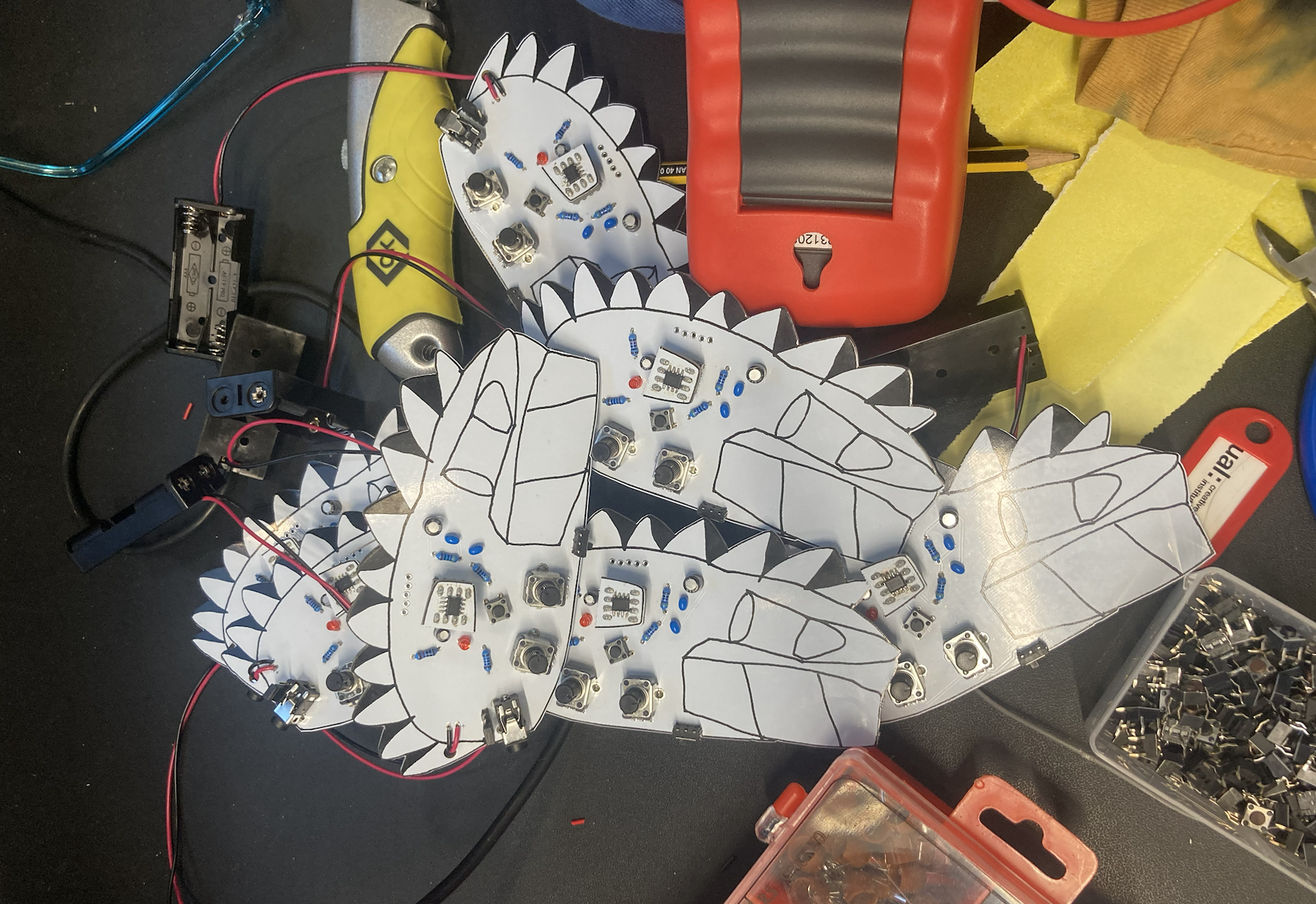
Agnes Cameron is a Lecturer and Specialist Technician at the UAL Creative Computing Institute (UAL), with a dual role as part-time staff and academic. She holds a background in electronics and software engineering, combining technical expertise with artistic and pedagogical pursuits. A 2024 Bellingcat Tech Fellow , she specializes in multispectral satellite imagery , synthesizer design , and research software sustainability . Her affiliations include the Somerset House Studios as a resident artist, co-founding Foreign Objects , and directing Inflationary Assets (a community interest company). She has taught at Parsons School of Design and Hunter College , and is a Carpentries instructor focusing on peer-to-peer skill-sharing. Recent projects include the More Roar synthesiser (collaborating with Dirty Electronics Ensemble) and investigations into bauxite mining’s ecological impacts using remote sensing. Her work spans critical technology analysis , geospatial ethics , and the intersection of art with infrastructure. Key achievements : 2024 Bellingcat Technical Writing Fellowship Creative code specialist with MIT Museum Studio and Media Lab Co-organizer of Naive Yearly interdisciplinary events
Lucia Ortega Donaire is an Interim Substitute Assistant Professor (Profesor Sustituto Interino) in the Department of Nursing , Faculty of Health Sciences , University of Jaén , Spain. Her research focuses on geriatric nursing, sleep-related disorders, sexual-health education among young adults, and innovative teaching methodologies such as simulation and gamification in nursing curricula. Education: PhD in Health Sciences (Nursing), University of Jaén , 2022 Thesis: “Calidad de vida en personas mayores con síndrome de apneas-hipopneas durante el sueño y su relación con el deterioro cognitivo y funcional” Supervisors: Dr. María José Calero García, Dr. Ana Raquel Ortega Martínez, Dr. Sergio Iglesias Parro. Research Interests: Dr. Ortega Donaire’s work spans three complementary domains: Gerontological Nursing & Sleep Medicine: Investigating quality of life, cognitive decline, and functional impairment in older adults with obstructive sleep apnoea and type-2 diabetes mellitus. Sexual & Reproductive Health Education: Exploring knowledge, attitudes and behaviours related to contraception, pornography exposure and sexist attitudes among university students. Educational Innovation in Nursing: Evaluating the effectiveness of clinical simulation, immersive virtual reality, gamification and on-line learning strategies to enhance student engagement and clinical competencies. Publication Trends: Across 25 peer-reviewed outputs (2021-2025) her publications reveal a clear trajectory: systematic reviews and observational studies addressing chronic disease management in older populations, interventional studies on anxiety reduction techniques, and educational research employing innovative pedagogies. The work is predominantly quantitative, with an increasing emphasis on systematic reviews that synthesise global evidence. Scientific Awards & Grants: No awards, grants or funding acknowledgements were found in the provided text. Advising & Supervision: Currently no advisees or doctoral students are listed in the available material. Laboratories & Teams: Affiliation details point to participation in the Faculty of Health Sciences research groups, although specific laboratory or team names are not provided.