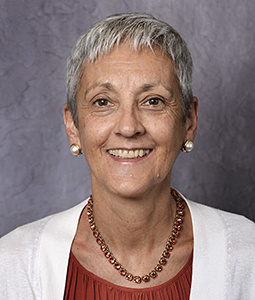
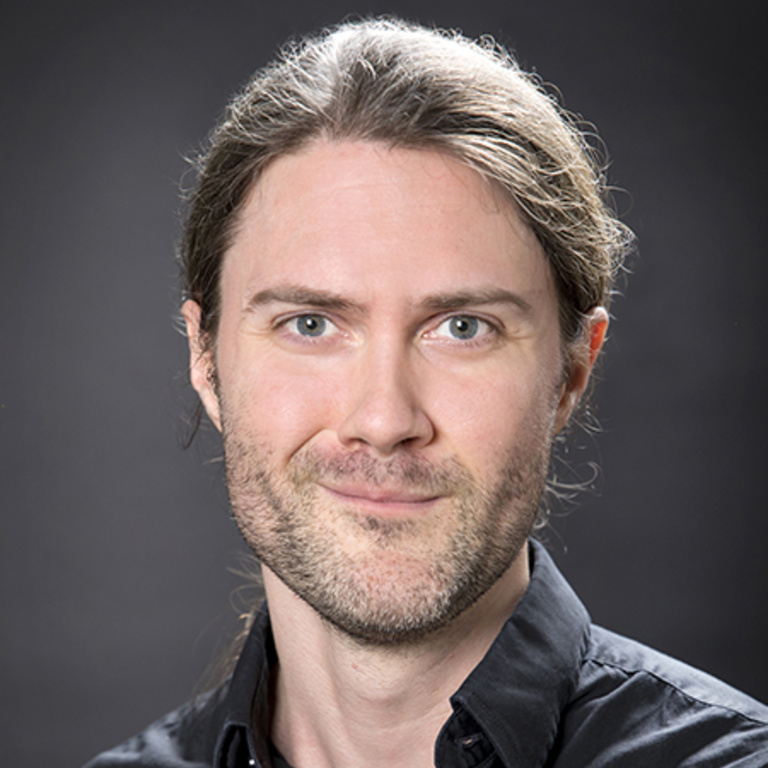
Anne Bezuidenhout is a Professor in the Department of Philosophy & Linguistics at the University of South Carolina's McCausland College of Arts and Sciences. Holding a PhD from the University of Michigan (1990), she has been affiliated with the Linguistics Program since 1992 and the Institute of Mind and Brain since 2013. Education: PhD in Philosophy, University of Michigan (1990) Affiliations: Core Member, Linguistics Program; Affiliated Member, Institute of Mind and Brain Her research focuses on the semantics-pragmatics interface , particularly: Presuppositions and conversational implicatures Discourse processing in anaphoric pronoun resolution Foregrounding/backgrounding of non-restrictive relative clauses Conversational tailoring and perspective-taking Noun-noun compounds and enriched composition Recent publications examine presupposition theory, discourse prominence, and reference mechanisms. She teaches courses in formal logic, semantics-pragmatics, and philosophy of mind. Service roles include: Co-Editor-In-Chief, Journal of Pragmatics Executive Secretary, American Pragmatics Association (AMPRA) Editorial Board Member, Pragmatics and Cognition Advisory Editorial Board, Palgrave Studies in Pragmatics, Language and Cognition
Prof. Heike Wiese holds the chair of German in Multilingual Contexts at Humboldt University of Berlin within the Faculty of Language, Literature and Humanities, Department of German Studies and Linguistics. Previously, she was a professor at University of Potsdam and held visiting positions at Yale University and Brandeis University. She is a distinguished member of the Academia Europaea and of the German Council for Migration, as well as the speaker of the Centre 'Language in Urban Diversity'. Her research focuses on the dynamics of multilingual settings, with particular attention to grammatical developments, monolingual ideologies, linguistic discrimination, and empowerment. Her primary research interests include: Urban contact dialects (including 'Kiezdeutsch' in Germany) Linguistic practices of heritage speakers Turkish-German language contact phenomena Grammatical-pragmatic interfaces and linguistic architecture (V2 and V3 word order in Germanic) Mass and count nouns, numeral constructions, and focus particles Discourse markers and emoji as linguistic elements Linguistic discrimination and empowerment in society and education Prof. Wiese's recent scholarly work demonstrates a sophisticated integration of theoretical linguistics with sociolinguistic and educational perspectives. Her publications from 2021-2025 reveal a consistent focus on language variation in multilingual contexts, particularly examining how linguistic systems interact across language boundaries. She has made significant contributions to understanding urban contact dialects, especially Kiezdeutsch in Berlin, and German-speaking communities in postcolonial settings like Namibia and Australia. Her research challenges monolingual ideologies and advocates for linguistic diversity through both theoretical analysis and practical applications. Her scientific recognition includes: Membership in the prestigious Academia Europaea Leadership role as speaker of the Centre 'Language in Urban Diversity' Through extensive outreach activities, Prof. Wiese collaborates with multilingual communities, kindergartens, schools, educational policymakers, and museums. She has developed practical materials for teachers to address linguistic diversity in classrooms and challenge linguistic discrimination. Her research methodology emphasizes 'language situations' - a technique to elicit comparable, naturalistic data across registers, languages, and speakers, recognizing the complexity of multilingual repertoires. Prof. Wiese leads research in the Multilingualism, Interculturality and Language Lab (CU.mil), where her team investigates language variation in urban contexts and develops methodologies for studying linguistic diversity. Her work bridges theoretical syntax with sociolinguistics, psycholinguistics, and educational linguistics, with important implications for language policy, teacher education, and public understanding of linguistic diversity in increasingly multicultural societies.
Dr. Angeliek van Hout is a faculty member at the University of Groningen's Faculty of Arts, where she leads the Acquisition Lab within the Center for Language and Cognition Groningen (CLCG). Her academic profile centers on experimental research into first language acquisition in typically developing monolingual children, employing a crosslinguistic perspective to investigate fundamental aspects of language development. Her research expertise spans multiple interconnected domains of linguistic development: Temporal reference (tense and aspect, telicity, event culmination) Nominal reference (definiteness, quantification) Syntactic structures (questions, passives, pronouns) Pragmatic reasoning (scalar implicatures, theory of mind) Dr. van Hout's methodological approach integrates formal linguistic theory with empirical experimentation, examining how children acquire complex linguistic structures across different languages. Her recent work demonstrates particular focus on logical operators and their interpretation in child language, with extensive crosslinguistic comparisons examining how children process disjunction under negation in Dutch, French, Hungarian, and Italian. She investigates the cognitive mechanisms underlying these linguistic phenomena, bridging theoretical linguistics with cognitive science. Her publication record shows consistent productivity with 89 research outputs including 25 articles, 23 conference contributions, and 20 book chapters. Notable recent publications include work on prosodic disambiguation in Dutch, free choice interpretation in French children, and crosslinguistic patterns in quantifier acquisition. Dr. van Hout actively contributes to the academic community through: Supervision of PhD students (4 supervised works documented) Editorial work including the TABU Festschrift for Jack Hoeksema Organizing academic events such as "Novel Semantic Research in Theory, Processing and L1 Acquisition" Presenting research at international conferences including the Boston University Conference on Language Development Her research has practical applications in understanding typical language development trajectories, which she communicates to broader audiences through public engagement activities. She has presented on language development in twins at multiple public events and participated in the NEMO Science Live initiative from 2016-2018, demonstrating commitment to knowledge transfer beyond academic circles. As leader of the Acquisition Lab, Dr. van Hout directs research examining how children develop linguistic competence across various domains, with particular attention to the interface between syntax, semantics, and pragmatics in early language development.
Dániel Péter Biró is a Professor of Composition at the Grieg Academy – Department of Music, University of Bergen, Norway. His academic and artistic trajectory spans institutions including Princeton University (PhD 2004), University of Victoria, Utrecht University, and Harvard University. Current research integrates music composition with philosophy (Spinoza), computational ethnomusicology, and Jewish/Islamic chant analysis Key projects: Sounding Philosophy (Norwegian Artistic Research Program 2021-2024), Computational Ethnomusicology (since 2007) His research interests focus on historicized composition, where melodic contours from oral traditions (Jewish Torah trope, Qur’an recitation) are algorithmically analyzed and transformed into contemporary works. This bridges medieval musical syntax with modern computational methods, exploring memory citation, negative space in historical dialogue, and philosophical concepts like Spinoza's Geist and intuition . Scientific awards include: Guggenheim Fellowship (2017) Ernst von Siemens Music Foundation grants (2010, 2012) Radcliffe Institute Fellowship (2014-2015) Internal Research Grants from University of Victoria and Princeton University His compositions are published by Edition Gravis, with recordings featured on Neos Music and German radio (Deutschlandfunk).
Karim Achab serves as a Part-time Professor in the Department of Linguistics within the Faculty of Arts at the University of Ottawa, holding dual teaching responsibilities in linguistics and French as a Second Language. His research centers on Amazigh studies with deep expertise in Tamazight (Berber, Kabyle, Tuareg) linguistics, spanning syntax, morphology, and lexical semantics. He maintains a strong focus on North African geopolitics alongside broader interests in bilingualism, language contact, heritage languages, dialectal variation, minority languages, and second-language pedagogy. His multilingual capabilities in French, English, Tamazight varieties, Hungarian, and Spanish directly inform his interdisciplinary approach to linguistic diversity. While the source text confirms his active faculty status and research domains, it does not specify details regarding student advising, grant funding, laboratory affiliations, or collaborative research teams. No information about scientific awards or publications was provided in this institutional profile.
Stewart McCauley, PhD, is an Assistant Professor in the Department of Speech and Hearing Science at the University of Iowa. His research focuses on cognitive mechanisms underlying language development, particularly how variability in these mechanisms influences outcomes in typically developing individuals and those with developmental language disorders. He employs methodologies including computational modeling, behavioral measures, and electroencephalography (EEG). He teaches courses such as CSD 3116 (Neuroscience of Speech and Hearing), CSD 4145 (Developmental Language Disorders), and CSD 1015 (Introduction to Speech and Hearing Sciences and Disorders). His research interests span language development, statistical learning, computational modeling, and neurocognitive aspects of language processing. Recent work explores multiword units’ impact on syntactic errors in children, cross-linguistic models of child language, and individual differences in statistical learning. McCauley actively seeks PhD students for collaborative research projects. His articles frequently investigate language learning mechanisms, emphasizing computational approaches and cross-linguistic perspectives. He is affiliated with the University of Iowa’s Wendell Johnson Speech and Hearing Center and maintains an active Google Scholar profile.
Ana Teresa Pérez-Leroux is a Professor of Spanish and Linguistics and Chair of the Department of Spanish and Portuguese at the University of Toronto . She also serves as Director of the Cognitive Science Program. Her research focuses on child language acquisition, bilingualism, and Spanish syntax, with an emphasis on understanding how children learn complex grammatical structures. She holds a PhD in Hispanic Linguistics from the University of Massachusetts Amherst. Key affiliations include the Faculty of Arts and Science , where she has been a professor since 2009, and leadership roles such as Chair of Spanish and Portuguese (2019–present) and Director of Cognitive Science (2014–2019). Earlier roles include Visiting Professorships at the Federal University of Rio de Janeiro and Michigan State University. Research Interests : Her work investigates syntactic and semantic development in monolingual and bilingual children, particularly recursion in noun phrases, clitic usage, and tense/mood systems. Recent projects include SSHRC-funded studies on noun phrase complexity ($158,848, 2014–2018), revealing insights into recursive structures across languages like Japanese, German, French, Spanish, and English. Grants and Collaborations : Co-PI on SSHRC Insight Grant exploring recursive embedding in children. Collaborators include Susana Bejar, Diane Massam, and Yves Roberge. Supervises over 20 graduate students and has published extensively in Bilingualism: Language and Cognition , Linguistics , and Language . Education : PhD in Hispanic Linguistics (1993), MA in Spanish & Linguistics (1992), both from UMass Amherst. BA in Modern Languages (1983) from Universidad Autónoma de Santo Domingo.
Dr. Luke Adamson is a tenure-track Researcher in Research Area 3 'Syntax and Lexicon' at the Leibniz-Zentrum Allgemeine Sprachwissenschaft (ZAS), Berlin. Previously, he held a Postdoctoral Fellowship at Harvard University (2020–2022) and served as Lecturer at Rutgers University (2022–2023). He earned his PhD in Linguistics from the University of Pennsylvania (2019) and holds dual degrees from Oberlin College: a Bachelor of Arts in Psychology and a Bachelor of Music in Cello Performance (2010–2014). His research focuses on nominal features, grammatical gender, and syntactic modularity, with notable projects exploring gender locality hypotheses, coordination resolution in three-gendered languages, and suppletion phenomena. Collaborators include prominent linguists such as Elena Anagnostopoulou (University of Crete), Ruth Kramer (Georgetown University), and Stanislao Zompì (Universität Potsdam). Key contributions include work on gender assignment constraints in languages like Greek, Swedish, and Lithuanian, as well as syntactic interfaces in Jarawara and Italian. Recent presentations include invited talks at the University of Geneva (June 2025), Yale University (October 2024), and the Brussels Conference on Generative Linguistics (December 2024). He co-edits Linguistic Inquiry Squibs & Discussion and organizes the ZAS Brown Bag Lunches. His work has been supported by grants from the National Science Foundation and the European Research Council. Adamson’s academic networks span formal linguistics and typological studies, with ongoing projects addressing politeness pronouns in Romance languages, emotive predicates in clausal complements, and allosemy in Greek gender systems.
Samantha Fladd is an Assistant Professor in the Department of Anthropology at Washington State University (WSU) and Director of the Museum of Anthropology. She holds a Ph.D. from the University of Arizona. Her research focuses on anthropological archaeology in the U.S. Southwest, particularly the Ancestral Pueblo communities of the Four Corners region. Key interests include spatial analysis of architecture, depositional practices, and room decommissioning. She has conducted fieldwork in Chaco Canyon, northeastern Arizona, and southwestern Colorado, emphasizing archival and museum collection studies. As Museum Director, she advocates decolonial approaches, prioritizing community-led exhibitions and cultural care in collections management. Her work explores the history of archaeology, digital archives, and intersectional identities of women in Southwestern archaeology. Selected Awards: Julian D. Hayden Student Paper Competition (2018) for her work on ritual fauna at Pueblo Bonito. Research Projects: Co-directs a collaborative project on women’s intersectional identities in the northern Southwest. Leads studies on spatial syntax, environmental archaeology, and material culture analysis in Chaco Canyon and Homol’ovi settlements.
Professor Wesley Oliver is a faculty member at the Kline School of Law, Duquesne University, and serves as Director of the Law and Computing Program. He specializes in integrating computer science principles into legal education, focusing on programming solutions for legal challenges. The program, launched in 2023-24, emphasizes foundational coding skills for lawyers without prior technical backgrounds. Education & Professional Background: Oliver has been teaching courses like Coding for Lawyers since 2021. His work leverages generative AI to enhance student learning, allowing faster progress in syntax and problem-solving. Research & Program Focus: The Law and Computing Concentration prepares students for roles in legal tech teams, e-discovery, and software development. Key courses include Statistics and Machine Learning and Data Structures . Oliver aims to expand the program into a tech-focused JD track, delaying traditional courses like Property to prioritize advanced programming. Student Outcomes: Graduates like Joe Pisano demonstrate the program’s success, though some pursue non-traditional legal paths. The hybrid skill set of law and coding is highlighted as critical for modern legal practice. Future Initiatives: Oliver plans to introduce a tech-focused first-year curriculum, enabling students to engage in legal tech internships earlier. This reflects the growing demand for professionals bridging legal and computational expertise.
Krister Schönström is an Associate Professor and subject leader for Sign Language at Stockholm University's Department of Linguistics. He teaches courses on Swedish Sign Language and supervises students at all academic levels, including doctoral candidates. His research focuses on multilingualism among deaf individuals, language acquisition, and sign language proficiency assessment. Key projects include 'Promoting the reading of deaf students in sign language-based classrooms' (Skolfi-funded) and 'The multilingual situation of deaf refugees in Sweden' (VR-funded). He leads the 'From speech to sign' project on second language acquisition of sign language (RJ-funded 2017-2019). His work explores visual language learning dynamics, translanguaging in multilingual classrooms, and developing sign language proficiency tests. Collaborations include FORTE-funded research on deafblindness communication with Linköping University. Education: Not explicitly detailed in text Research Projects: Mulder (deaf refugees), Skolfi reading project, FORTE deafblindness study Grants: VR, Skolfi, Riksbankens Jubileumsfond, FORTE Labs/Teams: Sign Language section leadership, collaborative work on multilingual deaf education His research spans bilingualism's bimodal aspects, second language acquisition challenges, and practical tools like sign language proficiency assessments. He emphasizes the visual modality's role in deaf learners' literacy and communication strategies.
Vibeke Roggen is an Associate Professor emerita at the University of Oslo's Department of Classics, specializing in Neo-Latin studies, textual criticism, and Latin grammar. Her academic career includes leadership roles as Chair of Norway's National Council for Greek and Latin (2007–2011) and director of a cooperative project between Oslo and Azerbaijan University of Languages (2008–2013). Her research spans multiple Neo-Latin domains including the transmission of Catullus, analysis of Petrarch's Africa , and pedagogical approaches to classical languages. She maintains active engagement in public scholarship through initiatives like NRK Radio's 'Den lille latinskolen' program. Publication analysis reveals sustained focus on Latin linguistics and historical transmission, with recent works including comprehensive Latin grammars (2022) and dictionaries (2015). Her scholarly output demonstrates consistent exploration of language evolution, cross-cultural linguistic connections, and pedagogical applications of classical studies across different historical periods.
Roberta D'Alessandro is a Professor of Linguistics/Syntax and Language Variation at Utrecht University's Department of Languages, Literature and Communication, and Head of the Linguistics section. She leads the research group 'Language Structure: Variation and Change' within the Institute for Language Sciences (ILS). Her work focuses on syntactic variation, heritage language syntax, and microvariation in Italo-Romance and Indo-Aryan dialects. She is editor-in-chief of Isogloss and Grammars and Sketches of the World's Languages/Romance , and president of Going Romance . Her research explores syntactic theory through heritage language data, language contact in migration contexts, and the syntax-phonology interface. Awards include the Knight of the Italian Republic (2014) and membership in the Global Young Academy (2014–2019). She coordinates EU policy initiatives and advises on ethical research practices. Education: Ph.D. in Linguistics (not explicitly stated, inferred from career) Grants: ERC Consolidator Grant (Microcontact Project), NWO VIDI (2010–2015), Marie Curie Fellowship (2005–2007) Recent work emphasizes ethical considerations in theoretical linguistics and the integration of fieldwork with formal syntactic analysis. She collaborates internationally, leading projects on endangered languages and linguistic microvariation.
Prof. Peter Schrijver is a Professor of Celtic and Classics at Utrecht University's Faculty of Humanities, leading the Department of Languages, Literature, and Communication (TLC). His research focuses on historical linguistics, particularly the evolution of Celtic languages and Indo-European studies. Schrijver earned his PhD in Classical Philology from Leiden University (1991) and held academic positions at Ludwig-Maximilians-Universität München before joining Utrecht University in 2005. He has served as vice-dean of the Faculty of Humanities (2015–2020) and director of undergraduate studies for languages and cultures (2007–2014). His work explores language contact, prehistoric linguistic relationships, and the cultural history of Europe. He is an editorial board member of the Journal of Indo-European Studies and frequently delivers invited lectures on topics like Hattic syntax, Celtic origins, and language evolution. His contributions bridge linguistic analysis with archaeological and genetic perspectives, offering insights into prehistoric language dynamics. Research interests include the history of Brittonic and Goidelic languages, substrate influences in Old English, and the linguistic prehistory of Western Europe. He has published extensively on Indo-European phonology, Celtic comparatives, and substrate languages. His recent work examines East Caucasian languages and Neolithic linguistic connections. Schrijver's editorial roles and international collaborations highlight his role in advancing comparative linguistics.
Dr Bo Yao is a Senior Lecturer at Lancaster University's Department of Psychology, Fylde College. His research focuses on the cognitive neuroscience of language and inner speech, exploring neural mechanisms underlying inner speech's role in cognition and mental health. He employs methods like EEG, fMRI, eye tracking, and computational modeling. Yao supervises 4 postgraduate students and leads the Language, Inner Speech, and Neuroscience (LISN) Lab. Research Interests: Inner speech's neural basis, auditory verbal hallucinations, embodied cognition, and psycholinguistics. Recent work examines rhythmic foundations of thought and emotional processing in language. His 2025 publications highlight innovations in parafoveal preview benefits and predictive coding frameworks. Publications span cognitive neuroscience, psycholinguistics, and neuroimaging, with a focus on reading comprehension, speech processing, and emotional word analysis. His work bridges phenomenological experience with neural mechanisms, using meta-analyses and experimental paradigms. Advising and Labs: Supervises students in language cognition and inner speech research. The LISN Lab develops interdisciplinary approaches to understand language and consciousness.