Gurmeet Kaur is a linguist and post-doctoral researcher currently based at the University of Göttingen, Germany, supported by a DFG grant. She completed her PhD at the Indian Institute of Technology Delhi under the supervision of Prof. Pritha Chandra and was an Alexander von Humboldt Postdoctoral Fellow from 2018 to 2020. Research interests: Syntax and its interfaces with morphology and semantics Phi-features and pronominal syntax Honorific and polite pronouns Agreement, concord, imperatives and allocutivity Her recent work focuses on the inventory and organization of phi-features in pronominal syntax, with special attention to honorific and polite forms. She also investigates mixed agreement phenomena, imperative clauses and allocutive agreement, aiming to clarify how syntactic structures interact with morphological and semantic components. No publications, students, awards or laboratory affiliations are listed on the source page.
Professor Sascha Gaglia serves as academic advisor and referee at an institution with German-language academic documentation. Specializing in Slavic linguistics, particularly Polish and Russian syntax and morphosyntax, their scholarly focus centers on predicate expressions and copular constructions. Research interests include comparative Slavic linguistics with emphasis on case systems (nominative vs. instrumental) and morphosyntactic properties of predicate expressions. Their work bridges theoretical linguistics with comparative analysis of Slavic language structures. Professor Gaglia has supervised doctoral research, most notably Hagen Pitsch's 2014 dissertation examining lexical and morphosyntactic properties of Polish and Russian predicate expressions. This indicates active mentorship within the field of theoretical linguistics.
Peter Gallmann is a Professor at the University of Göttingen, primarily serving as an advisor and referee for doctoral and master’s theses across diverse fields, including linguistics, medicine, chemistry, mathematics, and neuroscience. His research interests span syntax and coordination structures in linguistics, polymerization chemistry, neuroimmunology, mathematical modeling of Brownian motion, and medical studies on fibromyalgia, Duchenne muscular dystrophy, and chronic pain mechanisms. Students supervised include Petra-Kristin Bonitz (2014) on subject gaps in coordinative structures, Laura Josephine Botzet (2025) on reproductive decision-making, and Moritz Johannes Joswig (2025) on CO₂/epoxide copolymerization. Other advisees include Shivani Shivani (2025) on primate fitness and Samuel Enrico Schumann (2025) on fibromyalgia treatments. His work also intersects with clinical studies in cardiology, dentistry, and autism research, though no explicit awards, grants, or laboratory affiliations are mentioned in the provided texts.
Mohammad Hamdaqa is an Associate Professor at the Department of Computer Engineering and Software Engineering at Polytechnique Montréal (Canada), where he leads the Software and Emerging Technologies Lab. He received his PhD in Software Engineering from the University of Waterloo in Canada in 2016 and holds multiple advanced degrees including a Master of Applied Science in Software Engineering and an MBA with a minor in Management Information Systems. His educational background includes: Ph.D. in Electrical and Computer Engineering, University of Waterloo, Canada Master in Electrical and Computer Engineering, Concordia University, Canada Master in Business Administration, New York Institute of Technology, USA Bachelor in Computer Engineering, Jordan University of Science and Technology, Jordan Dr. Hamdaqa's research focuses on the intersection of software engineering and emerging technologies. His work explores how software engineering approaches can be tailored to address the complexities of architecting, building, and deploying applications for new platforms like Cloud Computing and Blockchain. He is particularly interested in how emerging technologies can advance software creation, evolution, and management practices. His research spans model-driven software engineering, cloud computing, blockchain, and the application of AI in software development processes. His recent publications demonstrate a strong focus on smart contract security, infrastructure as code, model-driven engineering, and the application of large language models in software engineering tasks. His work bridges theoretical software engineering concepts with practical applications in cutting-edge technology domains, with particular emphasis on addressing security, sustainability, and maintainability challenges in next-generation software systems. Dr. Hamdaqa has received recognition through service on program committees for major software engineering conferences including ASE, ICSE, MODELS, and SANER. He serves on the editorial board of Service Transactions on Internet of Things and is a Member of the IEEE Computer Society and the Association for Computing Machinery. He has supervised multiple Master's students to completion, with recent theses focusing on OCL generation, smart contract auditing, epidemiological modeling, and infrastructure as code security. His current research group continues to explore innovative approaches at the intersection of software engineering and emerging technologies. Dr. Hamdaqa leads the Software and Emerging Technologies Lab at Polytechnique Montréal, which brings together researchers and students to investigate cutting-edge challenges in software engineering for new technology platforms. The lab focuses on practical solutions that balance theoretical rigor with real-world applicability.
Dr. Berkan Sariaydin serves as Lecturer in the Department of Didactics of Ancient Languages within LMU Munich's Faculty of Languages and Literatures, while concurrently holding a Studienrat position at Wilhelmsgymnasium Munich. His dual academic-school roles focus on bridging classical philology with contemporary pedagogy through innovative multimedia approaches. His educational trajectory includes: MA-level studies in Latin, German and Philosophy at LMU Munich (2012-2018) First State Teaching Examination (2018) Doctoral degree from LMU Munich (2018-2024) Second State Teaching Examination (2024) Research centers on classical reception studies with emphasis on intermedial transformations of antiquity. His work analyzes how ancient narratives (particularly Virgil and Ovid) manifest in modern media like graphic novels and fantasy literature, while developing practical didactic frameworks for language instruction. Current projects explore mythological narratives as tools for addressing contemporary social challenges through the ERC-funded 'Modern Argonauts' initiative. His publication record shows consistent output since 2016, with increasing focus on methodological innovation in classical reception studies. Recent works demonstrate growing integration of multimedia analysis and pedagogical application, particularly in teacher training contexts. Award highlights include: Bavarian State Ministry award for exceptional teacher training (2024) German National Academic Foundation doctoral scholarship (2019) LMU's MZL Prize for academic excellence (2019) Germany Scholarship for undergraduate studies (2015) Grant involvement centers on the ERC Proof of Concept project 'The Modern Argonauts' at Warsaw University, where he develops multicultural educational programs using classical mythology. His teaching methodology emphasizes active student engagement with ancient texts through contemporary media adaptations. He actively contributes to academic discourse through LMU's 'Rejuvenated Antiquity' research seminar and international conferences, focusing on practical applications of classical studies in modern educational settings.
Prof. Dr. Benjamin Uhl serves as Head of the Language Education Department at the University of Koblenz's Institute of Primary School Education, where he holds a professorship focused on language education in primary schools. He also serves as a Professorial Senator in the university's Senate. His academic work bridges theoretical research and practical application in language education, with particular emphasis on transitions between educational stages and supporting diverse learners. Dr. Uhl's research focuses on critical areas of language education: Continuous language learning during transitions from kindergarten to elementary school Reading comprehension and support for students with learning disabilities Multilingualism in educational settings and urban environments Grammar instruction methodologies for primary school students Design-Based Research approaches connecting university research with classroom practice Early literacy acquisition and storytelling development in young children His recent publications reveal a strong trend toward practical applications of language education research, with particular emphasis on bridging the gap between theoretical knowledge and classroom practice. Dr. Uhl frequently employs Design-Based Research methodologies that involve direct collaboration with teachers and schools. His work demonstrates growing interest in digital learning tools, including AI applications in grammar instruction, and in understanding the linguistic landscapes of urban environments through projects like MehrKO. Dr. Uhl actively supervises master's theses through a dedicated colloquium that meets biweekly during semesters. He has guided numerous students through empirical research projects focused on language education, with particular emphasis on children's perspectives and practical applications. His teaching projects often involve collaboration with local schools, as seen in the Language Education Network and MehrKO projects. Among his significant research initiatives is the "Leseband-L" project, which addresses reading support for students with learning disabilities, and the "ProFis" project that examined language support strategies in inclusive kindergartens. He also contributes to professional development through workshops and collaborations with the Pädagogische Landeszentrum in Rhineland-Palatinate.
Sebastian Hoffmann is a distinguished academic affiliated with the University of Trier , where he served as Dean of the Faculty of Languages, Literatures and Media Studies from 2017 to 2023. He has held significant roles, including Visiting Professor at the University of Tampere (2014–2017) and Lecturer in English Linguistics at Lancaster University (2006–2009). His expertise lies in Corpus Linguistics , with a focus on World Englishes , Syntactic Change , and Corpus Methodology . He co-developed BNCweb , a widely used web interface for the British National Corpus. PhD from the University of Zurich His research explores usage-based approaches to language study, including syntactic evolution , phonological patterns (e.g., intrusive /r/), tag questions , and verb complementation . Recent work highlights the role of Internet-derived data in corpus linguistics and the fixedness of collocations . His publications span Corpus Methodology , Historical Linguistics , and Phraseology , with key works such as Corpora and Lexis (2018) and Grammaticalization and English Complex Prepositions (2005). He has contributed extensively to journals like the International Journal of Corpus Linguistics and Journal of English Linguistics . Hoffmann has been recognized for leadership in professional organizations, including Chair of ICAME (2017–2023) and Vice-President for the Profession of the International Society for the Linguistics of English (2018–2023). He teaches courses such as The History of the English Language and Transcribing and Analyzing Spoken Language .
Doreen Georgi is a Professor of Linguistics at the University of Leipzig, specializing in syntax and morphology. She is known for her work on the interaction between syntax and morphology in natural languages.
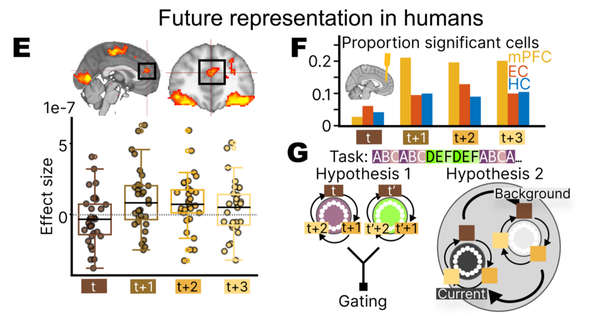
Mathias Sablé-Meyer is a Postdoctoral Researcher at University College London's Sainsbury Wellcome Centre, working in Tim Behrens's lab. He completed his PhD under the supervision of Stanislas Dehaene at PSL/Collège de France and NeuroSpin, CEA, where he investigated humans' ability to manipulate highly abstract structures, particularly focusing on the perception of geometry. His research spans cognitive neuroscience, computational modeling, and experimental psychology, with a focus on understanding the mechanistic implementation of compositional mental representations. He employs methodologies including MEG, fMRI, behavioral experiments, and computational models to investigate how humans mentally represent abstract structures like geometric shapes, language, and mathematical concepts. Sablé-Meyer's work reveals fascinating insights about human cognitive uniqueness, particularly in geometric perception compared to non-human primates. His recent research examines sequence processing mechanisms and aims to establish foundations for mechanistic implementations of Language of Thought models. He has published in top journals including Cognitive Psychology , Trends in Cognitive Sciences , PNAS , and Journal of Neuroscience . Glushko Dissertation Prize from the Cognitive Science Society (2023) As a supervisor, he co-advises Master's students including Maxime Cauté, who is exploring cross-modal representation of sequences, and is involved with several other students including Svenja Kuchenhoff, Amy Wong, and others. His lab follows open science principles, with code systematically published on the Open Science Framework alongside articles. His research program bridges cognitive science, neuroscience, and artificial intelligence, with implications for understanding both human cognition and developing more human-like AI systems. He maintains active collaborations across institutions including UCL, Collège de France, MIT, and École Normale Supérieure.
Philipp Unberath serves as Professor of Psychology at SRH University since 2022, holding a habilitation in psychology from Friedrich-Alexander-Universität Erlangen-Nürnberg (FAU) awarded in 2023. His career bridges clinical psychology practice and biomedical informatics innovation, with prior roles including 18 years as Research Assistant at FAU (2004-2022) focusing on legal psychology and developmental disorders. His research integrates artificial intelligence with healthcare through two complementary threads: Biomedical Informatics: Leading technical development of cancer genomics platforms (cBioPortal extensions, molecular tumor board systems, clinical decision support tools) Clinical Psychology: Specializing in developmental/abnormal psychology, legal psychology, and prevention programs for children/families This dual expertise enables human-centered design of healthcare IT systems that address both technical and psychological dimensions of patient care. Analysis of his 15 most recent publications (2019-2023) reveals a strategic pivot toward precision oncology informatics, with 80% of recent work focused on genomic data integration, molecular tumor boards, and clinical decision support systems. His psychological background informs usability studies and workflow implementations, creating a distinctive niche at the AI-healthcare-psychology intersection. Scientific recognition includes: Bavarian doctoral scholarship (2002-2004) Continuous high-impact publication in biomedical informatics (JMIR, Cancers, BMC Med Inform) As an active principal investigator, Prof. Unberath directs grant-funded projects developing clinical-genomic integration platforms. His supervision approach combines technical mentorship in health informatics with clinical psychology perspectives, preparing students for interdisciplinary healthcare innovation roles. Current work focuses on real-world implementation of AI-driven decision support in oncology settings.
Chang-ai Sun is a full professor at the School of Computer and Communication Engineering, University of Science and Technology Beijing (USTB). He currently serves as Vice Dean of the Institute for Multidisciplinary Innovation (IMI), Head of the Department of Computer Science, and Director of the Software Engineering Institute at USTB. He received his bachelor's degree in computer science from the University of Science and Technology Beijing and his PhD in computer science from Beihang University, China. Prof. Sun's primary research focuses on software engineering with particular emphasis on software testing, program analysis, and service-oriented computing. Recently, he has been devoted to developing novel theories, techniques, and supporting tools for intelligent software development and maintenance. His work spans theoretical foundations to practical applications in software quality assurance, with increasing focus on AI-driven approaches to traditional software engineering challenges. His publication record shows consistent contributions to metamorphic testing, program repair, and the application of AI techniques to software engineering problems. Recent work explores the intersection of large language models and software testing methodologies, demonstrating both theoretical innovation and practical implementation. Prof. Sun has received significant recognition for his contributions: 11 national Software Prototype/Service Innovation Awards Senior Member of IEEE Distinguished Member of China Computer Federation (CCF) As principal investigator and major investigator, he has completed over 40 research projects funded by the European Union, Australia, China, and Hong Kong. His extensive grant portfolio demonstrates strong international collaboration and significant impact in the software engineering community. He actively mentors students and junior researchers through his leadership roles. Prof. Sun leads the Software Engineering Institute at USTB, where his team focuses on advancing research in software testing, program analysis, and intelligent software development tools. His leadership extends to departmental administration as Head of the Department of Computer Science, shaping curriculum and research directions for one of China's leading technical universities.
Zhou Yang is an Assistant Professor at the University of Alberta and Fellow at the Alberta Machine Intelligence Institute (Amii), with research focusing on the intersection of software engineering and artificial intelligence. His academic journey includes a Ph.D. from Singapore Management University, an M.Sc. in Software System Engineering from University College London, and undergraduate studies at Yangzhou University. His research interests span Software Engineering, Artificial Intelligence, AI for Software Engineering (AI4SE), Software Engineering for AI (SE4AI), Large Language Models, and Cybersecurity. Yang's work explores how human and AI collaboration can improve code writing, how AI impacts open-source communities, and how developers build software in emerging environments like VR/AR. His recent publications demonstrate strong trends in code language models, with significant contributions to ASE, ICSE, ISSTA, and top journals like TOSEM and TSE. His research addresses critical challenges including token efficiency in code generation, user perception of AI coding assistants, privacy preservation in code models, and fairness in AI systems. 2024 IEEE Computer Society Best Paper Award (1 out of 183 submissions) ACM Distinguished Paper Award from ISSTA 2024 Distinguished Reviewer Award from Internetware 2024 SMU Research Staff Excellence Award (1 of 4 university-wide) SMU Presidential Fellowship Award SMU Dean's List Award 1st Place in ACM Student Research Competition at ICSE 2024 Yang actively mentors graduate students with regular one-on-one meetings, constructive feedback, and support for top-venue publications. He provides full funding through teaching assistantships and research grants, including travel support for conferences. His lab focuses on responsible research conduct and societal implications of AI work. Though early-career, he actively builds professional networks for students through collaborations and supports diverse career paths in academia and industry. He leads research in the Alberta Machine Intelligence Institute, focusing on practical applications where software engineering principles enhance AI systems and where AI techniques solve real-world software engineering challenges.
Gang (Gary) Tan is a Professor in the Computer Science and Engineering Department at Pennsylvania State University, co-directing the Institute for Networking and Security Research (INSR). His research bridges computer security, formal methods, and programming languages to develop practical solutions for software vulnerabilities and AI fairness. Education: B.E. in Computer Science from Tsinghua University Ph.D. in Computer Science from Princeton University Dr. Tan specializes in applying compiler techniques and formal verification to security challenges, with seminal work on cache side-channel attacks and fairness in machine learning. His Security of Software (SOS) Group develops frameworks that integrate theoretical guarantees into real-world systems, emphasizing measurable security outcomes and ethical AI. Recent projects focus on quantifying bias in neural networks and mitigating speculative execution vulnerabilities. Analysis of his 2021-2025 publications reveals a strategic pivot toward AI security, where he pioneers methods for fairness testing (e.g., information-theoretic debugging) and repair (e.g., NeuFair). Concurrently, his security work evolves from foundational side-channel research (SpecSafe, 2021) toward hardware-software co-design solutions, demonstrating consistent innovation across theoretical and applied domains. Scientific Awards: James F. Will Career Development Professorship NSF CAREER Award Google Research Award (two instances) Distinguished Reviewer Award at 2018 IEEE Symposium on Security and Privacy Outstanding Research Award at Penn State Ruth and Joel Spira Excellence in Teaching Award Best Paper Award at PLDI 2024 Dr. Tan leads the SOS Group with funding from NSF (including CAREER), DARPA (ISAT study group membership), and industry partners like Google. His grants support interdisciplinary projects spanning secure compilation, fairness engineering, and hardware security, while his teaching excellence award reflects commitment to pedagogy in core systems courses. He co-directs Penn State's Institute for Networking and Security Research (INSR), fostering collaboration between systems, security, and AI researchers. The SOS Group maintains active partnerships with industry security teams and contributes to open-source tools for vulnerability detection, with recent work expanding into fairness certification for machine learning pipelines.
Andreas Zeller serves as Professor for Software Engineering at Saarland University and faculty at the CISPA Helmholtz Center for Information Security in Saarbrücken, Germany. His dual appointments position him at the intersection of academic research and practical cybersecurity applications, contributing significantly to both institutions' research profiles. Professor Zeller's research spans multiple dimensions of software quality assurance, with particular expertise in automated debugging techniques, mining software repositories for insights, specification mining, and security testing methodologies. His work consistently bridges theoretical foundations with practical implementation, resulting in tools and frameworks adopted widely in both research and industry contexts. Analysis of his recent publications reveals an evolutionary trajectory from foundational debugging work toward increasingly sophisticated grammar-based testing approaches, with notable integration of machine learning techniques in recent years. His research demonstrates consistent focus on improving software reliability through automated analysis, with growing emphasis on security applications including XML injection testing, GNSS module security, and binary file format vulnerabilities. Recipient of two ERC Advanced Grants (including the S3 project) ACM Fellow ACM SIGSOFT Outstanding Research Award Professor Zeller has successfully secured substantial research funding through competitive mechanisms including ERC grants, enabling his team to pursue ambitious research agendas. His leadership extends to mentoring through his roles as doctoral symposium co-chair and active participation in new faculty development initiatives. He maintains strong engagement with the research community through numerous program committee memberships and conference organization roles. At CISPA Helmholtz Center for Information Security, Zeller contributes to the center's mission through research focused on software security testing and analysis. His work on grammar-based testing and fuzzing directly addresses critical security challenges in modern software systems, with practical applications for improving software resilience against attacks.
Mohammad Adnan Hamdaqa is an Associate Professor at the Department of Computer Engineering and Software Engineering at Polytechnique Montréal (Canada), where he leads the Software and Emerging Technologies Lab. He holds a Ph.D. in Software Engineering from the University of Waterloo (2016), along with a Master's in Electrical and Computer Engineering from Concordia University, an MBA from New York Institute of Technology, and a Bachelor's in Computer Engineering from Jordan University of Science and Technology. His research focuses on the intersection of emerging technologies and software engineering, particularly how software engineering approaches can be adapted for new platforms like Cloud Computing and Blockchain. His work spans model-driven software engineering, cloud applications, and blockchain technologies. Analysis of his recent publications reveals a strong emphasis on blockchain technology, especially smart contracts and Ethereum, with significant work on security, evolution, and visualization of these systems. His research also demonstrates growing integration of large language models in software engineering tasks, particularly for model specification and code generation. There's also a notable thread of work on sustainability in infrastructure as code and security practices across cloud platforms. Hamdaqa actively contributes to the academic community as a member of IEEE Computer Society and ACM, and has served on program committees for numerous conferences in software engineering and services communities. He has successfully supervised multiple Master's students, with recent theses focusing on smart contract auditing, epidemiological modeling using model-driven approaches, and security practices in infrastructure as code. His lab maintains active research in both theoretical and applied aspects of software engineering for emerging technologies.