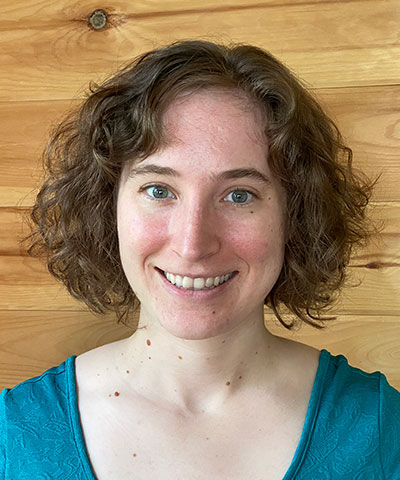
Professor Mary Moroney joined the Department of Linguistics in January 2022. She earned her PhD from Cornell University in 2021, specializing in nominal structure and interpretation through fieldwork on Shan, an understudied Kra-Dai language. Her research explores semantics, syntax, definiteness, quantification, and comparative structures through linguistic fieldwork in Southeast Asia. Recent publications focus on comparative structures in Shan language, classifier systems, and typological studies of definiteness. Her work consistently demonstrates innovative approaches to documenting understudied languages and contributes significantly to theoretical linguistics.
Rajesh Bhatt is a Professor and Graduate Program Director in the Department of Linguistics at the University of Massachusetts Amherst. He holds a PhD from the University of Pennsylvania (1999). His research focuses on the syntax-semantics interface, comparative syntax of Modern Indo-Aryan languages, and Tree Adjoining Grammars. He previously taught at the University of Texas at Austin and has contributed to the NSF-funded Hindi/Urdu Treebanks project. Education: PhD in Linguistics, University of Pennsylvania, 1999 Research Interests: Interaction of aspect and modality Comparative syntax, including long-distance agreement and correlative constructions Computational linguistics, particularly treebank development and multi-layered annotation Teaching & Contributions: Developed courses on syntax, formal methods, and computational linguistics Collaborated on the Hindi/Urdu Treebanks project Organized workshops on comparative syntax and computational linguistics
María Biezma is an Associate Professor in the Department of Linguistics at UMass Amherst. Her research examines how meaning is constructed through interactions of syntax, semantics, and pragmatic context. Current work investigates anchoring phenomena where syntactic structures condition pragmatic inferences. Her dissertation 'Anchoring Pragmatics in Syntax and Semantics' established frameworks for analyzing discourse particles and alternative questions. Ongoing projects explore formal representations of focus, presupposition, and information structure across languages. Prior to UMass, she held an assistant professorship at the University of Konstanz (2014-2019) where she maintains research collaborations.
Michael McCourt serves as a Visiting Assistant Professor of Honors at the University Honors Program (UHP). He joined UHP in Spring 2024 and teaches courses such as the first-year seminar Origins and Evolution of Modern Thought . In Spring 2025, he will introduce an upper-level course in Arts and Humanities for Honors students. His affiliation is explicitly with UHP, though the overarching university is not named in the text. Education: BA in Philosophy and English, University of Massachusetts, Amherst MA in Philosophy, Northern Illinois University PhD in Philosophy, University of Maryland, College Park Research interests span the individuation of word meaning, language’s relationship with thought, psycholinguistic investigations of speech/text processing, and historical philosophical ideas about language and mind. His work integrates empirical methods (e.g., reading-time experiments) with theoretical frameworks in philosophy and linguistics, particularly focusing on Greek and Roman philosophy. Publications reflect interdisciplinary inquiry: recent work explores semantic internalism and anaphoric expressions, while earlier studies address structural processing mechanisms in language. The 2024 article (forthcoming) bridges philosophical and psycholinguistic perspectives, while the 2020 and 2015 articles emphasize experimental analyses of syntactic and semantic phenomena. Advising and grants: No specific advisees or grant details are provided in the text. His research includes projects on historical ideas about language and mind, though funding sources are unmentioned.
Letitia Naigles is a Professor in the Department of Psychological Sciences at the University of Connecticut. She serves as Vice President of the International Association for the Study of Child Language and leads the UConn Child Language Lab. Her research focuses on language acquisition across diverse populations, including typically developing children and those with autism spectrum disorders. She examines how linguistic input interacts with innate cognitive, neurological, and social factors to shape language development. Naigles holds a Ph.D. in Psychology from the University of Pennsylvania (1988). Her work spans theoretical and applied domains, addressing cross-linguistic variations in language acquisition and neurobiological underpinnings of developmental language disorders. She has held visiting appointments at the MIND Institute and Koç University, Turkey. Her awards include Fellow status in the Association for Psychological Science (2009). She has secured research funding from NIH, NSF, and other agencies, focusing on topics such as grammatical impairment in autism and longitudinal language profiles in developmental disorders. Her teaching includes courses on developmental psychology, language acquisition, and the neurobiology of language. Naigles’ research group, the UConn K.I.D.S. (Kids in Developmental Science), collaborates internationally to explore language mechanisms in diverse populations. Her publications bridge cognitive science, linguistics, and clinical applications, advancing understanding of both typical and atypical language development.
Antje Muntendam is an Associate Professor of Linguistics and Spanish at Florida State University (FSU), affiliated with the Modern Languages and Linguistics department. She holds a M.A. from Leiden University and a Ph.D. from the University of Illinois at Urbana-Champaign. Her roles include serving as Coordinator and Adviser of Linguistics at FSU, Affiliate Faculty at the Native American and Indigenous Studies Center, and Affiliated Member of the Heritage Linguistics Lab at Leiden University. Her research focuses on bilingualism, language contact, and prosody, with particular emphasis on Quechua-Spanish and Turkish-Dutch bilingual communities. She investigates cross-linguistic influence, code-switching, and intonation patterns in Andean and European contexts. Muntendam is co-founder of the international conference on Bilingualism in the Hispanic and Lusophone World (BHL). She currently leads a National Science Foundation-funded project (2024-2027) on Quechua and Spanish intonation in Andean language contact. Muntendam teaches courses such as Bilingualism in the Spanish-Speaking World , Psycholinguistics of Bilingualism , and Spanish Phonetics . Her work bridges syntax, sociolinguistics, and psycholinguistics, addressing topics like clitic placement, focus marking, and heritage language acquisition. Her publications span journals like Linguistic Approaches to Bilingualism and Bilingualism: Language and Cognition . Her academic contributions include co-editing volumes on Quechua stance and deixis and co-authoring studies on prosodic transfer and syntactic interfaces in bilingual contexts. She actively engages in interdisciplinary research, integrating experimental methods (e.g., eye-tracking) and comparative analyses of multilingual speech.
Zhiying Qian is an Assistant Professor in the Department of Modern Languages and Linguistics at Florida State University (FSU). She holds a Ph.D. in East Asian Languages and Cultures with a certificate in Second Language Acquisition and Teacher Education from the University of Illinois at Urbana-Champaign (2015). Her research focuses on psycholinguistics, second language acquisition, and language program management, employing neuroscientific methods like EEG and eye-tracking to study cognitive processes in language comprehension. She leads the Chinese Language Teachers Association’s Research Special Interest Group, fostering collaboration among over 200 researchers in Chinese language education. **Education**: - Ph.D. in East Asian Languages and Cultures (UIUC, 2015) - Certificate in Second Language Acquisition and Teacher Education (UIUC, 2015) - Advanced Japanese studies at the Inter-University Center for Japanese Language Studies (Yokohama, Japan) **Research Interests**: - Applied linguistics and neurolinguistics - Sentence processing and classifier systems in Chinese/Japanese/English - Second language acquisition mechanisms - Technology-enhanced language pedagogy - Blended learning and teacher training **Grants and Funding**: - Seed Grant ($100k, FSU, 2024–2026) - Collaboration with Dr. Zilong Xie on neural tracking of linguistic units - Multiple institutional grants (e.g., $20k First-Year Assistant Professor Grant, 2019) **Lab & Outreach**: Directs the Language Processing and Eye-Tracking Lab, offering research opportunities in cognitive linguistics and second language acquisition. She serves as Review Editor for the Journal of Chinese as a Second Language (2024–2027) and actively promotes collaborative research through her SIG leadership.
José A. Camacho is a Professor and Director of the School of Literatures, Cultural Studies and Linguistics at the University of Illinois at Chicago. His research focuses on syntax, bilingualism, and language contact phenomena, with particular attention to Spanish and indigenous languages like Shipibo. He has authored influential textbooks such as Introducción a la sintaxis del español (2018) and edited volumes like Exploring Interfaces (2019). His work bridges formal syntax with sociolinguistic concerns, examining heritage speaker grammars, null subject parameters, and morphosyntactic variation. Notable projects include studies on gender agreement in Shipibo-Spanish contact zones and adverb placement in heritage Spanish. Camacho has collaborated extensively with researchers on indigenous language maintenance in urban settings, as seen in Linguistic attitudes towards Shipibo in Cantagallo (2018). Publications span over three decades, with key contributions to syntactic theory (e.g., revisiting the null subject parameter) and bilingualism studies. His recent work explores paradigmatic uniformity in heritage grammars and the Big DP hypothesis in contact languages. Camacho serves as an editorial board member for major linguistics journals and has organized international workshops on bilingual morphology.
Luis López is a Professor of Spanish Linguistics and Director of Graduate Studies at the University of Illinois at Chicago (UIC). He holds a PhD in Linguistics from Cornell University (1995) and has been affiliated with UIC since 1999. His research focuses on pragmatics, syntax, morphology, and bilingualism, with notable work on code-switching and the integration of bilingual grammars. He directed the Bilingualism Research Laboratory at UIC for many years and has contributed to the Cambridge Handbook of Distributed Morphology. His recent work bridges law and linguistics, examining perjury semantics and legal discourse. Education: PhD in Linguistics, Cornell University (1995); BA in Filología, Universitat de Barcelona (1988). Research highlights include studies on metaphor theory, minimal assertions, and the conceptual structure of perjury. He serves on editorial boards for journals like Current Issues in Multilingualism and ISOGLOSS. Notable awards include the Alexander von Humboldt Fellowship (2016) and a Fulbright Award (2012–2013). López has advised numerous students and collaborated on projects exploring code-switching syntax, adjective placement, and second language acquisition. His work emphasizes the importance of bilingual data in linguistic theory and the application of formal syntax to contact phenomena.
Anthony Yacovone is a Post-doctoral Research Fellow with a joint appointment at Tufts University's Department of Psychology and Massachusetts General Hospital. He is affiliated with the NeuroCognition of Language Laboratory under the guidance of Gina Kuperberg. His research focuses on linguistic prediction, cognitive neuroscience, and computational modeling of inference, alongside investigations into syntactic processing and real-world knowledge interactions. He will assume a role as Assistant Professor in Boston University's Department of Linguistics starting July 2025. Education includes a PhD in Psychology from Harvard University (2023), where he worked with Jesse Snedeker on language acquisition and sentence processing, and a BA in Psycholinguistics from University of Massachusetts Amherst (2016), collaborating with Brian Dillon and Lyn Frazier on syntactic processing research. Key research interests span psycholinguistics, neurolinguistics, and child language acquisition. His work integrates EEG, eye-tracking, and computational methods to explore topics like form-based prediction in natural contexts, developmental shifts in lexical vs. plausibility-based processing, and code-switching effects in multilingual discourse. Publications highlight methodological innovations (e.g., web-based eye-tracking comparisons) and theoretical contributions to understanding linguistic prediction mechanisms. Current research emphasizes bridging computational models with neurophysiological evidence in language processing. No formal grants or awards are listed in the provided information. His academic trajectory includes advising roles yet to be detailed in the text.
Dr. Esra Predolac is a Lecturer and Language Coordinator for Turkish at the University of Kansas, where she also serves as Assistant Director of the Center for Russian, East European, and Eurasian Studies (CREES). She holds a Ph.D. in Linguistics from Cornell University (2017). Her research focuses on syntax and its interfaces, including clausal complements, nominalizations, embedded root phenomena, extraposition, and second language acquisition, with a particular emphasis on Turkish grammar. She teaches Turkish language courses at various levels and contributes to academic publications in formal linguistics. Her research explores syntactic structures in Turkish, such as clausal complements and nominalizations, analyzing their interactions with semantics and syntax. She investigates phenomena like embedded root constructions and ki-clauses to uncover deeper theoretical insights into Turkish syntax. Her work bridges formal linguistic theory and practical applications in language acquisition. Dr. Predolac has published studies on Turkish syntax, including analyses of clausal structures presented at workshops like the Workshop on Altaic Formal Linguistics and the Northeast Linguistics Society. She actively participates in academic editing, co-editing conference proceedings such as Formal Approaches to Slavic Linguistics 18 (2011). No scientific awards or grants are listed in the provided information. She coordinates Turkish language programs and supports CREES initiatives, though no specific lab or team affiliations are mentioned.
Shinichiro Fukuda is an Associate Professor in the Department of Linguistics at the University of Hawaiʻi at Mānoa, affiliated with the College of Arts, Languages & Letters. His research focuses on theoretical and experimental syntax, lexical semantics, syntax-semantics interface phenomena, and their acquisition across speaker populations, with particular attention to East Asian languages. He serves as a series editor for Endangered and Lesser-Studied Languages and Dialects and an associate editor for Language and Linguistics . Additionally, he coordinates the EATS Lab, a virtual research initiative at UHM exploring syntactic theory and methodology through experimental approaches. Roles: Series Editor, Associate Editor, Lab Coordinator Labs: EATS Lab (Experimental Approaches to Theoretical Syntax) His work bridges formal syntax, semantics, and applied linguistics, emphasizing cross-linguistic analysis and empirical methods. Research priorities include language preservation efforts for endangered East Asian varieties and syntactic development in diverse linguistic populations.
Kara Hawthorne is an Associate Professor in the Department of Hearing, Speech, and Language Sciences at Gallaudet University's Human Services and Sciences school. Her work focuses on prosody-syntactic interactions, speech perception in cochlear implant users, and language processing in neurodiverse populations. She teaches graduate courses including Research Methodology, Speech Science, and Dissertation Seminars. Research interests include prosody's role in syntax acquisition, clinical practices for speech-language pathologists, and linguistic challenges faced by individuals with intellectual and developmental disabilities. Her grants include studies on cochlear implant outcomes, early intervention strategies, and accent adaptation in speech perception. Hawthorne has advised 11 doctoral students and serves on committees for Gallaudet’s PhD program and institutional review boards. She has published over 20 peer-reviewed articles, with recent work exploring prosody meta-analyses and intervention methods for children with language delays. Current research emphasizes clinical applications of prosody research and accessibility in communication technologies.
Ryan Lepic is an Assistant Professor of Linguistics at Gallaudet University, specializing in the structure of American Sign Language (ASL) and usage-based approaches to linguistic analysis. He holds a PhD from the University of California, San Diego (2015), and focuses on topics such as construction grammar, sign language typology, and the relationship between form and meaning in signed languages. His research emphasizes empirical descriptions of ASL, challenging outdated frameworks and advocating for cross-linguistically transparent terminology. Teaching includes courses like LIN-732 Cognitive Linguistics II, LIN-263 Introduction to ASL Structure, and PST-361 Introduction to ASL. His work frequently intersects with corpus linguistics and empirical data collection, as seen in projects analyzing initialized signs, compounds, and idioms in ASL. Collaborations include work with researchers like Corrine Occhino and Julie Hochgesang on topics ranging from corpus development to theoretical debates over 'lexicalization' in sign languages. Publications span cognitive linguistics, sign language syntax, and multimodal compositionality, with recent attention to idioms as affective constructions and the role of frequency in linguistic knowledge. His research often highlights ASL's unique status as a young language in contact with spoken languages, providing insights into language change and variation.
Paloma Jeretic is an Assistant Professor at the University of Pennsylvania’s School of Arts & Sciences. She previously held a postdoctoral position at the Leibniz-Zentrum Allgemeine Sprachwissenschaft (ZAS) in Berlin as part of the LeibnizDream project. She earned her Ph.D. in Linguistics from New York University in 2021, focusing on neg-raising modals and scaleless implicatures. Her research spans semantics, pragmatics, and syntax, with a focus on cross-linguistic studies of negation, modality, and implicature. She conducts fieldwork on languages such as Ecuadorian Siona, Turkish, French, and Spanish, and utilizes experimental, computational, and corpus-based methods in her work. Education Ph.D., Linguistics, New York University, 2021 Research Interests Dr. Jeretic’s work explores semantics and pragmatics, with a focus on negation, modality, and their interfaces with syntax. Key topics include implicature, negative concord, polarity, and the semantics of differential objects. She also investigates how large language models process natural language structure and meaning. Methodologically, her research combines theoretical analysis, fieldwork, typological comparison, and experimental approaches. Awards & Grants While no specific awards are listed, her extensive publication record reflects sustained recognition in linguistic research. Labs & Collaborations Her collaborative projects include work with institutions like ZAS Berlin and co-authors globally, focusing on language universals and typological diversity in semantics and syntax.