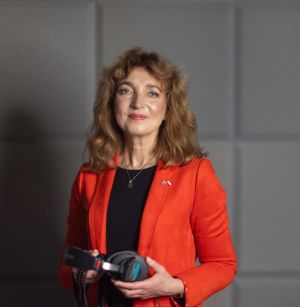
Prof. Dr. hab. Anna Bondaruk is a full Professor at the Department of Theoretical Linguistics , Institute of Linguistics , and Faculty of Humanities at John Paul II Catholic University of Lublin. She has served as Head of Department since 2019 and previously held that role from 2008-2019. Her research focuses on theoretical linguistics, specializing in Polish and Irish syntax, copular clauses, control theory, and case marking within the Minimalist Program. Linguistic Expertise : Syntactic Structures (Polish, Irish, Old English) Psych Verbs and Experiencer Constructions Passive Voice Typology Minimalist Program Applications Polish-Specific Theoretical Frameworks Recent Research Trends include studies on dative possessors, unaccusative verbs, and the syntax of experiential predicates. Her 2024 work explores possessive constructions involving 'lack'-type verbs, while 2023 publications analyze existential uses of Polish verbs and comparative syntax. Scientific Recognition : Inner Reward (Nagroda Rektora KUL) for top publication (2024) Erasmus+ Scholar (multiple awards 2001-2024) Medal za Długoletnią Służbę (2020) Nagroda Premiera Rady Ministrów RP (2006) Editorial Board Member for journals like Poznań Studies in Contemporary Linguistics
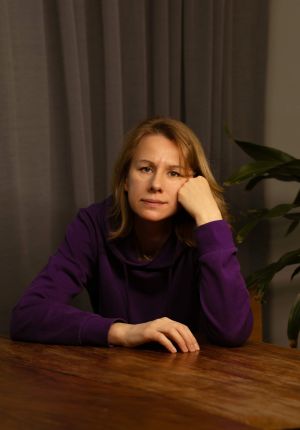
Hanna Kędzierska serves as an Assistant Professor in the Department of English and Comparative Linguistics at the University of Wrocław, where she is affiliated with the Center for Experimental Research in Natural Language. Her academic trajectory includes doctoral research on foreign-accented speech processing using ERP techniques and postdoctoral work at Adam Mickiewicz University in Poznań. Her research program centers on psycholinguistic and neurolinguistic mechanisms in multilingual contexts, with specific expertise in foreign-accented speech perception, idiom processing, and phonemic contrast discrimination. She employs ERP and eye-tracking methodologies to investigate neural correlates of language processing across L1, L2, and L3 speakers. Current work examines how foreign pronunciation influences error detection in idiomatic expressions through her National Science Centre-funded Miniatura grant. Analysis of her 15 most recent publications reveals a consistent focus on multilingual speech processing using electrophysiological methods. Key trends include the neural basis of L2/L3 accent perception (2025), cross-linguistic vowel processing (2023), and idiom comprehension mechanisms (2018-2020). Her work bridges theoretical linguistics with experimental cognitive science, particularly in Slavic language contexts. Miniatura grant from National Science Centre (2024): 'The influence of foreign pronunciation on the processing of errors in idioms: a psycholinguistic study' Dr. Kędzierska has secured competitive research funding while contributing to corpus development (DiaBiz.Kom dialogue act project) and historical linguistics (Polish indefinite article grammaticalization). Her experimental work consistently employs rigorous psycholinguistic paradigms including timed cloze tasks and ERP measurements. She collaborates extensively with researchers like Magdalena Wrembel and Krzysztof Hwaszcz across multiple publications.
Magdalena Wrembel is a Professor at the Faculty of English, Adam Mickiewicz University in Poznań (UAM), where she has held positions since 1996—progressing from Assistant Lecturer to full Professor (2017–present). She serves as Head of Bilingualism Matters@Poznań and Principal Investigator for major grants including CLIMAD (OPUS-19-HS) and ADIM (GRIEG-1 NCN/Norway Grants). Her educational background includes an MA in English (1993), Ph.D. in English (2005), and D.Litt. in Linguistics (2016), all from Poznań. Her research explores multilingual phonological acquisition, psycholinguistics, and pedagogy, with emphases on: Cross-linguistic influence in L2/L3 phonology Neurocognitive processing of speech sounds (ERP studies) Bilingual/metalinguistic awareness development Innovative pronunciation teaching methods Her publications focus on multilingual speech perception/production, corpus linguistics, and theoretical modeling (e.g., Natural Growth Theory). Recent work employs neurophysiological methods to study vowel categorization and phonological transfer across Polish-English-Norwegian multilinguals. Awards & Honors: 6× AMU Rector's Prizes for research achievements (e.g., 2013, 2016) 7× AMU Rector's Prizes for organizational/didactic work (2009–2019) Minister of Science Team Award (2015) WR Lee IATEFL Scholarship (2009) Obermann Fellowship (2010) Leadership: Former President of Societas Linguistica Europaea (2020–2023); organizer of 15+ international conferences (e.g., EuroSLA, ICPhS workshops); editorial board member for Linguistic Approaches to Bilingualism ; PhD thesis examiner at Rutgers, Barcelona, and Münster. Grants: Leads CLIMAD (2021–2024, OPUS-19-HS) on cross-domain multilingualism; co-leads ADIM (2021–2024, GRIEG) with Norwegian partners on L3 acquisition modeling; previously directed projects on bilingual phonology (NPRH) and sound-color associations.
Dr. Joanna Śmiecińska is a Senior Lecturer at the Faculty of English, Adam Mickiewicz University, Poznań, Poland. Her academic career spans over two decades, with affiliations including research collaborations and visiting positions at institutions such as Eastern Michigan University and the University of Vienna. Education: MA in English (Poznań 1999), Ph.D. in English linguistics (Poznań 2003) Her research focuses on the syntax-phonology interface , evolution and neurobiology of language , and prosody , with particular interest in Polish-English contrastive grammar and bilingual speech processing. She has contributed to understanding prosodic development across age groups and prosody's interaction with non-verbal cognition. Publications highlight her work in: Prosody and syntax interactions Stative verbs' aspectual behavior Wh-scope marking mechanisms Bilingual cognitive control Children's prosodic perception Stroop effect in bilinguals Her conference presentations span prestigious venues like the Poznań Linguistic Meeting and Societas Linguistica Europaea annual meetings. Scientific awards and positions include University of Wales scholarship (1999) Visiting lecturer at Eastern Michigan University (2001-2002) Visiting lecturer at University of Vienna (2004-2006)
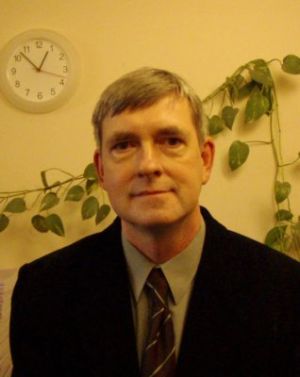
Przemysław Tajsner is a Professor at the Faculty of English, Adam Mickiewicz University in Poznań, Poland. He holds a D.Litt. in English linguistics and has been a long-standing member of the academic staff, contributing significantly to research and administration within the School of English. His contact information includes an office in Collegium Heliodori, room 342, and the email tprzemek@amu.edu.pl. M.A. in English, Adam Mickiewicz University, Poznań, 1982 Ph.D. in English, Adam Mickiewicz University, Poznań, 1990 D.Litt. in English Linguistics, Adam Mickiewicz University, Poznań, 1998 His primary research interests lie in generative syntax and its interfaces, with a strong focus on cross-linguistic analysis and the interplay between syntax and phonology. He also investigates functional syntax and pragmatic aspects of language, contributing to theoretical debates in formal linguistics. His work often engages with foundational questions in linguistic methodology, as evidenced by his plenary talk on the validity of armchair linguistics. Although no publications are listed in the provided text, his conference participation and editorial roles suggest sustained scholarly output in theoretical and contrastive linguistics, particularly within generative frameworks. His involvement in international meetings indicates a broad academic network and influence in European and global linguistics communities. He has held key administrative roles, including Deputy Head of the School of English (2008–2012) and Head of the Ph.D. Programme (2004–2012), demonstrating leadership in academic governance and graduate education. He served as the Socrates Programme Co-ordinator for the Faculty of Modern Languages and Literature between 1998 and 2000, facilitating international academic exchange. Przemysław Tajsner has been a visiting lecturer at Michigan State University (1992–1993) and the University of Vienna (1997–1998), and has delivered guest lectures and conference papers across Europe and North America. He has participated in major linguistics conferences such as the Poznań Linguistic Meeting, GLOW in Asia, and the Annual Meeting of the Societas Linguistica Europaea, where he also convened sessions. He is a member of the editorial board of Poznan Studies in Contemporary Linguistics and previously served as Editorial Assistant for Papers and Studies in Contrastive Linguistics .
Marcin Krygier is an Associate Professor at Faculty of English, Adam Mickiewicz University , specializing in Historical Linguistics with focus on Old and Middle English phonology, morphology, and language contact. His career spans extensive research on Germanic language systems and medieval English texts.
Aveen Mohammed Hasan is an Assistant Professor in the Department of English Language at the Iraqi College of Humanities, University of Zakho. She holds a PhD in Linguistics from Ulster University (2012) and has been actively involved in academic leadership roles, including serving as Head of Department and Head Assistant. Her research focuses on Kurdish linguistics, with specializations in phonetics, phonology, and sociolinguistics. Education: Doctor of Philosophy (2012), Master of Arts (2005), Bachelor of Arts (2001) in English Language from University of Duhok. Professional experience includes roles as Assistant Professor (2018–present), Lecturer (2013–2018), and Assistant Lecturer (2005–2013). She has conducted training programs on TESOL methodology, higher education leadership, and ELT pedagogy. Research interests include Kurdish intonation patterns, phonological processes (e.g., glide insertion, stress shifts), loanword variation, and language acquisition in Kurdish-speaking children. She has organized academic workshops and serves on editorial committees for journals like Humanities Journal of University of Zakho and Journal of Comparative Studies. Recent work includes developing articulation tests for Kurdish children, analyzing e-learning challenges during the pandemic, and studying loanword usage in Kurdish dialects. Her contributions to phonetics and sociolinguistics have been presented at international conferences, including the International Conference on Kurdish Linguistics and the University of Daugavpils’ Human: Language, Society, Culture conference.
Dr. Sławomir Zdziebko serves as an Assistant Professor in the Department of English-Polish Comparative Linguistics at the Institute of Linguistics, Faculty of Humanities, John Paul II Catholic University of Lublin, Poland. His academic career demonstrates consistent scholarly productivity with publications spanning from 2008 to 2023 across multiple international linguistics venues. His research profile encompasses: Theoretical phonology with emphasis on Polish palatalization processes Morpho-phonological interfaces in Slavic languages Scottish English phonetics and phonology Government Phonology and Element Theory frameworks Comparative Polish-English linguistic structures Syntax-semantics interface phenomena in Polish Dr. Zdziebko's scholarly output reveals an evolving research trajectory from early work on Scottish Vowel Length Rule (2009-2012) to increasingly sophisticated analyses of Polish morphophonological phenomena. His recent publications (2021-2023) demonstrate deep engagement with theoretical frameworks like Element Theory applied to Polish palatalization, while maintaining empirical grounding in Slavic linguistic data. His work consistently bridges formal linguistic theory with concrete analysis of Polish language structures. His academic service includes organizing the 'Young Linguists in Dialogue' conference series (2008, 2010, 2012) and presenting research at numerous international conferences across Europe including events in Leipzig, Jerusalem, Vienna, and Manchester. His publication record in journals like LINGUISTIC REVIEW, Studies in Polish Linguistics, and Acta Linguistica Academica reflects recognition within the theoretical linguistics community.
Dr. hab. Anna Bloch-Rozmej is an Assistant Professor at the Department of Applied Linguistics , Institute of Linguistics , within the Faculty of Humanities at the John Paul II Catholic University of Lublin . Her academic career spans theoretical and applied linguistics, with a focus on phonology, minority languages, and language acquisition. Research Interests: Theoretical phonology, contrastive phonology (Irish, English, Polish, German), minority languages (Vilamovian/Wilamowicean), second language acquisition, sociolinguistics. Teaching: English phonetics/phonology, TEFL, descriptive grammar, government phonology, sociolinguistics. Publications highlight her expertise in Government Phonology, Celtic linguistics, and Slavic phonological phenomena. Notable works include studies on Irish phonology (1998), Vilamovian sound systems (2015), and recent explorations of euphemisms (2023). Her research spans formal phonology, phonetic analysis, and educational applications. Administrative Roles: She has served as Head of Department since 2019, with prior terms from 2010–2014 and 2014–2019, indicating sustained leadership in academic governance.
Jolanta Klimek-Grądzka , Professor at the John Paul II Catholic University of Lublin , is a leading scholar in Historical Linguistics with a focus on Polish borderlands language and historical stylistics . Her work spans language corpora , religious texts , and digital humanities , particularly in archival research and historical editing . As Deputy Dean for Student Affairs at the Faculty of Humanities, she bridges academic administration with scholarly rigor. Research Pillars : Kyiv Polish dialects, Orthodox linguistic traditions, historical semantics, and sociolects. Editorial Role : Secretary of the editorial board for the journal Roczniki Humanistyczne . Academic Engagement : Regular office hours via MS Teams on Tuesdays and Fridays (12:00–13:00). Her publications emphasize 17th-century Polish , including analysis of aorist forms , interconfessional dialogues , and linguistic borrowings . She contributes to digital edition planning of historical texts like the Archiwum filomatów and Żołtarz Psalter . While no scientific awards are listed, her impact on Polish language heritage is profound through over 15 recent articles (2024–2009) that explore language contact zones , religious-political rhetoric , and Baroque stylistic varieties . Her work bridges manuscript studies with modern linguistic theory , making her a key figure in Polish historical language research .
Krzysztof Hwaszcz is a Postdoc (Adiunkt – stażysta podoktorski) at the Faculty of English, Adam Mickiewicz University (UAM), Poznań, Poland. He holds a Ph.D. in Linguistics with distinction from the University of Wrocław (2020), and has interdisciplinary training with degrees in English Philology and Mechanical Engineering. Education: B.A. in English Philology, Legnica, 2013 M.A. in English Philology, Wrocław, 2015 Eng. in Mechanical Engineering, Wrocław, 2016 Ph.D. in Linguistics (with distinction), Wrocław, 2020 His research centers on experimental and corpus-based linguistics, with a focus on the syntax-semantics interface, compound word processing, psycholinguistics, and second/third language acquisition. He investigates how syntactic and semantic components interact in language processing, particularly in Polish and bilingual contexts. His work combines cognitive experiments, priming studies, and corpus analysis to explore the mental lexicon and language representation. The recent publications reflect a strong trend in psycholinguistic experimentation, especially in the processing of compound words, semantic transparency, and hemispheric asymmetries in bilinguals. His work bridges theoretical syntax with cognitive science, using empirical data from reaction time and priming tasks. Topics include figurative language, indefinite articles in Slavic languages, and cerebral lateralization in L1/L2 processing. Scientific Grants and Projects: Principal Investigator, 2018–2019: 'Syntactic and semantic components of experimentally elicited compound blends in Polish' (FNP) Principal Investigator, 2016–2018: 'The numeral jeden as an indefinite article: A corpus-based study in Polish' (FNP) Principal Investigator, 2017–2018: 'The role of semantic transparency in the processing of Polish compound words' (FNP) Principal Investigator, 2016–2018: 'The representation and organization of the mental lexicon in the processing of Polish compound words' (FNP) Co-Investigator, 2022–2024: 'Across-Domain Investigations in Multilingualism (ADIM)', NCN GRIEG-1 (PI: Magdalena Wrembel) Co-Investigator, 2018–2019: 'Cerebral asymmetries in the processing of compounds in L1 and L2' (PI: Hanna Kędzierska) He has not advised any students listed in the provided text but has actively collaborated on research with scholars such as Hanna Kędzierska and Joanna Bożek. He has presented his work at numerous international conferences, including the University of Vienna (invited talk), ISMBS, and the European Conference on Formal Description of Slavic Languages. He is associated with research teams ADIM and CLIMAD, indicating ongoing collaborative projects in multilingualism and cognitive linguistics. Labs and Research Teams: He is affiliated with the ADIM (Across-Domain Investigations in Multilingualism) and CLIMAD research groups, which focus on experimental and corpus-based studies of multilingual cognition and language processing.
Bartosz Wiland is an Associate Professor at the Faculty of English, Adam Mickiewicz University in Poznań, Poland, where he is affiliated with the Department of English-Polish Comparative Linguistics. He is actively engaged in research and teaching in theoretical linguistics, with a specialization in comparative syntax and morphology of Slavic languages and nanosyntax. Education: B.A. in English Linguistics, Adam Mickiewicz University Poznań, 2003 M.A. in English Linguistics, Adam Mickiewicz University Poznań, 2005 Ph.D. in Linguistics (cum laude), Adam Mickiewicz University Poznań, 2009 Habilitation in Linguistics (cum laude), Adam Mickiewicz University Poznań, 2020 His research interests lie at the intersection of syntactic theory and morphological structure, particularly focusing on Slavic languages through the lens of nanosyntax. He investigates phenomena such as prefix stacking, remnant movement, complementizer syncretism, and the syntax-semantics interface, contributing to theoretical debates on lexicalization and functional hierarchy. His teaching portfolio includes graduate and undergraduate courses in generative linguistics, syntax, morphology, and academic writing. The recent publications reflect a sustained focus on nanosyntax and Slavic linguistic structures, with recurring themes including syntactic movement, morphological decomposition, and cross-linguistic comparison. His work frequently appears in top-tier journals and edited volumes, demonstrating consistent scholarly output and international recognition. Scientific Awards and Honors: Fulbright Junior Grant at MIT, 2007–2008 Władysław Kuraszkiewicz Scholarship, 2008–2009 Prime Minister's Award for Outstanding Ph.D. Dissertation, 2010 Start Stipend, Foundation for Polish Science, 2011 Fellow, Young Academy of Europe, elected 2015 Bartosz Wiland has supervised B.A. and M.A. students and welcomes prospective M.A. and Ph.D. candidates in syntax, morphology, and nanosyntax. He has served on the scientific advisory board of the Van Riemsdijk Foundation since 2022 and has organized major conferences such as the 41st Poznań Linguistic Meeting and the Workshop on Prefixes and Suffixes at the 21st International Congress of Linguists. He is also the organizer of several student and specialist workshops, reflecting strong academic leadership and mentorship. His research has been presented at leading international venues including NELS, WCCFL, FASL, and SLE.
Sylwiusz Żychliński is an Assistant Professor in the Faculty of English at Adam Mickiewicz University (AMU), Poznań, Poland. He is actively engaged in research and teaching in formal linguistics, with a focus on syntax and multilingualism. His institutional affiliation includes the Department of English Linguistics, where he contributes to both undergraduate and graduate education. Education: B.A. in English, Adam Mickiewicz University, Poznań, 2003 M.A. in English, Adam Mickiewicz University, Poznań, 2005 Ph.D. in English Linguistics, Adam Mickiewicz University, Poznań, 2013 His research interests center on syntactic theory, particularly gradient acceptability and comparative syntax between English and Polish. He applies experimental methods to investigate generative frameworks and multilingual language acquisition. His work increasingly explores cross-linguistic influence in phonology and syntax within trilingual settings. While no article titles are listed in the provided text, his research output is evident through numerous presentations at international conferences such as the Societas Linguistica Europaea, Poznań Linguistic Meeting, and specialized workshops on multilingualism and L3 acquisition. These contributions indicate a strong focus on empirical and theoretical syntax, with collaborative work on modeling multilingual competence. Scientific Awards: University Scholarship for Outstanding Research Results (2010–11) Sylwiusz Żychliński has been involved in significant research projects, including the NCN-funded CLIMAD (OPUS-19-HS) and ADIM (GRIEG) grants, where he serves as a co-investigator. These projects examine cross-linguistic influence in multilingualism across domains and model L3 acquisition in diverse settings in collaboration with institutions in Norway. He supervises or collaborates with researchers such as Anna Skałba, Magdalena Wrembel, and Kamil Kaźmierski. He also contributes to academic service as a member of the editorial board of Poznań Studies in Contemporary Linguistics and has co-organized events like the Workshop on the Syntax of Infinitives and Gerunds. He is active in several professional organizations, notably the Societas Linguistica Europaea (2012–2013; 2022–present), and has conducted research visits to institutions in Germany, the USA, and Norway. His teaching includes courses on contrastive grammar, generative syntax, and TEFL at the university level.