Max Planck Institute for Evolutionary AnthropologyGermany
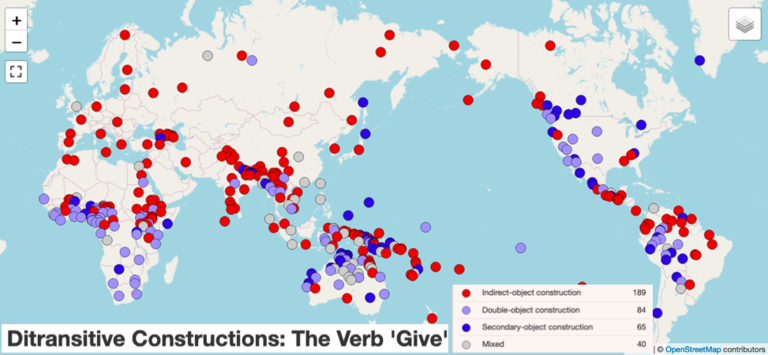
Martin Haspelmath is a Senior Research Scientist at the Department of Linguistic and Cultural Evolution at the Max Planck Institute for Evolutionary Anthropology (MPI-EVA), Leipzig, and an honorary (adjunct) professor at Leipzig University. His research focuses on comparative linguistics, language universals, and typology, particularly in syntactic and morphological systems. He co-edited the World Atlas of Language Structures (2005/2013) and co-founded Language Science Press . Education: PhD in Linguistics, Freie Universität Berlin (1990–1993) MA in Linguistics, University of Cologne and University at Buffalo (1985–1989) Undergraduate studies in Linguistics, University of Vienna (1983–1985) Research Interests: Haspelmath investigates global grammatical diversity, form-function correspondences, and universals in syntax, morphology, and lexical systems. His work emphasizes comparative concepts for cross-linguistic analysis and critiques traditional grammatical categories. Grants & Projects: ERC project leader at Leipzig University (2015–2020) Co-creator of Grambank , an open-access database of grammatical structures Leading initiatives for open-access publication and linguistic data sharing Labs/Teams: Active in the MPI's Department of Linguistic and Cultural Evolution, collaborating on projects like APICS (Atlas of Pidgin and Creole Language Structures) and ValPal (Valency Patterns Leipzig).
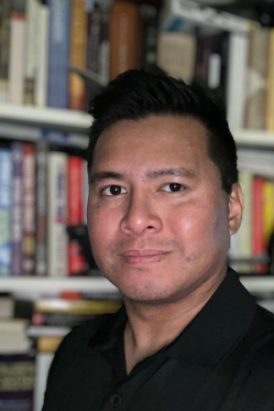
Jay Crisostomo is an Associate Professor and Director of Graduate Studies at the University of Michigan's Department of Ancient Near Eastern Civilization and Languages and Civilizations within the College of Literature, Science, and the Arts. He holds the George G. Cameron Professorship. His research focuses on the languages and intellectual histories of ancient Mesopotamian cuneiform cultures, with emphases on sociolinguistics, multilingualism, translation, and scribal practices. He earned a Ph.D. from the University of California, Berkeley in 2014. Teaching encompasses courses on ancient Middle Eastern history, languages, and cultures, including 'Science and Technology in the Ancient Middle East' and 'Madness, Medicine, and Magic in the Middle East.' He also teaches on sport history and language in the ancient Mediterranean. As Director of Graduate Studies, he supports MES program students, advising prospective PhD candidates in ancient Middle East history/Assyriology. Research highlights include his book Translation as Scholarship: Language, Writing, and Bilingual Education in Ancient Babylonia and ongoing projects on the 3,000-year history of Sumerian language use, Babylonian scholars, and Sumerian-Akkadian linguistic contact. Current efforts involve editing 150 lexical tablets in Germany's collections. His work bridges ancient textual analysis with broader themes in cultural transmission and knowledge systems. He collaborates on critical editions of cuneiform texts and maintains affiliations with international research networks. Contactable via cjcrisos@umich.edu, his office is located at 202 South Thayer Street, Ann Arbor.
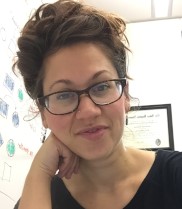
Lisa Lai-Shen Cheng is a Professor of General Linguistics at the Leiden University Centre for Linguistics, with a focus on comparative syntax and its interactions with semantics, prosody, and processing. She co-founded the Leiden Institute for Brain and Cognition (LIBC) and is a member of KNAW, Academia Europaea, and LSA Fellow. PhD in Linguistics from MIT (1991) Assistant/Associate Professor at UC Irvine (1991-2000) Her research explores language variation through comparative syntax , wh-questions , and interdisciplinary approaches involving the brain. Key projects include Ellipsis Licensing Beyond Syntax (NWO), Understanding Questions (NWO), and Advancing the European Multilingual Experience (FP7 EU). Her work spans Chinese , Bantu , and other languages, addressing phenomena like intervention effects and scope fixation . Her publications include studies on wh-in-situ in Chinese, French, and Bantu languages, emphasizing the role of interfaces and cognitive processes. Awards include membership in KNAW (2017), Academia Europaea, and LSA Fellow status. She has supervised over 20 PhD students and teaches syntax and syntax-semantics interface courses at Leiden University. Her affiliations include the Theoretical Linguistics and Experimental Linguistics groups.
Richard Futrell is an Associate Professor at the University of California, Irvine (UCI), affiliated with the Department of Language Science. He leads the Language Processing Group, focusing on computational models of human and machine language processing. His work bridges information theory, Bayesian cognitive modeling, and natural language processing (NLP) interpretability. University of California, Irvine Department of Language Science Language Processing Group leader His research examines how linguistic structures emerge from cognitive and communicative pressures. Key areas include dependency locality, surprisal theory in sentence processing, and efficiency-driven language evolution. He investigates how memory constraints, predictability, and information density shape syntactic and morphological patterns across languages. Recent publications analyze code-switching efficiency, syntactic priming, ERP component modeling, and agent-based language contact simulations. His work frequently employs Bayesian modeling, neural network analysis, and cross-linguistic corpora to uncover universal principles in language processing. ACL Best Paper Award (2024) Best Paper Award for Computational Modeling of Language (2023) Marr Prize for Best Student Paper (2017) He has developed datasets like SPACER for error repair analysis and contributed to phonotactic learning frameworks. His collaborations span cognitive scientists, computational linguists, and neuroscientists, advancing understanding of language production, comprehension, and structural optimization.
Viktória Dabóczi is a lecturer in the Department of German Studies at the University of Siegen, Faculty I. She holds a doctorate from the University of Siegen (2016) and has been actively involved in teaching and research in German linguistics since 2012. Her current academic role as AOR aZ (Akademische Oberrätin auf Zeit) began in June 2025, indicating a senior academic position. She teaches courses such as Introduction to German Linguistics, Grammatical Variation, and Language Acquisition. Research Interests: Her work focuses on word classes, spoken language, grammar theory, language acquisition, and lexical change in German, often with comparative insights from Hungarian. She investigates how words are conceptualized in speech and writing, the evolution of discourse markers, and grammatical variation in contemporary usage. The analysis of her recent publications (2005–2025) reveals a consistent focus on theoretical and applied German linguistics, with increasing attention to sociolinguistic phenomena such as pandemic-related neologisms and ideological word formations. Her research bridges empirical analysis, cognitive linguistics, and language teaching, often in interdisciplinary or contrastive frameworks. Reviewed works on German morphology and grammar Contributed to international projects like EuroGr@mm and ProGr@mm Participated in interdisciplinary conferences on ellipsis and language processing Advising and Grants: While no formal students are listed, her editorial and collaborative roles suggest mentorship and academic leadership. She has been involved in long-term research projects, including EuroGr@mm (2004–2012), indicating sustained grant-supported activity. Her current role at Siegen reflects ongoing institutional support for her research and teaching. Labs and Teams: She has collaborated with researchers at Justus Liebig University of Giessen, University of Szeged, and IDS-Mannheim. Her work with the Diskursmonitor research group and participation in interdisciplinary conferences highlight her integration into active research networks in German linguistics.
Orwin Martin is an Associate Professor of Somali Language and Literature at the University of Naples 'L'Orientale', Department of Asia, Africa and Mediterranean. He holds a First Class Honors degree in Arabic and Amharic from SOAS (1986) and a PhD in Somali Phonology (1994). Previously, he served as Senior Lecturer at SOAS (2008–2020) and held various administrative roles including Head of Department (2011–2014). His research focuses on Somali poetry's linguistic and aesthetic dimensions, including meter analysis, Arabic influences, and literary translation. He has published extensively on Somali poets like Hadraawi and Weedhsame, and collaborates with international institutions like the Poetry Translation Centre. Teaching spans Somali language at all levels, comparative literature, and translation studies. He has organized conferences, including the 2018 Somali Studies Congress in Hargeysa, and contributed to academic roles such as editorial boards for African Languages and Cultures and the Journal of Somali Studies. Awards include a certificate from Hargeisa Youth Development Association for outreach work.
Nigel Fabb is a Visiting Professor of Literary Linguistics at the University of Strathclyde, set to become Emeritus Professor in September 2024. He holds a BA from the University of Cambridge (1980) and a PhD in Linguistics from MIT (1984), supervised by Noam Chomsky. His research focuses on the intersection of linguistics and literary form, with notable works analyzing meter, rhyme, and cognitive responses to literature. Fabb has authored influential books like A Theory of Thrills, Sublime and Epiphany in Literature (2022) and What is Poetry (2015), and edited volumes including Rhyme and Rhyming in Verbal Art (2022). He has held prestigious fellowships, including the Leverhulme Major Research Fellowship (2014–2017), and served as editor of the Journal of Linguistics (1997–2014). His current projects include co-authoring a book on songs and linguistics with Myfany Turpin. Fabb’s research interests span metrical theory, cognitive approaches to literary experiences, and linguistic universals in poetry. He has explored topics such as the psychological basis of thrills in literature, the role of working memory in poetic form, and cross-linguistic verse structures. His work bridges linguistics, literature, and cognitive science, with interdisciplinary contributions to palaeography, cultural studies, and economics. Fabb has been actively involved in academic leadership roles, including Head of Department (2002–2005), Acting Dean (2010), and Vice-Dean for Research (2010–2013). He remains an editor of the Literary Universals Project and has delivered keynote lectures globally. His Erdös-Bacon number of 8 reflects his unique interdisciplinary reach, combining academic collaboration with a connection to theater through Russell T Davies.
Richard Treadwell Hallock (1906–1980) was a distinguished Elamitologist and Assyriologist affiliated with the University of Chicago’s Department of Oriental Languages. He served as associate professor (1963–1970) and later professor (1970–1971), retiring as professor emeritus. His career included foundational work on the Persepolis Fortification Tablets, revolutionizing understanding of Achaemenid Persian administration and languages. Hallock earned a B.A. at the University of Toronto (1929), an M.A. (1931), and Ph.D. (1934) from the University of Chicago under Edward Chiera. His research spanned cuneiform studies, Elamite grammar, and Assyrian lexicography. Hallock’s major contributions include editing the Assyrian Dictionary project and publishing Persepolis Fortification Tablets (1969), which established a comprehensive corpus of Achaemenid administrative records. His work clarified Elamite syntax, Iranian onomastics, and imperial bureaucratic systems. He was honored as a Corresponding Fellow of the British Academy (1972) for his transformative contributions. During WWII, Hallock served in military intelligence, later resuming academic work at the Oriental Institute. His publications addressed cuneiform scripts, grammatical analyses, and historical reconstructions, shaping Achaemenid studies through meticulous textual analysis and interdisciplinary approaches.
Jennifer Culbertson is an Associate Professor at the University of Edinburgh, where she has been a faculty member since 2014 when she took up a Chancellor's Fellowship, later being promoted to Reader (equivalent to Associate Professor) in 2018. She is a founding member of the Centre for Language Evolution at Edinburgh and maintains an active research program in experimental linguistics and cognitive science. Dr. Culbertson obtained her PhD in Cognitive Science from Johns Hopkins University in 2010, with her dissertation receiving the Robert J. Glushko Prize for Outstanding Dissertations in Cognitive Science in 2011. Her primary research investigates how languages are shaped by learning and use, with particular focus on grammatical structures (like word order) and morphological categories (gender and person systems). She employs experimental and computational methods to explore how typological universals arise from properties of the human cognitive system. Her work bridges theoretical linguistics, cognitive science, and language evolution, examining the cognitive constraints that influence linguistic patterns across diverse languages and learning contexts. She frequently uses artificial language learning paradigms to isolate specific cognitive mechanisms underlying language structure. Analysis of her recent publications reveals a consistent focus on cognitive biases in linguistic structure, particularly in word order and morphological systems. Her research increasingly incorporates cross-population studies (including work with autistic learners) and developmental perspectives to understand how language patterns emerge across different populations and throughout the lifespan. She examines how simplicity principles, communicative efficiency, and statistical learning shape linguistic structure. Dr. Culbertson's scientific contributions have been recognized with several prestigious awards: Robert J. Glushko Prize for Outstanding Dissertations in Cognitive Science (2011) ERC Starting Grant Young Academy of Europe membership (2019) Her research has been supported by over €2 million in funding from the ESRC and ERC. While specific advisees aren't mentioned in the provided text, her active publication record with numerous co-authors suggests she mentors graduate students and early-career researchers. Her work has significant implications for understanding language universals, language acquisition, and the cognitive foundations of linguistic structure. As a founding member of the Centre for Language Evolution at Edinburgh, Dr. Culbertson collaborates with an interdisciplinary team investigating the biological, cognitive, and cultural foundations of human language. Her research often intersects with psychology, cognitive science, and computational linguistics, contributing to a comprehensive understanding of language as both a cognitive and social phenomenon.
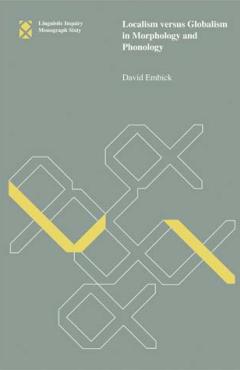
David Embick is a Professor in the Department of Linguistics at the University of Pennsylvania's School of Arts & Sciences. He received his Ph.D. from the University of Pennsylvania in 1997 and has established himself as a leading scholar in theoretical and experimental linguistics. Ph.D., University of Pennsylvania, 1997 Professor Embick's research spans both theoretical and experimental linguistics, with a focus on syntactic theory, morphological theory (particularly Distributed Morphology), and the syntax/morphology interface. His work explores syntax and phonological form, argument structure, lexical knowledge, and language processing in the brain. He has developed significant research in language and autism using MEG neuroimaging techniques. His theoretical contributions include the Localist approach to morphology and phonology, which contrasts with Globalist theories like Optimality Theory. His recent publications reveal a strong trend toward integrating theoretical linguistics with experimental psycholinguistics, particularly in morphological processing and spoken word recognition. Embick's work bridges theoretical syntax and morphology with cognitive neuroscience, examining how linguistic structures are represented and processed in the brain. His research on autism spectrum disorders has produced important insights into auditory processing differences in this population. Professor Embick leads the XMorph (Experimental Morphology) Lab at Penn, which investigates lexical and morphological representation and processing. The lab works closely with Meredith Tamminga's Language Variation and Cognition Lab and collaborates with Tim Roberts at the Children's Hospital of Philadelphia on autism spectrum disorder research. His lab has produced significant work on morphological priming, semantic transparency effects, and the representation of inflectional morphology in the mental lexicon. Embick has advised several doctoral students including Ava Creemers (2020), Robert J. Wilder (2018), and Amy Goodwin Davies (2018), whose dissertation topics focused on morphological processing, speech perception, and lexical representation respectively. His collaborative research spans multiple institutions and disciplines, connecting theoretical linguistics with cognitive neuroscience and clinical applications.
Tanja Ackermann is a Professor of German Linguistics with a focus on Variation and Change at Bielefeld University , holding the position since 2023. She serves as project leader in two subprojects of the Collaborative Research Center 1646: Linguistic Creativity in Communication (projects A06 and B03), and as a member of BiSEd (Bielefeld School of Education). Her academic affiliations include the Faculty of Linguistics and Literary Studies and its Habilitation Committee . Doctorate in Linguistics (2017) Habilitation, Venia legendi in German Linguistics (2023) Prior academic roles: Acting Professor at University of Mainz (2020–2022), Research Associate at Freie Universität Berlin (2011–2023), and short-term lectureship at Peking University (2017). Research interests span diachronic and synchronic analysis of language variation (areal/sociolinguistic), language change (functional/contrastive), historical grammar (morphology/morphosyntax), and pragmatics (speech acts, address forms, (im)politeness, expressivity). She specializes in onomastics (name grammar, sociopragmatic aspects, phonology) and interactive linguistic creativity (interrogative forms, indirect meaning). Publications reflect trends in Germanic morphosyntax, historical pragmatics, and onomastic variation. Key themes include inflectional erosion , possessive markers , and gendered phonological patterns in proper names. Scientific Recognition Awarded Wilhelm von Humboldt Prize by the DGfS in 2019 Affiliation Highlights Project leader for SFB 1646 (linguistic creativity in communication) Previous involvement in SRC 980 'Episteme in Motion' (subproject C08, 2016–2020)
Massachusetts Institute of TechnologyUnited States
Suzanne Flynn is a Professor of Foreign Languages and Linguistics at the Massachusetts Institute of Technology (MIT), affiliated with the Department of Linguistics and Philosophy. Her research focuses on Second Language Acquisition (SLA), Syntax, Semantics, and the intersection of Universal Grammar with language learning mechanisms. She has contributed significantly to theories such as the Cumulative-Enhancement Model for multilingualism and the Parameter-Setting Model in SLA. Education: Not explicitly mentioned, but her academic roles and publications suggest advanced degrees in Linguistics. Affiliations: MIT Linguistics and Philosophy Department, involvement in academic societies and conferences. Her work explores syntactic and semantic factors in SLA, including free relative clauses, third language acquisition, and the role of cognitive constraints in language learning. Key contributions include co-editing volumes on SLA theories and co-authoring foundational texts like Theoretical Second Language Acquisition (2006). She has also published extensively in journals such as Behavior and Brain Sciences and International Journal of Multilingualism . Research Themes: Universal Grammar, syntactic parameters, comparative language acquisition (children vs. adults). Though no specific awards are listed, her impactful publications and academic leadership reflect scholarly recognition. Her advising and grants are not detailed here, but she has supervised collaborative projects with colleagues like B. Lust and G. Martohardjono. She is involved in the MIT Linguistics community, contributing to pedagogical innovation and theoretical discourse in language studies.
Lev Michael is a Professor of Linguistics at the University of California, Berkeley, in the Department of Linguistics within the College of Letters and Science. His research focuses on anthropological linguistics, typology, and the documentation and description of Amazonian languages, particularly in Peru. He is actively engaged in fieldwork, language revitalization, and the study of South American historical and contact linguistics. Research Interests: Lev Michael's work spans a wide range of topics in linguistic anthropology and descriptive linguistics. He specializes in the documentation of endangered Amazonian languages such as Iquito and Nanti, examining grammatical phenomena like evidentiality, negation, and subject-verb agreement. His research integrates fieldwork with computational methods, particularly in phylogenetic classification of language families like Tupí-Guaraní and Arawakan. He is deeply committed to language revitalization and community-based lexicography, contributing to school dictionaries and literacy materials. Recent Research Trends: His recent publications (2017–2022) reflect a strong emphasis on lexicography, computational phylogenetics, and the sociocultural dimensions of language use. Articles span from dictionary compilation to Bayesian modeling of language evolution, demonstrating a unique blend of traditional fieldwork and cutting-edge quantitative analysis. There is a consistent focus on Arawakan and Tukanoan languages, evidentiality, poetic structure in oral traditions, and the historical relationships among South American language families. Scientific Contributions: Co-developer of lexicographic resources for Iquito and other endangered languages Pioneer in applying computational phylogenetics to South American language classification Contributor to the understanding of evidentiality and reported speech in Amazonian languages Advocate for language revalorization and community-led documentation Advising and Grants: While specific students and funded grants are not listed in the provided text, Lev Michael frequently collaborates with students and community members on documentation projects. His extensive co-authorship with scholars like Christine Beier and Jaime Pacaya Inuma suggests a collaborative, team-based research model involving students, local speakers, and interdisciplinary partners. His work likely involves external funding given the scale of fieldwork and publication output, though specific grants are not mentioned. Labs and Research Teams: Lev Michael is associated with the Fieldwork and Language Documentation group and the Language and Social Context faculty at UC Berkeley. His collaborative projects involve multidisciplinary teams including linguists, anthropologists, and native speaker consultants, particularly from Peruvian Amazonian communities. He contributes to digital language archiving and lexicography using tools like FLEx (FieldWorks Language Explorer), indicating involvement in computational language documentation initiatives.
Martina Werner is a Senior Postdoc and Research Fellow at the Austrian Centre for Digital Humanities (ÖAW), affiliated with the Institute of German Studies at the University of Vienna's Faculty of Philology and Cultural Studies. She holds a habilitation in German Linguistics from the University of Vienna (2019) and a PhD from LMU Munich (2009). Her academic appointments include visiting professorships at Universität Würzburg (2024–2025) and LMU Munich (2019–2020), along with a guest professorship at the University of Vienna (2017/2018). Research Focus: Werner specializes in morphology, historical linguistics, and corpus-based approaches. Her work explores grammar theory, language change, syntax-morphology interfaces, and digital humanities methodologies. Current projects include FWF-funded research on relational adjectives in historical German (RAHiG) and the diachrony of nominalized infinitives. Publication Trends: Her recent articles (2016–2025) predominantly analyze diachronic morphology in German, focusing on nominalization patterns, compound structures, and suffix evolution. Corpus linguistics methodologies underpin her investigations into grammaticalization, language variation, and comparative Germanic linguistics. A strong interdisciplinary thread connects linguistic theory with empirical data analysis. Awards & Grants: FWF Project Funding: RAHiG – Relational Adjectives in the History of German (2019–2026) Elise Richter Project Grant: Diachrony of the Nominalized Infinitive in German (2014–2019) LMUMentoring Excellence Program (2008–2011) HWP Doctoral Scholarship (2005–2006) Academic Service: Werner co-leads research teams at ÖAW's Digital Humanities Centre, collaborates internationally on Germanic linguistics projects, and supervises academic initiatives through the Vienna Linguistic Society. Her teaching covers historical linguistics, morphology, and language development at undergraduate and graduate levels.
Dr. Zekine Özertural is a researcher affiliated with the University of Bonn's Department of Central Asian Linguistics and Cultural Studies, specializing in Manichaean Studies and Old Turkic languages. Her work bridges historical linguistics, religious studies, and manuscript analysis, focusing on pre-Islamic Old Turkish texts and their cultural contexts. Research Focus: Old Turkish Uyghur Manichaeism, Dictionary of Old Uyghur, Cataloging of Oriental Manuscripts in Germany (KOHD), and Pre-Islamic Old Turkish Texts Electronic Corpus (VATEC). Scientific Activities: Collaborative projects like KOHD for manuscript preservation, editorial contributions to academic proceedings (e.g., 2011's Eastern Manichaeism ), and interdisciplinary analysis of textual evolution. Her recent publications (2002-2014) analyze Manichaean-Uyghur textual structures, phonetic/orthographic peculiarities, and cross-cultural linguistic influences, particularly between Turkic and Iranian traditions. She has co-authored works on Sogdian-Old Turkic relations and confessional texts like Xuastvanıft, contributing to understanding Central Asian religious syncretism.