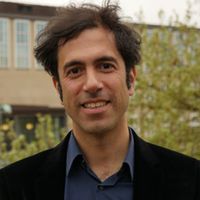
Aria Adli is a Professor of Linguistics at the Department of Romance Studies , University of Cologne, where he has been tenured since April 2014. He serves as Head of the Sociolinguistic Lab and is a principal investigator in the CRC 1412 (Register: Language-Users’ Knowledge of Situational-Functional Variation). Research focus: Grammatical variation, syntax in speech contexts, information structure, social stratification (Bourdieu), and register analysis Education: Habilitation from University of Freiburg (2011); PhD in Romance Linguistics (Tübingen 2004); Double MA in Linguistics/Psychology His work combines cross-cultural analysis (French, Spanish, Catalan, Persian) with empirical methods including fieldwork, corpus analysis, acceptability judgments, statistics, and computer simulations . He leads the Sociolinguistic Lab Cologne and has organized international workshops like the Flexible and Multiple Plural Marking in Language Contact (2022) and Sounds and Structure in Language and Music (2016). Scientific grants include CRC 1412 (2020-2027), DAAD EduVenTure (2020-2021), CRC 1252 (2017-2020), and DFG grants for projects like The Relation between Grammar and Usage (2013-2017). He has supervised 15+ students including PhDs by Amalia Canes Nápoles and Eric Engel.
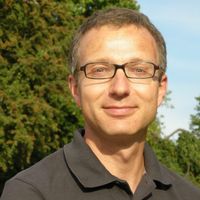
Markus Egg is a Professor at the Department of English and American Studies , Humboldt University of Berlin. He is a principal investigator in the Collaborative Research Center 1412 (CRC 1412) focused on "Register: Language Users’ Knowledge of Situational-Functional Variation". His work bridges theoretical linguistics with computational approaches, particularly in metaphor annotation, register analysis, and discourse structure. He has organized international workshops such as MeStaR (Metaphors and Stance Markers in Register Variation). Current affiliation: Humboldt University of Berlin Key projects: CRC 1412, GeRMaN (German Register Marking by Non-Literal Expressions), MeStaR workshop Research Focus: His research examines how metaphors and metonymies function as markers of register variation across different contexts, including social media (e.g., LGBTQ+ slang on Twitter), religious language, and computational linguistics. He integrates methodologies from corpus linguistics, cognitive science, and natural language processing to model register knowledge. Teaching: Regularly teaches courses on linguistics, computational semantics, and machine learning applications in language research. In 2023, he conducted a webinar on "Register marking by metaphor and metonymy" at Nakhchivan State University. Collaborations: Collaborates with institutions like Charles University (Prague), Ruhr-Universität Bochum, and Università della Calabria. Frequent collaborator: Valia Kordoni (metaphor corpus development).
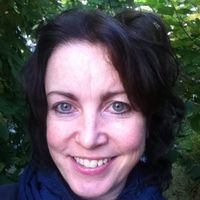
Muriel Norde is a full Professor of Scandinavian Linguistics at the Department of Northern European Studies , Humboldt-Universität zu Berlin, since 2013. Her research focuses on historical linguistics , construction grammar , and degrammaticalization in Germanic languages, particularly Scandinavian varieties. She has extensive experience in corpus linguistics and diachronic morphological analysis . Current Role: Professor at Humboldt-Universität Berlin Past Affiliations: University of Groningen (1997-2013), University of Amsterdam (1998-2003) Research Highlights : Spearheads the BiNoKo Corpus project for comparative historical register analysis. Leads international collaborations on exaptation in morphology and evaluative morphology . Key publications in Diachronic Construction Grammar and libfixes in European languages. Academic Contributions : Authored 83+ publications with over 21,182 reads. Notable works include studies on Swedish genitive evolution , Dutch diminutives , and modal constructions in Old Swedish . Her 2023 Frontiers in Psychology paper co-analyzes register pervasiveness across cultures. Supervision : Serves as promotor or committee member for 9+ PhD theses, including projects on Old Norwegian syntax , Dutch productivity shifts , and Norwegian demonstrative reinforcement . Collaborates with universities in Edinburgh, Ghent, Leuven, and Oslo.
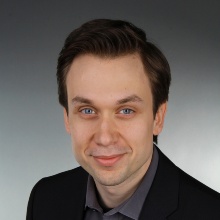
Jörg Förstner serves as a Lecturer and Doctoral student at the Institute of Linguistics, Department of Linguistics/German Studies (ILG) at the University of Stuttgart, contributing to both teaching and research missions within the department. His research centers on syntactic-semantic interfaces, specifically examining how theta role extension impacts valence-controlled coherence in German language structures. This work intersects theoretical linguistics with German language studies, focusing on the morphosyntactic manifestations of semantic roles and their discourse-level implications. Complementing his academic work, Förstner participates in the Editorial group for advanced language courses for upper secondary school, applying his linguistic expertise to curriculum development for high school German education through practical pedagogical frameworks.
Ljudmila Geist serves as a Research Associate and DFG Project Manager at the University of Stuttgart's Institute of Linguistics within the Department of Linguistics and German Studies (ILG). Holding the academic rank of Privatdozent (equivalent to Associate Professor), she leads two major DFG-funded research projects while teaching linguistics and Slavic studies courses at undergraduate and graduate levels. Her institutional affiliation spans formal instruction in Linguistics, German Studies, and Slavic Studies programs including teacher training tracks for German and Russian. Her research expertise centers on the syntax-semantics interface with three core pillars: Semantics/Pragmatics : Nominal reference systems, information structure dynamics, speaker-hearer knowledge interaction in discourse, and copula clause semantics Morphosyntax : Argument linking mechanisms, case assignment for objects/predicatives, and co-argument binding phenomena Language Comparison/Typology : Cross-linguistic analysis of definiteness/indefiniteness in article-less languages, grammatical category comparisons between Russian and German Her work consistently bridges theoretical linguistics with empirical Slavic language data. Analysis of her 15 most recent publications reveals strong methodological continuity in formal linguistic approaches applied to Slavic languages, particularly Russian-German comparisons. Key thematic clusters include noun phrase semantics (mass/count distinctions, definiteness marking), copula constructions, and question-response systems. Her research increasingly incorporates experimental methodologies while maintaining rigorous formal analysis frameworks, demonstrating evolution from theoretical syntax toward integrated psycholinguistic approaches. Geist actively contributes to academic infrastructure through editorial roles including co-editing Advances in Formal Slavic Linguistics 2018 (Language Science Press, 2021) and multiple volumes of Investigations into Formal Slavic Linguistics . She has organized workshops such as Divide and Count at the 2023 DGfS conference in Cologne, demonstrating leadership in advancing research on morphosyntactic-semantic interfaces. Her teaching portfolio demonstrates deep integration of research and pedagogy across morphology, syntax, and Slavic linguistics courses. Recent offerings include Morphology (SS 2024), Syntax, Semantics and Typology of Nouns (WS 2023/24), and specialized seminars on nominal categories and German-Russian comparative linguistics. She completed Baden-Württemberg's 200-hour university teaching certification in 2008, reflecting commitment to pedagogical excellence.
Dr. Chin-hui Lin is a Lecturer specializing in Chinese language education at Humboldt University of Berlin's Institute for Asian and African Studies, part of the Culture, Social and Educational Sciences Faculty. She teaches multiple Chinese language courses ranging from intermediate to advanced levels, including Modern Chinese II, IV, and specialized courses on contemporary Chinese society. Her office is located at Johannisstr. 10, Room 302, with regular office hours on Tuesdays from 2:00-3:00 PM conducted via Zoom. Her educational background includes: BA in Chinese Literature from National Tsinghua University (1999) MA in Teaching Chinese as a Foreign Language from National Taiwan Normal University (2003) PhD in Chinese Linguistics from Leiden University (2014) Dr. Lin's research focuses on innovative approaches to Chinese language pedagogy and linguistic analysis. She specializes in technology-supported language learning, curriculum design, and teacher training methodologies. Her linguistic research examines interactional linguistics, discourse analysis, pragmatics, and sociolinguistics within Mandarin Chinese, with particular attention to Taiwan Mandarin variants. Her work bridges theoretical linguistics with practical classroom applications, developing effective teaching strategies for German university contexts. Her recent publications demonstrate a clear trend toward addressing contemporary challenges in language education, particularly the shift to emergency remote teaching during the pandemic. She has systematically investigated both student and teacher perspectives on digital language instruction, while maintaining her foundational research on linguistic structures like utterance-final particles in Taiwan Mandarin. Her work consistently connects theoretical linguistic insights with practical pedagogical applications. Her notable scientific achievements include: Excellent Teaching Award from Leiden University's Faculty of Humanities (2012) Shortlisting for the Humboldt Award for Excellence in Teaching focused on digital teaching (2020) Nomination for contributions to digitally supported teaching concepts (2021) Dr. Lin has received recognition for her innovative approaches to language instruction, particularly her development of technology-enhanced learning environments and emergency remote teaching frameworks. While specific grant information isn't detailed in the provided materials, her award nominations suggest successful funding for digital teaching initiatives. She collaborates with colleagues like Prof. Dr. Henning Klöter on teaching innovations and research projects, including the Chinese Grammar Platform (ChinGram). She contributes to the academic community through her involvement in the Institute's research projects and teaching initiatives, particularly in developing digital teaching methodologies for Chinese language instruction at the university level.
Thomas Lischeid is a Professor for German Language Learning at the Weingarten University of Education since 2010. His work spans German didactics, media symbolism, and discourse analysis, with a focus on text/media interplay and orthography education. Education: Dr. phil. (1998, Ruhr University Bochum) Teaching Experience: Lecturer roles at Ruhr University Bochum (1997-2001), University of Wuppertal (2002), University of Siegen (2003-2005), Acting Chair at University of Hildesheim (2007-2009) and Greifswald (2009-2010) Research Interests include multimodal representation (infographics), language reflexion, crisis narratives, and orthography education. His publications explore intermediality, Nazi book burning symbolism, and Kafka's pedagogical relevance. Recent Publications address media oscillations during crises, poetic film analysis, and intermedial diagrammatics. He also contributed to seminal handbooks like Kernbegriffe der Sprachdidaktik . Scientific Focus Discourse-semiotic analysis of normalism Media symbolism in educational contexts German as a second language
Mardale Alexandru is a University Professor at Inalco , affiliated with the Europe Department and the SeDyL research center. His work focuses on the syntax–semantics–discourse interface, particularly in heritage Romanian contexts, differential object marking, and the grammaticalization of prepositions in Romance languages. Research Interests: His expertise spans heritage language acquisition, linguistic expression of displacement, and modality in Romanian. He examines how language contact and reduced input affect syntactic structures, with a strong emphasis on grammaticalization processes and case-preposition interactions. 2024-2023 publications highlight his work on heritage Romanian in France, differential object marking, and clitic doubling. 2022-2003 contributions explore complex prepositions, animacy effects, and diachronic changes in Romanian syntax. Administrative Roles: He serves as Head of Romanian Studies and Educational Manager of the cross-disciplinary Linguistics course (LGE) at Inalco. He holds key positions in institutional governance, including membership in the Scientific Council and Research Commission.
Florian Schwartz is an Associate Professor of Linguistics at the University of Pennsylvania , where he also serves as the Undergraduate Chair and Associate Director for Education at mindCORE . His research integrates formal semantics and pragmatics with psycholinguistic experimentation to study how linguistic content and contextual information interact during language comprehension. Research Focus : Presupposition projection, scalar implicatures, definiteness systems, and social identity effects on interpretation. Methodology : Uses eye-tracking (visual world paradigm), truth value judgments, and online experiment platforms like PCIbex . Grants & Awards : Funded by NSF, ESF, XPRAG.de, and Penn’s URF. Mercator Fellow sponsored by DFG. Collaborations : Active with labs at Goethe-University Frankfurt, MIT, and University of Konstanz. Recent Publications (2023) explore covariation in processing, social identity effects on imprecision, and presupposition projection asymmetry. His edited work Experimental Perspectives on Presuppositions (2015) remains influential in theoretical psycholinguistics.
Gert-Jan Schoenmakers is an Assistant Professor in Language & Communication at Utrecht University's Department of Languages, Literature and Communication. With a Ph.D. from Radboud University (2022), his work bridges generative linguistics with experimental methodology. Current affiliation: Utrecht University (College of Humanities) Academic title: Assistant Professor (not part-time) Research focuses include experimental syntax, linguistic intuition analysis, acceptability judgment reliability, and discourse-pragmatics interfaces. Recent publications explore: Address pronouns in multilingual contexts Island constraints across languages Emerging youth vernacular constructions Methodological pluralism in linguistic research 2025 trends show expanded work on Caribbean Dutch dialects and child language acquisition patterns. His 2024 media appearance on NPO1's Villa VDB discussed youth language innovation ('Ik ben stad' phenomenon). Teaching involvement includes courses in: Communication studies Media & communication Linguistic methodology Second language acquisition Technical skills encompass experimental design, statistical analysis, and quantitative research methodology.
Agnès Celle is a Professor of Linguistics at the University of Paris since 2004. She holds a prominent position in the field of linguistic research, particularly focusing on the intersection of semantics and pragmatics with cross-linguistic perspectives between English and French. Her research interests span across multiple dimensions of linguistic theory and application. Specializing in Time, Aspect, Modality, and Evidentiality , Professor Celle has made significant contributions to understanding how surprise is linguistically expressed and the phenomenon of mirativity. Her recent work has expanded to examine non-canonical questions and the intricate relationship between modality and speech acts, revealing how grammatical structures shape communicative functions in everyday discourse. Professor Celle's publications demonstrate a clear trajectory toward understanding questioning patterns in digital discourse, particularly through analysis of TED Talks. Her recent work explores how question sequences function in knowledge transmission, how epistemic conditionals operate as argumentative tools in polar questions, and how modal verbs contribute to the pragmatic force of questions in public speaking contexts. This research reveals important connections between grammatical structures and their pragmatic functions in real-world communication. Award: Best paper award for Post-Doc researcher at SLE Conference, Helsinki 2024 Professor Celle has supervised 11 PhD students to completion across diverse topics including political discourse, temporal deixis, documentary discourse, and question sequences, with two additional students currently working under her supervision. She has secured significant research funding including a Marie Curie Prestige Project (2017-2018) on surprise-induced questions conducted at the University of Colorado at Boulder, and has been the Principal Investigator for the TransQuest project (2022-2024) on knowledge transmission in questions. Currently leading multiple collaborative research initiatives including TransQuest (2022-2024) and previously directing studies on surprise questions from a comparative perspective (2019-2022), Professor Celle works within a robust research network involving scholars from institutions across Europe including the University of Tartu and University of Constance.
Dr. Maaike Schoorlemmer is a Researcher at the Institute for Language Sciences under the Faculty of Humanities at Utrecht University . She has contributed extensively to fields like syntax, morphology, and Slavic linguistics. Role: Research Coordinator Department: Institute for Language Sciences University: Utrecht University Her research interests include: Syntax-Morphology Interface Slavic Language Structures Metalinguistic Awareness Formal Grammar Recent publications focus on Russian grammar, argument structures, and linguistic theory. She has edited academic yearbooks and contributed to theoretical linguistics. Contact: m.schoorlemmer@uu.nl
Dr. Jan Dvorak is a Lecturer in French Linguistics at the Université Toulouse - Jean Jaurès , affiliated with the Cognition, Languages, Ergonomics (CLLE) laboratory. He teaches Introduction to French Syntax and Phonetics/Phonology to undergraduate students, while preparing candidates for the 18th-century French language test in modern literature certification. PhD in Linguistics (2021) from ENS de Lyon - Université de Lyon Supervised by Céline Guillot-Barbance and Olga Nádvorníková Research Focus His research operates within Löbner’s Concept Types and Determination Theory , investigating: Grammaticalization of Czech ten into definite articles Deictic semantics in spoken French demonstratives Contrastive referential strategies between Czech and French Pragmatic effects in emotional demonstrative uses Emergent grammatical structures in informal registers Publication Trends Recent work spans 2019–2024 with a focus on: Comparative analysis of Czech-French demonstrative systems Grammaticalization processes in Slavic and Romance languages Corpus-driven studies of spoken language Definiteness markers in superlative constructions Deixis and reference chain dynamics Scientific Recognition Recipient of Prix Gallica for best dissertation in language sciences (2022) Published in Discours , Travaux de Linguistique , Scolia , and conference proceedings Technical Expertise TXM textometric software proficiency Corpus annotation and analysis Functional linguistic theory application Cross-linguistic typology
Céline Vaguer is a Lecturer at Université Toulouse - Jean Jaurès, affiliated with the Cognition, Languages, Ergonomics (CLLE) school. Her academic work focuses on French syntax, lexical & grammatical semantics, and discourse analysis. Syntactic Constructions Lexical Semantics Discourse Markers Phraseology Translation Studies Her research explores how linguistic forms interface with meaning, particularly through prepositions, adverbial phrases, and discourse markers. She has extensively analyzed expressions like en même temps and genre in spoken French, revealing their enunciative and argumentative roles. Recent publications (2022-2024) highlight her work on synonymy (vélo/bicyclette), discursive categorization (genre), and syntactic constructions. She serves as an editorial manager for journals like Langages and Langue française , contributing to academic discourse through Varia issues.
Raluca Alexe is a Lecturer in the Department of Theoretical and Applied Linguistics at the Faculty of Letters, Transilvania University of Brașov, Romania, with office location in Building T, Room TP7 at B-dul Eroilor 25. Her research centers on contrastive grammar (particularly Spanish-Romanian), Romance linguistics, semantics, and Spanish for specific purposes. She investigates conditional structures across languages, cultural integration in language teaching, and legal discourse through corpus-based methodologies. Publications from 2017-2021 reveal consistent focus on conditional syntax in Romance languages, with applications spanning legal contexts, foreign language pedagogy, and cross-linguistic analysis. Her work demonstrates strong methodological emphasis on contrastive studies and corpus linguistics.