Professor David Adger is a Professor of Linguistics at Queen Mary University of London, part of the School of Languages, Linguistics and Film. He holds a PhD from the University of Edinburgh. His primary research focuses on syntax, exploring the cognitive underpinnings of linguistic structure, its relationship to meaning and sound, and cross-linguistic variation. He has extensively studied Scottish Gaelic and other Celtic languages, while also analyzing data from diverse languages to refine generative syntactic theories. Notable contributions include his book *Language Unlimited* (2019), which demystifies formal linguistics for broader audiences. His work bridges theoretical syntax with sociolinguistics, examining probabilistic patterns in syntactic usage and dialectal variation, such as in Scots. He advocates for the autonomy of syntax while engaging with interdisciplinary questions about language evolution and cognition. Adger is affiliated with the Formal Linguistics Research Group at Queen Mary and maintains an active blog discussing linguistic theory and current debates in the field.
Giuseppina Turano is an Associate Professor at the Department of Linguistics and Comparative Cultural Studies of Ca' Foscari University of Venice. Her academic focus centers on Albanian language and literature, with specialization in syntax, morphology, dialectology, and language contact phenomena. She has extensively studied the Arbëresh dialect and Italo-Albanian varieties, particularly their morphosyntactic structures under Italian influence. Her research also explores Albanian literature's interplay with language and cultural identity, including translation challenges of works by authors like Ismail Kadare. Her publications investigate topics such as quirky subjects in nonactive sentences, participle usage, complementizer distribution, and clitic climbing in Balkan languages. She has contributed to edited volumes on Albanian studies and co-edited collections on Kadare's literary techniques. Turano's work bridges theoretical linguistics with empirical studies, addressing microvariation in Italo-Albanian dialects and historical aspects of Albanian grammar. Despite no listed awards, her scholarly output reflects sustained contributions to Albanian linguistics and literature. She advises no formally listed students but has co-authored works with colleagues like Iliana Krapova and Flora Koleci, indicating collaborative research networks. Turano’s affiliation with Ca' Foscari includes teaching responsibilities and academic leadership in her department.
Silvio Cruschina is a Professor of Italian at the University of Helsinki's Faculty of Arts, Department of Languages. His research focuses on syntax, information structure, and dialectology, with particular emphasis on Romance languages, especially Italian and Sicilian dialects. He leads projects such as ALIHAS (A Linguistic Investigation of Hate Speech) and ReVerSe (Residual Verb Second in Romance), exploring hate speech dynamics, syntactic phenomena, and residual language structures. Cruschina's work bridges theoretical linguistics with applied research, including studies on focus fronting, implicatures, and morphological competition in dialects. He co-edited An Investigation of Hate Speech in Italian (2024) and published extensively on topics like Sicilian quantifiers, Catalan syntax, and Italian prosody. His teaching includes courses on Italian dialects and syntax, and he actively participates in academic events as a speaker, organizer, and opponent in doctoral defenses. Key projects include analyzing non-cooperative discourse contexts and investigating historical origins of verb-second phenomena in Romance languages. His research integrates formal syntax, historical linguistics, and sociolinguistic perspectives, contributing to both theoretical frameworks and practical applications in language documentation.
Adam Ledgeway is a Professor of Italian and Romance Linguistics at the University of Bergamo (since 2024), following a 21-year career at the University of Cambridge (2001–2023), where he held roles from University Assistant Lecturer to Professor. His research spans comparative Romance linguistics, dialectology, morphosyntactic theory, historical linguistics, and language contact, with a focus on southern Italian dialects and Greek-Romance interactions. Education: PhD (1996), MA with distinction (1993), and BA First Class (1992) from the University of Manchester. Research Interests: Ledgeway’s work bridges diachronic and synchronic analysis, examining phenomena like verb movement, complementation systems, differential object marking, and phonology-syntax interfaces. He has extensively studied Greek-Romance contact in southern Italy and parametric microvariation across dialects. Article Trends: His recent publications (2018–2024) emphasize diachronic morphosyntax, Romance microvariation, and cross-linguistic contact effects, particularly in Greek-speaking enclaves. Topics include Jespersen’s Cycle, periphrasis, and configurationality shifts from Latin to Romance. Scientific Awards: Fellow of the British Academy (2017) Honorary Doctorate, University of Bucharest (2016) Co-editor of major OUP and Wiley-Blackwell series Advising and Grants: Supervised 24 PhD students since 1999. Secured grants including a Leverhulme Major Project (2015–2019), 3 Marie Curie Projects (2005–2017), and AHRC Research Leave (2006). Served on REF panels and as an advisor for international projects.
Alison Gabriele is a Professor and Department Chair of Linguistics at the University of Kansas, where she directs the Second Language Acquisition and Processing Lab . Her research focuses on syntax, psycholinguistics, and neurolinguistics in second language acquisition (SLA), with a particular interest in morphosyntactic development, L2 processing mechanisms, and individual differences in language learning. She holds a Ph.D. in Linguistics from the City University of New York Graduate Center and a B.A. in English Literature and Rhetoric from SUNY Binghamton. Her work employs empirical methods including ERP studies and behavioral experiments to investigate topics such as island effects, agreement processing, and cross-linguistic transfer. Notable contributions include studies on the neurolinguistic basis of L2 syntactic systems and the role of implicit causality in native and non-native processing. She is a recipient of the Kemper Award (2024) , recognizing her scholarly impact. Teaching and advising emphasize second language acquisition and bilingualism, with courses reflecting her interdisciplinary research. Her lab explores intersections between SLA, cognitive science, and computational linguistics, contributing to theoretical advancements in multilingualism and language processing.
Mark Hale is a Professor in the Department of Classics, Modern Languages and Linguistics at Concordia University. His research spans Indo-European linguistics (syntax), Oceanic linguistics (Micronesian), and diachronic phonology/syntax. He holds a PhD from Harvard University (1987), an MA from Indiana University (1980), and a BA from the University of Michigan (1976). Research Interests His work focuses on: Exploiting Wackernagel’s Law to analyze archaic Indo-Iranian clause structures Historical phonology and syntax of Micronesian languages (Marshallese, Rotuman) and New Caledonian/Loyalty Islands languages Phonology-syntax interface in diachronic contexts Key Article Trends Mark Hale’s publications emphasize: Indo-Iranian and Oceanic syntactic-phonological phenomena Clitic sequencing and prosodic constraints Child language acquisition and constraint ranking Neogrammarian sound change and its theoretical implications Formal grammar frameworks (Optimality Theory, I-Language) Microvariation in phonology and syntax Education PhD Linguistics, Harvard University (1987) MA Linguistics, Indiana University (1980) BA Linguistics, University of Michigan (1976)
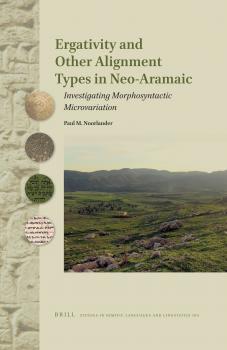
Dr. Paul M. Noorlander is a Researcher in Hebrew & Aramaic Studies at the University of Cambridge , affiliated with the Faculty of Asian and Middle Eastern Studies and a Fellow of St Edmund's College . He specializes in endangered Neo-Aramaic languages, focusing on their documentation, typology, and historical-sociocultural context. His research spans Areal Linguistics , Historical Syntax , and Language Contact , particularly in regions where Semitic and Iranian languages intersect. He leads projects like the North Eastern Neo-Aramaic Database and the ERC-funded Echoes of Vanishing Voices initiative, which reconstructs the linguistic history of Aramaic-speaking communities in contact with Iranian. He teaches courses including Comparative Semitic Linguistics , Biblical Hebrew , and Linguistic Typology , emphasizing interdisciplinary approaches. His publications explore word order typology, ergativity, and corpus-based analyses of Neo-Aramaic dialects, with recent works focusing on VO/OV alternations and contact-induced syntactic shifts.
Steven Foley is a Visiting Assistant Professor at the University of Georgia Athens, specializing in morphosyntax, psycholinguistics, and fieldwork. His research focuses on linking formal grammatical hypotheses to real-time language comprehension, particularly in understudied languages like Georgian and Zapotec. Key areas include incremental ambiguity resolution, morphosyntactic variation, and the sociolinguistic dimensions of linguistic innovation. His recent work examines the processing of singular they in English, exploring how comprehension strategies vary across social groups. Collaborative studies highlight clusters of comprehension behavior correlated with age and gender identity. Foley also investigates morphological reanalysis in Georgian placeholder verbs and verb-argument dependencies in Georgian syntax, emphasizing crosslinguistic insights for psycholinguistic theory. Publications include work on sociolinguistic-psycho linguistic interactions (2024), Georgian agreement systems (2024), and syntactic microvariation in Zapotec (2022). He presents findings at conferences such as HSP 2024 and publishes in journals like the Journal of Cultural Cognitive Science . Foley advocates for multi-methodological research and maintains active social media presence for linguistics outreach.
Alessandra Tomaselli is a Full Professor of German Linguistics at the Department of Foreign Languages and Literatures , University of Verona. She has served as a Dean's Advisor on Educational Policy since 2013 and participates in various university governance bodies, including the Department Council and Internationalisation Committee. Her research focuses on Germanic Grammar and Syntax , Dialectology (particularly German dialects in Northern Italy), Language Change , and Acquisition of German as a second language for Romance speakers. She leads comparative studies on syntactic microvariation and language contact phenomena. She coordinates projects like VinKo: Varietäten im Kontakt/Varietà in Contatto/Varieties in Contact and Germanic-Romance language contact in the Southern-Central Alps . Her work intersects with Corpus Linguistics and Digital Humanities . She teaches courses including Comparative Germanic Syntax and German Language 1 for undergraduate and graduate programs, with a focus on integrating grammatical theory into foreign language pedagogy via methods like Felderanalyse .
Richard Stockwell is a Lecturer in Linguistics at the School of Communication and Media, Ulster University. He holds academic qualifications from the University of Cambridge, University of California, Los Angeles, and the University of Oxford. His research focuses on syntax and semantics, particularly ellipsis, dialect syntax, free relative clauses, and Condition C reconstruction. Education: PhD in Linguistics, University of California, Los Angeles Doctor of Philosophy, University of Cambridge Postdoctoral Junior Research Fellow, Christ Church, University of Oxford Stockwell's research explores phenomena such as causative VP-omission, metalinguistic ellipsis in advertising, sprouting with except-phrases, and cross-dialectal syntactic differences. His work has been published in journals like Glossa and Natural Language Semantics , and presented at conferences including NELS and WCCFL. Scientific Awards: Student Abstract Award, 3rd place at LSA 2021
Anne Dagnac is an Associate Professor of French and Romance Linguistics at the University of Toulouse - Jean Jaurès, where she is a member of the CLLE (Cognition, Languages, Language, Ergonomie) research laboratory. Since 2020, she has co-directed the "Langues et Langage" research team within CLLE, one of the three main research teams of the laboratory. Dr. Dagnac specializes in syntax, with particular expertise in French syntax, Picard syntax, and syntactic microvariation. Her research focuses on areas such as elliptical constructions in French, the complementizer domain in Romance languages, and negation in Picard. She has made significant contributions to understanding regional variations in French syntax, particularly in Southern French and Picard dialects. As principal investigator of the ANR-funded SyMiLa project (Syntactic Microvariation in the Romance Languages of France), Dr. Dagnac has developed important resources for studying Gallo-Romance syntax, including the SyMiLa database. Her work bridges theoretical linguistics with empirical dialectology, creating innovative approaches to studying syntactic variation across Romance languages spoken in France. Dr. Dagnac's recent publications demonstrate a clear focus on syntactic microvariation across Gallo-Romance languages, with particular attention to complementizer systems, object marking, and pronoun usage. Her work combines theoretical syntax with experimental and corpus-based methodologies, contributing to our understanding of how syntax varies across regional varieties of French and related Romance languages. From 2014 to 2017, Dr. Dagnac served as head of the Department of Modern Literature, Cinema and Occitan at the University of Toulouse - Jean Jaurès. She was also co-responsible for the "Variation and Structure of Languages" research axis at CLLE from 2015 to 2018. Her leadership in the SyMiLa project has established her as a key figure in the study of Romance syntactic variation. Dr. Dagnac co-directs the "Langues et Langage" research team at CLLE, which focuses on linguistic structures, variation, and usage across Romance languages. The team conducts research on formal description of languages, linguistic resources development, and language teaching methodologies, with particular emphasis on regional languages of France including Occitan and Picard.
Delia Bentley is a Professor of Romance Linguistics at the University of Manchester's Department of Linguistics and English Language, part of the School of Arts, Languages and Cultures. She specializes in the syntax-discourse interface, focusing on Romance languages like Sicilian and Sardinian. Her research explores how lexical and contextual meaning influences grammatical structures, with notable work on existential, locative, and causative constructions. She has led major AHRC-funded projects and contributed to linguistic documentation initiatives, such as the Existential Constructions project . Editor of Transactions of the Philological Society and Studies in Role and Reference Grammar . Former Head of multiple departments including Linguistics and English Language, and leader of MA Linguistics programs. Recipient of AHRC grants and School of Arts research awards (2024, 2015, 2014). Her research interests include syntactic microvariation, Italian and Romance dialectology, and the discourse-syntax interface. Key contributions include monographs on existential constructions and co-edited volumes like The Cambridge Handbook of Role and Reference Grammar . She actively promotes linguistic diversity through the Linguistic Diversity Collective. In teaching, she emphasizes rigorous analysis and transferable skills, offering courses on syntax, Romance linguistics, and research methods. Currently supervises doctoral projects on topics like Greek-Romance dialectal TAM systems and Catalan-Spanish syntax-discourse interfaces. Leadership roles: Programme Director (MA Linguistics), Head of multiple divisions, and peer reviewer for Italian research councils. Collaborations include the Atlante Linguistico della Sicilia and Atlante Sintattico dell’Italia Settentrionale . Her work aligns with UN SDG 4 (Quality Education) by preserving linguistic heritage and promoting education in diverse linguistic contexts.
Caroline Heycock is a Professor of Syntax at the University of Edinburgh , affiliated with the School of Philosophy, Psychology and Language Sciences and the Department of Linguistics and English Language . She is currently on research leave until January 2025. Her teaching includes courses on syntax at both undergraduate and postgraduate levels. She actively supervises PhD students and has advised numerous scholars in syntactic theory and related fields. Her research focuses on syntactic theory , variation , and change , with particular attention to copular clauses, Faroese syntax, and Scots dialectal features. Key projects include investigations into nominal predication structures, verb movement in Faroese, and sociolinguistic aspects of Scots syntax. She has secured funding from major bodies like the Arts and Humanities Research Council (AHRC) and the European Union. Recent work explores the theoretical and empirical dimensions of copular clauses, including appositional boundaries and cross-linguistic agreement patterns. Her research integrates formal syntax with sociolinguistic methodologies, as seen in studies on Scots dialectal variation and experimental analyses of Icelandic agreement phenomena. Caroline Heycock has supervised over 25 PhD students and has led or co-led 15 research projects, including major initiatives like the Scots Syntactic Atlas and the EU-funded AThEME project. Her contributions span theoretical syntax, language acquisition, and historical change, with a focus on under-researched languages like Faroese and Scots.
Ana Madeira is an Associate Professor at the Language Sciences Department of the Faculty of Social Sciences and Humanities, Universidade Nova de Lisboa. She is affiliated with the Linguistics Research Centre of the same university (CLUNL), where she contributes to research in second language acquisition, syntax, and foreign language teaching. Her work spans theoretical and applied linguistics, with a focus on Portuguese as a second language and bilingualism. Doctorate: University College London, in Linguistics. Her research explores microvariation in anaphora resolution, control and restructuring phenomena, and the impact of input on language acquisition. She has contributed to projects assessing language proficiency, developing placement tests, and creating digital teaching platforms like Saberportuguês.pt. Ana has coordinated postgraduate programs and served as a principal investigator in projects funded by institutions such as the Calouste Gulbenkian Foundation and the British Academy. Notable awards include the British Academy Postdoctoral Research Fellowship. She has reviewed for journals like Probus and Linguistic Approaches to Bilingualism and collaborated with publishers to develop educational materials. Her professional experience includes organizing summer courses, teacher training, and advising on bilingualism and academic success in Portuguese education.
Professor Björn Hansen is Chair of Slavic Linguistics at the Institute of Slavic Studies, University of Regensburg, where he has held a professorship since 2002. Previously, he served as Lecturer in Slavonic Linguistics at the University of Cambridge (2000-2002) and as a research assistant at the University of Hamburg. He is also Partnerschaftsbeauftragter for university cooperation with the University of Novi Sad (Serbia) and University of Łódź (Poland), and chairs the doctoral committee for the Faculty of Philosophy IV at Regensburg. Born: 1964 in Flensburg 1984-1991: Studies in East Slavic Studies and German Language and Literature at University of Hamburg 1995: PhD in Slavic Linguistics (University of Hamburg) 2001: Habilitation in Slavic Philology - Linguistics (University of Hamburg) Hansen's research spans multiple areas of Slavic linguistics, with particular focus on the structures of Polish, Russian, Serbian and Croatian languages. His work investigates language contact phenomena, areal typology, language change in Slavia, heritage linguistics, and corpus linguistics. He specializes in syntax and semantics, particularly examining modality, grammaticalization processes, contact-induced change, clitics (including clitic climbing), indefiniteness, subject encoding, frame semantics of public discourse, and the language of religion. His methodological approach often combines corpus-based analysis with theoretical linguistic frameworks. Analysis of Hansen's recent publications reveals consistent focus on microvariation in South Slavic languages, particularly Bosnian, Croatian, and Serbian. His work demonstrates expertise in clitic phenomena, modal constructions, and subject case marking. He frequently employs corpus-based methodologies to investigate rare linguistic phenomena, especially in underresourced languages. His research increasingly connects historical linguistics with contemporary language use, examining how grammaticalization processes evolve over time and across language contact situations. Member of DFG-Fachkollegium 104-02 (2009-2024) Official expert for Alexander von Humboldt Foundation (since 2011) Reviewer for multiple national research foundations including DFG, Swiss National Science Foundation, and Austrian Science Fund Member of editorial boards for several international linguistics journals Hansen has supervised numerous doctoral and master's students, with research spanning heritage language syntax, Slavic modality, language contact phenomena, and corpus-based linguistic analysis. He leads multiple externally funded research projects including 'seeFfield' (VolkswagenStiftung, 2022-2029), 'LangGener' (DFG-NCN, 2018-2022), and several DFG projects examining microvariation in Bosnian/Croatian/Serbian, Polish-German bilingualism, and historical semantics of corruption. As Principal Investigator of the Graduate School for East and Southeast European Studies (2012-2019), he has significantly contributed to interdisciplinary research in the region. Hansen directs the Binational Study Program 'German-Polish Studies' (funded by DAAD) and has organized numerous international conferences and workshops on Slavic linguistics, including the 'Clitic Climbing' workshop (2017) and 'Perspectives of German-Slavic Multilingualism' conference (2016).