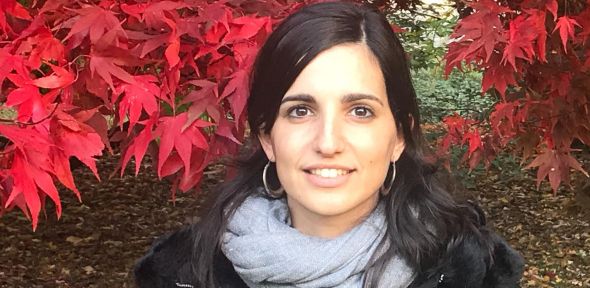
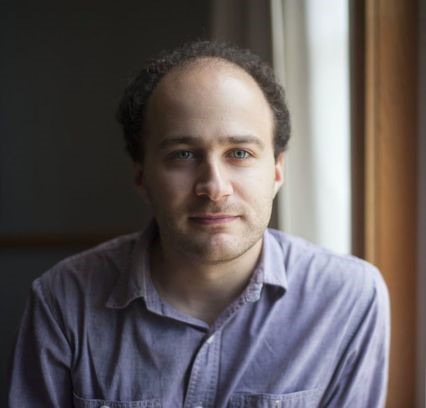
Dr. Brigitta Mittmann is a Senior Lecturer at the Department of English and American Studies, Friedrich-Alexander University Erlangen-Nuremberg (FAU), holding the Alexander von Humboldt Professorship for Language and Cognition. Her work focuses on lexicography, phraseology, and comparative analysis of spoken English varieties.
Prof. Gerhard Jäger holds the Chair of General Linguistics at the Faculty of Humanities, University of Tübingen . He serves as a Principal Investigator (PI) in the Clusters of Excellence Human Origins and Machine Learning for Science , and leads projects like Phylomilia (funded by Volkswagen Foundation) and CrossLingference (ERC Advanced Grant). His career spans multiple institutions, including Bielefeld University (2004-2009) and Stanford University (visiting scholar, 2004). Habilitation (2002) at Humboldt University Berlin with thesis on Anaphora and Type Logical Grammar PhD (1996) at Humboldt University Berlin on Dynamic Semantics His research bridges computational linguistics , phylogenetic analysis , and game theory , focusing on Bayesian models , language evolution , and cross-linguistic typology . Recent work explores phylogenetic inference from acoustic speech data and geographic influences on language trees . Key contributions include 15+ recent publications on topics spanning phylogenetic typology , cognate detection , and Bayesian language modeling . These works employ machine learning , statistical inference , and evolutionary game theory to analyze language change , typological variation , and linguistic stability . Honors include ERC Advanced Grant , Volkswagen Foundation funding , and DFG-Humanities Centre for Advanced Studies participation. He has taught courses in Computational Historical Linguistics , Phylogenetic Methods , and Bayesian Data Analysis across institutions like Tübingen, Bielefeld, and Stanford. He actively contributes to academic communities through workshop organization (e.g., Quantitative Theoretical Linguistics , Game Theory in Pragmatics ) and serves on the faculty council at Tübingen. His team collaborates with institutions like Max Planck Institute for Evolutionary Anthropology , University of Pennsylvania , and LMU Munich .
Dr Ares Llop Naya serves as an Affiliated Catalan Lecturer in the Department of Spanish and Portuguese within the Faculty of Modern and Medieval Languages and Linguistics at the University of Cambridge, while holding the Batista i Roca Fellowship at Fitzwilliam College. Her academic profile bridges theoretical linguistics with practical language pedagogy, focusing on Romance language structures and their educational applications. Her research centers on microsyntactic variation in Romance languages, particularly examining negation systems and syntactic phenomena in Catalan and Pyrenean varieties through both diachronic and synchronic lenses. She actively integrates theoretical insights into language teaching methodology, specializing in Catalan and Spanish pedagogy for both native and foreign language contexts. This dual focus manifests in her publications spanning syntactic theory, dialectology, and innovative language teaching approaches that address contemporary classroom challenges. Analysis of her publication trajectory reveals consistent thematic concentration on Romance microvariation, with recent work expanding into pedagogical applications. Her scholarship demonstrates methodological diversity—combining linguistic atlas data, corpus analysis, and classroom research—while maintaining core focus on Catalan syntax and its implications for language acquisition theory. The Pyrenean linguistic corridor remains a persistent geographical anchor across her diachronic and synchronic investigations. Dr Llop Naya's scholarly contributions have been recognized through prestigious awards: Joan Solà International Prize in Catalan Philology for her monograph on Romance negation systems Her teaching portfolio encompasses advanced courses in Romance linguistics, historical syntax, and sociolinguistics, with particular emphasis on translating theoretical frameworks into practical classroom resources. While specific grant funding details aren't publicly documented, her work consistently addresses real-world language education challenges through collaborative projects like the Microvariació.cat initiative. She contributes to the Microvariació.cat project—a digital repository documenting syntactic variation across Catalan dialects—which serves as both research infrastructure and pedagogical resource. This initiative exemplifies her commitment to creating practical applications from theoretical linguistic research while preserving endangered dialectal features of the Romance continuum.
Susan Irvine is a Professor of English Language & Literature at University College London , where she has held the Quain Professorship since 1992. Educated at the University of Otago and the University of Oxford, she specializes in Old English prose and poetry, teaching across undergraduate and graduate programs including the MA in Medieval and Renaissance Studies. Education: Doctor of Philosophy (University of Oxford, 1987), Bachelor of Arts (Honours, University of Otago, 1981) Her research focuses on Old English literature and language , particularly works associated with King Alfred's court (9th century) and the transitional period between Old and Middle English. She explores manuscript studies, textual reconstruction, and the interplay between linguistic and literary analysis. Recent publications examine topics like Anglo-Saxon micro-texts, the protean form of the Old English Boethius, and prefatory traditions in Old English. These works highlight her expertise in medieval manuscript culture , translation studies , and historical linguistics . Scientific Awards: 2011 Publication Prize (International Society of Anglo-Saxonists) AHRC Research Leave Scheme Award (2007) Irvine also contributes to professional activities as an editor and academic officer, with roles at the Fontes Anglo-Saxonici Project and external examining appointments. Her teaching emphasizes the relevance of Old English to modern literary theory and encourages engagement with UCL's Special Collections.
María Sol Sansiñena Pascual serves as Assistant Professor (tenure track) at KU Leuven across Leuven, Kortrijk, and Brussels campuses while also holding a guest professorship at Ghent University. Her primary academic affiliation lies within the Faculty of Arts at KU Leuven where she actively contributes to the Functional and Cognitive Linguistics: Grammar and Typology (FunC) research group. Education PhD in Spanish Linguistics, KU Leuven (2015) Research Focus Her scholarly work centers on semantic-pragmatic interpretation mechanisms, with special emphasis on modality and TAM (Tense, Aspect, Mood) categories, discourse phenomena including insubordination, language variation/change dynamics, and translation pattern analysis. She employs interactional-constructional frameworks to examine Spanish grammatical structures across synchronic and diachronic dimensions, particularly investigating evolutionary pathways from Latin to contemporary Spanish varieties. Publication Trends Analysis of her recent scholarly output reveals concentrated research trajectories in diachronic syntax (especially insubordinate clause evolution), modal-evidential semantics in Spanish conditional/future forms, grammaticalization processes of verbal periphrases, and indexicality mechanisms. Her methodological approach consistently integrates functional, cognitive, and construction grammar perspectives to address complex language change phenomena. Research Leadership Current promotor of "Pathways to insubordination: diachronic evolution of non-subordinate structures" (2025-2026) Principal investigator for "Speech-act orientation and intersubjective alignment" project (2020-2025) Academic Contributions She actively participates in the FunC research collective while teaching specialized courses including Spanish Linguistics I/III, Discourse Analysis, and Master's thesis support seminars. Her scholarly service includes editorial contributions such as co-editing the 2024 volume "Indexicality: The Role of Indexing in Language Structure and Language Change".
Na'ama Pat-El is a Professor in the Department of Middle Eastern Studies at the University of Texas at Austin, affiliated with the College of Liberal Arts and the Middle Eastern Languages and Cultures Graduate Studies Committee (MELC GSC). She holds a Ph.D. (2008) in Semitic Philology from Harvard University, preceded by studies at Hebrew University under Gideon Goldenberg and Harvard under John Huehnergard. Education: Ph.D., 2008, Harvard University (Semitic Philology) B.A. and M.A., Hebrew University of Jerusalem Her research focuses on Comparative Semitic Linguistics, Historical Linguistics, Syntax, and Language Contact , with a particular emphasis on syntactic change and morphological evolution. She investigates phenomena such as the development of verbal paradigms, plural morphemes, and copulae across Semitic languages, including Akkadian, Hebrew, and Aramaic. Recent publications address topics like the nondevelopment of third-person nominative pronouns in Semitic perfect/stative paradigms, the diachronic shift of East Semitic subordination markers into West Semitic indicative markers, and the reevaluation of Hebrew 'sign' terminology through epigraphic and comparative evidence. Her work also challenges assumptions about paired body part gender assignment in Semitic languages. Selected Publications (2025–2020) explore: Proto-Semitic verbal morphology Historical syntax in Akkadian and Neo-Assyrian Plural-gender mismatches in Hebrew Substrate influences in Levantine Arabic Biblical text linguistics
Prof. dr. Enoch O. Aboh is Professor of Linguistics at the University of Amsterdam , Faculty of Humanities, Department of Literature and Linguistics. His office is located at Spuistraat 134, room 647, and he can be contacted at e.o.aboh@uva.nl . Research Interests: Prof. Aboh’s work lies at the intersection of formal syntax, language contact, and learnability. He investigates creole formation , multilingual ecologies , Gbe and Kwa syntax , cartographic approaches to clause structure , and sign language morphosyntax . A recurring theme is the emergence and evolution of grammatical systems under contact, approached through both descriptive fieldwork and formal theoretical modelling. His publications reveal a methodological breadth spanning experimental studies with kindergarteners on statistical learning, computational detection of loanwords, and fine-grained syntactic analyses of serial verb constructions, predication patterns, and determiner systems. This spectrum underscores his commitment to integrating cognitive, typological, and formal perspectives on language. Awards & Recognition: While no specific prizes are listed in the current material, Prof. Aboh’s extensive editorial and collaborative work—evidenced by numerous co-edited volumes and Festschrift contributions—attests to his standing in the field. Students & Grants: Details on PhD advisees or funded projects are not provided in the source text. Labs & Teams: No dedicated laboratory or research group names are mentioned, yet his affiliation with the Amsterdam Center for Language and Communication (ACLC) can be inferred from the institutional context.
Shunichi Ishihara is a Professor at the School of Culture, History & Language, The Australian National University, where he leads research in forensic linguistics and computational linguistics. His work focuses on forensic text and voice comparison, authorship attribution, and Japanese linguistic studies. He holds qualifications including a PhD (ANU), MSc (Macquarie), MA (ANU), and BEd (Shizuoka). Research Interests: Forensic Voice/Text Comparison Computational Linguistics Intonational Modelling Japanese Language Processing Stylometric Analysis Research Trends: Recent work emphasizes likelihood ratio-based systems for authorship verification, fusion of acoustic and text features for forensic analysis, and applications of deep learning in text evidence evaluation. His studies often explore cross-lingual comparisons (e.g., Japanese, English, Vietnamese) and system validation methodologies. Grants & Projects: "Likelihood project on author recognition" (2024-2026) "Big Australian Speech Corpus" (2010-2015) Multiple forensic voice/text comparison initiatives Labs & Teams: Director of the Speech and Language Lab, collaborating on speech corpus development and forensic linguistic systems.
Arto Anttila is an Associate Professor in the Department of Linguistics at Stanford University and holds an Adjunct Professor (dosentti) position in General Linguistics at the University of Helsinki. His research spans multiple linguistic subfields with particular focus on the interfaces between phonology, syntax, and prosody. Dr. Anttila's research interests include phonology, morphology, syntax, metrics, and language variation. His work often explores how phonological constraints interact with syntactic structures and how variation manifests across different linguistic domains. He has made significant contributions to Optimality Theory, MaxEnt grammar, and probabilistic approaches to phonology. His recent publications demonstrate a strong focus on metrical patterns, stress systems, syllable structure, and the relationship between prosody and syntax. Anttila frequently collaborates with researchers like Giorgio Magri, Adams Bodomo, and Ryan Heuser, examining phenomena across diverse languages including English, Finnish, and Dagaare (an African language). Anttila has developed several computational tools for linguistic research, including CoGeTo (Convex Geometry Tools for constraint-based phonology), MetricalTree (for English phrasal stress prediction), Prosodic (for automatic metrical scansion), T-Order Generator, and OTOrder. These tools reflect his interest in the mathematical and computational aspects of linguistic theory.
Viktória Dabóczi is a lecturer in the Department of German Studies at the University of Siegen, Faculty I. She holds a doctorate from the University of Siegen (2016) and has been actively involved in teaching and research in German linguistics since 2012. Her current academic role as AOR aZ (Akademische Oberrätin auf Zeit) began in June 2025, indicating a senior academic position. She teaches courses such as Introduction to German Linguistics, Grammatical Variation, and Language Acquisition. Research Interests: Her work focuses on word classes, spoken language, grammar theory, language acquisition, and lexical change in German, often with comparative insights from Hungarian. She investigates how words are conceptualized in speech and writing, the evolution of discourse markers, and grammatical variation in contemporary usage. The analysis of her recent publications (2005–2025) reveals a consistent focus on theoretical and applied German linguistics, with increasing attention to sociolinguistic phenomena such as pandemic-related neologisms and ideological word formations. Her research bridges empirical analysis, cognitive linguistics, and language teaching, often in interdisciplinary or contrastive frameworks. Reviewed works on German morphology and grammar Contributed to international projects like EuroGr@mm and ProGr@mm Participated in interdisciplinary conferences on ellipsis and language processing Advising and Grants: While no formal students are listed, her editorial and collaborative roles suggest mentorship and academic leadership. She has been involved in long-term research projects, including EuroGr@mm (2004–2012), indicating sustained grant-supported activity. Her current role at Siegen reflects ongoing institutional support for her research and teaching. Labs and Teams: She has collaborated with researchers at Justus Liebig University of Giessen, University of Szeged, and IDS-Mannheim. Her work with the Diskursmonitor research group and participation in interdisciplinary conferences highlight her integration into active research networks in German linguistics.
J. Elliott Casal serves as an Assistant Professor in the Department of English at the University of Memphis, where his research centers on applied linguistics with emphases in corpus linguistics, discipline-specific writing, and genre-based language pedagogy. His work bridges theoretical frameworks with practical applications for language teaching and academic literacy development across diverse disciplinary contexts. His academic credentials include: Ph.D. (2016-2020) from Pennsylvania State University M.A. (2012-2014) from Ohio University B.A. (2004-2008) from Ohio University Casal's research investigates functional linguistic conventions in professional communication, development of discipline-specific literacies, and corpus tool integration in language education. His scholarship critically examines syntactic complexity, phraseological patterns, and academic literacy across disciplines through both quantitative corpus analysis and qualitative assessments of learner agency, creativity, and intentionality in writing development. Analysis of his 15 most recent publications (2019-2024) reveals consistent focus on corpus-driven methodologies applied to academic writing across STEM and humanities disciplines. Key trends include syntactic complexity development in L2 legal writing, AI-writing detection ethics, frame-based formulaic features in academic genres, and cross-disciplinary variation in research article structures, demonstrating evolving applications of corpus linguistics to contemporary language education challenges.
Professor Julia Schlüter is a distinguished academic in the Chair of English Linguistics within the Humanities Faculty at the University of Bamberg, Germany. She has served as Senior Lecturer at the Chair of English Linguistics and Language History under Prof. Manfred Krug since June 2008, holding the title of Professor following her habilitation in 2008. Her institutional profile demonstrates deep commitment to both research and teaching innovation, particularly through her leadership of the KorPLUS project and development of open educational resources for corpus linguistics. Her research interests span corpus linguistics for English language learners, empirical methods for studying language variation and change, and the application of corpus methods to teaching. She specializes in examining grammatical, phonological, and lexical differences between British and American English across historical periods from Middle English to present-day usage. Her work investigates phonological variation (particularly phonotactically controlled alternations), morphological change, and syntactic variation through corpus analysis, with special attention to functional grammar and grammaticalization theory. Professor Schlüter's recent publications (2022-2025) reveal a strategic evolution in her research focus, with increasing emphasis on the intersection of corpus linguistics and digital education. While maintaining her foundational work in historical English linguistics, she has developed significant expertise in applying corpus methods to language teacher education and evaluating AI writing tools. Her work demonstrates consistent methodological innovation, moving from traditional corpus analysis to blended learning approaches and digital educational resource development. Her scientific recognition includes: Winner of the 2025 Teaching Innovation Prize from the International Society for the Linguistics of English for the KorPLUS project University of Bamberg Prize for outstanding habilitation (2009) Lise Meitner Programme post-doctoral scholarship (2005-2006) Rectorate Prize from University of Paderborn for outstanding Ph.D. thesis (2005) Multiple DAAD scholarships for international study Professor Schlüter actively supervises doctoral research, currently guiding three Ph.D. candidates (Katharina Deckert, Aklima Nahar, and Nikolai Beland) while having successfully completed supervision for several others. She leads the KorPLUS project (2021-2025), funded by the Stiftung Innovation in der Hochschullehre, which develops open educational resources for corpus linguistics. Her research has been consistently supported by the German Research Foundation (DFG) and other funding bodies throughout her career. She heads the KorPLUS team (with Carina Großmann and Katharina Deckert) which develops the interactive Open Educational Resource platform for corpus linguistics. Her YouTube channel offers video tutorials on corpus basics, and she has created the Video Podcast Series "How to Update your Grammar" for English teachers. She regularly organizes in-service teacher trainings and collaborates with the Virtual Linguistics Campus at RWTH Aachen University to deliver her educational materials globally.
Ruth Kramer is an Associate Professor in the Department of Linguistics at Georgetown University's College of Arts and Sciences. Her research lies at the intersection of syntax and morphology, with a focus on grammatical gender, number, agreement, and syncretism, primarily in Afroasiatic languages such as Amharic, Coptic, and Ancient Egyptian. Institution: Georgetown University School: College of Arts and Sciences Department: Department of Linguistics Rank: Associate Professor Email: rtk8@georgetown.edu Office: Poulton Hall 251 Status: On sabbatical in Fall 2023 Her research interests include theoretical syntax, morphological theory, the syntax-morphology interface, phi-features, clitic doubling, and the morphosyntactic behavior of gender and number. She specializes in Amharic and has made significant contributions to the understanding of gender assignment, plural formation, and agreement patterns in this language. She also conducts research on Ancient Egyptian and Coptic, particularly in word order, relative clauses, and plural morphology. Her publications reflect a strong trend in theoretical and cross-linguistic morphosyntax, especially within the framework of Distributed Morphology. Her work often bridges detailed empirical analysis of understudied languages with broad theoretical implications for syntactic and morphological theory. She has authored a major monograph, The Morphosyntax of Gender (Oxford University Press, 2015), and numerous articles in leading journals such as Natural Language and Linguistic Theory , Linguistic Inquiry , and Journal of Afroasiatic Languages and Linguistics . Ruth Kramer is actively engaged in research collaboration, having co-authored papers with scholars like Mark Baker, Matt Hewett, and Anbessa Teferra. She has presented her work at major conferences and workshops, including NELS, Diachronic Generative Syntax, and the Afranaph Project. She teaches courses in linguistics and has advised students, though specific student names are not listed in the provided texts. She is also involved in academic service, such as contributing chapters to authoritative handbooks like The Oxford Handbook of Determiners and The Cambridge Handbook of Distributed Morphology .
Kentaro Inui is a distinguished researcher at Tohoku University , specializing in Natural Language Processing , Computational Linguistics , and Machine Learning . His work focuses on advancing language model behavior through rigorous empirical analysis, including mechanisms for detokenization , entity identification , and numerical reasoning . Inui has pioneered methods to rectify spurious beliefs in LLMs via unlearning techniques and explored the dynamics of reasoning strategies in neural models. His research addresses chat translation quality through metrics like MQM-Chat and investigates repetition neurons responsible for text generation patterns. Inui also contributes to argumentation analysis with annotation frameworks like LPAttack and develops resources such as COPA-SSE for commonsense reasoning. His work on universal graph-based relation extraction and cross-stitching architectures has established new benchmarks in NLP task performance. Inui's publications span top-tier conferences including ACL , EMNLP , and LREC , often involving collaborations with researchers like Benjamin Heinzerling and Jun Suzuki. His methodological innovations in semi-structured explanation generation , position embedding (e.g., SHAPE), and zero pronoun resolution demonstrate his focus on both theoretical and practical NLP challenges. While no direct awards or student mentorship data appear in the provided corpus, his extensive publication record (over 20 papers between 2021-2025) underscores significant contributions to NLP education tools , knowledge base integration , and dialogue system consistency . Current projects like ReCall mechanisms and numerical property encoding directions highlight his ongoing impact on model interpretability and reasoning accuracy.
Martin Hinterberger is Professor of Byzantine and Modern Greek Studies at the University of Cyprus since 2002. He holds MA and PhD degrees from the University of Vienna and served as research fellow at the Austrian Academy of Sciences (1995-2001). He has taught at the University of Vienna, Freie Universitaet Berlin, and EHESS Paris. Specializes in emotions in Byzantine literature Expert in Byzantine hagiography and theoretical approaches Focus on language analysis (learned vs vernacular) Collaborator on the bibliography of the Byzantinische Zeitschrift His recent publications explore the synthetic perfect tense in Byzantine Greek, hagiographic metaphrasis, and emotional expressions in literature. He co-edited volumes on Byzantine-Latin intellectual history and serves as a leading voice in Byzantine philology.