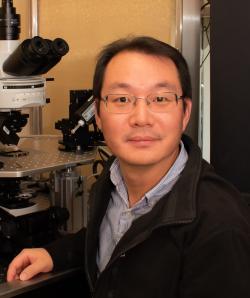
Dr. Mark Bear is the Picower Professor of Neuroscience at MIT's Department of Brain and Cognitive Sciences and a principal investigator at the Picower Institute for Learning and Memory. He previously served as Director of the Picower Institute (2007–2009) and was on the faculty of Brown University School of Medicine for 17 years before joining MIT in 2003. His research focuses on synaptic plasticity mechanisms underlying learning, memory, and neurodevelopmental disorders like fragile X syndrome and autism. Key contributions include discovering the mGluR theory of fragile X syndrome, which revolutionized treatment approaches, and pioneering methods to reverse amblyopia in animal models. Education: B.S. from Duke University, Ph.D. in neurobiology from Brown University, followed by postdoctoral training at the Max Planck Institute for Brain Research (Frankfurt, Germany) and Brown University under Wolf Singer and Leon Cooper. Research interests encompass visual cortex development, hippocampal plasticity, and translational studies for neurodevelopmental disorders. His lab employs electrophysiology, molecular biology, and behavioral assays to study synaptic modifications. Recent work explores non-ionotropic NMDA receptor signaling, retinal inactivation therapies for amblyopia, and electrophysiological biomarkers for fragile X syndrome. Publications highlight groundbreaking discoveries in synaptic plasticity mechanisms, amblyopia recovery pathways, and therapeutic strategies for autism spectrum disorders. His work bridges basic neuroscience with clinical applications, particularly in fragile X syndrome and amblyopia treatment.