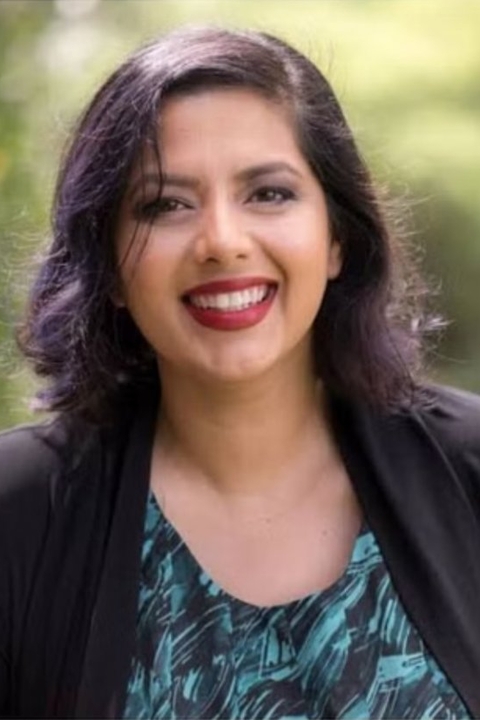
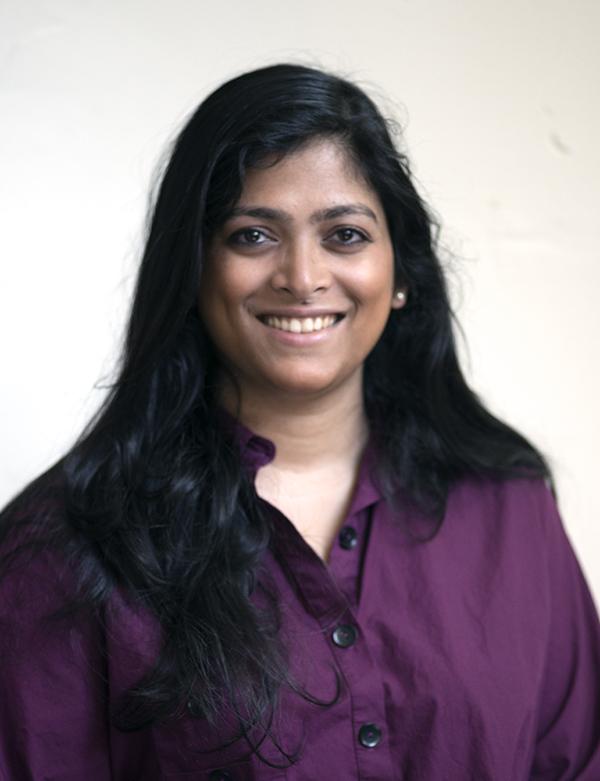
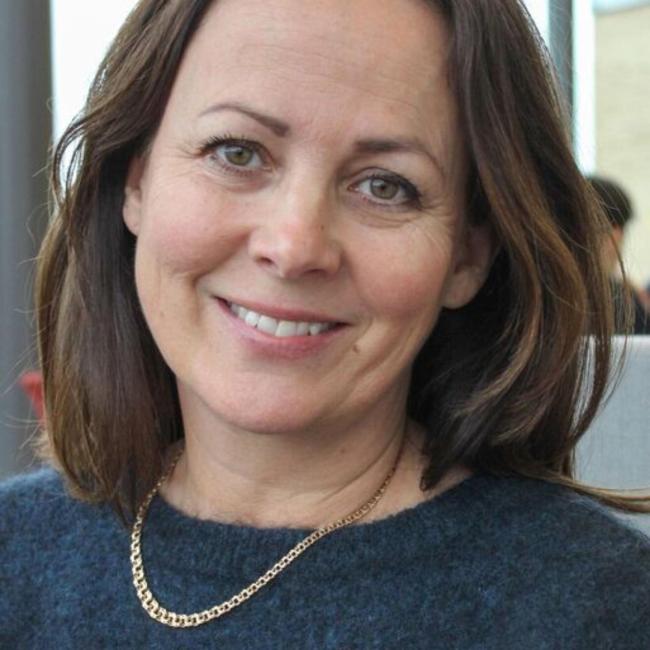
Aaron Richmond serves as Associate Director of the Center for Advanced STEM Education and Professor of Psychological Sciences at Metropolitan State University of Denver. He holds editorial roles at journals like Teaching of Psychology and Journal of Educational Psychology . With a Ph.D. in Educational Psychology from the University of Nevada-Reno (2006), he focuses on pedagogical strategies in STEM and higher education, including cognitive processes, instructional effectiveness, and multicultural teaching. His research explores teaching competencies, metacognition, and online learning dynamics. Notable awards include the Jane S. Halonen Award for Excellence in Teaching and leadership roles in professional organizations like the Society for Teaching of Psychology. Richmond has authored over 70 peer-reviewed publications and actively promotes evidence-based teaching methods through frameworks like the 'model teacher' criteria. Key areas of impact include: Development of learner-centered syllabi Evaluation of feedback modalities in online education Global alignment of psychology education standards Advocacy for STEM teacher preparation His work bridges cognitive science and practical pedagogy, emphasizing student engagement and workforce readiness in 21st-century education.
Zareena Grewal is an Associate Professor at Yale University, holding appointments in American Studies, Ethnicity, Race, and Migration, and Religious Studies. She is a historical anthropologist and documentary filmmaker whose work examines race, gender, religion, nationalism, and transnationalism in American Muslim communities. Her research traces the intersections of Islamophobia, identity politics, and global religious networks. Grewal has received grants from prestigious institutions like the Fulbright, Wenner-Gren, and Luce Foundations. Her notable works include the book Islam is a Foreign Country: American Muslims and the Global Crisis of Authority (2013), an ethnography of transnational Muslim networks, and the film By the Dawn’s Early Light (2004), which critiques racialized perceptions of Islam. Her forthcoming book, Is the Quran a Good Book? , explores the Quran’s role in American cultural and political discourse. Grewal’s research spans topics such as refugee care in Greece, the legacy of Malcolm X, and pedagogical approaches to anti-racism. Her work frequently engages with issues of Islamophobia, transnational solidarity, and the ethical dimensions of humanitarianism. She has been recognized for bridging academic scholarship with public-facing activism. Awards: Fulbright Foundation Grant, Wenner-Gren Foundation Grant, Luce Foundation Grant Grants: Extensive funding from leading academic foundations Labs/Teams: Engaged in interdisciplinary collaborations on migration, religion, and social justice
Xan Chacko is an Assistant Teaching Professor and Interim Director of the Program in Science, Technology, and Society (STS) at Brown University, where they also serve as Director of Undergraduate Studies. A feminist science studies scholar, Chacko focuses on natural history, ecology, agriculture, and conservation through the lens of colonial extraction and climate catastrophe, with seed banking as a central case study in their research on biodiversity conservation. Chacko's educational background includes: PhD in Science and Technology Studies, University of California at Davis (2018) MSc, Imperial College (2008) BA, Wellesley College (2005) Research examines how data practices in seed banks ignore complexities of colonial histories while claiming to secure humanity's future, revealing how classification systems erase local and indigenous knowledge. Chacko analyzes the relationship between physical seeds and their metadata, demonstrating how data storage choices reflect scientists' expectations for the future. Their feminist STS approach extends to teaching data, algorithms, and code's societal impacts. Analysis of recent publications shows consistent focus on seed banking's colonial legacies, invisible labor in science, and data's role in biodiversity narratives. The work spans history of science, feminist theory, and political ecology, highlighting gaps in data systems that perpetuate colonial power structures while proposing alternative epistemic frameworks. Chacko supervises undergraduate students from data and computer science pursuing STS as an additional concentration. They participated in Brown's Data Science Institute (DSI) faculty fellowship and are developing a new course on data and algorithms with a DSI fellow, bridging computational science and critical STS perspectives. As co-editor of 'Invisible Labour in Modern Science' and contributor to collaborative projects like the DSI fellowship, Chacko engages with institutional initiatives while directing the STS program's undergraduate curriculum and research directions.
Kim Fallen Bailey is a Lecturer in Music Education at the Royal Irish Academy of Music (RIAM), specializing in Leaving Certificate curriculum development and Junior Musicianship. She holds a BMusEd (Hons) from Trinity College Dublin (2007) with a Commendation Award for Teaching. Her roles include designing and delivering the RIAM's 2-year Leaving Cert Music course, Easter Revision Course, Music Technology Workshop, and the Foundations preparatory program. She also directs the e-course 'Teaching Leaving Cert Music, Sets A and B.' Her professional experience spans special education (Crannog Nua Special School) and founding Ceol Draíochta music school, where she focuses on piano, theory, vocal training, and Leaving Cert grinds. Research interests include contemporary music pedagogy, curriculum design, and special needs education integration. Key presentations include analyses of Gerald Barry's work (Galway Music Residency, 2019), Leaving Cert teaching methodologies (RIAM Conference, 2014), and graphical score utilization (Post Primary Music Teachers Association, 2011). She has also presented on Irish music education systems to international delegates (Estonian Society for Music Education, 2007).
FATMA FİLİZ TILFARLIOĞLU is a Professor at Gaziantep University's Faculty of Education, Department of Foreign Language Education, specializing in English Language Teaching. With a distinguished academic career spanning over three decades, she has made significant contributions to the field of foreign language education, particularly through her development and research on the Lean Educational Method. Her academic journey began with a PhD from Çukurova University (1993-1996), followed by her appointment as a Research Assistant at Gaziantep University in 1990, progressing through academic ranks to become a full Professor in 2021. Her research interests focus on innovative approaches to language teaching, including the Lean Educational Method, discourse analysis, language learning strategies, self-efficacy in language learning, and teacher education. Professor TILFARLIOĞLU has supervised 38 master's theses and has an extensive publication record with 46 articles, 5 book chapters, and 66 conference papers. Her work demonstrates a consistent focus on improving language teaching methodologies and understanding the psychological factors affecting language learning. Her recent research has centered on innovative teaching methods such as TRIZ and CDIO in language education, analysis of teacher self-efficacy in distance learning environments, and the psychological aspects of language learning including fear of success and rejection sensitivity. Professor TILFARLIOĞLU has also led projects focused on foreign language education in Turkish society, including 'Hayatta Biz de Varız Hep Beraber Elele' and 'BİK PROJESİ - Biliyor musunuz İngilizceden Korkmuyorum.' TESOL U.S.A. Convention (1999) TEFL Summer School (1996) Yurtdışı Yüksek Lisans ve Doktora Bursu from YÜKSEK SEÇİM KURULU BAŞKANLIĞI (1991) Yurtdışı Yüksek Lisans ve Doktora Bursu from MİLLİ EĞİTİM BAKANLIĞI (1990) Throughout her career, Professor TILFARLIOĞLU has held significant administrative roles including Department Head, Vice Dean, and various committee memberships at Gaziantep University. She has taught numerous courses at both undergraduate and graduate levels, focusing on English Language Teaching Methodology, Materials Evaluation, and Contextual Grammar. Her academic leadership extends to her membership in INGED (İngilizce Eğitim Derneği) since 1995.
Dr. Mark Baillie is an Assistant Professor in the Department of Chemistry at the University of Arkansas at Little Rock. He also serves as Director of the STRIVE Program and the Mobile Institute on Scientific Teaching (MoSI) Workshop. His research focuses on Chemistry Education Research and Institutional Change Research, exploring how faculty training, teaching strategies, and student backgrounds impact STEM success. He holds a PhD in Organic/Medicinal Chemistry from Emory University and a BS from Bucknell University. Education highlights include a Post-Doctoral Fellowship in Chemical Biology at EPFL (Switzerland), an Emory University NSF Fellowship, and a Six Sigma Green Belt from General Electric. His work bridges educational innovation with organic chemistry expertise, addressing barriers to equitable STEM participation through programs like Learning Assistant initiatives and evidence-based teaching workshops. Research trends show a transition from medicinal chemistry (e.g., Enigmol anti-cancer agents) to STEM education analytics, using machine learning for classroom monitoring. Awards include multiple Student Faculty Appreciation Awards and recognition as a Rising Star in STEM education. His Baillie Research Group collaborates on institutional reforms and active learning frameworks, emphasizing student mindset and belongingness in STEM retention. Key Awards: Student Faculty Appreciation Award 2023 NSF Graduate Fellowship (2007–2008) Outstanding Teaching Assistant Award (2006) Advising/Grants: Leads workshops and programs without explicit grant mentions in provided texts. Labs/Teams: Directs the Baillie Research Group, focusing on education research and institutional change.
Dr. Mohammed Estaiteyeh serves as an Assistant Professor of Digital Pedagogies and Technology Literacies in the Department of Educational Studies, Faculty of Education, at Brock University. He holds the Brock Chancellor’s Chair for Teaching Excellence and leads digital technology courses in the Teacher Education program while presiding over Technology and Teacher Education (TATE), a special interest group within the Canadian Society for the Study of Education. His academic credentials include a PhD in Curriculum Studies with STEM focus from Western University (2022), complemented by over 15 years of multifaceted experience spanning K-12 teaching, academic leadership, educational consulting, and higher education program development. His scholarly trajectory demonstrates continuous engagement from teacher training through advanced research leadership. Dr. Estaiteyeh’s research program rigorously explores educational technology integration across multiple dimensions: AI-driven pedagogical innovations, immersive VR/AR applications, digital transformation frameworks, and equity-centered technology implementation. His work consistently bridges STEM education with differentiated instruction methodologies, examining how technological tools can address diverse learner needs while advancing curriculum innovation in both K-12 and post-secondary contexts. Particular emphasis is placed on teacher professional development and the ethical implications of emerging technologies. Analysis of his 15 most recent publications (2022-2024) reveals three dominant thematic clusters: (1) AI and immersive technologies in teacher preparation, (2) pandemic-accelerated digital transformation in STEM education, and (3) interdisciplinary program development for medical sciences education. His scholarship demonstrates methodological diversity spanning systematic reviews, case studies, and empirical evaluations of technology-enhanced teaching interventions. Prestigious Recognition: Brock Chancellor’s Chair for Teaching Excellence (2023-2026) Fellowships: Ontario Graduate Scholarship (2021-2022) Inclusive Education Awards: Jessica Jean Campbell Coulson Award and Inclusive Education Research Award (2020) Teaching Excellence: Art Geddis Learning About Teaching Memorial Award (2021) His active research portfolio includes $60,000 in Mitacs Globalink funding for 2025 internships and multiple institutional grants supporting digital transformation initiatives. As an available graduate advisor, he focuses on developing interdisciplinary research partnerships through Brock’s Social Justice Research Institute and Transforming Futures Lab, with current projects examining technology access in marginalized communities and AI ethics in teacher education.
Professor Catherine Burgess is a leading academic in Aboriginal Education and Studies at the University of Sydney's Sydney School of Education and Social Work. She specializes in culturally nourishing pedagogies, community-led initiatives, and curriculum development centered on Aboriginal knowledge systems. Her work emphasizes collaboration with Aboriginal communities to advance educational equity and sovereignty. Education: PhD (University of Sydney) MEd(Aboriginal) (University of South Australia) GradDipEdStudies(Computer) (University of Sydney) DipT(Special) (University of Technology Sydney) Research Focus: Professor Burgess' research prioritizes Indigenous-led education reforms, including the Learning from Country framework, which integrates Aboriginal voices and sovereignty into curricula. Her projects aim to transform teacher training, professional learning, and policy to address systemic inequities. Key Projects: ARC Linkages Grant: Sparking Imagination Education ($472,593) National Indigenous Australians Agency Culturally Nourishing Schooling Project ($500,000) Paul Ramsey Foundation Grant ($3,000,000) Awards: 2024 TUH Teacher Educator of the Year 2023 Colin Marsh Award for Curriculum Innovation Lifetime Memberships in key Indigenous education organizations Teaching & Supervision: She leads courses on Aboriginal curriculum design, community engagement, and leadership. Current supervisees include doctoral candidates researching culturally responsive pedagogies and Indigenous health integration in education. Labs/Teams: Her interdisciplinary team extends Learning from Country to healthcare and social work, fostering culturally safe practices. Collaborations include the Aboriginal Voices project and partnerships with NSW schools and Indigenous communities.
Dr. Stephen F. Strain is an Assistant Professor of Teaching in the Department of Biomedical Engineering at the University of Memphis. His research focuses on cognitive science, artificial general intelligence, computational modeling of medical diagnosis, and chess-related cognition. He holds a BA in Physics (Columbia University, 1987), MD (ETSU Quillen College of Medicine, 1999), and MS in Biomedical Engineering (University of Memphis, 2009). His doctoral studies under Dr. Stan Franklin explored applications of the LIDA cognitive model to medical diagnosis and chess cognition, though progress was paused following Dr. Franklin’s 2023 passing. Dr. Strain is the faculty sponsor of the UM Chess Club and has an Erdős number of 3 due to collaborative publications with Dr. Franklin. Education: BA, Physics, Columbia College at Columbia University, 1987 MD, ETSU Quillen College of Medicine, 1999 MS, Biomedical Engineering, University of Memphis, 2009 Research Interests: Dr. Strain’s work bridges cognitive science and biomedical engineering, emphasizing computational models of medical diagnosis and chess cognition. He explores how brain rhythms influence cognition and advocates for integrating biological principles into cognitive science. His LIDA Model-based research aims to create intelligent systems for medical decision-making and cognitive tasks. Recent Publications: His recent work includes syllabi for biomedical engineering courses (2021–2024) and advancements in the LIDA model (2011–2018), focusing on cognitive architecture and medical applications. His publications reflect a blend of pedagogical innovation and foundational cognitive science research. Awards & Recognition: No formal awards listed, but his Erdős number of 3 highlights collaborative contributions to interdisciplinary research. Grants & Advising: While no grants are explicitly noted, his doctoral work with LIDA and MAX demonstrates engagement in funded research. He advises the UM Chess Club, fostering academic-community integration. Labs & Teams: Collaborates with the Cognitive Computing Research Group (CCRG) at the University of Memphis, leveraging their LIDA model infrastructure for interdisciplinary projects.
Susanne Duek is a Professor at Karlstad University's Department of Swedish, specializing in multilingual education, language policy, and immigrant integration in schools. Her work focuses on how educational policies are implemented in linguistically diverse settings, particularly regarding Swedish as a second language and digital literacy practices. Her research explores topics such as: Educational policy reforms and their classroom enactment Identity construction through multilingual digital practices Challenges faced by students with immigrant backgrounds Leadership strategies for inclusive education Recent studies include analyses of smartphones in secondary classrooms, Nordic post-pandemic educational values, and principals' perspectives on evidence-based schooling. She frequently collaborates with colleagues like Anna Lindholm and Birgitta Ljung Egeland on issues of language diversity and literacy. No scientific awards were explicitly mentioned in available texts. Her work emphasizes practical implementation gaps between policy and classroom realities, particularly in multilingual contexts.
Ruby Batz, Ph.D. is an Assistant Professor of Special Education in the College of Education and Human Development at the University of Nevada, Reno. Her work focuses on equity in early intervention and early childhood special education, particularly examining how race, ethnicity, disability, and language intersect with family-centered practices. Education: Ph.D. in Early Intervention/Early Childhood Special Education Leadership Program, University of Oregon, United States M.A. in Early Intervention, University of Oregon, United States Licenciatura in Educational and Clinical Psychology, Universidad Rafael Landívar, Guatemala Profesorado in Special Education, Universidad del Valle de Guatemala, Guatemala Research Focus: Dr. Batz's research agenda centers on three interconnected areas: investigating sociocultural mechanisms shaping family engagement, examining racialization in special education, and exploring teacher-educators' roles in reproducing or disrupting inequality. Her work particularly emphasizes the educational trajectories of young children at the intersections of disability, race, ethnicity, language, and socioeconomic status. She employs multiple research methodologies including experimental and quasi-experimental designs, observational data analysis, interviews, and case studies. Her commitment as a community-engaged scholar focuses on advancing early schooling practices for families of emergent bilingual children with disabilities, while challenging deficit-based discourses surrounding multiply-minoritized children and families. Scientific Awards and Recognition: AAHHE Faculty Fellow (2021-2022) Fulbright Fellow Society for Research in Child Development Early Career Grant (2021-2023) Spencer Foundation Racial Equity Grant (2022-2025) Grants and Funding: Dr. Batz serves as Principal Investigator on projects supported by the Society for Research in Child Development and Spencer Foundation. As co-investigator, she contributes to a transdisciplinary team awarded a multi-site National Institute of Health (NIH) grant (2022-2027) to study structural inequity in Early Intervention. Professional Background: Prior to joining UNR in 2020, Dr. Batz was a research associate at The Center on Teaching and Learning and an instructor in Special Education and Educational Methodology and Policy Leadership at the University of Oregon. She has extensive international experience, including consulting for the Ministry of Education of Guatemala and various international nonprofit organizations. Her practical experience includes three years teaching preschool and five years as a special education teacher for students with significant disabilities in Guatemala.
Katrine Ellemose Lindvig serves as an Associate Professor in the Department of Science Education within the Faculty of Science at the University of Copenhagen. Her research focuses on interdisciplinary higher education, examining policy-practice connections and institutional structures shaping academic work. Education: M.Sc in Educational Studies/International Development Studies, Joker - En postmoderne udforskning af videnskabelig identitet (2010), Roskilde University PhD in University Science Education (2017), University of Copenhagen Research Focus: Lindvig investigates how faculty and students navigate visible/invisible structures in higher education, with emphasis on interdisciplinary teaching, digital technology impacts, and pandemic-induced educational shifts. Her work employs bricolage and interpretative policy analysis to explore academic identity formation and collaborative infrastructure development in interdisciplinary programs. Recent publications (2024-2025) reveal strong thematic trends toward collaborative infrastructures for interdisciplinary education, student engagement measurement, and digital well-being interventions. Articles consistently address implementation challenges in monodisciplinary academic systems while developing practical frameworks for curriculum design and policy alignment. Professional Activities: Lindvig actively disseminates research through invited lectures on interdisciplinary collaboration tools (e.g., CoNavigator) and policy-pedagogy alignment. Her press contributions address impostor syndrome in academia and screen-free teaching benefits. Research Environment: She contributes to the Center for Digital Education and collaborates internationally on interdisciplinary higher education projects, as evidenced by her network spanning multiple countries.
Dr. Rikki Byrd serves as an Assistant Professor of Visual Culture Studies in the Department of African and African Diaspora Studies at the University of Texas at Austin, with a courtesy appointment in the Department of Art and Art History. She teaches courses including The Arts Of Hip Hop and Twentieth-Century African American Art for the 2025 academic year. Her educational background includes: Ph.D. and Master of Arts in Black Studies from Northwestern University Master of Arts in Fashion Studies from Parsons School of Design Bachelor of Journalism from the University of Missouri Dr. Byrd's research centers on Black aesthetic practices, examining the intersections of 20th and 21st century art, fashion studies, and performance. Her scholarly work explores how Black communities express identity, resistance, and cultural memory through visual and sartorial practices. She approaches fashion not merely as clothing but as a critical site of cultural production, political expression, and historical documentation within the African diaspora. Her writing has established her as a leading voice in fashion and visual culture criticism, appearing in prominent venues including Hyperallergic, Cultured, Teen Vogue, Frieze, and The New York Times. Her commentary regularly addresses the historical significance of Black fashion practices and their contemporary manifestations. Her notable achievements include: Founder of the Black Fashion Archive Co-founder of the Fashion and Race Syllabus Recipient of the Robert Rauschenberg Foundation residency Recipient of the Modern Ancient Brown Foundation residency Chicago Critic's Table Fellowship recipient As a curator, Dr. Byrd has contributed to significant exhibitions including The Culture: Hip Hop & Contemporary Art in the 21st Century at the Baltimore Museum of Art and Saint Louis Art Museum, where she curated fashion presentations featuring works by Telfar, Wales Bonner, and Virgil Abloh. She is currently co-organizing Mahogany @ 50, a year-long events series celebrating the 50th anniversary of the film Mahogany in Chicago. Her curatorial work consistently centers Black creativity and challenges conventional narratives in art and fashion history. Dr. Byrd maintains active professional engagements as an editorial advisory board member for Bloomsbury Fashion Publishing and inclusivity board member for Soho House. She works between Austin and Chicago, bridging academic scholarship with public-facing cultural commentary.
Joanne Hughes is a Professor at Queen’s University Belfast, affiliated with the School of Social Sciences, Education and Social Work and the Senator George J Mitchell Institute for Global Peace, Security and Justice. She serves as Director of the Centre for Shared Education, leading research on education in divided societies and educational inequalities. Her work has influenced policies like the Shared Education Act (2016) in Northern Ireland and international programs in Macedonia, Israel, and Kosovo. Her research focuses on intergroup relations, shared education interventions, and the impact of academic selection systems. Key achievements include a UNESCO Chair (2016), Queen’s Anniversary Prize (2020), and Fellowship from the Academy of Social Sciences (2021). She has advised governments globally and led over 20 funded projects. Recent publications explore systemic educational inequities, cultural diversity in Northern Ireland schools, and social cohesion effects of grammar schools. Her work aligns with UN Sustainable Development Goals related to quality education and peacebuilding.
Mark Fraser is a Lecturer in the School of Education at the University of Wollongong, Australia. He holds positions within the Faculty of Arts, Social Sciences & Humanities and has been affiliated with the institution since 2010. His academic background includes a Doctor of Education (2005–2011), Master of Education (TESOL) (2000), and other postgraduate qualifications. Prior to his academic career, he worked as a Bank Officer (1986–1993) and held senior teaching roles in Japanese universities (2001–2009). Dr. Fraser’s research focuses on critical reflection, professional identity, and effective teaching practices in TESOL. He explores how interactions and curricular frameworks shape teacher development and classroom efficacy. His work bridges theoretical and practical dimensions of education, emphasizing reflective practices and curriculum alignment with policy. His recent articles (2021–2024) highlight trends in reflective teaching, TESOL pedagogy, and identity formation. He has secured research funding through the University of Wollongong’s Early Mid-Career Researcher Grant (2022). Fraser supervises PhD candidates in areas like language policy, argumentative writing, and heritage language education. He actively contributes to academic leadership roles, serving as Treasurer for the Applied Linguistics Association of Australia and ATESOL. He also reviews for journals such as TESOL Quarterly, Asia-Pacific Journal of Education, and Language Teaching Research.