Alessio Reali is a Lecturer at Università Carlo Cattaneo - LIUC , specializing in Law Sciences . His academic work focuses on Trust Law , Private Law , and Intergenerational Wealth Transfer , with a particular emphasis on the application of the Hague Convention on Trusts within Italian legal systems and cross-border contexts. 2023 : Analyzed express trusts for intergenerational wealth transfers in Italian corporate/family contexts, stressing alignment with Hague Convention. 2022 : Critiqued Swiss trust law proposals as foreign-focused, warning against civil law system conflicts. 2021 : Explored Italian private law fundamentals and transnational testamentary substitution mechanics. 2020 : Addressed restitution law, mutual dissent in banking contracts, and real estate trust formalities. 2019 : Investigated collation waivers and irrevocable donor acts in inheritance disputes. His research bridges Italian Civil Code interpretations with international fiduciary frameworks, advocating for systematic legal harmonization over ad hoc solutions like 'internal trusts'. Publications demonstrate expertise in reconciling common law and civil law systems, particularly in trust instruments and transnational succession cases.
Mustafa Aksu is a Professor at Istanbul University's Faculty of Law, Department of Civil Law. His research spans Civil Law , Intellectual Property Law , Information Law , and EU Legal Harmonization . He has advised 26 theses and published extensively on digital rights, family law, and obligations law. Research Interests: Focus on AI and law, copyright exhaustion in digital markets, EU-Turkey legal alignment, domain name regulation, and protection of computer programs. Publications: Recent works include AI's legal frameworks (2023), medical informatics law (2021), and digital exhaustion doctrine (2016). His research emphasizes cross-border IP enforcement and EU court precedents. Contact: Email aksum@istanbul.edu.tr | Office: Hukuk Fakültesi Binası, İkinci Kat, Oda No: 38, Beyazıt, Istanbul, Turkey.
Scott Walbridge is the Chair of the Department of Civil and Environmental Engineering at the University of Waterloo, where he has been actively teaching and researching since 2006. He holds a Doctorate in Civil Engineering from the Swiss Federal Institute of Technology (EPFL), a Master's from the University of Alberta, and a Bachelor's in Civil Engineering from the same institution. His research focuses on enhancing structural safety and durability through fatigue assessment, retrofitting of welded metal structures, modular construction, and life-cycle cost analysis. He chairs the CSA aluminum structures technical subcommittee for bridge design codes (S6) and actively contributes to code development for structural welding and aluminum design. Walbridge has been Program Director for Waterloo’s Architectural Engineering program (2018–2022) and serves on editorial boards for journals like Structural Engineering International and ASCE Journal of Bridge Engineering . Education: PhD, Civil Engineering (Steel Structures), EPFL, Switzerland (2005) MSc, Structural Engineering, University of Alberta (1998) BSc, Civil Engineering, University of Alberta (1996) Research Interests: Fatigue assessment, welded metal structures, modular construction, structural reliability, fracture mechanics, and life-cycle cost analysis. His work bridges theoretical frameworks with practical applications, such as improving fatigue life prediction for aluminum bridge decks and optimizing material selection for corrosion resistance. Professional Engagement: Chair of CSA S6 Aluminum Structures Subcommittee, active member of welding code committees (W59, W59.2), and contributor to national bridge design standards. His leadership in code development ensures alignment with modern material technologies and sustainability goals. Teaching & Advising: Recently taught courses like CIVE 512 (Rehabilitation of Structures) and CIVE 704 (Bridge Design). He is currently accepting graduate students in structural engineering and bridge design.
Dr. Paolo Bergamo is a Senior Researcher at the Swiss Seismological Service (SED), ETH Zurich, since April 2016. He specializes in engineering seismology, focusing on earthquake site response models, ground-motion modeling, and seismic risk assessment. His work includes projects such as the Earthquake Risk Model Switzerland (ERM-CH23) and the SERA Horizon2020 initiative. He holds a PhD in Earth Sciences from Politecnico di Torino (2012) and advanced degrees in Environmental Engineering. Key research areas include soil amplification analysis, geophysical surveys, and the integration of empirical and computational methods for seismic hazard mitigation. His contributions span microzonation studies, site characterization using borehole and ambient vibration data, and the development of design-compatible waveforms for Swiss building codes. Education: PhD in Water and Territory Management Engineering, Politecnico di Torino (2012) MSc and BSc in Environmental Engineering, Politecnico di Torino (2008, 2005) Research Interests: Dr. Bergamo’s work emphasizes the collation of empirical ground-motion data with building codes, spatial modeling of soil amplification, and geophysical site characterization. He employs advanced techniques like surface-wave analysis, machine learning, and canonical correlation for seismic hazard assessment. Projects & Grants: ERM-CH23: Site response implementation and national seismic risk modeling SERA Project (Horizon2020): Site characterization indicators Swiss Federal Office for Environment-funded studies on microzonation and geophysical monitoring Labs & Teams: Active contributor to the Engineering Seismology group at SED, leading efforts in alpine valley seismic modeling and offshore site characterization in Lake Lucerne.
Prof. Bernd Domer is an Associate Professor at the Geneva School of Landscape, Engineering and Architecture (HES-SO) specializing in Building Information Modeling (BIM) , Geographic Information Systems (GIS) , and digital transformation of civil engineering . He leads multiple ongoing research projects including CU_OFROU_PAB (CHF278,844) focused on BIM-GIS workflows for noise barriers, and SousEtoile (CHF50,000) developing subsurface prediction models for urban planning. His work addresses critical challenges in software interoperability and point cloud processing for infrastructure digital twins. BA HES-SO in Architecture (HEPIA) BSc Civil Engineering (EPFL) BSc HES-SO in Civil Engineering (HEPIA) MSc HES-SO in Engineering (HES-SO Master) His research explores digital workflows for infrastructure projects, with over 15 recent publications examining topics like: Semantic segmentation of point clouds (2024) IFC standard optimization (2023) Underground confidence level modeling (2021) Swiss BIM implementation frameworks (2020) Construction waste management platforms (2018) He serves as Head of the MIC Group and co-directs the CAS in BIM Coordination . Active in international committees like EG-ICE and Bauen digital Schweiz , his work bridges academic research with practical implementation through collaborations with HEPIA , HEIG-VD , and institutions like the Swiss Federal Roads Office (OFROU) .
Prof. Donat Fäh is a faculty member at ETH Zurich's Institute of Geophysics, part of the Swiss Seismological Service (SED). His work focuses on advancing seismic hazard assessment and site response modeling in Switzerland and beyond. He leads interdisciplinary projects integrating geophysical surveys, machine learning, and empirical data to refine risk models for urban areas like Basel and Lucerne. Key contributions include developing the ERM-CH23 national earthquake risk framework and improving methodologies for nonlinear soil behavior analysis using KiK-net data from Japan. His research emphasizes high-resolution amplification mapping, subsurface characterization via ambient vibrations, and understanding glacial and subaqueous slope dynamics. Research interests span seismic site effects, soil mechanics, landslide stability monitoring, and the application of advanced geophysical inversion techniques. He collaborates internationally to enhance earthquake risk communication and building code compliance, particularly in low seismicity regions. Current efforts include refining 3D geophysical models for urban settings and exploring Bayesian methods for subsurface structure identification. His work bridges fundamental geophysical research with practical engineering solutions for infrastructure resilience. Advising and grants: No formal advisees or grant details are explicitly listed in the provided texts. His collaborative projects, however, suggest involvement in large-scale initiatives such as URBASIS and the Swiss strong-motion network modernization. Labs and teams: Prof. Fäh is affiliated with the Swiss Seismological Service (SED) and actively contributes to ETH Zurich’s seismic monitoring infrastructure. His team collaborates with institutions in Japan (KiK-net network) and applies cutting-edge geophysical techniques to study subglacial environments and lakebed geotechnics.
Sophia Hunger is an Assistant Professor of Computational Social Science at the University of Bremen and a visiting scholar at the Center for Civil Society Research (WZB Berlin Social Science Center). She completed her doctorate at the European University Institute in 2020 and remains associated with WZB as a guest researcher. Research Focus : Protest movements, political polarization, immigration policy, and computational methods like quantitative text analysis and automated event extraction. Projects : MOTRA (radicalization monitoring) and PolCon (political conflict in Europe). Publications : Appeared in Political Science Research and Methods , European Political Science Review , and Swiss Political Science Review . Media Engagement : Contributed expert opinions to ARD , El País , France24 , and Süddeutsche Zeitung . Teaching : Co-taught courses on protest politics at Free University of Berlin and conducted workshops on text-as-data approaches at institutions like the European University Institute and WZB. Methodological Innovation : Developed semi-automated protest event data systems and dictionaries to track immigration-related discourse and polarization trends.
Luc Thévenoz is a full professor and Dean at the Faculty of Law, University of Geneva, where he also directs the Center for Banking and Financial Law. His academic and professional work focuses on the law of obligations, banking and financial markets law, and trusts and fiduciaries. He has held influential roles in Swiss financial regulation, including chairing the Swiss Takeover Commission and serving on the Swiss Federal Banking Commission. His research interests include financial regulation, private banking, intermediated securities, trust law, and corporate governance. He has contributed significantly to international harmonization efforts, notably the Geneva/UNIDROIT Convention on Intermediated Securities and the Hague Trusts Convention. He has also been instrumental in shaping Swiss legislation on financial services and fiduciary structures. The most recent articles reflect his ongoing engagement with Swiss financial law, particularly in areas such as trust regulation, investment damages, private banking, and the legal treatment of cryptocurrencies. His publications often combine doctrinal analysis with practical implications, bridging academic scholarship and regulatory practice. He frequently collaborates with other experts and contributes to annual reviews of Swiss banking law. Honorary Member of the Society of Trust and Estate Practitioners (STEP), 2007 Luc Thévenoz is deeply involved in academic leadership and continuing education. He founded the CAS in Compliance Management and co-directs the CAS in Financial Regulation at the Universities of Geneva and Bern. He regularly teaches at the University of Luxembourg and has been a visiting professor at Berkeley, Boston University, and Duke Law School. He co-organizes the annual Banking and Financial Law Day, which brings together around 350 practitioners. He is a member of the editorial board of the Swiss Journal of Business Law and Trust Law International and serves on the board of directors of Banque Mirabaud & Cie SA. His academic work is centered at the Center for Banking and Financial Law at the University of Geneva, where he leads research and educational initiatives in financial law. He has supervised numerous collaborative projects and publications, often involving teams of researchers and practitioners. His leadership extends to editorial boards and professional associations that shape the discourse on financial and trust law in civil law jurisdictions.
Pierre-Yves Marro is a Swiss and New York qualified attorney serving as Counsel at Quinn Emanuel Urquhart & Sullivan in Zurich while maintaining an active academic role as Privatdozent (Private lecturer) at Zurich University School of Law. He holds Venia Legendi for Public International Law and European Law, teaching courses on International Organizations and International Litigation. Marro is also a member of the Institute for International Law and Comparative Constitutional Law at Zurich University. His educational background includes a summa cum laude Dr. iur. (Ph.D. in Law) from Zurich University School of Law (awarded Prix Paul Guggenheim and Professor Walther Hug Prize), magna cum laude Lic. iur. from the same institution, and an LL.M. in International Legal Studies from NYU School of Law. He has been admitted to the New York Bar since 2011 and the Zurich Bar since 2013. Marro specializes in complex domestic and international proceedings, advising clients in cross-border multi-jurisdictional disputes and pre-litigation strategy. His research interests focus on international law, European law, state immunity, international organizations, and the intersection of public international law with domestic legal systems. His scholarly work demonstrates particular expertise in Swiss civil procedure, enforcement of claims, and the legal status of international organizations. His recent publications reveal a strong focus on Swiss legal frameworks, particularly the Swiss Civil Code and procedural law, while also addressing broader European and international legal contexts. The publications show consistent engagement with practical legal challenges in arbitration, state immunity, financial regulation, and cross-border dispute resolution, reflecting his dual practice in both academic and professional legal settings. Future Leader in Commercial Litigation by Who's Who Legal (2022, 2023, 2024) Rising Star in Commercial Arbitration by Euromoney's Expert Guides (2022) Key Lawyer by Legal 500 EMEA for Arbitration and Litigation (2024, 2025) Highly Recommended for Commercial Litigation by Leaders League Switzerland (2023, 2024) Marro regularly speaks at conferences on litigation and public international law topics and has served as a substitute professor at Zurich University. His professional activities include membership in the Swiss Bar Association, Zurich Bar Association, Swiss Arbitration Association, and Zurich Lawyers Association, demonstrating his active engagement with both academic and professional legal communities in Switzerland.
Maya Hertig Randall is a Full Professor at the Department of Public Law within the Faculty of Law of the University of Geneva. Her scholarly work focuses on human rights law, constitutional law, and European legal frameworks, with particular emphasis on migration rights, discrimination law, and religious freedom. Key affiliations include the Faculty of Law and Department of Public Law (University of Geneva) Research spans human rights protection mechanisms, constitutional review, and transnational legal dialogues Her research explores intersections between Swiss federal law and international obligations, analyzing topics like migrant rights, hate speech regulation, and the integration of human rights into civil codes. She has contributed extensively to comparative law scholarship through publications in multiple languages (French, German, English). Recent publications highlight trends in freedom of expression limitations, disability rights enforcement, and the impact of international human rights instruments on Swiss jurisprudence. Her work often examines tensions between direct democracy and fundamental rights protections. As an academic leader, she has supervised 17 graduate works while contributing to major legal commentaries and international symposia. Her scholarship addresses contemporary challenges in constitutionalism, including digital rights, minority protections, and the evolving role of courts in democratic governance.
Yael Nadja Strub serves as a Senior Assistant and Lecturer in Civil Law and Civil Procedure Law at the University of Zurich since 2012. She holds a Doctorate in Law (2010) and Licentiate (2004) from the same institution, complemented by visiting research at the British Institute of International and Comparative Law in London (2016). She is concurrently a part-time Senior Judge at the Aargau Higher Court and Judge at the Disciplinary Chamber of Swiss Sports. Her research spans civil law , sports law , and insurance law , with specialized focus on doping regulations, arbitration mechanisms, and liability frameworks. She frequently collaborates with Prof. Ulrich Haas on sports law developments and has contributed to commentaries on the Swiss Code of Civil Procedure and Insurance Contract Act. Strub's publications (2015-2023) reveal dominant themes in sports jurisprudence, including: Evolution of anti-doping regulations and CAS procedures Equine law and liability in sports animals Insurance recourse mechanisms and tort law applications Regulatory analysis of FIFA and Olympic governance frameworks Her work consistently intersects procedural rigor with substantive legal innovation. She holds leadership roles as Chairwoman of a consulting firm's Board of Directors and serves as ad hoc clerk at the Court of Arbitration for Sport (CAS) in Lausanne. Her professional trajectory includes prior legal positions at AXA Winterthur, Zurich law firms, and Swiss Olympic's anti-doping division.
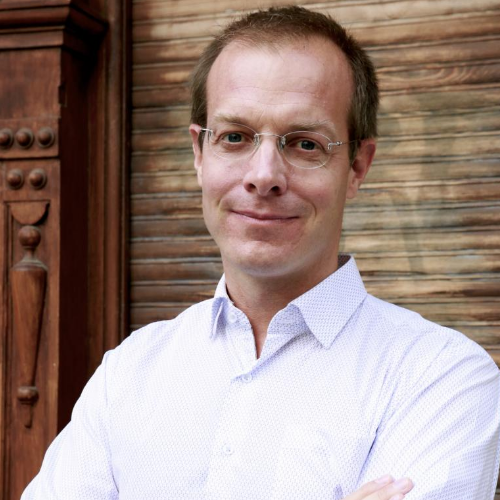
Prof. Dr. Roger Rudolph holds the Chair of Labor and Private Law at the University of Zurich's Law Faculty. His research focuses on labor law jurisprudence, employment contracts, and workplace legal disputes. He co-hosts the podcast Arbeitsrecht Inside , providing accessible insights into labor law challenges. His work includes analyzing Federal Supreme Court rulings, publishing widely in legal journals like ZBJV and plädoyer , and editing key texts such as Handbook of Employment Law . Rudolph collaborates with researchers like Christoph Reusser and Adrian von Kaenel, addressing topics like internal investigations, pandemic-era labor law, and contractual adjustments during crises. His team includes research assistants specializing in labor law, and he advises on legal frameworks impacting modern work environments. Despite no explicit mention of awards, his prolific publications and academic leadership reflect significant contributions to Swiss labor law discourse.
Stéphane BORDAS is a Full Professor in Computational Mechanics at the University of Luxembourg's Faculty of Science, Technology and Medicine (FSTM), leading the Computational Mechanics (Legato) research group. His work focuses on free boundary problems, method development for complex geometries, and applications in fracture mechanics, biomechanics, and computational engineering. He previously held roles at Cardiff University and the Swiss Federal Institute of Technology in Lausanne (EPFL). His research integrates computational methods like XFEM, isogeometric analysis, and meshfree techniques to address challenges in engineering and medicine. Education: Ph.D. in Theoretical and Applied Mechanics, Northwestern University (2003) M.Sc. in Civil Engineering, École Spéciale des Travaux Publics and Northwestern University (1999) Research Interests: Computational Mechanics, Biomechanics, Finite Element Methods, Fracture Mechanics, High-Performance Computing, Isogeometric Analysis. Grants & Projects: ERC Starting Grant (RealTCut) for surgical simulation and material cutting FP7 ITN INSIST for meshless methods Labs/Teams: Computational Mechanics (Legato) Group at the University of Luxembourg. His work bridges academia and industry, with applications in aerospace, biomedical engineering, and materials science. He is active in open-source software development, including codes for XFEM, isogeometric analysis, and meshfree methods.
Prof. Dr. iur. Walter Boente is an Assistant Professor with tenure track in Private Law at the University of Zurich's Faculty of Law. His primary research focuses on the Swiss Civil Code (ZGB), comparative law, and specialized areas including family law, succession law, legal capacity, and disability rights. He leads the Chair of Boente, supervising research assistants like Yann Conti and Barbara Borkowski, and teaches courses such as Güter- und Erbrecht vertieft and Nachlassplanung . Education: Studied law at the Universities of Osnabrück (1995–1998) and Konstanz (1998–2000), earning first and second state examinations in law from Baden-Württemberg (2000) and Bavaria (2003). Completed his doctoral thesis Coexistence and Unity in Civil Law at Basel in 2011, followed by a habilitation procedure at Fribourg in 2017. Research emphasizes legal systems' coherence, disability rights implementation, and cross-jurisdictional comparisons. His publications include Der Erwachsenenschutz, Art. 360-387 ZGB (2015) and Familienrecht in a nutshell (2017). He frequently presents at international conferences, addressing topics like adult guardianship reforms and legal capacity safeguards. Teaches advanced courses on family and succession law, co-organizes workshops like the International Journal of Mental Health and Capacity Law seminar in 2017, and advises on projects such as the Netzwerk für Disability Studies . His work bridges civil law theory with practical applications in vulnerable populations' legal protections.


/photo/Marro_P_PRINT.jpg.jpg)