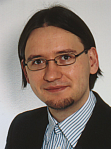
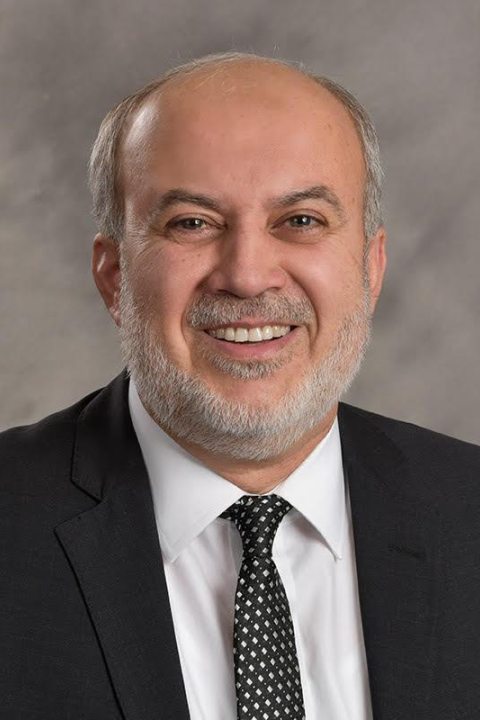
Dr. Marcel Dettling is a Group Lead in Data Analysis and Statistics at the ZHAW School of Engineering , focusing on predictive analytics, applied statistics, and complex data analysis. He also serves as a Lecturer at ETH Zurich , teaching advanced statistical methods. Education : PhD in Mathematics (2000-2004), ETH Zurich Postdoc in Applied Statistics (2004-2006), Johns Hopkins University His research spans predictive analytics (regression, classification, time series), data mining, and applications in health economics, transportation safety, social sciences , and business analytics . Recent work includes pharmaceutical cost group analysis for Swiss healthcare and predictive maintenance for marine vessels. Selected publications highlight his expertise in flight trajectory modeling , deep learning error mitigation , and statistical frameworks for rehabilitation finance . His projects address diverse fields like crowdworking in nursing, energy optimization for shipping, and customer behavior prediction.
Prof. Dr. Frank Meisel holds the Chair for Supply Chain Management at the Christian-Albrechts-University of Kiel, within the Faculty of Law, Economics and Business. His research focuses on mathematical modeling and quantitative solution methods for the design and operation of production, distribution, and service networks. 1998-2003: Studied Traffic Engineering at the Technical University of Dresden 2008: Received Dr. rer. pol. with thesis "Seaside Operations Planning in Container Terminals" 2014: Completed Habilitation in Business Economics with thesis "Papers on the Design and Operations of Production-, Distribution- and Service-Networks" Since 2013: Professor of Supply Chain Management at Kiel University Prof. Meisel's research spans multiple areas of logistics and operations research. His primary interests include maritime logistics, particularly container terminal operations; vehicle routing problems with synchronization requirements; and integrated planning of production-distribution networks. He develops mathematical models and optimization algorithms to address complex logistical challenges in various industry contexts, from seaport operations to healthcare logistics and urban waste management. His work bridges theoretical operations research with practical logistics applications across diverse sectors. His publication record demonstrates a progression from specialized maritime logistics problems to broader supply chain applications. Recent work shows increasing focus on sustainability considerations and the integration of multiple operational decisions across different parts of supply networks. His research has significant practical implications for container terminal operations, intermodal transportation, and service logistics. Prof. Meisel actively contributes to the academic community through conference presentations at major events including EURO, IFORS, and specialized workshops on maritime logistics. His work appears in top-tier journals such as Transportation Science, European Journal of Operational Research, and Computers & Operations Research. He teaches courses including Supply Chain Management, Production and Logistics, and Operations Management at both undergraduate and graduate levels. His educational contributions include developing curriculum for English-language business programs and supervising student research projects in logistics optimization.
Professor Julia Race is a leading academic in the Department of Naval Architecture, Ocean and Marine Engineering at the University of Strathclyde’s Faculty of Engineering, where she also serves as Vice Dean (Academic). Her research focuses on the role of pipeline infrastructure in achieving net-zero emissions, particularly through carbon dioxide transport for Carbon Capture and Storage (CCS) and hydrogen energy systems. PhD, University of Cambridge – Carbon diffusion across dissimilar steel welds (1992) BEng, University of Sheffield (1989) Her research interests center on the adaptation of energy infrastructure for decarbonization, combining engineering, risk assessment, and socio-economic analysis. She investigates material specifications for CO₂ and H₂ pipelines, quantitative risk assessments, hydraulic design, and the wider economic impacts of energy transitions. Her work is closely tied to UN Sustainable Development Goals, particularly those related to climate action and sustainable industry. The recent publications reflect a strong trend toward interdisciplinary research at the intersection of engineering, economics, and policy. Her work increasingly emphasizes the socio-economic dimensions of decarbonization, including employment impacts, labour supply constraints, and regional economic benefits of CCS and hydrogen infrastructure. There is a clear focus on UK industrial clusters and the role of Scottish CO₂ transport systems in national and international markets. Julia Race has contributed to several policy briefings and collaborative reports with key stakeholders including the Scottish Government, OEUK, and Storegga. She is actively engaged in research projects funded by EPSRC, NERC, and the British Council, focusing on early-career development, maritime decarbonisation, and engineering education equity. Co-investigator, Strathclyde Engineering Scholars – Equal Outcomes for the Most Disadvantaged (2025) Principal Investigator, EPSRC/NERC CDT in Offshore Renewable Energy (IDCORE 2) (2019–2028) Co-investigator, Empowering Early Career Researchers to Advance Maritime Decarbonisation in Indonesia (2024–2026) Co-investigator, Green Hydrogen Integration at Sullom Voe (2023–2024) She plays a key role in policy outreach and professional engagement, regularly participating in workshops and meetings with government and industry stakeholders. Her leadership extends to diversity and inclusion in engineering education, where she contributes to initiatives aimed at supporting disadvantaged students.
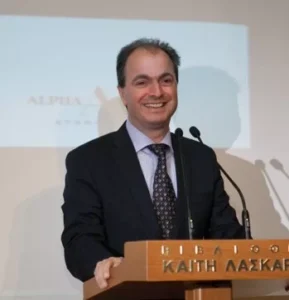
Panagiota Antonopoulou is a Professor at the University of Peloponnese , affiliated with the Faculty of Human Movement Sciences and Quality of Life and the Department of Sports Organization & Management . Her work bridges media studies , political communication , and sports management , with a focus on place branding and digital media impacts . Education: Doctoral degree in Sociology from Panteion University (dissertation: The role of television in national elections , Grade: Excellent) Research interests include: Sports, media, and political communication interactions Place branding through ultra-distance events like Spartathlon Crisis management in sports organizations Sustainable tourism and urban identity (e.g., Piraeus, Sparta) Strategic HRM in sports events and facilities Recent publications highlight: Algorithmic journalism in sports reporting (2018) Media's role in shaping perceptions of sports violence (2012–2017) Place branding strategies for regional development (2017) Evolution of Greek sports press and radio (2008–2012) She teaches courses such as: "Sports Journalism and Media" (2015–present) "Tourism Politics and Strategy" (2015–present) "Communication and Writing Skills" (2010–present)
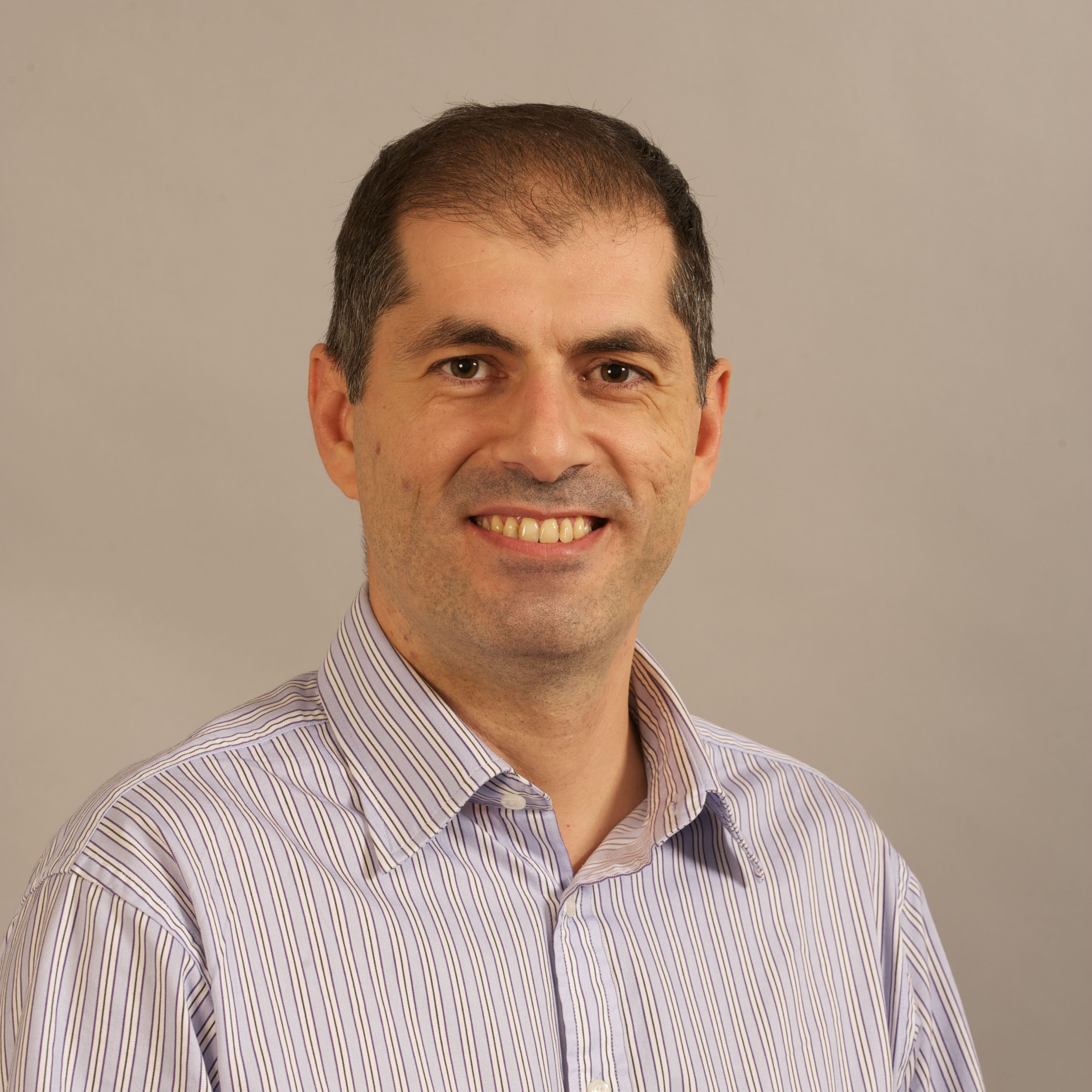
Dr. Fabio Ballini is an Associate Professor specializing in Maritime Energy Management at World Maritime University. With a PhD in Electrical Engineering from the University of Genova, his research focuses on sustainable maritime solutions including port energy management, circular economy applications, and ship emission control technologies. He has led numerous EU-funded projects such as Horizon Europe's SeaNergy and CyberMar. Research Expertise: Air pollution abatement, externality cost analysis, and clean-tech solutions for maritime transport. His work bridges economic and environmental dimensions of port operations. Professional Experience: Former Adjunct Professor at the University of Genova teaching Maritime Economy and Social Cost-Benefit Analysis. Extensive project management experience across EU programs including TEN-T and Interreg.
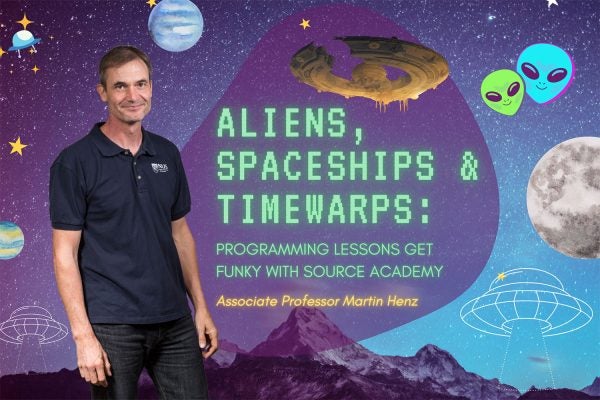
Martin Henz is an Associate Professor at the National University of Singapore , affiliated with the School of Computing and its Department of Computer Science . His academic journey includes an M.Sc. in Computer Science from Stony Brook University (1993) and a Dr.rer.nat. in Computer Science from Saarland University (1997). He has also worked as a Research Scientist at the German Research Centre for Artificial Intelligence. Research Focus : Scalable Experiential Learning, Systems for Teaching/Learning, AI in Education, Programming Languages, Algorithms, and Constraint Programming. Key Projects : Source Academy (immersive programming environment), Deep Teaching (LMS enhancements), and NUS Seafarers (maritime experiential learning). Publications span education technology, programming languages, and sustainable engineering, with recent works focusing on JavaScript-based pedagogy, automated question generation, and electric vehicle conversions. He supervised Rahul Singhal 's PhD, leading to the educational startup Cerebry, and co-founded Workforce Optimizer Pte Ltd with Alan Sevugan. Awards : NUS Annual Digital Education Award (2021) NUS Annual Teaching Excellence Award (2016/17) Fulbright Scholarship (1990) Startup @ Singapore Champion (2001)
María José Piñeira Mantinán is a Professor at the University of Santiago de Compostela, affiliated with the Department of Geography within the Faculty of Geography and History. She is part of the Institute of Studies and Development of Galicia (IDEGA) and leads the ANTE research group focused on territorial analysis. Her doctorate (2005) from the same university examined urban structures in A Coruña, supervised by Dr. Xosé Manuel Santos Solla and Dr. Petros Petsimeris. Her research interests center on urban geography, particularly urban planning, tourism impacts, social vulnerability, housing policy, and regional development. She explores how urbanization processes intersect with economic, social, and environmental challenges, with a focus on Spanish cities and peripheral regions. Her recent work highlights trends in urban segregation, the effects of touristification on historical centers, and innovative housing solutions. She has also addressed environmental challenges like flood mitigation in Niamey and fisheries policy impacts in Galician ports. Her interdisciplinary approach combines spatial analysis with socio-economic frameworks. No scientific awards are explicitly mentioned. She has advised one doctoral thesis (2005) and collaborates with IDEGA and ANTE to advance urban governance and territorial development initiatives. Her involvement with research groups like ANTE and IDEGA positions her at the forefront of urban studies in Galicia, contributing to policy-oriented research on sustainable urbanization and regional resilience.
Ioannis Theotokas is Professor of Maritime Business Administration and Department Chair of the Department of Maritime Studies at the University of Piraeus. He has extensive academic and professional experience in maritime business administration, having previously served as Secretary General of the Ministry of Shipping and Insular Policy and Deputy Secretary General of the Ministry of Economy, Infrastructure, Shipping and Tourism. Education: Studied at the University of Piraeus (Department of Economics) PhD in Maritime Business Administration from the Department of Maritime Studies, University of Piraeus Professor Theotokas' research focuses on Maritime Business Administration, Business Strategy, and Human Resource Management in shipping. His work explores critical areas including Corporate Social Responsibility, Corporate Governance, Innovation, and Competitiveness in shipping. His interdisciplinary approach bridges theoretical frameworks with practical applications in the maritime industry, examining how organizational culture, leadership, and strategic management impact shipping companies' performance and sustainability. His recent scholarly output demonstrates a clear trend toward examining contemporary challenges in shipping, particularly digital transformation, human resource management in the context of industry changes, and sustainable business practices. His work spans theoretical frameworks and practical applications, with a strong emphasis on Greek shipping companies while maintaining a global perspective on maritime business administration. Professor Theotokas has actively participated in numerous research initiatives, serving as a scientific manager or researcher in European and national research programs funded by the European Commission, the Niarchos Foundation, the Ministry of Development, the Panhellenic Maritime Federation, and the Academy of Athens. These projects include KNOWME, CAPTAINS, MELES, INNOSUTRA, RURAL eGOV, and SLIM-VRT, focusing on employment, entrepreneurship, strategy in shipping, maritime education, and distance learning. He is an active member of the International Association of Maritime Economists and the Association of Maritime Economists of Greece, contributing to the advancement of maritime economic research and education. His leadership extends beyond academia through his previous governmental roles where he helped shape maritime policy in Greece.
Hans Petter Hildre is Head of Department at the Department of Ocean Operations and Civil Engineering , part of the Faculty of Engineering at the Norwegian University of Science and Technology (NTNU). His work focuses on maritime engineering, digital twin technology, and marine operations. Research interests include: Digital Twin Applications in Maritime Industry Offshore Operations and Wind Turbine Installation Marine Robotics and Autonomous Systems Wave Field Estimation and Environmental Load Analysis Human-Machine Interaction in Maritime Contexts Co-simulation and Real-time Monitoring Recent publications highlight trends in: Wave shielding effects for offshore vessels Knowledge transfer from automotive/aviation to maritime Crane path planning using digital twins Visual attention zone recognition systems Hydrodynamic modeling and sensitivity analysis Smart city-maritime integration Scientific collaborations span institutions including: European Commission (Future Skills Reports) Royal Institution of Naval Architects The American Society of Mechanical Engineers (ASME) IEEE Transactions on multiple domains Springer Publishing
Iraklis Lazakis is a Reader in Maritime Operations and Maintenance at the Department of Naval Architecture, Ocean and Marine Engineering (NAOME), within the Faculty of Engineering at the University of Strathclyde. He joined the university as a PhD researcher in 2007 and began his academic career in 2011, establishing himself as a key figure in maritime systems research and education. His research interests span a broad range of topics including ship operations, systems maintenance and reliability, condition monitoring, risk and asset management, shipyard productivity, and offshore renewable energy systems (wind, wave, and tidal). His work bridges academic theory with industrial application, drawing from his 8 years of prior industry experience in maritime surveys, accident investigations, and ship repairs. The trends in his recent publications reflect a strong focus on data-driven and digital solutions for sustainable maritime operations. Key themes include the development of simulation and optimization tools, application of virtual reality for safety, cost reduction in offshore wind O&M, and decarbonization strategies such as onboard CO2 capture. His work increasingly integrates AI, digital twins, and human factors to enhance system performance and crew wellbeing. He has received numerous accolades, including: SNAME Faculty Advisor of the Year (2024) SNAME WES Best Paper Award (2023) Multiple Knowledge Transfer Partnerships Certificates of Excellence (2020, 2022) Laureate of the Franz Edelman Award (2012) ISSC Committee IV.2 Membership (2012–2015) Lazakis actively supervises undergraduate, postgraduate, and PhD students, and leads or contributes to a wide portfolio of research and knowledge exchange projects. His recent projects include decarbonizing UK shipping, structural surveys of vessels like Calmac and the Royal Yacht Britannia, and development of low-cost underwater gliders. He plays a strategic role in supporting colleagues with funding applications, publications, and industry collaboration. His work contributes to UN Sustainable Development Goals related to sustainable energy and industry innovation.
Dr. Shobana Nair Partington serves as Head of the Department for Operations, Technology, Events, and Hospitality Management at Manchester Metropolitan University's triple-accredited Business School, leading a team of 60 academic staff serving over 2,000 students. With over 20 years of academic leadership experience, she also holds strategic university roles as Academic Co-Chair for the Race Equality Charter and Academic Co-Director for Accreditation. Her international teaching engagements span Switzerland, Bulgaria, and Malaysia, reflecting her global perspective on business education. Her educational foundation includes a Master's degree in Economics from the University of Leeds, funded by a Foreign and Commonwealth Office scholarship, and doctoral research at Manchester Metropolitan University supported by the Low Pay Commission. These qualifications underpin her evidence-based approach to labor market analysis. Shobana's research centers on systemic inequalities in hospitality employment, with particular focus on pay practices, working conditions, and minimum wage impacts. Her work bridges economic theory and practical industry applications, examining how structural factors shape employee experiences in service sectors. She integrates psychological safety frameworks with innovation studies to develop actionable insights for organizational change. Analysis of her publication trajectory reveals persistent themes in hospitality labor economics, with evolving emphasis from foundational minimum wage studies toward contemporary investigations of psychological safety and innovation. Her research consistently connects policy implications with operational realities in hotels, cruise ships, and tourism enterprises. Her scholarly contributions have been recognized through: Senior Fellowship of the Higher Education Academy Fellowship of the Institute of Professional Development As an academic supervisor, she has guided six PhD candidates to completion on topics ranging from hotel information systems to tourist transport experiences. Her department drives innovation through the Digital & Technology Solutions degree apprenticeship and applied research initiatives that help businesses adapt to technological disruption. She actively serves on the Chartered Association of Business Schools' Learning, Teaching and Student Experience Committee and as a Senator for the Institute of Professional Development. The department operates as a dynamic hub for industry-engaged scholarship, with faculty from diverse nationalities developing curricula that integrate digital fluency, data analytics, and creative problem-solving. Their research directly informs sector practices while addressing critical challenges like student award gaps and workplace inclusion through the Race Equality Charter framework.
Capt./Dr. Augusta D. Roth serves as Professor of the Practice and Director of Continuing Education for the Maritime Transportation program within the College of Marine Sciences & Maritime Studies at Texas A&M University at Galveston. Her extensive maritime operational background combines with academic leadership to shape curriculum and training programs, with her office located in Kirkham Hall (Room 122A) where she can be reached at 409-740-4471. Her educational foundation includes: Doctorate in Business Administration-Leadership from Walden University (2018) Master of Business Administration from Phoenix University (2008) Bachelor of Science in Maritime Transportation from Texas A&M University (1996) Dr. Roth's research centers on maritime workforce sustainability, specifically leadership dynamics in training vessel environments. Her work bridges business administration principles with practical maritime operations, examining organizational factors affecting mariner retention through both quantitative and qualitative lenses. This interdisciplinary approach integrates safety management systems with human resource strategies unique to the maritime sector. Her publication on leadership strategies for mariner retention demonstrates her focus on solving critical workforce challenges in maritime education. The research analyzes command structure effectiveness, crew morale drivers, and retention-focused leadership models aboard state academy training ships, contributing to evolving best practices in maritime professional development. Scientific Awards No scientific awards, fellowships, or medals were documented in the source materials. Advising and Grants While Dr. Roth's administrative role as Director of Continuing Education involves program oversight, the available information does not specify graduate student advisees or externally funded research grants under her direction. Professional Service Dr. Roth actively contributes to maritime governance as National Secretary/Treasurer of the Council of American Master Mariners and Houston Local Chapter Member. Her service extends to the Sea Aggie Former Student Network as Campus Liaison and Boy Scouts of America as Assistant Scout Master, reflecting her commitment to professional development and youth mentorship in maritime communities.
Ashraf Attia is a Professor of Marketing and Chair of the Marketing and Management Department at the School of Business, State University of New York at Oswego. He holds a B.A. from Cairo University, an MBA from The American University in Cairo, and a Ph.D. and MA from Old Dominion University. His research focuses on sales training evaluation, cross-cultural marketing ethics, and electronic marketing, with notable contributions to understanding social media's impact on behavioral change in political and economic contexts. Dr. Attia teaches courses such as Consumer Behavior and E-Marketing. His work has been recognized with awards including the 2016 President's Award for Scholarly Activity and the Best Paper Award (2005) from the Journal of Personal Selling & Sales Management. His research spans diverse fields, including the effects of dietary supplements on poultry productivity, structural analysis of materials, and the role of social media in global uprisings like Algeria and Sudan. Education: B.A., Cairo University MBA, The American University in Cairo MA and Ph.D., Old Dominion University His publications explore interdisciplinary themes, from marketing ethics to agricultural science, reflecting his broad academic interests. He actively engages in advising students and contributes to grants focusing on sales training and marketing strategies.
Piia Tint is a Professor at Tallinn University of Technology (TalTech), affiliated with the School of Business and Governance and the Department of Business Administration. She specializes in occupational health, ergonomics, and risk management. Her roles include leading the Ergonomics Laboratory and the Chair of Labour Environment and Safety, and she has organized significant events like the Baltic Sea Network in Occupational Health (BSN) Annual Meeting in 2015. Education: Doctorate in Chemical Processes (1977) from the Technical Institute of Lensoveta Postgraduate studies in Chemical Engineering (1972–1975) Advanced training in Occupational Health via Nordic Institute of Advanced Training (NIVA) Research Interests: Focuses on occupational safety, musculoskeletal disorder prevention, environmental risk assessment, and green shipping sustainability. Her work integrates ergonomic principles with digital tools and AI for workplace health improvements. Awards: 2018: Appreciation from Riga Technical University for cross-institutional collaboration 2012: Honors for scientific publications 2006: Best Researcher in Faculty of Economics Grants and Projects: Led over 16 projects, including EU-funded initiatives on telework for aging workers, green shipping impacts, and ergonomic interventions in healthcare. Key contributions include developing risk assessment methods and OHSAS 18001 compliance studies. Labs/Teams: Heads the Ergonomics Laboratory (accredited since 2003) and collaborates with international networks like the Finnish Ergonomics Society and Eurotox.
George N. Papageorgiou is a Professor of Management & Information Systems at the Gregoriou School of Business Administration, European University Cyprus. He serves in leadership roles including Deputy Dean (2012–2017) and PhD Programme Coordinator (2015–2017). He holds a PhD in Systems Modelling and Simulation from City University, London (1997), along with an MBA (1994) and First Class Honours in Engineering (1992). His research focuses on digital marketing competencies, smart urban mobility systems, entrepreneurship education, and system dynamics modeling for healthcare and sustainability. Notable projects include the SPN (Smart Pedestrian Network) system, funded by Horizon 2020, and the DIMAS project addressing digital marketing frameworks. Awarded the IEEE Best Paper Award (2017) and Innovation Distinction (SPARKS 2019), his work spans over 50 publications in journals like IEEE and Emerald. He actively reviews for IEEE, Emerald, and the System Dynamics Society. His consulting roles include EU research proposal evaluation and editorial work for Emerald. Key achievements include developing frameworks for sustainable urban mobility and green entrepreneurship education. He has led EU-funded projects totaling millions in grants, emphasizing interdisciplinary approaches to innovation and education.