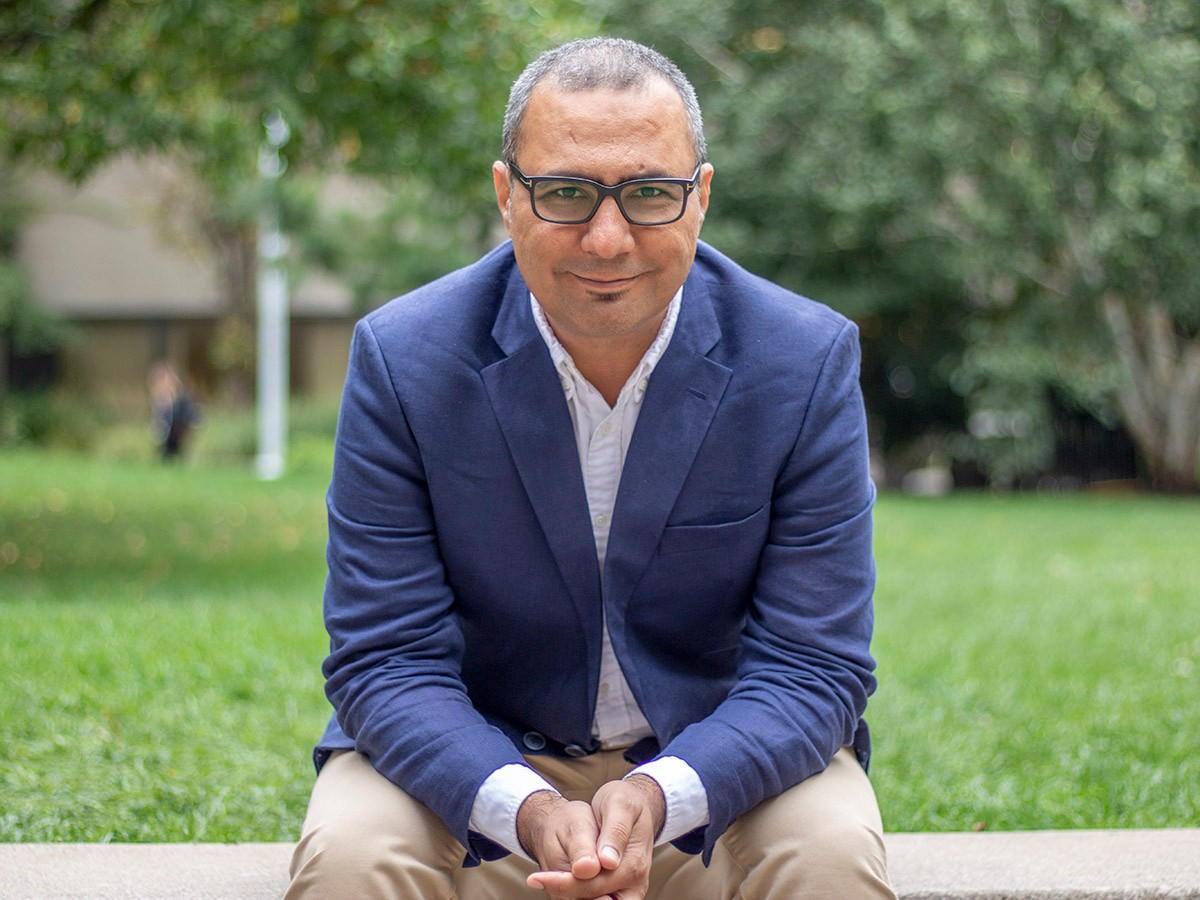
Georgia Chalvatzaki is a Professor in the Department of Computer Science at TU Darmstadt, leading the PEARL-Lab (Interactive Robot Perception and Learning Lab) with a team of 13 PhD candidates and postdocs. Her research focuses on human-centered robotics, integrating perception, planning, and action to develop robots that adapt to dynamic environments through structured knowledge embedding. Key research areas: Robotics, Artificial Intelligence, Machine Learning, and Human-Robot Interaction Applications: Healthcare (assistive systems), logistics automation, and sustainable agriculture Notable innovation: SE(3)-Diffusionsmodelle for 3D spatial learning in robots Her work combines model-based robotics with modern learning techniques like reinforcement learning and graph-based neural networks, enabling robots to transfer knowledge across scenarios and adjust behavior contextually. Georgia has received significant accolades, including: ERC Starting Grant (2024) Alfried Krupp Prize (2025, €1.1 million) Ellis Scholar recognition in the European Lab for Learning and Intelligent Systems She actively promotes open science, diversity, and early-career researcher development, serving as a keynote speaker at major conferences like IROS and CoRL.
Prof. Dr. Aimee van Wynsberghe is the Alexander von Humboldt Professor for Applied Ethics of Artificial Intelligence at the University of Bonn. She serves as Director of the Institute for Science and Ethics (IWE) and founded the Bonn Sustainable AI Lab. Her affiliations include the German National Academy of Sciences Leopoldina, the European Commission's High-Level Expert Group on AI (2018-2020), and advisory roles at Deloitte, the World Economic Forum, and the Konrad Zuse Schools for AI Excellence. . Education PhD in Applied Ethics, University of Twente (2012) M.A. in Bioethics, Erasmus Mundus (2008) M.A. in Applied Ethics, Catholic University of Leuven (2007) B.Sc. in Honours Cell Biology, University of Western Ontario (2006) Research Interests focus on integrating ethical frameworks into AI and robotics design. Key areas include AI ethics, robotics ethics, digital ethics, care ethics, and value-sensitive design. She pioneered ethical guidelines for care robots and explores systemic risks in AI sustainability. Publication Trends show a shift toward sustainability challenges in AI, analyzing hidden environmental costs, post-colonial biases in AI standards, and structural ethical frameworks. Her work bridges philosophy, technology, and policy to address global AI impacts. Scientific Awards L'Oréal UNESCO For Women In Science Award (2018) Grants include a 3.8M EUR Mercator Foundation grant (2022), 3.5M EUR Humboldt Professorship (2021), NWO Gravitation Grant (2020), and others. She advises governments and institutions on AI ethics and co-founded the Foundation for Responsible Robotics. Labs & Teams : She leads the Bonn Sustainable AI Lab and has directed the Artificial Intelligence Lab at TU Delft. Her work involves interdisciplinary collaborations, including the interdisplinary task force at Aarhus University (2025).
Dr. Iro Armeni is Assistant Professor of Civil and Environmental Engineering at Stanford University, leading the Gradient Spaces research group. Her interdisciplinary research bridges architecture, civil engineering, and computer vision to develop data-driven methods for sustainable and adaptive built environments. Professor Armeni's work focuses on creating gradient environments that blend physical and digital realities through mixed reality technologies. She develops computational methods for 3D scene understanding, generative design, and adaptive spaces that respond to human needs. Her research integrates AI with architectural design to improve sustainability, inclusivity, and reusability of built spaces. Current projects include 3D scene graph representations, automated BIM modeling from visual data, and neuro-symbolic approaches for design optimization. She has developed tools like HoloLabel (AR semantic labeling) and SemSpray (VR annotation) for construction information management. Professor Armeni holds a PhD from Stanford University, supported by a Google PhD Fellowship, and completed postdoctoral research at ETH Zurich with an ETH Fellowship. She teaches courses on Computer Vision for the Built Environment and Mixed Reality applications.
Elena Simperl is a Professor of Computer Science and Deputy Head of Department for Enterprise and Engagement at King's College London's Department of Informatics. She co-directs the King's Institute for Artificial Intelligence and serves as Director of Research for the Open Data Institute. As a Hans Fischer Senior Fellow at the Technical University of Munich's Institute for Advanced Study, she leads the Trustworthy Knowledge Graphs focus group and contributes to advancing human-centric AI research across European institutions. Professor Simperl obtained her doctoral degree in Computer Science from the Free University of Berlin and her diploma from the Technical University of Munich. Prior to joining King's, she held academic positions in Germany, Austria, and at the University of Southampton, and was a Turing Fellow. Her career trajectory demonstrates consistent leadership in bridging academic research with practical applications in data ecosystems. Her research sits at the critical intersection of AI and social computing, focusing on human-centric approaches to building sociotechnical systems that integrate data, algorithms, and human capabilities. She investigates how to make knowledge engineering more accessible, how to leverage collective intelligence for data quality improvement, and how to design participatory AI systems that address societal challenges like misinformation. Her work spans knowledge graphs, semantic technologies, crowdsourcing, and open data, with particular emphasis on the social dimensions of data-intensive systems and the governance frameworks needed for trustworthy AI deployment. Analysis of her recent publications reveals a strong evolution toward integrating large language models with traditional knowledge engineering practices while maintaining human oversight. There's a clear trajectory from foundational work on knowledge representation toward increasingly applied research addressing real-world challenges in media ecosystems, citizen science, and data governance, with growing attention to policy implications of AI technologies. Fellow of the British Computer Society Fellow of the Royal Society of Arts Hans Fischer Senior Fellow at TUM-IAS (2023) Ranked among top 100 most influential scholars in knowledge engineering of the last decade Included in Women in AI 2000 ranking Professor Simperl has led 14 major European and national research projects totaling millions in funding, including MediaFutures (a Horizon 2020 program tackling online misinformation), QROWD, ODINE, Data Pitch, and ACTION. She currently co-chairs the Croissant working group in ML Commons developing data standards for AI, and serves as president of the Semantic Web Science Association. Her research has directly influenced the development of data ecosystems supporting startups and citizen science initiatives across Europe, demonstrating exceptional ability to translate theoretical advances into practical impact. As Director of Research at the Open Data Institute, she oversees initiatives connecting data entrepreneurs with artists and civic organizations. Her leadership in the MediaFutures project established a data-driven innovation hub that supported 51 startups/SMEs and 43 artists through three open calls, creating a sustainable model for arts-technology collaborations addressing media challenges. Her work with the ODINE project helped create a European ecosystem for data-driven startups, demonstrating her commitment to building practical applications of open data principles.
Bilal Farooq is an Associate Professor and Program Director for the Master of Engineering in Interdisciplinary Engineering (MEIE) at Toronto Metropolitan University, holding the Canada Research Chair in Disruptive Transportation Technologies and Services within the Department of Civil Engineering. His educational background includes a PhD from the University of Toronto (2011), MASc from Lahore University of Management Sciences (2004), and BSc from the University of Engineering and Technology (2001). Dr. Farooq's research pioneers disruptive transportation solutions through cyber-physical systems, AI/machine learning applications, behavioral modeling, and optimization techniques. His work specifically targets on-demand multimodal systems, sustainable urban transportation, urban air mobility, automated vehicles, and extended reality applications, addressing critical urban mobility challenges with human-centered approaches. Analysis of his recent publications reveals a strong trend toward quantum-enhanced computational methods, privacy-preserving federated learning frameworks, and sustainability-focused decarbonization strategies across transportation domains, with increasing emphasis on human factors and real-world implementation. Notable scientific awards include: Ontario Early Researcher Award (2018) Canada Research Chair (2017) MassMotion Academic Pedestrian Modelling Project of the Year (2016) Québec Early Researcher Award (2014) Dr. Farooq actively supervises graduate students and secures significant research funding through his Canada Research Chair position and Early Researcher Awards. He directs the Laboratory of Innovations in Transportation (LiTrans), which develops interdisciplinary solutions integrating mathematics, engineering, computer science, and economics to address emerging transportation challenges. LiTrans focuses on disruptive transportation technologies, complete streets design, cyber-physical systems, pedestrian dynamics, resilience, and climate change impacts, collaborating with industry and government partners to translate research into practical urban mobility innovations for smart cities worldwide.
Prof. Alexander Pretschner is a Professor of Software & Systems Engineering at the Technical University of Munich (TUM) and Founding Director of the Bavarian Research Institute for Digital Transformation (bidt). He also serves as Scientific Director of fortiss, a Bavarian research institute for software-intensive systems. His research focuses on software engineering, testing, information security, and ethical software development. Pretschner holds a PhD from TUM and has held academic positions at Karlsruhe Institute of Technology (KIT) and TU Kaiserslautern. He is a co-editor of several prestigious journals, including IEEE Transactions on Reliability and the Journal of Software Testing, Verification and Reliability. Education: PhD in Computer Science, Technical University of Munich MSc in Computer Science, University of Kansas (on Fulbright Scholarship) Diplom in Computer Science, RWTH Aachen University Research Interests: His work spans testing methodologies, secure software design, and ethical considerations in agile development. Notable contributions include frameworks for metamorphic testing, distributed data usage control, and accountability mechanisms for cyber-physical systems. Awards: IBM Faculty Award (2012, 2013) Google Focused Research Award (2011, 2012) EARTO Innovation Prize (2014) 2nd Platz Supervisory Award (2020) Advising & Grants: Pretschner has supervised numerous PhD and Master’s students, contributing to over 200 publications. He leads projects like EDAP (Ethical Deliberation in Agile Processes) and collaborates with industry partners on cybersecurity and AI ethics initiatives. Labs & Teams: His work is anchored in bidt, fortiss, and TUM’s Chair of Software & Systems Engineering, focusing on societal impacts of digitalization and trustworthy AI systems.
Prof. Jochen Hartmann holds the Digital Marketing professorship at the TUM School of Management (Munich). Previously, he was an assistant professor at the University of Groningen's School of Business and Economics and worked as a management consultant at McKinsey & Company. He earned his doctorate from the University of Hamburg and coordinated the DFG research group FOR 1452 (2019-2022). His research focuses on digital marketing and machine learning, particularly analyzing unstructured data (computer vision, NLP) and generative AI. Key themes include social media, algorithmic fairness, diversity in advertising, and human-machine interactions. Education: Ph.D. in Business Administration (University of Hamburg), Management Consulting experience at McKinsey & Company. Research interests combine cutting-edge AI techniques with marketing challenges. Recent work explores generative AI's impact on advertising, algorithmic bias in finance, and visual search innovations. His text/image mining studies rank among top-cited articles in marketing journals like the International Journal of Research in Marketing and Journal of Marketing Research. Awards include the EMAC-Sheth Sustainability Award, Lindau Nobel Laureate Meetings' Young Economist distinction, and multiple best dissertation awards. Grants: Led DFG-funded research group (2019-2022). Affiliated with Columbia Business School (visiting scholar) and Mannheim Business School (lecturer in machine learning). Labs/Teams: Active in interdisciplinary research groups focusing on AI applications in marketing and business analytics.
Dr Duncan Smith is an Associate Professor in GIS and Visualisation at the Centre for Advanced Spatial Analysis (CASA) at University College London (UCL). He serves as Programme Co-Director for the MSc Urban Spatial Science, focusing on digital visualisation and Geographical Information Systems (GIS) education. His research emphasizes urban sustainability, transport accessibility, and interactive urban visualisation, with a particular interest in global mega-cities like London, Singapore, and São Paulo. Dr Smith holds a PhD from UCL (2011), an MSc from the University of Edinburgh (2005), and a BA (2003). His recent projects include leading the ESRC-funded Driving Urban Transitions project (2024) exploring sustainable travel in small cities and outer metropolitan areas. Previously, he was Co-Investigator on the SIMETRI project (NSFC JPI Urban Europe) analyzing urban sustainability in London, the Randstad, and China's Greater Bay Area. His research interests span urban visualisation techniques, transport equity analysis, and polycentric urban development. Key areas include GIS-driven urban modelling, accessibility metrics, and the intersection of housing policy with sustainable urban form. His interactive visualisations, available on citygeographics.org , showcase innovative approaches to spatial data presentation. Dr Smith's work consistently addresses global sustainability challenges through geospatial methodologies. Recent studies highlight inequalities in transport accessibility and the spatial implications of urban policies. Upcoming projects will further investigate small-city mobility dynamics using multi-national collaborations with Amsterdam and Lisbon researchers.
Ian Ewart is an Associate Professor at the University of Reading's School of the Built Environment, serving as Head of Construction and Engineering Management and Research Group Lead for Organisation, People and Technology. He chairs the Research Ethics Committee since 2016 and supervises undergraduate/postgraduate dissertations. His academic journey spans engineering and anthropology: DPhil Social and Cultural Anthropology, University of Oxford, St Hugh's College (2007-2012) MSc Material Anthropology and Museum Ethnography, University of Oxford, St Hugh's College (2006-2007) BA (Hons) Archaeology and Anthropology, University of Oxford, Harris Manchester College (2003-2006) Diploma in Management Studies, University of the West of England (1990-1994) BEng (Hons) Mechanical Engineering, Staffordshire University (1983-1987) Ewart's research integrates ethnographic methods with digital technology studies, examining human-technology interactions in construction and domestic settings. His work bridges engineering practice and social anthropology, focusing on skill transmission, sustainable design, and multisensory experiences in virtual environments. Publications from 2025-2013 reveal a dominant trajectory in digital twins for socio-ecological sustainability, VR-based occupant behavior prediction, and HBIM for heritage conservation. The corpus demonstrates consistent cross-disciplinary innovation, merging archaeological reconstructions with healthcare applications while maintaining anthropological rigor. Key recognition: ESRC Future Research Leader fellowship (2013) for Designing Healthy Homes project He supervises PhD candidates like Afolabi Dania (Nigerian sustainable construction) and Joanna Hull (Heritage BIM), leveraging ESRC funding for ethnography-VR health studies. His grants emphasize participatory design and real-world impact assessment in built environments. Leaders the Organisation, People and Technology research group, developing multisensory Roman town reconstructions with sound/smell integration to advance archaeological and architectural experience modeling.
Marcos Cruz is Professor of Innovative Environments at The Bartlett School of Architecture, University College London (UCL), where he leads research in bio-integrated design. He runs Bio-ID with Dr. Brenda Parker, a multidisciplinary research platform investigating design driven by biotechnology, computation, materials, and fabrication. Previously, he served as Director of The Bartlett from 2010-2014 and founded the BiotA Lab (2014-2018). His academic career spans multiple institutions including University College London (where he ran MArch Unit 20 for 19 years), University of Westminster (2008-2010), UCLA (2010), and IAAC (2014-present). Professor Cruz holds a Licenciatura from ESAP Porto, a Masters with distinction from UCL, and a PhD from UCL (2007), sponsored by the Portuguese Foundation for Science and Technology. His doctoral research on 'Neoplasmatic Architecture' earned him the RIBA President's Research Award in 2008. He is a registered architect with both the Architects Registration Board (ARB) and the Portuguese Architecture Chamber. His primary research area is Bio-Integrated Design, which explores how biotechnology and computation can reshape our built environment in response to climate change. This work goes beyond using nature as inspiration; instead, it treats nature as the medium for a multi-layered design approach. His key research project, Poikilohydric Living Walls, investigates integrating growth systems directly on building facades using algae and mosses that can switch photosynthetic activity on and off without additional maintenance. Another significant research area is The Body in Architecture, which examines the relationship between human flesh and architectural flesh, proposing a 'thick embodied flesh' that creates truly inhabitable architectural interfaces. His recent publications demonstrate a strong progression toward integrating living systems directly into building materials and facades. The research spans from microbial to tectonic scales, with increasing focus on biomaterials, robotic fabrication, and sustainable design approaches that actively participate in urban ecosystems rather than merely responding to them. RIBA President's Research Award (2008) for 'Neoplasmatic Architecture' Multiple Best Unit awards at Bartlett Summer Show (awarded by Thom Mayne, Paul Finch, Richard Rogers, Claude Parent, and Ross Lovegrove) Work part of permanent collection at FRAC Orleans Exhibitions at Venice and São Paulo Biennales Professor Cruz has supervised numerous PhD students through UCL's Research-by-Design programme and currently directs the MArch/MSc in Bio-Integrated Design. His research has been supported by EPSRC and involves industrial partners including Laing O'Rourke, Pennine Stone Limited, and Amorim, with academic partners at UCL Biochemical Engineering, University of Coimbra, and IST Tomar. He co-founded MAM-ARCH London (formerly marcosandmarjan) in 2000, whose work has built buildings and pavilions, won international competitions including the Kunsthaus Graz, and been exhibited globally. His practice represents a significant bridge between architectural design and biological systems, positioning him at the forefront of bio-integrated architectural research.
Magnus Liebherr is a Professor at the University of Duisburg-Essen , focusing on Technology Acceptance , Artificial Intelligence , and Sustainable Transportation . His work bridges Business Administration with Human-Computer Interaction , exploring how users adapt to emerging technologies like autonomous vehicles and AI systems. Key research areas include: Acceptance of AI applications in mobility Business model development for climate-neutral transportation Cognitive and psychological factors in technology interaction Digital media effects on adolescent well-being Trust calibration in automated systems His recent publications examine Large Language Model dependency , gamified language learning , and mental workload metrics for autonomous vehicles. While no formal awards are listed, his interdisciplinary work spans psychology , engineering , and business strategy .
Mazdak Nik-Bakht is an Associate Professor at Concordia University's School of Building, Civil, and Environmental Engineering. His work bridges construction engineering with digital innovation, focusing on smart infrastructure and sustainable development. PhD, Construction Engineering & Mgmt., University of Toronto PhD, Structural Engineering, Iran University of Science & Technology MASc & BASc, Structural and Civil Engineering, Iran University of Science & Technology His research integrates Artificial Intelligence and Social Network Analysis into construction management systems. Key areas include: Smart infrastructure and urban computing Deconstruction and circular economy principles Building Information Modeling (BIM) and digital twinning Process mining in Architecture, Engineering, and Construction (AEC) industry Decision models in construction project management Semantic computing and computational linguistics applications Recent publications show a focus on BIM analytics , urban resilience , and social media's role in infrastructure planning . Papers often combine AI and network theory to solve complex construction challenges. 2015 Outstanding paper award - Built Environment Project and Asset Management journal He teaches courses on: Big Data Analytics for Smart City Infrastructure Building Information Modeling (BIM) for Construction Building Economics Project Cost Estimating
Assoc. Prof. Dr. Sema Alaçam Doğan has been affiliated with Istanbul Technical University since 2014, serving as an Associate Professor in the Department of Architecture . She has held administrative roles including Deputy Head of Department and Erasmus Coordinator. Education : PhD in Informatics in Architectural Design (2008-2014), MS in Informatics in Architectural Design (2005-2008), and BS in Architecture (1999-2005) from Istanbul Technical University. Her research explores Computational Design , Artificial Intelligence in Architecture , and Sustainable Material Innovation . She investigates digital tools for heritage preservation, daylight optimization in BIM, and cognitive development in architecture students. Recent publications analyze AI-assisted design literacy , machine learning for Sinan mosques , and environmental comfort in Harran houses . Her work integrates algorithmic frameworks with sustainable practices. Scientific awards include multiple ITU Publication and Performance Awards (2021-2024), FABFEST Prizes , and the 2024 Artemis Educator Award from NASA. Active projects like "Physical Computation in Architectural Drawing" and "Robotic Fabrication with Recycled Wind Turbine Blades" demonstrate her leadership in computational and sustainable research.
Masood Masoodian is an Associate Professor in the Department of Art and Media at Aalto University, Finland. He leads the Visual Communication Design research group, focusing on interactive visualization for health, energy, and sustainability contexts. Previously, he held roles at the University of Waikato (2000-2016), University of Southern Denmark, and Massey University. Education: Doctoral degree in Other disciplines from the University of Waikato (1999) Research interests include design thinking, visualization of complex data, and creative aging interventions. Notable projects include the EU-funded INT-ACT initiative (2024-2026) addressing intangible cultural heritage. He has received an award for collaborative work on video game ludonarrative analysis (2019). Recent activities include organizing workshops on map-based interfaces, co-creating cultural heritage methods, and delivering public talks on digital design. Supervised two theses and contributed to 131 peer-reviewed outputs, emphasizing human-centered design and sustainability. Grants: Principal investigator for multiple EU projects totaling over 3 years of active funding. Awards: Prize for 'Comedy in the Ludonarrative of Video Games' (2019). Labs/Teams: Visual Communication Design group, collaborating internationally on projects like INT-ACT's cultural heritage mapping.
Jihyun Lee is an Assistant Professor in the Department of Mechanical and Manufacturing Engineering at the Schulich School of Engineering, University of Calgary. She was awarded the Anna Boyksen Fellowship by the Technical University of Munich Institute for Advanced Study (TUM-IAS) in 2021, hosted by Prof. Michael Zäh. Doctorate in Mechanical Engineering from University of Michigan-Ann Arbor (2016) Prior post at Korea Institute of Machinery and Materials (2016-2019) Her research focuses on mechatronics, robotics, manufacturing automation, and control systems , with applications in machine tools, additive manufacturing, and precision measurement. She integrates artificial intelligence and optimization to enhance industrial automation. Recent publications highlight work on vibration control , sensor fusion , and flexible manufacturing systems . Her team explores dynamic modeling , nanocomposite sensors , and human-in-the-loop robotics for industrial and marine applications. 2020 Remote Teaching Award, Schulich Engineering 2020 Early Achievement Award, Association of Korean-Canadian Scientists and Engineers 2018 Best Achievement Award, KIMM She supervises doctoral and master’s students at the University of Calgary, emphasizing hands-on experience and MATLAB/Python simulation skills in her lab. Her work bridges quantum logic and industrial robotics through interdisciplinary collaborations.