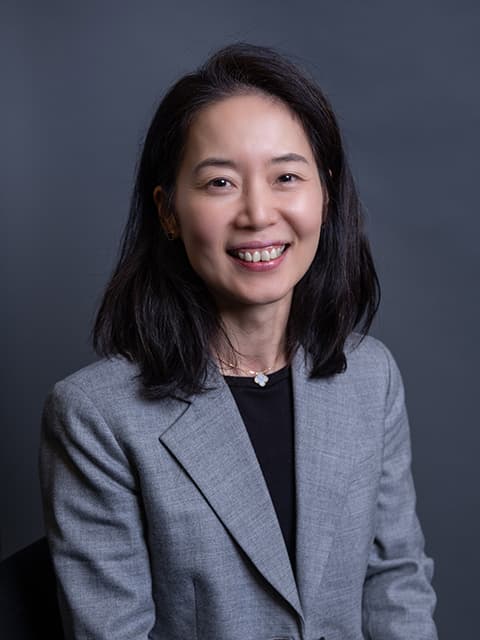
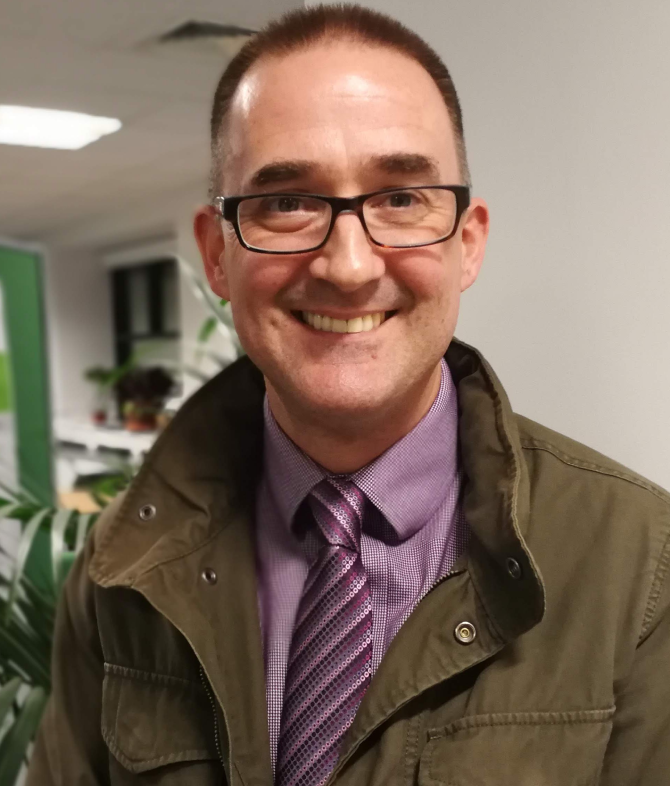
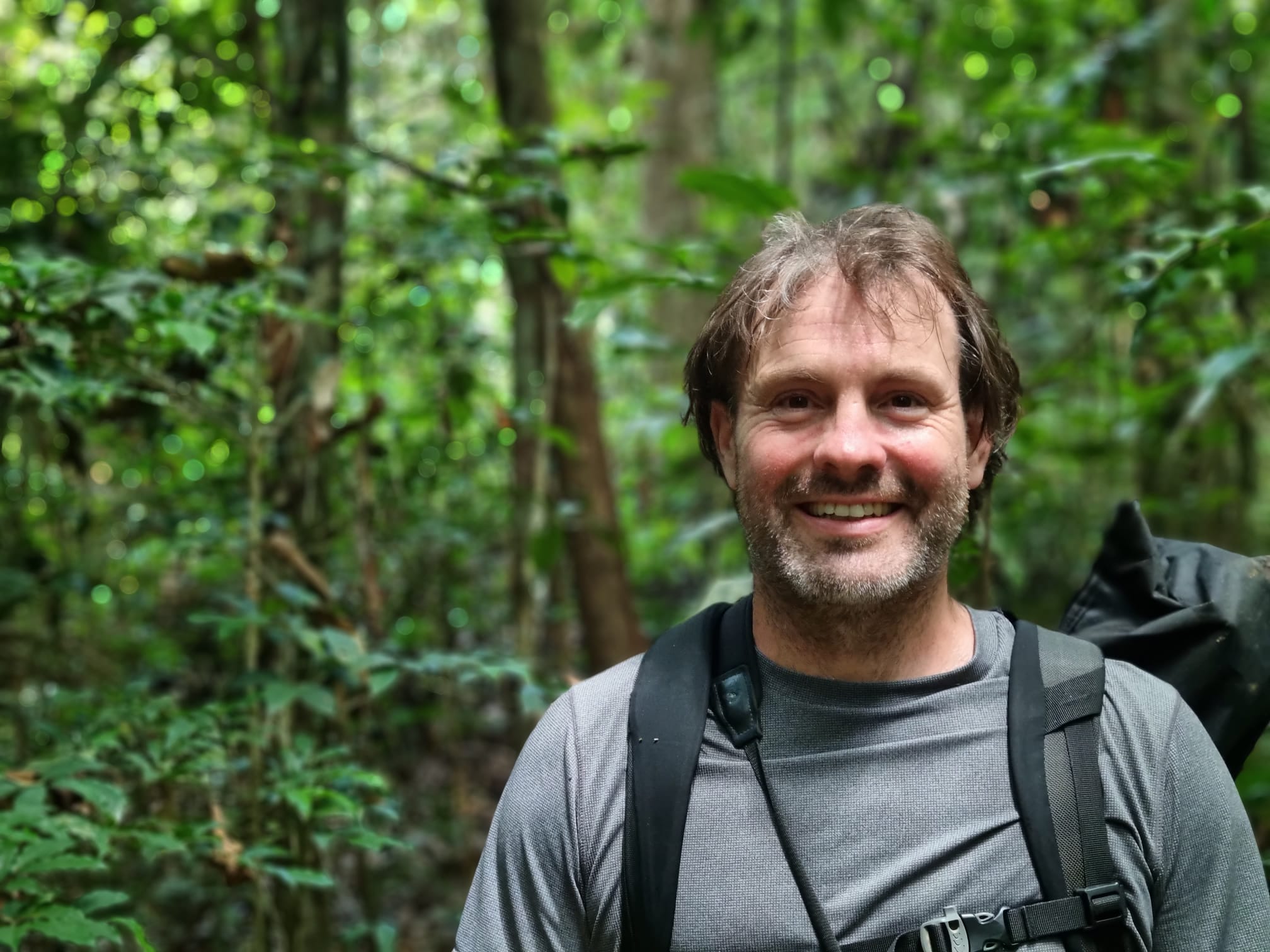
Professor Sarah Lauwo is a faculty member at the Aberdeen Business School, Robert Gordon University, specializing in social accounting, corporate social responsibility (CSR), and accountability mechanisms. Her research explores sociological theories applied to accounting dynamics, particularly in resource-rich regions and developing economies. She has held teaching positions at institutions in the UK and Africa, including the University of Dar es Salaam and the University of Essex. Qualifications : Doctor of Philosophy (PhD) in Accounting, University of Essex (2006–2011) Master of Business Administration (MBA), University of Dar es Salaam (2000–2002) Bachelor's Degree in Accounting, University of Dar es Salaam (1997–2000) Research Interests : Corporate social responsibility (CSR) and environmental accounting Accountability in sustainable development goals Transparency in extractive industries and public governance Her articles focus on topics such as anti-corruption in public procurement, CSR reporting in stigmatized industries, and fiscal discipline reforms. She has contributed to journals like the Accounting, Auditing and Accountability Journal and Critical Perspectives on Accounting . Awards : Associate Fellow, Higher Education Academy (2009) Certified Public Accountant (CPA), Tanzania (2004) Teaching involves advanced modules on literature reviews and PhD supervision. She advises on topics like accountability in public sectors and corporate governance.
Dr. Sue Park serves as a Lecturer in International Business, Strategy and Innovation, specializing in interdisciplinary research at the intersection of sustainable development, frugal innovation, and circular economy. Her work examines sociological and economic dimensions of grassroots enterprises in developing countries and the role of public/private actors as change agents for sustainable development goals. Her research adopts a critical perspective on traditional development pathways, emphasizing collaborative approaches to achieve sustainability targets. Key investigations include frugal business models in constrained environments, circular economy transitions in developing nations, and IoT-enabled innovations for bottom-of-the-pyramid communities. Park bridges academic theory with practical policy applications through her background in international economic policy and development practice. Dr. Park contributes to the International Business, Strategy and Innovation research group, with publications spanning Technovation, Business Strategy & Development, and IEEE Transactions on Engineering Management. Her scholarly output demonstrates consistent focus on sustainable innovation systems, with recent work (2022-2024) examining technical functionality in circular business models and frugal entrepreneurship for social challenges.
Andrew P. Dicks is a Teaching Professor in the Department of Chemistry at the University of Toronto, serving as Associate Chair for Undergraduate Studies. His work focuses on transforming chemistry education through green laboratory practices, sustainable curricula, and innovative pedagogical strategies. He has spearheaded the redesign of undergraduate organic chemistry labs to emphasize microscale experiments, green chemistry principles, and collaborative learning. His research explores methods to integrate the United Nations Sustainable Development Goals into education and has been recognized with the ACS-CEI Award for an undergraduate catalytic chemistry course. Dr. Dicks’ administrative contributions include mentoring faculty and developing programs like the Chemistry Teaching Fellowship. He advocates for teaching assistant training, writing instruction, and student learning communities. His lab initiatives emphasize real-world relevance, using waste materials (e.g., McDonald’s cooking oil) and natural media (citrus juice) to demonstrate chemical principles. Notable research themes include solvent-free reactions, energy-efficient microwave techniques, and metrics for evaluating reaction greenness. His articles highlight trends in green chemistry education, pandemic-driven pedagogical adaptations, and interdisciplinary approaches to materials science. Awards include the ACS-CEI Award, reflecting his impact on advancing sustainable chemistry education globally. Dr. Dicks also champions humor and puzzles in science communication to engage learners and foster a culture of curiosity.
Theodoros Zachariadis is a Professor and Interim Director of the Energy, Environment and Water Research Center (EEWRC) and the Science and Technology Driven Policy and Innovation Research Centre (STeDI-RC) at The Cyprus Institute. He previously served as Dean of the Faculty of Geotechnical Sciences and Environmental Management at the Cyprus University of Technology (2015–2020), and as Assistant/Associate Professor there (2009–2020). His expertise spans energy and environmental policy, climate change mitigation, and environmental taxation. He holds a Doctorate in Mechanical Engineering from Aristotle University of Thessaloniki. **Research Interests:** Techno-economic analysis of energy, environmental, and transport policies; environmental taxation; climate policy integration with Sustainable Development Goals (SDGs); decarbonization strategies; and green tax reforms. His work emphasizes cost-effective climate policies and equitable transitions. **Awards:** 2009 Research Prize of Cyprus (Republic of Cyprus) and 2019 Environmental Prize (President of Cyprus). He has been ranked in the top 2% of globally cited academics in Energy (2020s). **Affiliations:** Vice Chair of the Scientific Committee of the European Environment Agency, Manager of SDSN Europe, Leadership Council member of SDSN Cyprus, and former Visiting Professor at Aarhus University. He advises on EU climate policies and sustainable development. **Grants & Projects:** Extensive research on Cyprus’ energy policies, EU climate frameworks, and decarbonization pathways. Key outputs include analyses of the EU’s 'Fit for 55' package, green recovery strategies post-pandemic, and cross-border energy cooperation in the Eastern Mediterranean. **Labs/Teams:** Leads research teams at EEWRC and STeDI-RC focusing on policy design, climate adaptation, and techno-economic modeling. Collaborates with international networks like Green Budget Europe and the Journal *Energy Economics* (associate editor).
Prof Martin Spinelli is the UK's first named Professor of Podcasting and Creative Media at the University of Sussex's School of Media, Arts and Humanities. He leads podcast studies research, including the Bloomsbury Podcast Studies series and the award-winning The Rez children's podcast. His work emphasizes pro-social media for social change, such as the Agricultural Voices Syria project addressing UN Sustainable Development Goals. Education: PhD from State University of New York at Buffalo, plus degrees from University of Sussex and Virginia Tech. Former roles include founding the Academic Radio Program at CUNY Brooklyn College. Research focuses on podcasting's cultural impact, including youth engagement, audio editing poetics, empathetic media, and platform algorithms. Key grants include Arts Council England funding for The Rez and Sussex projects promoting sustainable agriculture via podcasts. Awards include the 2021 Emerald Interdisciplinary Research Award for AVS Syria project and Prose Award shortlist for Podcasting: The Audio Media Revolution . Supervises PhD students in podcasting, sound art, and media production cultures.
Tommaso Feraco is an Assistant Professor at the University of Padova , focusing on the intersection of education , psychology , and behavioral science . His work examines how social, emotional, and behavioral skills (SEBS) influence academic performance, well-being, and developmental outcomes across diverse populations, including adolescents, adults, and individuals with specific learning disabilities. Research trends highlight his contributions to character strengths , self-regulated learning , and adaptability in educational contexts. He has also developed methodological tools to address clustering analysis limitations in data science. His recent publications investigate SEBS applications in career readiness , pro-environmental behavior , and mental health resilience .
Narges Mahyar is an Associate Professor at the University of Massachusetts Amherst in the Manning College of Information and Computer Sciences (CICS) . She is currently on sabbatical with the Aviz team at the Inria Center, University of Paris-Saclay . Her research focuses on Human-Computer Interaction (HCI) , Information Visualization , and Digital Civics , aiming to empower communities through technology. Education: She holds a PhD in Computer Science from the University of Victoria, an MS in Information Technology from the University of Malaya, and a BS in Electrical Engineering from Tehran Azad University. She completed postdoctoral fellowships at the University of British Columbia (2014–2016) and the University of California San Diego (2016–2018). Research Interests: Her work addresses complex societal challenges like climate change, urban planning, and healthcare by designing inclusive technologies. Key areas include civic engagement, data visualization for equity, and integrating AR/VR for public participation. Notable projects include CommunityClick and RisingEMOTIONS , which enhance public input in decision-making. Publications & Awards: With over 50 publications, her work has received prestigious awards including Best Paper Awards at CHI 2023 , Eurovis 2022 , and CSCW 2020 . Her research emphasizes ethical design and inclusivity, particularly involving marginalized communities. Grants & Advising: She has secured grants totaling over $1.4 million, including NSF funding for projects like "Mapping Instability" . Advises PhD student Mahmood Jasim and collaborates with Ali Sarvghad and Pari Riahi on interdisciplinary research. Labs & Teams: Leads the HCI-VIS Lab at UMass, focusing on social computing and visualization. Collaborates internationally with teams like Aviz and Inria on civic tech initiatives.
Felicia Fai is a Senior Lecturer (Associate Professor) at the University of Bath, affiliated with the Management Strategy & Organisation department. She holds roles in the Centre for Governance, Regulation and Industrial Strategy, the Made Smarter Innovation: Centre for People-Led Digitalisation, and the Institute of Sustainability and Climate Change. Her research focuses on technological capabilities, regional innovation ecosystems, and policy frameworks for economic development. She is particularly interested in how regional capabilities can drive innovation beyond traditional industry classifications. PhD: Corporate Technological Competence (University of Reading, 1999) MA: International Business (University of Reading, 1994) BA: Applied Economics (Ulster University, 1993) Her research explores corporate technological competence, regional innovation networks, and the role of universities as anchor institutions. Recent projects include studies on coworking spaces' impact on regional development, smart specialisation strategies for lagging regions, and the UK's Industrial Strategy. She has advised the Cabinet Office on regional growth policies and served as an external examiner for postgraduate programs at Birkbeck and the University of Strathclyde. Her work contributes to UN Sustainable Development Goals by addressing innovation-driven economic growth and regional inequality reduction. She actively supervises doctoral students interested in competence-based technological innovation and networks. Key grants include projects funded by the Economic and Social Research Council and Engineering and Physical Sciences Research Council, focusing on topics such as regional innovation ecosystems and the potential of coworking spaces for levelling up regional economies. Her research outputs highlight themes like the role of policy in regional development, the contemporary relevance of classical economic theories to modern workspaces, and the temporal effects of R&D subsidies on innovation outcomes.
Peter Nuttall serves as Associate Dean (International) at the University of Bath's School of Management within the Department of Management, Marketing, Business & Society. His office is located at 10 EAST 4.74 and he maintains an active research profile with 29 research outputs including articles, book chapters, and conference proceedings. Dr. Nuttall's research focuses on consumer behavior and practices of adolescents, with particular attention to adolescent expression of self through music consumption, social environments influencing adolescent choice, elective identity, and commitment to practice within social groups. His current projects examine style and subculture in small social groups organized around shared fashion and music, as well as ritual practices including adolescent experiences of the high school prom and its globalization. His research portfolio demonstrates significant impact with publications referenced in policy sources, picked up by news outlets, and cited across social media platforms. His 2019 article 'It's Not Easy Living a Sustainable Lifestyle' has received 112 citations and 854 downloads, indicating substantial scholarly engagement with his work on sustainable consumption dilemmas. Adolescence Psychology (100% relevance) Youth Social Sciences (70% relevance) Ritual Social Sciences (52% relevance) Secondary Schools Social Sciences (44% relevance) UK Social Sciences (32% relevance) Qualitative Research Psychology (27% relevance) Dr. Nuttall has successfully led research projects including 'Disadvantage and Ritual Excess: Examining Inclusion and Exclusion during Adolescent Transition' funded by The British Academy from 2012-2014. His work contributes to UN Sustainable Development Goals, particularly those related to sustainable consumption patterns and quality education. His research methodology emphasizes innovative approaches to gain deeper insights into adolescent behavior, frequently employing qualitative techniques including in-depth interviews.
Professor Jos Barlow is a Distinguished Professor of Conservation Science at the Lancaster Environment Centre, University of Lancaster. His research focuses on understanding how human activities impact tropical forest biodiversity and ecosystem services, with a primary focus on the Brazilian Amazon. He co-founded the Sustainable Amazon Network (Rede Amazônia Sustentável) and serves as a Trustee of WWF-UK, Lead Author for the UN’s Science Panel for the Amazon, and Editor-in-Chief of the Journal of Applied Ecology. His work integrates field studies, collaborative networks, and policy engagement to address environmental and socio-economic challenges in tropical regions. Research Interests: Human impacts on tropical forest biodiversity Ecosystem services and climate resilience Amazonian forest dynamics and restoration Socio-ecological trade-offs in land-use change Publications: His recent work explores insect acoustic activity in Amazonian forests, holistic conservation strategies, and biodiversity database development. Key themes include climate impacts, deforestation drivers, and secondary forest regeneration. Advising: Supervises 4 postgraduate students, including Matthew Clark, Pablo Gallego Anex, and Oana Resiga. Collaborates with institutions like the Federal University of Pará, Brazil. Labs/Teams: Active in the Lancaster Environment Centre and co-leads the Sustainable Amazon Network, fostering interdisciplinary research on conservation and sustainable development.
Myriam M.A.H. Cloodt serves as an Associate Professor of Open Innovation and Entrepreneurship at the Department of Innovation, Technology Entrepreneurship & Marketing (ITEM) within the School of Industrial Engineering at Eindhoven University of Technology (TU/e). She is also affiliated with EAISI High Tech Systems as a University Researcher. Her academic career spans over two decades, with a continuous focus on understanding innovation processes in complex business environments. Dr. Cloodt earned her MSc in Business Economics from Maastricht University in 1997. After working as a lecturer for two years, she began her PhD research at the Department of Organization & Strategy, completing her dissertation at METEOR (Maastricht University) on measuring innovative performance of high-tech companies after mergers and acquisitions. She joined Eindhoven University of Technology in July 2004 as a researcher at the School of Technology Management, becoming Assistant Professor in June 2006, and was promoted to Associate Professor of Open Innovation and Entrepreneurship in August 2017. Her research focuses on open innovation, corporate entrepreneurship, and strategic management, with particular interest in corporate venturing, strategic technology alliances, mergers and acquisitions, network analysis, and value constellations within innovation ecosystems. Dr. Cloodt's work bridges academic theory and practical application, as evidenced by her participation in industry projects for companies and innovation ecosystems like the High Tech Campus Eindhoven. Her publications span prestigious journals including Research Policy, Journal of Product Innovation Management, and Technological Forecasting and Social Change, as well as book chapters for Oxford University Press. Analysis of her recent publications reveals a strong trajectory toward circular economy applications, particularly in plastics innovation, alongside continued work on innovation ecosystems, science parks, and military innovation contexts. Her research demonstrates methodological diversity, employing network analysis, case studies, and stated choice experiments to investigate complex innovation phenomena across different sectors and organizational contexts. Best Paper Award - Mature PhD Student at the ESU European University Network on Entrepreneurship Conference (2021) Dr. Cloodt actively supervises graduate students and has contributed to numerous research projects, including C-PlaNeT (Circular Plastics Network for training), SEE-V-Lab, and the Brabant Center of Entrepreneurship. Her professional engagements extend to developing publications for organizations such as Adviesraad voor het Wetenschaps- en Technologiebeleid (AWT) and Het Financieele Dagblad. In teaching, she contributes to the BSc program in Industrial Engineering & Management Science, the MSc program in Innovation Management, and the Certificate program in Technology Entrepreneurship & Management. Her work aligns with UN Sustainable Development Goals, particularly through contributions to circular economy research and sustainable innovation practices. Dr. Cloodt maintains active collaborations with industry partners and participates in significant academic conferences including the Annual World Open Innovation Conference where she serves on program committees.
Marta Costa Figueiredo is an Assistant Professor in the Department of Chemical Engineering and Chemistry at Eindhoven University of Technology (TU/e), specializing in electrocatalysis and electrochemical synthesis for sustainable processes. Her research focuses on converting CO₂ and biomass into high-value chemicals like fuels and organic molecules. She holds a MSc from University of Porto and completed her PhD at the University of Barcelona in 2012, followed by postdoctoral positions at Aalto University, Leiden University, and University of Copenhagen. She joined TU/e in 2019 after industry experience at Avantium. Research Interests: Her work addresses challenges in CO₂ electroreduction, catalyst design (e.g., Cu-based bimetallic systems), and scaling-up electrochemical processes for industrial applications. Key topics include formate production via In₂O₃ doping, lignin-based electrode functionalization, and superparamagnetic ferrite electrolyzers. Her group emphasizes understanding reaction mechanisms at electrochemical interfaces and improving catalyst stability under practical conditions. Awards: ISE Travel Award for Young Electrochemists (2015) Advising & Grants: Supervises 18 students and contributes to courses on electrochemical energy storage and inorganic chemistry. Her work aligns with UN Sustainable Development Goals 7 (Affordable Energy) and 13 (Climate Action). Labs/Teams: Leads research in TU/e's Inorganic Materials Chemistry group and collaborates with industry partners like Avantium. Active in interdisciplinary teams focusing on electrochemical CO₂ conversion and green chemical synthesis.
Dr. Ye Wang is an Assistant Professor at the Department of Microsystems , Mechanical Engineering School , Eindhoven University of Technology . Active in UN Sustainable Development Goals related to biomedical technology, their work focuses on magnetic artificial cilia for microfluidic applications. Academic Rank: Assistant Professor University: Eindhoven University of Technology School: Mechanical Engineering Department: Microsystems Research Interests : Fluid dynamics in microsystems, magnetic actuation, biomechanical stimuli response, and biomedical device development. Key areas include programmable artificial cilia, shear-thinning fluid transport, and biofouling prevention through microscale engineering. Scientific Trends : Recent works emphasize cilia-based microfluidic mixing, non-Newtonian fluid dynamics, and organ-on-chip platforms. Collaborative projects with Prof. J.M.J. den Toonder and P.R. Onck dominate current publications. Advising : Supervised multiple student theses on topics ranging from microrheology to microheater reliability. Graduate students include F.W. Boots , M.H.J. Dekkers , and Y.-T. Lan . Projects : Currently involved in Accelerating Innovation in Microfabricated Medical Devices (2020-2023) with focus on continuous monitoring and advanced diagnostics. Scientific Impact : 1231 citations (Scopus) with collaborative networks spanning fluid dynamics, magnetic actuation, and biomedical applications. Featured in PNAS and Lab on a Chip publications.
Prof. Peeter Verlegh is a Full Professor of Marketing and Head of the Marketing Department at Vrije Universiteit Amsterdam (VU). He holds a PhD (2001) and MSc in Food Science from Wageningen University. Previously, he served at Erasmus University Rotterdam and the University of Amsterdam. He has held visiting roles at the University of Colorado-Boulder and lectured internationally. His research focuses on consumer responses to branding, marketing communications, and social interactions (e.g., social media and word of mouth), emphasizing practical business applications. He edits top journals like Journal of Consumer Research and International Journal of Research in Marketing . Key research interests include brand engagement authenticity, social media impact, and consumer resistance to advertising. Notable contributions include meta-analyses on social media effects and front-of-package labeling. He has received awards, including the 2015 Best IJA Paper Award. Teaching includes Branding & Advertising (MSc) and Consumer Marketing (Part-Time MSc). His work aligns with UN Sustainable Development Goals, addressing responsible business practices. Recent projects include studies on music’s value and online booking barriers. He actively participates in international conferences and editorial roles. Awards: Best IJA Paper (2015), ICORIA Conference Best Paper (2017), AMS Sheth Finalist (2021) Grants: Behavioral intervention research, consumer behavior measurement tools Collaborations: Global research on marketing psychology and consumer behavior Labs/Teams: Leads the Marketing Department’s research initiatives at VU’s School of Business and Economics. Engages in interdisciplinary projects on consumer engagement and brand activism.
Jaco van de Pol is a Full Professor of Computer Science at Aarhus University, holding dual roles in the Digital Society Institute and Formal Methods and Tools. He earned his PhD from Utrecht University in 1996, specializing in Termination of Higher-order Rewrite Systems, and a Master's in Computer Science (Term Rewriting) in 1992. His research focuses on model checking, formal methods, algorithms, and automated verification, contributing to UN Sustainable Development Goals related to innovation and education. Education: PhD, Termination of Higher-order Rewrite Systems, Utrecht University (1996) Master's in Computer Science (Term Rewriting), Utrecht University (1992) Research Interests: His work spans model checking, formal verification, parallel algorithms, and their applications in software engineering and bioengineering. He emphasizes practical formal methods, such as SCC algorithms and timed automata analysis, to solve complex computational challenges. Awards: Best Paper Award SPIN 2017 (2017) Best Student Paper Award (2018) Advising & Grants: Supervised 12 students and contributed to collaborative projects in formal methods and computational biology. His research has been applied to areas like cartilage phenotype modeling and parallel algorithm design. Labs/Teams: Engages with interdisciplinary teams, including computational biology and distributed systems groups, to advance formal methods in practical contexts.