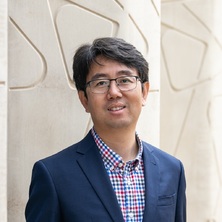
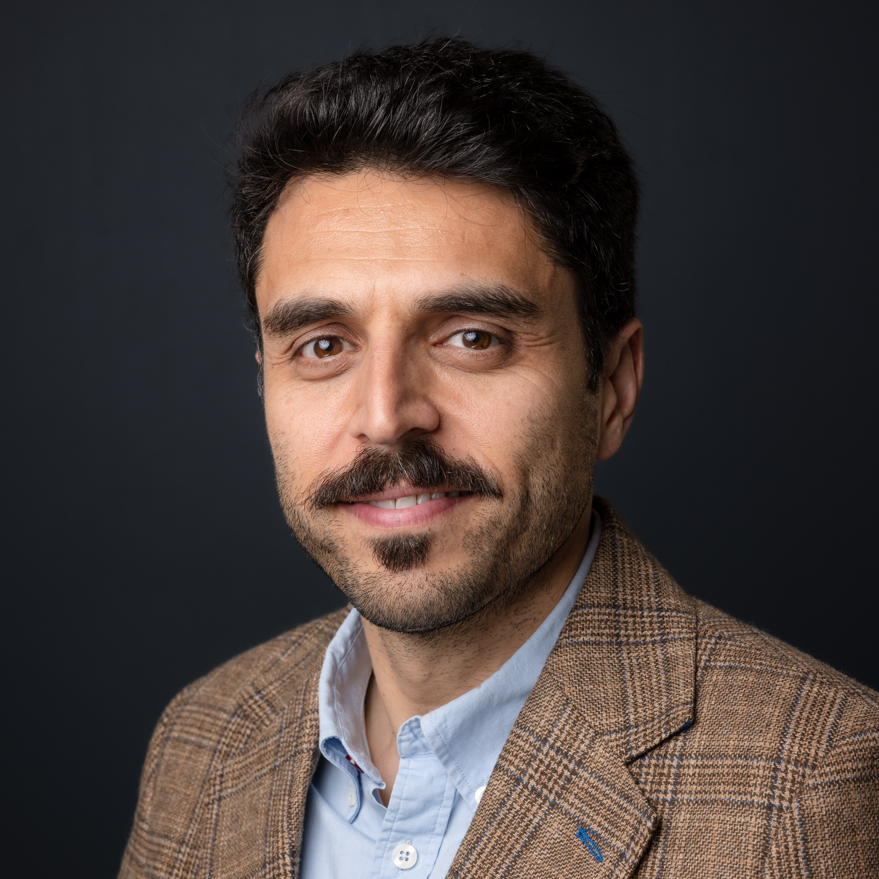
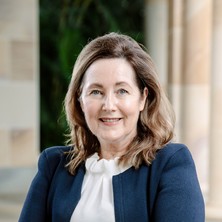
Professor Justin Chalker is the Matthew Flinders Professor and Research Leader at Flinders University 's College of Science and Engineering, affiliated with the Flinders Institute for NanoScale Science and Technology. He works at the intersection of organic chemistry, chemical biology, and materials science , focusing on sustainable chemistry solutions for environmental and technological challenges. Education: B.S. in Chemistry and B.A. in History/Philosophy of Science (University of Pittsburgh, 2006); D.Phil. in Chemistry (University of Oxford, supervised by Benjamin Davis) Career: Assistant Professor at University of Tulsa (2012-2015); Lecturer (2015) and Senior Lecturer (2017-present) at Flinders University His lab develops chemical tools for biological system interrogation and novel materials like sulfur-based polymers for mercury remediation, recyclable composites, and zinc-ion battery cathodes. Current projects include inverse vulcanization, waste valorization, and environmental applications of sustainable chemistry. His research aligns with UN Sustainable Development Goals for environmental protection and resource efficiency, particularly in material science (vulcanization, composite materials, polysulfides) and chemical biology (cysteine modification, protein chemistry). Key scientific recognitions: 2016 Tall Poppy Award, 2017 Dream Chemistry Award Finalist, Eureka Prize Finalist (2018), SA STEM Educator of the Year (2018), AMP Tomorrow Maker Award (2018) Prospective students can contact Dr. Chalker directly for Ph.D. and Honours opportunities. The lab website ( www.chalkerlab.com ) provides details on their research in sulfur chemistry, recyclable polymers, and chemical sustainability .
Professor Jianhua Guo is a faculty member at The University of Queensland (UQ), holding the position of Professor and UQ Amplify Fellow in the Australian Centre for Water and Environmental Biotechnology (ACWEB). He is also the ACWEB Deputy Director - Research. His research focuses on integrating process engineering, environmental microbiology, and biotechnology to develop sustainable solutions for contaminant removal in water and wastewater systems. He is a pioneer in studying the environmental dimension of antimicrobial resistance (AMR), particularly how non-antibiotic pharmaceuticals and chemicals contribute to AMR spread. His groundbreaking work has been featured in over 100 media outlets and has secured over $14M in research funding. He has published over 200 peer-reviewed articles in journals like Nature Microbiology , Water Research , and Environmental Science & Technology . His accolades include the 2013 DECRA and 2017 ARC Future Fellowship. He serves as an editor for Journal of Hazardous Materials and Water Science & Technology . Research Interests Environmental AMR and microbial ecology Methane-based biotechnology and bioconversion Nitrogen cycling microorganisms Bioremediation and biofilm reactors Microplastics and health risks Wastewater treatment innovations Grants & Funding $14M+ in ARC Discovery/Linkage grants and industry partnerships ARC Training Centre for Environmental and Agricultural Solutions to Antimicrobial Resistance (CEA-StAR) Dual-membrane upgrading and anaerobic alkane oxidation projects Awards 2013 DECRA 2017 ARC Future Fellowship Supervision Prof. Guo actively supervises PhD and master’s students in areas like AMR mitigation, methane-based bioreactors, and microbial ecology. Notable supervised projects include studies on antibiotic resistance in wastewater, novel disinfection processes, and microbial oxidation of gaseous alkanes. Labs & Teams He leads research teams within ACWEB and collaborates with the Queensland Alliance for Environmental Health Science. His lab focuses on cutting-edge technologies like membrane biofilm reactors and gas fermentation systems.
Associate Professor Mohsen Kalantari is a Geospatial Engineering academic at the University of New South Wales (UNSW) School of Civil and Environmental Engineering , with concurrent roles as co-founder of the startup Faramoon . His career spans roles at the University of Melbourne's Department of Infrastructure Engineering and Victorian government's land administration initiatives through DELWP. Education : PhD in Geomatics Engineering (2008, University of Melbourne), Master of GIS Engineering (2004), Bachelor of Surveying Engineering (2001) His research bridges geospatial engineering with construction automation , focusing on 3D cadastre , BIM-GIS integration , and smart cities . Recent publications show trends in underground land administration , digital twins , and LADM standard implementations . Scientific Awards : National educational recognition (2019), Victorian educational grants (2018), and prestigious fellowships (2012) As a supervisor , he guides PhD candidates in topics ranging from BIM for waste management to underground cadastral systems . His industry engagement includes partnerships with the United Nations , Open Geospatial Consortium , and Singapore Land Authority .
Associate Professor Bambang Trigunarsyah holds a position at RMIT University since 2018, affiliated with the School of Property, Construction and Project Management (PCPM). He earned his BSc in Civil Engineering from Colorado School of Mines, a Master's in Civil Engineering (Construction Management) from the University of Indonesia, and a PhD in Engineering Project Management from the University of Melbourne. His career spans industry roles, including project engineering in Indonesia's oil and gas sector, academic leadership at the University of Indonesia, and international teaching/research appointments at Queensland University of Technology (QUT) and King Fahd University of Petroleum and Minerals in Saudi Arabia. Research interests focus on post-disaster reconstruction, infrastructure project governance, constructability of infrastructure, and project management in developing countries. Notable projects include risk management frameworks using blockchain, circular economy in Saudi construction, and BIPV energy solutions. He actively supervises HDR students in areas like public-sector project success determinants and thermal environment studies. Bambang serves as Higher Degree Research Delegate Authority (HDR DA) for the School of PCPM and teaches postgraduate project management programs. Professional memberships include AIPM, PMI, and ASCE. His industry advisory roles include Indonesia's National Construction Service Development Board (2002-2007) and Australia-Indonesia Centre's Infrastructure Cluster (2016-2018). Recent research emphasizes BIM applications in infrastructure preservation, risk assessment methodologies, and climate-resilient construction. His work bridges theory and practice, addressing challenges in emerging economies and complex project environments.
Dr. Reza Fazeli is a Research Fellow at the Zero-Carbon Energy for the Asia-Pacific Grand Challenge at the Australian National University's School of Engineering. He joined ANU in January 2020, following six years as a Research Analyst and Adjunct Lecturer at the University of Iceland. His research focuses on sustainable energy transitions, decarbonization strategies, and energy policy assessment. Education background: PhD in Sustainable Energy Systems, University of Porto (MIT-Portugal program) MSc in Energy Systems Engineering, Sharif University of Technology BSc in Mechanical Engineering, University of Tehran Dr. Fazeli's research spans energy modeling, system dynamics, and multi-criteria decision analysis. He investigates decarbonization pathways for transportation and energy systems, GIS-based sustainability assessments, and hydrogen economy transitions. His work combines technological and behavioral perspectives to develop sustainable energy solutions. His recent publications focus on hydrogen certification, emission accounting frameworks, and renewable integration challenges. Articles consistently address policy-technical interfaces in energy transitions, with increasing emphasis on international hydrogen trade and certification systems since 2021. Dr. Fazeli leads research on green hydrogen economy assessments and coordinates cross-disciplinary projects at the ANU Energy Change Institute.
Professor Janet McColl-Kennedy is a leading figure in marketing and service science at The University of Queensland's Business School. She serves as Program Lead for Innovation Pathways (FaBA) and co-founded the Service Innovation Alliance (SIA) research hub, focusing on customer experience, AI, digital transformation, and sustainability. With Fellow status in the Academy of the Social Sciences in Australia and the Australian and New Zealand Marketing Academy, she holds international recognition including Research.com's World's Best Business Scientists ranking and the Christopher Lovelock Career Contributions to the Services Discipline Award (2025). University of Queensland Business School Honorary Visiting Professor, Cambridge Service Alliance Research Collaborator, University of Cambridge Her research spans customer experience management, service ecosystems, digital transformation, and healthcare services. She has pioneered frameworks for customer value co-creation and service recovery strategies, integrating AI and behavioral science. Her 2019 paper on customer experience insights was implemented by a major B2B organization, while her work on value co-creation improved outcomes at Lutheran Community Care. Recent publications focus on AI impacts in food and beverage services, sustainable service ecosystems, and digital health interventions. She has secured over $89 million in competitive grants, including multiple ARC Linkage and Discovery Projects, and leads cross-disciplinary teams with institutions like Cambridge University and Arizona State University. 2024 - ARC College of Experts appointment 2023 - Bo Edvardsson Industry Impact in Services Award 2022 - Elected Fellow of Academy of the Social Sciences in Australia 2021 - Clarivate Highly Cited Researcher 2018 - Ranked most influential marketing academic in Australia With over 220 publications and a Google Scholar H-index of 62, she has mentored 15 PhD students and examined theses at multiple universities. Her teaching spans 30+ years across undergraduate, postgraduate, and executive programs in Australia, USA, Italy, China, and Korea, with awards for blended learning and corporate education.
Distinguished Professor Peter Ralph is a faculty member at the University of Technology Sydney (UTS), holding the position of Professor of Marine Biology within the Faculty of Science and serving as the Executive Director of the Climate Change Cluster (C3). He is also the founder of the NSW Deep Green Biotech Hub and an influential member of global initiatives such as UNESCO’s Blue Carbon Scientific Working Group and the Czech Academy of Sciences’ Global Change Research Centre. Leadership Roles: Director of the Climate Change Cluster, Deputy-Chair of Sydney Institute of Marine Sciences. Research Collaborations: Partnerships with CSIRO, industry, NGOs, and international institutions. Key Contributions: Over 280 publications and $15M+ in research funding. His research focuses on algae-based solutions to climate change and sustainability, including carbon capture, bioplastic production, waste-water remediation, and circular bio-economy models. He explores advanced manufacturing through Industry 4.0 integration and zero-waste bio-refinery approaches, while also advancing algal phenomics using automated high-throughput screening systems. Recent articles highlight innovations in AI-driven biorefinery optimization, microalgal bioprospecting, and mutagenesis techniques for rare earth element extraction. His work bridges environmental science with engineering, addressing challenges in algae cultivation scalability and commercialization. Scientific Awards: 2012 and 2018 UTS Vice-Chancellor’s Research Excellence Awards. Peter has secured major grants, including the Fermentalg PhD Project on Microalgae Screening, PNG Natural Seafood’s Macroalgae Product Development, and the Winifred Trust Foundation’s Aquaculture initiative. His research teams collaborate across disciplines to transform algae into sustainable resources for food, energy, and biomanufacturing. He leads UTS’s Climate Change Cluster (C3), a hub for interdisciplinary climate research, and actively promotes algae-building technologies and carbon storage innovations through biomasonry products.
Alana Clifton-Cunningham is a dedicated educator and researcher in fashion and textile design at the University of New South Wales, Faculty of Arts, Design & Architecture. With over two decades of experience in higher education, she has established herself as a leader in sustainable and innovative design education. Her work bridges traditional craftsmanship with cutting-edge technologies, creating experiential learning environments that prepare students for contemporary design practice while addressing global sustainability challenges. Educational Background: 2021 | UNSW - Learn to Lead: Progress Needs Resilient Leaders 2019 | UTS - Graduate Certificate in Higher Education Transdisciplinary Learning 2008 | UNSW (COFA) - Master of Design (Hons) Research 2002 | UTS - Graduate Certificate in Higher Education Teaching and Learning 2001 | TAFE - Diploma of Marketing Management 1993 | UTS - Bachelor of Design (Hons) (Fashion and Textile Design) Clifton-Cunningham's research focuses on sustainable fashion practices, with particular emphasis on circular economy principles in textile production and garment design. Her work explores scalable models for textile remanufacturing, clothing waste reduction, and sustainable workwear systems. She is deeply engaged in addressing clothing sizing issues and standards in Australia, advocating for more inclusive approaches to fit and body diversity. Her commitment to equity, diversity, and inclusion underpins all aspects of her leadership and teaching, making her a strong advocate for responsible design futures that prioritize both environmental sustainability and social justice. Her publication record demonstrates a consistent focus on the intersection of design education, cultural exchange, and sustainable practices. Notable works include her 2022 book chapter on cross-cultural textile workshops in India, her 2018 analysis of undergarment technology evolution, and her contributions to exhibitions like 'Out of Hand' at the Powerhouse Museum. These works collectively highlight her emphasis on hands-on, experiential learning that connects students with real-world sustainability challenges and cultural contexts. Research Grants: 2024 | Redesigning Clothing Waste Using a Circular Design Framework - LP230200929 $220,473K 2024 | Department of Community and Justice - $17,900 2024 | Education Focussed Community of Practice (PVCESE) - $2,500 2023 | Department of Community and Justice - $15,900 2023 | Education Focussed Community of Practice (PVCESE) - $6,995 2017 | AbbVie Pharmaceutical Pty Ltd, HS Support Garments: Chief Investigator - $35,000 Clifton-Cunningham actively supervises research in fashion and textile design, with a focus on sustainable practices and innovative design processes. Her extensive industry network, including partnerships with major fashion labels, brings real-world insight into the classroom. She has led international global studios, including immersive programs in India where students collaborate with artisans. Her current ARC Linkage project 'Redesigning Clothing Waste Using a Circular Design Framework' represents a significant contribution to sustainable fashion research. Her creative practice is reflected in numerous exhibitions, including the Seoul International Fashion Art Biennale (2016, 2018), Wangaratta Contemporary Textile Awards, and the Powerhouse Museum's 'Out of Hand' exhibition. These artistic endeavors complement her academic work, demonstrating the practical application of her research interests in sustainable and innovative textile design.
About Vipul Jain: Associate Professor Vipul Jain leads Supply Chain and Logistics Management at RMIT University’s School of Accounting, Information and Supply Chain Management. With over 20 years of academic experience, he has held senior roles at institutions like Victoria University of Wellington (NZ) and IIT Delhi (India), contributing to curriculum development, research strategy, and academic-industry collaboration. His international collaborations span over 20 global institutions, emphasizing interdisciplinary research in supply chain resilience, sustainability, and Industry 4.0. Education & Academic Leadership: Previously served as Programme Director for Master of Technology (Industrial Engineering) at IIT Delhi, leading the establishment of the Modelling and Analysis of Supply Chain (MASC) Lab. Holds editorial roles for journals like International Journal of Intelligent Enterprise and Computers & Industrial Engineering . Research Focus: Specializes in supply chain design, sustainability, circular economy, and business analytics. His work integrates ICT and big data to address complex supply chain challenges, with notable contributions to vaccine distribution, blockchain adoption, and post-pandemic resilience. Over 145 peer-reviewed publications, including high-impact journals like OMEGA and International Journal of Production Economics , reflect his prolific output. Industry Impact: Conducted management training for organizations like JCB and IBM. Served as an expert assessor for New Zealand’s Ministry of Business and Industry and advised the Indian Railways. His research has been funded by the Department of Science and Technology (India) and EU initiatives like FP6 I*PROMS. Awards & Recognition: Ranked #7 in India’s top logistics academics (2018), recipient of Literati Awards (2024, 2020), and multiple editorial leadership roles. Active in global conferences, including co-chairing ANZAM 2023. Labs & Collaborations: Founded MASC Lab at IIT Delhi. Collaborates with Coventry University, Monash University, Hong Kong Polytechnic, and institutions in Switzerland, Spain, Canada, and the U.S. Focus areas include sustainable supply chains, digital transformation, and crisis resilience.
Dr. Mario Rebosura serves as a Postdoctoral Research Fellow at the Australian Centre for Water and Environmental Biotechnology (ACE), part of the Faculty of Engineering, Architecture and Information Technology at the University of Queensland. His work bridges fundamental research and practical engineering solutions for sustainable urban water systems. His academic credentials include: Bachelor of Science in Chemical Engineering (2009) from the University of the Philippines Los Banos Masters of Engineering in Environmental Engineering (2012) from the Catholic University of Korea PhD in Chemical Engineering (2020) from the University of Queensland Rebosura specializes in integrated urban water management with emphasis on anaerobic technologies and resource recovery. His research investigates iron salt applications throughout urban water cycles, contaminant fate analysis, and advanced wastewater treatment processes. He combines chemical engineering principles with environmental science to develop circular economy solutions that transform waste streams into valuable resources while improving infrastructure resilience. His publication record reveals consistent focus on optimizing iron-based interventions across the urban water system—from sewer networks to treatment plants—with recent expansion into micropollutant management and enhanced anaerobic digestion. This trajectory demonstrates increasing sophistication in addressing complex water-energy-resource nexus challenges through interdisciplinary experimentation. Rebosura actively contributes to scholarly discourse as Editor for the International Research Journal on Innovations in Engineering, Science and Technology and as a reviewer for leading water research journals. His conference presentations have generated international recognition through speaking invitations and workshop leadership. He has secured significant research funding including: Australian Research Council project 'An integrated approach to iron salt use in urban water systems' (2014–2019) Meat & Livestock Australia initiative 'Wastes to Profits: Advanced Anaerobic Digestion' (2018–2022) As a core member of ACE, Rebosura leverages world-class facilities for laboratory and pilot-scale water research, collaborating within multidisciplinary teams to advance sustainable water management solutions for global challenges.
Associate Professor Sam Kirshner is a faculty member at the University of New South Wales within the School of Information Systems and Technology Management . His research focuses on behavioral decision making , algorithmic impact on operations , and artificial intelligence applications in business contexts. PhD in Management Science from Queen’s University, Canada Teaching expertise in data visualization, predictive analytics, and AI ethics Co-author of Business Analytics: A Management Approach Member of the Ethical AI Advisory His research explores how psychological distance and construal level theory influence decisions in supply chains, technology management, and consumer behavior. Recent work examines ChatGPT's decision biases , algorithm aversion , and sustainable operations under financial constraints. Key publication trends show focus areas: AI ethics and human-AI collaboration Behavioral supply chain analysis Temporal/spatial psychological distance effects CO2 forecasting with sparse data Consumer behavior in digital platforms Virtual reality and cognitive processing Supervision roles include mentoring 2 PhD students and 6 honors students, contributing to the next generation of scholars in business analytics and technology management.
Associate Professor Gilda Carvalho is a leading researcher at the Australian Centre for Water and Environmental Biotechnology (ACWEB) and the School of Chemical Engineering at the University of Queensland. She leads the Drinking and Recycled Water research group and specializes in Environmental Bioengineering , focusing on microbial processes for water/wastewater treatment and resource recovery. Research areas: Chemicals of Emerging Concern (CEC), Biological Nutrient Removal (BNR), biofilm systems, membrane processes, and polyhydroxyalkanoate (PHA) production Key methodologies: Molecular tools linking microbial ecology to process performance Academic output: Over 90 peer-reviewed papers and >40 multinational research projects with industrial partners Educational impact: Coordinator of Postgraduate Programs in Urban Water Engineering and supervisor of >20 PhD students Her recent research explores phage-based biofilm disruption , micropollutant removal via advanced oxidation, and resource recovery from waste streams. Current funding includes projects on biofilm solutions for drinking water and sustainable wastewater reuse. She integrates multidisciplinary approaches across biotechnology, chemical engineering, and environmental science to address global water challenges.
Professor Bing-Jie (Bruce) Ni is an Adjunct Professor at the University of Technology Sydney (UTS) within the School of Civil and Environmental Engineering and a full Professor at UNSW Sydney. He is an internationally recognised leader in environmental engineering, wastewater treatment, greenhouse-gas mitigation, microplastics fate, electrocatalysis and sustainable energy systems. Education PhD in Environmental Engineering, University of Science and Technology of China, Hefei (2005–2009) Research Interests Professor Ni’s research integrates process engineering, microbial biotechnology, materials science and mathematical modelling to develop sustainable technologies for high-efficiency pollutant removal, minimal carbon footprint and maximal energy recovery from wastewater. He is a global pioneer in: Modelling and control of nitrous oxide (N₂O) and methane (CH₄) emissions from wastewater systems, Micro- and nano-plastics ecotoxicity and mitigation in anaerobic digestion, Transforming sewage sludge into high-value liquid bio-energy (medium-chain fatty acids and long-chain alcohols), Designing cost-effective electrocatalysts from natural minerals for green hydrogen production and wastewater electrolysis. Research Output & Impact Over the last decade he has published 2 research books, 30 book chapters and >400 refereed journal papers , including 35 in Environmental Science & Technology and 85 in Water Research . His work has influenced global policy: the IPCC adopted his nitrous-oxide-emission model in 2019 to revise national greenhouse-gas inventories for the first time in 13 years. Awards & Recognition ARC Future Fellowship & ARC DECRA Fellowship Clarivate Analytics Highly Cited Researcher (Web of Science) Royal Society of Chemistry Highly Cited Researcher (2020–present) Mendeley Data Top 2 % Cited Researchers worldwide Listed among “Australia’s Most Innovative Engineers” (Engineers Australia, 2018) 50+ additional awards including Scopus Young Researcher Award, South Australian Water Awards, UQ Research Excellence Awards, and Outstanding Doctoral Dissertation Awards. Research Funding & Leadership He has secured ≈ AUD $10 million in competitive funding (six major ARC grants plus >20 government, university and industry projects). He serves as: Lead Guest Editor, Water Research Editorial Advisory Board, Environmental Science & Technology Associate Editor for Journal of Cleaner Production , Environmental Chemistry Letters , Environmental Research , Journal of Environmental Management Editorial Board member for five additional high-impact journals. Teaching & Supervision At UTS he teaches Renewable Energy Technologies , Environmental and Sanitation Engineering , Process Dynamics and Control , and Water and Wastewater Treatment . He is available to supervise Masters and PhD students in environmental biotechnology, process modelling and sustainable energy systems. Laboratory & Commercial Translation He heads active research teams at both UNSW and UTS and is the inventor of >10 granted patents , some of which are currently being commercialised to deliver real-world impacts in greenhouse-gas-neutral wastewater treatment and renewable energy production.
Dr. Richard Culas is an Associate Professor in Agricultural Economics/Agribusiness at Charles Sturt University's School of Agricultural, Environmental and Veterinary Sciences. He holds degrees from the University of Peradeniya (BScAgr), Norwegian University of Life Sciences (MScAgEcon), Norwegian School of Economics (MEcon), and the University of Sydney (PhD). His expertise spans teaching, research, and advisory roles, including external PhD examining and peer-reviewing for 20+ journals. Dr. Culas' research focuses on agricultural economics, environmental economics, development economics, and agribusiness management. He has led and contributed to projects funded by ACIAR, Hort Innovation Australia, and the Soil CRC, totaling ~A$7.5m. Key projects include assessing organic fertilizer benefits and regenerative agriculture's socioeconomic impacts. His work addresses global challenges such as water resource management, climate-smart agriculture, and sustainable farming practices. He has published extensively in journals like Agricultural Systems , Australian Journal of Agricultural and Resource Economics , and Sustainability . Notable achievements include the Emerald Literati Award for Outstanding Reviewer (2018) and a team award for Research Excellence (2016). He has also contributed to curriculum development for Charles Sturt's Master of Agriculture program. His research and advisory roles include leadership in soil health projects, groundwater management in Pakistan, and value chain analyses in Bangladesh and Nepal. Dr. Culas collaborates internationally on climate adaptation strategies, trade policies, and food security initiatives, reflecting his commitment to bridging academic research with real-world agricultural challenges.
Professor Vinayak Dixit serves as the IAG Chair of Risk in Smart Cities and Director of the Research Centre for Integrated Transport Innovation (rCITI) at the University of New South Wales (UNSW), within the School of Civil and Environmental Engineering. With a distinguished career spanning academia and research leadership, Professor Dixit has established himself as a leading expert in transportation risk analysis and smart city infrastructure. Professor Dixit's research focuses on studying risk in transportation infrastructure systems, with particular emphasis on highway safety, travel time uncertainty, and resilience against natural and man-made disasters. His work integrates cutting-edge approaches including quantum computing applications for transportation network optimization, analysis of connected and automated vehicles, and development of models for transportation resilience. His research interests span multiple disciplines, bridging civil engineering, transportation science, risk analysis, and computational methods. Professor Dixit has secured significant research funding from prestigious organizations including the United States National Science Foundation, Federal Highway Administration, and the Strategic Highway Research Program of the Transportation Research Board. His leadership extends to directing the Research Centre for Integrated Transport Innovation (rCITI), where he oversees a comprehensive research program addressing critical transportation challenges in smart cities through multiple focus areas including Connected Mobility Services, Deep Data and Digitization, Engineering Smart Cities & Logistics, Human-Centred And Automated Systems Design, and Integrated Infrastructure Strategic Planning. Professor Dixit previously served as the Associate Director of Research for the Gulf Coast Centre for Evacuation and Transportation Resiliency at Louisiana State University, where he founded the Driving Simulator Laboratory in collaboration with other faculty members. This demonstrates his longstanding commitment to innovative research infrastructure development and interdisciplinary collaboration across engineering, economics, computer science, and urban planning to address complex transportation challenges in the 21st century.