Dr. Ga-young Kelly Suh is an Assistant Professor in the Department of Biomedical Engineering at California State University, Long Beach (CSULB), with a secondary appointment as an Adjunct Professor in the Department of Surgery – Vascular at Stanford University. She joined CSULB in Fall 2019 after completing her Ph.D. in Mechanical Engineering at Stanford University and a postdoctoral fellowship in Stanford's Department of Surgery – Vascular (2011–2016). Her multidisciplinary research bridges engineering and clinical practice, focusing on computational modeling and medical imaging to optimize endovascular surgeries. Her research integrates computational fluid dynamics, geometric analysis, and clinical data acquisition to study vascular biomechanics. Key interests include: Dynamic behavior of aortic endografts under physiological stresses Medical imaging techniques for 3D vascular reconstruction Predictive modeling of surgical outcomes for aneurysms and dissections Development of low-cost diagnostic tools and educational methodologies Recent publications (2021–2025) emphasize aortic pathologies, stent mechanics, and educational innovations. Over 70% of articles involve computational analysis of vascular dynamics, with emerging work in wearable biosensors and microfluidics. Awards are not documented in available sources. She advises undergraduate and graduate students through scheduled office hours and course guidance (BME 200/311/490B). No grants or lab details are mentioned, though her institutional website references the Cardiovascular Research Center (CVRC).
Tugba Efendigil is a Clinical Assistant Professor in the Operations and Technology Management department at Boston University's Questrom School of Business. Her research focuses on the digital transformation of supply chains, circular supply chain systems, and applications of machine learning in operational optimization. Prior to joining BU, she worked as a research scientist at MIT and gained academic and industry experience in Turkey (2012–2017). She holds a Master of Science and PhD in Industrial Engineering from Yildiz Technical University, and completed postdoctoral research at Katholieke Universiteit Leuven in Belgium. Her academic work spans supply chain design, ERP systems, reverse logistics, and electronic waste management. She has published in leading journals such as Annals of Operations Research , Computers & Industrial Engineering , and Expert Systems with Applications . Her methodological expertise includes fuzzy logic, neural networks, and hybrid AI approaches. Professional memberships include the IEEE Technology and Engineering Management Society and the Decision Science Institute . Her teaching experience covers both undergraduate and graduate-level courses, with a focus on integrating academic research with practical applications in start-up environments.
Eujin Pei is a Full Professor in Additive Manufacturing at Brunel University London, where he serves as Associate Dean (Quality Assurance) for the College of Engineering, Design and Physical Sciences. He is also Director of the BSc Product Design Engineering Programme and leads the Additive Manufacturing & 4D Printing Research Group while serving as Co-Director of the Brunel Centre for Digital Manufacturing. With Chartered Engineer (CEng), Chartered Environmentalist (CEnv), and Chartered Technological Product Designer (CTPD) accreditations, Professor Pei bridges industry expertise with academic research, having previously developed solutions for companies including Motorola, Ericsson, Sennheiser, and Rentokil Initial. Professor Pei's research focuses on shape memory materials, design principles for Additive Manufacturing, and sustainable manufacturing technologies. He is a recognized expert in Design for Additive Manufacturing (DfAM) and 4D Printing, with significant contributions to understanding the causal relationship between Additive Manufacturing processes and shape-changing behaviors. His work extends to developing design guidelines for optimizing part orientation, minimizing overhangs, enhancing layer adhesion, and light weighting through simulations. As Chair of the UK National Standards Committee for Additive Manufacturing (BSI AMT/8) and UK Head of Delegation to ISO/TC 261, he shapes global standards for Additive Manufacturing Data and Design. His publication record reveals a strong focus on standardization efforts, 4D printing applications, and sustainable manufacturing practices. The research trends show increasing emphasis on interdisciplinary approaches, combining materials science, engineering design, and sustainability considerations. Recent work explores human-centered design for 4D printing applications, medical implementations of 4D printing, and advanced computational methods for energy optimization in manufacturing processes. Additive Manufacturing Award for Excellence from ASTM International (2022) Listed in Stanford University's top-cited scientists (2020-2024 editions) International WorldStar Packaging Award (2014) IDSA IDEA Award (2011) Helen Hamlyn Centre for Design 24 hour Inclusive Design Challenge (2011) Motorola Motofwrd (2006) Professor Pei has served as Principal Investigator and Work Package Leader for high-impact research grants, including the EU-funded MULTHEM project exploring Additive Manufacturing to create lightweight, thermally efficient components. His advisory roles include positions with the UK Government Office for Science for the "Foresight Project on Drivers of Technology Needs" on 4D Printing and the "Rapid Tech Assessment on 4D Printing." He is a Full College Member of the EPSRC Peer Review College and serves on the Engineering Council Registration Standards Committee. As Editor-in-Chief of the Progress in Additive Manufacturing Journal, he plays a significant role in shaping the field's scholarly discourse. Professor Pei leads the Additive Manufacturing & 4D Printing Research Group at Brunel, which focuses on developing frameworks for 4D Printing and exploring the influence of infill patterns and densities on printed parts. The group collaborates with international partners and industry stakeholders, including BAE Systems Applied Intelligence through Knowledge Transfer Partnerships. His research extends to partnerships with cultural organizations including the Leicester Arts and Museum Service and Leicester Transport Heritage Trust for applying 3D Printing to digitally reproduce and restore historical artifacts.
Dr. Ande M. Rumilla is a distinguished pathologist at Mayo Clinic in Rochester, Minnesota, specializing in Laboratory Medicine and Pathology with a focus on Anatomic Pathology. She holds appointments in the Mayo Clinic College of Medicine and serves as an active researcher and clinician within the Department of Laboratory Medicine and Pathology. Her educational background includes a BA in Biology from the University of Chicago (1999) and an MD from the University of Illinois College of Medicine at Chicago (2004). She completed her residency training in Anatomic and Clinical Pathology (2008) followed by a fellowship in Molecular Genetic Pathology (2010), all at Mayo Clinic. Dr. Rumilla's research spans molecular pathology, genetic diagnostics, and precision medicine with particular expertise in cancer genomics, molecular diagnostics, and epigenetic analysis. Her work bridges basic science with clinical applications, focusing on developing and validating molecular assays for improved patient care. She has made significant contributions to understanding tumor mutation burden, BRAF/RAS signaling pathways, and molecular characterization of various cancers. Her publication record shows a clear trend toward increasingly sophisticated molecular techniques, from traditional pathology to next-generation sequencing, liquid biopsy analysis, and computational approaches to molecular diagnostics. Recent work emphasizes pan-cancer biomarker detection, methylation disorder classification, and validation of clinical molecular assays. Young Investigator Award from the Association for Molecular Pathology (2009) Dr. Rumilla actively contributes to professional societies including the Association for Molecular Pathology (since 2009), College of American Pathologists, United States and Canadian Academy of Pathology, and American Society for Clinical Pathology. She has participated in developing consensus guidelines for cell-free DNA assay validation, demonstrating leadership in establishing standards for molecular diagnostics. Her collaborative research extends across multiple Mayo Clinic departments and external institutions, reflecting the interdisciplinary nature of modern molecular pathology.
Karen Reynolds is a Matthew Flinders Distinguished Professor of Biomedical Engineering in the College of Science and Engineering at Flinders University, where she has been a faculty member since 1997. She serves as Director of both the Medical Device Research Institute and the Medical Device Partnering Program, a national initiative supporting early-stage innovation in medical devices. Her leadership extends to external roles including Board Member of the National Imaging Facility, Director of the Academy of Technological Sciences & Engineering Board, and Chair of the Health and Technology Forum. Professor Reynolds' educational background includes a Masters in Biomedical Engineering from the University of Oxford, followed by research positions at both Oxford and Leicester Universities where she earned her PhD. Her academic credentials also include MSc, MA, BA(Hons), and a Graduate Certificate in Tertiary Education. Her primary research interests focus on medical device innovation, physiological monitoring, bone biomechanics, and surgical instrumentation and training. Her work bridges engineering principles with clinical applications, particularly in developing technologies that solve real end-user problems in healthcare. She has made significant contributions to virtual reality medical simulation, non-invasive monitoring techniques, and bone imaging and modeling. Analysis of her recent publications reveals a strong focus on practical biomedical engineering solutions with immediate clinical relevance. Her work spans orthopedic biomechanics (particularly shoulder and knee modeling), respiratory monitoring systems, and rehabilitation robotics. The consistent theme across her research is the development of engineering solutions that address specific clinical challenges, with emphasis on validation and practical implementation. Fellow of the Australian Academy of Technological Sciences & Engineering (FTSE) Fellow of the Australian Academy of Health & Medical Sciences (FAHMS) Honorary Fellow, Engineers Australia (HonFIEAust) Australian Professional Engineer of the Year, 2010 South Australian Scientist of the Year, 2012 David Dewhurst Award, Engineers Australia, 2016 Medical Technology Association of Australia Outstanding Achievement Award, 2014 Top 100 Most Influential Engineers in Australia (2012, 2013, 2015) Professor Reynolds has supervised 15 principal and 1 associate PhD/Master's students in Biomedical Engineering. Her research is supported through the Medical Device Partnering Program, a significant national initiative that facilitates collaboration between researchers, clinicians, and industry partners. She has received numerous research grants supporting her work in medical device development and validation. She leads the Medical Device Research Institute at Flinders University, which serves as a hub for interdisciplinary research involving engineers, clinicians, and industry partners. The Institute works closely with the Medical Device Partnering Program, creating a comprehensive ecosystem for medical device innovation from concept through to commercialization. Her research teams specialize in biomechanical modeling, medical device prototyping, and clinical validation studies.
Luis Angel Vallejo Valdezate is a Professor at the University of Valladolid, affiliated with the Department of Surgery, Ophthalmology, Otorhinolaryngology and Physiotherapy. He is associated with the Castile and Leon Institute of Neuroscience and has contributed extensively to research in Otorhinolaryngology, Hearing Loss, and Neurobiology. Education: PhD (1996) from the University of Valladolid Primary Affiliation: Castile and Leon Institute of Neuroscience (1FA Center) His research focuses on auditory physiology, surgical techniques in otology, and anatomical variations affecting endocrine and ear surgeries. He has pioneered innovations in middle ear prosthetics and nasal obstruction diagnostics. Recent publications highlight advancements in vestibular schwannoma management, thyroid surgery, and mecanoacoustic modeling. His work bridges clinical practice with computational analysis, emphasizing therapeutic success metrics and anatomical precision. He has supervised PhD research, including studies on olfactory bulb modifications following early sensory deprivation, though specific student names are not listed in the provided text.
Nicholas Bambos is the R. Weiland Professor in the School of Engineering at Stanford University, holding a joint appointment in the Department of Electrical Engineering and the Department of Management Science & Engineering. He served as the Fortinet Founders Department Chair of the Management Science & Engineering Department from 2016 to 2020. His academic career spans over three decades, with previous positions as an assistant professor (1989-1995) and tenured associate professor (1995-1996) at UCLA before joining Stanford in 1996. Prof. Bambos's primary research interests focus on the architecture and high-performance engineering of computer systems and networks, along with data analytics emphasizing medical and health-care applications. His work spans multiple domains including networking and the Internet, cloud computing, multimedia streaming, computer security, and digital health. Methodologically, his contributions extend to network control, online task scheduling, routing and distributed processing, and machine learning and artificial intelligence. His research has resulted in over 300 peer-reviewed publications that demonstrate a strong interdisciplinary approach, bridging theoretical computer science with practical healthcare applications. The trajectory of Prof. Bambos's recent publications reveals a strategic expansion from traditional networking and systems research into healthcare analytics, particularly opioid use prediction and digital health monitoring. His work increasingly integrates machine learning techniques with domain-specific medical knowledge, showing a clear evolution toward solving complex societal challenges through technological innovation. Many publications demonstrate collaborative work across engineering, medical, and data science disciplines, reflecting the growing importance of interdisciplinary research in addressing modern healthcare challenges. His significant scientific achievements have been recognized through numerous prestigious awards: R. Weiland Professorship in Engineering (2016-present) Eugene L. Grant Teaching Award (2014) IBM Faculty Award (2002) Cisco Systems Faculty Scholar (1999-2003) National Young Investigator Award from NSF (1992-1997) Prof. Bambos has graduated over 40 doctoral students who have gone on to leadership positions in academia, Silicon Valley industries, technology startups, finance, and venture capital. His research has been supported by significant funding, including a $30 million Stanford Networking Research Center which he directed from 1999 to 2005. Beyond traditional academic roles, he has served on various editorial boards, scientific committees, and as a consultant and co-founder of technology startups, demonstrating his commitment to translating academic research into real-world impact. He leads the Computer Systems Performance Engineering Lab (Perf-Lab) at Stanford, which comprises doctoral students and industry visitors engaged in various research projects. His lab serves as an interdisciplinary hub connecting theoretical computer science with practical applications in healthcare, energy, and networking domains. The lab's collaborative environment fosters innovation across traditional academic boundaries, reflecting Prof. Bambos's broader research philosophy of addressing complex problems through integrated, multi-disciplinary approaches.
Ryan Gallagher is a Conjoint Senior Lecturer at the School of Health Sciences, College of Health, Medicine and Wellbeing at the University of Newcastle. He is also a Senior Physiotherapist and Data Scientist with expertise in leveraging healthcare data to improve patient outcomes. His work bridges clinical practice and data science to address healthcare challenges. Dr. Gallagher's educational background includes: Doctor of Philosophy in Physiotherapy from the University of New South Wales Bachelor of Physiotherapy from the University of Newcastle Master in Data Science majoring in Computational Intelligence His research focuses on applying data science and machine learning to healthcare challenges, particularly in the areas of stroke rehabilitation, telehealth, and advanced practice clinical roles. Dr. Gallagher is particularly interested in how E-Health and technology can transform healthcare delivery and the physiotherapy profession. His work on idiopathic Normal Pressure Hydrocephalus (iNPH) has made significant contributions to understanding how gait and balance assessments can predict surgical outcomes following CSF tap tests. He has extensively researched the application of machine learning to analyze clinical trends and outcomes on a large scale. Analysis of Dr. Gallagher's publication record reveals a strong focus on translational research that bridges clinical practice with data science. His work spans multiple domains including stroke rehabilitation, telehealth implementation, musculoskeletal care, and neurological conditions like iNPH. A significant thread throughout his research is the application of data-driven approaches to improve healthcare efficiency, patient outcomes, and access to services, particularly in rural settings. His more recent work shows increasing emphasis on healthcare system redesign and value-based care. Dr. Gallagher has received notable recognition for his research: Best HDR Publication for 2019 from the School of Health Sciences at the University of Newcastle Currently, Dr. Gallagher serves as co-supervisor for a PhD candidate researching "Understanding the Drivers of Telehealth Usage among Patients in Australia and how it Reduces Costs over In-person Healthcare Services." His supervisory work reflects his dual expertise in healthcare delivery and data science. While specific grant information isn't detailed in the provided text, his publication record suggests involvement in multiple research projects related to stroke care, telehealth implementation, and neurological rehabilitation. Dr. Gallagher's work appears to be closely connected with clinical teams at John Hunter Hospital and involves collaboration with multiple healthcare professionals across various specialties. His research on rural healthcare models suggests engagement with regional healthcare networks in New South Wales. His recent work on practice-based research networks indicates leadership in developing collaborative research infrastructure among physiotherapists in regional Australia.
Dr Nisha Nixon is a Fellow at St Catharine's College, University of Cambridge, holding an academic appointment in the School of Clinical Medicine with specialization in the Department of Ophthalmology. Appointed as an Academic Clinical Fellow in Ophthalmology in 2020 and admitted to the Fellowship in 2022, she serves as chief investigator for innovative clinical studies leveraging virtual reality technology. Her educational background includes preclinical and clinical medical training at St Catharine's College with first-class honors, complemented by intercalated studies in Physiology, Development and Neuroscience. Key distinctions include the Moses Holway Scholarship, John Addenbrooke Medical Prize, Thomas Hobbes Scholarship, and Robert Comline Prize in Systems Physiology. Dr Nixon's research focuses on revolutionizing oculomotor assessment through virtual reality applications , particularly for strabismus diagnosis and eye movement analysis outside traditional clinical settings. Her work bridges ophthalmology , medical technology development , and automated diagnostic systems , emphasizing cost-effective solutions using accessible hardware like VR headsets. Her publication portfolio demonstrates consistent advancement in diagnostic innovation, with recent work (2021-2023) centering on augmented reality strabismus screening and virtual reality ocular misalignment testing. Earlier research (2015-2017) established foundations in dry eye therapy, lacrimal surgery, and color vision adaptation for clinicians. Moses Holway Scholarship John Addenbrooke Medical Prize Thomas Hobbes Scholarship Robert Comline Prize in Systems Physiology As an educator, Dr Nixon has supervised Neurobiology and Human Behaviour for second-year medical students since 2012 and holds a Postgraduate Certificate in Medical Education (2016). Her current VR-based clinical study represents significant grant-funded research exploring automated diagnosis systems, with potential to transform community-based eye care delivery through low-cost technology.
Dinggang Shen serves as Professor and Dean of the School of Biomedical Engineering at ShanghaiTech University, demonstrating leadership in academic administration while maintaining an active faculty role. His dual appointment as Adjunct Professor at an unspecified institution reflects cross-institutional engagement within the biomedical engineering community. Research interests center on computational biomedical engineering, with emphases on medical imaging analysis, machine learning applications in diagnostics, and computer vision for surgical systems. His work bridges AI innovation with clinical medicine, particularly in developing image-based decision support tools for healthcare. Scientific recognition is not documented in the source text, though his deanship indicates significant peer standing. Student mentorship details and grant funding specifics remain undisclosed, but his gmail contact provides direct accessibility for academic collaboration.
Dr. Elvis C. S. Chen serves as Assistant Professor in Western University's Faculty of Engineering, Department of Electrical and Computer Engineering, with cross-appointments in the Department of Medical Biophysics and Department of Medical Imaging. He holds concurrent research positions as Associate Scientist at Robarts Research Institute and Scientist at London Health Research Institute, while participating in Western's Biomedical Engineering Graduate Program. His academic credentials include: Ph.D. in Computer Science, Queen's University (2007) M.Sc. in Computer Science, Queen's University (1999) B.Sc. (Hons) in Computer Science, Queen's University (1995) Research centers on Computer-Assisted Interventions (CAI) and Medical Image Computing (MIC), specifically developing patient-specific surgical modeling techniques for orthopedic procedures like total knee replacement. His work integrates engineering principles with clinical applications through collaborations with medical technology companies to enhance surgical outcomes. Professional leadership includes serving as Associate Editor for IEEE Transactions on Medical Imaging and Chair of the IEEE EMBS London Chapter. He maintains active clinical engineering practice as a Limited Engineering Licensee (LEL) certified by Professional Engineers Ontario. Dr. Chen's research ecosystem spans Robarts Research Institute and London Health Research Institute, where he bridges electrical/computer engineering with medical imaging and surgical innovation through multidisciplinary teams focused on translational healthcare solutions.
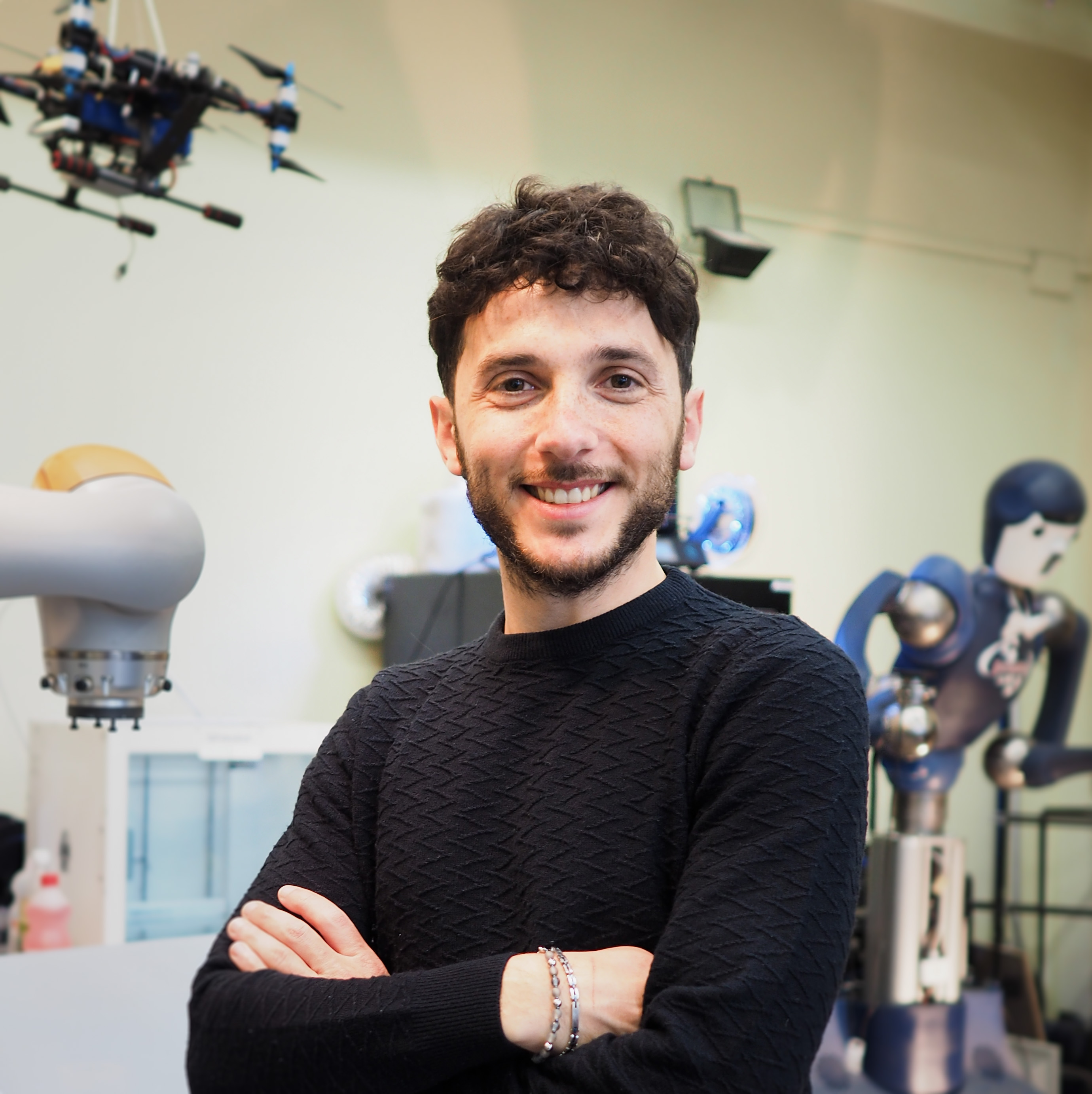
Mario Selvaggio is an Assistant Professor at the Department of Electrical Engineering and Information Technology, University of Naples Federico II. He actively contributes to robotics research through his involvement with PRISMA Lab and ICAROS , while co-founding spinoff companies BeyondShape and Herobots . His academic background includes a Ph.D. in Information Technology and Electrical Engineering (2020) under Prof. Bruno Siciliano, with previous degrees in Mechanical Engineering (2013, 2015). Ph.D. in Information Technology and Electrical Engineering (2020) Bachelor's and Master's in Mechanical Engineering (2013, 2015) His research interests focus on shared control/autonomy, robot teleoperation, passivity-based control, soft robotics, and robotic surgery. He has developed innovative solutions including: Shared-control teleoperation for soft growing robots Non-prehensile object transportation frameworks Advanced modeling of cable-suspended dual-arm systems Medical robotics with force-sensor equipped tools Virtual reality-based teleoperation architectures Recent publications (2021-2025) span topics from semi-autonomous aerial manipulation to cyber-physical measurement systems, with emphasis on human-robot interaction and industrial applications. He serves as Associate Editor for several IEEE conferences and journals. Scientific Awards IEEE RAS Technical Committee on Haptics grant ($2500, 2018) Second prize at Bioengineering Congress (2018) Finalist for 'Fabrizio Flacco' Best Paper Award (2020) Prof. Selvaggio teaches the Master's Course in Automation Engineering and Robotics (2024/2025) using Robot Operating System (ROS) curriculum. He actively collaborates with international research groups at IRISA/INRIA Rennes , Rainbow team , and University of California Santa Barbara (mechanical engineering department). His research combines theoretical advancements with practical implementations, demonstrated through extensive validation in simulated environments and real robotic platforms including KUKA LWR IIWA manipulators, dVRK systems, and humanoid platforms.
Dr. Menino Osbert Cotta is an Honorary Research Fellow at the University of Queensland Centre for Clinical Research, specializing in pharmacokinetics/pharmacodynamics (PK/PD) of antimicrobials and therapeutic drug monitoring (TDM) in critically ill patients. His work focuses on optimizing beta-lactam antibiotics and anti-infective agents for sepsis, neurocritical care, and resistant infections. Key Research Areas: Antimicrobial stewardship, precision dosing software, ICU pharmacotherapy, cerebrospinal fluid drug penetration, and machine learning applications in TDM. Collaborations: Works with international teams across Australia, UK, and LMICs, particularly on beta-lactam infusion strategies and hospital antimicrobial programs . Recent Trends: 2024-2025 publications emphasize pediatric ICU antibiotic compatibility cost-effectiveness of outpatient parenteral antimicrobial therapy (OPAT) CSF pharmacokinetics of ceftriaxone Methodology: Utilizes population PK/PD modeling, systematic reviews, and clinical trials like BLING III to evaluate continuous vs. intermittent infusions in sepsis. Contact: Email m.o.cotta@uq.edu.au for collaboration or inquiries.
Dr. Simone Foti is a Research Fellow at the Department of Computing, Faculty of Engineering in Imperial College London . He holds a PhD from University College London (UCL) and has held internships at Disney Research Studios and Adobe Research. Education : PhD (2023), MRes (2019), MSc (2017), BSc (2015) His research spans Geometric Deep Learning , Computer Graphics , and Computer Vision , focusing on improving 3D generative models for applications in AR/VR, the metaverse, medical imaging, and digital human creation. Recent work explores problems in non-Euclidean domains like graphs and meshes, with trends including latent disentanglement , 3D reconstruction , and medical applications of geometric AI. Collaborations include institutions like Carnegie Mellon University, Politecnico di Milano, and UCL, with publications across top venues such as NeurIPS , CVPR , and Computer Graphics Forum . Current projects include UV-free texture generation and mesh sampling techniques .
Mohammad Al Saadi is a Physician Scientist affiliated with the Faculty of Medicine and Pharmacy at Vrije Universiteit Brussel, Belgium. His work focuses on robotic cochlear implant surgery , image-guided interventions , and post-meningitis ossified cochlea challenges. Research Themes : Cochlear Implants, Robotics, Medical Imaging, Meningitis, Neurosurgery His recent publications (2023-2025) analyze keyhole drilling trajectories , robotic accuracy , and anatomical safety factors in cochlear implantation. Collaborations with surgeons like Van de Heyning and Topsakal highlight his translational approach. Al Saadi actively presents at conferences such as the 5th International Symposium on Otosclerosis and contributes to clinical advancements like the HearO procedure . His work bridges engineering precision with otolaryngology expertise, emphasizing improved outcomes for hearing-impaired patients.