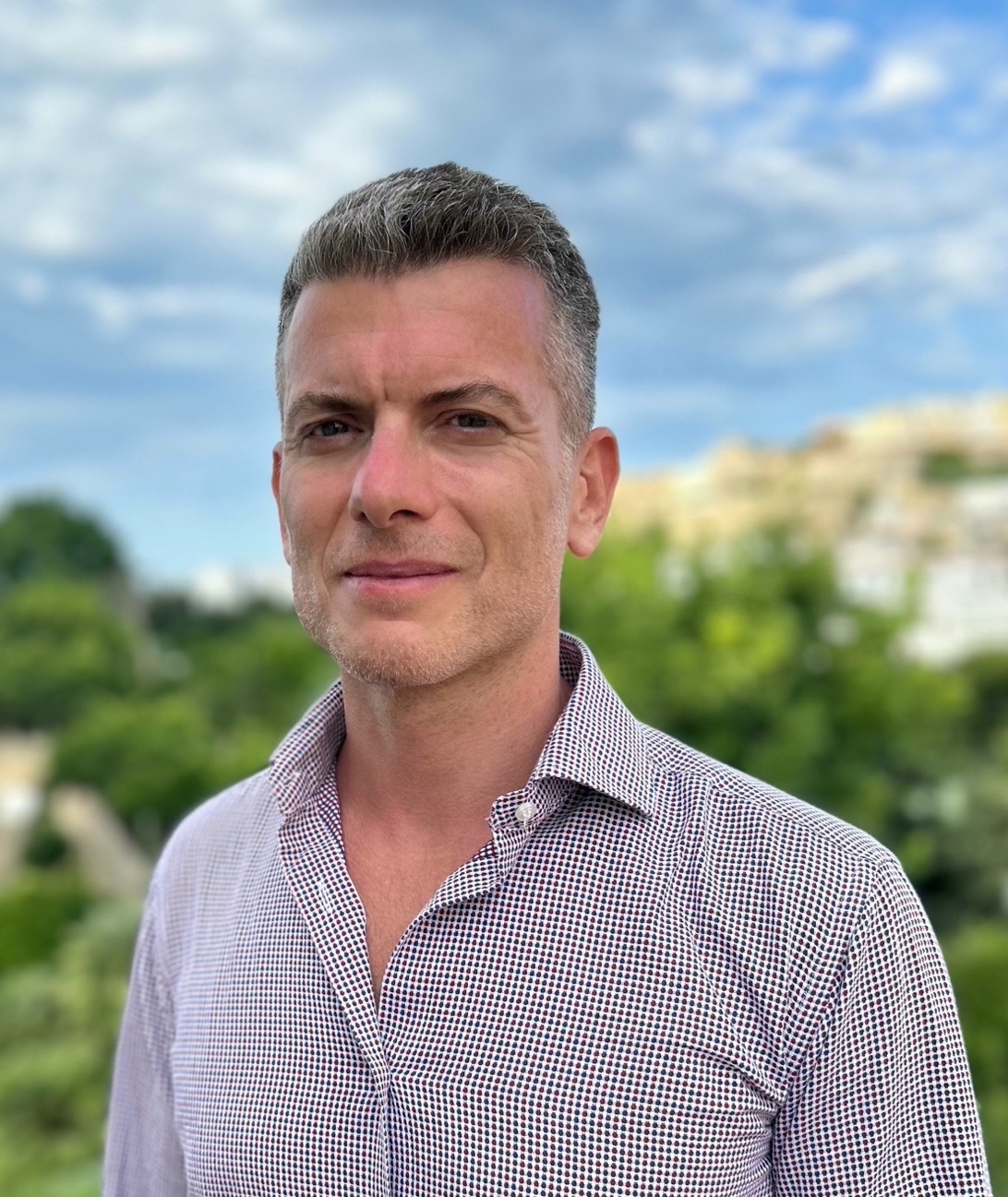
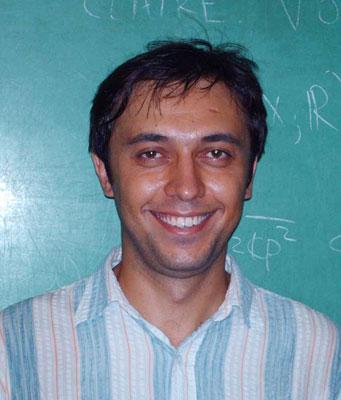
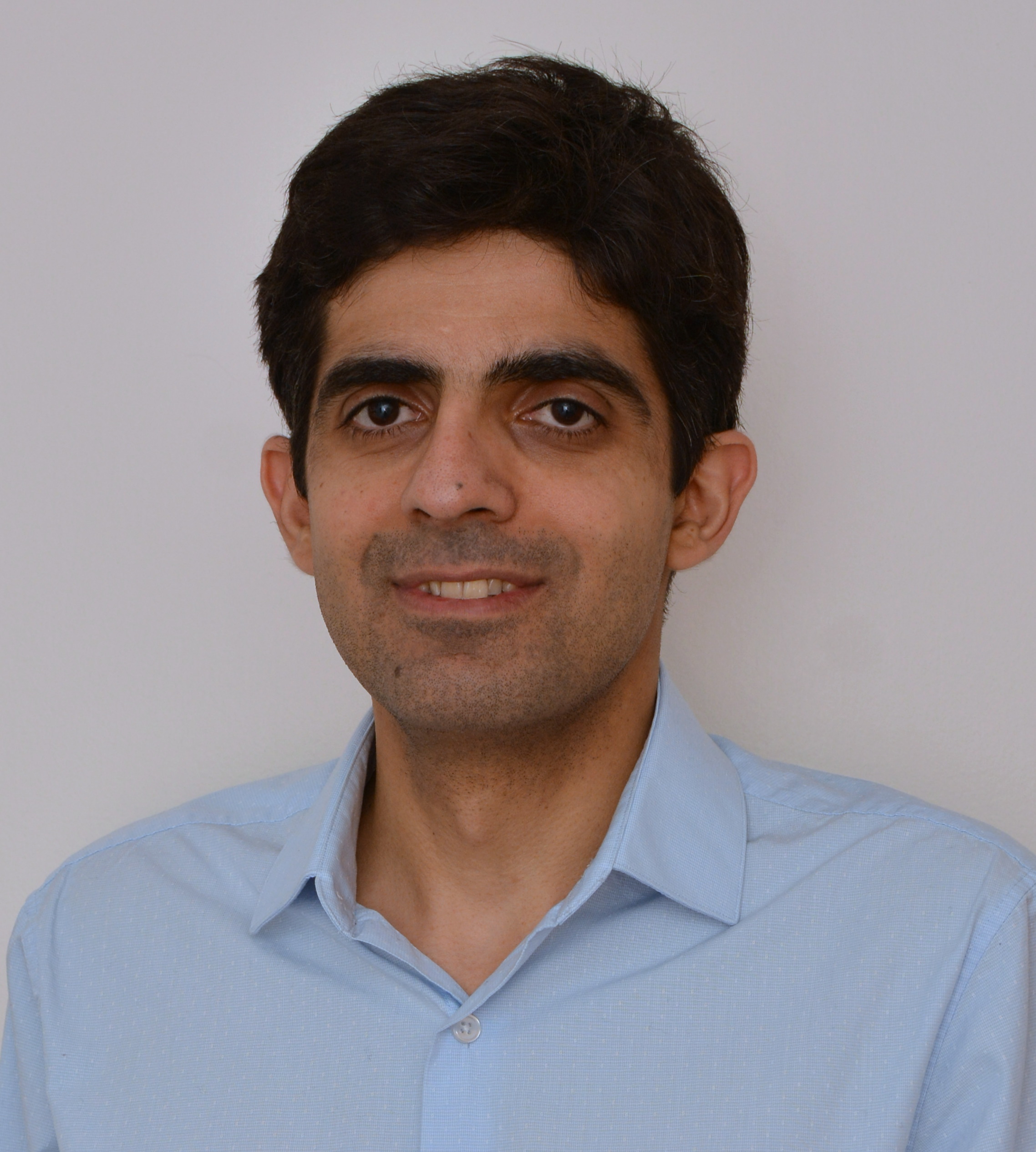
Dr Alex Sherman is a Lecturer at UNSW Sydney in the School of Mathematics & Statistics . He previously held postdoctoral positions at the University of Sydney with Kevin Coulembier and at Ben-Gurion University of the Negev with Inna Entova-Aizenbud. His research focuses on representation theory and supergeometry , with applications to Lie superalgebras , modular representation theory , and tensor categories . He has published extensively on topics such as ghost distributions, Duflo-Serganova functors, and the geometry of spherical supervarieties. Email: alex.sherman@unsw.edu.au Location: Room 4111, The Red Centre, UNSW Sydney, NSW 2052 In 2025 , he will lecture the Linear Algebra stream of MATH1241. He organizes the UNSW Pure Maths Seminar and Algebra Seminar , and has co-organized courses on Kazhdan-Lusztig equivalences and tensor categories.
Luca Vitagliano is a Full Professor of Geometry at the Department of Mathematics, University of Salerno. His research focuses on Differential Geometry and Mathematical Physics, with specializations in Poisson Geometry, Lie Algebroids/Groupoids, Differentiable Stacks, and Geometric Methods for PDEs. He has advised four PhD students, including Antonio Maglio (2025) and Pier Paolo La Pastina (2020). He teaches courses such as Geometry II, Homology and Cohomology, and Higher Geometry. His recent articles explore shifted contact structures, Nijenhuis integrations, and deformation cohomology. Education: Not explicitly stated in text Research Groups: Geometry Group at University of Salerno Affiliations: INdAM Intensive Period on Poisson Geometry, Poisson 2024 Conference His work bridges pure mathematics (homological methods, stack theory) with applications in mathematical physics, emphasizing geometric structures like Jacobi manifolds and coisotropic submanifolds. He actively participates in international conferences and publishes with collaborators globally.
Tilmann Wurzbacher is a Professor at the University of Lorraine, affiliated with the Department of Mathematics, Computer Science, and Mechanics. His research focuses on geometric methods in mathematical physics, including multisymplectic geometry, supermanifolds, complex Kähler manifolds, and infinite-dimensional analysis. He has contributed to the development of multisymplectic structures for classical field theories and collaborates on foundational questions in supergeometry. His recent publications emphasize multisymplectic geometry, supermanifolds, and infinite-dimensional structures, with applications to geometric quantization, conservation laws, and Hamiltonian systems. He has co-authored works on co-moments, Lagrangian submanifolds, and singular superspaces. Wurzbacher actively organizes seminars and workshops, including the weekly LieGA seminar and international workshops on multisymplectic geometry. He participates in CNRS-funded networks such as the 80Prime Project "GraNum" and the GDGR "GDM".
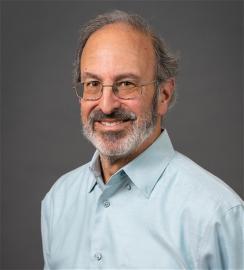
Thomas Scanlon is Professor of Mathematics at the University of California, Berkeley and serves as Vice-Chair for Graduate Affairs in the Berkeley Senate. He is additionally affiliated with the campus-wide Group in Logic and the Methodology of Science. His research lies at the intersection of mathematical logic and number theory, with a focus on model theory and its applications to diophantine geometry, difference and differential algebra, and arithmetic dynamics. Education S.B., University of Chicago, 1993 Ph.D., Harvard University, 1997 Research Interests Scanlon’s work centers on model theory , especially o-minimality , stability theory , and geometric model theory . He applies these logical tools to problems in diophantine geometry such as the André–Oort and Zilber–Pink conjectures, studies difference and differential algebraic structures, and investigates arithmetic dynamics of rational maps and Drinfeld modules. Publications Overview Since 1997 he has authored or co-authored more than sixty research papers. Recurring themes include the model theory of valued and difference fields, jet and prolongation spaces, effective bounds in diophantine problems, and functional transcendence results. Recent work (2018-2025) explores differential Chow varieties, strong minimality of modular functions, effective elimination procedures for differential-difference equations, and uniformity questions in diophantine geometry. Doctoral Supervision Scanlon has supervised at least sixteen Ph.D. theses at UC Berkeley, covering pure model theory, diophantine geometry, differential algebra, and stability theory. Students graduated between 2002 and 2022 include Alice Medvedev, Dragos Ghioca, Alex Kruckman, and Benjamin Castle. Contact & Office Email: scanlon@math.berkeley.edu Office: 723 Evans Hall, UC Berkeley Phone: (510) 642-3665
Mahir Can is a Professor of Mathematics at Tulane University, affiliated with the School of Science & Engineering. His research focuses on Algebraic Combinatorics and Geometry, with particular emphasis on algebraic structures, monoid theory, and geometric representation theory. He holds a Ph.D. in Mathematics from the University of Pennsylvania (2006) and a B.S. in Mathematics from Middle East Technical University (2001). His work explores intersections between combinatorics, algebraic geometry, and coding theory, including studies on Schubert varieties, toric varieties, and error-correcting codes derived from algebraic structures. Recent research highlights include investigations into irreducible numerical monoids, spherical varieties, and the geometry of flag manifolds. Publications span topics such as metric space constructions via directed graphs, applications of homogeneous fiber bundles, and generalized conjectures in combinatorial monoid theory. No scientific awards or grants are explicitly listed in the provided text. Dr. Can’s advising record and lab affiliations are not detailed here, though his academic profile reflects active engagement in advanced mathematical research and education.
Ryan Grady is an Associate Professor in the Department of Mathematical Sciences at Montana State University, affiliated with the College of Letters & Science. His research bridges geometry, topology, and quantum field theory (QFT), with a focus on derived geometry and higher Lie theory. Research Interests: His work applies QFT techniques to geometric and topological problems, explores derived algebraic structures (e.g., L-infinity spaces, cosheaves), and investigates connections between renormalization group flows and sigma models. Recent publications address K-theoretic invariants, operadic structures in topology, and algebraic models for topological field theories. Scientific Awards: Stannard Award for Graduate Teaching (2021) NExT Fellow (2019) ICCM Best Paper Award (2018) Research Enhancement Grant (2018) Member, MSU Center for Faculty Excellence (2017) Education: Ph.D. and M.S. in Mathematics from the University of Notre Dame (2012, 2009), and B.S. in Mathematics from the Colorado School of Mines (2007). Students: Co-chaired Eric Berry (PhD 2021) and Adam Howard (PhD 2021), advised Garrett Oren (MS 2021), and mentored Bryce Morrow (BS 2023).
Hadi Salmasian is a Full Professor in the Department of Mathematics and Statistics at the University of Ottawa, Faculty of Science. He holds a PhD from Yale University and specializes in Lie groups, Lie algebra representations, and related areas of algebra and mathematical physics. Education: PhD in Mathematics, Yale University Research Interests: Dr. Salmasian's research focuses on representation theory of Lie groups and Lie superalgebras, quantum groups, invariant theory, and applications to mathematical physics. His work explores topics such as Capelli eigenvalue problems, spherical functions on supergroups, and polynomiality of faithful dimensions for nilpotent groups. Recent Research Trends: His publications emphasize the interplay between algebraic structures (e.g., Weyl algebras, quantum homogeneous spaces) and representation-theoretic techniques, with applications to quantum computing and cryptography. Notable themes include classification of dual pairs in Lie supergroups and development of hash functions over finite groups. Awards: No awards explicitly mentioned in the provided texts. Advising & Grants: Supervised students include Manal Al-Zahrani, Mengyuan Cao (co-supervised with Monica Nevins), Dene Lepine, and Mitra Mansoori. Postdoctoral researchers include Ali Assem Mahmoud (co-supervised with Anne Broadbent and Monica Nevins). Research activities involve collaboration with groups in algebra and Lie theory. Labs/Teams: Active in research groups focused on algebra, Lie theory, and representation theory within the Department of Mathematics and Statistics at the University of Ottawa.
V. Alan Kostelecky is a Distinguished Professor at Indiana University, specializing in theoretical particle physics as a theorist. His research focuses on supergravity, differential geometry, and extensions of supersymmetry. He earned his Ph.D. in 1982 from Yale University under Samuel MacDowell, with a dissertation titled Geometric Construction of Extended Supergravity , exploring locally SO(4)-invariant deSitter supergravity. His work involves advanced mathematical frameworks, including fiber bundles and differential supergeometry, to construct gauge theories and analyze supergravity models. Notable contributions include the development of algebraic structures in osp(4/4) superalgebras and consistency checks of supersymmetric algebras through Bianchi identities. No awards, grants, or advised students are explicitly listed in the provided text. His current affiliations and ongoing research directions remain unspecified beyond his foundational work on supergravity.
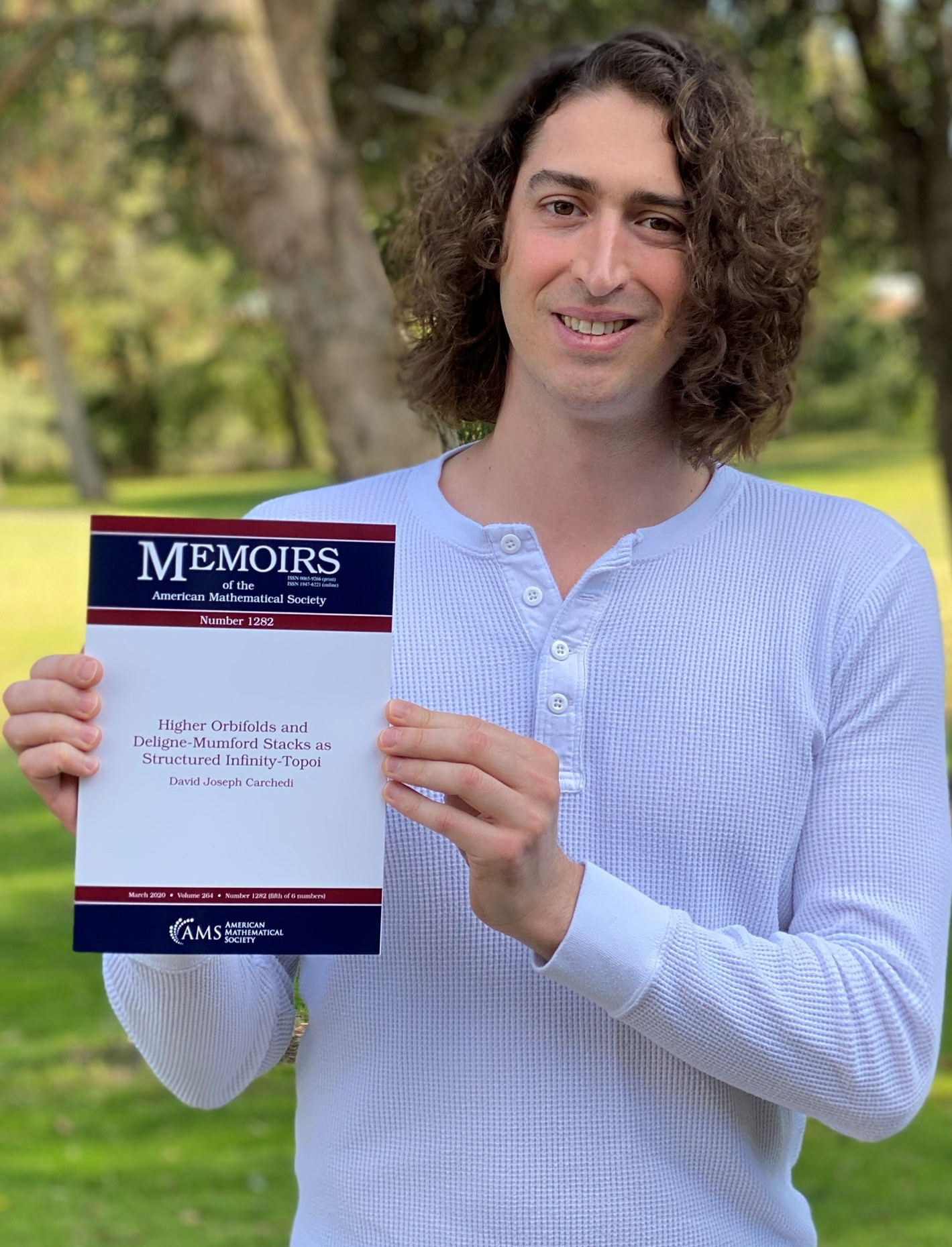
David Carchedi is an Assistant Professor of Mathematics at George Mason University (GMU). He earned his PhD in 2011 from Utrecht University under Ieke Moerdijk, with a thesis on "Categorical Properties of Topological and Differentiable Stacks." His research focuses on applications of higher category theory to topology and differential/algebraic geometry, particularly derived geometry and field theory. Education: PhD in Mathematics (Utrecht University, 2011) Positions: Sabbatical at Max Planck Institute (2018-2019); Postdoc at Max Planck Institute (2011-2014) and University of British Columbia (2014-2015) His research includes developing derived differential geometry for field theory (supported by an NSF grant with Owen Gwilliam), exploring étale and motivic homotopy theory, and studying log geometry with collaborators Sarah Scherotzke, Nicolo Sibilla, and Mattia Talpo. He co-organizes the Topology, Arithmetic, and Dynamics Seminar at GMU and mentors the university’s Association for Women in Mathematics chapter. His recent publications span derived geometry, étale stacks, log schemes, and superalgebras. These works emphasize categorical frameworks, homotopy theory, and geometric applications. He has also contributed to sheaf theory for étale stacks and homological algebra in supergeometry. Notable collaborations include D. Roytenberg (derived manifolds), Scherotzke/Sibilla/Talpo (log geometry), and Elmanto (étale realizations). He has taught courses on homotopy theory, category theory, algebraic topology, and calculus at GMU and other institutions.
Ekaterina Shemyakova serves as Associate Chair in the Department of Mathematics and Statistics within the College of Natural Sciences and Mathematics at the University of Toledo. She maintains an active research profile with numerous publications spanning nearly two decades in specialized areas of mathematical physics and differential equations. Dr. Shemyakova's research interests focus on differential operators, Darboux transformations, partial differential equations, supermanifolds, and cluster algebras. Her work bridges pure mathematics with applications in mathematical physics, particularly exploring the algebraic and geometric structures underlying differential operators. She has made significant contributions to the theory of Darboux transformations, developing classification schemes and algorithms for various types of differential operators, including those on supermanifolds. Analysis of her publication record reveals consistent research productivity with a notable shift toward supergeometry and cluster algebras in recent years. Her work demonstrates a progression from classical differential operators to more sophisticated structures involving supersymmetry and algebraic combinatorics. The research shows strong connections between algebraic structures, geometric interpretations, and computational approaches to differential equations. Dr. Shemyakova has developed computational tools for working with linear partial differential operators, indicating her commitment to both theoretical development and practical implementation. Her publications appear in reputable journals such as Journal of Geometry and Physics, Selecta Mathematica, and Letters in Mathematical Physics, reflecting the quality and impact of her research. As Associate Chair, she contributes to departmental leadership while maintaining an active research program. Her work continues to explore the deep connections between algebraic structures, differential geometry, and mathematical physics, with recent publications indicating expanding interests in super cluster algebras and related combinatorial structures.
Jeffrey Rabin is a Professor of Mathematics at the University of California, San Diego (UCSD), specializing in mathematical physics and mathematics education. He holds a Ph.D. in Physics from Stanford University (1981) and has held postdoctoral positions at Yale University and the University of Chicago before joining UCSD. His research focuses on supermanifolds, supervarieties, and their applications in string theory and supersymmetric systems. He co-founded the Algebraic Thinking Institute (ATI) at UCSD in 1998, an initiative to enhance high school algebra education, and serves on the faculty of the joint Ph.D. program in Mathematics and Science Education (MSED) between UCSD and San Diego State University (SDSU). Rabin has received notable awards for teaching excellence, including the UCSD Alumni Association Distinguished Teaching Award and the Academic Senate Award for Distinguished Teaching. His work bridges advanced mathematical physics with educational innovation, addressing both theoretical frameworks (e.g., super Riemann surfaces) and pedagogical challenges in STEM education. Current teaching includes advanced math courses like Math 31AH (Honors Linear Algebra) and Math 500 (special topics). His publications span mathematical physics, algebraic geometry, and STEM education. Recent work explores interdisciplinary collaboration in STEM teaching and student challenges in proof-based mathematics. Rabin’s contributions to supermanifold theory and mathematics education reflect a dual commitment to theoretical rigor and practical educational impact.
Jose Vicente Beltran Solsona is an Associate Professor in the Department of Mathematics at the Faculty of Mathematics, University of Valencia, Spain. He is a member of the research group GEOSING, focusing on Singularities, Generic Geometry, and Applications. His academic work spans differential geometry, mathematical physics, and geometric structures on manifolds. Research Interests: His primary research areas include Differential Geometry, Poisson and Jacobi structures, graded algebras, supermanifolds, and their applications in mathematical physics and computational geometry. He investigates geometric properties of curves and differential operators on forms, often bridging pure mathematics with theoretical physics. The analysis of his publications reveals a strong focus on geometric structures such as Poisson-Nijenhuis systems, graded Jacobi operators, and helical polynomial curves. His work frequently intersects with computer-aided geometric design and mathematical physics, particularly in modeling wave equations using Bézier techniques and analyzing vacuum polarization in quantum field theory. Scientific Contributions: Characterization of quintic helices with applications in geometric modeling. Development of graded Poisson and Jacobi structures on differential forms. Contributions to superconnection theory and supermanifold geometry. Advising and Grants: While specific details on grants and supervisees are not available in the provided texts, his long-standing collaboration with Dr. Juan Monterde and sustained publication record indicate active research leadership. He contributed to foundational work in geometric curve theory and mathematical physics frameworks. Labs and Teams: He is an active member of the GEOSING research group at the University of Valencia, which investigates singularities and generic geometric phenomena with applications in various scientific domains.
Andrea Santi is a Research Fellow in the Department of Mathematics and Statistics at UiT The Arctic University of Norway. His research focuses on advanced topics in differential geometry, Lie theory, and mathematical physics, with particular emphasis on super-PDE systems, CR manifolds, and nonholonomic superdistributions. His work bridges algebraic structures and geometric analysis, often involving supersymmetric extensions and integrable systems. Recent contributions include studies on Exceptionally simple super-PDE for F(4), 3-nondegenerate CR manifolds in 7 dimensions, and symmetries of supergeometries. These publications highlight his expertise in geometric analysis, non-linear PDEs, and algebraic representation theory. No scientific awards are explicitly mentioned. His advising and grant activities remain unspecified in the provided data. His research is conducted within the Department of Mathematics and Statistics, with collaborations extending to institutions like the University of Salento (UdSdP) and others noted in his publications.
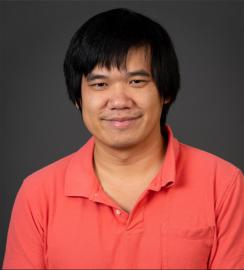
Steven Sam is a Professor in the Department of Mathematics at the University of California San Diego. His academic journey began with a Ph.D. in Mathematics from the Massachusetts Institute of Technology in 2012, and he has since established himself as a leading researcher at the intersection of multiple mathematical disciplines. Sam's research spans algebra, combinatorics, algebraic combinatorics, commutative algebra, representation theory, and algebraic geometry. His work focuses particularly on representation stability and the theory of twisted commutative algebras. An underlying theme of his research involves the interface of combinatorics, representation theory, and algebraic geometry, with a special emphasis on commutative algebra. His contributions include solving the Lannes-Schwartz artinian conjecture and substantial work on finiteness properties of sequences of representations. His publication record demonstrates consistent high-impact contributions across a range of mathematical subfields. Recent work shows a strong emphasis on representation theory applied to commutative algebra problems, with particular attention to stability phenomena, twisted commutative algebras, and connections to algebraic geometry. His research often involves collaborations with prominent mathematicians like Andrew Snowden, Jerzy Weyman, and Daniel Erman, reflecting the interdisciplinary nature of his work. Sloan Research Fellowship Professor Sam actively mentors students at all levels. He currently advises three PhD students (Abhik Pal, Suhas Gondi, and one unnamed student who hasn't advanced to candidacy) and has successfully guided former PhD students Robert Laudone (2020) and Hang (Amy) Huang (2019) to completion. His undergraduate mentorship has produced notable research papers and honors theses on topics ranging from invariant theory to combinatorial representation theory. His research has been supported by various grants that enable his work on representation stability, commutative algebra, and related fields. Sam has organized several significant conferences and workshops, including the MSRI Spring 2024 program on commutative algebra and the Free Resolutions and Representation Theory workshop at ICERM in 2020, demonstrating his leadership within the mathematical community.
Madeleine Jotz is a W2 Professor of Geometry at the University of Würzburg since August 2021, holding the Chair of Mathematics X (Geometry) at Emil-Fischer-Straße 31. Her academic career includes positions as acting professor and junior professor in Göttingen (2016-2021), Vice-Chancellor's Fellow in Sheffield (2013-2017), Swiss NSF Postdoctoral Fellow at UC Berkeley (2012-2013), and doctoral studies at EPFL (2008-2011). Her research focuses on differential geometry and geometric mechanics , with particular expertise in Poisson geometry and higher structures . Key research areas include Courant algebroids, Lie n-groupoids and Lie n-algebroids, geometric structures on double vector bundles, representations up to homotopy, and characteristic classes. Her work bridges pure mathematics with applications in theoretical physics, particularly in understanding geometric structures underlying mechanical systems. Analysis of her recent publications (2018-2024) reveals a strong focus on higher geometric structures, particularly N-manifolds, Lie n-algebroids, and their representations. Her work shows increasing sophistication in handling higher categorical structures while maintaining connections to classical geometric mechanics. The publications demonstrate consistent collaboration with researchers like Malte Heuer, Rajan Mehta, and Tudor Ratiu across multiple institutions. Professor Jotz maintains an active research program with publications spanning prestigious journals including Journal de Mathématiques Pures et Appliquées, Journal of Homotopy and Related Structures, and Mathematical Physics, Analysis and Geometry. Her office is located in Building 31 (Physics East), Room 00.011, with contact email madeleine.jotz@uni-wuerzburg.de.