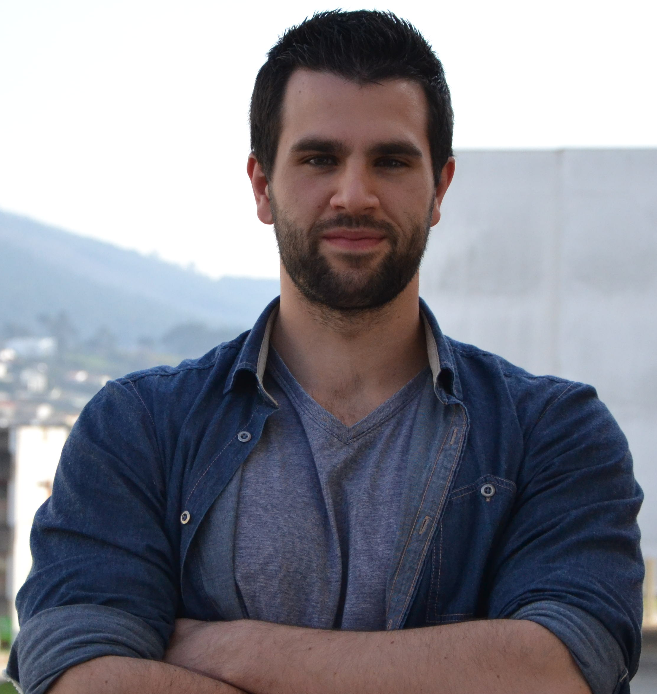
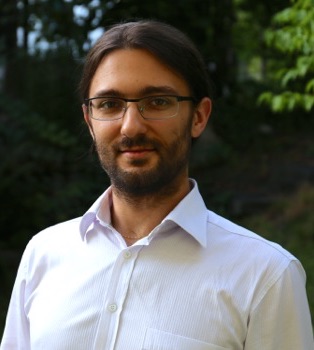
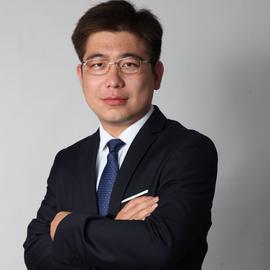
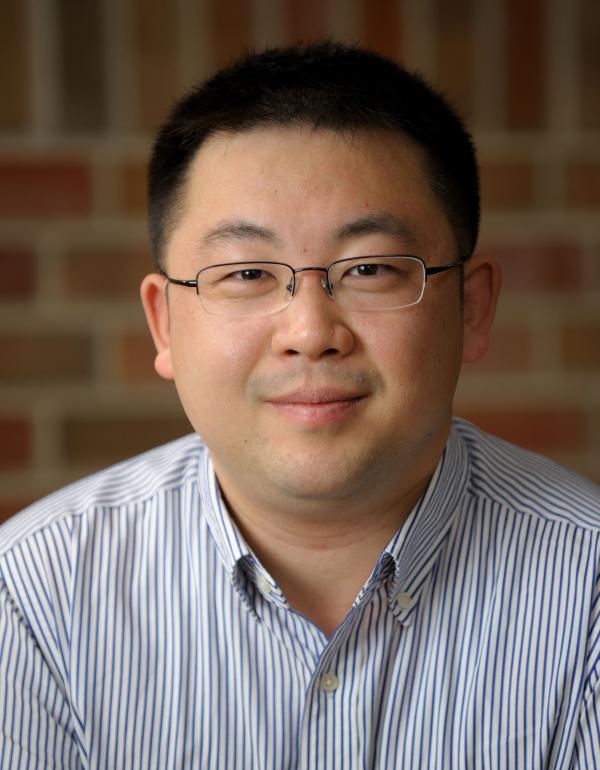
Ricardo Gonçalves Macedo is an Invited Assistant Professor at the University of Minho and a Researcher at INESC TEC's Distributed Storage Research (DSR) team since 2016. He holds a PhD in Computer Science (2023) from the MAP-i program at Universities of Minho, Aveiro, and Porto, focusing on user-level software-defined storage data planes. His research emphasizes storage systems and operating systems, addressing performance, reliability, and energy efficiency in large-scale I/O infrastructures. Key areas include kernel-bypass storage stacks, disaggregated resources, and HPC storage challenges. Recent work includes tools like LAZYFS for fault injection and PADLL for metadata QoS control. He leads projects like DisaggregatedHPC (energy-efficient resource disaggregation) and CDMS (healthcare data management). Ricardo has supervised over 10 theses at the University of Minho and contributes to open-source projects in storage optimization. His work is published in top venues like VLDB, IEEE Cluster, and FAST.
James Charlton is a Researcher in the Department of Architecture and Built Environment at Northumbria University's School of Design. He holds a PhD in 3D Design (2012) and became a Fellow of the Higher Education Academy (FHEA) in 2016. His work focuses on advancing architectural and urban design through digital technologies, including Building Information Modelling (BIM), 3D visualization, and laser scanning. Charlton leads high-impact projects in smart cities, digital twins, and sustainable disaster relief shelters, blending technical innovation with practical urban planning solutions. His research interests span architectural technology, urban design, and the integration of digital tools into education and heritage preservation. Notable outputs include studies on phygital urban planning engagement and biodesign for disaster resilience. Charlton actively contributes to academic discourse through peer-reviewed journals and conferences, while maintaining roles as a subject expert in architectural project evaluations. Charlton has published on topics ranging from VR wayfinding simulations to heritage-driven immersive experiences, demonstrating a commitment to both technological advancement and community-focused urban development. His work is accessible via the Virtual NewcastleGateshead portal and his academic profile on Northumbria's Research Link.
Cătălin Bogdan CIOBANU is a Lecturer at the Electronics and Computers Department within the Faculty of Electrical Engineering and Computer Science at the Technical University of Brașov. His research focuses on advanced computing architectures, including SIMD designs, reconfigurable systems, embedded systems, and supercomputing. He is affiliated with the university’s main campus at Politehnicii St, no 1, Brașov, România, and can be contacted via email at catalin.ciobanu@unitbv.ro or phone +40 711 928 609. His research interests revolve around optimizing computational hardware for high-performance tasks. Key areas include the design of polymorphic registers for efficient matrix operations, high-bandwidth memory systems for digital signal processors, and accelerating algorithms using AVX2 and CUDA. He has contributed to projects like the SARC architecture and the EXTRA platform for reconfigurable HPC. CIOBANU has published extensively in journals like IEEE Micro and conferences such as IEEE International Conference on Computational Science and Engineering. His work often bridges theoretical computer architecture with practical applications in embedded and supercomputing systems. No scientific awards are explicitly mentioned in the provided text. His advising activities and grants are not detailed here, but his involvement in academic research and development at the university is central to his role.
Henry M. Tufo is a Researcher affiliated with the University of Colorado, USA . His work spans High-Performance Computing (HPC) , Cloud Computing , and Computational Fluid Dynamics , with a focus on climate modeling, grid systems, and scalable algorithms. Tufo has collaborated extensively with institutions like IBM, Argonne National Laboratory, and researchers such as Paul Fischer, Kate Keahey, and Paul Marshall. His research interests include: Developing scalable HPC systems for climate and astrophysical simulations Integrating cloud computing with scientific workflows Optimizing spectral element methods for atmospheric models Trends in his publications highlight expertise in parallel computing , secure execution environments , and numerical methods for fluid dynamics. Tufo has contributed to frameworks like the FLASH code and GraphBLAS for large-scale simulations.
Dr. Christian Schiffer is a Research Fellow at the Research Centre Jülich, leading the 'Large-scale AI for Brain Mapping' team within the Institute of Neuroscience and Medicine (INM-1). His work focuses on developing deep learning algorithms for automated analysis of cytoarchitectonic brain structures using high-resolution histological data. He heads the Helmholtz AI Young Investigator Group, which integrates contrastive learning, graph neural networks, and high-performance computing (HPC) workflows to advance brain mapping technologies. His research applies methods like convolutional neural networks (CNNs) and generative models to extract microstructural features from petabyte-scale microscopy datasets. Key contributions include 3D cytoarchitectonic mapping, integrating topology with histological data, and improving computational efficiency for large-scale neuroimaging analysis. Schiffer also collaborates with the 'Big Data Analytics' group, advancing tools for 3D reconstruction and interactive AI applications in neuroscience. Notably, he received the Helmholtz AI Award 2023 for his contributions to AI-driven neuroscience. His work bridges artificial intelligence, supercomputing, and neuroanatomy to create data-driven brain atlases, enabling deeper insights into brain connectivity and function. Schiffer’s group actively contributes to open-source tools like the Julich-Brain platform and participates in initiatives such as the 'BigBrain' project.
Prof. Markus Diesmann is a Director of the Institute for Advanced Simulation (IAS-6) and the Institute for Neuroscience and Medicine (INM-10) at Forschungszentrum Jülich. He leads the Computational Neurophysics group, focusing on understanding neuronal network dynamics through computational models and supercomputing. His work integrates theoretical neuroscience with high-performance computing to simulate brain-scale networks and explore neuromorphic computing foundations. Research interests include correlation structures in neuronal networks, simulation technologies, brain-scale modeling, and software engineering for neuroscience. He has pioneered efforts in scaling neuronal network simulations to exascale systems and improving computational efficiency. Key contributions include the NEST simulation software and studies on synaptic plasticity, sequence learning, and LFP dynamics. Publications emphasize advancements in simulation algorithms, network connectivity analysis, and bridging experimental data with computational models. His work addresses challenges in real-time cortical microcircuit simulation, neuromorphic hardware integration, and the role of noise in neural computation. Prof. Diesmann collaborates internationally on neuroscience initiatives and high-performance computing applications. He advocates for robust scientific software practices and contributes to infrastructure for open science in computational neuroscience.
Fred Chong is the Seymour Goodman Professor of Computer Science at the University of Chicago and Chief Scientist for Quantum Software at Infleqtion. He leads the NSF-funded EPiQC Project, aiming to bridge theoretical quantum algorithms with practical hardware. His research spans quantum computing, computer architecture, security, and sustainable computing. Chong holds a PhD from MIT (1996) and previously served at UC Davis and UCSB. He has been awarded the NSF CAREER Award, IEEE Fellow distinction, and over a dozen best paper awards. His work includes co-founding Super.tech (acquired by ColdQuanta) and advising on the National Quantum Initiative. Education: PhD in Computer Science from MIT (1996). Past roles include Chancellor’s Fellow at UC Davis (1997-2005) and Professor/Director at UCSB (2005-2015). Research focuses on quantum software/hardware co-design, quantum algorithms, and practical quantum systems. His team develops tools like WESTPA for weighted ensemble simulations and collaborates on projects like the Greenscale Center for Energy-Efficient Computing. Awards include the Quantrell Award (teaching) and University of Chicago’s Graduate Teaching and Mentoring Award. Key grants total over $80M led/co-led. Labs/groups include the EPiQC Consortium, Systems Group, and CERES Center for Unstoppable Computing. Recent work includes scaling quantum networks, improving qubit reliability, and applying quantum computing to drug discovery and oncology.
Maciej Besta is a leading researcher at ETH Zurich's Institute for Computing Platforms, where he heads research initiatives at the Scalable Parallel Computing Lab (SPCL) and contributes to the ETH Future Computing Laboratory (EFCL). Working under the mentorship of Professor Torsten Hoefler, he has established himself as a prominent figure in high-performance computing, graph processing, and large language models. Position: Researcher at Institute for Computing Platforms, ETH Zurich Research Leadership: Head of Sparse Graph Computations and Large Language Models Research at SPCL Collaboration: Leads project management for SPCL's contributions to ETH Future Computing Laboratory Besta's research spans multiple abstraction levels, from hardware and network topologies to middleware, algorithms, and programming models. His primary focus areas include graph-enhanced language models, graph neural networks, graph databases, and sparse models, with applications across various computational settings. He approaches these problems through rigorous performance modeling and formal reasoning, emphasizing both scalability and practical implementation. His recent publications reveal a clear trend toward integrating graph structures with language models and AI systems. Besta has pioneered work on graph databases, knowledge graphs of thoughts, and higher-order graph neural networks, while maintaining his strong foundation in high-performance computing and network topology design. His research bridges traditional HPC with cutting-edge AI, creating novel approaches for efficient large-scale computation. IEEE TCSC Award for Excellence in Scalable Computing (Early Career, 2023) Multiple Best Paper Awards at Supercomputing conferences (2022, 2023) ACM SIGHPC Doctoral Dissertation Award (2022) ETH Medal for outstanding doctoral thesis (2021) Fellow of The Explorers Club (2022) Besta actively mentors ETH Zurich students through semester projects, Bachelor's, and Master's theses, focusing on graph processing and related computer science challenges. His mentorship extends beyond technical guidance, incorporating lessons from his extensive polar and mountaineering expeditions that emphasize mental resilience, efficient risk management, and leadership. He has supervised numerous student projects that have resulted in high-impact publications at top-tier conferences. As a core member of the Scalable Parallel Computing Lab, Besta collaborates with researchers across ETH Zurich and international institutions. His unique approach integrates insights from extreme environment expeditions into research methodology, creating a distinctive framework for tackling complex computational problems. The lab's work under his leadership spans theoretical modeling, practical implementation, and real-world deployment of high-performance systems.
Alexandru Calotoiu is a Researcher in the Department of Computer Science at ETH Zürich, affiliated with the Professorship for Scalable Parallel Computing. His work focuses on performance modeling, high-performance computing (HPC), serverless systems, and cloud computing. He leads research in empirical performance modeling for complex applications, optimization of parallel algorithms, and scalable cloud architectures. Key research areas include noise-resilient performance models, serverless computing frameworks, and compositional parallel programming. He has contributed to benchmarking tools like SeBS and developed techniques for loop scheduling, static analysis, and resource disaggregation in HPC environments. His publications from 2023–2025 emphasize serverless systems (e.g., FaaSKeeper, Cppless), performance embeddings for optimization, and specialized supercomputing for climate science. These studies address scalability, reproducibility, and cross-platform performance portability in data-centric workloads. No scientific awards are explicitly listed, but his work has been presented at leading conferences such as ISCA and IEEE/ACM events. He collaborates on projects like rFaaS (RDMA-enabled serverless platforms) and Process-as-a-Service frameworks. His research bridges theoretical models with practical implementations in distributed systems and cloud infrastructure.
Jose Luis Lucas Simarro is a researcher at the Faculty of Informatics, Complutense University of Madrid, specializing in cloud computing and distributed systems. His work focuses on developing innovative solutions for large-scale distributed environments. His institutional affiliations include: Faculty of Informatics, Complutense University of Madrid Laboratoire de l'Informatique du Parallélisme, Ecole Normale Supérieure de Lyon (Research Stay: 2012-2013) Multiple EU-funded research projects including BEACON (2015-2017), PANACEA (2013-2016), and CloudCatalyst (2013-2015) Dr. Simarro's research interests span across several areas of cloud and distributed computing: Cloud Computing and Data-centric Architectures Edge Computing and IoT Integration Distributed and Federated Cloud Systems High Performance Computing in Cloud Environments Grid Computing and Resource Management His work has resulted in significant contributions to open-source technologies, most notably OpenNebula, a cloud management platform with over 100,000 downloads used by organizations like Akamai and the Leibniz Supercomputing Center. He has also contributed to GridWay, a metascheduler for large-scale computing resources. Dr. Simarro has been actively involved in numerous EU-funded collaborative research projects spanning from BEinGRID (2005-2009) to BEACON (2015-2017), demonstrating a sustained research career in cloud and distributed systems. He participates in important research networks such as NESSI, Open Grid Forum, and the Globus Alliance. His teaching experience includes serving as a Laboratory Assistant for courses in Networks, Performance Evaluation, and Fundamentals of Computers during 2012-2013.
Victor Fung is an Assistant Professor in the School of Computational Science and Engineering (CSE) at Georgia Tech's College of Computing. Previously, he was a Eugene P. Wigner Fellow at Oak Ridge National Laboratory (ORNL) in the Center for Nanophase Materials Sciences. He holds a B.A. in Chemistry from Cornell University and a Ph.D. in Physical Chemistry from the University of California, Riverside. His research focuses on leveraging artificial intelligence, high-performance computing, and machine learning to accelerate materials and chemical discovery, particularly through inverse design and automated data-driven ecosystems. His work spans developing graph neural networks for quantum chemistry surrogate models, designing novel materials atom-by-atom, and creating chemically-informed machine learning frameworks. He collaborates extensively with experimentalists and computational scientists to bridge theory and application. Key areas of exploration include catalysis for energy storage, carbon capture, and neuromorphic devices. Dr. Fung leads a multi-disciplinary team at Georgia Tech, mentoring PhD, MS, and undergraduate students. His lab emphasizes open-source software development and high-throughput computational workflows, utilizing supercomputers like Perlmutter and Frontier. Recent achievements include publishing breakthroughs in inverse design methodologies and high-entropy alloy nanocatalysts. Awards and recognition include his Wigner Fellowship and sustained contributions to computational chemistry. His group actively seeks motivated researchers with backgrounds in machine learning, computational chemistry, and materials science to join ongoing projects in AI-driven scientific discovery.
Pooya Ronagh is a Research Assistant Professor at the University of Waterloo, affiliated with the Department of Physics & Astronomy and the Institute for Quantum Computing (IQC). He also serves as a Scientific Lead at the Perimeter Institute Quantum Intelligence Lab (PIQuIL) and directs the Hardware Innovation Lab at 1QBit. His work bridges quantum computation, machine learning, and optimal control, focusing on quantum algorithms, error correction, and hybrid quantum-classical systems. Education: PhD in Mathematics (University of British Columbia, 2016), MSc in Mathematics (UBC, 2011), dual BSc in Mathematics and Computer Science (Sharif University of Technology, 2009). Awards include the Benjamin Franklin Fellowship (2009). Research Interests: Quantum algorithms for machine learning, reinforcement learning, fault-tolerant quantum architectures, cryogenic systems, and quantum control. He explores applications of quantum simulation to improve learning efficiency and robustness in AI systems. Recent work includes optimizing quantum error correction decoders, developing scalable superconducting architectures, and advancing neural network-based quantum state tomography. His contributions span theoretical frameworks (e.g., lattice surgery scheduling) and experimental methods (e.g., SFQ pulse control). Teaching: Courses like PHYS 490 (Machine Learning in Physics) emphasize practical coding and interdisciplinary projects. Grants and collaborations involve industry and academic partners in quantum hardware and software development. Labs: Hardware Innovation Lab (1QBit), IQC Quantum Control Group Future Work: Scaling quantum supercomputers, cryogenic neural decoders, quantum-enhanced generative AI
Bo Zhang serves as an Assistant Professor in the Department of Computer Science at Michigan Technological University's College of Computing. Prior to joining Michigan Tech in August 2025, he was a Post-Doctoral Research Associate at the Scientific Computing and Imaging Institute, University of Utah. His academic journey includes significant collaborations with national laboratories including Sandia, Oak Ridge, and NASA. Dr. Zhang holds a Ph.D. in Computer Science from the University of Utah (2024) where he worked under Professor Manish Parashar, and a Bachelor's degree in Telecommunication Engineering from Beijing University of Posts and Telecommunications (2018). His research focuses on addressing fundamental challenges in high-performance computing systems, particularly in the areas of GPU-accelerated architectures and extreme-scale data management. His work bridges theoretical computer science with practical implementations on leadership-class supercomputers, developing innovative solutions for data movement optimization and workflow integration across heterogeneous computing environments. Current projects include the National Data Platform (NDP) and DataSpaces framework for extreme-scale data management. Dr. Zhang's publications demonstrate consistent contributions to major HPC conferences including HiPC, Euro-Par, and CCGrid, with a strong emphasis on practical implementations that deliver significant performance improvements (up to 75% reduction in data-exchange time) while maintaining portability across diverse hardware platforms. Best Paper Candidate at Euro-Par 2023 Dr. Zhang actively mentors graduate students and seeks self-motivated Ph.D. candidates interested in HPC, cloud computing, and digital twins. His laboratory leverages multiple leadership computing facilities including Perlmutter@NERSC, Polaris@ALCF, Frontera@TACC, and Michigan Tech's Superior/Portage/DeepBlizzard systems. Current research directions include extending the DataSpaces framework for edge-cloud-HPC continuum integration and developing next-generation digital twins workflows.
Yanxin Liu is an Assistant Professor in the Department of Chemistry & Biochemistry and the Institute of Bioscience and Biotechnology Research (IBBR) at the University of Maryland. His research focuses on understanding protein complexes related to human diseases using an integrative approach combining biophysics, biochemistry, structural biology, and computational modeling. The lab specializes in high-resolution cryo-electron microscopy, cryo-electron tomography, and molecular dynamics simulations. Recent highlights include collaborations on viral structural analysis, protein aggregation studies, and computational modeling of Hsp90 dynamics. The lab has secured significant resources, including Anton3 supercomputer time for biomolecular simulations and a Labbot instrument for advanced research. Dr. Liu’s work emphasizes cross-disciplinary collaboration, with contributions to studies on SARS-CoV-2 proteins, mitochondrial chaperones, and Lassa virus mechanisms. His team has trained students and postdocs who have received awards such as the G. Forrest Woods Memorial Scholarship and FASEB travel grants. The Liu Lab actively recruits students and researchers, fostering a dynamic environment for addressing biomedical challenges through structural biology and advanced technologies. Key Technologies: Cryo-EM, Molecular Dynamics, NMR Spectroscopy Focus Areas: Protein-Protein Interactions, Disease Mechanisms, Drug Design Collaborations: University of Maryland, FDA, UCSF
Dr. Charles James Gillan is a Senior Lecturer at Queen's University Belfast's School of Electronics, Electrical Engineering and Computer Science, part of the Faculty of Engineering and Physical Sciences. His research focuses on high-performance computing (HPC), heterogeneous accelerators (FPGAs and GPUs), and their applications in diverse fields such as clinical physiology, electromagnetic fields, and image analysis. He collaborates extensively with the QUB Medical School on data analytics and machine learning for ICU patient monitoring. Gillan has led multiple projects, including an InterTrade Ireland-recognized Fusion project with CreVinn Ltd, which transferred FPGA programming knowledge to industry. His work spans academic and industrial partnerships, emphasizing innovation in computing systems and real-world problem-solving. His research interests include KTP projects, EPSRC funding, and H2020 initiatives. He has contributed to high-impact projects like the HPC-NI center and handheld olfactory detection systems. Awards include an InterTrade Ireland award for his Fusion project. Gillan has also engaged in outreach, training graduates in OpenCL programming and fostering industry-academia collaboration. Publications highlight advancements in neural networks for blood pressure prediction, exascale computing algorithms, and AI-driven healthcare solutions. His work bridges theoretical computing and practical applications, with a focus on edge computing architectures and transparency in food systems.