معرفی
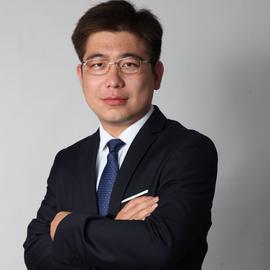
Bo Zhang serves as an Assistant Professor in the Department of Computer Science at Michigan Technological University's College of Computing. Prior to joining Michigan Tech in August 2025, he was a Post-Doctoral Research Associate at the Scientific Computing and Imaging Institute, University of Utah. His academic journey includes significant collaborations with national laboratories including Sandia, Oak Ridge, and NASA.
Dr. Zhang holds a Ph.D. in Computer Science from the University of Utah (2024) where he worked under Professor Manish Parashar, and a Bachelor's degree in Telecommunication Engineering from Beijing University of Posts and Telecommunications (2018).
His research focuses on addressing fundamental challenges in high-performance computing systems, particularly in the areas of GPU-accelerated architectures and extreme-scale data management. His work bridges theoretical computer science with practical implementations on leadership-class supercomputers, developing innovative solutions for data movement optimization and workflow integration across heterogeneous computing environments. Current projects include the National Data Platform (NDP) and DataSpaces framework for extreme-scale data management.
Dr. Zhang's publications demonstrate consistent contributions to major HPC conferences including HiPC, Euro-Par, and CCGrid, with a strong emphasis on practical implementations that deliver significant performance improvements (up to 75% reduction in data-exchange time) while maintaining portability across diverse hardware platforms.
- Best Paper Candidate at Euro-Par 2023
Dr. Zhang actively mentors graduate students and seeks self-motivated Ph.D. candidates interested in HPC, cloud computing, and digital twins. His laboratory leverages multiple leadership computing facilities including Perlmutter@NERSC, Polaris@ALCF, Frontera@TACC, and Michigan Tech's Superior/Portage/DeepBlizzard systems. Current research directions include extending the DataSpaces framework for edge-cloud-HPC continuum integration and developing next-generation digital twins workflows.