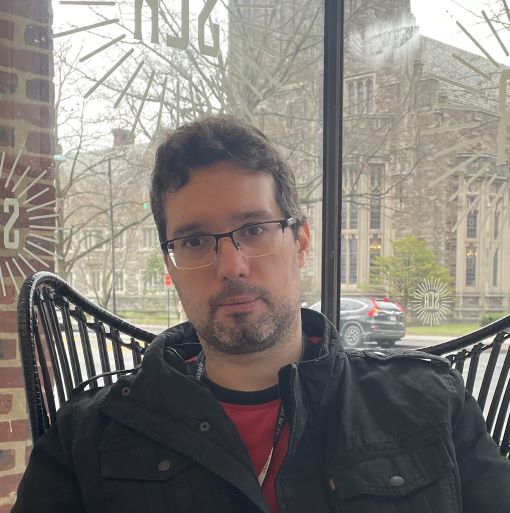
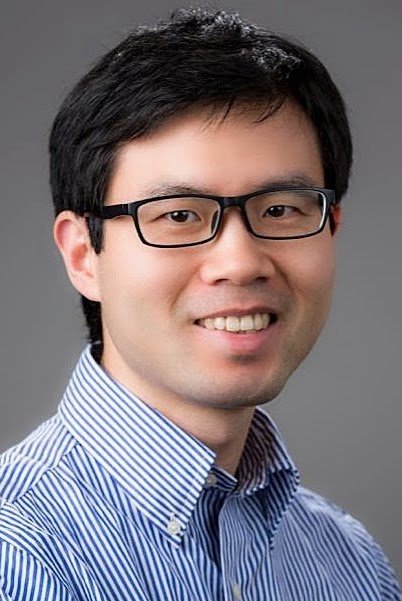
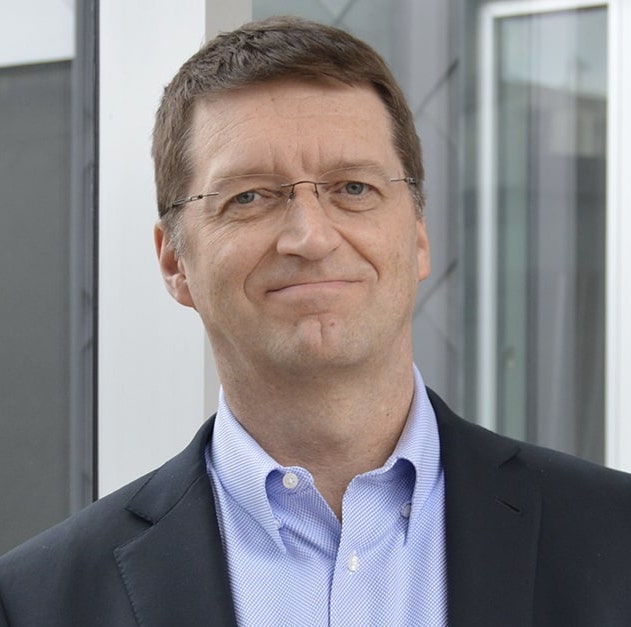
Professor Vladimir Bavula is a faculty member at the University of Sheffield within the School of Mathematical and Physical Sciences . His research focuses on noncommutative Noetherian rings, modules, differential operators, D-modules, and dimension theory (Krull, global homological, Gelfand-Kirillov, filter dimensions). He also investigates graded and filtered algebras, automorphism groups, and properties of simple infinite-dimensional noncommutative algebras. His recent publications address localizations of rings and modules, Δ-locally nilpotent algebras, prime spectra of quantum Weyl algebras, and the Jacobian Conjecture. His work spans topics like Ore extensions, singularity theory, and homological dimensions. Professor Bavula teaches advanced mathematics modules (MAS333, MAS438) and leads research in the Pure Mathematics cluster. He has held grants related to the Dixmier Conjecture and automorphisms of polynomial integro-differential operators. Contact: Office J15, Hicks Building, Hounsfield Road, Sheffield S3 7RH, UK.
Alexandre Gondran is a researcher at École Nationale de l'Aviation Civile (National School of Civil Aviation) with a career spanning quantum mechanics, combinatorial optimization, and air traffic management. His work bridges foundational physics and practical operations research, focusing on quantum interpretations (de Broglie-Bohm theory, double-scale models), graph coloring algorithms, and robust flight path allocation. Education : PhD in Computer Science (2008) from University of Technology of Belfort-Montbéliard and University of Franche-Comté. Research Interests : Alexandre's research explores quantum mechanics' foundational aspects through de Broglie-Bohm theory, semiclassical limits, and path integral methods. In optimization, he develops hybrid metaheuristics and exact algorithms for graph coloring, gate allocation, and air traffic conflict resolution. Publication Trends : His articles demonstrate dual expertise in quantum foundations (12/15 papers) and optimization (3/15), with recent works extending to stochastic processes and tropical mathematics applications in physics. Collaborations : Alexandre frequently collaborates with Michel Gondran (quantum theory), Laurent Moalic (graph algorithms), and Nicolas Barnier/Ruixin Wang (transportation systems), reflecting interdisciplinary research across physics, computer science, and aviation engineering.
Francesco Scazza serves as an Associate Professor in the Department of Physics at the University of Trieste, where he holds multiple leadership positions including Head's Office Delegate for Technological Transfer and Territorial Relations, Departmental Board Member, and Joint Board of Studies Member. His research focuses on experimental condensed matter physics with particular emphasis on quantum many-body physics and quantum simulation using ultracold atoms. University of Trieste, Department of Physics (current) Principal Investigator for RTDA triennale PON FIS/03 research project (2021-2025) Member of multiple departmental boards and committees His research interests span quantum simulation, ultracold atomic systems, and condensed matter physics with applications in technological transfer. Scazza's work bridges fundamental quantum phenomena with practical applications, particularly through his leadership in technological transfer initiatives at the university. His research group investigates quantum many-body systems with potential applications in quantum computing and simulation technologies. Analysis of his recent publications reveals a strong focus on quantum simulation techniques, ultracold atom manipulation, and condensed matter systems. His work demonstrates growing interest in quantum information applications and interdisciplinary approaches combining atomic physics with materials science. The publications show consistent output in high-impact journals with increasing collaboration across European research institutions. Scazza actively participates in departmental governance as evidenced by his multiple committee appointments. He contributes to both undergraduate and graduate education through his involvement with degree programs and doctoral studies boards. His research group, Quantum many-body physics and quantum simulation with ultracold atoms, operates within the Department of Physics's Condensed Matter Physics research strand. The group maintains strong connections with Elettra Sincrotrone Trieste and other regional research facilities.
Fernando Granha Jeronimo is an Assistant Professor at the Siebel School of Computing and Data Science, University of Illinois Urbana-Champaign. His research explores theoretical computer science with emphases on coding theory, expander graphs, quantum computing, and optimization. He holds a PhD from the University of Chicago, M.Sc./B.Sc. degrees from Unicamp (Brazil), and an engineering degree from Telecom Paris. His work investigates interactions between complexity theory, pseudorandomness, quantum algorithms, and high-dimensional expanders. Recent studies focus on explicit code constructions near information-theoretic bounds, quantum-classical complexity separations, and efficient decoding algorithms leveraging expander properties. Publications demonstrate consistent focus on coding theory (explicit codes, list decoding), quantum complexity (unentangled proofs, pseudoentanglement), and optimization (LP/SDP hierarchies). A trend toward quantum applications is evident in recent works on quantum LDPC codes and property testing. Awards & Fellowships: Simons-Berkeley Fellow Google Research Fellow TA Prize, University of Chicago (awarded twice) Advising & Grants: Actively recruits graduate students for his research group. Previously supported by Simons Institute and Google Research Fellowship during postdoctoral work at IAS. Current courses include quantum computing (CS 498) and advanced topics in codes/optimization (CS 598). Leads the Local-to-Global TCS Mentorship Program and research groups focused on coding theory, quantum complexity, and expander applications.
Yulong Lu serves as an Assistant Professor at the School of Mathematics, University of Minnesota, and holds affiliated faculty status with the Data Science Initiative in the College of Science and Engineering. His research bridges theoretical mathematics and practical applications in data science, with active recruitment of undergraduate and graduate researchers. Lu earned his Ph.D. in Mathematics and Statistics from the University of Warwick under Andrew Stuart and Hendrik Weber. His academic trajectory includes an Assistant Professorship at the University of Massachusetts Amherst (2020-2023) and a Phillip Griffiths Research Assistant Professorship at Duke University (2017-2020) mentored by Jonathan Mattingly and Jianfeng Lu. His research spans mathematical foundations of machine learning , applied probability , stochastic dynamics , applied analysis , PDEs , Bayesian statistics , and uncertainty quantification . Recent work demonstrates deep integration of diffusion models, transformers, and operator learning to solve complex physical systems while establishing theoretical convergence guarantees. Analysis of his 15 most recent publications reveals dominant trends in physics-informed generative modeling for PDEs, in-context learning for dynamical systems, and theoretical analysis of deep learning approximations. His work consistently connects abstract mathematical frameworks with concrete scientific computing applications across fluid dynamics, quantum mechanics, and optimization. No scientific awards were documented in the provided materials. Lu actively mentors researchers through open positions for Ph.D. students (Fall 2026 intake), postdocs via Mathjobs, and UMN internships focused on deep learning theory and scientific applications. His group emphasizes self-motivated collaboration on theoretical and applied challenges in machine learning. He leads a research group developing theory for deep learning applications in scientific computing, with current projects including diffusion-based PDE solvers, transformer architectures for dynamical systems, and uncertainty quantification for inverse problems.
Arzu Boysal is a Full Professor at Boğaziçi University, affiliated with the Department of Mathematics in Istanbul, Türkiye. Her career spans over two decades, blending teaching and research in pure mathematics, particularly representation theory and algebraic geometry. Ph.D. in Mathematics, University of North Carolina at Chapel Hill (2005) B.Sc. in Industrial Engineering, Boğaziçi University (1994) Her research focuses on the representation theory of Lie algebras and affine Lie algebras, exploring their applications in algebraic geometry, moduli spaces, and complex geometry. She investigates connections between algebraic and geometric structures, with emphasis on Lie groups and their infinite-dimensional analogs. Arzu’s publications reflect her interdisciplinary approach, ranging from theoretical studies on Verlinde spaces and fusion products to applied mathematical modeling in mechanical systems. Her work on Multiple Bernoulli series and wall-crossing formulas bridges number theory with geometric quantization. She has received institutional research funding through Boğaziçi University's BAP-5076P project (2010), titled "Duvar Atlama Metodu ile Hacim ve Boyut Hesapları," focusing on volume and dimension calculations via partitioning methods.
Liang Liang is a prominent academic affiliated with the University of Science and Technology of China, School of Management, where they have been actively contributing to research in operations research and management science. With over 180 publications spanning two decades from 2004 to 2024, their scholarly output demonstrates significant expertise and sustained contribution to the field. Liang Liang frequently collaborates with researchers across China and internationally, with notable co-authors including Yongjun Li, Jie Wu, Feng Yang, and Joe Zhu. Liang Liang's research interests center around Data Envelopment Analysis (DEA) and its numerous applications across various domains. Their work demonstrates exceptional versatility in applying operations research methodologies to solve complex problems in supply chain management, environmental performance evaluation, financial systems, and information technology. The researcher has made significant contributions to methodological advancements in DEA, including network DEA, two-stage systems, cross-efficiency evaluation, and handling undesirable outputs. Their research often addresses practical challenges in Chinese contexts while making theoretical contributions with global relevance. Analysis of Liang Liang's recent publications reveals a clear trend toward increasingly sophisticated applications of DEA methodologies across diverse fields. The work shows progression from basic DEA applications to complex multi-stage, network-based, and game-theoretic approaches that address real-world constraints. Recent research demonstrates growing interest in digital platforms, social media analytics, environmental sustainability, and post-pandemic workplace dynamics, reflecting adaptability to emerging research areas while maintaining methodological rigor. The publications appear in top-tier journals including European Journal of Operational Research, Annals of Operations Research, and Journal of the Operational Research Society, indicating high scholarly impact. Liang Liang's collaborative network spans numerous institutions across China, with frequent partnerships with researchers from the University of Science and Technology of China, Chongqing University, and other leading Chinese academic institutions. The extensive publication record suggests active mentorship of junior researchers, though specific student names aren't documented in the available information. The research portfolio demonstrates consistent funding support, likely from Chinese national and provincial research agencies, though specific grant details aren't provided in the source material.
Carsten Schneider is a Professor and Director of the Computer Algebra and Applications group at the Research Institute for Symbolic Computation (RISC) , part of the Johannes Kepler University Linz , Austria. His work focuses on symbolic summation algorithms, difference rings, and their applications in combinatorics, particle physics, and quantum field theory. Research Interests: His expertise includes Computer Algebra , Special Functions , Perturbative Quantum Field Theory , and Combinatorics . He develops algorithms for simplifying multi-sums and solving recurrences, with applications to Feynman integrals and operator matrix elements in particle physics. Grants & Projects: He leads Austrian Science Fund (FWF) grants such as Symbolic Summation for Computer Science (2024–2028) and Computer Algebra for Multi Loop Feynman Integrals (2021–2025). Past grants include FWF SFB F50 research projects in enumerative combinatorics. Software: He developed the Sigma summation package, used for symbolic computation in multi-loop calculations. His tools are widely applied in particle physics and combinatorics. Teaching & Mentoring: Teaches courses like Algorithmic Combinatorics and Computer Algebra at JKU. Organizes workshops and co-chairs conferences like SYNASC and RADCOR . Active in supervising international training networks such as the SAGEX Marie Curie project. Editorial Roles: Editorial board member of journals like Journal of Symbolic Computation and Annals of Combinatorics . Co-edited volumes on symbolic computation in physics and combinatorics.
Prof. Marian Nowak holds the position of Professor at the Department of Mathematical Analysis , within the Institute of Mathematics at the University of Zielona Góra . He also serves as the Head of Department for the Department of Mathematical Analysis. His contact details include an office in Room 520 at A-29 Teaching Building (Z. Szafrana 4a, 65-516 Zielona Góra) and email M.Nowak@im.uz.zgora.pl. Prof. Nowak's research focuses on advanced topics in Functional Analysis , particularly exploring Operator Theory , Vector Measures , and Banach Space Geometry . His work delves into properties of operators such as dominated, nuclear, and Bochner-representable operators, with applications to integral representations and spectral theory. He also investigates topological structures like strict topologies and Mackey topologies in vector-valued function spaces. His recent publications (2021–2025) emphasize operator decompositions in Banach function spaces, nuclear operators, and vector measure integrations. Notable contributions include studies on dominated operators in measurable function spaces and applications of Baire measures. While no specific awards are listed, his extensive publication record reflects sustained academic engagement. No advisees or grants are explicitly mentioned in the provided data. His work is centered within the pure mathematics domain, with occasional interdisciplinary forays into spectral theory and medical applications (e.g., biomarker evaluations for ovarian cancer in 2017).
David Alexander Jaklitsch is a Research Fellow at the Department of Mathematics, University of Oslo. He is part of the cross-disciplinary QOMBINE project focusing on Mathematics for quantum computation and many-body theory, collaborating with Makoto Yamashita. His research investigates categorical Morita equivalence in tensor categories and its applications to state sum 3D oriented topological field theories. Previously, he completed his PhD at Universität Hamburg under supervision of Jürgen Fuchs, César Galindo, and Christoph Schweigert within the Quantum Universe Research School. His doctoral work examined interactions between duals, pivotal structures, and categorical Morita equivalence. He is affiliated with the Operator Algebras research group at the University of Oslo. His current research bridges algebraic structures in quantum theory and mathematical physics.
Tuomas Sandholm is the Angel Jordan University Professor of Computer Science at Carnegie Mellon University, where he also holds appointments in the Machine Learning Department, the Ph.D. Program in Algorithms, Combinatorics, and Optimization, and the CMU/University of Pittsburgh Joint Ph.D. Program in Computational Biology. He serves as Co-Director of CMU AI and Director of the Electronic Marketplaces Laboratory. Dr. Sandholm's research spans artificial intelligence, economics, and operations research, with particular focus on algorithms and complexity, game theory, machine learning, and electronic commerce. His work involves developing incentive-compatible market mechanisms and efficient algorithms for executing those mechanisms, as well as designing software agents that act optimally in electronic marketplaces. His research has led to significant commercial applications, including systems fielded by CombineNet, Inc. that handled over $60 billion in spend. Sandholm's recent publications reveal a strong emphasis on solving large-scale games, equilibrium computation, and applying these techniques to real-world problems. His work shows a progression from theoretical foundations to practical implementations, with applications ranging from poker AI (Libratus and Pluribus) to kidney exchange systems. His research group has pioneered techniques in game abstraction, regret minimization, and equilibrium computation that have pushed the boundaries of what's possible in imperfect-information games. Vannevar Bush Faculty Fellowship (2023) AAAI Award for AI for the Benefit of Humanity (2023) IJCAI John McCarthy Award (2021) Robert S. Engelmore Award (2021) Minsky Medal (2019) Science Breakthrough of the Year Runner-Up (2019) As an advisor, Sandholm has mentored numerous PhD students who have gone on to prestigious positions at institutions like MIT, Stanford, and CMU. His lab has secured substantial research funding for projects including solving large-scale games and heart transplantation policy optimization. The Electronic Marketplaces Laboratory he directs has been instrumental in developing algorithms that run the national kidney exchange for UNOS, resulting in approximately 10,000 life-saving transplants. Sandholm is also the founder and CEO of multiple companies including Strategy Robot, Inc., Strategic Machine, Inc., and Optimized Markets, Inc., which apply his research to defense, intelligence, business strategy, and advertising markets.
Pablo A. Parrilo is the Joseph F. and Nancy P. Keithley Professor of Electrical Engineering at the Massachusetts Institute of Technology, affiliated with the Department of Electrical Engineering and Computer Science and the Laboratory for Information and Decision Systems. His research bridges optimization, control theory, and algebraic geometry, focusing on convex optimization, semidefinite programming, and computational methods. Dr. Parrilo develops theoretical foundations and computational tools like SOSTOOLS for solving polynomial optimization problems and provides key insights into system robustness and control synthesis. Research Interests: Dr. Parrilo's work centers on algebraic techniques for optimization and control, including sum-of-squares decompositions, game theory, and convex algebraic geometry. He explores applications in machine learning, autonomous systems, and combinatorial optimization. Publications Focus: His recent publications demonstrate advances in stochastic optimization, geometric algorithms, and non-convex optimization, with consistent themes in efficient computation and theoretical guarantees.
Jelena Diakonikolas is an Assistant Professor in the Department of Computer Sciences at the University of Wisconsin–Madison, within the School of Computer, Data & Information Sciences. Her research focuses on large-scale optimization with applications to machine learning and networked systems. She explores algorithm design, convergence analysis, and robust learning techniques, with contributions to optimization theory and practical implementations in wireless networks and distributed systems. Her work spans theoretical advancements, such as analyzing convergence properties of incremental methods and variance-reduced algorithms, alongside applied research in robust learning, adversarial noise mitigation, and resource allocation in wireless networks. Notable areas include fixed-point equations, primal-dual methods, and block-coordinate optimization techniques. She has authored numerous papers on topics like stochastic gradient descent, variational inequalities, and distributionally robust optimization. Dr. Diakonikolas' research also intersects with wireless communication systems, including full-duplex networking and integrated circuit design. Her contributions address challenges in full-duplex systems, such as interference cancellation and resource allocation. She has explored fairness and delay in heterogeneous networks, as well as energy harvesting in wireless networks.
Lisa Hellerstein is a Professor in the Department of Computer Science and Engineering at the NYU Tandon School of Engineering. She holds an A.B. from Harvard University (1984) and a Ph.D. from the University of California, Berkeley (1989). Her research focuses on Approximation Algorithms, Stochastic Combinatorial Optimization, Machine Learning Theory, Boolean Functions, and Computational Complexity. Her work spans theoretical computer science with contributions to algorithmic efficiency, stochastic decision-making, and discrete mathematics. Notable publications include advancements in min-sum ordering problems, stochastic score classification, and approximation algorithms for Boolean function evaluation. She is affiliated with the Algorithms and Foundations Group at NYU Tandon, contributing to projects like 'Minimum Cost Strategies for Sequential Search and Evaluation' and 'Robust Uncertain Data Management.' Her research has appeared in top venues such as ITCS, ESA, SODA, and SIAM Journal on Computing, with a focus on theoretical guarantees and practical algorithmic solutions. She has advised numerous graduate students and holds grants related to computational learning and optimization frameworks.
Tian An Wong is an Associate Professor of Mathematics at the University of Michigan-Dearborn, with affiliations in the College of Arts, Sciences, and Letters and the Center for Southeast Asian Studies. They are actively involved in research at the intersection of pure mathematics and social justice issues. Dr. Wong's educational background includes a PhD in Mathematics from the City University of New York (CUNY) Graduate Center (2016) and a BA in Mathematics from Vassar College (2011). Wong's research spans both pure mathematics and applied areas with social relevance. Their primary mathematical interests include: Number Theory, particularly modular forms and L-functions Representation Theory Automorphic Forms Topological Data Analysis applied to social issues Causal inference in policing data Wong has published extensively in both pure mathematics journals and interdisciplinary venues. Their recent work shows a strong trend toward applying mathematical techniques to analyze police violence, predictive policing algorithms, and social justice issues. This dual focus on theoretical mathematics and socially relevant applications makes their research program distinctive. Notable scientific contributions include: Work on Bianchi modular forms and their applications Research on Dedekind sums and their connections to number theory Analysis of police violence using topological data analysis Critical examinations of predictive policing algorithms Wong advises numerous students, particularly on projects that bridge pure mathematics with social justice applications. They lead the Blue Data Lab, which studies police violence, surveillance, and technology, and are involved in the Mathematical and Computational Approaches to Social Justice initiative. Wong is also active in public scholarship, writing for venues like the AMS Inclusion/Exclusion blog, Times Higher Education, and Critical Asian Studies, where they address issues of race, equity, and the role of mathematics in society.