Yulong Lu
استادیار · Mathematical foundations of machine learning and data sciences
University of Minnesota Twin Citiesمعرفی
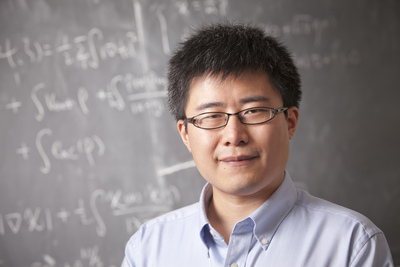
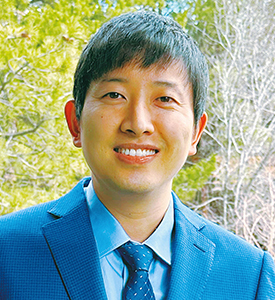
Yulong Lu serves as an Assistant Professor at the School of Mathematics, University of Minnesota, and holds affiliated faculty status with the Data Science Initiative in the College of Science and Engineering. His research bridges theoretical mathematics and practical applications in data science, with active recruitment of undergraduate and graduate researchers.
Lu earned his Ph.D. in Mathematics and Statistics from the University of Warwick under Andrew Stuart and Hendrik Weber. His academic trajectory includes an Assistant Professorship at the University of Massachusetts Amherst (2020-2023) and a Phillip Griffiths Research Assistant Professorship at Duke University (2017-2020) mentored by Jonathan Mattingly and Jianfeng Lu.
His research spans mathematical foundations of machine learning, applied probability, stochastic dynamics, applied analysis, PDEs, Bayesian statistics, and uncertainty quantification. Recent work demonstrates deep integration of diffusion models, transformers, and operator learning to solve complex physical systems while establishing theoretical convergence guarantees.
Analysis of his 15 most recent publications reveals dominant trends in physics-informed generative modeling for PDEs, in-context learning for dynamical systems, and theoretical analysis of deep learning approximations. His work consistently connects abstract mathematical frameworks with concrete scientific computing applications across fluid dynamics, quantum mechanics, and optimization.
No scientific awards were documented in the provided materials.
Lu actively mentors researchers through open positions for Ph.D. students (Fall 2026 intake), postdocs via Mathjobs, and UMN internships focused on deep learning theory and scientific applications. His group emphasizes self-motivated collaboration on theoretical and applied challenges in machine learning.
He leads a research group developing theory for deep learning applications in scientific computing, with current projects including diffusion-based PDE solvers, transformer architectures for dynamical systems, and uncertainty quantification for inverse problems.