University of Illinois Urbana-ChampaignUnited States
Angela D. Kent is a Professor in the Department of Natural Resources and Environmental Sciences at the University of Illinois Urbana-Champaign, where she also serves as Director of the Program in Ecology, Evolution, and Conservation Biology within the School of Integrative Biology. She is affiliated with the Carl R. Woese Institute for Genomic Biology. Her research focuses on microbial communities in agroecosystems and natural environments, particularly their roles in nitrogen cycling, soil health, and sustainable bioenergy production. Key research interests include microbial interactions in plant-microbe systems, the impact of genetic variation in crops on microbial processes, and the ecological and biogeochemical implications of soil microbiomes. She has authored over 99 publications and supervised datasets on topics such as denitrification dynamics, rhizosphere microbiome assembly, and microbial contributions to nitrogen retention. Dr. Kent has received the NACTA Educator Award (2012) and has contributed to high-impact studies on topics like microbial community responses to environmental stressors and the application of stable isotopes in bioenergy research. Her work bridges microbial ecology, agronomy, and environmental science, emphasizing practical solutions for sustainable agriculture and ecosystem management.
Andy Ball is a Distinguished Professor in the School of Science at RMIT University, specializing in environmental microbiology and biotechnology. He leads the ARC Training Centre for the Transformation of Australia’s Biosolids Resource and has held key roles at institutions including the University of Essex and Flinders University. His research focuses on bioremediation, organic waste treatment, and environmental pollution solutions, with over 300 peer-reviewed publications and significant industry collaboration. Andy's academic career spans 30 years, with roles such as Director of the Centre for Environment and Society at Essex and Director of Flinders Bioremediation. He has attracted >$22M in research grants, particularly in applied environmental microbiology. His awards include the Royal Society of Victoria Medal (2021) and RMIT Research Excellence Award (2018). Research interests emphasize sustainable remediation of contaminated environments, leveraging microbial ecology and biotechnology. His teaching spans environmental science and biotechnology programs at RMIT. Andy advises on projects addressing bioremediation, bioenergy, and pathogen survival, with active collaborations with industries like Shell and Melbourne Water.
Azma Putra Azis is a Lecturer in the School of Civil and Mechanical Engineering at Curtin University, with a focus on acoustics, vibration control, and sustainable materials. He is affiliated with campuses in Australia, Dubai, Malaysia, Mauritius, and Singapore. His research emphasizes eco-friendly acoustic absorbers using natural fibers (e.g., wood, oil palm, coconut) and additive manufacturing. He collaborates widely, publishing in journals like International Journal of Environmental Science and Technology and Applied Acoustics . His work spans noise control, composite material development, and structural acoustics. Teaching areas include Science and Engineering, with contributions to the Centre for Aboriginal Studies and interdisciplinary fields. Education: Not explicitly stated in profile, but extensive academic publications suggest advanced qualifications in mechanical/acoustical engineering. Research Interests: Acoustic absorber design, composite materials, vibration dynamics, and sustainable engineering. Professional Networks: ORCID (0000-0001-6023-2493), Google Scholar, LinkedIn, and personal website ( www.azmaputra.com ). Publications highlight innovations in sound absorption using agricultural waste (e.g., durian husk, sugarcane fiber) and optimization of muffler designs. His work bridges engineering and environmental science, with applications in construction, automotive, and renewable materials.
Professor Oula Ghannoum is a renowned plant scientist and academic leader at the Hawkesbury Institute for the Environment (HIE), Western Sydney University. She serves as Director of the ARC Training Centre for Smart and Sustainable Horticulture and holds leadership roles, including Biological Sciences Discipline Lead and Associate Editor at Functional Plant Biology . Her research focuses on photosynthesis, global change biology, and protected cropping, aiming to enhance food security and climate resilience through crop improvement and sustainable agricultural practices. Education: BSc (Honours) in Plant Biochemistry, University of NSW (1993) PhD in Plant Physiology, Western Sydney University (1998) Research Interests: Professor Ghannoum’s work addresses global challenges like food security and climate change by exploring plant responses to environmental stress. Her lab uses advanced technologies like smart glasshouses and hyperspectral imaging to optimize crop yield and quality. Key areas include sugar signaling pathways in C3/C4 plants, water use efficiency, and heat tolerance in cereal crops. Grants & Funding: She has secured over $25M in research funding, leading projects on C4 photosynthesis, automated crop monitoring, and protected cropping systems. Notable collaborations include the ARC Centre of Excellence for Translational Photosynthesis and Future Food Systems CRC. Awards: 2024 Vice-Chancellor’s Excellence in Research Award 2023 Education and Outreach Award (Australian Society of Plant Scientists) 2001 ARC Postdoctoral Fellowship Labs & Teams: Her team develops innovative frameworks for sustainable horticulture, combining biology with AI and smart technologies. Ongoing work includes imaging-based crop monitoring and phenotyping for climate-resilient crops.
Dr. Mahendra Bhandari is an Assistant Professor at Texas A&M AgriLife Research and Extension Center in Corpus Christi, affiliated with the Texas A&M College of Agriculture and Life Sciences. He holds a B.S. in Agriculture from Tribhuvan University (2011), an M.S. in Plant, Soil and Environmental Science from West Texas A&M University (2016), and a Ph.D. in Agronomy from Texas A&M University (2020). Affiliations: Texas A&M AgriLife Research, Texas A&M College of Agriculture and Life Sciences Roles: Lead researcher in Digital Agriculture, UAS-based phenotyping, and precision agriculture His research focuses on integrating remote sensing (UAS, satellite, ground sensors), big data analytics, and machine learning to improve crop management and breeding. Key areas include high-throughput phenotyping for cotton, corn, and sorghum; UAS data integration for crop yield prediction; and digital twin frameworks for in-season management. Collaborators include Dr. Juan Landivar-Bowles and Dr. Jinha Jung. Publications emphasize UAS applications in crop monitoring, yield estimation, and disease detection. His work bridges agronomic principles with emerging technologies to enhance agricultural resilience. Key Projects: UAS-based HTP system development Satellite-UAV data fusion for precision irrigation Mechanistic models for cotton yield forecasting Labs/Teams: Leads the Digital Agriculture research team at Texas A&M AgriLife, focusing on UAS innovation and AI-driven agricultural solutions.
Adjunct Professor Robert Speight holds a position at Queensland University of Technology (QUT) within the Faculty of Science, School of Biology & Environmental Science. His primary role is Director of CSIRO's Advanced Engineering Biology Future Science Platform. He focuses on microbial biotechnology, enzyme engineering, and industrial biotechnology applications. His research spans protein engineering, microbial production systems, and biocatalyst development for industrial processes. Education: BSc (Chemistry) from Imperial College London (1996) PhD in Biochemistry from the University of Cambridge (2000) Research Interests: Enzyme optimization for industrial applications Microbial protein production systems Biocatalytic processes for chemical manufacturing Biorefinery development and techno-economic assessments Synthetic biology for future foods and sustainable bioproduction Grants & Projects: Lead investigator for the $6.5M Queensland Sustainable Aviation Fuel Initiative ARC Centre of Excellence in Synthetic Biology (2020–present) Biorefineries for Profit Phase 2 (RnD4Profit 2019) Collaborations: Works with industry partners and academic groups, including the ARC Centre of Excellence in Synthetic Biology and the Centre for Agriculture and Bioeconomy at QUT. Affiliations: President of Synthetic Biology Australasia CSIRO Director of Advanced Engineering Biology Future Science Platform Labs/Teams: Maintains collaborations in enzyme engineering and microbial systems through QUT’s adjunct role and CSIRO leadership.
Emmanuel Sulle is an Assistant Professor and Director of the Aga Khan University’s Arusha Climate and Environmental Research Centre in Tanzania, and a member of the University of Cologne’s Global Faculty specializing in Global South Studies. He holds a PhD in Poverty, Land, and Agrarian Studies from the University of the Western Cape (UWC), South Africa, and a Master’s in Environmental Policy from the University of Maryland, USA. His research focuses on climate change, sustainable agriculture, land tenure, and agrarian transformation in Africa, with a strong emphasis on inclusive development and policy analysis. Previously at PLAAS (UWC), Sulle led multi-country studies on women’s land rights and development corridors across Eastern, Southern, and Western Africa. His work bridges academic rigor with practical policy influence, addressing issues such as green economy frameworks, biodiversity conservation, and community-led tourism. His research has been published in high-impact journals like Journal of Peasant Studies and Conservation and Society . Awarded the Harvard University Doctoral Student Fellowship and CODESRIA Doctoral Grant, Sulle currently holds a visiting scientist grant from Simon Fraser University. His leadership in managing complex research projects has contributed to innovative frameworks for equitable benefit-sharing in agricultural and environmental initiatives.
J. Christopher Brown is a Professor of Geography and Environmental Studies at the University of Kansas. He specializes in human-environment interactions, focusing on sustainable development in the Amazon Basin. His research integrates ecological, political, and socio-economic dimensions to address deforestation, agricultural expansion, and NGO-mediated rural development. Affiliations: Department of Geography, University of Kansas; Collaborator with Brazil's Embrapa Agricultural Research Agency Key Projects: Amazonian NGO dynamics and political impacts Soybean and sugarcane expansion impacts Spatial analysis of deforestation and land use Research interests include political ecology, biogeography, and the interplay between global and local scales. He employs remote sensing and interdisciplinary methods to study environmental governance and policy outcomes. His work on NGOs reveals how funding shapes political behavior in Brazil, with findings published in Comparative Political Studies and Political Geography . Recent studies highlight the edge effects of land-use changes and biodiversity impacts on pollinators like orchid bees. Awards: 2016 George and Eleanor Woodyard International Educator Award (University of Kansas) Brown's research bridges academic inquiry and policy, examining how development policies interact with ecological systems in Latin America. Current projects address soy moratorium efficacy, sugarcane expansion in the Cerrado, and the MST landless movement's political influence.
Professor Henny Osbahr is a faculty member at the University of Reading, specializing in climate change adaptation, agricultural sustainability, and gender dynamics in rural development. Her work focuses on understanding how farmers perceive and adapt to climate variability, with a particular emphasis on Africa and South Asia. She has collaborated extensively on projects addressing soil fertility, groundwater management, and the socio-cultural dimensions of agricultural practices. Her research interests span environmental policy, participatory methodologies, and the empowerment of marginalized groups through sustainable farming practices. Notable contributions include studies on Zero Budget Natural Farming in India and the role of cultural beliefs in shaping climate responses in Ghana. Recent articles highlight her focus on biodegradable agricultural materials' environmental impacts, gender equity in sugarcane farming, and youth perspectives in Philippine agriculture. She has authored reports on groundwater resilience in Burkina Faso and co-developed the RAINWATCH climate monitoring system, demonstrating practical applications of her research in development contexts. Professor Osbahr's interdisciplinary approach integrates quantitative analysis with qualitative insights from farming communities, ensuring her work bridges academic research and actionable policy recommendations.
Jennifer P. Mathews is a Professor of Anthropology in the Sociology and Anthropology Department at Trinity University, where she teaches courses in archaeology and biological anthropology. Her academic career is deeply rooted in Maya studies, with particular expertise in ancient and historical Maya archaeology, as well as issues of sustainability and tourism. She has received significant recognition for her teaching excellence, including the prestigious Dr. and Mrs. Z.T. Scott Faculty Fellowship (2019-20), the state-wide Piper Professor award (2020), and the Murchison Term Professorship (2023-2026). Dr. Mathews earned her Ph.D. and M.A. in anthropology, with a specialization in Maya archaeology, from the University of California at Riverside, and her undergraduate degree in anthropology from San Diego State University (1991). Since 1993, she has conducted extensive fieldwork and archival research in Mexico, establishing herself as a leading expert in Maya archaeology. Her research has evolved from focusing on ancient Maya studies—particularly roads, architecture, and site layouts—to examining the post-Colonial period of the Yucatan Peninsula (1850–1950), with particular attention to commodity extraction including sugarcane, chicle (the base for chewing gum), rum production, and avocados. Her scholarly output includes numerous journal articles, book chapters, and several edited books such as Quintana Roo Archaeology , Lifeways in the Northern Maya Lowlands , The Value of Things: Prehistoric to Contemporary Commodities in the Maya Region , and Construction of Maya Space: Causeways, Walls, and Open Areas from Ancient to Modern Times . She has also co-authored significant works like Chicle: The Chewing Gum of the Americas: From the Ancient Maya to William Wrigley and Bittersweet History: Sugarcane, Rum, Labor and Life on the Yucatán Peninsula . Currently, she is working on a book about the deep history of the avocado, tracing its journey from Mesoamerican origins to California in the nineteenth century. Her recent publications reveal a strong focus on historical archaeology of the Yucatan Peninsula, particularly examining how 19th century practices relate to contemporary issues. She explores topics ranging from chicle gum's role in popular culture to the preservation challenges facing archaeological sites amid modern development pressures. Her work consistently bridges ancient and modern contexts, demonstrating how historical practices inform current sustainability challenges. Dr. and Mrs. Z.T. Scott Faculty Fellowship (2019-20) Piper Professor award (2020) - a state-wide teaching award for superior teaching at the college level Murchison Term Professorship (2023-2026) Dr. Mathews actively engages with the community through collaborations with local institutions like the San Antonio Museum of Art (SAMA), where she teaches docents about ancient Mesoamerican cultures. Her students contribute research papers to museum collections and help develop e-Museum descriptions. She incorporates service learning into her courses, organizing projects that support causes like the San Antonio Food Bank, the San Antonio Zoo's primate conservation efforts, and Maya women artisans in Mesoamerica. Additionally, she has curated two significant exhibits: 'The Modern Maya: The Photographs of Macduff Everton' and 'Crafting Maya Identity.' Her academic affiliations span multiple interdisciplinary programs including Environmental Studies, Global Latinx Studies, Museum Studies, and the MAS: Mexico, the Americas, and Spain program.
Alejandro Cifuentes serves as a Full Research Professor at the Spanish National Research Council (CSIC) in Madrid, where he leads the Laboratory of Foodomics and directs the Metabolomics Platform under the International Excellence Campus CSIC + University Autonoma of Madrid. His prior roles include Founding Director of the Institute of Food Science Research and Deputy Director of the Institute. His research centers on foodomics and metabolomics, with emphasis on advanced extraction technologies for bioactive compounds from diverse sources including plants, dairy, and microalgae. Key interests encompass sustainable processing methods, neuroprotective agents, antioxidant properties, and the valorization of agricultural by-products for health applications. Analysis of his recent publications reveals a dominant focus on green extraction techniques—particularly supercritical CO₂ and pressurized systems—combined with mass spectrometry for bioactive compound analysis. His work bridges food science, analytical chemistry, and biotechnology to address challenges in food safety, nutrition, and sustainable resource utilization. Dr. Cifuentes directs the Laboratory of Foodomics and Metabolomics Platform, leading interdisciplinary teams in projects spanning microalgal protein characterization, dairy microbiota studies, and neuroprotective compound transport mechanisms, with strong industry and academic collaborations across Europe.
Alex Nading is an Associate Professor in the Department of Anthropology at Cornell University's College of Arts and Sciences. His research focuses on medical and environmental anthropology in Nicaragua, examining transnational health campaigns, grassroots environmental movements, and the intersections of labor, ecology, and global health through ethnographic methods. Education: PhD, University of Wisconsin-Madison MA, University of Sussex BA, University of Virginia Research Focus: Nading bridges medical anthropology with critical environmental studies and science and technology studies. His work centers on epidemics (dengue, chronic kidney disease), chemical infrastructures of global health, and environmental justice activism. Key themes include disposability in labor, plantation ecologies, and collaborative ethnographic experiments exploring 'buen vivir' (quality of life) in urban Nicaragua. Publication Trends: Recent work (2020-2024) reveals escalating focus on chronic kidney disease in sugarcane zones, analyzing how capital, science, and environmental toxicity converge in labor exploitation. His scholarship increasingly incorporates collaborative methodologies, using visual and dramatic arts to co-produce knowledge with Nicaraguan communities about urban survival and social justice. Professional Leadership: Served as editor of Medical Anthropology Quarterly (2021-2024). Active as Faculty Fellow at Cornell's Atkinson Center for Sustainability and on the Steering Committee for Latin American and Caribbean Studies. Collaborative Projects: Co-leads 'A Political Ecology of Value' with Josh Fisher, conducting cohort-based ethnography in Nicaraguan cooperatives and urban workshops that merge artistic practice with social theory to reimagine environmental movements.
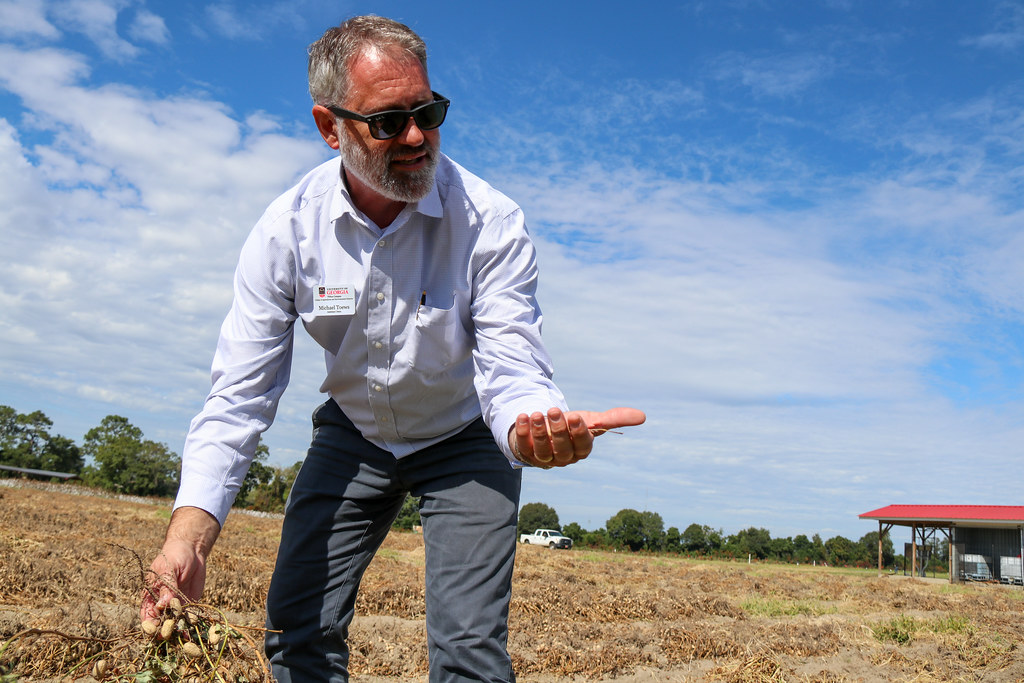
Dr. Michael D Toews serves as the Associate Dean for Extension in the University of Georgia's College of Agricultural and Environmental Sciences (CAES), overseeing a team of over 1,000 faculty and staff across 4-H, family and consumer sciences, and agricultural/natural resources programs. A Kansas native, he holds a BS in biology from Fort Hays State University and advanced degrees (MS/PhD) in entomology from Oklahoma State University. His career includes postdoctoral work at Kansas State University and USDA-ARS before joining UGA in 2006 as a research entomologist specializing in pest ecology and integrated pest management (IPM). Dr. Toews has held key leadership roles including Assistant Dean of the UGA Tifton Campus (2020-2025), where he increased graduate enrollment by 48%, postdoctoral scholars by 57%, and research expenditures by 46%. His research focuses on invasive species management (e.g., kudzu bugs, sugarcane aphids), agricultural sustainability, and pest management strategies. He co-directed the Center for Invasive Species and Ecosystem Health and developed Extension programming addressing stored product entomology and urban pest control. His professional accolades include the 2015 Southeastern Branch Award for Excellence in Integrated Pest Management. Dr. Toews has secured over $21M in grant funding, authored 112 peer-reviewed manuscripts, and mentored 6 postdoctoral researchers while serving on 26 graduate student committees. His leadership emphasizes modernizing Extension operations, strengthening urban-rural connections, and advancing UGA's land-grant mission through interdisciplinary collaboration and infrastructure development.
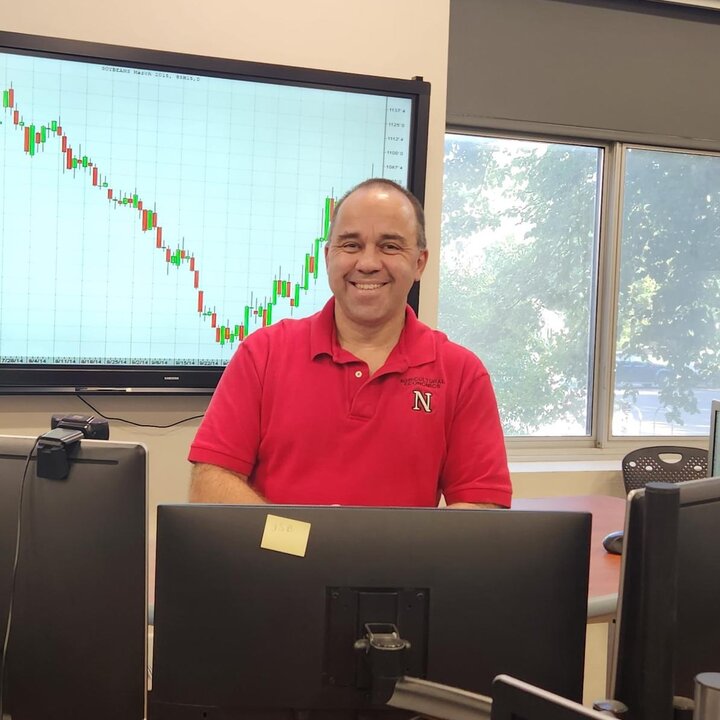
Fabio Mattos serves as an Associate Professor in the Department of Agricultural Economics at the University of Nebraska-Lincoln's College of Agricultural Sciences and Natural Resources, maintaining an office at the Food Industry Center (FYH 303A) in Lincoln, NE, with contact details including phone 402-472-1796 and email fmattos@unl.edu. His research centers on commodity price analysis, risk management, and futures market dynamics, with specific expertise in ethanol-agricultural price linkages, crop report impacts, and decision-making under uncertainty. Recent work examines infrastructure evolution in Brazilian soybean trade, mini-futures contracts, and volatility transmission between ethanol and agricultural markets, reflecting strong methodological rigor in time-series analysis and market microstructure. Analysis of his 2020-2025 publications reveals consistent focus on market interconnectedness—particularly Brazil-US agricultural-ethanol systems—and innovations in futures design addressing real-world trading challenges. His scholarship bridges academic theory with practical applications for producers, traders, and policymakers, while educational contributions like Commodity Marketing for High School Students (2022) demonstrate outreach commitment. No scientific awards were documented in the provided materials. Regarding advising and professional engagement, the absence of student listings or grant details suggests primary focus on individual research output, though his active publication record indicates ongoing scholarly contributions. No information about research labs or collaborative teams was available.
Dr. Luan Oliveira is an Assistant Professor and Precision Agriculture Extension Specialist at the University of Georgia's College of Agricultural & Environmental Sciences (CAES), Department of Horticulture. His roles are distributed as 75% Extension, 20% Research, and 5% Service. He holds a Ph.D. in Agronomy (Crop Production) from São Paulo State University and a B.Sc. in Agronomic Engineering from Federal University of Paraíba, Brazil. His research focuses on precision agriculture tools, agricultural machinery optimization for vegetables and specialty crops, and mechanized operations like planting, spraying, and harvesting. He leads the Precision Horticulture Team, aiming to improve crop quality through innovative technologies. Dr. Oliveira has received the 2021 Gerald O. Mott Award for Meritorious Graduate Student in Science. He has authored/co-authored 9 refereed articles, 7 Extension Publications, 40 conference papers, and 13 book chapters, securing ~$220,000 in grants as PI/Co-PI. His work emphasizes practical applications in precision agriculture, including drone spraying, robotic systems, and mechanized sugarcane planting. Key grants and awards highlight his contributions to agricultural technology and crop management. His research spans diverse crops like peanuts, corn, cotton, and sugarcane, addressing challenges in seeding depth, soil compaction, and equipment wear. He collaborates with the Institute for Integrative Precision Agriculture and UGA's Precision Agriculture initiatives.