Prof. Ryan Cotterell is an Assistant Professor in the Department of Computer Science at ETH Zürich. His research focuses on machine learning and natural language processing, particularly in transformer models, syntactic control of language systems, and computational linguistics. He teaches courses such as Neural Networks and Computational Complexity, Natural Language Processing, and Advanced Topics in Machine Learning. His work bridges theoretical foundations and practical applications, exploring topics like language model expressivity, information locality, and formal language theory. Recent publications highlight innovations in controlled generation, model evaluation, and multimodal systems. While no specific awards are listed, his contributions to the field are evident through his extensive publication record and academic roles. Advising and grant details are not explicitly mentioned in the provided texts, but his involvement in teaching and research indicates active mentorship and project leadership. No lab or team affiliations specific to Ryan Cotterell are detailed here.
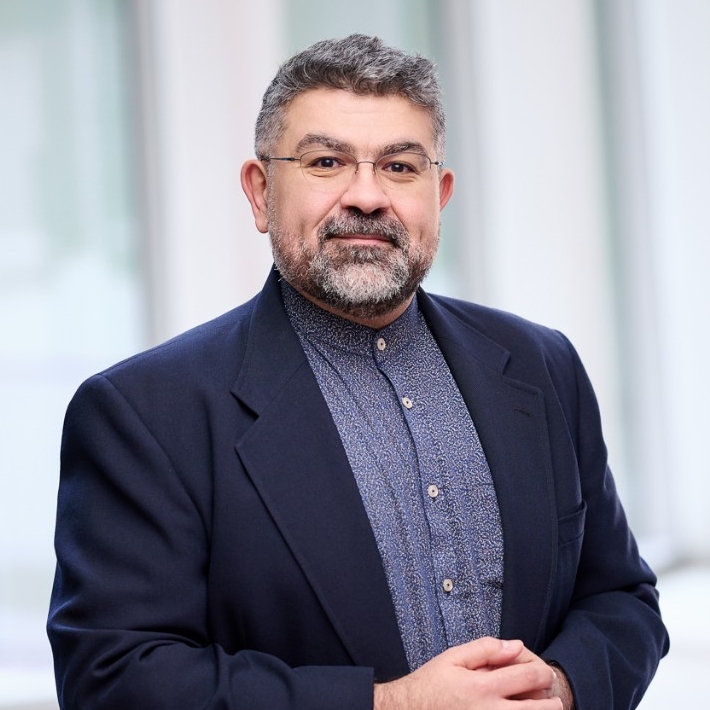
Nizar Habash is a Professor of Computer Science at New York University Abu Dhabi (NYUAD) and a Global Network Professor at the Courant Institute of Mathematical Sciences. He is the director of the Computational Approaches to Modeling Language (CAMeL) Lab, where he leads research in natural language processing, computational linguistics, and Arabic language technologies. His educational background includes a BS in Computer Engineering and a BA in Linguistics and Languages from Old Dominion University, and MS and PhD degrees in Computer Science from the University of Maryland, College Park. Habash's research focuses on artificial intelligence, particularly natural language processing for Arabic and its dialects. His work spans machine translation, morphological and syntactic analysis, sentiment analysis, dialogue systems, and dialect identification. He has developed foundational resources such as the MADAR corpus, CODA orthography, and tools like MADAMIRA and CamelParser. His publications reflect a strong emphasis on creating robust, multilingual, and dialect-aware NLP systems for low-resource and complex linguistic environments. Habash has been involved in over 20 research grants and has authored more than 150 publications, including the influential book Introduction to Arabic Natural Language Processing . His recent work centers on improving machine translation, modeling Arabic orthography and morphology, and building large-scale annotated corpora for dialectal Arabic. His scientific recognition includes the ELRA Antonio Zampolli Prize in 2024 for outstanding contributions to language resources and evaluation in human language technologies. Habash advises numerous research projects and capstone theses at NYUAD. He has taught courses such as Natural Language Processing, Arabic Computational Linguistics, Discrete Mathematics, and the Computer Science Research Seminar. He has secured significant grant funding, particularly through projects like QALB and MADAR, which have advanced Arabic NLP research globally. He leads the CAMeL Lab, a vibrant research group focused on AI-driven language modeling, with active projects in Arabic readability (SAMER), dialect identification (ADIDA), dialogue systems (TOIA, BOTTA), and corpus development (GUMAR, Curras, Arab-Acquis).
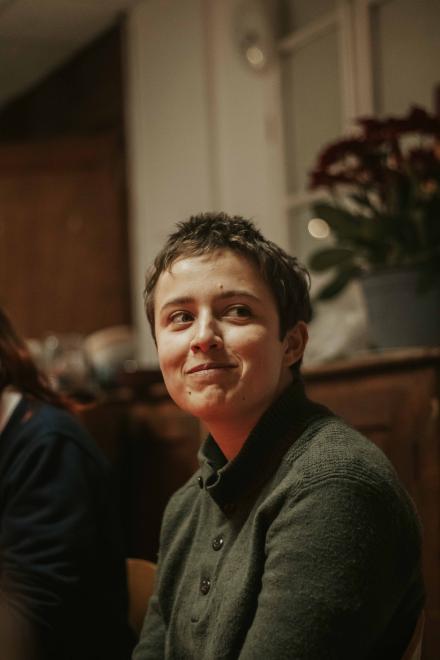
Isa Vialard is a Postdoctoral Researcher at the Max Planck Institute for Software Systems (MPI-SWS) in Saarbrücken, Germany. She is affiliated with the Foundations of Algorithmic Verification Group led by Joël Ouaknine. Her research focuses on well quasi-orders (WQOs), ordinal measures, and their applications to verification of well-structured transition systems. She also explores weighted timed games and combinatorics on words, with contributions to proof assistant methodologies. Education: She completed her PhD at Laboratoire Méthodes Formelles (LMF), ENS Paris-Saclay, under the supervision of Philippe Schnoebelen, with a thesis titled Measuring well quasi-orders and complexity of verification (defended July 2024). Teaching: From 2021 to 2024, she taught courses on Formal Languages , Rewriting Theory , Architecture and Systems , and Logic Project at ENS Paris-Saclay. She currently supervises Angel Wuttke’s internship on 2-clock weighted timed games. Publications: Her work bridges theoretical computer science and mathematical logic, with recent contributions to piecewise complexity analysis, tropical algebra applications, and ordinal measures of combinatorial structures. Key areas include formal verification, subword complexity, and algebraic methods for discrete systems. Labs/Teams: Active member of the Foundations of Algorithmic Verification Group at MPI-SWS, collaborating on timed systems and formal methods research.
Sergey Kitaev is Professor of Mathematics in the Department of Mathematics and Statistics and Associate Dean (Research) in the Faculty of Science at the University of Strathclyde. He leads the Mathematical and Stochastic Analysis Group, the Applied and Discrete Analysis Group, and the Strathclyde Combinatorics Group. He is an editor of prominent journals including the Journal of Combinatorial Theory, Series A (JCTA), Proceedings of the Edinburgh Mathematical Society (PEMS), and Enumerative Combinatorics and Applications (ECA). University: University of Strathclyde School: Faculty of Science Department: Department of Mathematics and Statistics Leadership Roles: Associate Dean (Research), Head of multiple analysis and combinatorics groups His research centers on combinatorics, graph theory, discrete analysis, formal languages, and optimization. He is a pioneer in the theory of word-representable graphs and the study of patterns in permutations and words. His influential books Patterns in Permutations and Words (2011) and Words and Graphs (2015) are foundational in these areas. His recent work includes projects on optimal resource distribution and shortening universal words for DNA sequence assembly. The most recent articles reflect a strong focus on word-representable graphs, permutation patterns, enumeration, and their applications in computer science and bioinformatics. There is a consistent trend in exploring structural graph properties via combinatorial representations, with increasing application-oriented directions such as algorithm analysis and DNA assembly. Scientific awards and recognitions include: Best of Science award, University of Strathclyde Teaching Excellence Awards, 2025 Leverhulme Research Fellowship, 2023 Strathclyde Teaching Excellence Award, 2018 Most cited article in JCTA, 2018 “Abel Extraordinary Chair”, 2010 Kitaev has supervised several PhD students including Marc Glen, Kittitat Iamthong, and Najlaa Alalwan, and has mentored postdoctoral researchers such as Amy Glen and Vit Jelinek. He has secured substantial research grants, including £45,267 from the Leverhulme Trust and over £44,000 from various UK mathematical societies and EPSRC. He is actively involved in academic leadership, serving on research committees, editorial boards, and organizing major international conferences such as the Permutation Patterns Conference and the British Combinatorial Conference. He is a key figure in the Strathclyde Combinatorics Group , the Mathematical and Stochastic Analysis Group , and the Applied and Discrete Analysis Group , fostering collaborative research and international partnerships. His work is supported by strong computational tools developed by collaborators, such as software for verifying word-representability and finding graph representations.
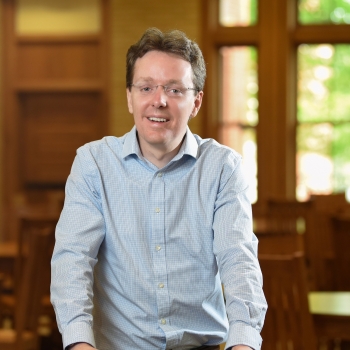
Peter R. W. McNamara is a Professor of Mathematics in the Department of Mathematics & Statistics at Bucknell University in central Pennsylvania. He received his Ph.D. from MIT in 2003 under the supervision of Richard Stanley, following undergraduate studies at Trinity College Dublin. His academic career includes postdoctoral positions at LaCIM (Université du Québec à Montréal), Instituto Superior Técnico in Lisbon, and visiting positions at MIT, UC Berkeley, and Trinity College Dublin. Ph.D.: MIT (2003), Advisor: Richard Stanley B.A.: Trinity College Dublin McNamara's research focuses on combinatorics, particularly algebraic and order-theoretic aspects. His work centers on symmetric and quasisymmetric functions, P-partitions, edge labellings of posets, and bijective combinatorics. He has made significant contributions to understanding positivity and equality questions in symmetric function theory and the combinatorial topology of partially ordered sets. His recent publications demonstrate continued productivity in algebraic combinatorics, with a focus on quasisymmetric functions, P-partitions, and the structure of various posets. The publications show a consistent research trajectory with increasing collaboration and sophisticated applications of combinatorial methods to algebraic structures. Presidential Award for Teaching Excellence (2025) Simons Foundation Collaboration Grant (2012-2018) Charles W. and Jennifer C. Johnson Prize (2003) MIT Presidential Fellowship (1999-2000) McNamara has successfully mentored numerous undergraduate researchers, including several honors thesis students who have gone on to pursue doctoral studies. His teaching portfolio at Bucknell is extensive, covering courses from calculus to advanced combinatorics and algebra. He has also been actively involved in university service, chairing multiple departmental and university committees, and organizing academic conferences including sessions at the American Mathematical Society meetings. His professional activities include extensive conference organization, editorial reviewing for major combinatorics journals, and participation in the Mathematical Olympiad community.
William Schuler is a Professor in the Department of Linguistics at The Ohio State University and directs the Computational Cognitive Modeling Lab . He is affiliated with the Center for Cognitive Sciences and has been recognized with the prestigious PECASE award for his interdisciplinary research bridging computational linguistics, psycholinguistics, and cognitive neuroscience. Research Interests : His work focuses on computational models of human language processing, surprisal estimation, memory-constrained parsing, and cognitive modeling of linguistic complexity. He investigates how transformer architectures, probabilistic grammars, and attention mechanisms align with human reading behaviors and neural responses. Scientific Contributions : Leveraging transformer models and attention patterns for cognitive processing analysis Developing depth-bounded grammar induction techniques Exploring the role of memory and recency in language comprehension Advancing semantic models via vectorial representations Integrating NLP with neuroscience for brain response prediction Recent Article Trends : His publications from 2022-2025 emphasize transformer-based surprisal modeling, memory-aware language processing, and cross-disciplinary applications in medical education. Key themes include reconciling large language models with psycholinguistic data, optimizing grammar induction algorithms, and analyzing neural correlates of linguistic complexity. Scientific Awards : Presidential Early Career Award for Scientists and Engineers (PECASE) Teaching & Advising : He teaches advanced courses in computational linguistics, machine learning, and linguistic meaning. His advisees include researchers like Byung-Doh Oh and Christian Clark, who contribute to language modeling, grammar induction, and cognitive neuroscience applications.
Dr. Zhukova Galina Nikolaevna is an Associate Professor at the Department of Software Engineering , Faculty of Computer Science , National Research University Higher School of Economics (HSE), where she has worked since 2017. Her academic career spans 21 years, including prior roles at Moscow State University of Printing Arts and Moscow Polytechnic University. PhD in Physical and Mathematical Sciences (2004, Moscow State University of Printing Arts) Specialist in Applied Mathematics (1999, Moscow State University) Advanced training in software engineering pedagogy (2018–2025) Research Focus : Dr. Zhukova specializes in Probability Theory , Mathematical Statistics , and Combinatorial Optimization . Her work analyzes algorithm complexity distributions, develops hybrid exact methods for the Traveling Salesman Problem (TSP), and investigates symbolic sequence reconstruction under noise. She contributes to probabilistic modeling of computational efficiency and quantile-based complexity metrics . Publication Trends : Her 15 most recent articles focus on TSP complexity prediction , noise-resistant sequence reconstruction , and hybrid algorithm design for asymmetric problems. These combine probabilistic modeling , statistical analysis , and computational efficiency studies , with applications in optimization and data processing. Gratitude from HSE Software Engineering Department (2023) Gratitude from HSE Faculty of Computer Science (2019) Selected for HSE Personnel Reserve (High Professional Potential Group) Recognized under 'New Teachers' category (2018) Teaching Contributions : Dr. Zhukova delivers courses on Operations Research , Mathematical Analysis , and Algebra in Python . She designs practical Python-based curricula for software engineering students and teaches minors in Applied Linear Algebra for the Faculty of Economic Sciences.
Antonio Toral is a leading researcher at the University of Groningen, focusing on Neural Machine Translation (NMT) , human evaluation , and parallel corpus curation . His work spans low-resource language modeling, lexical diversity enhancement, and multilingual figurative language detection. Affiliations: University of Groningen, MaCoCu Project, CREAMT Consortium Key projects: MaCoCu (Massive collection of under-resourced language data) CREAMT (Creativity in literary translation) Research interests include: Improving NMT naturalness and lexical richness Document-level evaluation of machine translations Character-level modeling and downsampling techniques Reproducibility challenges in human NLP evaluation Cross-lingual formality transfer without parallel data His recent articles (2021–2025) demonstrate expertise in: Reinforcement learning for naturalness preservation Statistical analysis of translationese effects Dependency-based reordering models Pivot translation for Catalan→Chinese Domain-specific corpus creation for EU Digital Service Infrastructures
Christian Stump is a Professor for Algebraic Combinatorics at the Ruhr-Universität Bochum since 2018 and coordinator of the DFG priority program Combinatorial Synergies . His research focuses on algebraic and geometric combinatorics , particularly in Coxeter groups, cluster algebras, noncrossing partitions, and hyperplane arrangements. He leads the Research Team Stump and collaborates with institutions like Goethe-Universität Frankfurt and Universitat de Barcelona. Research interests: Algebraic Combinatorics, Cluster Algebras, Coxeter Groups, Subword Complexes, Noncrossing Partitions Current projects: Machine learning combinatorial statistics, Combinatorial Polytope Theory His recent work includes studies on non-crossing partitions , Hodge filtrations for reflection groups, and central limit theorems for permutation statistics. He has supervised PhD students in topics ranging from brick polyhedra to matroid complexes and contributed to computational tools like the FindStat database and SageMath . Scientific Awards : DFG Heisenberg Fellowship (2017-2018) Humboldt Research Award (2023) Simons Fellowship (2023) As a principal investigator , he has secured over €1.2 million in DFG grants, including leadership of the project "Combinatorial Polytope Theory" (2024) and coordination of the SPP2458 program. He actively contributes to editorial boards of Electronic Journal of Combinatorics and Combinatorial Theory , and organizes conferences like Formal Power Series and Algebraic Combinatorics (FPSAC) .
Georg Zetzsche is a tenure-track faculty member at the Max Planck Institute for Software Systems (MPI-SWS) in Kaiserslautern, Germany, since November 2018. He leads the Models of Computation group , focusing on theoretical foundations of formal verification and synthesis for infinite-state systems. His work bridges decidability, computational complexity, and automata theory , with applications to program analysis and concurrent systems .
Alex Roitershtein is an Instructional Associate Professor in the Department of Statistics at Texas A&M University, part of the College of Arts & Sciences. His research focuses on probability theory, stochastic processes, and their applications in statistical models, combinatorics, and complex systems. He has contributed to areas including random walks, Markov processes, evolutionary dynamics, and network science. His work often bridges theoretical developments with practical applications in infrastructure resilience, genetic models, and algorithmic combinatorics. Roitershtein’s recent publications explore topics ranging from optimal resource allocation strategies in financial systems to extinction dynamics in evolutionary models. He has also investigated network robustness through Markovian influence graphs and studied combinatorial patterns in permutations and words. His research frequently employs probabilistic methods, generating functions, and stochastic analysis to address both foundational and applied questions. His articles reflect a multidisciplinary approach, with contributions to statistical physics (e.g., avalanche dynamics in excitable networks), computational biology (e.g., Wright-Fisher population models), and discrete mathematics (e.g., enumeration of staircase patterns). While no specific awards are listed, his extensive publication record demonstrates sustained scholarly activity in probability and its applications.
Mélodie Andrieu is an Associate Professor in Mathematics at the University of the Littoral Opal Coast, France, affiliated with the Joseph Liouville Laboratory of Pure and Applied Mathematics in the "algebra, dynamics, arithmetic" group. During 2024-2025, she is on a sabbatical research stay (délégation CNRS) at the Center for Mathematical Modeling, University of Chile, within the "probability and ergodic theory" group.
Arnau Padrol is an Associate Professor at the Department of Mathematics and Computer Science, Faculty of Mathematics, Universitat de Barcelona. He is a member of the Combinatorics Research Group, the Institut de Matemàtica de la Universitat de Barcelona (IMUB), and the Centre de Recerca Matemàtica (CRM). He is currently on leave from a similar position as Maitre de conférences HDR at Sorbonne Université’s Institut de Mathématiques de Jussieu - Paris Rive Gauche, where he was part of the Combinatoire et Optimisation team. His research lies at the intersection of discrete geometry, combinatorics, and algebra, with a focus on convex polytopes, oriented matroids, triangulations, and their applications. He explores deep structural properties of polytopes, including their realization spaces, deformation cones, and connections to cluster algebras and combinatorial optimization. His work often reveals surprising phenomena in higher dimensions, such as the existence of polytopes without rational realizations or with complete graphs. The recent publications reflect a strong trend in geometric combinatorics, particularly in the study of polytopal structures like associahedra, zonotopes, and hypersimplices, and their combinatorial and algebraic properties. Key themes include universality, realizability, and the interplay between geometry and combinatorics in high-dimensional spaces. Scientific Awards: No specific awards mentioned in the provided text. Advising and Grants: Arnau Padrol has supervised multiple PhD students and postdoctoral researchers, including Chiara Mantovani, Eva Philippe, Germain Poullot, and Leonardo Martínez-Sandoval. His supervision reflects an active research group in geometric combinatorics. He has been involved in research projects such as Geometry and Algebra in Combinatorics , Red Temática de Matemática Discreta y Algorítmica , Combinatorics and Complexity of Discrete Geometric Structures , and several ANR-funded projects including PAGCAP and CAPPS, indicating sustained grant support for his research. Labs and Teams: He is a core member of the Combinatorics Research Group at Universitat de Barcelona and is affiliated with IMUB and CRM. At Sorbonne Université, he was part of the Combinatoire et Optimisation team at IMJ-PRG. These affiliations place him within active research networks in discrete mathematics in Europe.
Prof. Dr. Christian Stump holds the W2-Professorship for Algebraic Combinatorics at the Faculty of Mathematics, Ruhr-Universität Bochum . He coordinates the DFG Priority Program Combinatorial Synergies and actively engages in interdisciplinary research at the intersection of combinatorics, algebra, and geometry. His team includes Jun.-Prof. Dr. Marie Brandenburg PhD students Elena Hoster, Nupur Jain, and Federico Lazzeri Former members Research Interests span algebraic combinatorics , cluster algebras , non-crossing partitions , subword complexes , and machine learning applications in mathematics . His work explores the deep connections between combinatorial structures and algebraic geometry, particularly through reflection groups and Catalan theory. Scientific Trends from his recent articles include Non-crossing and m-divisible partition analysis Hyperplane arrangement topology Matroid theory and lattice paths AI-assisted mathematical discovery Combinatorial geometry of polyhedra and complexes Scientific Awards include DFG Heisenberg Fellowship (2017-18) CRM-ISM Fellowship (2009-11) Grants & Projects highlight PI for DFG Priority Program Combinatorial Synergies (€473,360) Heisenberg Fellowship project on Noncrossing phenomena (€585,300) DFG Research Grant for Coxeter-Catalan Combinatorics (€324,900) Labs & Collaborations include the Combinatorial Synergies program, the FindStat.org combinatorial statistics database, and collaborations with institutions in Frankfurt, Barcelona, and Berlin.
Prof. Michael Drmota is a distinguished academic at TU Wien's Department of Combinatorics and Algorithms, part of the Faculty of Mathematics and Geoinformation. He leads research in discrete mathematics, focusing on combinatorics, number theory, and random discrete structures. His work bridges pure mathematics with applications in computer science and statistical physics. Research Interests: Drmota's expertise spans analytic combinatorics, additive number theory, random graph theory, and the study of automatic sequences. He explores topics like prime number distributions, planar map structures, and stochastic processes in discrete systems. His methods often involve generating functions, singularity analysis, and probabilistic techniques. Key Projects: He coordinates major research initiatives including Arithmetic Randomness , Shape Characteristics of Planar Maps , and Infinite Singular Systems . These projects investigate foundational questions in combinatorics and number theory, with implications for algorithm design and mathematical physics. Advising & Collaboration: Drmota supervises graduate students and collaborates internationally. Notable advisees include Andreas Nessmann (discrete polyharmonic functions), Lucas Unterberger (Erdős-Ko-Rado theorems), and Guan-Ru Yu (pattern occurrences in planar maps). His work appears in top-tier journals and conference proceedings. Labs/Teams: Active in TU Wien's Network Lab , he fosters interdisciplinary research on complex networks and algorithmic combinatorics.