معرفی
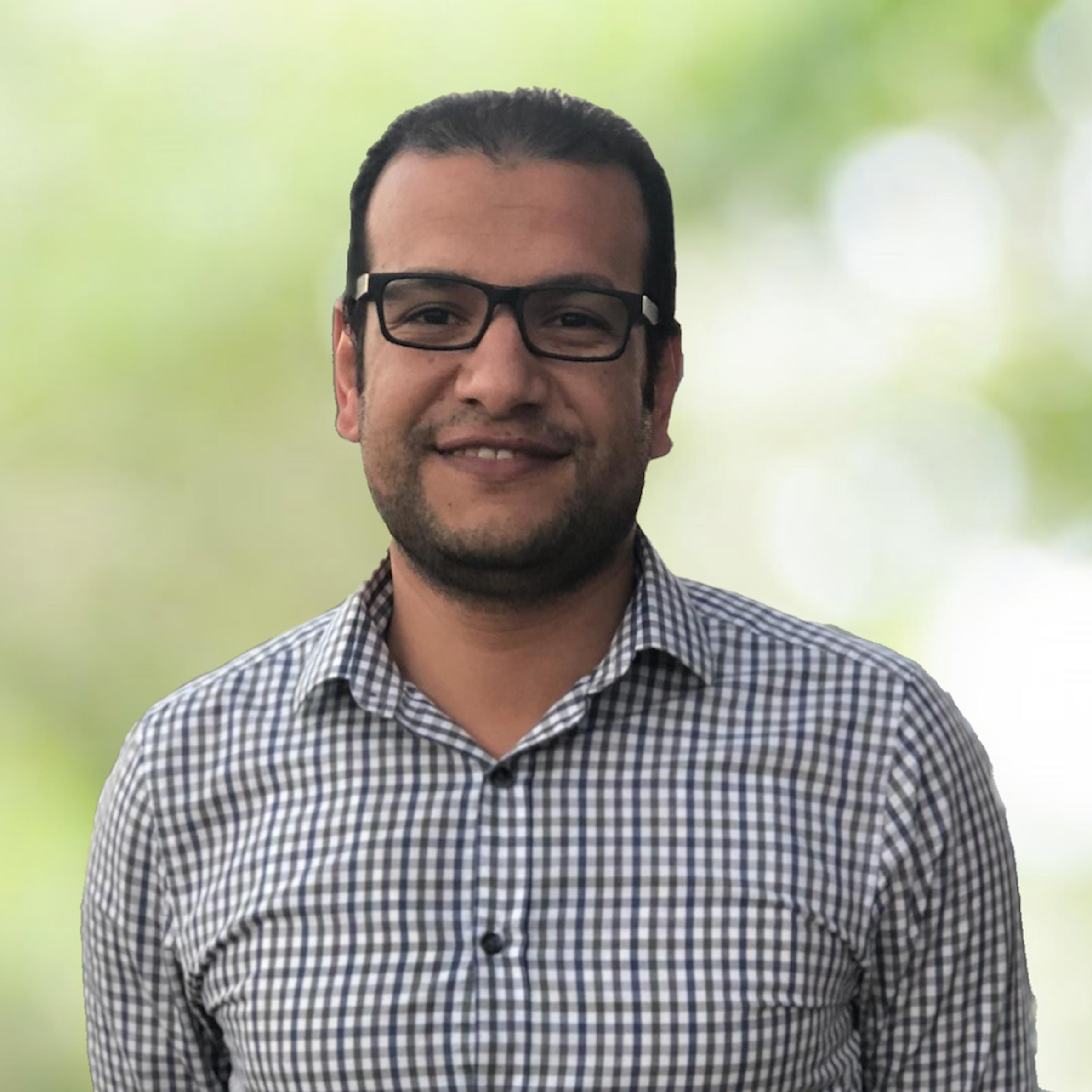
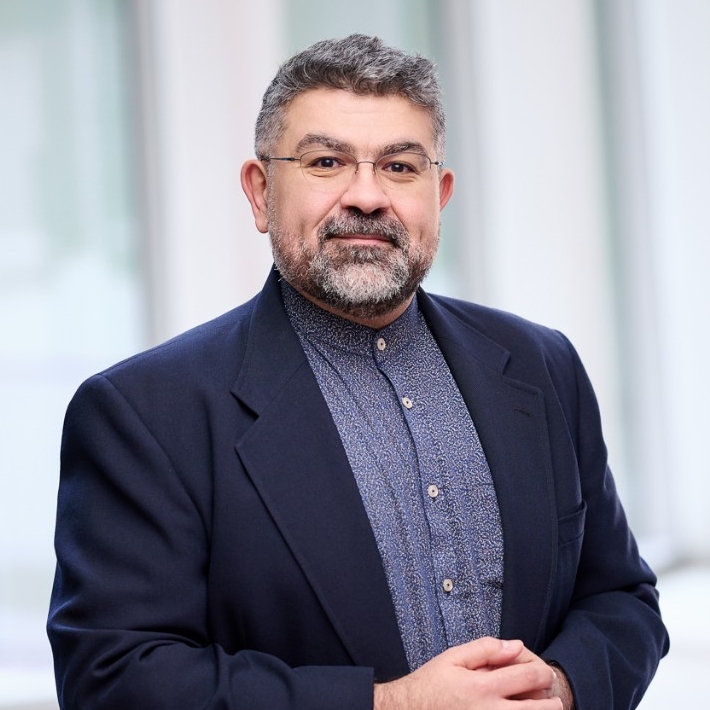
Nizar Habash is a Professor of Computer Science at New York University Abu Dhabi (NYUAD) and a Global Network Professor at the Courant Institute of Mathematical Sciences. He is the director of the Computational Approaches to Modeling Language (CAMeL) Lab, where he leads research in natural language processing, computational linguistics, and Arabic language technologies.
His educational background includes a BS in Computer Engineering and a BA in Linguistics and Languages from Old Dominion University, and MS and PhD degrees in Computer Science from the University of Maryland, College Park.
Habash's research focuses on artificial intelligence, particularly natural language processing for Arabic and its dialects. His work spans machine translation, morphological and syntactic analysis, sentiment analysis, dialogue systems, and dialect identification. He has developed foundational resources such as the MADAR corpus, CODA orthography, and tools like MADAMIRA and CamelParser. His publications reflect a strong emphasis on creating robust, multilingual, and dialect-aware NLP systems for low-resource and complex linguistic environments.
Habash has been involved in over 20 research grants and has authored more than 150 publications, including the influential book Introduction to Arabic Natural Language Processing. His recent work centers on improving machine translation, modeling Arabic orthography and morphology, and building large-scale annotated corpora for dialectal Arabic.
His scientific recognition includes the ELRA Antonio Zampolli Prize in 2024 for outstanding contributions to language resources and evaluation in human language technologies.
Habash advises numerous research projects and capstone theses at NYUAD. He has taught courses such as Natural Language Processing, Arabic Computational Linguistics, Discrete Mathematics, and the Computer Science Research Seminar. He has secured significant grant funding, particularly through projects like QALB and MADAR, which have advanced Arabic NLP research globally.
He leads the CAMeL Lab, a vibrant research group focused on AI-driven language modeling, with active projects in Arabic readability (SAMER), dialect identification (ADIDA), dialogue systems (TOIA, BOTTA), and corpus development (GUMAR, Curras, Arab-Acquis).
حوزههای پژوهشی