Xuan Songمشاهده پروفایل
دانشیار
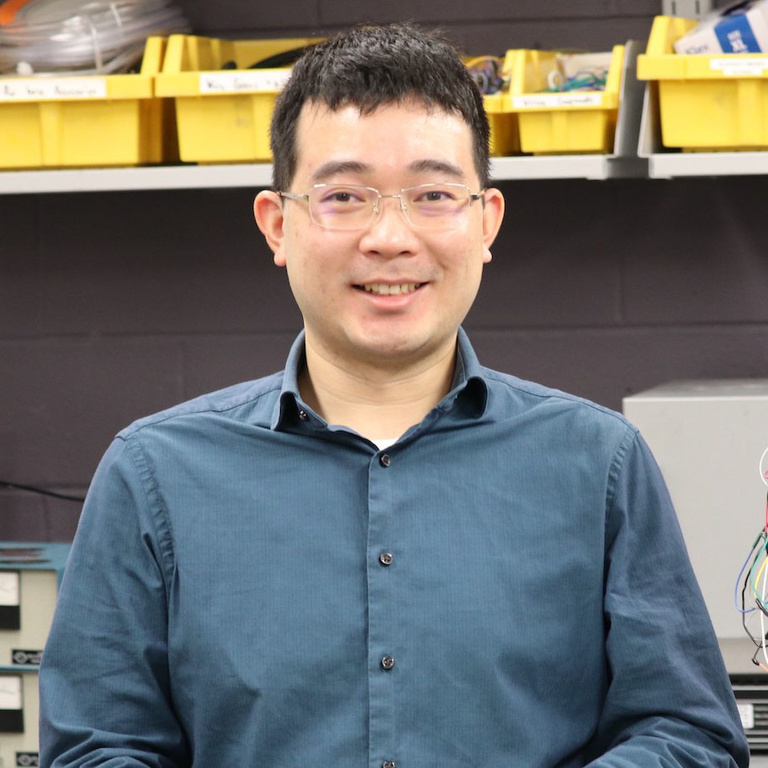
Xuan Song is an Associate Professor in the Department of Industrial and Systems Engineering at the University of Iowa's College of Engineering and a Researcher at the Iowa Technology Institute. His interdisciplinary work bridges advanced manufacturing, materials science, and computational engineering with applications in biomedical and defense sectors. Education: PhD in Industrial and Systems Engineering, University of Southern California, 2016 MS in Computer Science, University of Southern California, 2016 MS in Mechanical Engineering, Zhejiang University, 2011 BS in Mechanical Engineering, Wuhan University, 2008 Research Focus: Dr. Song pioneers additive manufacturing techniques for ceramics and composites, emphasizing experimental mechanics and AI-driven design . His lab develops hydrothermal-assisted jet fusion and pressure-assisted binder jetting processes, enabling breakthroughs in biomanufacturing (e.g., bone scaffolds) and sustainable materials (e.g., wastepaper recycling). Current projects integrate deep learning for microstructural optimization of piezocomposites and dental zirconia. Publication Trends: Recent work (2023-2025) reveals three dominant threads: (1) ceramic process innovation (hydrothermal/sintering techniques), (2) biomedical applications (dental implants, bone regeneration), and (3) AI-enhanced materials design. His research consistently addresses defect mitigation and property optimization across dental, energetic, and piezoelectric materials. Awards: James A. Chisman Faculty Fellow Advising & Grants: While specific advisees and grants aren't detailed in available sources, his lab's focus on NSF/DoD-relevant areas (energetic materials, biomanufacturing) suggests active federal funding. His dual appointment with the Iowa Technology Institute facilitates industry-academia translation. Laboratory: The SONG Lab (Science Of Next-Gen manufacturing) operates as a hub for multi-material additive systems, featuring capabilities in binder jetting, stereolithography, and AI-driven process control. Collaborations span ASME, SME, and ACerS professional networks.