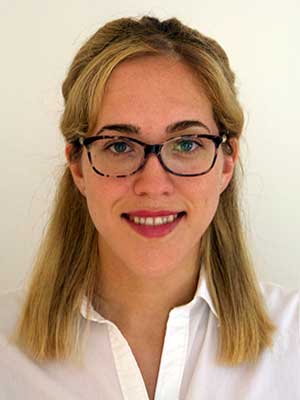
Karine Charry is a Professor at the Louvain School of Management (LSM) within the University of Louvain (UCLouvain), affiliated with the Louvain Research Institute in Management and Organizations (LouRIM) . Her work focuses on behavioral responses to marketing strategies in health and sustainability contexts. Email: karine.charry@uclouvain.be Office: Building B, Floor 02, Office B207, Chaussée de Binche 151, 7000 Mons Research Interests: Behavioral impact of sustainability labels and nudges Effectiveness of environmental NGO campaigns Role of social media influencers in dietary and ecological behaviors Prosocial communication via platforms like Twitter Co-branding and packaging strategies for child-targeted products Key Article Trends (2006-2025): Her publications span food marketing ethics, social media dynamics, threat appeals in youth campaigns, gamification for health apps, and sustainability labeling. Notably, she investigates how social norms and digital engagement shape pro-environmental and healthy eating behaviors in children and adolescents.
Daphna Motro is an Associate Professor in the Department of Management and Entrepreneurship at Hofstra University's School of Business. She holds a PhD in Management & Organizations from the University of Arizona and a BA in Cognitive Science with highest distinction from the University of Virginia. Her academic work bridges behavioral science, organizational behavior, and ethics. PhD, Management & Organizations – University of Arizona BA, Cognitive Science (Highest Distinction) – University of Virginia Dr. Motro’s research centers on emotions in organizational contexts, particularly how emotional experiences and expressions affect motivation, leadership, ethical behavior, and performance evaluations. She investigates how demographic factors such as gender and race shape emotional dynamics in the workplace. Her methodological approach incorporates modern technologies like eye-tracking and facial recognition software to capture subtle emotional responses. Her recent publications span top journals including the Journal of Applied Psychology , Journal of Business Ethics , and Journal of Experimental Social Psychology . The themes across her work reveal a strong focus on behavioral ethics, emotional regulation, bias in evaluation, and affective influences on decision-making. Her research has been featured in high-impact outlets such as Harvard Business Review and MIT Sloan Management Review , indicating broad relevance beyond academia. Dr. Motro teaches graduate and undergraduate courses such as Organizational Behavior and Compliance, Ethics, and Sustainability. She emphasizes interactive, research-informed pedagogy to engage students in contemporary organizational challenges. While no specific scientific awards or student advisees are listed in the profile, her publication record and media presence reflect a growing influence in the field of organizational behavior and behavioral ethics. She is actively involved in research and teaching, with no indication of retirement or emeritus status. Her office is located in Leo A. Guthart Hall, and she can be contacted via the university’s email system.
Ian M. Hughes is an Assistant Professor in the Industrial/Organizational Psychology program at North Carolina State University's Department of Psychology within the College of Humanities and Social Sciences. His research focuses on workplace social exchanges, employee well-being, and occupational health psychology. He holds a Ph.D. from Bowling Green State University (2023) following prior degrees from the same institution (M.A., 2021) and the University of Central Florida (B.S., 2019). Dr. Hughes' work examines how social support dynamics and workplace mistreatment affect psychological, physiological, and behavioral outcomes. He also investigates politics and work, social media's impact, and human-animal interaction. His research has been published in high-impact journals such as the Journal of Occupational Health Psychology and Computers in Human Behavior . He leads the PAWW (Psychology, Animals, Work, and Well-being) lab, exploring interdisciplinary connections between these areas. Recent studies highlight trends in understanding unhelpful workplace support mechanisms, pet ownership's spillover effects on work performance, and the psychological impacts of doomscrolling. His work bridges organizational behavior with health psychology, emphasizing practical applications for improving workplace climates and employee well-being. Though no formal awards are listed, his prolific publication record (over 20 articles since 2019) indicates sustained academic impact. His CV provides further details about grants, lab activities, and collaborative projects. He advises the PAWW lab team but no named students are listed in available materials.
Yuta Sugiura is an Associate Professor in the Department of Information and Computer Science at Keio University's Faculty of Science and Technology. His research focuses on innovative human-computer interaction techniques, particularly in wearable computing, tangible interfaces, and novel input methods. Previously, he worked as a postdoctoral researcher at the National Institute of Advanced Industrial Science. Dr. Sugiura's research interests span Human-Computer Interaction, Wearable Computing, Augmented Reality, Tangible User Interfaces, Gesture Recognition, Ubiquitous Computing, Haptics, and Virtual Reality. His work often explores how everyday objects and environments can become interactive surfaces, with notable projects including the iRing (intelligent ring), SenSkin (skin as interface), and EarHover (mid-air gesture recognition for hearables). He has developed numerous novel interaction techniques that leverage physical properties of materials and human physiology for input and output. His recent publications indicate a strong focus on hearable computing, medical applications of HCI, edible interfaces, and novel authentication methods. The research shows a consistent pattern of exploring unconventional interaction surfaces and leveraging subtle physical phenomena for input sensing. His work has significant implications for healthcare applications, particularly in neurological disorder screening and rehabilitation. Best Paper Award Dr. Sugiura has advised numerous students who have gone on to publish significant work in top-tier HCI venues. His research has been supported by various grants enabling the development of novel interaction techniques and systems. He maintains strong collaborations with researchers across Japan and internationally, particularly in the fields of wearable computing and medical applications of HCI. His laboratory appears to focus on lifestyle computing, developing interfaces that integrate seamlessly into daily activities. Current projects include exploring edible displays, adaptive ear interfaces, and novel authentication methods using wearable devices. Future work seems to be heading toward more medical applications of HCI, particularly in neurological assessment and rehabilitation.
Alex Borgella is an Associate Professor of Psychology at Fort Lewis College in Durango, Colorado, where he also leads the Social Perception Experimentation (SPEx) Lab. He holds a Ph.D. in Social Psychology from Tufts University (2017), an M.A. from James Madison University, and a B.A. from the University of West Florida. Prior to joining Fort Lewis College in 2019, he served as a Visiting Assistant Professor at Bates College. Ph.D., Social Psychology, Tufts University, 2017 M.A., Psychological Sciences, James Madison University, 2012 B.A., Psychology, University of West Florida, 2010 Dr. Borgella's research centers on social psychological mechanisms of stereotyping, prejudice, and discrimination. His work explores intergroup interactions, implicit bias, within-group racial bias, and stereotype threat, particularly in understudied populations such as Indigenous communities, people with multiple stigmatized identities, and in contexts like combat sports and social media. He investigates how identity-related humor can reduce intergroup anxiety and how generative AI representations affect psychosocial well-being. His research has been published in journals including the Journal of Experimental Social Psychology , Psychology of Sport and Exercise , and Humor: International Journal of Humor Research , and has been featured in NPR, Psychology Today, VICE, and Gizmodo. His most recent publications show a strong trend in examining subtle forms of bias in dynamic settings—such as UFC refereeing and social media—and in exploring how stereotype threat manifests across diverse identities, including White individuals in rhythmic performance. His 2024 Mamie Phipps Clark Faculty Research Award supports groundbreaking work on text-to-image AI and racial representation. 2024 Mamie Phipps Clark Faculty Research Award (APA and Psi Chi) Featured Scholar, Fort Lewis College Alice Admire Outstanding Teaching Award Ginny Hutchins Teaching Award for New Faculty Best Educator in Durango FLC Achievement Award Dr. Borgella is a dedicated mentor, supervising numerous undergraduate research projects through the SPEx Lab. Many of his students have presented at national conferences and pursued graduate studies. He teaches core courses such as Research Methods, Social Psychology, and the Senior Research Capstone. He is currently securing funding and mentoring students on projects related to AI, social media bias, and intergroup dynamics. His lab, originally founded at Bates College, is now based at Fort Lewis College and actively recruits undergraduates.
Ashwin Ram is a postdoctoral researcher at Saarland University's Human-Computer Interaction & Interactive Technologies Lab, under Prof. Jürgen Steimle. He holds a PhD in Computer Science from the National University of Singapore (NUS), advised by Prof. Shengdong Zhao, and a Bachelor's in Electronics Engineering from NIT Trichy. His research focuses on wearable augmented reality, smart glasses, and accessibility, leveraging cognitive and behavioral theories to design intelligent interfaces. Notable contributions include Mindful Moments (DIS '23, Honorable Mention), a mindfulness tool for smart glasses, and a quadruped robot guidance system for visually impaired individuals (CHI '24, Honorable Mention). He has served as an Associate Chair (AC) for UIST 2025 and CHI 2025. His work bridges HCI with wearable computing, exploring topics like video learning optimization (LSVP, IMWUT '21), sound source localization via neural networks (NCC '18), and accelerating Hawkes processes for event modeling (ICML '17 workshop). He collaborates internationally, including a research visit at UCL's Multi-Sensory Devices Group. Key achievements include 17 peer-reviewed publications (Google Scholar, ORCID: 0000-0003-1430-8770) and interdisciplinary projects like semantic floor map-based robot navigation. Beyond academia, he practices Carnatic music, plays guitar, and is fluent in Malayalam, Tamil, and English, with proficiency in French, German, and Hindi.
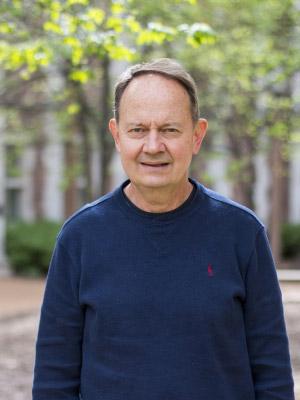
David Balota serves as an Adjunct Professor in the Department of Psychological and Brain Sciences at Washington University in St. Louis. With a career spanning multiple decades, his research has significantly contributed to our understanding of cognitive processes in aging and Alzheimer's disease. His work bridges theoretical cognitive psychology with clinical applications, particularly in developing sensitive cognitive markers for early detection of neurodegenerative conditions. Dr. Balota's primary research interests focus on the interplay between attention, memory, and language processing, with specific emphasis on how these cognitive domains change in healthy aging and in the presence of dementing illnesses like Alzheimer's disease. His research program has extensively examined automatic and controlled processes in cognitive tasks, lexical decision performance across the lifespan, and the development of sensitive cognitive markers for preclinical Alzheimer's disease. A significant portion of his recent work has focused on mind-wandering, reaction time variability, and their relationship to Alzheimer's disease biomarkers. His extensive publication record demonstrates consistent contributions to the field, with recent work increasingly incorporating digital assessment methods and biomarker research. Dr. Balota has made notable contributions to understanding how subtle cognitive changes can predict progression to cognitive impairment, particularly through examining attentional control processes and their relationship to tau pathology and neurodegeneration. Dr. Balota has been instrumental in developing large-scale lexical decision and naming corpora that have become standard resources in psycholinguistics research. His work on the English Lexicon Project has provided valuable data for understanding word recognition processes across different age groups and clinical populations.
Prof. Namkje Koudenburg is an Associate Professor of Psychology at the University of Groningen's Faculty of Behavioural and Social Sciences. Her research focuses on group processes, communication dynamics, and social change, particularly exploring how conversational interactions shape solidarity and regulate norms. She holds a PhD in Psychology (cum laude, 2014) and has held visiting positions at Princeton University and the University of Melbourne. Key research areas include polarization, online disagreement, and the social consequences of mediated communication. She leads projects such as the Interreg North Sea Region 'Speak Up' initiative on constructive dialogue and the 'Deviant Causes Social Change' study on norm evolution. Her work has been recognized with awards including the KNAW Early Career Award (2020) and the European Association of Social Psychology's Jos Jaspars Award (2017). Teaching responsibilities include Group Dynamics for third-year psychology students and supervising PhD candidates in topics like moralization in polarized contexts and online social regulation. She co-edits Acta Psychologica and serves on the editorial board of the Journal of Personality and Social Psychology . Notable publications span topics such as conversational flow’s role in solidarity, the depolarizing effects of diplomatic skills online, and the 'sound of silence' in norm erosion prevention. Her work bridges social psychological theory with real-world applications in climate activism and health interventions.
Dr. Kathleen Anne Welsh-Bohmer is a distinguished Professor of Psychiatry and Behavioral Sciences at Duke University School of Medicine, with secondary appointments in Neurology and Psychology and Neuroscience. She serves as the Director of Outreach and Recruitment Core of the Duke/UNC Alzheimer Disease Research Center and is a member of the Duke Clinical Research Institute and Duke Institute for Brain Sciences. Dr. Welsh-Bohmer earned her Ph.D. from the University of Virginia in 1985. Her research career has focused on developing effective prevention and treatment strategies to delay the onset of cognitive disorders in later life. From 2006 through 2018, she directed the Joseph and Kathleen Bryan Alzheimer's Center in the Department of Neurology and oversaw neuropsychology operations for the global TOMMORROW clinical trial. Currently, she directs the Alzheimer's disease therapeutic area within the Duke Clinical Research Institute and collaborates with VeraSci to develop digital cognitive assessment tools for early Alzheimer's disease detection. Her research spans multiple domains of Alzheimer's disease and cognitive aging, with particular emphasis on developing reliable digital cognitive assessment tools informed by neuroscience and technology advances. Her work addresses critical gaps in early pre-clinical Alzheimer's disease detection and has significant implications for both clinical practice and accelerating global clinical trials for Alzheimer's prevention. She has made substantial contributions to understanding genetic factors in cognitive decline, particularly through her work with the TOMM40 and APOE genes. Analysis of her recent publications reveals a strong focus on advancing diagnostic methods, understanding genetic risk factors, developing digital assessment tools, and examining cognitive trajectories in aging populations. Her research bridges basic neuroscience with clinical applications, with increasing emphasis on technology-enabled assessment methods and precision medicine approaches to Alzheimer's disease. Dr. Welsh-Bohmer has been actively involved in numerous major research initiatives including the Cache County Memory Study and the TOMMORROW clinical trial. Her collaborative approach spans multiple institutions and research domains, reflecting the interdisciplinary nature of modern Alzheimer's research. She has contributed significantly to understanding how vascular factors, genetic markers, and lifestyle factors influence cognitive aging and dementia risk. Her laboratory and research team focus on developing and validating cognitive assessment tools that can detect subtle changes in cognitive function before clinical symptoms of dementia emerge. This work involves close collaboration with technology companies, clinicians, and basic scientists to create assessment methods that are both scientifically rigorous and practical for clinical use.
Imre Salma is a Professor at the Department of Analytical Chemistry within the Faculty of Science at Eötvös Loránd University (ELTE). His research focuses on atmospheric chemistry, aerosol physics, and environmental science, with an emphasis on particle formation, air quality, and health impacts. He holds a Doctor of Science (DSc) degree and has extensive experience in analytical techniques, including eddy accumulation and convolutional neural networks for particle detection. Salma’s work examines ultrafine particles in urban environments, investigating their sources, dynamics, and health consequences. His research spans long-term data analysis (e.g., 11-year datasets), lockdown effects on pollution, and regional comparisons across Europe. He also explores oxidative potential of particles, lung deposition mechanisms, and firework-related air quality degradation. Key applications include improving air quality monitoring, informing policy, and advancing climate models. His publications span aerosol nucleation mechanisms, hygroscopic properties, and interdisciplinary approaches bridging chemistry, computer science, and public health. Salma collaborates internationally, contributing to initiatives like the COST Action 633. His lab is located at the Institute of Chemistry in Budapest, with a focus on cutting-edge analytical methods and environmental problem-solving.
Dr. Anna Rosenkranz is a researcher at the Institute for German Linguistics, specializing in Clinical Linguistics at Philipps-Universität Marburg. She holds a visiting professorship at the Department of Educational and Rehabilitation Sciences, University of Cologne (2024-2025), focusing on language disorders in neurologically impaired populations. Her career spans institutions including Ruhr-Universität Bochum and University of Reading, with a PhD in Linguistics (2015). Current affiliations: Philipps-Universität Marburg (since 2019), University of Cologne (2024-2025) Education: PhD Linguistics (Bochum), MA Speech Science (Marburg), BA Linguistics (Bochum) Rosenkranz's research bridges clinical linguistics and neuropsychology, focusing on: Executive function contributions to word retrieval in aphasia Complex semantic processing in cognitive communication disorders Diagnostic tools for subtle post-brain-injury communication deficits Psycholinguistic models of verbal fluency in psychiatric and neurological conditions Digital participation barriers for speech-language impaired individuals Her work emphasizes practical applications in speech therapy, including the development of the KomplexSem test and FAVRES-D assessment. Recent publications analyze digital accessibility challenges, semantic processing, and cognitive-linguistic interactions across conditions like schizophrenia and dementia. Professional activities include: Co-developer of cognitive-communication screening tools (CCCABI-DE, KomplexSem) Coordinator of continuing education programs (2022-2024) Keynote speaker at international workshops on language production and neurorehabilitation Contributor to BMBF-funded projects on 'small disciplines with high potential'
Pauline Larrouy-Maestri is a Senior Researcher at the Max Planck Institute for Empirical Aesthetics in Frankfurt/Main, Germany, where she has been working since 2019 after serving as a Postdoctoral Researcher in the Neuroscience Department from 2014-2019. Her interdisciplinary research focuses on how humans categorize acoustic information that unfolds over time to make sense of sounds, working at the intersection of music, speech, and neuroscience. Dr. Larrouy-Maestri holds a PhD in Psychology from the University of Liège (2009-2013) and has an unusually diverse educational background including a Bachelor in Music (Piano) from the Royal Conservatory of Mons, a Master in Speech Therapy from the University of Brussels, additional studies in Psychology, Pedagogy, and Music Therapy, and research stays at McGill University and SUNY Buffalo. This multidisciplinary foundation informs her unique approach to studying sound perception. Her research examines how we process ambiguous auditory material that sits at the boundaries between music and speech categories, such as sprechgesang and West-African talking drums. She investigates auditory sequence processing in music, particularly how continuous streams of sound are parsed into meaningful units, and has made significant contributions to understanding the perception of correctness in singing. Her work on vocal communication explores how pitch, timing, and other acoustic features contribute to our interpretation of emotional content and meaning in both music and speech. Analysis of her recent publications reveals a sophisticated integration of behavioral, electrophysiological, and computational approaches to study music-speech interactions, with growing emphasis on cross-cultural perspectives, individual differences, and neural mechanisms. Her work increasingly examines how subtle acoustic variations influence aesthetic judgments and emotional responses to vocalizations. 2023: €20,000 research scholarship for "Humanity of Speech" project 2017: Selected for "Sign Up! Careerbuilding for outstanding female post docs in the MPG" 2016: Young Investigator Award from SEMPRE and ICMPC14 2015: PBEEE Merit scholarship from Fonds de recherche du Québec 2013: Patrimoine de l'Université de Liège and FNRS fundings 2011: Grant from French Community of Belgium Dr. Larrouy-Maestri currently supervises multiple researchers including Camila Bruder, Madita Hoerster, and Zofia Hobubowska. Her research is supported by competitive grants including the recent Imminent scholarship and previous funding from Belgian and Canadian sources. She maintains extensive international collaborations with researchers including David Poeppel, Melanie Wald-Fuhrmann, Marc Pell, and others across neuroscience, psychology, and musicology disciplines. Her work is conducted within the Neuroscience Department at the Max Planck Institute for Empirical Aesthetics, where she contributes to the institute's interdisciplinary mission of studying aesthetic experiences through multiple methodological approaches. She participates in research groups focusing on auditory perception, music cognition, and the neural mechanisms underlying language and music processing, helping bridge traditionally separate fields through innovative experimental designs.
Stuart Deerness is a Senior Lecturer in the School of Education within the Faculty of Culture and Society at Auckland University of Technology (AUT). He leads the Graduate Diploma in Secondary Teaching programme and teaches across the Bachelor of Arts and Master of Education programmes. His academic career follows extensive experience as a secondary school teacher, providing him with practical insights into educational systems and challenges. Dr. Deerness holds a PhD in Education (2014) and a Master of Education, both from The University of Auckland. His educational background informs his research on the complex relationships between power structures, social inequality, and educational practices. His research focuses on how social and political systems affect teachers' professional lives and how educators navigate government policies, political trends, and their own values. Deerness examines the broader societal impacts on education and how educational institutions shape society in return. He investigates what constitutes a "good school" and who determines these standards, with particular attention to making educational systems fairer for all students. His work frequently employs qualitative and ethnographic methodologies to uncover the subtle ways teachers maintain educational values within constrained policy environments. Analysis of Deerness's recent publications reveals a consistent critical perspective on educational policy, particularly examining tensions between neoliberal reforms and social justice imperatives. His scholarship demonstrates growing emphasis on innovative learning environments, teacher identity formation, and the political dimensions of curriculum implementation. A notable trajectory shows his work evolving from examining teacher practices to analyzing systemic issues in educational assessment, culminating in his 2025 analysis of how influential schools contributed to NCEA's replacement. As an educator, Deerness supervises graduate research and contributes to teacher education through courses on curriculum theory, educational philosophy, and contemporary issues in education. His teaching emphasizes the development of critical perspectives among future educators, preparing them to navigate complex educational landscapes while maintaining commitment to equity principles. Dr. Deerness maintains an active presence in public discourse on education, regularly contributing to media discussions about educational policy, school choice, and assessment systems in New Zealand. His recent work has critically examined the relationship between prestigious schools adopting alternative assessment systems like Cambridge International and the eventual government decision to replace NCEA, demonstrating his ability to connect academic research with practical educational concerns.
Donald McMillan is an Associate Professor (Docent) in Human-Computer Interaction at Stockholm University's Department of Computer and Systems Sciences. He is a core member of the Stockholm Technology & Interaction Research (STIR) group, which brings together technologists and social scientists to research and build new digital technologies within the Human-Computer Interaction field. His research focuses on the adoption, adaptation, and use of novel technology in everyday settings, with particular emphasis on expanding the interactional repertoire of conversational interfaces. McMillan investigates how insights from fluid human-human communication can inform the development of better human-computer interaction paradigms through machine learning applications. His work often examines the contextual and social dimensions of technology use in real-world environments. Currently, McMillan serves as Principal Investigator for the Advanced Adaptive Intelligent Systems project, which develops new ways for robots and intelligent agents to understand and adapt to human collaborative work, and the Designing New Speech Interfaces with Ambient Audio project. He is also involved in the Implicit Interaction project. Previous projects include Autonomous Last Mile (developing Extended Reality experiences for human intervention in autonomous vehicle scenarios) and From Tracking to Hacking (exploring how people interact with technology to hack traditional sleep schedules). Advanced Adaptive Intelligent Systems: Developing adaptive interaction frameworks for intelligent systems Designing New Speech Interfaces with Ambient Audio: Expanding conversational capabilities through environmental audio analysis Implicit Interaction: Exploring subtle, background interaction paradigms Autonomous Last Mile: Creating XR experiences for human-robot collaboration scenarios From Tracking to Hacking: Investigating technology adaptation for non-normative sleep patterns His extensive publication record demonstrates deep expertise across multiple HCI domains, with recent work focusing on conversational interfaces, ethical AI considerations, gaze patterns in speech interaction, and contextual wearable technology use. McMillan's research methodology often combines empirical studies of real-world technology use with design implications for future systems, resulting in practical contributions to the field of Human-Computer Interaction.
Norman H. Christ is the Ephraim Gildor Professor of Computational Theoretical Physics in the Department of Physics at Columbia University. He leads research in lattice Quantum Chromodynamics (QCD), focusing on high-precision calculations to test the Standard Model of particle physics, particularly in areas where the model may fall short such as CP violation phenomena. His research interests center on high-energy nuclear and particle physics, with specific focus on lattice QCD calculations for kaon physics, CP violation, and precision tests of the Standard Model. Christ develops advanced computational methods to calculate subtle effects like the direct CP violating parameter ε' in K → ππ decay, the hadronic light-by-light contribution to the muon anomalous magnetic moment, and the extremely small mass difference between neutral K mesons. His recent publications demonstrate consistent high-impact work in lattice field theory, with particular emphasis on kaon physics, algorithm development, and precision Standard Model predictions. The research spans theoretical development, numerical algorithm design, and large-scale computational implementations. Scientific Awards and Recognition: Ephraim Gildor Professor of Computational Theoretical Physics Fellow of the American Physical Society Professor Christ maintains an active research program with Columbia colleague Robert Mawhinney and through major international collaborations including the RBRC-Brookhaven-Columbia (RBC) and UKQCD collaborations. His work requires substantial computational resources and involves close collaboration with experts at Brookhaven National Laboratory, RIKEN BNL Research Center, University of Connecticut, and European institutions including the Universities of Edinburgh and Southampton. His laboratory, part of Columbia's High Energy Theory Group, focuses on developing and applying lattice QCD methods to solve challenging problems in particle physics where precision calculations can reveal potential limitations of the Standard Model.