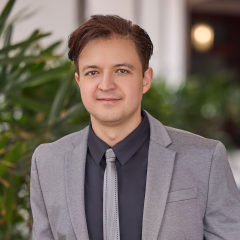
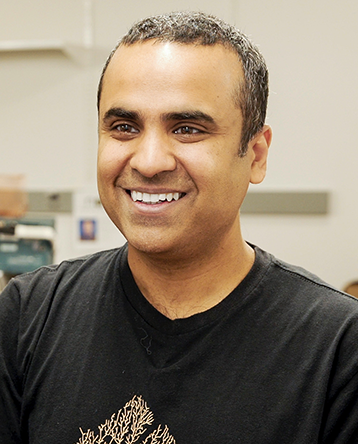
Tomislav Suligoj is a Full Professor at the Department of Electronics, Microelectronics, Computer and Intelligent Systems, Faculty of Electrical Engineering and Computing (FER) at the University of Zagreb. His research focuses on advanced semiconductor devices including horizontal current bipolar transistors (HCBT), single-photon avalanche diodes, and GaN-based high-electron-mobility transistors. Research areas include: Microelectronics, Semiconductor Device Physics, RF Circuit Design, Photodiode Optimization, FinFET Technology, and Gallium Nitride Transistors Key technologies: HCBT (low-cost BiCMOS integration), PureB SPADs (dark count suppression), GaN HEMTs (high 2DEG density), and MALTA architecture (radiation-tolerant sensors) His recent publications analyze: Ultra-low dark count SPADs in 180 nm CMOS Cryogenic temperature performance of HCBT devices Ballistic transport in phosphorene nanoribbon FETs Radiation-hard sensors for ATLAS High Luminosity LHC Advanced mobility modeling in ultra-thin InGaAs channels Stress effects in FinFET structures
Nicolò Zagni is a Postdoc Researcher at the University of Modena and Reggio Emilia (UNIMORE) , focusing on Gallium Nitride (GaN) and Ferroelectric device reliability. He earned a PhD in Information and Communication Technologies (ICT) in 2021 with a thesis on Simulation and Modeling of GaN Electronics . His research spans power electronics , dynamic on-resistance (RON) instabilities , phase-transition logic switches , and negative capacitance transistors . He has explored GaN device degradation under OFF-state stress , hole emission from carbon traps , and ferroelectric endurance . Key article trends include device simulation (TCAD) , trap dynamics in GaN , and novel materials for RF/millimeter-wave amplifiers . Collaborations include institutions like Purdue University and studies on SiC and MoS₂ applications.
Shubin Liu is a researcher specializing in microelectronics, integrated circuits, and analog circuit design. His work focuses on advanced ADC architectures (e.g., pipelined SAR, time-interleaved, noise-shaping), phase-locked loops (PLL), and sensor readout systems for MEMS and biomedical applications. Recent publications highlight collaborations with Zhangming Zhu and colleagues on high-speed, low-power, and PVT-robust designs. Research interests span Analog-to-digital conversion Low-power RF front-ends Calibration techniques High-frequency oscillators Biopotential amplifiers Time-interleaved ADCs His 15 most recent articles (2023-2025) explore power-efficient ADCs, jitter reduction in PLLs, and sensor interfaces, with keywords including Electronics, Integrated Circuits, Signal Processing, and Microelectronics. Notable subfields: SAR ADCs, Time-Domain Interpolation, Capacitor Mismatch Compensation, and IoT-optimized designs. Shubin Liu’s work is published in journals like IEEE Journal of Solid-State Circuits , Microelectronics Journal , and conferences such as CICC and ISSCC, reflecting his active engagement in cutting-edge analog and mixed-signal research.
Elisabetta Chicca is a Professor of Bio-Inspired Circuits and Systems at the University of Groningen's Faculty of Science and Engineering. Her work bridges neuromorphic engineering, spiking neural networks, and bio-inspired sensing. University: University of Groningen Department: Bio-Inspired Circuits and Systems Email: e.chicca@rug.nl Research Interests: Focus on developing CMOS models of cortical circuits for brain-inspired computation, combining spiking neural networks with memristive systems. Key areas include bio-inspired vision, olfaction, touch, and motor control to create agents that operate in real-world environments. Recent Article Trends: Explore neuromorphic processors with hybrid CMOS-memristor architectures, event-based vision for motion detection, tactile sensing in robotics, and benchmarking frameworks for neuromorphic algorithms. Scientific Contributions: She co-founded the Neuromorphic Computing and Engineering journal and serves on its Executive Editorial Board. Her team has received EU Horizon 2020, NWO, and DFG grants.
Alfonso Rafael Cabrera Galicia is a Doctoral Researcher at the Forschungszentrum Jülich, affiliated with the Peter Grünberg Institute (PGI) and its department Integrated Computing Architectures (PGI-4) . His work focuses on cryogenic electronics for quantum computing and semiconductor device physics. Academic Rank: Researcher Location: Wilhelm-Johnen-Str. 1, Jülich, 52428 Contact: +49 2461 61 2425 His research spans cryogenic integrated circuits , power management for quantum systems , and low-temperature semiconductor behavior . Recent publications highlight advancements in voltage regulation, noise thermometry, and cryogenic CMOS optimization for quantum computing. Key trends: Cryogenic compatibility of FDSOI technology Quantum control circuit design Power integrity in large-scale systems Thermal effects in nanoscale transistors Labs/Teams: • Peter Grünberg Institute (PGI-4) - Integrated Computing Architectures
Travis Blalock is a Visiting Professor in Electrical and Computer Engineering at the University of Virginia's School of Engineering and Applied Science. His research centers on mixed-signal CMOS VLSI design with applications in low-power systems. Primary investigations include analog/digital signal processor design, low-power analog-to-digital converters, integrated optoelectronic sensors/signal processing, and efficient architectures for human-computer interfaces. Additional interests encompass built-in self-test for analog ICs, low-voltage amplifiers, reference circuits, analog neural networks, and mixed-signal CAD techniques. His work advances energy-efficient computing solutions for embedded systems and sensor networks.
Yngvar Berg is a Professor at the University of Oslo's Department of Informatics, affiliated with the Faculty of Mathematics and Natural Sciences and the Nanoelectronics (NANO) research group. His work focuses on nanoelectronic systems, low-voltage CMOS circuit design, and educational technology. He holds a formal title of Professor and is based at Ole-Johan Dahls hus in Oslo. His research emphasizes analog and digital circuit design for ultra-low voltage applications, including floating-gate amplifiers, MEMS sensors, and energy-efficient systems. He has contributed to advancements in sensor front-ends, oscillator stability, and bidirectional transducer interfaces. Recent work also explores peer assessment methodologies in computer science education, emphasizing formative feedback and gamification for student engagement. Berg's publications span IEEE conferences (ICNSC, NEWCAS, ISMVL) and journals like Electronics and Sensors . His technical contributions include innovations in semi-floating gate amplifiers, Q-loading for particulate matter sensors, and curriculum design for first-year engineering students. His professional affiliations include the IEEE, and he actively collaborates with researchers like Mehdi Azadmehr and Omid Mirmotahari. Current research themes include bionanoprotonics, low-power CMOS integration, and technology-enhanced learning environments.
Loai Salem is an Assistant Professor in the Electrical and Computer Engineering department at the University of California, Santa Barbara (UCSB), where he leads the Power Electronics and Microsystems (PES) Lab. His research focuses on advancing power electronics technology to enable clean energy applications, including energy harvesters, RF supply modulators, and voltage regulation modules for AI systems, electric vehicles, and DC microgrids. PhD in Electrical and Computer Engineering from UC San Diego MSc in Microelectronics System Design from Nile University BSc in Electronics and Communications Engineering from Cairo University Research interests center on reducing power electronics' size, weight, and cost while maintaining efficiency through novel capacitor-based architectures, hybrid converter topologies, and advanced fabrication techniques. Applications include Internet-of-Everything nodes, renewable energy systems, and RF power amplifiers. Recent publications highlight advancements in switched-capacitor rectifiers for piezoelectric energy harvesting, hybrid dc-dc converters with reduced magnetic stress, and CMOS-compatible transformer designs. His work integrates experimental validation with theoretical innovation in power management. DARPA Young Faculty Award IEEE Solid-State Circuits Society Predoctoral Achievement Award ISS Analog Devices Outstanding Student Designer Award Dr. Salem emphasizes fostering independent, principled researchers in his lab, prioritizing qualities like innovation, technical autonomy, and collaborative humility in prospective students.
Fabrice Seguin is a Lecturer at IMT Atlantique 's Department of Optics (OPT), with over two decades of expertise in integrated circuit design for biomedical sensors and flexible electronics. His career began at Telecom Bretagne in 2002 after completing his PhD in Bordeaux (2001) on high-speed current-conveyors for RF circuits. Research Focus Smart contact lens systems for eye tracking Stretchable textile transducers for biomechanical/flow sensing Low-power analog/digital processing for autonomous sensors Medical imaging photonics (liquid xenon detectors) Key Publications highlight advancements in: Multiphoton Compton cameras via Time-Over-Threshold photon counting PEDOT:PSS-coated elastane yarns with 600% stretchability Subthreshold CMOS ASICs for gaze tracking with 0.2° accuracy Scientific Awards include the 2nd OPTIM-ABB Prize Paper Award (2002). His patents cover contact lens eye-tracking systems and RF energy harvesters. Seguin co-leads the Hardware Architectures and CAD Tools team at Lab-STICC and contributes to PRACOM research pole.
Jean Tomas is an Associate Professor at the University of Bordeaux, affiliated with the Laboratoire de l'intégration, du matériau au système (IMS). He is a member of the Bioelectronics research group and Team 2HC within IMS, a prominent research laboratory focused on materials, systems integration, and micro/nanoelectronics. His work bridges the gap between theoretical neural models and practical hardware implementations. Dr. Tomas's research focuses on neuromorphic engineering with particular emphasis on spiking neural networks and memristive systems. His work spans from fundamental circuit design of biomimetic neurons to practical applications in low-power computing and intelligent sensors. He has made significant contributions to the hardware implementation of spiking neural networks using memristive technologies, exploring how these systems can achieve efficient computation with minimal energy consumption. His research also extends to electronic microassembly processes and power electronics. The analysis of his publication record reveals a consistent trajectory from early work on analog neural circuit design toward increasingly sophisticated neuromorphic systems. His recent publications demonstrate expertise in mixed-mode spiking neural networks, passive memristive arrays, and their application to neuromorphic cameras. His work addresses critical challenges in hardware neural networks, including the effects of line resistance in crossbar arrays and strategies for on-the-fly learning in resource-constrained environments. Dr. Tomas actively collaborates with researchers across multiple institutions, including CNRS@CREATE Ltd. and various university laboratories. His work has been supported by significant research initiatives including ANR-19-CHIA-0003 (GrAI - Green Artificial Intelligence) and the European Project ULPEC (Ultra-Low Power Event-Based Camera). He is deeply involved in the Bioelectronics research ecosystem at IMS, contributing to both fundamental research and practical applications. His work connects circuit design with system-level implementation, particularly in the development of energy-efficient neuromorphic sensors that can process information at the edge of computing networks.
George Souliotis is an Associate Professor at the Department of Electrical and Computer Engineering, University of Peloponnese, where he has been a faculty member since 2019. With over twenty years of professional and research experience in analog integrated circuit design, he has worked for multinational microelectronic companies and continues to serve as a consultant to companies in Greece and abroad. His expertise spans multiple domains of electronic circuit design including high-speed interfaces, RF circuits, and biomedical applications. Dr. Souliotis received his B.Sc. in Physics from the University of Ioannina in 1993, followed by M.Sc. and Ph.D. degrees in Electronics from the University of Patras in 1998 and 2003, respectively. Prior to his current position, he served as a Lecturer at the Department of Electrical Engineering, TEI of Western Greece (2015-2019), and as an Adjunct Lecturer there from 2002 to 2015. He was also a specialized technical and teaching laboratory staff member at the Department of Physics, University of Patras from 2005 to 2015. His research focuses on analog and mixed signal integrated circuit design , with particular expertise in high-speed serial interfaces (USB2, USB3, BLE, M-PHY), RF circuits operating up to 80 GHz, and low-power design. Dr. Souliotis has made significant contributions to circuits for communication protocols, precision analog design, and biomedical instrumentation. He has published over 60 papers in prestigious journals and conferences and holds two patents in the field, demonstrating consistent research productivity through 2024. Analysis of his recent publications reveals three dominant research streams: high-precision comparators and data converters, power-efficient DC-DC solutions, and biomedical interface circuits. His work consistently addresses challenges in speed, accuracy, and power consumption across diverse applications from consumer electronics to medical devices. The integration of traditional analog design with modern communication protocols represents a unifying theme across his research portfolio. Senior Member of IEEE Two patents in analog circuit design Dr. Souliotis serves as a reviewer for more than 10 international journals and conferences, contributing to scholarly discourse in his field. His industry consulting work demonstrates the practical applicability of his research, while his role in the ECSA Laboratory supports both undergraduate and graduate education in hardware design. His collaborations span academic and industrial partners in Greece and internationally. As a core member of the ECSA Laboratory (Electronics Circuits, Systems and Applications) at the University of Peloponnese, Dr. Souliotis contributes to research in FPGA and ASIC design, analog/mixed signal circuits, RF design, and digital systems for security applications. The laboratory provides essential infrastructure for advancing research in integrated circuit design while training students in state-of-the-art techniques across the analog-digital spectrum.
Pulkit Grover is a Professor in the Department of Electrical and Computer Engineering at Carnegie Mellon University, with additional appointments in the Neuroscience Institute and Biomedical Engineering (by courtesy), and affiliation with the Center for Neural Basis of Cognition. His research spans multiple interdisciplinary domains including information theory, energy-efficient communication and computing, neural sensing, and noninvasive brain stimulation techniques. Dr. Grover received his Ph.D. in Electrical Engineering and Computer Science from the University of California, Berkeley in 2010, following M.Tech and B.Tech degrees in Electrical Engineering from the Indian Institute of Technology, Kanpur (2005 and 2003). He completed a postdoctoral fellowship at Stanford University (2011-2012) before joining CMU as faculty. His research focuses on developing a science of information for understanding and designing energy-efficient and stable decentralized systems, ranging from low-power communication/computation systems to large control, computational, and biological systems. Key research directions include information theory applied to neural systems, energy-efficient communication and computing, noninvasive neural sensing and stimulation, and coded computation for resilient computing with unreliable elements. His work bridges theoretical foundations with practical implementations, often collaborating with neuroscientists, clinicians, and circuit designers. Analysis of his recent publications reveals significant contributions in noninvasive brain stimulation techniques (including the development of 'DeepFocus'), high-resolution EEG systems, bias reduction in neural sensing for diverse populations, and theoretical frameworks for information flow in computational systems. His work demonstrates strong integration of information theory with neuroscience and engineering applications. NSF CAREER Award (2014) Best paper award at the International Symposium on Integrated Circuits (ISIC) Best student paper award at IEEE CDC 2010 2012 Leonard G. Abraham best paper award from IEEE Communications Society 2011 Eli Jury Award from UC Berkeley AIMBE College of Fellows induction IEEE Information Theory Society Distinguished Lecturer (2022-2023) Dr. Grover has advised numerous PhD students who have gone on to faculty positions at institutions including Dartmouth College, UCSB, University of Maryland, and University of Pittsburgh. His research has been supported by significant grants from NSF (including CAREER and EARS awards), SRC SONIC Center, NIH, DARPA N3 program, Google Faculty Research Award, and CMU internal funding mechanisms. He leads the 'For All Lab' which focuses on engineering principles of devices and systems that are accessible by all and unbiased toward different hair types and skin colors.
Dr. Forest Zhu is a Senior Lecturer at the University of Technology Sydney (UTS), School of Electrical and Data Engineering. His research focuses on microelectronics, RF integrated circuits, and power amplifiers for wireless communication and radar systems. He holds an ARC DECRA Fellowship (2016) and an ARC Future Fellowship (2023) and was recognized as Australia’s top researcher in Microelectronics (2022-2023). Education: B.Eng. and Ph.D. in Electronic Engineering (University of Hertfordshire, UK, 2005-2008) Postdoctoral roles at Aberystwyth University (2008-2009) and Macquarie University (2011-2016) Research: Specializes in analog/mixed-signal IC design, RF front-end circuits, and energy harvesting. Key contributions include low-power voltage references, mm-wave filters, and high-efficiency power amplifiers. His work spans 65nm to 45nm SOI CMOS technologies and has led to over 150 publications. Awards: ARC DECRA Fellowship (2016) ARC Future Fellowship (2023) Australia’s Top Microelectronics Researcher (2022-2023) Grants & Funding: Secured $3M+ from ARC and industry, including grants for GaN amplifiers, 5G/6G systems, and cryogenic characterization facilities. Notable projects include 'Digitally Assisted Power Amplifier Design' (2025-2027) and 'Space-Qualified Gallium Nitride Amplifiers' (2022-2023). Labs & Leadership: Member of UTS’s Global Big Data Technologies Centre. Editorial roles include Senior Associate Editor for IEEE Transactions on Circuits and Systems I, and Guest Editor for JETCAS (2024).
Hee Lee is an Assistant Professor at the University of Pittsburgh's Department of Electrical and Computer Engineering. His research focuses on energy harvesting, low-power integrated circuits, miniature system design, and battery management. He holds a Ph.D. from the University of Michigan (2014) and M.S./B.S. degrees from Yonsei University (2007/2005). Research Interests: Design of ultra-low-power analog/mixed-signal circuits for IoT and biomedical applications Energy-autonomous systems using photovoltaic, piezoelectric, and biofuel-based harvesting Miniaturized sensor nodes with embedded neural network accelerators Recent work emphasizes hybrid timestamping circuits (2025), subthreshold voltage references (2024-2025), and mm-scale neural accelerators (2023). His publications span IEEE journals and conferences like ISSCC, JSSC, and VLSI Symposia. Patents include innovations in voltage references and energy harvesting interfaces. He has developed systems like the mSAIL platform for monarch butterfly tracking and implantable IOP monitors. Lab activities involve collaboration with Michigan's Blaauw/Sylvester group on projects like System-on-Mud oceanic sensors and millimeter-scale biofuel-powered devices. Current research explores high-temperature IoT systems and neuromorphic hardware accelerators.
José Pineda de Gyvez is a Full Professor of Resilient Nanoelectronics at Eindhoven University of Technology (TU/e), specializing in ultra-low power designs, variability tolerance, and context-aware computing. He leads research in semiconductor technology, systems power management, and low-power techniques for integrated circuits. His work bridges academia and industry, focusing on applications like IoT, microcontrollers, and healthcare electronics. Pineda holds a PhD from TU/e (1991) and has held roles at Texas A&M University (1991-1999), Philips Research (1999-2006), and NXP Semiconductors (2006 onwards as Principal Scientist and Fellow). He joined TU/e as a professor in 2006, maintaining dual roles in academia and industry innovation. His research emphasizes low-power digital design techniques such as subthreshold design, DVFS, and technology-aware physical design. He has authored over 100 publications, 4 books, and 30+ US patents. His work is funded by institutions like the Dutch Ministry of Science and the US National Science Foundation. As an IEEE Fellow (2009), Pineda contributes to editorial boards of journals like the Journal of Low Power Electronics . His labs focus on embedded systems, energy harvesting, and resilient nanoelectronics, with a strong emphasis on practical industrial applications.



.jpg)