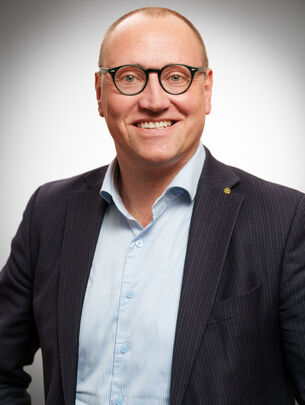
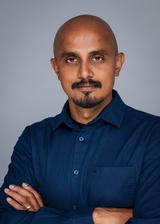
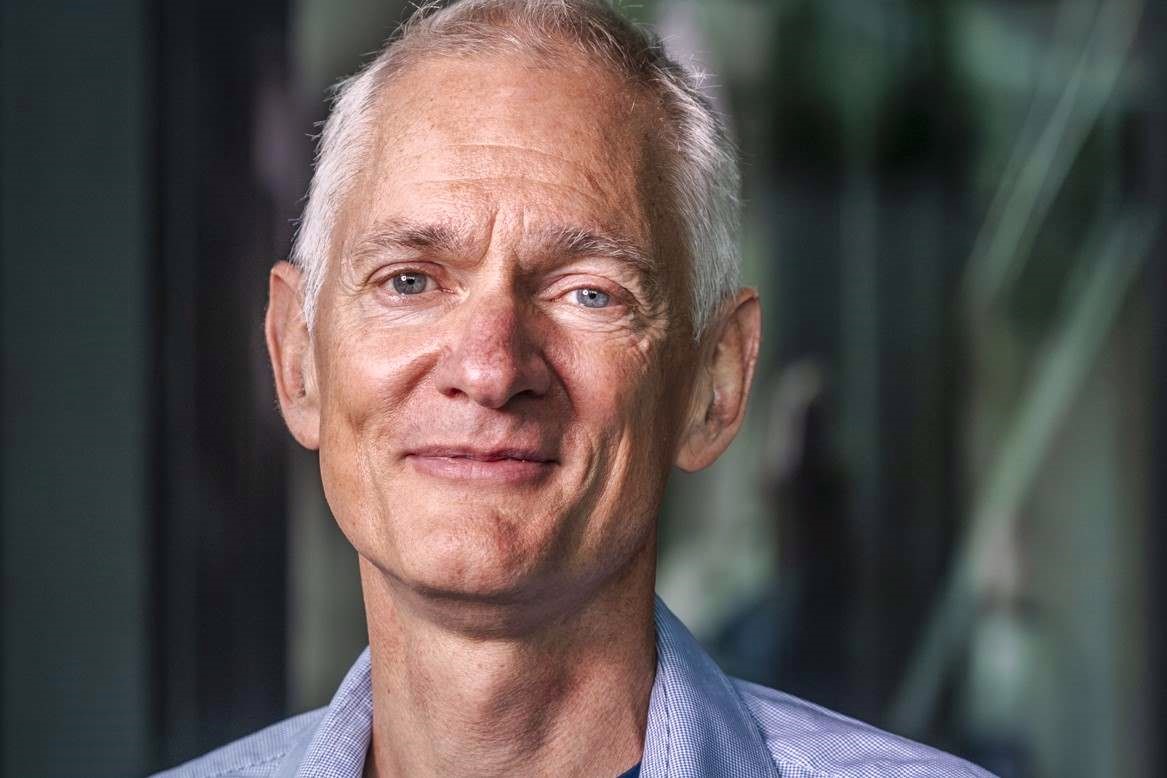
Christian Melchers is a Professor of Geoengineering and Post-Mining at the Georg Agricola University of Applied Sciences since 2012, with a focus on mine water monitoring, fluid/gas migration, and hydraulic barriers. Since 2022, he serves as Vice President and Scientific Director of the Post-Mining Research Centre. His career includes roles as a lecturer at the University of Münster and managing partner in a geotechnical consultancy. Doctorate in Geosciences (2009) from the University of Münster Active in international mining symposia (Vancouver, Brisbane, Leipzig) His research spans post-mining challenges, mine closure strategies, and environmental geology, with publications emphasizing global perspectives and technical innovations. Key memberships include the German Society for Geosciences and the Hydrogeology Section (FHDGG). As Deputy Chairman of the Forum Mining and Water Foundation, he contributes to post-mining governance frameworks.
Christof Kneisel is a Professor in Physical Geography at the University of Würzburg's Institute of Geography and Geology. As a leading researcher in permafrost and alpine geomorphology, he focuses on frozen ground dynamics, glacial-permafrost interactions, and geophysical methods for subsurface characterization across the Swiss Alps, Austria, Northern Sweden, and Iceland. His research integrates field data, GIS analysis, and 3D resistivity imaging to model environmental system responses to climate change. Key research areas include: Permafrost mapping and monitoring Application of geophysical techniques Soil science in cold climates Natural hazard assessment in alpine zones Climate-landform interactions His recent publications emphasize 3D electrical resistivity applications, permafrost dynamics in talus slopes, and carbon pool formation in alpine soils. Current projects funded by the German Research Foundation (DFG, KN 542/21-1) and federal ministries explore climate resilience in Bavarian agriculture through geospatial big data integration. Notable scientific contributions include: Advancing 3D geophysical monitoring for frozen ground Conceptual models of periglacial systems Key textbook co-authorship in physical geography International collaborations with Canada's Geological Survey
Harrie-Jan Hendricks-Franssen is a Professor at the Jülich Research Centre , affiliated with the Institute of Bio- and Geosciences (Agrosphere, IBG-3). He serves as a Principal Investigator in the Cosmic Sense team, focusing on advanced hydrological modeling and data assimilation techniques. Research Expertise : Development of inverse modeling methods for subsurface and land surface hydrological systems, integration of terrestrial system modeling, high-performance computing, and statistical analysis of hydrological data (e.g., neutron intensity measurements via cosmic ray probes). Technical Contributions : Implementation of measurement operators linking neutron intensity to soil moisture distribution, enabling precise environmental monitoring. Contact details: Tel. +49 2461 61 4462, Fax +49 2461 61 2518, Address: Wilhelm-Johnen-Straße, 52428 Jülich, Germany.
Dr. Ute Daewel is a Researcher at the Helmholtz-Zentrum Hereon , focusing on marine ecosystem modeling and biogeochemical data assimilation . She leads or co-leads major projects including CoastalFutures , RETAKE II , ECOTWIN , and NECCTON , with recent work emphasizing parameter estimation in coupled physical-biological ocean models.
Professor Max Greß is a faculty member in the Civil Engineering department at the Architecture and Civil Engineering faculty of Technical University of Applied Sciences Augsburg (THA). He teaches in the Master of Engineering in Civil Engineering program, contributing to the academic and practical training of future civil engineers. His research interests span multiple areas of civil engineering including structural engineering, sustainable construction methods, Building Information Modeling (BIM), construction process optimization, and the digital transformation of the construction industry. Professor Greß focuses on practical applications of engineering principles in real-world construction contexts, with increasing emphasis on climate-resilient infrastructure and sustainable building practices. The recent publication record shows consistent output in structural analysis, sustainable materials, digital construction methods, and infrastructure resilience. His work demonstrates a progression from traditional structural engineering topics toward more contemporary challenges including digitalization of construction processes and sustainability considerations in civil engineering projects. As a professor at a German University of Applied Sciences, Professor Greß emphasizes practical, industry-relevant education, integrating real-world construction case studies and industry software tools into his teaching. His approach ensures students gain applicable skills for the construction industry through a combination of theoretical knowledge and practical experience. Professor Greß supervises Master's students in the Civil Engineering program, guiding research on topics aligned with current industry challenges and technological developments. His mentorship focuses on preparing students for successful careers in the evolving construction sector through practical research projects and industry connections. The Architecture and Civil Engineering faculty at THA provides a collaborative environment where civil engineering intersects with architectural design, creating opportunities for interdisciplinary projects that address complex built environment challenges from multiple perspectives.
Dr. Karlis Kukemilks is a researcher in the Geology Division of Department VI - Spatial and Environmental Sciences at the University of Trier, Germany. He leads a major DBU-funded project developing sustainable cement alternatives through alkali-activated geopolymers, positioning him at the forefront of low-carbon construction materials research. His research spans four interconnected domains: Geomechanics : Advanced slope stability modeling and excavation shoring techniques Sustainable Materials : Transforming industrial waste (clay sludge, silicate dusts) into eco-cements Hydrogeology : Dewatering systems and groundwater flow modeling for construction Geophysics : Resistivity tomography and self-potential methods for subsurface characterization Current work focuses on the DBU project (2024-2026) creating geopolymers that eliminate conventional cement's high-temperature processes. These materials demonstrate exceptional acid/heat resistance and aesthetic versatility while utilizing 100% regional industrial byproducts. The project actively collaborates with SMEs to implement findings in real-world construction applications. Dr. Kukemilks directs a well-equipped research unit utilizing: GIS : ArcMap, QGIS for spatial analysis Geomechanics : GeoStudio, Rocscience, Plaxis for stability modeling Hydrogeology : HydroGeoSphere, MODFLOW, PEST for flow simulation His methodology integrates field investigations with advanced numerical modeling to solve practical engineering challenges while reducing environmental impact.
Dr. Murugan Ramasamy is a Senior Scientist at the Leibniz Centre for Tropical Marine Research (ZMT) in Bremen, Germany, leading the Submarine Groundwater Discharge Research Group within Program Area 3 - Land-Ocean Rivers and Transformation. His research focuses on understanding the complex hydrological processes connecting terrestrial and marine environments. His research interests include: Hydrology and hydrogeology Surface-subsurface water and solute dynamics Land-ocean connectivity Reactive transport modeling Submarine groundwater discharge processes Dr. Ramasamy's work integrates field measurements, numerical modeling, and geochemical analysis to investigate submarine groundwater discharge (SGD) across diverse geographical settings. His research spans tropical coastal systems in India, the Arabian Sea, and coastal environments in Canada. Recent work has expanded into climate change mitigation approaches including marine carbon dioxide removal and ocean alkalinization techniques, as evidenced by his 2024-2025 publications in high-impact journals. Analysis of his recent publications reveals a consistent research trajectory focused on quantifying SGD fluxes, understanding nutrient and contaminant transport through coastal groundwater systems, and exploring practical applications for coastal aquifer management. His work demonstrates methodological versatility, moving from traditional hydrogeological approaches to incorporating advanced climate modeling techniques for environmental solutions. Dr. Ramasamy maintains active international collaborations, particularly with researchers in India and Canada. His research on mine reclamation in Nova Scotia demonstrates his ability to address diverse environmental challenges across different geographic contexts while maintaining his core expertise in groundwater processes.
Dr. Emmanuel Anthony serves as an Alexander von Humboldt post-doctoral fellow within the Applied Geophysics group at the Geophysical Institute (GPI) of Karlsruhe Institute of Technology, Germany, maintaining an office in Room 103 at Campus West 6.36 (Hertzstr. 16, Karlsruhe). His research centers on Geophysics with specialized expertise in Applied Geophysics, focusing on translating theoretical geophysical principles into practical solutions for subsurface analysis, environmental monitoring, and resource exploration across diverse geological contexts. Scientific recognition includes: Alexander von Humboldt Postdoctoral Fellowship As an active member of GPI's Applied Geophysics research collective, Dr. Anthony contributes to collaborative projects developing advanced geophysical instrumentation and field methodologies for real-world earth science applications.
Dr. Lukas Y. Wick serves as Head of the Working Group Bioavailability and Deputy of the Head of Department at the Helmholtz Centre for Environmental Research - UFZ in Leipzig, Germany. With over two decades of experience in environmental microbiology, his work bridges fundamental research with practical applications for soil and water remediation. Dr. Wick earned his Diploma in Chemistry (1989) and Ph.D. in Organic Chemistry (1994) from the University of Basel, Switzerland, followed by postdoctoral research at MIT. His career path includes positions at EAWAG and EPFL before joining UFZ in 2004, where he has established himself as a leader in microbial ecology research. Research Focus: Dr. Wick's program centers on microbial degradation of organic contaminants, with particular emphasis on the bio-physical, physiological and ecological drivers that influence these processes. His team investigates biotransformation of contaminants, mycosphere ecology (bacterial-fungal interactions), fungal biotechnology for remediation, electro-bioremediation using weak electric fields, and microbial transport in subsurface environments. This integrated approach has positioned his group at the forefront of understanding how microbial communities function in contaminated environments. Analysis of Dr. Wick's recent publication record reveals a strong trajectory toward interdisciplinary research combining microbiology, electrochemistry, and environmental engineering. His work on fungal networks as conduits for microbial dispersal and contaminant degradation has opened new avenues for bioremediation strategies, with increasing emphasis on electrokinetic approaches for enhancing pollutant breakdown. Over 150 peer-reviewed publications spanning environmental microbiology and bioremediation Multiple collaborative projects including 'Tapping nature's potential' (2021-2027) and 'Phages as vectors in the Earth's Critical Zone' (AquaDiva) Research connecting fundamental microbial processes with practical environmental applications Leadership and Collaboration: As Deputy Head of the Scientific and Technical Council of UFZ, Dr. Wick plays a significant role in shaping research directions at the institution. His work demonstrates extensive international collaboration, particularly with European research institutions, and has contributed to advancing methodologies in environmental microbiology and remediation technologies. Technical Innovation: Dr. Wick's laboratory has pioneered approaches for studying microbial activity in complex environments, particularly focusing on the mycosphere as a hotspot for biotransformation of contaminants in soil. His work on electro-bioremediation represents a novel integration of physical and biological approaches to environmental cleanup.
Dr. Paco Lopez Dekker is an Associate Professor at Delft University of Technology's Department of Geoscience and Remote Sensing and Group Leader at the German Aerospace Center (DLR) Microwaves and Radar Institute. His research focuses on advanced radar remote sensing , particularly Synthetic Aperture Radar (SAR) systems for Earth observation. Key areas include: Bistatic/multistatic SAR configurations Ocean surface current and wave dynamics Land ice deformation monitoring Satellite mission design (e.g., ESA's Harmony mission) Radar signal processing innovations He leads the Satellite Radar Lab at TU Delft, developing cutting-edge techniques like super-resolution PSI and multi-satellite interferometry. His recent publications (2023-2025) emphasize: CubeSat-based radar altimetry systems Physics-guided ML for agricultural remote sensing Cryosphere applications of bistatic SAR Harmony mission performance analysis Ocean topography retrieval methods With 275+ publications and ongoing leadership in ESA missions, Dr. Dekker significantly advances satellite remote sensing capabilities for geoscience applications.