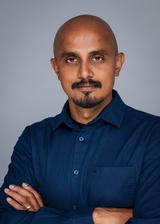
Reda El Ghawi is a Doctoral Researcher at the Max Planck Institute for Biogeochemistry in the Department Biogeochemical Integration (BGI) , specializing in hybrid modeling that combines physics-based approaches with machine learning. He contributes to the Model-Data Integration and Atmosphere-Biosphere Coupling, Climate and Causality research groups under the International Max Planck Research School for Global Biogeochemical Cycles (IMPRS-gBGC). Research Focus: El Ghawi’s work centers on integrating machine learning techniques with process-based land-surface models (e.g., JSBACH) to model biological processes like transpiration and photosynthesis. His studies span groundwater dynamics, stable isotope analysis, and climate modeling, emphasizing hybrid methodologies to reconcile physical laws with data-driven insights. Key Contributions: Recent publications highlight applications in semiarid Mediterranean hydrology, karst spring analysis, and Managed Aquifer Recharge. His technical expertise includes numerical modeling, data assimilation, and earth system simulations.
Oleg Zakirovich Khalimov is an Associate Professor at the Department of Construction and Economics within Khakass Technical Institute (KhTI), a branch of Siberian Federal University . With 52 years of professional experience , he specializes in geotechnical engineering, construction lifecycle management, and real estate assessment. His academic credentials include a Candidate of Technical Sciences degree and a qualification as Civil Engineer from Tomsk Civil Engineering Institute (1972). Academic Degree: Candidate of Technical Sciences Specialties: Construction (08.03.01, 08.04.01, 08.05.01) Research Focus: His work addresses geotechnical challenges in construction, particularly in environments with high groundwater levels. He has contributed to methodologies for engineering surveys, structural monitoring, and real estate valuation frameworks. Recent professional training highlights include digital education technologies and quality management systems. Scientific Output: Khalimov has authored over 150 publications , including three major monographs covering geotechnical lifecycle support, engineering surveys for historical buildings, and real estate depreciation assessment. His research demonstrates consistent engagement with practical construction challenges and educational innovation. Scientific Awards: Certificate of Honor (2016, 2023) Honored Builder of Khakassia Republic (2022) Honorary Worker of Science and Technology (2006)
Dr. Eric Hall is a Baxter Fellow and Lecturer in Applied Mathematics at the University of Dundee's School of Science and Engineering. He holds a PhD in Mathematics from the University of Edinburgh (2013) and a B.A. in Mathematics from the University of Pennsylvania. Prior to joining Dundee in 2020, he held postdoctoral positions at KTH Royal Institute of Technology, University of Massachusetts Amherst, and RWTH Aachen University. His research focuses on the mathematical foundations of data science, specializing in uncertainty quantification , stochastic simulation , and predictive modeling for complex systems. Current work develops domain-aware surrogate models and sensitivity analysis techniques for scientific machine learning, with applications spanning materials science, finance, geophysics, and solar physics. Publications demonstrate a strong focus on multi-scale systems and scientific machine learning , with recent work expanding into astrophysical applications. Research consistently integrates mathematical rigor with practical applications across physics and engineering domains. Awards and Honors Dundee Difference Awards 2025 - Innovation of the Year Fellow of the Institute of Mathematics and its Applications (2022) Science and Engineering Staff Awards - Innovation in Teaching (2022) Dr. Hall actively supervises PhD students in uncertainty quantification and scientific machine learning, and serves as second supervisor for doctoral projects on chaotic differential equations. He has secured research grants including STFC PhD funding for Solar Physics applications and Heilbronn Focused Research Group funding. He maintains memberships in the Edinburgh Mathematical Society (Trustee), Institute of Mathematics and its Applications, Society for Industrial and Applied Mathematics, and American Mathematical Society. Dr. Hall leads research in uncertainty quantification within the Mathematics division and collaborates internationally on multi-scale modeling projects.
Prof. Dr. rer. nat. Stefan Schönert holds the Chair of Experimental Astroparticle Physics at the Technical University of Munich since 2010. His research bridges neutrino physics and dark matter searches , with leadership roles in major international collaborations. Academic Affiliation: TUM School of Natural Sciences Research Focus: Neutrino properties, dark matter detection, low-background techniques Email: schoenert@ph.tum.de His career spans experimental innovations in subsurface laboratories and development of cryogenic detectors . Recent work includes liquid argon purification systems and wavelength-shifting reflector stability studies. Notable scientific awards include the ERC Advanced Grant (2018) and Max Planck Fellow (2016) . He leads the LEGEND collaboration and contributes to the Origins Cluster of Excellence .
Professor Matthias Braun is a distinguished academic in the field of physical geography, specializing in remote sensing and GIS applications for glaciology and polar research. He holds a professorship at the Institute of Geography at Friedrich-Alexander University Erlangen-Nuremberg (FAU), where he leads the Chair of Geography (Remote Sensing and GIS) and serves as Chairman of the Examination Board for B.Sc./M.Sc. Physical Geography and BA/MA Cultural Geography since 2022. His research focuses on monitoring glacier dynamics, ice sheet changes, and climate impacts in polar and mountainous regions using advanced remote sensing techniques. Professor Braun has held several significant leadership positions including Chairman of the International Doctoral Program 'Measuring and Modelling Mountain Glaciers in a Changing Climate' in the Bavarian Elite Network funded by the Bavarian Ministry of Science & Art since 2022, and Coordinator of the DFG SPP Antarctic Research since 2017. His academic journey includes an Associate Professor position at the University of Alaska Fairbanks (2010-2011) and extensive field experience leading multiple Arctic and Antarctic expeditions since 1994/95, with research stays in Alaska, South America, West & East Africa, Himalaya & Karakorum. His research interests span glaciology, remote sensing, geographic information systems, climate change impacts, land use change, polar regions, and high mountain environments. Professor Braun's work integrates microwave and optical remote sensing data from satellite and airborne platforms to derive geobiophysical parameters and their spatiotemporal variations. He employs advanced digital image processing, pattern recognition, SAR interferometry, and polarimetry techniques in his research. His laboratory maintains active participation in major research initiatives including the TanDEM-X and TanDEM-L Science Teams since 2010. Professor Braun's extensive publication record demonstrates a clear progression from foundational work on glacier monitoring to sophisticated applications of machine learning and deep learning for glacier feature extraction. His recent work focuses on calving front detection using SAR imagery, glacier velocity mapping, and integration of multi-sensor data for comprehensive glaciological analysis. Key research themes include glacier mass balance, ice sheet dynamics, supraglacial hydrology, and climate change impacts on cryospheric systems across diverse regions including Antarctica, Patagonia, the Himalayas, and the European Alps. Among his notable recognitions is the 2009 Science Award for Physical Geography from the Prof. Dr. Frithjof Voss Foundation for Geography and his Habilitation at the Mathematical-Natural Science Faculty of the University of Bonn in 2009. He serves as an Associate Editor for Frontiers in Earth Sciences – Cryospheric Sciences and reviews for numerous peer-reviewed journals. Professor Braun has mentored numerous doctoral students to completion, with recent graduates including Dr. Christian Sommer (2022), Dr. David Farias Barahona (2021), Dr. Stefan Lippl-Seifert (2020), and Dr. Peter Friedl (2019). Several students are currently completing their dissertations under his supervision. His research is supported by various funding mechanisms including the Bavarian Elite Network, DFG research programs, and international collaborations. He maintains strong connections with national and international research institutions including membership in the International Glaciological Society (IGS), German Society for Photogrammetry, Remote Sensing and Geoinformation (DGPF), German Society for Polar Research (DGP), and German Society for Geography (DGfG).
Christian Melchers is a Professor of Geoengineering and Post-Mining at the Georg Agricola University of Applied Sciences since 2012, with a focus on mine water monitoring, fluid/gas migration, and hydraulic barriers. Since 2022, he serves as Vice President and Scientific Director of the Post-Mining Research Centre. His career includes roles as a lecturer at the University of Münster and managing partner in a geotechnical consultancy. Doctorate in Geosciences (2009) from the University of Münster Active in international mining symposia (Vancouver, Brisbane, Leipzig) His research spans post-mining challenges, mine closure strategies, and environmental geology, with publications emphasizing global perspectives and technical innovations. Key memberships include the German Society for Geosciences and the Hydrogeology Section (FHDGG). As Deputy Chairman of the Forum Mining and Water Foundation, he contributes to post-mining governance frameworks.
Christof Kneisel is a Professor in Physical Geography at the University of Würzburg's Institute of Geography and Geology. As a leading researcher in permafrost and alpine geomorphology, he focuses on frozen ground dynamics, glacial-permafrost interactions, and geophysical methods for subsurface characterization across the Swiss Alps, Austria, Northern Sweden, and Iceland. His research integrates field data, GIS analysis, and 3D resistivity imaging to model environmental system responses to climate change. Key research areas include: Permafrost mapping and monitoring Application of geophysical techniques Soil science in cold climates Natural hazard assessment in alpine zones Climate-landform interactions His recent publications emphasize 3D electrical resistivity applications, permafrost dynamics in talus slopes, and carbon pool formation in alpine soils. Current projects funded by the German Research Foundation (DFG, KN 542/21-1) and federal ministries explore climate resilience in Bavarian agriculture through geospatial big data integration. Notable scientific contributions include: Advancing 3D geophysical monitoring for frozen ground Conceptual models of periglacial systems Key textbook co-authorship in physical geography International collaborations with Canada's Geological Survey
Dr. Kim Völlinger is a Researcher at the Technical University of Berlin in the Models and Theory of Distributed Systems group. Her academic career spans formal methods, trustworthy machine learning, and distributed systems, with a focus on integrating interactive proof assistants like Coq for neural network verification. Education: Computer Science with a minor in Cognitive Psychology at Humboldt University of Berlin and ENSEEIHT in Toulouse, France PhD Supervisors: Wolfgang Reisig (HU Berlin), Kurt Mehlhorn (MPI-INF Saarbrücken), Holger Schlingloff (Fraunhofer FOKUS) Her research bridges theoretical computer science and practical verification, exploring witness-based runtime verification for asynchronous systems, hybrid system formalization, and LLM-supported proof synthesis. She also contributes to interdisciplinary collaborations, particularly evident in her microbiology-related publications. Recent publications on Google Scholar highlight her work in environmental microbiology, including microbial community dynamics in petroleum reservoirs, DNA extraction from crude oil, and bacterial stress responses in extreme saline environments. These studies reflect cross-disciplinary applications of computational modeling to environmental systems. Teaching activities include formal languages, automata theory, and interactive theorem provers. She actively mentors doctoral students, leads research-oriented master's projects, and supervises student theses. The Models and Theory of Distributed Systems group at TU Berlin serves as her primary research environment, where she continues to develop tools for computational verification and machine-reviewed proofs.
Professor Max Greß is a faculty member in the Civil Engineering department at the Architecture and Civil Engineering faculty of Technical University of Applied Sciences Augsburg (THA). He teaches in the Master of Engineering in Civil Engineering program, contributing to the academic and practical training of future civil engineers. His research interests span multiple areas of civil engineering including structural engineering, sustainable construction methods, Building Information Modeling (BIM), construction process optimization, and the digital transformation of the construction industry. Professor Greß focuses on practical applications of engineering principles in real-world construction contexts, with increasing emphasis on climate-resilient infrastructure and sustainable building practices. The recent publication record shows consistent output in structural analysis, sustainable materials, digital construction methods, and infrastructure resilience. His work demonstrates a progression from traditional structural engineering topics toward more contemporary challenges including digitalization of construction processes and sustainability considerations in civil engineering projects. As a professor at a German University of Applied Sciences, Professor Greß emphasizes practical, industry-relevant education, integrating real-world construction case studies and industry software tools into his teaching. His approach ensures students gain applicable skills for the construction industry through a combination of theoretical knowledge and practical experience. Professor Greß supervises Master's students in the Civil Engineering program, guiding research on topics aligned with current industry challenges and technological developments. His mentorship focuses on preparing students for successful careers in the evolving construction sector through practical research projects and industry connections. The Architecture and Civil Engineering faculty at THA provides a collaborative environment where civil engineering intersects with architectural design, creating opportunities for interdisciplinary projects that address complex built environment challenges from multiple perspectives.
Dr. Karlis Kukemilks is a researcher in the Geology Division of Department VI - Spatial and Environmental Sciences at the University of Trier, Germany. He leads a major DBU-funded project developing sustainable cement alternatives through alkali-activated geopolymers, positioning him at the forefront of low-carbon construction materials research. His research spans four interconnected domains: Geomechanics : Advanced slope stability modeling and excavation shoring techniques Sustainable Materials : Transforming industrial waste (clay sludge, silicate dusts) into eco-cements Hydrogeology : Dewatering systems and groundwater flow modeling for construction Geophysics : Resistivity tomography and self-potential methods for subsurface characterization Current work focuses on the DBU project (2024-2026) creating geopolymers that eliminate conventional cement's high-temperature processes. These materials demonstrate exceptional acid/heat resistance and aesthetic versatility while utilizing 100% regional industrial byproducts. The project actively collaborates with SMEs to implement findings in real-world construction applications. Dr. Kukemilks directs a well-equipped research unit utilizing: GIS : ArcMap, QGIS for spatial analysis Geomechanics : GeoStudio, Rocscience, Plaxis for stability modeling Hydrogeology : HydroGeoSphere, MODFLOW, PEST for flow simulation His methodology integrates field investigations with advanced numerical modeling to solve practical engineering challenges while reducing environmental impact.
Dr. Murugan Ramasamy is a Senior Scientist at the Leibniz Centre for Tropical Marine Research (ZMT) in Bremen, Germany, leading the Submarine Groundwater Discharge Research Group within Program Area 3 - Land-Ocean Rivers and Transformation. His research focuses on understanding the complex hydrological processes connecting terrestrial and marine environments. His research interests include: Hydrology and hydrogeology Surface-subsurface water and solute dynamics Land-ocean connectivity Reactive transport modeling Submarine groundwater discharge processes Dr. Ramasamy's work integrates field measurements, numerical modeling, and geochemical analysis to investigate submarine groundwater discharge (SGD) across diverse geographical settings. His research spans tropical coastal systems in India, the Arabian Sea, and coastal environments in Canada. Recent work has expanded into climate change mitigation approaches including marine carbon dioxide removal and ocean alkalinization techniques, as evidenced by his 2024-2025 publications in high-impact journals. Analysis of his recent publications reveals a consistent research trajectory focused on quantifying SGD fluxes, understanding nutrient and contaminant transport through coastal groundwater systems, and exploring practical applications for coastal aquifer management. His work demonstrates methodological versatility, moving from traditional hydrogeological approaches to incorporating advanced climate modeling techniques for environmental solutions. Dr. Ramasamy maintains active international collaborations, particularly with researchers in India and Canada. His research on mine reclamation in Nova Scotia demonstrates his ability to address diverse environmental challenges across different geographic contexts while maintaining his core expertise in groundwater processes.
Dr. Adriana Paluszny is a Senior Lecturer in the Department of Earth Science and Engineering at Imperial College London and a Royal Society Tata University Research Fellow. Her academic journey at Imperial began in 2005, evolving through roles as Post-Doctoral Research Assistant (2009-2013), Research Fellow (2013-2017), and her current dual appointments since 2018-2019. She holds a PhD from Imperial College London and an undergraduate degree from Universidad Simón Bolivar. Her research focuses on computational modeling of subsurface processes, with emphasis on: Fracture mechanics and rock fragmentation dynamics Fluid flow in fractured geological systems Geomechanical behavior of brittle rocks Environmental applications for subsurface resource management She has been honored with the Royal Society Tata University Research Fellowship , recognizing her contributions to earth sciences. Industrial experience includes prior work in R&D at MCE Anlagenbau (Vienna).
Dr. Lukas Y. Wick serves as Head of the Working Group Bioavailability and Deputy of the Head of Department at the Helmholtz Centre for Environmental Research - UFZ in Leipzig, Germany. With over two decades of experience in environmental microbiology, his work bridges fundamental research with practical applications for soil and water remediation. Dr. Wick earned his Diploma in Chemistry (1989) and Ph.D. in Organic Chemistry (1994) from the University of Basel, Switzerland, followed by postdoctoral research at MIT. His career path includes positions at EAWAG and EPFL before joining UFZ in 2004, where he has established himself as a leader in microbial ecology research. Research Focus: Dr. Wick's program centers on microbial degradation of organic contaminants, with particular emphasis on the bio-physical, physiological and ecological drivers that influence these processes. His team investigates biotransformation of contaminants, mycosphere ecology (bacterial-fungal interactions), fungal biotechnology for remediation, electro-bioremediation using weak electric fields, and microbial transport in subsurface environments. This integrated approach has positioned his group at the forefront of understanding how microbial communities function in contaminated environments. Analysis of Dr. Wick's recent publication record reveals a strong trajectory toward interdisciplinary research combining microbiology, electrochemistry, and environmental engineering. His work on fungal networks as conduits for microbial dispersal and contaminant degradation has opened new avenues for bioremediation strategies, with increasing emphasis on electrokinetic approaches for enhancing pollutant breakdown. Over 150 peer-reviewed publications spanning environmental microbiology and bioremediation Multiple collaborative projects including 'Tapping nature's potential' (2021-2027) and 'Phages as vectors in the Earth's Critical Zone' (AquaDiva) Research connecting fundamental microbial processes with practical environmental applications Leadership and Collaboration: As Deputy Head of the Scientific and Technical Council of UFZ, Dr. Wick plays a significant role in shaping research directions at the institution. His work demonstrates extensive international collaboration, particularly with European research institutions, and has contributed to advancing methodologies in environmental microbiology and remediation technologies. Technical Innovation: Dr. Wick's laboratory has pioneered approaches for studying microbial activity in complex environments, particularly focusing on the mycosphere as a hotspot for biotransformation of contaminants in soil. His work on electro-bioremediation represents a novel integration of physical and biological approaches to environmental cleanup.
Leonhard Ganzer is a Professor at Georg-August-Universität Göttingen, serving as an advisor and referee for doctoral dissertations in fluid dynamics and porous media systems. Professor Ganzer's research focuses on multiphase flow phenomena in porous media, with specialized expertise in tracer technology development. His work involves creating experimental and numerical models to predict the behavior of Kinetic Interface Sensitive (KIS) tracers, which provide novel methods for measuring fluid-fluid interfacial area under both static and dynamic conditions. This research has significant applications in subsurface resource management including petroleum engineering, carbon sequestration, and groundwater systems where understanding two-phase flow behavior is critical. Specializes in fluid-fluid interfacial area measurement techniques Develops reactive tracer methodologies for porous media characterization Focuses on applications for underground gas, oil, and CO 2 storage systems As an academic advisor, Professor Ganzer has supervised doctoral research including Hiwa Abdullah's 2024 dissertation on KIS tracers for multiphase flow systems. His advisory role demonstrates his standing as an established researcher contributing to advanced studies in subsurface fluid dynamics and reservoir characterization.
Carola Vogt Breyer is a Professor of Geotechnics at Stuttgart University of Applied Sciences (HFT Stuttgart), employed since 2005. She served as Dean of the Master's program in Geotechnics/Tunnel Construction (2019-2024) and Dean of the Faculty of Civil Engineering, Building Physics and Economics (2015-2019). Her expertise spans soil mechanics, foundation engineering, and tunnel construction within civil engineering. She earned her Dipl.-Ing. in Civil Engineering from the University of Kaiserslautern (1991), specializing in concrete construction, statics, and foundation engineering/soil mechanics, followed by a Dr.-Ing. (Ph.D.) in 1999. Prof. Vogt Breyer's research focuses on geomechanics and practical applications in underground construction. Key areas include stress measurement in granular soils, displacement mechanics of deep foundations, and load-bearing behavior of trenchless pipeline systems. Her work bridges theoretical soil mechanics with field applications in urban infrastructure projects. Recent publications (2018-2025) reveal a concentrated trend toward trenchless technologies, particularly microtunneling and pipe jacking, reflecting industry demand for minimally invasive subsurface construction. Her 2025 lectures emphasize geotechnical risk assessment in contaminated sites and HDD pipeline installation challenges. She actively shapes academic discourse through leadership roles: since 2011, she has led seminars on "Microtunneling, Pipe Jacking and HDD" at the Technical Academy Esslingen and "Subsoil and Contaminated Sites" for the Association of Road and Traffic Engineers. She chairs the "Construction in Soil and Rock" colloquium program committee and serves as a reviewer for the BMBF "Research at Universities of Applied Sciences" program. Prof. Vogt Breyer maintains active industry engagement through memberships in the German Society for Geotechnics (DGGT) and the International Society for Soil Mechanics and Geotechnical Engineering (ISSMGE), alongside research collaborations at institutions including the Norwegian Geotechnical Institute (NGI) and McMaster University.