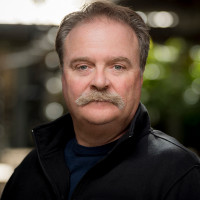
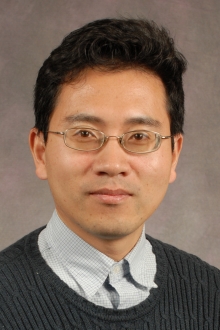
Dr. Dennis Buckmaster is a Professor in Agricultural & Biological Engineering at Purdue University, serving as Dean's Fellow for Digital Agriculture. He holds a B.S. from Purdue University and M.S./Ph.D. from Michigan State University. His research focuses on digital agriculture, machine systems engineering, and data science applications in farming. He co-coordinates the Agricultural Systems Management program and teaches courses like Computing Technology with Applications and Ag Tech and Innovation. He leads the Open Ag Technology and Systems Center (OATS Center), advancing open-source solutions for agriculture through platforms like ISOBlue and OADA. His work integrates IoT, robotics, and machine learning to optimize crop production, livestock management, and farm decision-making. He has authored over 150 publications on precision agriculture technologies. Professional memberships include American Society of Agricultural and Biological Engineers and Fluid Power Society. He emphasizes data interoperability, edge computing, and bridging engineering with agricultural practices through collaborative frameworks like LATTICE and Meta Ag.
Biondo Biondi is the Barney and Estelle Morris Professor of Geophysics at Stanford University, affiliated with the School of Earth Sciences. He leads the Stanford Exploration Project and holds roles such as Chair of the Geophysics Department (2019–2022) and Director of the Stanford Earth Imaging Project (1998–Present). His research focuses on seismic imaging algorithms, computational geophysics, and fiber-optic sensing technologies. He earned his Ph.D. (1990), M.S. (1987) in Geophysics from Stanford, and M.Sc. in Electrical Engineering from Politecnico di Milano (1984). Dr. Biondi's research emphasizes improving seismic data imaging through advanced computational methods. He pioneered urban seismic monitoring using preexisting telecommunication fibers, enabling cost-effective subsurface analysis. His work integrates machine learning and high-performance computing to address challenges in reservoir imaging, CO2 monitoring, and infrastructure health. Key research areas include distributed acoustic sensing (DAS), ambient noise tomography, and inverse theory applications. He has authored over 180 publications and received awards like the SEG Honorable Mention (2019, 2016, 2009) and the Distinguished Instructor Short Course (2007). His teaching includes courses like 3-D Seismic Imaging and Reflection Seismology, and he advises graduate students in geophysics and computational science. Collaborations span industry (e.g., Schlumberger, Saudi Aramco) and global institutions. Biondi’s administrative contributions include co-directing the Stanford Earth Sciences Algorithms and Architectures Initiative and serving on editorial boards like the SIAM Journal on Imaging Sciences. His lab’s innovations bridge geophysics with emerging technologies, advancing both academia and industry applications in energy, environment, and urban infrastructure.
Neal Driscoll is a Professor of Geology and Geophysics at the Geosciences Research Division, Scripps Institution of Oceanography, UC San Diego. He specializes in tectonic deformation, landscape evolution, and seafloor imaging, with a focus on understanding Earth's processes through sediment records. Driscoll co-directs UC San Diego’s Center for Public Preparedness (CP2) and leads ALERTCalifornia, a critical infrastructure network monitoring wildfires, floods, and earthquakes via over 1,000 cameras. His work bridges geohazard mitigation, climate impacts, and disaster response. Education: B.S., Geology, University of New Hampshire M.S., Oceanography, University of Rhode Island Ph.D., Columbia University (Lamont-Doherty Earth Observatory) Research Interests: Driscoll investigates tectonic deformation’s role in shaping landscapes and seascapes, particularly in response to climate and sea-level changes. His fieldwork includes high-resolution seafloor imaging and seismic data analysis in regions like Iceland and California. He also studies neotectonics, geohazards, and coastal processes, with recent focus on the San Andreas Fault system and Salton Trough rift dynamics. ALERTCalifornia: This program uses advanced camera networks to monitor natural disasters, providing real-time data for first responders and researchers. Its infrastructure, originally for earthquake monitoring, now supports multi-hazard tracking, including wildfires and landslides, enhancing public safety and environmental understanding. Awards: Office of Naval Research Young Investigator Award Heezen Award and Storke Award (Lamont-Doherty Earth Observatory) Scripps Undergraduate Teaching Award MIT Distinguished Crosby Lecturer Advising & Grants: Driscoll has mentored students in geology and geophysics, with grants supporting his research on fault systems, climate impacts, and disaster preparedness. His collaborative projects include the Salton Seismic Imaging Project and Arctic Ocean sediment studies. Labs & Teams: Leads ALERTCalifornia and CP2 teams, collaborates with Scripps’ Geosciences Research Division on marine geophysics and tectonic studies, and partners with global institutions like WHOI and Icelandic research groups.
Søren Munch Kristiansen is an Associate Professor in the Department of Geoscience at Aarhus University, Faculty of Natural Sciences. His interdisciplinary research bridges geoscience and archaeology, focusing on the complex interactions between soil, water, and human societies across time. He is actively engaged in transdisciplinary projects involving geoarchaeology, groundwater, and public health. Research Interests: His work centers on how soil and groundwater have shaped human prehistory and continue to influence modern life. Key areas include safe drinking water from a lifelong perspective, geoarchaeological prospection, Viking Age settlements, and the application of geophysical and geochemical methods in archaeological contexts. He is particularly interested in novel, interdisciplinary methodologies. Recent Research Trends: His recent publications reveal a strong focus on integrating geophysical data (e.g., GPR, borehole databases) with archaeological interpretation, especially in 3D urban modeling and landscape change. Themes include Viking Age sites, interglacial deposits, and anthropogenic soil modifications. His work increasingly employs machine learning and large-scale data synthesis. Scientific Awards: No awards mentioned in the provided text. Advising and Grants: While specific students are not listed, he leads and participates in multiple funded research projects, indicating an active supervisory role. His grants span from 2016 to 2024, including projects like TITAN, SAGA, and 'Fingerprinting displaced molecular substances,' highlighting sustained funding and leadership in interdisciplinary geoscience-archaeology research. Labs and Teams: He is involved in collaborative networks such as the Soil Science & Archaeo-geophysics Alliance (SAGA), suggesting leadership in interdisciplinary research teams. His work often involves multi-proxy analyses and international collaborations, particularly in Scandinavian archaeological geophysics.
Dr. Robert Pickle is a Postdoctoral Fellow at the Research School of Earth Sciences (RSES), Australian National University (ANU), specializing in Geophysics. His work focuses on seismic network design, machine learning applications in seismology, and tectonic studies in active seismic zones. He contributes to projects like the Southwest Australia Seismic Network (SWAN) and the Australian Passive Seismic Server, advancing understanding of crustal dynamics and seismic hazard assessment. Education: PhD (specific details not provided in texts). Research Interests: Dr. Pickle’s expertise spans seismic instrumentation, regional seismic monitoring, and the integration of machine learning for improving earthquake catalog accuracy. His studies address critical areas such as the Banda Arc–Australian Plate collision zone and the seismicity of southwest Australia. Projects: Principal investigator on the Australian Passive Seismic Server and researcher on the Enhanced 3-D seismic structure of Southwest Australia (SWAN) project. Collaborates with institutions like the ANU’s RSES and international seismological networks. Labs/Teams: Active in ANU’s Geophysics research groups, contributing to collaborative efforts in seismic data acquisition and analysis.
Ghassan AlRegib is the John and Marilu McCarty Chair Professor in the School of Electrical and Computer Engineering at Georgia Institute of Technology. He directs the Omni Lab for Intelligent Visual Engineering and Science (OLIVES), the Center for Energy and Geo Processing (CeGP), and previously led Georgia Tech's MENA initiatives (2015-2018). His research spans machine learning, image processing, and seismic interpretation with real-world applications in autonomous vehicles, medical imaging, and subsurface analysis. His research focuses on trustworthy AI systems through three pillars: enhancing interpretability, improving robustness/generalizability, and tackling domain-specific challenges. Key interests include human-in-the-loop frameworks, uncertainty quantification, explainable AI, and physics-driven learning. The OLIVES lab pioneered modern machine learning applications in seismic interpretation and developed open-source datasets for geological fault analysis. Dr. AlRegib's scientific contributions include over 270 publications, multiple U.S. patents, and leadership roles as Technical Program co-Chair for ICIP 2020/2024. His work demonstrates significant impact through awards like the IEEE Fellow designation (2022) and multiple best paper awards at premier conferences. IEEE Fellow (2022) 2023 EURASIP Best Paper Award 2019 ICIP Best Paper Award 2017 Denning Faculty Award for Global Engagement CSIP Research & Service Awards (2003) He has advised numerous PhD students including Dr. Ashraf Alattar (now Auburn professor) and Dr. Zhiling Long (Kennesaw State faculty). His lab structure emphasizes collaborative teams comprising postdocs, senior/junior PhD students, and undergraduates working on high-impact problems from autonomous systems to medical diagnostics. Current research thrusts include trustworthy neural networks, human-in-the-loop frameworks, and deployment of machine learning in seismic interpretation and ophthalmology.
Michael Pyrcz is a Professor in the Hildebrand Department of Petroleum and Geosystems Engineering and holds the rank of Associate Professor in the Jackson School of Geosciences at the University of Texas at Austin. He is the recipient of the B. J. Lancaster Professorship in Petroleum Engineering and the George H. Fancher Centennial Teaching Fellowship in Petroleum Engineering. His research focuses on subsurface data analytics, geostatistics, and machine learning applications in energy systems and CO2 sequestration. Pyrcz teaches widely, including through online lectures and GitHub workflows, and has authored over 50 peer-reviewed publications and a textbook on spatial data analytics. His work integrates machine learning with geoscience challenges, such as uncertainty quantification in reservoir modeling and CO2 storage site evaluation. He leads initiatives in energy data analytics through the Freshman Research Initiative and collaborates with industry on workflow development. Key research areas include generative AI for subsurface models, stochastic methods for fracture networks, and anomaly detection in geologic monitoring. Education: Background in petroleum engineering and geosciences (details not explicitly provided). Grants/Advising: Extensive industry collaboration and mentorship roles at Chevron prior to UT Austin. Labs/Teams: Maintains active GitHub repositories (GeostatsGuy), YouTube lecture series (GeostatsGuyLectures), and social media outreach (X/GeostatsGuy).
A.T. Charlie Johnson serves as the Rebecca W. Bushnell Professor of Physics and Astronomy at the University of Pennsylvania's School of Arts & Sciences, where he has been a standing faculty member since 1994. His research program focuses on nanoscale systems and has established him as a leading figure in condensed matter physics, earning recognition from major scientific societies. His educational foundation includes: Ph.D. in Physics from Harvard University (1990) B.S. in Physics from Stanford University (1984) Professor Johnson's research centers on the development and application of atomic-layer nanomaterials, particularly graphene and transition metal dichalcogenides , for fundamental studies of transport phenomena and practical biosensor applications. His group employs advanced nanofabrication techniques at Penn's Singh Center for Nanotechnology to create devices that leverage biological molecules for chemical recognition in disease diagnosis, security screening, and environmental monitoring. This work bridges condensed matter physics with biomedical engineering , yielding innovative solutions for real-world detection challenges. Analysis of his 2023-2025 publications reveals three dominant research thrusts: (1) scalable graphene-based biosensor development for medical diagnostics, (2) exploration of quantum phenomena like Klein tunneling in novel nanoelectromechanical systems, and (3) interdisciplinary applications spanning oncology, planetary science, and fetal medicine. His work consistently emphasizes materials synthesis , device integration , and practical translation of nanoscale phenomena. His scientific contributions have been recognized with prestigious honors: Defense Science Study Group Fellow (2018-2019) Fellow of the American Association for the Advancement of Science (2017) Fellow of the American Physical Society (2011) Lindback Foundation Award for Distinguished Teaching (2003) David and Lucille Packard Foundation Fellowship (1994-1999) As an educator, Professor Johnson has mentored numerous graduate students and postdoctoral researchers, with notable alumni like Michael Biercuk (founder of Q-CTRL). His research has been supported through significant leadership roles including Director of the Nano/Bio Interface Center (2014-2017) and Packard Fellowship funding, enabling sustained innovation in nanotechnology. His group actively collaborates across disciplines to advance both fundamental understanding and practical applications of nanomaterials. Based at the Singh Center for Nanotechnology, Johnson leads a dynamic research team utilizing state-of-the-art facilities for nanofabrication and characterization. His laboratory maintains strong campus collaborations through secondary appointments in Electrical and Systems Engineering and Materials Science and Engineering, fostering an interdisciplinary environment for developing next-generation nanoscale devices.
Dr. Zhigang Peng is a Professor in the School of Earth & Atmospheric Sciences at Georgia Institute of Technology, part of the College of Sciences. His research focuses on seismicity dynamics, fault zone imaging, and data science applications in geophysics. He holds a Ph.D. in Geological Sciences from the University of Southern California (2004), an M.S. in Electrical Engineering (2002), and a B.S. in Geophysics from the University of Science and Technology of China (1998). Dr. Peng’s work spans seismological studies of earthquake triggering mechanisms, fault zone structures, and deep-focus earthquakes. He has pioneered dense seismic array techniques to image fault systems and employs machine learning for event detection and phase picking. His recent projects include analyzing the 2023 Kahramanmaraş earthquake sequence in Türkiye and the 2024 Noto earthquake in Japan. He leads initiatives like the Center for Collective Impact in Earthquake Science (C-CIES), promoting inclusive scientific collaboration. Research Highlights: Fault zone imaging, dynamic triggering, AI-driven seismology Labs: ES&T 2235 (Seismology Lab), ES&T 2256 (Office) His awards include the 2002 AGU Outstanding Student Paper Award. He actively contributes to earthquake hazard assessment, nuclear explosion monitoring, and volcano-seismic interactions, with over 150 peer-reviewed publications.
Alan Hunter is a Professor in Autonomous Systems at the University of Bath's Department of Mechanical Engineering. He serves as Deputy Head of Department for Workload and Wellbeing and is affiliated with the Water Innovation & Research Centre (WIRC) and the UKRI CDT in Accountable, Responsible and Transparent AI. His research focuses on underwater acoustics, signal processing, imaging, and machine intelligence, with applications in sonar-based remote sensing and marine robotics. Education: B.E. (Hons I) in Electrical and Electronic Engineering from the University of Canterbury (2001), PhD in Synthetic Aperture Sonar (SAS) from the same institution (2006). Career highlights include roles at the University of Bristol (2007-2010), TNO Netherlands (2010-2014), and NATO CMRE (2014). He has led projects on sub-sediment imaging, autonomous mine-hunting systems, and precision navigation algorithms. Research Interests: • Underwater Acoustics & Sonar Imaging • Autonomous Underwater Vehicles • Machine Learning for Acoustic Data Analysis • Non-Destructive Inspection via Ultrasound • Sustainable Coastal Protection (via UN SDG contributions) Active Projects (2023-2025+): - Noise Network Plus : Engineering a Quieter Future (EPSRC) - TESSMEX SR 4 : Naval Mine-Hunting Technology (Defence Lab) - Decision-Making with Ambiguities : Legal AI for Robotics (EPSRC) Professional Affiliations: • Senior Member, IEEE • Associate Editor, IEEE Journal of Oceanic Engineering • Collaborations with NATO, TNO, and UK Defence Orgs. Labs & Teams: • Robotics and Autonomous Systems Lab • Centre for Space, Atmospheric and Oceanic Science • WIRC @ Bath (Water Innovation Hub)
Abdulkadir C. Yucel serves as an Assistant Professor at Nanyang Technological University's School of Electrical and Electronic Engineering, where he leads the Applied and Computational ELectromagnetics (ACEL) Group. His research spans applied electromagnetics, radar imaging, and AI-driven electromagnetic analysis with applications in smart cities, neurotechnology, and quantum systems. Education: Ph.D. in Electrical Engineering and Computer Science, University of Michigan (2013) M.S. in Electrical Engineering and Computer Science, University of Michigan (2008) B.S. in Electronics Engineering, Gebze Institute of Technology (2005, Summa Cum Laude) Yucel's research focuses on developing advanced computational techniques for electromagnetic analysis, particularly through machine learning applications in radar detection, uncertainty quantification, and integral equation solvers. His team pioneers innovations in tree radar systems for root imaging, through-wall sensing, and bio-electromagnetic analysis for MRI/TMS applications. Recent work integrates deep learning with tensor decomposition to accelerate EM simulations. Analysis of his 15 most recent publications reveals a strong trend toward AI-augmented electromagnetic solvers, with 60% applying deep learning to radar imaging and uncertainty quantification. Key domains include tree defect detection (24%), bio-electromagnetic dosimetry (16%), and accelerated computational methods (28%), demonstrating cross-cutting applications from forest health monitoring to medical safety. Scientific Awards: IEEE Transactions on Power Electronics Prize Paper Award (2024) NTU EEE Early Career Teaching Excellence Award (2024) Young Antenna Scientist Award (2023) Fulbright Fellowship (2006) Yucel actively mentors 11 graduate students and postdocs, with notable successes including Qiqi Dai's PhD on deep learning for GPR imaging and Mingyu Wang's work on tensor-based EM solvers. His research is supported by Singapore's National Research Foundation and industry partnerships, with recent grants focusing on standoff tree radar systems and neural network-accelerated EM analysis. The ACEL Group maintains collaborations with MIT, KAUST, and National Supercomputing Center Singapore. The ACEL Group operates advanced radar testbeds including custom tree radar systems and MRI safety validation platforms, with recent deployments highlighted in NTU's social media and National Supercomputing Center newsletters. Current projects focus on real-time tree health monitoring and AI-driven electromagnetic compatibility analysis for next-generation wireless systems.
Keith D. Koper is a Professor in the Department of Geology & Geophysics at the University of Utah and serves as Director of the University of Utah Seismograph Stations (UUSS). He is also the editor-in-chief of The Seismic Record . His work integrates academic research with operational seismic monitoring and public safety initiatives across Utah and the Intermountain West. Education: PhD in Geophysics, Washington University, 1998 BA in Math, Geology, and ISP, Northwestern University, 1993 Dr. Koper's research focuses on array seismology, forensic seismology, deep Earth structure (especially the inner core), earthquake rupture imaging, ambient seismic noise, and seismic hazards in the Intermountain West, including mining-induced and urban earthquakes. His work combines observational seismology with advanced signal processing and machine learning techniques to improve detection, discrimination, and imaging capabilities. He has led or contributed to major projects involving the Wasatch Front, Yellowstone, and regional seismic networks. His recent research emphasizes machine learning for earthquake detection, high-resolution relocation of aftershock sequences (e.g., Magna 2020, Bluffdale 2019), microseism generation in lakes, and fine-scale imaging of the Earth's inner core using seismic reflections. His studies often involve interdisciplinary collaboration, particularly with mining engineering and geodesy. Dr. Koper's research has been consistently funded by federal and state agencies, including the National Science Foundation (NSF), U.S. Geological Survey (USGS), Department of Energy (DOE), Air Force Research Laboratory (AFRL), and the Utah Department of Public Safety. His publications reflect a strong trend toward integrating computational methods with traditional seismological analysis to tackle complex problems in both natural and induced seismicity. Scientific Service and Leadership: Editor-in-Chief, The Seismic Record Director, University of Utah Seismograph Stations Secretary, U.S. Air Force Seismic Review Panel Former Chair and Vice-Chair, Utah Seismic Safety Commission Dr. Koper mentors graduate students in seismology and geophysics, including recent advisees Sean Hutchings and Alysha Armstrong. His research group actively engages in both fundamental and applied seismological research, with strong ties to national labs such as Sandia. The group is involved in deploying portable seismic arrays, analyzing large datasets, and developing new algorithms for event detection and classification. The University of Utah Seismograph Stations, under his leadership, plays a critical role in monitoring seismicity in Utah and Yellowstone, producing real-time earthquake information, ShakeMaps, and public outreach materials. The station also contributes to national and international efforts in nuclear test monitoring and volcanic hazard assessment.
Professor Ali Yapar is a faculty member at Istanbul Technical University in the Electronics and Communication Engineering department. His research focuses on Electromagnetics , Microwave Engineering , and Antenna Technologies , with a particular emphasis on inverse scattering problems and microwave imaging for biomedical applications. He has supervised numerous graduate students and led projects related to breast cancer treatment and rough surface imaging. PhD in Electronics and Communication Engineering from Istanbul Technical University (1997) MSc in Electronics and Communication Engineering (1995) His recent publications analyze advanced techniques for microwave hyperthermia systems, reverse time migration methods, and Newton-based solutions for electromagnetic inverse scattering. Key projects include TUBITAK-funded initiatives on microwave tomography and brain stroke imaging. He serves as a project investigator and executive for electromagnetic research programs. Research areas span Electromagnetic Wave Propagation , Green's Function Applications , and Dielectric Material Analysis . Collaborations include IEEE members and international researchers in computational electromagnetics.
Steven Constable is a Professor of Geophysics at the Institute of Geophysics and Planetary Physics (IGPP) within the Scripps Institution of Oceanography at UC San Diego. He specializes in electrical conductivity studies of Earth’s crust and mantle, seafloor instrumentation development, and geophysical data analysis. His research focuses on understanding tectonic processes, subduction zone dynamics, and marine geohazards through electromagnetic methods. Education: B.S., University of Western Australia Ph.D., Australian National University Research Interests: Electrical conductivity of crust and mantle Seafloor instrumentation development Magnetotelluric and controlled-source electromagnetic (CSEM) methods Subduction zone fluid dynamics CO 2 sequestration monitoring Mid-ocean ridge magmatism Grants & Collaborations: NSF-NERC Collaborative Research: Magnetotelluric imaging of plume-ridge interactions (Galapagos) Magnetotelluric Investigation of the Salton Trough (MIST) Experiment PI-LAB Experiment at the Equatorial Mid-Atlantic Ridge Labs & Teams: He leads the Marine Electromagnetics Lab , developing cutting-edge instrumentation for marine geophysical surveys. His team collaborates globally on projects ranging from Arctic permafrost assessment to subduction zone imaging.
Behzad Alaei serves as an Associate Professor in the Section for Study of Sedimentary Basins within the Department of Geosciences at the University of Oslo's Faculty of Mathematics and Natural Sciences. His office is located in room K38 of the Geology Building at Sem Sælands vei 1, 0371 Oslo, with a professional email contact at behzad.alaei@geo.uio.no. Dr. Alaei maintains an active research profile with publications spanning from 2005 to the present, demonstrating his ongoing contributions to geological sciences. Dr. Alaei's research spans multiple critical areas within structural geology and sedimentary basin analysis, with particular expertise in fault zone architecture, seismic interpretation techniques, and CO2 storage site assessment. His work bridges theoretical geological concepts with practical applications in petroleum geology and carbon sequestration. A significant portion of his research focuses on the Norwegian Barents Sea region, where he has conducted extensive studies on normal fault systems and their geometric characteristics. His recent work increasingly integrates machine learning and deep learning approaches with traditional geological analysis, reflecting the evolving nature of geoscience research methodology. The analysis of Dr. Alaei's publication record from 2018-2024 reveals a strong thematic continuity in fault characterization research, with progressive incorporation of advanced computational methods. Early publications focused primarily on traditional structural analysis of fault systems in sedimentary basins, while more recent work demonstrates increasing integration of machine learning techniques for fault detection and characterization. A notable trend is the application of these geological insights to practical challenges in carbon capture and storage, particularly regarding fault risk assessment for CO2 storage sites in the North Sea region. His collaborative work with Anita Torabi appears consistently throughout this period, suggesting a strong research partnership. Dr. Alaei maintains an active research program with multiple ongoing projects related to sedimentary basin analysis and fault characterization. His work appears to involve significant collaboration with both academic and industry partners, particularly in the context of CO2 storage research. While specific grant details aren't provided in the available information, his consistent publication record across multiple high-impact journals suggests successful funding of his research activities over the past two decades.