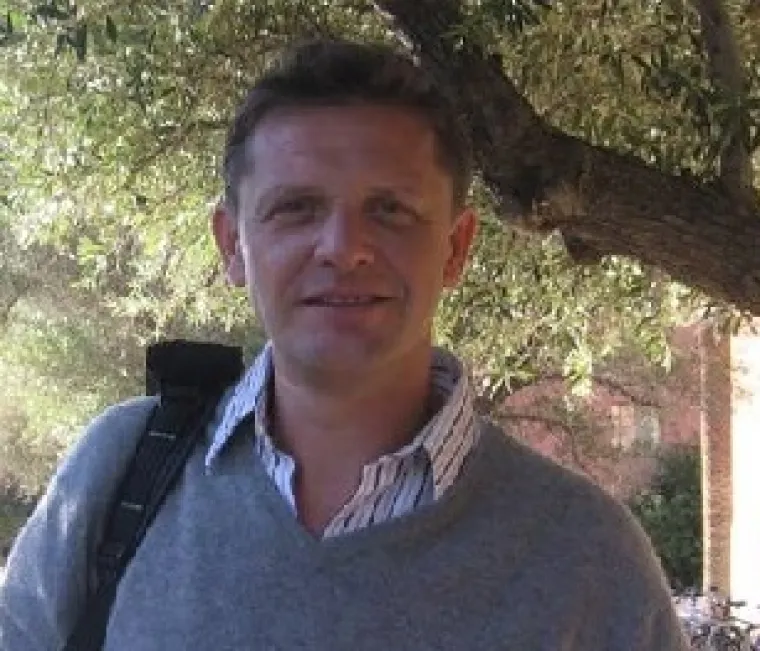
Dr. Manoj Hari is a Postdoctoral Research Associate in the Department of Geography at the University of Cambridge. He collaborates with Prof. Andrew Friend on projects such as the hybrid14 Dynamic Global Vegetation Model and landscape regeneration solutions addressing biodiversity and climate change. His work focuses on biosphere-atmosphere interactions, terrestrial carbon cycle dynamics, and Earth system modeling. Dr. Hari holds a PhD in Earth and Atmospheric Sciences from the National Institute of Technology Rourkela (India), an MSc in Geography from the University of Madras, and a BSc in Geography from Government Arts College Coimbatore. His research integrates remote sensing, climate modeling, and field observations to address critical environmental challenges. His recent articles explore topics such as aerosol impacts on ecosystems, tropical forest productivity, urbanization-induced seismicity, and monsoon precipitation trends. These studies highlight interdisciplinary approaches to understanding climate change feedback mechanisms and environmental policy implications. Dr. Hari contributes to the University’s research initiatives under themes like Vital Geographies and Climate and Environmental Dynamics. His work emphasizes translating scientific findings into actionable strategies for sustainable development and climate resilience.
Brandi Kiel Reese is an Associate Professor at the University of South Alabama and Senior Marine Scientist at the Dauphin Island Sea Lab , where she integrates microbial ecology , geomicrobiology , and systems biology to study aquatic and sediment biogeochemical cycling. Ph.D. in Marine Sciences, Texas A&M University (2011) Research focuses on microbial communities in marine subsurface , coastal hypoxia , and deep continental mines , using metatranscriptomics and high-throughput culturing Collaborates with the International Ocean Discovery Program for deep-sea sediment studies Her recent publications (2019-2014) span coastal hurricane impacts , subsurface microbial guilds , and extreme environment genomics . She mentors students including M.S. Sobol , M.M. Mullis , L.A. Zinke , and R.E. Weisend , and teaches courses in microbial ecology and geomicrobiology .
Derek Sawyer is a Professor and Associate Director for Administration in the Department of Earth Sciences at The Ohio State University, serving as Earth Sciences Transfer Credit Coordinator. He leads the Marine Geology and Geohazards Laboratory, focusing on sediment transport, natural hazards (submarine landslides, tsunamis), and subsurface stress analysis using advanced field methods and numerical modeling. His expertise spans marine geology, geophysics, and energy-related geoscience. Education: Ph.D. in Geology (2010, University of Texas at Austin), M.S. (2006, Penn State University), B.S. (2002, Eckerd College). Sawyer has extensive experience in marine expeditions, including roles with the International Ocean Discovery Program (IODP) as a shipboard scientist and Science Evaluation Panel member. He teaches courses on sedimentation, seismology, coastal geology, and energy-environmental systems. Research emphasizes submarine landslide mechanics, gas hydrate systems, and seafloor stability. Notable contributions include studies on Japan Trench paleoseismology, Gulf of Mexico sediment strength, and submarine hazard mitigation. Active in fieldwork using sonar mapping, subbottom profiling, and drone technology, his work bridges geology, geophysics, and environmental science. Collaborative projects include IODP expeditions and seismic interpretations of continental margin processes. His lab integrates field data with numerical models to address geohazard risks and sedimentary processes. Current investigations explore gas hydrate reservoirs, landslide-induced deformation, and subduction zone dynamics.
Anthony Ranchou-Peyruse is an Assistant Professor at the Université de Pau et des Pays de l'Adour, affiliated with the Institute of Analytical Sciences and Physico-Chemistry for Environment and Materials (IPREM). He holds the ANR Industrial Chair ORHyON (2020-2025) in partnership with ENGIE and co-leads the SEnGA laboratory with E2S-UPPA and Teréga. His research focuses on microbial communities in deep subsurface environments, particularly their roles in natural hydrogen reactivity, biocorrosion, and bioremediation. He combines anaerobic culturing, molecular biology, and interdisciplinary approaches with geology and analytical chemistry. Education highlights include a 2006 PhD in Microbiology and 2018 Habilitation to Supervise Research. He has led projects funded by ANR, ENGIE, and Teréga, focusing on hydrogen storage, microbial interactions, and CO₂ conversion. He has supervised 19 students and multiple postdocs/technicians, co-authoring over 50 publications. Key roles include Director of SPACE studies (2019-2023) and membership in national committees like GDR H2 Underground and the IODP France Office. Research interests span deep aquifers, extremophile microbiology, and georesources exploitation impacts. His recent work addresses hydrogen storage feasibility, microbial biofilm dynamics, and biogeochemical processes in subsurface systems.
Dr. Talib E. Butt is a Senior Lecturer at Northumbria University's School of the Built and Natural Environment, specializing in environmental risk assessment, sustainability, and climate change. His career spans over three decades across multiple sectors, including academia, government, and industry. He holds a PhD in environmental risk assessment and computer-aided modeling, an MSc in Sustainable Waste Management, and a BEng in Mechanical Engineering. His research focuses on holistic frameworks for sustainability, climate change adaptation, and environmental risk mitigation. Notable contributions include studies on renewable energy systems (e.g., solar railways, hydrogen extraction), waste-to-energy solutions, and food security under climate crises. He has secured over £200k in research funding, including a £463k project on green growth skills as a co-investigator. Dr. Butt is a peer reviewer for top-tier journals and conferences, an external adviser to universities like SEGi Malaysia and Punjab University, and a scientific committee member of SEEDS. He actively engages in enterprise activities, advising organizations like the Environment Agency and local councils. His awards include a nomination for Best Lecturer at the University of Exeter and a Fellowship at the Leeds Sustainability Institute. He supervises postgraduate students, guiding them toward impactful publications in environmental science and engineering.
Jason Sylvan serves as Associate Professor in the Department of Oceanography within the College of Geosciences at Texas A&M University since 2020, having previously held Assistant Professor positions at the same institution (2015-2020) and University of Southern California (2013-2015). His research focuses on geomicrobiology and biogeochemistry across diverse environments including hydrothermal vents, subseafloor crust, and the Gulf of Mexico continental shelf. Ph.D. in Biological Oceanography, Rutgers University (2008) M.Sc. in Biological Oceanography, Rutgers University (2004) B.Sc. in Biology, Brandeis University (1999) Sylvan's research spans three primary domains: hydrothermal vent systems and subseafloor biosphere processes, Gulf of Mexico microbial ecology (particularly regarding oil and dispersant interactions), and terrestrial hot spring environments. His work integrates microbiological, geochemical, and molecular approaches to understand microbial processes in extreme environments and their implications for global biogeochemical cycles. The research has significant relevance to understanding life in Earth's deep biosphere and microbial responses to environmental perturbations. His publication record demonstrates consistent output across marine geomicrobiology, with recent focus on phosphorus cycling in deep sediments, microbial metabolism in ocean crust, and oil-degrading microbial communities in the Gulf of Mexico. Sylvan's work frequently appears in high-impact journals including Nature, Frontiers in Microbiology, and Geochimica et Cosmochimica Acta. 2016 KAVLI Fellow 2016-2017 IODP Ocean Discovery Lecturer 2018 Dean's Distinguished Achievement Award: Innovative Educator Award Sylvan actively mentors graduate and undergraduate students, with numerous publications listing students as primary authors. His lab receives funding supporting research on deep biosphere processes and coastal microbial ecology. The Sylvan Geomicrobiology Lab at Texas A&M maintains active research programs in both deep-sea hydrothermal environments and Gulf of Mexico coastal systems, with particular expertise in microbial responses to environmental disturbances. The lab maintains strong collaborations with researchers across multiple institutions and participates in major oceanographic programs including IODP expeditions. Current research directions include continued investigation of deep biosphere processes, microbial responses to oil spills, and expanding work on terrestrial analog systems for understanding subseafloor life.
Peter A. Troch is Professor and Head of the Department of Hydrology and Atmospheric Sciences at the University of Arizona, holding the Agnese Nelms Haury Endowed Chair in Environment. He serves as Science Director of Biosphere 2. Research focuses on catchment hydrology, hillslope processes, and landscape evolution. Primary investigations develop experimental and modeling approaches to understand water partitioning, biogeochemical cycling, and landscape development. Current projects examine isotope tracers in hillslope systems, soil microbial dynamics, and weathering processes in model landscapes. Leadership roles include directing the Landscape Evolution Observatory at Biosphere 2, a large-scale experimental facility for studying ecohydrological processes. Research integrates field observations, controlled experiments, and numerical modeling across scales. Recent publications advance understanding of hydrologic transport processes, soil microbial responses to landscape changes, and carbon sequestration through weathering. Work consistently bridges hydrological theory with landscape evolution dynamics.
Jackie Goordial is an Assistant Professor in the Department of Ecosystem Science and Biodiversity at the University of Guelph. Her research focuses on environmental microbiology in extreme and rapidly changing environments, particularly permafrost soils, polar regions, and cold-arid ecosystems. She employs genomic sequencing, culturing, and in situ metabolic activity measurements to study microbial interactions and biogeochemical cycling. Academic History: BSc Honours, University of Toronto at Scarborough MSc, University of Toronto PhD, McGill University Research Interests: Her work investigates microbial survival strategies in extreme conditions, including permafrost thaw, Antarctic dry valleys, and deep-sea environments. She explores links between microscale processes and global biogeochemical cycles, with applications to astrobiology and climate change. Key themes include microbial community dynamics, extremophile physiology, and contamination prevention in low-biomass studies. Awards & Recognition: No specific awards listed, but her research has been highlighted in ISME Journal and Environmental Microbiology . Advising & Collaboration: Current opportunities exist for graduate students and postdoctoral fellows. Her lab emphasizes Indigenous partnerships in research stewardship, acknowledging traditional lands and collaborating with marginalized communities in polar science. Labs & Teams: Her lab integrates fieldwork, genomic technologies, and cross-disciplinary approaches to advance understanding of microbial life in Earth’s extreme environments and potential extraterrestrial analogs.
Professor Kliti Grice is a John Curtin Distinguished Professor at Curtin University, leading the WA Organic and Isotope Geochemistry Centre within the School of Earth and Planetary Sciences. Her work focuses on organic geochemistry, mass extinctions, and paleoenvironmental reconstruction using molecular fossils and stable isotopes. She has pioneered studies linking microbial activity to fossil preservation and mass extinctions, notably the end-Permian event. Grice holds over 30 national and international awards, including the 2021 ARC Laureate Fellowship and the 2018 ANZAAS Medal. Education: BSc(Hons) in Applied Chemistry (University of Kingston, 1991); PhD in Organic Geochemistry (University of Bristol, 1995). Research spans 30+ years, with over 300 publications. She mentors ~40 PhD students and leads international collaborations, including the Lord Howe Rise Project (IODP) and Chicxulub Impact Crater studies. Key achievements include identifying sulfide toxicity as a cause of mass extinctions and discovering microbial roles in fossil preservation. Her lab, WA-OIGC, integrates compound-specific isotope analysis (CSIA) with molecular and genomic techniques to explore Earth’s history. Grice chairs the Australian Academy of Science’s Diversity Committee and serves on global geochemical societies’ boards. Grice’s work bridges geology, microbiology, and environmental science, addressing global challenges like pollution and climate change. Her lab’s facilities include state-of-the-art organic geochemistry and isotope analysis tools, supporting interdisciplinary research from fossil preservation to oil/gas exploration.
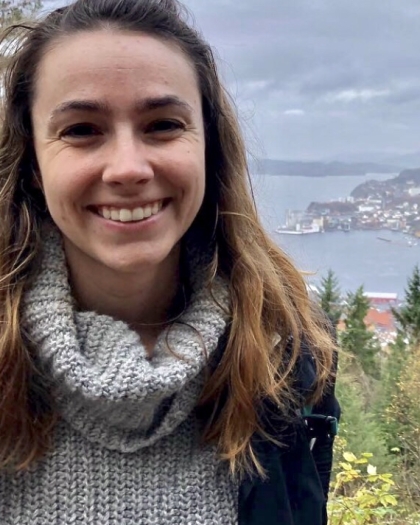
Hannah Rose Babel is an Assistant Professor in the Department of Earth Science at the University of Bergen, Norway, with office location at Allégaten 41, room 3A10d - 3102, and contactable via hannah.babel@uib.no. Her research focuses on Earth's largest biome—the deep subsurface biosphere—with emphasis on microbial processes in oceanic crust. Dr. Babel's work centers on geomicrobiology and deep biosphere dynamics , specifically investigating microbial colonization of fresh basalt glass in upper oceanic crust. Using subsurface observatories (SSOs) deployed at Surtsey volcano—a mid-ocean ridge analogue—she employs SEM microscopy and 16S rRNA meta-barcoding to study pioneer microbial communities. Her research reveals that fluid chemistry dominates over mineral substrate in shaping initial colonization patterns, challenging assumptions about mineral-driven microbial distribution in hydrothermally active zones. Her 2022-2024 publications demonstrate consistent focus on extreme-environment microbiology, spanning DNA/RNA stability at cryogenic temperatures, Arctic hydrothermal sulfate reduction, and basalt colonization mechanisms. These works highlight interdisciplinary integration of geochemistry, microbiology, and ocean crust studies to map life's limits in Earth's subseafloor. Supported by Research Council of Norway funding (project 288349), Dr. Babel actively disseminates findings through conferences including NORBIS and Microenergy Workshop. She collaborates extensively with international teams on deep biosphere projects, particularly through subsurface observatory deployments. Affiliated with the Geochemistry & Geobiology research group and Center for Deep Sea Research, she contributes to Bergen's leadership in marine geoscience through field-based investigations of microbial-rock interactions in nascent oceanic crust.
Dr. Cody S. Sheik is an Associate Professor in the Department of Biology at the University of Minnesota Duluth. His research integrates microbial ecology, biogeochemistry, and genomics to study freshwater and subsurface ecosystems. He leads interdisciplinary projects funded by NOAA, NSF, and the Army Corps of Engineers, focusing on climate impacts on cyanobacterial blooms, bioremediation, and deep biosphere processes. Research Focus: Sheik investigates microbial controls on elemental cycles (sulfur, iron, carbon, nitrogen) in environments ranging from Lake Superior to terrestrial subsurface fractures. His work emphasizes metagenomic approaches to uncover metabolic networks in low-energy systems, harmful algal bloom dynamics, and adaptive responses of microbial communities to environmental change. Publication Trends: Recent articles reveal a focus on cryptic biogeochemical cycles, subsurface microbiome diversity, and freshwater cyanobacterial ecology. His team employs cutting-edge omics tools to explore microbial interactions in extreme or anthropogenically impacted environments, with implications for ecosystem management and climate resilience. Grants & Projects: NOAA-funded study on synergistic climate impacts on Great Lakes harmful algal blooms (2022–2026) Peat-based chromium removal from industrial stormwater (2018–present) NSF-supported global survey of subsurface microbiomes (2024–2028) Army Corps collaboration on clay technology for algal bloom mitigation (2024–2025) Collaborations: Sheik works with the Great Lakes Observing System, international subsurface microbiology consortia, and environmental agencies, using facilities like the Lake Superior Ecological Observatory to advance long-term ecological monitoring.
Andrew Czaja is an Associate Professor in the Department of Geology at the University of Cincinnati, where he has been a faculty member since 2012, rising from Assistant Professor to his current position. His research bridges Earth's ancient history with the search for life beyond our planet, focusing on Precambrian paleobiology, astrobiology, and biogeochemistry. Dr. Czaja earned his B.S. in Environmental Science and Biology from the University of Connecticut in 1998, followed by a Ph.D. in Geology with a concentration in Paleobiology from the University of California, Los Angeles in 2006. His academic journey included postdoctoral research at the University of Wisconsin-Madison and lecturing positions at UCLA and California State University, Fullerton. His research investigates the early evolution of life on Earth, with particular focus on the Archean fossil record of South Africa and Australia, the geologic record of microbial metabolic evolution, and Mesoproterozoic terrestrial microbial ecosystems. He specializes in kerogen geochemistry and in situ morphological and geochemical analyses of Precambrian microfossils. His work has increasingly incorporated Mars exploration, particularly through his involvement with the Mars 2020 mission. Dr. Czaja's lab develops advanced analytical techniques for distinguishing true biosignatures from abiotic features in ancient rocks, knowledge directly applicable to the search for life on Mars. Analysis of Dr. Czaja's recent publications reveals a strong focus on Mars exploration and biosignature detection. His work with the Perseverance rover mission centers on analyzing Jezero Crater, an ancient river delta that may contain evidence of past life. His research combines field studies of ancient Earth environments with cutting-edge instrumentation to develop better methods for detecting potential biosignatures on Mars, particularly through the SHERLOC instrument that performs deep ultraviolet Raman spectroscopy. Dr. Czaja has received numerous awards and recognitions throughout his career, including: Lewis and Clark Field Scholar in Astrobiology (2010) Dissertation Year Fellowship from UCLA (2005) Eugene Waggoner Scholarship for Sustained Academic Achievement (2005) Graduate Research Fellowship from the National Science Foundation (2000-2003) Outstanding Undergraduate Researcher of the Year from the University of Connecticut (1999) Dr. Czaja has secured significant research funding, including multiple NASA and NSF grants totaling over $900,000 in active funding. His current projects include 'Life on an oxidizing planet: Microbial ecosystems of a Neoarchean carbonate platform' (NSF, $311,760), 'Searching for morphological and geochemical biosignatures on Mars to return to Earth' (NASA, $91,027), and participation in the Mars 2020 mission as part of the Participating Scientist Program ($439,000). His work often involves interdisciplinary collaborations with researchers across multiple institutions. Dr. Czaja's laboratory focuses on advanced analytical techniques for studying ancient microfossils and potential biosignatures, including Raman spectroscopy, confocal laser scanning microscopy, and geochemical analyses. His research group works at the intersection of geology, biology, and planetary science, developing methods to distinguish true biosignatures from abiotic features in ancient rocks - knowledge that directly informs the search for life on Mars. His team also conducts fieldwork in Precambrian rock formations in South Africa and Australia that serve as analogs for potential Martian environments.
Sindy Kluge is a researcher at the Helmholtz-Zentrum Dresden-Rossendorf (HZDR), affiliated with the "Deep Biosphere" and "Radiation Research on Biological Systems" departments. Her work focuses on microbial ecology in subsurface environments and radiation effects on biological systems. Research Areas: Radiation biology, environmental microbiology, biogeochemistry. Institution: Helmholtz-Zentrum Dresden-Rossendorf (HZDR), Germany. Contact: s.kluge@hzdr.de | +49 351 260 3194
Tobias Stacke is a Scientist in the Department of Climate Dynamics at the Max Planck Institute for Meteorology (MPI-M) in Hamburg, Germany, working within the Climate-Biosphere Interactions group. His research focuses on Earth system modeling, particularly land surface hydrology in Arctic regions, including permafrost, soil hydrology, and wetlands. Research Interests: Dr. Stacke specializes in simulating the Earth's hydrological cycle, with emphasis on Arctic processes and their atmospheric interactions. He contributes to the development of the ICON-LAND model and the creation of sustainable, high-resolution model infrastructure for Arctic landscape representation. Publication Trends: His recent work (2021–2025) centers on permafrost dynamics, global hydrological modeling, climate feedbacks, and Earth system model evaluation. His publications frequently appear in high-impact journals such as Nature Communications , Geophysical Research Letters , and Geoscientific Model Development , often involving large international collaborations and model intercomparisons (e.g., CMIP, ISIMIP). Scientific Roles: Research Scientist, Scientific Programmer, Model Developer Model Development: HydroPy, ICON-LAND, ESMValTool contributions Advising and Grants: There is no public information indicating that Tobias Stacke has supervised students. His research has been supported through major projects such as CRESCENDO, MiKlip, Q-Arctic, and CMIP6 coordination activities at MPI-M, indicating involvement in significant funded initiatives, though specific grants are not listed. Labs and Teams: He is embedded in the Climate-Biosphere Interactions group at the Max Planck Institute for Meteorology, contributing to large collaborative modeling efforts including the development and evaluation of Earth system models. He has also been involved with the IMPRS-ESM (International Max Planck Research School for Earth System Modeling), suggesting engagement with academic training and research coordination.
Dr. Johannes Raff is Head of the Terrestrial Microbiology Group at the Institute of Resource Ecology, Helmholtz-Zentrum Dresden-Rossendorf (HZDR) since 2025. He serves as a consultant/expert for the International Atomic Energy Agency (IAEA) since 2021 and has held guest lecturer positions at University of Granada (since 2016) and Technische Universität Dresden (since 2015). PhD in Biology (2002), University of Leipzig Diploma in Biology (1996), University of Bayreuth His research focuses on molecular mechanisms of radionuclide-microbe interactions, uranium speciation in contaminated waters, and biotechnological applications of S-layer proteins for metal recovery and biosensing. Key areas include: Actinide speciation and bioavailability Fungal/bacterial metal binding mechanisms Development of S-layer-based biosensors Phytoremediation of radioactive contaminants Microbial processes in nuclear waste repositories Recent publications emphasize: Eu(III)/U(VI) uptake in plants/fungi Uranium-diatom-bacteria interactions IAEA-relevant bioremediation strategies Microspectroscopic characterization of metal-microbe systems Projects include RENA (uranium remediation), BioVeStRa (radiation protection), and S-Sieve (metal recovery). He has contributed to advanced methodologies for: Impedance biochips for microbial diagnostics Uranium biosorption using biocers Nanoparticle synthesis via S-layer proteins Actinide speciation modeling