Denyce Wicht is a Professor in the Department of Chemistry & Biochemistry at Suffolk University , specializing in cleaving methyl group carbon bonds to high-valent main group elements (Si, S) and their environmental implications. Education : PhD in Chemistry from Dartmouth College; BA (Honors) in Chemistry with a minor in American Literature from the University of Vermont. Her research focuses on organosilicon and organosulfur chemistry , particularly the mechanistic processes of Si–CH3 and S–CH3 bond cleavage , with applications in environmental pollutant remediation and understanding microbial sulfur metabolism . She collaborates with labs at MIT and Auburn University to explore catalytic systems for breaking these bonds under physiological conditions. Recent publications highlight her work on flavin-dependent monooxygenases, structural analysis of sulfur assimilation enzymes, and green chemistry applications for pollutant degradation. Her studies span C–S bond cleavage mechanisms , terrestrial sulfur cycling , and reduction of anthropogenic environmental impacts . Scientific Awards : NSF RUI grant (2018-2021), NASA grant (2019-2021).
Oliver Bühler serves as a Teaching Associate Professor in the Department of Geosciences and Natural Resource Management at the Forest and Landscape College, University of Copenhagen. His research centers on urban tree physiology with emphasis on water balance challenges and establishment methodologies for roadside trees in demanding urban environments. His academic credentials include: MSc in Horticulture from LIFE (University of Copenhagen) Dipl.Ing. in Horticulture from University of Applied Sciences Berlin Professional nursery gardener certification Dr. Bühler's research program integrates urban microclimate studies with practical arboricultural solutions , investigating pest dispersion patterns, irrigation efficacy, and climate-resilient species selection. His work on green infrastructure's role in mitigating Copenhagen's urban heat island demonstrates applied environmental science addressing critical climate adaptation challenges in European cities. Analysis of his 2019-2025 publications reveals consistent focus on translating research into municipal practices—from tree valuation standards to construction impact mitigation—showcasing his commitment to evidence-based urban forestry solutions that balance ecological function with urban development pressures. He directs the Urban Tree Arboretum as a living laboratory while teaching the 'Plants and the urban climate' course for Landscape Engineers, leveraging his nursery background to bridge theoretical knowledge with hands-on tree management expertise for next-generation urban planners.
Brian D'Urso is an Associate Professor in the Department of Physics at Montana State University within the College of Letters & Science. His research focuses on precision measurements and quantum phenomena using levitated optomechanics. He leads the D'Urso Lab, which is part of both the Optical Technology Center (OpTec) and the Spectrum Lab at MSU. Dr. D'Urso received his B.S. in Physics from the California Institute of Technology in 1998 and his Ph.D. in Physics from Harvard University in 2003. His educational background provided the foundation for his current research in quantum optics and precision measurement systems. His primary research interests include levitated optomechanics, quantum optics, precision measurements, and atomic physics. The D'Urso Lab utilizes microparticles and nanoparticles levitated in magnetic, optical, and Paul traps under vacuum to make sensitive measurements with controlled coupling to the environment. Two specific research goals include fundamental tests of quantum mechanics and quantum gravity, and developing a new approach to precisely measuring the Newtonian gravitational constant G. Analysis of Dr. D'Urso's recent publications reveals a strong focus on levitated optomechanics systems, particularly using magneto-gravitational traps. His work spans both fundamental physics questions and practical instrumentation development. Key themes include particle trapping techniques, precision measurement methodologies, quantum measurement limits, and applications in gravitational physics. His research group has made significant contributions to understanding microsphere interactions, feedback cooling techniques, and accelerometer development using levitated particles. National Science Foundation (NSF) - Collaborative Research: Measuring G with a Levitated Test Mass Opto-Atomics Corporation (OPTATO) - Nanoparticle On-demand Loading System (Phase II) Montana State University II-VI Foundation Block-Gift Program Montana NASA EPSCoR program Dr. D'Urso actively mentors graduate and undergraduate students in his research group. Current graduate students include Cody Jessup, Connor Murphy, and Dakota Chapman. His former students have gone on to positions at institutions including AFRL (Albuquerque, NM), AdvR (Bozeman, MT), Green Bank Observatory (Green Bank, WV), and Kromek (Zelienople, PA). He also supports students applying for prestigious NSF Graduate Research Fellowships. The D'Urso Lab maintains strong connections with the broader scientific community through service activities including serving as a reviewer for journals such as American Journal of Physics, Nature Communications, and The Physics Teacher, as well as participating in NSF proposal review panels and conducting external tenure reviews for other institutions.
Tomás García-Cayuela is a full-time professor and researcher at Tecnológico de Monterrey's School of Engineering and Sciences, Campus Guadalajara, where he has been a faculty member since 2018. He works within the Biotechnology Food Sciences and Technologies department, focusing on food science, biotechnology, and sustainable processing methods. His educational background includes a Bachelor of Science and Technology of Foods from Universidad de Granada, Spain, and a PhD in Food Science and Technology from Universidad Autónoma de Madrid, Spain. He also completed research stays on Microbial Physiology and Biotechnology at UC Davis and Utah State University in the USA. García-Cayuela's research primarily centers on functional foods, nutriomics, and sustainable food processing technologies. His work explores fermented foods with emphasis on probiotic strains and prebiotic ingredients, as well as the revalorization of food waste and byproducts into functional bioactive compounds using innovative technologies. His extensive publication record demonstrates expertise in food fermentation, waste valorization, probiotics/prebiotics, and emerging food processing technologies that align with circular economy principles. His recent publications show a strong trend toward sustainable food systems, with particular focus on food waste valorization, probiotic-enriched food development, and circular economy applications in food processing. Many papers address environmental sustainability through bioremediation, life cycle assessment, and waste-to-value conversion strategies, while others focus on functional food development with health-promoting properties. Mexican Researcher Certification - Level 1 Member of the National Research System level 1 As an academic advisor, García-Cayuela has supervised at least 13 theses across various levels. He actively collaborates with scientific associations, journals, and international conferences as a reviewer. His research activities include developing prototypes of functional dairy products with probiotic, prebiotic, and antioxidant potential from cheese whey, and valorizing milk surplus for functional dairy products with potential application as auxiliary treatment for type 2 diabetes. His work spans multiple UN Sustainable Development Goals including Zero Hunger, Good Health and Well-being, and Responsible Consumption and Production. García-Cayuela works within the Functional Foods and Nutriomics research group at Tecnológico de Monterrey, with strategic focus on food fermentations and emerging technologies. His research integrates food science, biotechnology, and sustainability principles to develop innovative food solutions that address contemporary challenges in nutrition, health, and environmental sustainability.
Kevin de Oliveira is a Researcher at the International Iberian Nanotechnology Laboratory (INL), where he works in the Salomé Research Group. He has been employed at INL since 2019, initially as a Research Fellow and currently as a Researcher since July 2023. His work focuses on nanofabrication and coatings for optoelectronic applications. Education: M.Sc. in Micro and Nanotechnologies Engineering, Faculty of Sciences and Technology, Nova University of Lisbon (2019) Kevin's primary research areas include nanofabrication, coatings technology, and photovoltaics. Specifically, he develops passivation layers for solar cells and alternative coatings to replace toxic chromium. His work bridges materials science and engineering for sustainable energy applications. His recent publications (2021) focus on silicon oxide (SiOx) layers for thin-film solar cells, addressing interface passivation and substrate patterning in CIGS solar cells. The research emphasizes industrial viability and optimization of ultrathin structures. Kevin has contributed to several research projects at INL, including the H2020-funded ARCIGS-M (2019-2020), the PT2020-funded SafeChrome (2020-2023), and the current PRR Project R2UTechnologies. These projects focus on advancing solar cell technology and developing environmentally friendly coatings. He is part of the NOA (Nanofabrication for Optoelectronic Applications) group and the Salomé Research Group at INL, where he utilizes microfabrication and characterization techniques.
Dr. Alexander S. Clanachan is a Professor in the Department of Pharmacology at the University of Alberta, Faculty of Medicine & Dentistry, specializing in pharmacotherapy for myocardial ischemia-reperfusion injury. His work targets novel drug mechanisms to improve cardiac recovery in stressed hearts (e.g., diabetic, aged, or delayed-reperfusion scenarios). His educational background includes: BSc Hons Pharmacology, University of Glasgow, 1972 PhD Pharmacology/Anesthesia, University of Glasgow, 1976 Research Interests: Dr. Clanachan investigates: Recovery of left ventricular mechanical/metabolic function post-ischemia Na + /Ca 2+ homeostasis regulation Infarct size limitation pathways Cardioprotection via adenosine receptors and late I Na inhibition His lab employs model systems to quantify drug effects on cardiac efficiency, energy substrate metabolism, calcium overload, and signaling (GSK-3β, AMPK, p38MAPK). Analysis of his 15 recent publications (2011-2016) reveals consistent focus on metabolic-ionic crosstalk in reperfusion injury, particularly in diabetic hearts and anesthetic interactions. Key trends include adenosine-mediated glycogen regulation, late I Na inhibition for calcium control, and ROS-dependent cardioprotection mechanisms. Scientific Awards: No awards were mentioned in the source material. Advising and Grants: Dr. Clanachan mentors Research Associate Dr. Phing How Lou and teaches Pharmacology courses (PMCOL415, PMCOL337, PMCOL300*, PMCOL515*). Grant details were unspecified, but his collaborative projects span anesthesiology, diabetes, and cardiac metabolism. Laboratory: His lab (Medical Sciences Building, Room 9-43) conducts isolated heart perfusion studies, metabolic profiling, and molecular analysis of cardioprotective pathways.
Gary Lopaschuk serves as an Adjunct Professor in the Department of Pharmacology at the University of Alberta, where he maintains an active research program focused on cardiac energy metabolism. His work bridges pharmacological interventions with metabolic regulation in heart disease, diabetes, and neonatal cardiac development. His educational background includes: PhD in Pharmacology and Toxicology from the University of British Columbia (1983) Post-Doctoral Fellowship at The Milton S. Hershey Medical Centre Department of Physiology (1983-1985) Dr. Lopaschuk's research centers on the molecular regulation of cardiac fuel utilization, particularly the pathological dominance of fatty acids in diabetic hearts and post-infarction conditions. His laboratory has defined critical mechanisms behind the fetal-to-neonatal metabolic switch and developed pharmacological strategies to optimize cardiac energy metabolism. Current investigations focus on enzyme regulation in diabetic hearts and mitochondrial protection following ischemic injury. Analysis of his 2016-2017 publications reveals a cohesive research trajectory emphasizing metabolic modulators for heart disease, with recurring themes in fatty acid oxidation regulation, mitochondrial efficiency, and post-translational modifications. His work spans basic molecular mechanisms to clinical applications, particularly in diabetes-related cardiac complications and ischemic injury protection. Professional recognition includes: AHFMR Scientist fellowship Dr. Lopaschuk's laboratory at the Heritage Medical Research Centre (4-23 Heritage Medical Research Centre) generates sustained research output through collaborations with national and international teams. His work has contributed to major scientific statements including the American Heart Association's guidelines on cardiac metabolism assessment. Current projects focus on translating metabolic insights into therapeutic approaches for diabetic cardiomyopathy and neonatal cardiac surgery protection. His research program operates within the University of Alberta's cardiovascular research ecosystem, utilizing molecular, biochemical, and physiological methodologies to address cardiac metabolism questions with direct clinical relevance.
Soumendra Basu is a Professor of Mechanical Engineering and Associate Division Head of Materials Science & Engineering at Boston University's College of Engineering, with affiliations to the Photonics Center and Institute for Sustainable Energy. He holds a PhD in Materials Science from MIT (1989). His research focuses on high-temperature materials for energy systems, including solid oxide fuel cells, environmental barrier coatings, and photonic materials. He has authored over 100 publications and received awards like the Dean’s Catalyst Award (2025) and TECO Silver Medal (2014). Education: PhD in Materials Science, MIT (1989) Research Interests: - Solid Oxide Fuel Cell Electrochemistry and Durability - Thermal/Electrochemical Barrier Coatings - Wide Band-Gap Semiconductor Optics - High-Temperature Material Degradation Mechanisms Awards & Roles: - Chair, TMS Energy Conversion & Storage Committee (2020) - Subject Editor, JOM Journal (2018–present) - Member, The Minerals, Metals, and Materials Society (2017) Grants & Collaborations: - NSF-funded studies on mullite coatings and plasma-sprayed TBCs - DOE projects on ceramic corrosion protection - Collaborations with BU’s Photonics Center and MIT researchers Labs & Teams: - Materials Characterization Lab (focused on SEM/TEM analysis) - Energy Materials Group (developing SOFC and solar-grade silicon processes) - Interface Science Team (studying film/substrate adhesion)
Umesh K. Mishra serves as the Dean of The Robert Mehrabian College of Engineering and holds the Richard A. Auhll Professorship in the Department of Electrical and Computer Engineering at the University of California, Santa Barbara. He is a member of the National Academy of Engineering and directs both the Solid State Lighting and Energy Electronics Center and the ONR MURI Center on wide bandgap semiconductor based electronics. His educational background includes: PhD in Electrical Engineering from Cornell University MS in Electrical Engineering from Lehigh University BTech in Electrical Engineering from Indian Institutes of Technology Kanpur Mishra's research program centers on wide bandgap semiconductors, particularly gallium nitride (GaN) technology. His work spans GaN electronics, opto-electronics, materials science, oxide-based electronics, non-stoichiometric semiconductors, vacuum microelectronics, and InP & GaAs based electronics. His group has pioneered N-polar GaN technology, developing transistors demonstrating output powers of 6.7 W/mm at 94 GHz and 20.7 W/mm at 4 GHz. The research bridges fundamental materials science with practical applications in high-frequency communications and power electronics, utilizing metal-organic chemical vapor deposition (MOCVD) for high-quality GaN film growth. His recent publications reveal continued innovation across multiple fronts of GaN technology, with significant work on N-polar devices, advanced transistor designs, thermal management solutions using diamond cooling, and novel characterization methods. These publications demonstrate the group's leadership in both materials science and device engineering aspects of wide bandgap semiconductors. Mishra has received numerous prestigious honors: ISI Highly Cited Researcher Welker Award for Development of Gallium Nitride High Power Electronics ISCS Quantum Device Award IEEE David Sarnoff Award for Development of Gallium Nitride Electronics IEEE Jun-ichi Nishizawa Medal Elected Foreign Fellow, Indian National Academy of Engineering As an advisor, Mishra leads a substantial research group with numerous PhD students and professional researchers including Dr. Stacia Keller (Principal Development Engineer), Dr. Karine Hestroffer (Assistant Project Scientist), and Dr. Xiang Liu (Assistant Project Scientist). His group has secured significant research funding from organizations including the Office of Naval Research and likely other federal agencies and industry partners given the applied nature of their work. The laboratory facilities are located in the Engineering Science Building at UCSB, supporting both fundamental materials research and device fabrication. The Mishra Research Group operates within the Solid State Lighting and Energy Electronics Center, specializing in metal-organic chemical vapor deposition for growing high-quality GaN films and developing advanced transistor structures. Their work has made significant contributions to both academic knowledge and commercial semiconductor technology, with applications spanning high-frequency communications, power electronics, and optoelectronic devices.
Deepak Kumar is an Assistant Professor in the Department of Chemical Engineering at the State University of New York College of Environmental Science and Forestry (SUNY ESF). He also holds adjunct roles at the University of Illinois at Urbana-Champaign. His research focuses on advancing sustainable bioprocessing technologies, particularly in converting agricultural and industrial waste into biofuels, bioplastics, and high-value bioproducts. Key areas include bio-based circular economies, fermentation optimization, and techno-economic analysis (TEA) integrated with life cycle assessment (LCA). He earned his Ph.D. in Biological and Ecological Engineering from Oregon State University, followed by postdoctoral work at the University of Illinois. His educational background also includes an M.S. from IIT Kharagpur and a B.Tech. from Punjab Agricultural University. His research interests span novel fermentation technologies, enzyme application, biorefinery design, and waste valorization strategies. Recent work emphasizes converting agro-food waste (e.g., carrot rejects, corn germ meal) and forest residues into sustainable products. His lab, the Sustainable Bioprocessing and Bioproducts Lab (SBBL) , develops integrated biorefinery models and innovative filtration systems for PFAS removal. Publications highlight advancements in PHA production from waste, biofuel coproduction, and economic feasibility studies of lignocellulosic biomass utilization. His work bridges experimental research with computational modeling to optimize process economics and environmental impact.
Philipp Frankel is a Senior Lecturer in Metallurgy and Irradiation Damage at the University of Manchester's Department of Materials. He leads the Manchester Zirconium Group, a global leader in zirconium alloy research, and is Principal Investigator (PI) of the £9m EPSRC MIDAS Programme Grant. His research focuses on understanding materials degradation in nuclear reactors, particularly zirconium alloys' microstructural evolution under irradiation and corrosion. He is affiliated with the Henry Royce Institute's Nuclear Theme and collaborates with international consortia and industrial partners. Frankel holds an Engineering Doctorate (EngD) from the University of Birmingham, completed in collaboration with Rolls-Royce Plc, where he studied residual stresses in aerospace materials. His career includes postdoctoral roles on the MUZIC consortium and an EPSRC Fellowship investigating irradiation effects in zirconium alloys. Research interests include corrosion mechanisms, hydride behavior in zirconium alloys, irradiation-induced microstructural changes, and advanced characterization techniques such as synchrotron X-ray diffraction, neutron scattering, and 3D imaging. His work supports safer and more efficient nuclear energy production through fundamental materials science insights. Frankel oversees the Materials Performance Centre (MPC), a collaborative project with 40+ researchers. He advises numerous PhD students and has supervised over 15 graduate projects. His research also explores friction welding in aeroengine materials and surface treatments like laser shock peening. He actively promotes interdisciplinary and industrial partnerships, utilizing facilities like the Dalton Cumbrian Facility, Diamond Light Source, and National Nuclear Users Facility. His contributions align with UN Sustainable Development Goals related to affordable and clean energy and industry innovation.
Richard Gil is a Researcher at the Université Paris-Saclay, affiliated with the Institut de Chimie Moléculaire et des Matériaux d'Orsay (ICMMO) within the LCM research group. His work focuses on catalytic methodologies , particularly utilizing earth-abundant transition metals (e.g., Fe, Co, Sc) for sustainable organic transformations. Key areas include C-C bond formation (Suzuki-Miyaura cross-coupling), hydrofunctionalization of alkenes (hydroamination, hydroalkoxylation), and enantioselective reactions. Research interests span green chemistry principles , emphasizing atom-economical reactions and reducing reliance on precious metals. He has contributed to advancements in transition metal catalysis , including mechanistic studies and catalyst design for C-N, C-O, and C-P bond formation. His publications (2013–2024) highlight innovations in iron-based catalysts for cross-coupling reactions and substrate-selective cyclizations. Work also involves functionalization of chitosan derivatives for asymmetric reactions. Collaborations include teams at the ICMMO and other institutions, with a focus on translating catalytic systems into practical synthetic methodologies. No scientific awards are explicitly mentioned. His role combines research with teaching responsibilities as an Enseignant-Chercheur. Lab affiliations include the LCM team, focusing on molecular chemistry and material applications.
Mark Allen Davis holds dual roles as Associate Research Scientist in Conservation Biology at the Illinois Natural History Survey and Research Assistant Professor in Natural Resources and Environmental Sciences at the University of Illinois Urbana-Champaign. His primary affiliation is with the Department of Natural Resources and Environmental Sciences. Research Interests: Dr. Davis specializes in conservation biology with a focus on environmental DNA (eDNA) applications, genetic analysis of endangered species, and biodiversity management. His work addresses Pleistocene ecological dynamics, anthropogenic fragmentation impacts, and hybridization patterns in vertebrates. He also contributes to policy frameworks for endangered species recovery assessments. Publications: His recent work includes groundbreaking studies on freshwater mussel conservation via eDNA metabarcoding, reptile DNA persistence in terrestrial environments, and genetic analysis of Illinois' mottled sculpin. These studies utilize cutting-edge molecular techniques to inform conservation strategies. Collaborations: Active in interdisciplinary research networks, he collaborates on projects involving wildlife genetics, ecosystem monitoring, and policy development. His datasets include eDNA studies of fish communities and plecoptera phylogenomics.
Andreas Prester is a researcher affiliated with the University of Hamburg's Medical Faculty, specializing in structural biology and enzymology. His work focuses on understanding β-lactamase enzymes and developing inhibitors to combat antibiotic resistance. Utilizing cutting-edge techniques like time-resolved crystallography and serial synchrotron crystallography, he investigates enzyme catalytic mechanisms and drug interactions. Recent contributions include repurposing proteasome inhibitors for β-lactamase inhibition and advancing cryo-trapping methods for protein dynamics studies. His research bridges biochemistry, pharmacology, and structural biology, with a focus on antibiotic development and molecular mechanisms of enzymatic action. Prester has collaborated on instrumentation advancements like the Spitrobot freezer and HARE chips, enhancing high-throughput crystallographic studies.
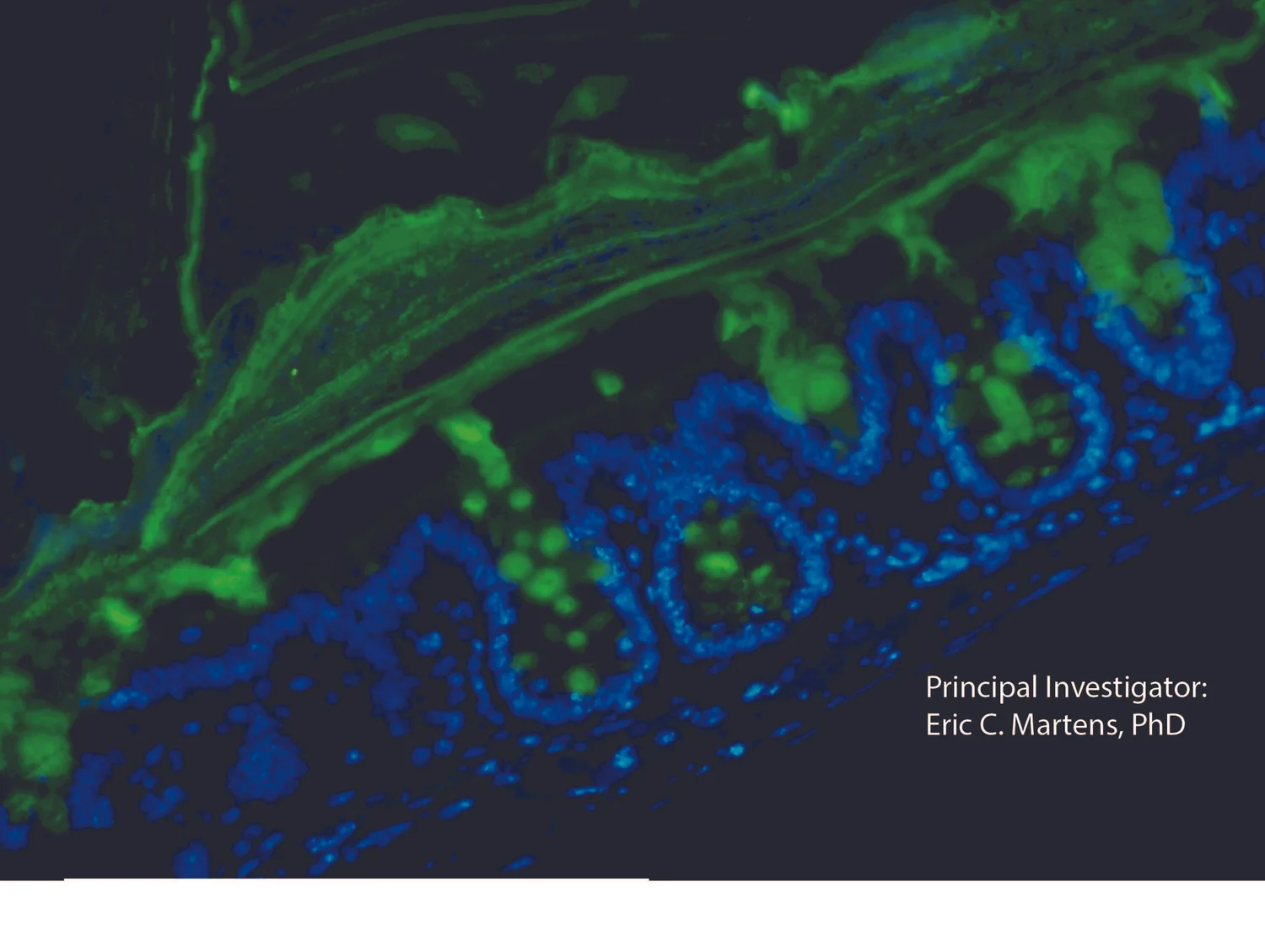
Eric Martens is a Professor in the Department of Microbiology & Immunology at the University of Michigan Medical School. He is also a member of the Rogel Cancer Center and the MM Microbiology and Immunology Center. His work focuses on understanding how human gut bacteria metabolize complex carbohydrates and other nutrients, particularly their roles in health and diseases like inflammatory bowel disease (IBD), colorectal cancer, and enteric infections. Education: BA in Microbiology from Washington University (1993–1997) PhD in Microbiology from University of Wisconsin-Madison (1998–2005) Research Interests: Metabolism of dietary fibers and mucus glycans by gut microbes Genomic evolution and lateral gene transfer in gut bacteria Microbiota-immune interactions and their impact on disease Development of diet-based interventions to modulate gut microbiota Role of bacteriophages in microbiota dynamics Recent Research Trends: Focus on how gut microbiota degrade mucus glycans and their link to IBD Exploration of carbohydrate utilization mechanisms in Bacteroides species Investigation of diet-microbiota interactions in disease contexts like Parkinson's and graft-versus-host disease Grants & Funding: Funded by NIH, HHMI, and foundations like the W. Garfield Weston Foundation Projects include microbiota-based therapies for IBD and immune modulation Laboratory: His Martens Lab is dedicated to translating microbiome research into clinical applications, with a focus on dietary interventions and microbial community engineering.