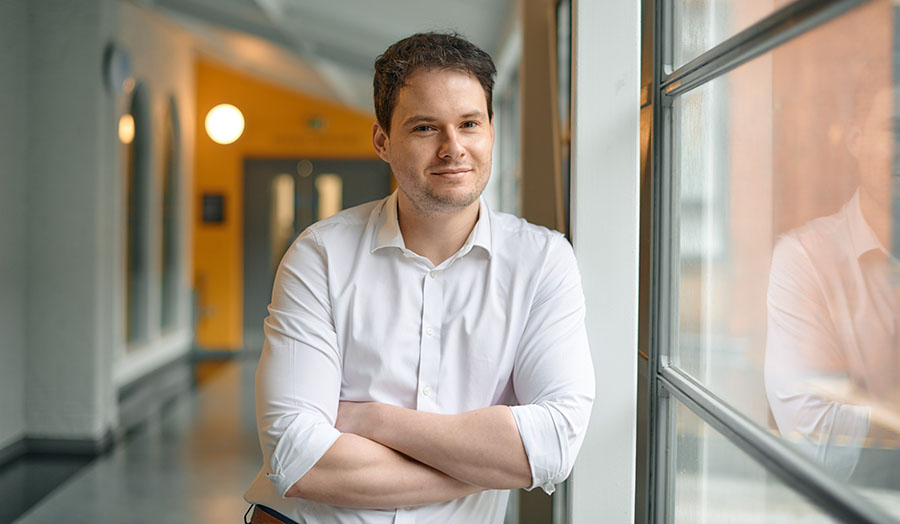
Dr. Han Du is an Associate Professor in the Department of Psychology at the University of California, Los Angeles (UCLA). He holds a PhD from the University of Notre Dame and leads the Du Research Lab. His methodological expertise includes Bayesian statistics, longitudinal data analysis, structural equation modeling, meta-analysis techniques, and machine learning applications in psychological research. Dr. Du's substantive research applies quantitative methods to developmental, clinical, cognitive, educational, and health psychology. His recent publications focus on transgender adolescent stress assessment, LGBTQ+ mental health in military contexts, social network interventions for HIV prevention, and minority stress theory applications. He teaches advanced statistical methods and supervises graduate students in quantitative psychology.
Mark S. Mizruchi serves as the Robert Cooley Angell Collegiate Professor of Sociology, Barger Family Professor of Organizational Studies, and Professor of Management and Organizations at the University of Michigan's College of Literature, Science, and the Arts. His distinguished career spans over three decades since joining Michigan as a full Professor in 1991 after rising to Associate Professor at Columbia University. Robert Cooley Angell Collegiate Professor of Sociology Barger Family Professor of Organizational Studies Professor of Management and Organizations Former Director of Organizational Studies Program (2012-2021) His research centers on the economic and political behavior of large American corporations through social network analysis, with current projects examining the changing nature of the American corporate elite, globalization of American banking, and corporate lobbying determinants. Mizruchi's work bridges sociology, organizational studies, and political economy, revealing how corporate networks shape American political life and economic structures. His publications include four influential books, with The Fracturing of the American Corporate Elite (2013) winning both the George R. Terry Award and the Distinguished Contribution to Scholarship Award. His research demonstrates significant trends toward corporate elite fragmentation and its political consequences, particularly the decline of corporate moderation in American politics. George R. Terry Award from Academy of Management Distinguished Contribution Award from ASA Political Sociology Section Guggenheim Fellowship (2011) National Science Foundation Presidential Young Investigator Award Center for Advanced Study in Behavioral Sciences Fellowship Two University of Michigan teaching excellence awards Mizruchi has advised numerous students through the Organizational Studies Program, securing Barger Leadership Institute funding for student research on corporate elites. His extensive service includes Associate Editorship at Administrative Science Quarterly , Consulting Editorship at the American Journal of Sociology , and reviewing for over 50 scholarly journals and granting agencies. He maintains active research laboratories examining corporate networks and their societal implications, with ongoing projects investigating contemporary corporate political behavior in polarized America.
Benjamin Druss is a Professor and Rosalynn Carter Chair in Mental Health at Emory University’s Rollins School of Public Health, Department of Health Policy and Management. He is a psychiatrist integrating mental health, physical health, and public health. His research focuses on improving care access/outcomes for populations with serious mental illnesses and medical comorbidities. He serves on JAMA Psychiatry’s editorial board and previously on NIMH’s National Advisory Council. Education: MD, New York University MPH, Yale University Research Interests: Health policy for mental health systems Social determinants of mental health Psychosis and comorbidity mechanisms Healthcare access disparities Articles Trends: Recent work examines opioid use patterns, mental health policy impacts, and neighborhood effects on psychiatric outcomes. Over 15 years of publications consistently address disparities in mental health care access and systemic solutions. Awards: APA Health Services Research Senior Scholar Award Carl Taube Award for Lifetime Contribution NAMI Exemplary Psychiatrist Award Advising/Grants: Leads research on mental health workforce resilience and Medicaid policy. Courses taught include mental health/medical policy, public mental health case studies, and dissertation guidance.
Allison McFall is an Assistant Research Professor in the Department of Epidemiology at Johns Hopkins University Bloomberg School of Public Health. Her work focuses on HIV epidemiology among key populations in India, particularly people who inject drugs (PWID) and men who have sex with men (MSM). Primary Division: Infectious Disease Epidemiology Active Since: 2013 Her research emphasizes optimization of HIV prevention, care, and treatment systems. Key methodologies include: Respondent-driven sampling Monitoring and evaluation of service delivery Electronic database design for epidemiological research Recent publications analyze: Antiretroviral therapy outcomes in PWID and MSM HCV treatment adherence support HIV self-testing technologies Geospatial targeting for health services McFall's work spans 59 research outputs with active collaborations across India on viral hepatitis-HIV coinfections and integrated care models.
Dr. Mark Thompson is a Senior Lecturer in Psychology and Researcher of Sport Psychology at London Metropolitan University's School of Social Sciences and Professions. He holds a PhD from the University of Hull and is a Fellow of the Higher Education Academy (FHEA). His academic work bridges sport psychology, healthcare rehabilitation, and youth athlete development. Dr. Thompson's education includes a PhD in Psychology from the University of Hull. His research focuses on emotional processes in elite athletes, doping propensity in youth sports, and post-COVID-19 patient rehabilitation. Notable projects include NHS-funded studies on telerehabilitation and collaborations with the International Olympic Committee and World Anti-Doping Agency. Research Interests: Psychophysiological responses to stress in sports Emotional regulation strategies among athletes Anti-doping education and youth athlete behavior Telehealth applications in post-hospitalization recovery His publications emphasize qualitative methodologies, exploring topics like athlete performance under stress, doping prevention programs, and healthcare professional perspectives on self-management approaches. Awards: Fellow of the Higher Education Academy (FHEA). Dr. Thompson has delivered presentations at major conferences such as the American College of Sports Medicine and contributed to media discussions on doping in elite sport via LoveSport Radio. His teaching spans foundational psychology to advanced modules like cognition and behavior, often serving as module leader.
Terje Andreas Eikemo is a Professor at the Department of Sociology and Political Science , Norwegian University of Science and Technology (NTNU) , and Head of the CHAIN research center . His work focuses on the intersection of social inequality , public health , and global policy , emphasizing how socioeconomic factors like education , income , and welfare systems influence mortality , chronic diseases , and mental health . He combines theories from sociology , epidemiology , and medicine to address health disparities across diverse contexts, including pandemics , climate change , and migration . 2009: Prize for Young Researchers in the Humanities 2010: SINTEF Prize for Outstanding Research 2014: NTNU Star Program Eikemo has published extensively in top journals like The Lancet and BMJ Open , with research themes spanning social determinants of health , policy interventions , and global health equity . His work includes GBD studies , European Social Survey analyses , and refugee health assessments. He serves as Editor-in-Chief of the Scandinavian Journal of Public Health and collaborates with international bodies like WHO and UNESCO .
Anne Berit C. Samuelsen serves as Associate Professor at the Department of Pharmacy, University of Oslo, where she also holds the position of Head of Education. Her academic foundation includes a Cand.pharm. degree and Dr.scient. doctorate, establishing her expertise in pharmaceutical sciences. Her research centers on polysaccharides from natural sources—particularly higher plants, cereals, and fungi (Basidiomycota)—with specialized focus on β-glucans. Key interests include carbohydrate chemistry, pharmacognosy, and the development of biopolymer-based pharmaceutical applications. Her work bridges fundamental structural characterization with practical drug delivery solutions, notably through liposome coating technologies and immunomodulatory compound development. Recent publications reveal a strong trajectory in fungal polysaccharide research, particularly with Pleurotus eryngii and Albatrellus ovinus species. Her team employs advanced techniques like diffusion-ordered NMR spectroscopy to analyze polysaccharide structures while investigating biological activities related to immune receptor binding (Dectin-1, Toll-like receptors) and therapeutic applications. This work demonstrates consistent output in high-impact journals including Carbohydrate Polymers and ACS Applied Bio Materials . She actively contributes to academic instruction through courses such as FARM1150 (Pharmaceutically Oriented Biochemistry), FARM3100 (Pharmacognosy), and FARM5200 (Use of Biopolymers in Pharmaceuticals). Her leadership extends to the Bioactive Natural Substances and Health Effects (BioNatH) research group and the Glyconor Consortium, where she investigates natural product applications for health improvement.
Hannu Saarijärvi is a Professor in the Faculty of Management and Business at Tampere University, specializing in Marketing. His research bridges consumer behavior, retail innovation, and data-driven health studies. Based in Tampere University's City Centre Campus, he explores transformative retailing and societal impacts of consumer data. University: Tampere University School: Faculty of Management and Business Department: Business Studies Email: hannu.saarijarvi@tuni.fi His research focuses on consumer behavior in omnichannel and second-hand retailing, data analytics using loyalty card datasets, and health research linking maternal experiences to dietary patterns. Recent studies examine sustainable diets , alcohol consumption dynamics , and food waste reduction . Key article trends highlight loyalty card data applications in health informatics , retail transformation , and sustainability . Collaborative studies with Finnish institutions analyze population-level consumption behaviors, legislative impacts, and digital service innovations. Professor Saarijärvi's work emphasizes value co-creation , customer experience , and strategic digitalization in retail contexts, with practical implications for public health and business models.
Sophie Ryan is a Climate and Health Research Fellow at Appalachian State University's Department of Geography and Planning, supported by the National Academy of Sciences. She holds a Ph.D. in Geography (candidate) from the University of North Carolina at Chapel Hill and advanced degrees in Geography from Appalachian State University and the University of Vermont. Education : Ph.D. Candidate in Geography (UNC Chapel Hill), M.A. in Geography (Appalachian State), B.S. in Geography (University of Vermont) Ryan's research integrates medical geography and climate science to explore mental health impacts of extreme weather events. Her work combines spatiotemporal modeling , health data analysis , and disaster response studies , focusing on youth, older adults, and vulnerable populations. Recent projects examine greenspace effects on mental health , compound climate events , and pandemic-related health disparities . Her publications highlight climate-mental health linkages , spatial epidemiology , and social vulnerability in disaster contexts. Articles address topics like heat-stress and mental health , transgender youth post-disaster trauma , and suicide risk disparities during the COVID-19 pandemic. Ryan employs distributed lag models , cluster analysis , and geospatial techniques to assess environmental health impacts. Scientific Awards : NASEM Climate-Health Fellow
Dr. Dean G. Kilpatrick is a Distinguished University Professor in the Department of Psychiatry and Behavioral Sciences at the Medical University of South Carolina (MUSC). He holds leadership roles as Director of the National Crime Victims Research and Treatment Center and Director of the Charleston Consortium Clinical Psychology Internship Program. His career spans over 50 years with continuous NIH funding since 1985 and extensive extramural grants from agencies like CDC, NIMH, and NIJ. His research focuses on traumatic stress, particularly PTSD prevalence, sexual violence epidemiology, and mental health impacts of mass violence. He pioneered rape crisis advocacy in South Carolina and has authored over 300 peer-reviewed publications (h-index 109), with eight papers cited over 1,000 times. His work influences policy through roles in IOM committees and testimony to U.S. Congress. Key areas of expertise include posttraumatic stress disorder, trauma exposure measurement, and disaster mental health interventions. His recent studies address mass violence community responses, lead exposure screening, and mobile health apps for PTSD mitigation. He has directed major initiatives like the Bounce Back Now intervention trial and the National Survey of Adolescents. Awards include the Presidential Award for Victims of Crime (1990) and the South Carolina Order of the Palmetto (2020). Professional service includes Editor-in-Chief of the Journal of Traumatic Stress (1997-2005) and ISTSS presidency (2005-2006). His grants total millions, funding projects on sexual assault policy, disaster preparedness, and trauma genetics. He advises federal agencies on victim services and has trained generations of psychologists through MUSC's clinical programs.
John Z. Ayanian serves as the Alice Hamilton Distinguished University Professor of Medicine and Healthcare Policy at the University of Michigan, holding joint appointments as Professor of Internal Medicine in the Medical School, Professor of Health Management and Policy in the School of Public Health, and Professor of Public Policy in the Gerald R Ford School of Public Policy. As inaugural Director of the Institute for Healthcare Policy and Innovation (IHPI), he leads a consortium of 700 faculty members across 15 schools and maintains clinical practice as a general internist at Michigan Medicine. His academic foundation includes a Bachelor of Arts in history and political science from Duke University (1982), medical degree from Harvard Medical School (1987), and master's in public policy from Harvard Kennedy School (1987), followed by residency and fellowship at Brigham and Women’s Hospital and post-doctoral training in health services research at Harvard School of Public Health. Dr. Ayanian's research program investigates health equity, access to care, and quality of care with particular attention to social determinants including race/ethnicity, gender, socioeconomic status, and insurance coverage. His work critically examines Medicaid expansion impacts, Medicare Advantage disparities, and policy responses to health inequities, often utilizing large-scale claims databases and cross-institutional collaborations. Current projects include the federally-authorized evaluation of Michigan's Medicaid expansion program serving over 700,000 adults. Analysis of his 15 most recent publications (2025) reveals three dominant research thrusts: (1) Medicare Advantage vs Traditional Medicare comparisons across diverse clinical conditions, (2) Medicaid policy evaluation including unwinding impacts and expansion effects, and (3) innovative measurement of health equity through new indices and AI applications. His work consistently emphasizes methodological rigor in health services research while maintaining strong policy relevance. His scientific honors include: Election to the National Academy of Medicine Master status in the American College of Physicians John Eisenberg National Award for Career Achievement in Research Distinguished Investigator Award from AcademyHealth Election to Alpha Omega Alpha and Association of American Physicians Dr. Ayanian leads the federally-funded Healthy Michigan Plan evaluation team of 15 faculty members and serves as founding Editor-in-Chief of JAMA Health Forum, previously holding editorial positions at the New England Journal of Medicine. His research receives substantial federal support focused on health policy evaluation, with particular emphasis on vulnerable populations. He actively mentors students and junior faculty across multiple disciplines. As Director of IHPI, he fosters interdisciplinary collaboration across 15 schools at the University of Michigan. His leadership extends to center memberships in AI and Digital Health Innovation, Caswell Diabetes Institute, and Center for Global Health Equity, where he promotes data-driven solutions to health disparities through cross-campus partnerships and innovative research methodologies.
Michelle Fitts is a Senior Research Fellow in the Wellbeing and Preventable Chronic Disease group, focusing on public health research related to Aboriginal and Torres Strait Islander communities, women’s health, and remote healthcare systems. Her work contributes to UN Sustainable Development Goals (SDGs) 3 (Good Health), 5 (Gender Equality), and 8 (Decent Work). Research Interests : Health equity for Indigenous populations Workforce dynamics in remote health services Digital health interventions for substance use Trauma and concussion management Gender-based violence in healthcare contexts Publication Trends : Her recent articles (2024–2025) emphasize qualitative methodologies, workforce retention in Aboriginal-controlled clinics, AI-driven health tools, and trauma-related healthcare disparities. Topics span SDG-aligned areas like chronic disease prevention and gender justice. Network & Collaborations : Collaborates with institutions in Australia’s Northern Territory and Western Australia, focusing on Indigenous health and rural service delivery. Key partnerships include academic teams in public health and emergency medicine.
Hui Luan is an Assistant Professor in the Department of Public Health at the Peter O’Donnell Jr. School of Public Health, UT Southwestern Medical Center. He joined UT Southwestern in 2024 after serving as an Associate Professor (tenured) at the University of Oregon (2018–2024). His research focuses on spatial epidemiology, Bayesian spatiotemporal statistics, and GIS applications to address health disparities and environmental determinants of disease. Education: Ph.D. in Planning, University of Waterloo, 2017 M.S. in Cartography and GIS, Wuhan University, 2011 B.S. in GIS, Wuhan University, 2009 Research Interests: Dr. Luan investigates spatial and temporal variations in health outcomes, particularly HIV incidence, and the role of social, physical, and built environments. He develops Bayesian models and spatial analytics to inform geographically tailored interventions. Current projects include optimizing PrEP accessibility, analyzing food environment equity, and leveraging spatial data science for public health policy. Key Achievements: Lead investigator of an NIH-funded R01 project on reducing HIV incidence via spatial data science Editorial board member of Spatial and Spatiotemporal Epidemiology Recipient of the Vu Fellowship (2021–22) Teaching: Teaches courses on GIS in Public Health, Spatial Analysis, and Big Data applications in geography. Recent courses include GIS and Public Health and Spatial and Spatiotemporal Analysis at the University of Oregon. Labs/Teams: Leads the Spatial Data Science Lab focused on advancing Bayesian methods for health data analysis and promoting GIS applications in public health practice.
Dr. Laura B. Balzer is an Associate Professor of Biostatistics at the University of California, Berkeley. Her work focuses on causal inference, machine learning, and addressing methodological challenges in both randomized trials and observational studies, particularly in global health contexts. She leads collaborations in East Africa, focusing on HIV elimination and community health in rural regions. Her research emphasizes translating academic findings into real-world impact. Education: PhD in Biostatistics, UC Berkeley (2015) MPhil in Computational Biology, University of Cambridge (2009) BS in Applied Mathematics, University of Vermont (2008) Research Interests: Dr. Balzer’s work addresses causal inference in complex settings, including semi-parametric methods, measurement challenges, and dependence structures. Her global health projects target HIV prevention, tuberculosis transmission, and hypertension management in sub-Saharan Africa. She designs interventions like the SEARCH Dynamic Choice model, which offers flexible HIV prevention options, and evaluates community health worker programs. Publications highlight her contributions to HIV/AIDS research, including studies on PrEP uptake, viral suppression in adolescents, and tuberculosis-HIV co-infection. Methodologically, she advances causal inference frameworks to handle missing data and clustered designs. Awards: While no specific awards are listed, her work has been funded by initiatives like the SEARCH trials, reflecting its scientific and public health significance. Advising & Grants: Balzer collaborates with multidisciplinary teams in Uganda and Kenya, focusing on translational research. Her grants support interventions linking statistical innovation to healthcare delivery improvements in resource-limited settings. Labs/Teams: Her research is embedded within global health partnerships, particularly within the SEARCH trials network, which integrates biostatistics with clinical and community-based implementation.
Jennifer Schwartz is the James F. Short Distinguished Professor in the Department of Sociology at Washington State University (WSU). Her research focuses on criminology, stratification/inequalities, communities, and substance use/health. She holds a Ph.D. from Pennsylvania State University (2003). Her work examines crime trends, gender disparities in offending, and the societal implications of criminal justice policies. Key areas include patterns of violence across genders and ages, rural-urban crime dynamics, and corporate financial fraud. Dr. Schwartz has conducted extensive research on drunk driving prevalence, gendered participation in environmental and corporate crimes, and cross-national variations in offending. Her projects often involve data triangulation across multiple sources (arrest records, self-reports, victim data). Notable grants include a National Institute of Justice-funded study on recreational cannabis in Washington State (2018-2019) and collaborative work on 21st-century corporate financial crime (2014-2019). Education: Ph.D., Sociology, Pennsylvania State University, 2003 Her research highlights how societal structures influence criminal behavior, particularly through gendered opportunities and risk preferences. She has published widely in top journals like Criminology and American Sociological Review , analyzing topics such as age-crime curves, rural justice systems, and environmental harm. Grants/Advising: Co-PI on NIJ studies on cannabis policy and corporate fraud; advisor on multiple doctoral projects Labs/Teams: Collaborates with WSU's Criminology Research Group on interdisciplinary projects