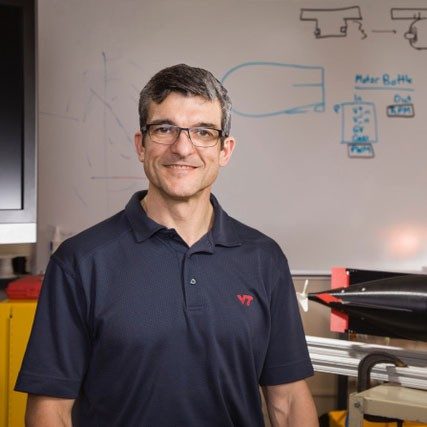
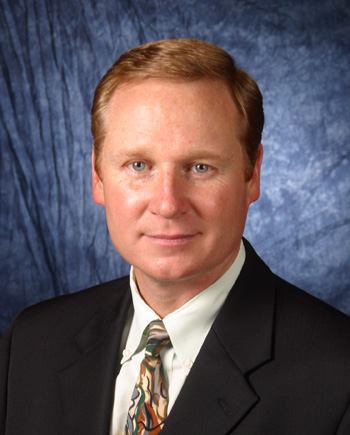
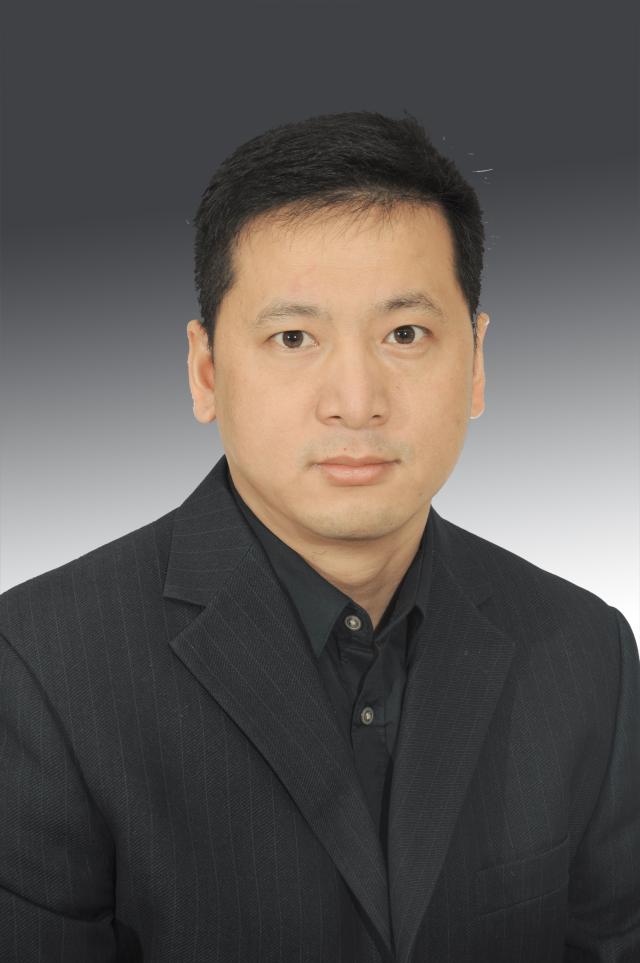
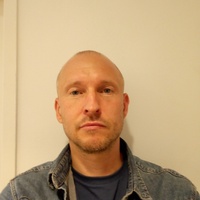
Kristin Y. Pettersen is a Professor at the Department of Technical Cybernetics, Norwegian University of Science and Technology (NTNU), and a Professor II at the Norwegian Defence Research Institute (FFI). She is a co-founder of Eelume AS, a company specializing in underwater robotics solutions. Education: Civil Engineering and PhD in Technical Cybernetics from NTNU Her research focuses on advanced control systems for marine and underwater vehicles, particularly snake robots and autonomous underwater vehicles (AUVs). Key areas include formation control, path following, adaptive guidance algorithms, and safety-critical control in dynamic environments. Recent work explores machine learning integration and energy-shaping techniques for robust locomotion. Publications highlight trends in Model Predictive Control (MPC) , Collision Avoidance , and Task-Priority Operational Space Control for redundant and underactuated systems. Her work bridges theoretical control theory with practical applications in marine robotics, including autonomous inspections and cooperative transport. Labs/Teams: Collaborates with NTNU's Faculty of Information Technology and Electrical Engineering and co-founded Eelume AS, advancing subsea robotic manipulation technologies.
Katherine Romanak is a Research Professor at the Bureau of Economic Geology, The University of Texas at Austin, specializing in geochemistry and carbon capture/storage (CCS) technologies. She pioneered the process-based soil gas monitoring approach for detecting CO2 leakage, which has become a global standard. Her work bridges scientific research and policy, with contributions to UNFCCC COPs and U.S. Class VI CCS regulations. Ph.D. in Geology (1997), UT Austin M.S. in Geology (1988), UT Arlington B.S. in Geology (1984), Southern Methodist University Her research focuses on: Geochemistry of carbon cycling in vadose zones and aquifers Development of environmental monitoring protocols for CCS sites CO2 leakage attribution and stakeholder engagement Integration of machine learning with field monitoring techniques Recent publications emphasize simplifying monitoring complexity, offshore CCS applications, and machine learning for anomaly detection. She holds two U.S. patents and collaborates globally on projects in Japan, Australia, Canada, and the U.S. Gulf Coast. Scientific awards include: 2015 BEG publication award 2017 U.S. patents for CO2 leakage detection Her team seeks partnerships with vadose zone modelers and microbiologists to advance industrial-scale monitoring systems. Romanak also co-developed UT Austin’s online CCS certification program and provides technical training for petroleum professionals transitioning to CCS roles.
Daniel J. Stilwell is a Professor in the Bradley Department of Electrical and Computer Engineering at Virginia Polytechnic Institute and State University (Virginia Tech), and Co-Director of the Center for Marine Autonomy and Robotics. He holds affiliations including the Seale Coastal Observatory Faculty Fellow role. His research focuses on autonomous underwater vehicles (AUVs), marine robotics, control systems, and sensor networks. He earned his Ph.D. in Electrical Engineering from Johns Hopkins University (1999), M.S. from Virginia Tech (1993), and B.S. in Computer Engineering from the University of Massachusetts (1991). His notable contributions include advancements in AUV control, underwater acoustic communication, multi-agent systems, and sensor network optimization. Key projects include the "Unconventional Marine Platforms" funded by the Office of Naval Research and collaborative subsea mapping initiatives. His work bridges theoretical control systems with practical robotic applications in marine environments. Dr. Stilwell has received prestigious awards such as the NSF CAREER Award and ONR Young Investigator Program Award. His research emphasizes robust control strategies, adaptive systems, and decentralized learning algorithms. He leads efforts in experimental validation of AUV control systems and underwater sensor networks, contributing to both academic and military applications.
Dr. Thangavel Thevar is a Senior Lecturer in the School of Engineering at the University of Aberdeen, where he has been teaching since 2005. He completed both his undergraduate degree (First Class Honours in Electrical Engineering) and PhD (in Laser Engineering) at the University of Aberdeen in 1989 and 1993 respectively. Prior to his academic career, he accumulated approximately 10 years of industrial R&D experience in the USA, working on solid-state laser development and holographic applications. Dr. Thevar's research focuses on several key areas: Digital holography for imaging of marine plankton and micro-particles Laser Induced Breakdown Spectroscopy (LIBS) for subsea applications Laser-based instrumentation development Development of solid-state lasers for scientific, industrial, and medical applications Engineering applications of holography His most notable recent achievement is leading a team that developed the weeHoloCam, a state-of-the-art ultracompact underwater holographic camera for imaging microorganisms. Weighing just 3.5 kg, this system is the lightest and most compact of its kind, capable of imaging 240 ml/s and continuously recording up to 200,000 holograms. The system incorporates a rapid hologram processor and an AI-based image classifier. This technology has significant applications in marine studies including spatial and temporal monitoring of plankton species, monitoring harmful plankton & micro-jellyfish, study of vertical transport of floc, and monitoring microplastic pollution in the ocean. Dr. Thevar has secured numerous research grants as Principal Investigator, including projects funded by Sustainable Aquaculture Innovation Centre (SAIC), BBSRC, DEFRA, and Defence & Security Accelerator (DSTL). His current research portfolio demonstrates strong interdisciplinary connections between optical engineering, marine science, and environmental monitoring. His scientific contributions include: Royal Academy of Engineering Visiting Teaching Fellow Award (2010-2013) US patent 8,494,012 B2 for Raman converters Development of alexandrite lasers and ruby holographic lasers during his industrial R&D period Work on US government contracts for non-destructive inspection methods for military aircraft and the space shuttle Sabbatical work at NASA Langley Research Centre developing diode pumped Thulium YALO lasers As an educator, Dr. Thevar has served as Coordinator of MSc Oil & Gas Engineering (2007-2020), Undergraduate Level 1 Coordinator, and has contributed to various committees including Quality Assurance and Students' Progression. He currently teaches courses including Principles of Electronics, Electrical & Mechanical Systems, Control Systems, and supervises individual projects at both undergraduate and postgraduate levels. He is accepting PhD students interested in Engineering research. Dr. Thevar is actively involved in professional organizations, serving as Technical Programme Chair for IEEE/OES Oceans Conference 2007, on organizing committees for various conferences, as a committee member of the Instrument Science and Technology Group (Institute of Physics), and as a member of both IET and IEEE. He also serves as a reviewer for optics-based journals.
Matthew A. Franchek is a Professor in the Department of Mechanical and Aerospace Engineering at the University of Houston, where he has served since 2002. His career spans over three decades, including prior roles as Professor and Chair at the University of Houston (2002–2009), Director of the Biomedical Engineering Program (2002–2009), and faculty positions at Purdue University from 1992 to 2002. He earned his Ph.D. (1991), M.S. (1988), and B.S. (1987) in Mechanical Engineering from Texas A&M University and the University of Texas at Arlington, respectively. Dr. Franchek’s research focuses on Dynamic Systems, Measurement and Control , with expertise in linear/nonlinear system identification, multivariable control theory, diagnostics/prognostics, and adaptive control. His engineering applications span internal combustion engines , exhaust after-treatment , noise/vibration control , and health prognostics for cardiovascular/respiratory systems . His recent publications highlight applications in superconductor manufacturing, aeroelastic stability, magnetic actuators, and subsea engineering. 2002 Best Paper Award, ASME Journal of Dynamic Systems, Measurement and Control 2001 ASME Dynamic Systems and Control Division Young Investigator Award 1997 CASA/SME University Lead Award 1997 Feddersen Faculty Fellow, Purdue University Multiple teaching awards at Purdue University (1994–2001) and Texas A&M University (1991) He has served as an Associate Editor for the ASME Journal of Dynamic Systems, Measurement and Control, held leadership roles in ASME and IEEE, and organized symposia on nonlinear control and robust control at international conferences. His professional activities include advisory roles at Cummins Incorporated and reviewing for NSF and numerous journals.
Yiguo Xue is a Professor and PhD Tutor at the Geotechnical and Structural Engineering Center, School of Civil Engineering, Shandong University. He has contributed extensively to tunnel engineering, subsea infrastructure, and slope stability analysis through advanced prediction models and numerical simulations. Research Interests: New tunnel geological condition prediction technologies Subsea tunnel and underground energy storage systems High slope stability evaluation Engineering exploration methods His recent work focuses on tunnel safety, subsea structural mechanics, and AI-driven hazard prediction models. Publications highlight his expertise in rockburst analysis, water inrush risk, and excavation optimization using machine learning and numerical frameworks. Scientific Awards: Recipient of China's Top 100 Most Influential Domestic Academic Paper Award (2008 paper on tunnel geological hazard forecasting) He has secured multiple national invention patents for tunnel monitoring devices (e.g., vibration sensors, collapse prediction systems) and developed specialized software for displacement prediction and rock classification.
Daohong Qiu is an Associate Professor and Master Tutor at the Geotechnical and Structural Engineering Center, School of Civil Engineering, Shandong University. His research focuses on advanced geological prediction in tunnels, surrounding rock stability, structural health monitoring for urban rail transit, and TBM tunneling performance optimization. Position: Associate Professor Affiliation: School of Civil Engineering, Shandong University Email: qiudh@sdu.edu.cn Research Interests: He specializes in geotechnical engineering challenges related to underground construction, including rock burst prediction , disaster control , and machine learning applications in geological modeling. His work emphasizes integrating advanced computational methods like quantum genetic algorithms and RBF neural networks with field data to improve tunnel safety and efficiency. Publication Trends: His recent 2019 studies address subsea tunnel risk assessment , rock burst prediction in underground caverns, and machine learning-driven surrounding rock classification . Earlier works (2014-2015) explore SVM/GA-SVM for geological disaster forecasting, while pre-2010 papers focus on optimization theory and stress field analysis. Patent Contributions: He holds multiple invention patents for geological prediction devices, including three-dimensional geological network modeling , seismic signal detection , and concrete elevation control systems .
Kenneth H. Stokoe is a Professor and the Jennie C. and Milton T. Graves Chair in Engineering at The University of Texas at Austin's Department of Civil Engineering. He holds a Ph.D. in Civil Engineering from the University of Michigan (1972), with prior academic roles including Cockrell Family Regents Chair and Brunswick-Abernathy Regents Professor. His expertise spans geotechnical earthquake engineering, soil dynamics, and non-destructive testing of geotechnical systems. He has pioneered advancements such as the crosshole seismic method for shear wave velocity measurement (ASTM D4428M standard), the RCTS laboratory testing system, and the SASW (Spectral-Analysis-of-Surface-Waves) method for field seismic evaluation. His research has been applied globally, including at Yucca Mountain (Nuclear Waste Repository), Hanford (Waste Treatment Plant), and numerous airport/runway projects. He also developed the Rolling Dynamic Deflectometer (RDD) for pavement stiffness profiling. Dr. Stokoe has led major NSF-funded projects, including the NEES (Network for Earthquake Engineering Simulation) program's large-scale mobile testing equipment. He is affiliated with 8+ professional societies and has authored over 150 publications. Awards include the Walter L. Huber Prize, National Academy of Engineering membership, and the Harold Mooney Award for seismic innovations. His academic career spans 45+ years with a focus on advancing geotechnical engineering through field and lab innovations, seismic site characterization, and infrastructure resilience. Current research emphasizes deep seismic profiling, real-time pavement assessment, and in-situ soil liquefaction testing.
Sigurd Skogestad is a Professor of Chemical Engineering at NTNU in Trondheim, specializing in process control. He has held this position since 1987, following his PhD from the California Institute of Technology (Caltech) in 1987. From 1999 to 2009, he served as Head of the Department of Chemical Engineering. Since 2015, he has directed the SUBPRO center for research-based innovation, focusing on subsea production and processing. Education: PhD in Chemical Engineering, California Institute of Technology (Caltech), 1987 Research Interests: His work emphasizes advanced control strategies, including control structure design, plantwide control systems, and optimal operation of process systems. He explores robust control methodologies, PID control applications, and distillation column dynamics. Modeling for control and subsea production systems are central to his current research through the SUBPRO initiative. Leadership & Roles: Director of SUBPRO Center (since 2015) Past Head of Department of Chemical Engineering (1999–2009) Labs/Teams: Leads the SUBPRO center, a collaborative research effort advancing subsea production technologies.
Dr. Harish Sarma Krishnamoorthy serves as Associate Professor in the Department of Electrical and Computer Engineering at the University of Houston, College of Engineering. He holds concurrent roles as Associate Director of the PEMSEC Consortium and Associate Editor of IEEE Transactions on Power Electronics. Ph.D. in Electrical and Computer Engineering (2015), Texas A&M University B.Tech. in Electrical and Electronics Engineering (2008), National Institute of Technology Tiruchirappalli, India His research focuses on high-density power conversion systems with particular emphasis on solid-state transformers for renewable energy integration, machine learning-driven health analytics for power electronics, and converter solutions for extreme environments in aerospace, defense, and subsea applications. Current projects include NSF CAREER-funded work on Edge Intelligence for power converters and DOE ARPA-E OPEN 2021 Mini-PulPS initiative for pulsed power systems. Recent publications highlight advancements in GaN HEMT reliability testing, resonant circuit breaker topologies, and multiport energy routers for hybrid renewable-oil & gas systems. His work spans converter design for 5G communication, NMR metrology, and electric aircraft propulsion architectures. NSF CAREER Award recipient (2023) IEEE PELS Young Professional Exceptional Service Award OTC Emerging Leader recognition (2022) GE 6-Sigma Green Belt Certification Best Presentation Awards at IEEE APEC He teaches graduate courses on power converters, modeling, and renewable energy systems while leading industry-funded research programs with applications in electric vehicles, data centers, and offshore energy systems.
Sigurd Skogestad is Professor in the Department of Chemical Engineering at the Norwegian University of Science and Technology (NTNU). He serves as Program Leader for the 5-year Master program in Chemical and Biochemical Engineering. His research develops simple yet rigorous methods to solve engineering problems, focusing on self-optimizing control structures that enable near-optimal operation under varying conditions. His approach moves economic optimization from slow real-time optimization to faster control layers. Key research areas: Self-optimizing control structures Process systems engineering Multivariable feedback control Plantwide process control Distillation modeling and control He has received significant recognition including the AIChE Computing in Chemical Engineering Award and IFAC Fellow status. He leads research groups in Process Control and contributes to the SUBPRO center on subsea production.
Tim Minshull is a Professor in Ocean & Earth Science at the University of Southampton. His research focuses on continental breakup mechanisms, methane hydrate dynamics, and geophysical imaging techniques. He leads large-scale projects such as a £4M initiative studying the west Iberia margin’s tectonic processes using 3D seismic data. Current projects include investigating methane hydrate dissociation in the Arctic and fluid flow in the North Sea using electromagnetic and seismic methods. He teaches geophysical techniques and global tectonics, and supervises multiple PhD students. His career includes roles at the University of Cambridge and Birmingham before joining Southampton in 2004. Education: BA (Cambridge), MSc (Durham), PhD (Cambridge) Key Projects: £4M Iberia margin study, Arctic hydrate dissociation modeling, North Sea fluid escape analysis Research interests span marine geophysics, subsea fluid dynamics, and seafloor spreading processes. He is affiliated with the Southampton Marine and Maritime Institute and collaborates internationally on initiatives like the STEMM-CCS carbon storage project.
Peter Martin is a Senior Lecturer in Chemical Engineering at the School of Chemical Engineering and Analytical Science, The University of Manchester. He leads the Multiphase Processing Group, which has secured over £4.1M in public and industrial funding. Current affiliation: The University of Manchester (2012–present) Prior roles: Lecturer (2007–2012), fixed-term Lecturer at University of Oxford (2004–2007) Education: PhD in Chemical Engineering, University of Cambridge (2002) MEng in Engineering Science, University of Oxford (1998) His research spans three themes: biosurfactant production/characterization, structured liquids/soft solids, and multiphase processes for MEG reclamation in oil/gas industries. He utilizes advanced techniques like Electrical Resistance Tomography and collaborates with Unilever and Cameron on industrial projects. Recent publications focus on membrane distillation for desalination, high-viscosity mixing analysis, and laser spectroscopy applications. He received the EPSRC Challenging Engineering award in 2011.
Dr. Piotr Omenzetter is a Senior Lecturer at the School of Engineering , University of Aberdeen, specializing in structural health monitoring (SHM), dynamic testing, and reliability analysis of civil infrastructure. His research focuses on offshore structures, wind turbines, bridges, and buildings, with applications of artificial intelligence and signal processing. Positions: Senior Lecturer (University of Aberdeen) Education: ME (Technical University of Gdansk), PhD (University of Tokyo) Research Interests include: Structural Health Monitoring (SHM) for offshore and subsea systems, wind turbines, and bridges Theoretical and experimental structural dynamics, including soil-structure interaction Reliability analysis under uncertainty and earthquake engineering Artificial intelligence (neural networks, deep learning) and signal processing (time series analysis) Structural control and optimization for wind farms and bridges Publication Trends show a focus on data-driven approaches like SHM and finite element model updating to assess damage severity in wind turbines and bridges. His work integrates machine learning (e.g., distance metric learning, neuro-fuzzy systems) and optimization algorithms (virus optimization, sequential niche techniques) to enhance damage detection accuracy. Teaching Responsibilities include courses on structural dynamics and reliability analysis for oil & gas engineering students. He has reviewed for 17 journals, including Computer Aided Civil and Infrastructure Engineering and Engineering Structures .
Alexander F Vakakis is the Donald Biggar Willett Professor of Mechanical Science and Engineering and holds a joint appointment in Aerospace Engineering at the University of Illinois' College of Engineering. His research focuses on nonlinear dynamics, vibration control, and energy transfer in mechanical systems. He has pioneered work on nonlinear energy sinks (NES) and targeted energy transfer (TET) mechanisms, with applications in aerospace, structural engineering, and acoustics. His recent studies explore phenomena like vibro-impact systems, nonlinear metamaterials, and data-driven methods for modal interaction analysis in fighter aircraft. Key research interests include nonlinear oscillators, wave localization, acoustic non-reciprocity, and the design of energy-dissipative structures. He has contributed to understanding energy redistribution in complex systems, such as subsea power cables and seismic mitigation frameworks. His work frequently bridges theory, computation, and experimental validation. Dr. Vakakis has authored over 500 publications, with recent articles addressing topics like topological interface modes in metamaterials, interband energy transfer in phononic lattices, and super-slow hysteresis dynamics. His research emphasizes leveraging strong nonlinearities to achieve novel engineering solutions. Awards: ASME Fellow (2012), Humboldt Research Award (2019) Collaborations: Active in aerospace dynamics, structural health monitoring, and metamaterial design Grants & Labs: Leads projects funded by NSF and industry partners; affiliated with Illinois' Nonlinear Systems Lab