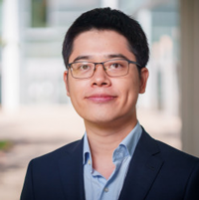
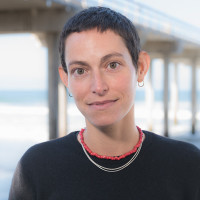
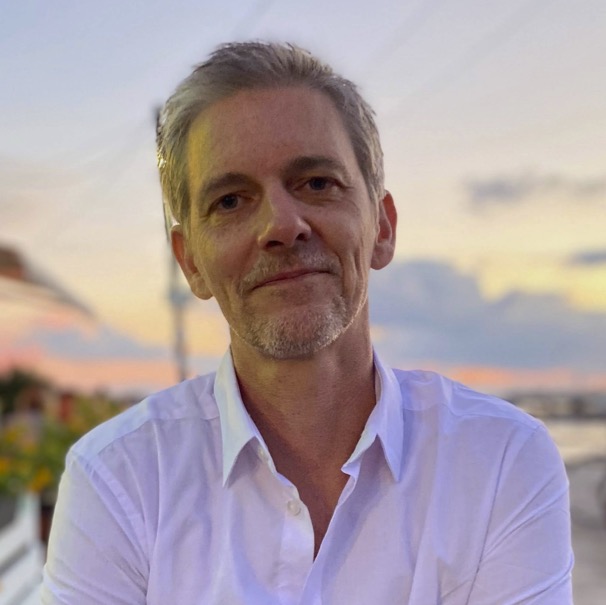
Lisa Beal is a Professor in the Department of Ocean Sciences at the Rosenstiel School of Marine, Atmospheric, and Earth Science, University of Miami. Her research focuses on understanding the dynamics of western boundary currents such as the Agulhas Current and Gulf Stream, their role in climate, and the impacts of climate change on ocean circulation. She leads the Beal Lab, emphasizing observational studies and global ocean observing systems. Her work integrates physical and biogeochemical processes, with recent studies highlighting nutrient supply mechanisms in the Agulhas region and the weakening of the Gulf Stream. She actively contributes to international initiatives like the Indian Ocean Observing System (IndOOS) and collaborates globally on projects involving ocean currents and climate modeling. Publications emphasize the interplay between ocean dynamics and climate, with a focus on observational techniques and data synthesis. She holds editorial roles in journals like Journal of Geophysical Research: Oceans , advocating for scientific integrity and peer review standards. Labs/Teams: Beal Lab, global collaborations in oceanography.
Katy Sheen is an Associate Professor of Physical Geography at the University of Exeter, part of the College of Life and Environmental Sciences and the Department of Earth and Environmental Science. She leads the BSc Marine Science programme and is affiliated with the Exeter Marine network. Her research focuses on ocean physics, climate variability, and marine environmental health, integrating seismic oceanography, Southern Ocean dynamics, and Sahel rainfall patterns. She has secured £4.3M in grants, including a UKRI Future Leaders Fellowship. Education: BA/MA/MSci in Natural Sciences (University of Cambridge, 2001–2005), PhD in Geophysics/Seismic Oceanography (University of Cambridge, 2006–2010). Professional roles include UK delegate for the International Association for the Physical Sciences of the Oceans and committee member of the International Union of Geodesy and Geophysics. Research Interests : Acoustic imaging of subsurface flows via seismic methods. Submesoscale ocean dynamics and their role in heat/carbon transport. Southern Ocean turbulent mixing and carbon uptake mechanisms. Climate impacts on Sahel rainfall variability and African food security. Microplastic transport modeling and marine plastic pollution. Awards & Grants : UKRI Future Leaders Fellowship NERC Exploring the Frontiers Grant Advising & Mentorship : Supervises PhD/MSc students in topics like low-oxygen zone biogeochemistry, Antarctic ice modeling, and microplastic pathways. Mentors postdoctoral researchers in acoustic oceanography and marine snow mapping. Labs & Collaborations : Leads the Exeter Marine network and collaborates with the Met Office Hadley Centre on climate prediction models. Films documenting fieldwork in the Southern Ocean and Senegal/Ghana highlight her public engagement efforts.
Markus Scheinert is a Researcher in the Ocean Dynamics group within the Ocean Circulation and Climate Dynamics division at GEOMAR Helmholtz Centre for Ocean Research in Kiel, Germany. His office is located in Room 3.306, Building 5 (ENB) at GEOMAR's main campus. He maintains an active research program focused on ocean circulation dynamics with particular emphasis on the North Atlantic region. Dr. Scheinert completed his PhD in 2008 at Christian-Albrechts-Universität Kiel with a dissertation titled "Causes and Impacts of northern North Atlantic Freshening." Prior to that, he completed his Diploma thesis in 2003 on "Mechanisms of low-frequency fluctuations of the western boundary current in the subpolar North Atlantic." He also conducted a research visit at Helsinki University's Division of Geophysics in 2004. His primary research interests include the dynamics and variability of the Subpolar North Atlantic gyre and western boundary current, Arctic and Sub-Arctic freshwater budget, and ocean circulation modeling. His work often involves high-resolution ocean modeling to understand climate-relevant processes in the Atlantic and Pacific Oceans. Analysis of his recent publications (2016-2025) reveals a strong focus on ocean circulation modeling, particularly examining the Atlantic Meridional Overturning Circulation, Agulhas Current system, and freshwater dynamics in the North Atlantic. His research increasingly incorporates software engineering aspects for scientific computing, reflecting the growing importance of computational infrastructure in modern oceanography. His work spans both fundamental ocean dynamics and climate-relevant processes, with recent publications addressing fine-scale climate simulations and data infrastructure development. Dr. Scheinert has been actively involved in numerous collaborative research projects, including the DRAKKAR initiative for high-resolution ocean modeling and the development of the Flexible Ocean and Climate Infrastructure (FOCI). His research often involves international collaborations with institutions across Europe and beyond, as evidenced by his participation in various workshops and conferences worldwide. He maintains a strong presence in both oceanographic research and scientific software development, with recent work addressing practical aspects of software engineering in marine research contexts. His laboratory work centers around computational oceanography using advanced modeling frameworks like NEMO and ORCA, with particular expertise in analyzing model outputs related to circulation patterns and climate variability.
Antonio Juan González Ramos is a University Professor in the Department of Biology at the University of Las Palmas de Gran Canaria (ULPGC), specializing in Ecology within the Faculty of Sciences. He is an active member of the GIR ECOAQUA research group focused on Biodiversity and Conservation, and participates in the Institute of Research in Sustainable Aquaculture and Ecology. His research interests center on marine ecological processes, with particular expertise in biogeochemical impacts of oceanic mesoscale and submesoscale phenomena, marine pollution risk assessment, and satellite observation techniques. His work often examines the dynamics of cyclonic and anticyclonic eddies and their effects on planktonic variability and marine productivity. Professor González Ramos has secured funding from diverse sources including the European Union, Spanish Ministry of Science, Innovation and Universities, and the Canary Agency for Research. His current projects span international collaborations with end dates extending to 2025, demonstrating ongoing active research engagement. While specific advising activities aren't detailed in the provided information, his leadership roles as main researcher on multiple competitive projects indicate significant mentorship responsibilities. His research has practical applications in marine environmental monitoring, sustainable aquaculture, and pollution risk management in coastal environments. He maintains professional profiles on ResearchGate, Google Scholar, ORCID (0000-0003-1374-5805), and Scopus (ID 56505656800), reflecting his active participation in the international scientific community.
Merrick Haller is a Professor in the School of Civil and Construction Engineering at Oregon State University, College of Engineering. He holds a joint appointment and is actively involved in coastal and ocean engineering research and education. His work is centered at the interface of remote sensing and coastal dynamics, with strong institutional support and collaboration across multiple agencies. Education: Ph.D., Civil Engineering, University of Delaware, 1999 M.C.E., Civil Engineering, University of Delaware, 1996 B.S., Earth & Atmospheric Sciences (Geophysics), Purdue University, 1993 Professor Haller’s research focuses on developing and applying remote sensing tools—particularly X-band marine radar—to study coastal ocean processes. His primary interests include nearshore remote sensing, wave transformation, rip currents, sediment transport, wave-current interaction, and hazardous waves at navigational inlets. His teaching encompasses hydraulics, wave mechanics, and coastal engineering. He previously coordinated the coastal and ocean program (2003–2010) and served as associate head of the School for seven years. The trends in his research, as reflected in recent and representative publications, emphasize real-time monitoring, data assimilation, and predictive modeling using radar and optical systems. Key themes include bathymetry estimation (e.g., cBathy), wave forecasting for wave energy applications, and submesoscale frontal dynamics. His work integrates field deployments, laboratory experiments, and numerical modeling, often in collaboration with NOAA, ONR, and USACE. Scientific Awards: 2007 Editors' Citation for Excellence in Refereeing, Journal of Geophysical Research-Oceans 2002 Editors' Citation for Excellence in Refereeing, Journal of Geophysical Research-Oceans Professor Haller leads the Haller Research Group and has advised numerous Ph.D. and M.S. students, many of whom have pursued careers in coastal engineering, government agencies, and academia. His research has been funded by the Office of Naval Research, Department of Energy, National Science Foundation, NOAA, Sea Grant, and the U.S. Army Corps of Engineers. He is a key contributor to major projects such as DARLA and NANOOS, involving radar deployments at New River Inlet, Cape Disappointment, and Yaquina Bay. He also collaborates with the Coastal Imaging Laboratory and the University of Washington’s Applied Physics Laboratory. Labs and Research Teams: He is affiliated with the Haller Research Group, the Nearshore Remote Sensing Group, and the DARLA project team. His group operates the Wave Imaging Marine Radar (WIMR) system and contributes to the National Marine Renewable Energy Center (now Pacific Marine Energy Center). Field sites include the Columbia River mouth, Newport, and New River Inlet, where radar and camera systems are deployed for coastal monitoring.
Peter Sheehan is an Emeritus Adjunct Professor in the Department of Geosciences at the University of Wisconsin-Milwaukee (UWM), affiliated with the College of Letters & Science. He holds the Robert and Sally Manegold Distinguished Curatorial Chair at the Milwaukee Public Museum and has served as Curator III, IV, and V there. His academic career spans over five decades, with a PhD in Paleontology from UC Berkeley (1971) and an MA from the same institution (1967). He has held adjunct professorships at UWM since 1977 and previously lectured at the University of Western Ontario (1972-1973) and conducted postdoctoral research in Sweden (1971-1972). His research focuses on mass extinctions, particularly the Late Ordovician and Cretaceous-Paleogene events, brachiopod community ecology, and the ecological aftermath of extinction crises. Key projects include studying microbial mat expansion post-Ordovician extinction, K/T asteroid impact effects, and Silurian faunal radiations. He also investigates modern glacial meltwater dynamics in Antarctic regions like the Bellingshausen and Amundsen Seas. Professional Affiliations: Fellow of the Geological Society of America and Wisconsin Academy of Sciences, among others. Research Themes: Extinction mechanisms, sequence stratigraphy, paleobiogeography, and climate-ocean interactions. Fieldwork: Extensive work in the Great Basin (USA), Estonia, and Antarctica. Recent publications emphasize Antarctic ice shelf dynamics, Bay of Bengal monsoon influences, and glacial meltwater pathways. His work bridges paleontology with modern environmental science, addressing both historical and contemporary Earth system challenges.
Jörn Callies is a Professor of Oceanography and Environmental Science at the California Institute of Technology (Caltech) and serves as the Graduate Option Representative for Environmental Science and Engineering. His research focuses on understanding ocean circulation and its role in Earth's climate regulation. Specialization: Physical oceanography, submesoscale dynamics, deep ocean turbulence Methods: in situ observations, satellite altimetry, numerical simulations His work explores how submesoscale fronts and currents drive surface-interior ocean exchange, while deep ocean overturning circulation influences long-term climate cycles. Recent publications analyze sea surface height spectra, near-inertial wave dynamics, and seismic thermometry techniques. He mentors students in Caltech's Environmental Science and Engineering program and collaborates on postdoctoral fellowships.
Shane Keating serves as a Lecturer in oceanography and fluid dynamics at the School of Mathematics and Statistics, University of New South Wales (UNSW), Australia. His research applies advanced mathematical frameworks to model planetary-scale oceanic and climate systems, with emphasis on quantifying complex fluid behaviors in Earth's environment. His primary research domains include: Geophysical Fluid Dynamics Ocean Turbulence and Eddy Processes Stochastic Superresolution Techniques Southern Ocean Stirring Mechanisms Solar Dynamo Modeling Dr. Keating actively develops educational resources for courses like MATH3261-5285 Fluids, Oceans, and Climate and MATH5271, publishing lecture notes and Jupyter notebook laboratories on GitHub. These materials bridge theoretical fluid dynamics with practical climate applications, reflecting his commitment to computational pedagogy in mathematical geosciences.
Prof. Amit Tandon is a Commonwealth Professor of Mechanical Engineering at the University of Massachusetts Dartmouth, with joint appointments in the School for Marine Science & Technology (SMAST) and as an Adjunct Scientist at Woods Hole Oceanographic Institution. His research focuses on fluid dynamics, ocean mixing processes, and sub-mesoscale/submesoscale phenomena in the upper ocean. Affiliations: College of Engineering, SMAST, Woods Hole Oceanographic Institution Education: BTech (IIT Kanpur), MS/PhD (Cornell University) Research interests include small-scale turbulence, mesoscale eddies, and their role in ocean circulation/climate. His work is supported by NSF (since 1996) and ONR (since 2008). Notable awards include Fulbright Specialist and Fulbright-Nehru Senior Scholar recognitions. Key grants: INTRINSIC (NSF), SubMIST (ONR), and leadership roles in international programs like IIOE-2 and ASTraL. Labs/Teams: Tandon Laboratory at UMass Dartmouth, collaborating with global institutions on projects like EKAMSAT and MISOBOB.
Xuanting Hao is an Assistant Professor at the Marine Physical Laboratory , part of the Scripps Institution of Oceanography at UC San Diego. His research focuses on small-scale physical processes at the atmosphere–ocean interface, employing physics-based and data-driven models to study air-sea interactions. Key areas include computational fluid dynamics, submesoscale oceanography, and boundary layer meteorology. Education: PhD, Mechanical Engineering, University of Minnesota (Twin Cities) B.E., Automotive Engineering, Tsinghua University, Beijing Research Interests: Development of high-performance computing models for air-sea processes Simulation of ocean-atmosphere interactions using adjoint-based methods and LES Analysis of coastal bathymetry, internal waves, and turbulence dynamics Integration of machine learning for improved predictive modeling His recent work emphasizes advancing numerical methods for coastal and oceanic systems, with applications to wave dynamics, bioluminescence quantification, and SAR data assimilation. He collaborates across disciplines to bridge fluid dynamics with environmental science. Key Contributions: Advances in adjoint-based high-order spectral methods for coastal bathymetry reconstruction Pioneering machine learning integration in LES for turbulence prediction Development of novel models for ocean surface wave modulation by internal waves His research is conducted at the Marine Physical Laboratory , a leading center for oceanography and atmospheric science.
Lia Siegelman is an Assistant Professor in the Integrative Oceanography Division at Scripps Institution of Oceanography, UC San Diego. Her research uses satellite data, in situ observations, and numerical simulations to study geophysical fluid dynamics, submesoscale turbulence, and air-sea-ice interactions. Education includes: PhD in Physical Oceanography from Université de Bretagne Occidentale MS in Oceanography from Sorbonne Université MS in Applied Mathematics from École des Ponts ParisTech BS in Mathematics from Sorbonne Université
Greg Crawford is the Dean of the Faculty of Science at Ontario Tech University in Oshawa, Ontario. He holds a B.Sc. (Honours Physics) and M.Sc. from the University of Victoria, a Ph.D. in Oceanography from UBC, and an MPA from California State University Dominguez Hills. As Dean, he oversees academic leadership, faculty development, and program strategy while maintaining research interests in physical oceanography and coastal dynamics. Dr. Crawford’s research focuses on ocean mixing processes, coastal currents, tsunami impacts, and remote sensing technologies. His work integrates observational data with numerical models to study environmental systems, climate change effects, and marine resource management. He has led interdisciplinary projects in California and the Pacific region, emphasizing sustainable partnerships between academia and industry. Prior to his current role, he held leadership positions at Humboldt State University and Vancouver Island University. He advocates for experiential learning and has established collaborations with government agencies, NGOs, and private companies to advance science-based solutions. His career bridges applied research, education innovation, and institutional governance in higher education.
Ryan Lowe is a Professor in the School of Earth and Oceans at The University of Western Australia (UWA), affiliated with the UWA Oceans Institute. He specializes in coastal processes, coastal engineering, and nature-based solutions for coastal protection. His research focuses on wave-driven coastal hazards, sediment transport, and the role of marine ecosystems in mitigating erosion and flooding. He has held roles including Co-Lead of the Coastal and Offshore Engineering Laboratory, Deputy Head of the Oceans Graduate School, and Program Leader for the ARC Centre of Excellence for Coral Reef Studies. Dr. Lowe completed his PhD in Civil and Environmental Engineering at Stanford University (2005) and held a postdoctoral position there before joining UWA in 2007. He received an ARC Future Fellowship (2012–2016) to study nearshore processes in Western Australia’s diverse coastal systems. He has authored over 130 journal articles and contributed to international guidelines for nature-based coastal protection. His teaching includes units on oceanographic methods, coastal oceanography, and marine systems. Current research priorities include coral reef resilience, artificial reef engineering, and coastal storm hazard预警 systems. He actively supervises PhD students focusing on WA’s coral reefs, rocky reefs, and sandy beaches. Education: PhD in Civil and Environmental Engineering, Stanford University (2005) Postdoctoral Researcher/Lecturer at Stanford University (2005–2007) Awards: ARC Future Fellowship (2012–2016) Grants: Over 80 grants from ARC, state governments, and industry partners, including current projects on coastal wave buoys and mooring systems.
K. Shafer Smith is a Professor of Mathematics and Atmosphere/Ocean Science at New York University’s Courant Institute, within the College of Arts and Science. His research focuses on large-scale turbulence in planetary fluids, particularly Earth’s oceans and atmosphere, aiming to understand heat and constituent transport and improve climate models. He holds a Ph.D. in Physics from the University of California, Santa Cruz (1999), and dual B.S. degrees in Physics and Mathematics from Indiana University, Bloomington (1992). His work spans oceanic mesoscale eddies, submesoscale currents, and their impacts on climate, biogeochemistry, and marine ecosystems. Recent studies emphasize parameterization of eddy effects, neural network reconstruction of ocean kinematics, and oxygen minimum zone dynamics in the Arabian Sea. Selected publications (2019–2024) highlight contributions to eddy parameterization, plankton model variability, and wave-driven processes. Collaborative projects include the LatMix campaign (2015) investigating upper-ocean stirring.
Douglas Wallace is a Professor and Department Chair in the Department of Oceanography at Dalhousie University. His research focuses on chemical oceanography and atmospheric science, with expertise in marine biogeochemical processes and environmental monitoring. Wallace holds a BSc from the University of East Anglia and a PhD from Dalhousie University. He leads the CERC.OCEAN laboratory, which specializes in cutting-edge oceanographic research using advanced instruments and field deployments. His work emphasizes the development of low-cost marine robotic systems and submesoscale ocean process analysis. Recent publications include studies on robotic vehicles for ocean sampling and assessments of Canada’s marine carbon sink. Wallace collaborates on initiatives like the Bedford Basin Time Series and deploys technologies such as the SeaCycler for long-term data collection. No scientific awards are explicitly listed in the provided texts. His advising and grant activities are not detailed here, though his leadership in the Department of Oceanography underscores his mentorship role. The CERC.OCEAN lab serves as a central hub for collaborative research projects, focusing on biogeochemical and ecological changes in marine environments.

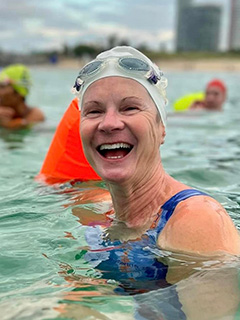


/prod01/production-cdn-pxl/media/umassdartmouth/profiles/smast/AmitTandon_EAS2.jpg)