Carla Tanguay is a Clinical Associate Professor and Assistant Dean for Educator Preparation and Accreditation at Georgia State University's College of Education & Human Development (CEHD). She has held leadership roles in teacher preparation since 2007, including 12 years coordinating the BS in Elementary Education program. Her work focuses on clinical practice, teacher development, accreditation, and urban education partnerships. She co-chairs the P-20 Metro-Atlanta Collaborative and leads the NSF-funded 'Preparing, Supporting and Retaining Elementary Mathematics Specialists (PSREMS)' project. Tanguay chairs the CEHD Assessment and Accreditation Committee and serves on state policy committees for teacher performance assessments (edTPA). Education: Ph.D. (2018), Ed.S. (2006), M.A. (1991), and B.A. (1985) in Education fields from Georgia State University and other institutions. Specializations include teacher education, school partnerships, instructional supervision, and accreditation. She has led program evaluations, policy development, and university-school collaborations to strengthen educator preparation. Research emphasizes teacher development, assessment systems, urban education challenges, and mathematics specialist training. Her work bridges policy implementation and practical classroom needs, with a focus on equity and educator effectiveness. She collaborates with national organizations like CEEDAR and state committees to shape teacher preparation standards.
Nancy A. Lever, PhD, serves as Associate Professor in Psychiatry at the University of Maryland School of Medicine, Executive Director of the University of Maryland School Mental Health Program, and Co-Director of the Center for School Mental Health. With over 20 years of experience, she is a nationally recognized leader advancing comprehensive school mental health systems through clinical practice, research, and policy at local, state, and national levels. Her educational foundation includes: Dartmouth College, BA in Psychology (1991; Phi Beta Kappa) Temple University, MA in Clinical Psychology (1994) University of Maryland Medical System, Psychology Internship (1996) Temple University, PhD in Clinical Psychology (1997) University of Maryland School of Medicine, Postdoctoral Fellowship (1998) Dr. Lever's research pioneers multi-tiered behavioral health systems emphasizing quality, sustainability, and trauma-informed care. Her work establishes family-school-community partnerships as critical for dropout prevention, student resiliency after civil unrest, and workforce development. She developed the School Mental Health Quality Assessment Questionnaire to standardize service evaluation. Recent publications reveal evolving priorities: teacher/staff wellness, telemental health implementation, and national performance metrics. Her scholarship consistently bridges clinical innovation with systemic change, highlighting sustainability strategies for school mental health programs. Accolades include: NIH Loan Repayment Award for Clinical Research (2004-2006) Baltimore City Mayoral Citation (2006) Paula U. Hamburger Children’s Mental Health Champion Award (2016) Dartmouth College Phi Beta Kappa and three departmental awards (1991) She directs major grants including: Promoting Student Resiliency (U.S. Department of Education, 2016-2018) Expanded School Mental Health in Baltimore City (2007-2018) National Resource Center for Mental Health Promotion (SAMHSA, 2013-2017) Project AWARE-SEA (SAMHSA, 2014-2019) Dr. Lever shapes national discourse as Planning Committee Chair for the National Conferences for Advancing School Based Mental Health (2001-present) and through leadership in the National Coordinating Committee on School Health and Safety and Maryland State School Health Council.
Thomas W. Kaminski is a Professor in the Department of Kinesiology & Applied Physiology at the University of Delaware’s College of Health Sciences. His research focuses on sensorimotor and neurocognitive aspects of musculoskeletal injuries, particularly chronic ankle instability, sport-related concussions, and repetitive head impacts in soccer. He directs the Athletic Training Research Laboratory, established in 2003, which collaborates with departments across UD, including Athletics, Physical Therapy, and Engineering. Education: PhD in Sports Medicine (University of Virginia, 1996), MS in Athletic Training (University of Arizona, 1985), BS in Sports Medicine (Marietta College, 1984). Courses taught include Evidence-Based Sports Medicine, Upper/Lower Extremity Evaluation, and Clinical Practicum. Research emphasizes injury prevention, biomechanical analysis, and rehabilitation strategies. His lab uses advanced tools like the KinCom Isokinetic Dynamometer, Bortec EMG systems, and Triax Impact Monitors. Current projects include studying neck strengthening programs for youth soccer players and blood biomarkers in concussion recovery. Grants and collaborations involve the NCAA-DoD CARE Consortium, focusing on collegiate athletes and military cadets. Lab initiatives aim to translate findings into broader health applications for physically active populations. Lab facilities include the Human Performance Lab and partnerships with UD Physicians, Student Health Services, and regional sports programs. Active research areas include concussion symptom evolution, sex-based injury differences, and the effects of sport specialization on cognitive/postural functions.
Prof. A.C.G. (Toine) Egberts is a Professor of Clinical Pharmacoepidemiology and Clinical Pharmacy at Utrecht University's Faculty of Medicine. He leads the Department of Pharmacoepidemiology & Clinical Pharmacology and serves as Director of Doctoral Education at the Graduate School of Life Sciences. His career includes roles as Chief Pharmacist at UMC Utrecht and Board Member of Pharmacy Division. He earned a PharmD from the University of Groningen and a PhD from Utrecht University, specializing in clinical epidemiology. Egberts focuses on reducing drug-related harm through research in adverse effects, sustainable pharmacy practices, and optimizing medication use. With over 500 publications, he sits on editorial boards and committees like CCMO and EPHOR. His work bridges drug development and patient outcomes, emphasizing translational research. Research interests include clinical pharmacology, pharmacoepidemiology, drug sustainability ('green pharmacy'), and innovations in prescribing/monitoring. Key projects like the ROAD study address medication waste reduction, published in JAMA Oncology . Awards include the Senior Jan Glerum Award (2016) and Huizinga Penning for clinical pharmacy contributions. Teaching and mentorship are central: guided over 70 PhD students, emphasizing education in hospital pharmacy. Grants and collaborations span clinical trials, adverse event detection, and AI applications in healthcare. Active in Dutch medicines policy through advisory roles and public media engagement.
Tommaso Feraco is an Assistant Professor at the University of Padova , focusing on the intersection of education , psychology , and behavioral science . His work examines how social, emotional, and behavioral skills (SEBS) influence academic performance, well-being, and developmental outcomes across diverse populations, including adolescents, adults, and individuals with specific learning disabilities. Research trends highlight his contributions to character strengths , self-regulated learning , and adaptability in educational contexts. He has also developed methodological tools to address clustering analysis limitations in data science. His recent publications investigate SEBS applications in career readiness , pro-environmental behavior , and mental health resilience .
Laura Barnes is a Professor in the Department of Systems and Information Engineering at the University of Virginia, and Associate Director of the Link Lab. She directs the Sensing Systems for Health Lab, focusing on technology-enabled health solutions. Her academic background includes a B.S. in Computer Science from Texas Tech University (2003), and M.S. (2007) and Ph.D. (2008) in Computer Science from the University of South Florida. Research interests span wireless health , human-machine interfaces , biomedical data sciences , and machine learning applications . Current projects include wearable sensor systems for mental health monitoring, clinician-patient communication frameworks (CommSense), and mobile interventions for anxiety reduction. Funding sources include NIH, National Institute of Aerospace, and the U.S. Army. Recent publications emphasize real-time monitoring , digital phenotyping , and context-aware interventions . Key themes include leveraging large language models for health analysis, developing scalable mobile sensing frameworks, and addressing health equity through technology. Labs/Teams : Sensing Systems for Health Lab, Link Lab Grants : NIH-funded projects on medication adherence and sleep disturbance analysis
Sonja Paus-Buzink is an Assistant Professor in Human Factors at TU Delft’s Faculty of Industrial Design Engineering, specializing in the Human-Centered Design department. Her research focuses on integrating human factors/usability evaluation into medical device and healthcare service design, emphasizing inclusive design perspectives. She teaches courses on human factors, usability, and medical device regulation, supervising students in research and graduation projects. Academic Background: PhD from TU Delft (Medisign Research Group), co-funded by Catharina Hospital, focusing on patient safety in image-based surgical procedures and VR/AR simulation tools. Postdoctoral work on surgical skillslabs and scientific coordination of the European Laparoscopic Surgical Skills Program. Previously a Managing Human Factors Specialist at UL-Wiklund R&D, advising medical device manufacturers on regulatory compliance. Research Interests: Human factors, ergonomics, medical device design, patient safety, inclusive design, surgical training, and healthcare technology. Her work bridges clinical, engineering, and psychological disciplines to enhance healthcare outcomes. Awards: Summa Cum Laude MSc in Industrial Design Engineering (TU Delft). Best IDE Graduate of the Year award at TU Delft. Grants & Collaborations: Collaborations with medical institutes, simulator companies, and organizations like the European Association for Endoscopic Surgery (EAES). Her research emphasizes cross-disciplinary teamwork to address challenges in surgical training and medical device usability. Labs/Teams: Engaged with TU Delft’s Medisign research group and skillslab initiatives. Active in developing tools for surgical training and patient safety in operating rooms.
Dr. Anna M. Bardone-Cone is a Professor in the Department of Psychology at the University of North Carolina at Chapel Hill, leading the Bardone-Cone Lab. Her research focuses on eating disorders, body image, and mental health disparities, with a strong emphasis on cultural and intersectional perspectives. She is committed to training diverse students and conducting research that addresses underrepresented groups such as BIPOC, LGBTQ+, and first-generation scholars. Her recent work explores topics like family influences on disordered eating, cultural pressures on South Asian populations, and neurocognitive profiles in eating disorders. She has presented at major conferences like the International Conference on Eating Disorders (ICED) and published in outlets like the UNC JOURney. In 2023, she was selected as a Thorp Faculty Engaged Scholar for her community-focused scholarship. Dr. Bardone-Cone advises multiple students, including Ale Miller, Emily Walsh, and Lauren Wash, whose theses and dissertations address eating disorder risk factors, body shame, and cultural influences. Her lab actively collaborates on projects like the South Asian Body Image Study (SABI) and advocates for inclusive research practices. Awards: Thorp Faculty Engaged Scholar (2023-2025) Grants & Funding: Supported by engaged scholarship initiatives through UNC. Her research bridges clinical and cultural psychology, with a focus on translating findings into practical interventions for marginalized groups. The lab’s future work continues to prioritize longitudinal studies on neuropsychological functioning and community-based mental health initiatives.
Myriam M.A.H. Cloodt serves as an Associate Professor of Open Innovation and Entrepreneurship at the Department of Innovation, Technology Entrepreneurship & Marketing (ITEM) within the School of Industrial Engineering at Eindhoven University of Technology (TU/e). She is also affiliated with EAISI High Tech Systems as a University Researcher. Her academic career spans over two decades, with a continuous focus on understanding innovation processes in complex business environments. Dr. Cloodt earned her MSc in Business Economics from Maastricht University in 1997. After working as a lecturer for two years, she began her PhD research at the Department of Organization & Strategy, completing her dissertation at METEOR (Maastricht University) on measuring innovative performance of high-tech companies after mergers and acquisitions. She joined Eindhoven University of Technology in July 2004 as a researcher at the School of Technology Management, becoming Assistant Professor in June 2006, and was promoted to Associate Professor of Open Innovation and Entrepreneurship in August 2017. Her research focuses on open innovation, corporate entrepreneurship, and strategic management, with particular interest in corporate venturing, strategic technology alliances, mergers and acquisitions, network analysis, and value constellations within innovation ecosystems. Dr. Cloodt's work bridges academic theory and practical application, as evidenced by her participation in industry projects for companies and innovation ecosystems like the High Tech Campus Eindhoven. Her publications span prestigious journals including Research Policy, Journal of Product Innovation Management, and Technological Forecasting and Social Change, as well as book chapters for Oxford University Press. Analysis of her recent publications reveals a strong trajectory toward circular economy applications, particularly in plastics innovation, alongside continued work on innovation ecosystems, science parks, and military innovation contexts. Her research demonstrates methodological diversity, employing network analysis, case studies, and stated choice experiments to investigate complex innovation phenomena across different sectors and organizational contexts. Best Paper Award - Mature PhD Student at the ESU European University Network on Entrepreneurship Conference (2021) Dr. Cloodt actively supervises graduate students and has contributed to numerous research projects, including C-PlaNeT (Circular Plastics Network for training), SEE-V-Lab, and the Brabant Center of Entrepreneurship. Her professional engagements extend to developing publications for organizations such as Adviesraad voor het Wetenschaps- en Technologiebeleid (AWT) and Het Financieele Dagblad. In teaching, she contributes to the BSc program in Industrial Engineering & Management Science, the MSc program in Innovation Management, and the Certificate program in Technology Entrepreneurship & Management. Her work aligns with UN Sustainable Development Goals, particularly through contributions to circular economy research and sustainable innovation practices. Dr. Cloodt maintains active collaborations with industry partners and participates in significant academic conferences including the Annual World Open Innovation Conference where she serves on program committees.
Elise Laende, PhD, is an Assistant Professor in Systems Design Engineering and Biomedical Engineering at the University of Waterloo, and holds an adjunct position as an Assistant Professor in Mechanical and Materials Engineering at Queen’s University’s Smith School of Engineering. Her research focuses on engineering solutions for healthcare, particularly in biomechanics, orthopaedic implants, and imaging techniques like radiostereometric analysis (RSA) and markerless motion capture. Education: PhD in Biomedical Engineering, Dalhousie University MASc in Biomedical Engineering, Dalhousie University BASc in Mechanical Engineering, University of Waterloo Research Interests: Biomechanical analysis of musculoskeletal systems Implant fixation and migration in total joint replacements Development of clinical tools for orthopaedic surgery Markerless motion capture for gait analysis Radiostereometric analysis (RSA) for in vivo implant assessment Research Trends: Dr. Laende’s work emphasizes precision in implant stability measurement, with a focus on RSA’s role in predicting aseptic loosening. Her recent studies explore the impact of patient-specific biomechanics (e.g., tibial slope, sex differences) on implant performance and the reliability of markerless motion capture under varying conditions. Advising & Grants: While no students are listed, her collaborative projects suggest involvement in clinical research and industry partnerships. Her research has been supported by grants focused on orthopaedic implant innovation and biomechanical assessment tools. Labs/Teams: Her work is conducted at the University of Waterloo’s Systems Design Engineering labs and in collaboration with clinical partners, leveraging advanced imaging and motion capture technologies.
Monika Neda is a Professor in the Department of Mathematical Sciences and Associate Dean for Research at the University of Nevada, Las Vegas (UNLV). She holds a Ph.D. in Mathematics from the University of Pittsburgh (2007) and a B.S. in Mechanical Engineering from the Technical Faculty Mihajlo Pupin in Serbia (2001). Her research focuses on theoretical and computational fluid dynamics, turbulence modeling, and numerical methods for partial differential equations, with particular emphasis on Navier-Stokes equations and sensitivity analysis. Her work explores model derivation, numerical stability, finite element error estimates, and computational simulations of fluid flow problems. She also investigates educational strategies to improve STEM students' foundational math skills through game-based and activity-based instruction. Neda is affiliated with UNLV's Center for Applied Math & Statistics and has contributed to interdisciplinary projects involving engineering education and photovoltaic panel efficiency. Recent research trends highlight advancements in stabilization techniques for fluid models (e.g., time relaxation, deconvolution operators) and innovative pedagogical approaches leveraging technology platforms like Canvas. Her publications span computational mathematics, turbulence closure models, and education-focused interventions. Neda's academic leadership includes roles in curriculum development and institutional research, reflecting her dual commitment to scholarship and academic administration.
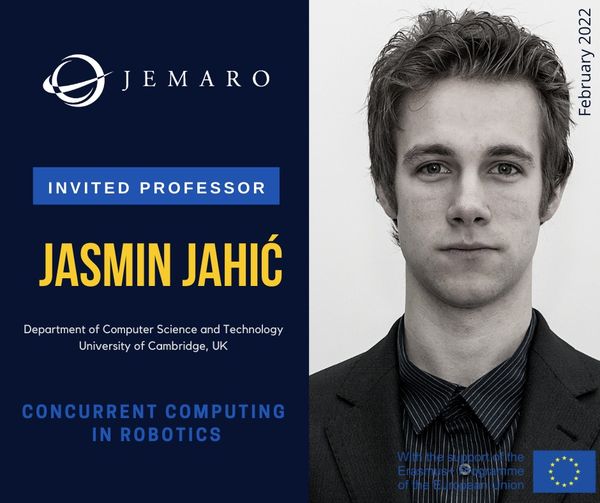
Jasmin Jahic is a Researcher at the Computer Architecture Group of the University of Cambridge, working under Timothy M. Jones. She holds a PhD in 'Supervised Testing of Embedded Concurrent Software' from the University of Kaiserslautern (2020) and has extensive experience as a researcher and project manager at the Fraunhofer Institute for Experimental Software Engineering. Her research focuses on concurrency in embedded systems, software engineering, AI integration, and low-power systems. Education: PhD in Computer Science from the University of Kaiserslautern (2020). Prior roles include Project Manager at Fraunhofer IESE and Coordinator of the European Master Program in Software Engineering. Research Interests: Concurrent computing, embedded systems architecture, AI applications in software engineering, and low-power system design. She explores concurrency bugs, synchronization mechanisms, and software architecture evolution in the context of Industry 4.0 and autonomous systems. Professional Activities: Co-Organizer of SAMOS workshops (2018–2021), Reviewer for IEEE/ACM conferences, and contributor to European Strategic Research Agendas for embedded systems. Teaches courses on software architectures for embedded systems and supervises numerous graduate students. Key Contributions: Frameworks like BOSMI for multithreaded software testing, FERA for concurrency bug detection, and research on AI adoption in traditional embedded systems. Active in HiPEAC conferences and industry partnerships.
Zhanna Sarsenbayeva is a Lecturer in the School of Computer Science at the University of Sydney. Previously, she held a Doreen Thomas Postdoctoral Research Fellowship at the University of Melbourne. Her research focuses on Human-Computer Interaction (HCI), Ubiquitous Computing, Accessibility, and Affective Computing. She earned a PhD in Engineering from the University of Melbourne, an MSc in Computer Science and Engineering from the University of Oulu, and a BSc in Computer Science from University College London. Research Interests: Dr. Sarsenbayeva explores how technology can enhance accessibility, improve emotion recognition in mobile contexts, and address situational impairments. Her work spans wearable sensors, mobile health applications, and ethical AI methodologies. Awards & Honors: 2022–2023: Australia-Germany Joint Research Cooperation Scheme 2021: CIS ECR Grant 2020: Doreen Thomas Postdoctoral Fellowship 2019: Gaetano Borriello Outstanding Student Award Advising & Grants: She currently supervises five PhD students researching topics like mixed reality collaboration and emotion recognition. Her grants include projects on accessibility standards and fairness in AI. International Collaborations: Engages with researchers at Aalborg University (Denmark), University of Oulu (Finland), and LMU Munich (Germany) on interdisciplinary projects.
Michele Ewing is a Professor in the School of Media and Journalism at Kent State University, part of the College of Communication & Information. With over 30 years of experience in public relations practice and education, she specializes in integrating digital and social media strategies into curricula. She teaches courses like PR Tactics, PR Campaigns, and pioneered the Digital Public Relations course. As PRSSA Kent faculty adviser, she led the chapter to national awards, including 2019 and 2014 Outstanding Chapter distinctions. Her research focuses on internal communication, leadership development, and digital engagement, addressing challenges like fake news management and AI ethics in PR. Education: B.A. in Speech Communication/Telecommunications from Youngstown State University and M.A. in Public Relations from Kent State University. She previously served as vice president at Marcus Thomas LLC, contributing to healthcare and internal communication strategies. Research highlights include exploring data analytics in PR leadership, social media's role in employee engagement, and mitigating fake news crises. Her work emphasizes bridging academic and professional PR practices, with notable contributions to PRSA's standards and pedagogy innovation. Awards include the 2014 Davis Young Award for mentoring and induction into PRSA College of Fellows. Advocacy and grants: Advised student teams achieving national recognition, such as the 2019 PRSA East Central District Diamond Award for the Donate Life Ohio campaign. She has shaped PRSSA Kent into a model chapter, fostering student leadership and professional readiness. Labs/Teams: Actively involved with the Public Relations Student Society of America (PRSSA) and the School of Media and Journalism's academic leadership committees. Her research collaborates with industry practitioners to address modern PR challenges like AI ethics and data-driven strategies.
Amr Fawzy Moussa is an Associate Professor at the Dental School of the University of Western Australia (UWA), leading the Biomaterials and Nano-dentistry research group. He holds roles as Head of the Division of Oral Restorative and Rehabilitative Sciences and Unit Coordinator for courses such as DENT 4232, DENT 4236, and DENT 3007. Previously, he worked at Ain Shams University and the National University of Singapore, focusing on Dental Biomaterials and Restorative Dentistry. His research interests span Dental Biomaterials, High-Intensity Focused Ultrasound (HIFU) applications in dentistry, nano-dentistry, and regenerative therapies. Current projects include HIFU-enhanced dental adhesion, 3D-printed self-healing materials, and anti-biofilm strategies. His work is funded by NHMRC, Australian Dental Research Foundation, Colgate, and industry partnerships. Prof. Moussa supervises PhD and HDR students and collaborates internationally with institutions in Asia-Pacific, Europe, and the USA. He serves on editorial boards for journals like Frontiers in Dental Medicine and is a NHMRC grant assessment panel member. His recent publications (2025) emphasize HIFU's role in dentin bonding, enamel remineralization, and biofilm eradication, reflecting his lab's focus on innovative materials and technologies for clinical dentistry.