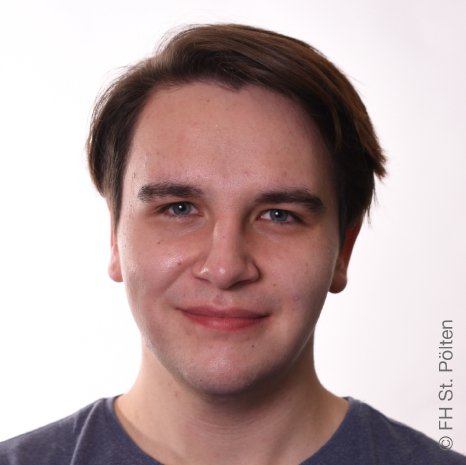
Patrick Kramml is a Junior Researcher in the Digital Technologies Research Group at the Institute of Creative\Media/Technologies, University of Applied Sciences St. Pölten. He is affiliated with the Department of Media and Digital Technologies and has been a Research Assistant and Tutor since November 2022. His educational background includes a B.Sc. in Media Technology (completed 2022) and an ongoing Master's in Digital Healthcare. His research interests span web and software development (with expertise in React, Vue, Node.js, Next.js, Python, and SwiftUI), AI algorithms , and paramedic technology applications . He integrates his volunteer experience as an emergency paramedic with the Red Cross Lower Austria into his technical work. No recent publications or supervised students are noted in the provided data. Kramml's professional experience includes an internship at BD Austria (2022) and ongoing contributions to academic tutoring in web technologies.
Melanie Misamer serves as Professor for Methods and Concepts of Social Work in Health Promotion at the Faculty of Engineering and Health, HAWK University of Applied Sciences and Arts (Göttingen Health Campus). Her academic foundation includes a doctorate in Educational Psychology from Technical University of Braunschweig (2012-2018) and Social Work studies at University of Vechta (2006-2011). Her research centers on power sensitivity in social work, developing theoretical frameworks and practical applications through multidimensional power concepts. Key contributions include creating measurement tools for power sensitivity, analyzing power dynamics in healthcare settings, and establishing evidence-based practices for professional conduct. Her work bridges social work theory with healthcare applications, focusing on ethical decision-making and reflective practice. Recent publications reveal strong trends toward quantifying power sensitivity through large-scale studies (n=403 students, n=324 professionals) while developing practical screening tools. Her research spans healthcare social work, interprofessional cooperation, and power dynamics in educational contexts, with increasing emphasis on evidence-based methods and textbook development for professional training. Misamer teaches across multiple programs including Master's in Health and Innovation in Social Work (MA GISA) and Bachelor's in Social Work in Healthcare (BA SAG), covering courses on power-sensitive leadership, social space design, and clinical psychology. Her professional activities include textbook authorship with Kohlhammer Verlag and conducting qualitative interviews with practitioners on power sensitivity implementation.
Stuart A. Smith serves as a Lecturer in Paramedic Science at the University of Bolton's School of Clinical and Biomedical Sciences, bringing 25 years of NHS clinical experience primarily in pre-hospital emergency care. His career spans roles from frontline paramedic to advanced practitioner, including specialized positions with air ambulance services and Manchester International Airport. His educational qualifications include: PGCE from Bolton Institute of Higher Education (1998) MA in Educational Management (2003) MSc in Advanced Practice (completed during clinical leadership role) Smith's research centers on healthcare communication and professionalism, specifically examining how staff conduct impacts patient experience in emergency settings. His work integrates practical insights from diverse clinical environments including ambulance services, urgent care centers, and airport medical response units. He actively promotes professional standards through conference presentations and symposiums. Professional recognitions include: Fellow of the Higher Education Academy Member of the Institute of Leadership Member of the College of Paramedics Member of the Order of St. John (2008) As an educator, Smith teaches the BSc(Hons) Paramedic Science programme, leveraging his extensive clinical background to develop practical curricula. His teaching philosophy emphasizes real-world application of communication skills and professional conduct, preparing students for the complex demands of emergency medical services. He maintains strong connections with clinical practice through ongoing engagement with ambulance services and healthcare institutions.
Isla Fairley is a Principal Lecturer (Practice Learning) in the School of Nursing, Midwifery and Paramedic Practice at Robert Gordon University (RGU), where she has served since 2014 and was promoted to her current rank in 2018. Her role centers on developing and overseeing clinical practice curricula for nursing students. Her educational credentials include: Master of Nursing (Nurse-led Practice) from Robert Gordon University (2007-2010) Post Graduate Certificate in Learning, Teaching and Assessment from Robert Gordon University (2015-2017) Ms. Fairley specializes in Practice Learning, leveraging 25+ years of clinical expertise as an NMC-registered paediatric nurse. Her work integrates high-dependency care protocols, type 1 diabetes management, and paediatric emergency response into nursing education. She develops competency frameworks that align clinical placements with academic standards, emphasizing patient safety and evidence-based decision-making in acute care environments. Recognized for teaching excellence, she holds: Fellow of the Higher Education Academy (FHEA) Ms. Fairley mentors undergraduate and postgraduate students during clinical placements, with oversight of practice assessment and professional development. Her coordination of NHS partnerships ensures students gain hands-on experience in medical-surgical units, pediatric wards, and diabetes specialist services across Northeast Scotland.
Stuart Burnett is a Lecturer in Mental Health Nursing at Robert Gordon University's School of Health, joining the faculty in July 2021 after clinical roles at Aberdeen's Royal Cornhill Hospital including specialist substance misuse services and general adult psychiatry outpatient care. His academic credentials include: Bachelor of Nursing (Mental Health) from Robert Gordon University (2012-2015) Postgraduate Certificate in Academic Practice with Merit from Robert Gordon University (2022-2023) Research interests emphasize community-based mental health interventions, emergency care coordination with police/frontline services, therapeutic applications of outdoor activities and gardening, and innovative nursing education methodologies. His work bridges clinical practice with academic training development. Professional recognition includes: Fellow of the Higher Education Academy (FHEA) In teaching, Burnett develops undergraduate/postgraduate nursing curricula across multiple specializations, supervises BSc dissertation students, and delivers critical clinical skills training including break-away techniques for nursing, paramedic, and midwifery cohorts.
Dr Las Aiyathurai serves as Lecturer in Paramedic Science at Canterbury Christ Church University, where he also holds roles as Recruitment Lead for the Paramedic Science Programme and Project Lead for Bridging the Gap in Student Support. With over a decade of clinical experience in Primary Care and General Practice, he shapes forward-thinking curricula for the BSc Paramedic Science programme across all three years. His research centers on student well-being in healthcare education, specifically developing integrated support systems that bridge university services with clinical placement challenges. This work addresses critical gaps in paramedic student support during practical training rotations. As a Personal and Academic Tutor, Dr Aiyathurai provides individualized mentoring to students. He spearheads the Bridging the Gap in Student Support initiative, creating frameworks to synchronize mental health resources with placement requirements through institutional collaboration.
Sophie Faulkner serves as a Lecturer and Paramedic Science BSc (Hons) Course Director at Canterbury Christ Church University, based at Rowan Williams Court (RWs38) in Medway. Her role encompasses module leadership, partnership research engagement, and dedicated focus on enhancing the paramedic student journey through knowledge transfer and research enthusiasm. Her educational background includes a First Class Honors BSc in Paramedic Science, with current pursuit of a PhD and completion of a Postgraduate Certificate in Academic Practice (PGCAP). Professional memberships include MCPARA (Member of the College of Paramedics). Research centers on critical paramedic discipline areas: resuscitation decision-making in pre-hospital environments, student transition to professional practice, and mental welfare safeguarding for paramedics. This work addresses high-stress operational challenges while improving educational frameworks and practitioner well-being across emergency medical services. Professional recognition: Fellow of the Higher Education Academy (FHEA) As Course Director, Faulkner oversees the entire Paramedic Science BSc curriculum for levels 4-6 students, integrating her extensive frontline experience from military, police, and NHS roles. Her teaching philosophy emphasizes practical scholarship development, though specific research grants or student advising details beyond program leadership aren't documented in available materials.
Anthony Kepler serves as Assistant Professor of Nursing at the School of Nursing within the College of Health Sciences at the University of Bridgeport, with office location HSC #706. His educational journey includes: Associate of Science in Nursing from Naugatuck Valley Community College (served as Class Representative and Class Treasurer) Bachelor of Science in Nursing from University of Phoenix (Sigma Theta Tau – International Honor Society of Nursing) Bachelor of General Studies from University of Connecticut (National Society of Collegiate Scholars) Masters of Science in Nursing Education from University of Phoenix (Nursing Education/Curriculum Development focus; Sigma Alpha Pi - National Society of Leadership and Success) Dr. Kepler's expertise bridges frontline emergency care and academic nursing education. His background as an EMT, CNA, ER Technician, and Paramedic informs his curriculum development approach, emphasizing real-world healthcare systems navigation. He specializes in translating military-honed teaching methodologies into nursing pedagogy, with particular focus on emergency response training and community healthcare integration across diverse socioeconomic contexts. His professional recognition includes: Sigma Theta Tau – International Honor Society of Nursing National Society of Collegiate Scholars Sigma Alpha Pi - National Society of Leadership and Success As an educator, Kepler integrates global healthcare perspectives gained through military service into mentorship, preparing students for complex clinical environments. His teaching philosophy emphasizes practical skill application while addressing systemic healthcare challenges observed during international deployments.
Julian Simpson is a Senior Lecturer and Programme Leader for the DipHE Paramedic Science at the University of the West of England. Based at the Frenchay Campus in Bristol, he leads academic programs within the Paramedic Science department. His position indicates active involvement in paramedic education curriculum development and delivery. Simpson's academic focus centers on Paramedic Science with inferred specializations in emergency medical response systems, pre-hospital care protocols, and clinical paramedicine education. The absence of recent publications suggests his primary responsibilities may be teaching-focused rather than research-oriented. No information is available regarding scientific awards, supervised students, or research grants at this time.
Richard Nicholson serves as a Senior Lecturer at Anglia Ruskin University within the School of Allied Health and Social Care, joining in October 2015 after a distinguished NHS career as a Senior Paramedic and Hazardous Area Response Team Operative. He progressed from Clinical Skills Tutor to Lecturer (2017), Senior Lecturer (2019), Course Leader for BSc Paramedic Science (2021), and currently acts as Admissions Tutor since 2023. His qualifications include a Master of Arts in Education and Post Graduate Certificate in Learning & Teaching (Anglia Ruskin University), Level 6 Mentoring qualification (University Campus Suffolk), Certificate of Higher Education in Emergency Medical Care (University of East Anglia), and BA (Hons) in Politics (University of Hull). Master of Arts in Education, Anglia Ruskin University Post Graduate Certificate in Learning & Teaching (Higher Education), Anglia Ruskin University Level 6 Preparation for Mentoring qualification, University Campus Suffolk Certificate of Higher Education in Emergency Medical Care, University of East Anglia Bachelor of Arts (Hons) Degree in Politics, The University of Hull His research centers on paramedic practice education and curriculum development, leveraging 14+ years of frontline NHS experience in CBRNe, HazMat, major incidents, and rescue operations. This practical foundation drives innovations in pre-hospital care training methodologies and student competency frameworks. His publication contributions focus on pediatric emergency protocols, notably the 2019 textbook chapter addressing critical gaps in prehospital pediatric care delivery systems. Professional recognition includes: Fellow, Higher Education Academy He supervises undergraduate major projects and leads modules across paramedic science, physician associate, and nursing programs while maintaining active roles in the College of Paramedics (Alternate Board Trustee) and East of England Clinical Senate. His operational expertise in Hazardous Area Response Teams directly informs curriculum design for high-risk emergency scenarios.
Dr Tim Hayes serves as Deputy Head of School of Allied Health and Social Care at Anglia Ruskin University's Faculty of Health, Medicine and Social Care. Based in Cambridge, he oversees public health and healthcare management courses across Chelmsford and Cambridge campuses while holding the academic rank of Senior Lecturer in Paramedic Science since joining ARU in 2015. His educational qualifications include: PhD from Anglia Ruskin University MSc in Leadership and Management in Public Services from University of Hertfordshire Postgraduate Certificate in Advanced Healthcare Practice from University Campus Suffolk Postgraduate Certificate in Education from Anglia Ruskin University Diploma in Immediate Medical Care from Royal College of Surgeons of Edinburgh Certificate in Higher Education Emergency Medical Care from University of East Anglia BSc (Hons) Law with History from Anglia Ruskin University Hayes specializes in paramedic workforce dynamics, investigating employee turnover, recruitment, retention, and organizational culture through grounded theory methodology. His research bridges clinical practice and academic theory, focusing on paramedic transitions within the NHS and rural/coastal healthcare workforce challenges. This expertise informs both his teaching in healthcare management and paramedic science curricula. His publication trajectory (2011-2024) reveals consistent focus on paramedic professional development and workforce sustainability, with recent work addressing rural/coastal Allied Health Profession challenges through rapid reviews and national guideline contributions. Publications demonstrate strong alignment with NHS England priorities and College of Paramedics standards. Professional recognition includes: Fellow of the Higher Education Academy Serving Brother of the Order of St John Hayes actively supervises research students while securing substantial funding including a £5.5m NIHR grant (2024-2029) for AHP workforce research and £115k from NHS England (2024) for rural/coastal workforce analysis. His knowledge exchange projects directly impact national paramedic preceptorship frameworks and clinical practice guidelines. As Lead Visitor for the Health and Care Professions Council and active College of Paramedics committee member, he shapes paramedic education standards nationally while maintaining clinical credibility through his 15-year paramedic career spanning ambulance services, rapid response units, and critical care helicopter operations.
Professor Donna Hartz serves as the Clinical Chair in Midwifery within the School of Nursing & Midwifery at Western Sydney University. With a career spanning over three decades since 1988, she has established herself as a leading expert in midwifery research with particular focus on Indigenous health and interprofessional healthcare approaches. Her academic credentials include a PhD from the University of Sydney and a Master of Midwifery Studies. Professor Hartz's research interests encompass a wide range of critical areas including midwifery practice, Aboriginal and Torres Strait Islander health, cultural safety, model of care development, and interprofessional responses to child maltreatment. Her work consistently addresses healthcare challenges within the Australian context, with strong emphasis on improving outcomes for vulnerable populations. Her recent publication trend shows increasing productivity, with research outputs growing from 1 in 2005 to 7 in 2023 and 6 in 2024. The thematic analysis of her publications reveals a consistent focus on midwifery practice, Indigenous health issues, and interprofessional healthcare approaches, with particular attention to practical applications in clinical settings. Professor Hartz currently leads two major research projects: The Gomeroi Gaaynggal Breastfeeding Study focusing on Indigenous health outcomes, and the Lungs for Life project addressing preterm infant care. She maintains an active professional presence through her long-standing membership in the Australian College of Midwives since 1988. As a supervisor, Professor Hartz is accepting HDR candidates and has demonstrated capacity to secure competitive research funding through NHMRC/MRFF grants. Her research program offers opportunities for students interested in midwifery, Indigenous health, and interprofessional healthcare approaches, with strong connections to clinical practice and community-based research.
Dr. Robin Pap is a Senior Lecturer in Paramedicine and Academic Program Advisor for Paramedicine at Western Sydney University's School of Science and Health. With over 20 years of international experience across six countries, he brings extensive clinical, leadership, and academic expertise to his role. His educational background includes a PhD from the University of Adelaide, MSc in Medicine (Emergency Medicine) from University of Witwatersrand, Higher Diploma in Higher Education and Training, and foundational emergency medical care qualifications from Durban University of Technology. Dr. Pap's research focuses on improvement science, quality/performance measurement, patient safety, and evidence/knowledge synthesis within paramedicine and prehospital emergency care. His work bridges clinical practice and academic research through multiple affiliations including the JBI Adelaide GRADE Centre (2020-present) and the Research Advisory Committee of the Australasian College of Paramedicine. His research spans quality indicator development, clinical guideline implementation, organizational learning from clinical debriefs, and evidence synthesis methodologies. His 36 publications with over 5,500 reads and 452 citations demonstrate significant impact in the field, with recent work focusing on consensus methods in paramedicine research, prehospital care quality measurement, and clinical decision making. His publications reveal a consistent trajectory toward improving evidence-based practice in paramedic services through rigorous methodological approaches. Dr. Pap has received numerous prestigious awards including: Australian Awards for University Teaching (AAUT) Citations for Outstanding Contribution to Student Learning (2020) Vice Chancellor's Teaching Excellence Award at Western Sydney University (2019) Multiple School of Science and Health Excellence in Teaching Awards (2019, 2016) Hamad Medical Corporation's Managing Director's Special Award for evidence-based clinical practice guidelines (2013) Technology Award for nationwide implementation of mechanical chest compression devices (2013) His teaching excellence is complemented by significant professional contributions to paramedic practice globally. Dr. Pap's international experience across diverse healthcare systems informs his approach to both research and education, creating valuable opportunities for students to engage with real-world paramedic challenges and evidence-based solutions.
Dr. Paul Simpson is an Associate Professor of Paramedicine at Western Sydney University with 26 years of experience in the field. Previously serving as the inaugural Director of Paramedicine at Western Sydney University from 2013 to 2022, he now contributes to institutional governance as Deputy Chair of the University's Human Research Ethics Committee. He is also the founder and former Chair (2018-2022) of the Australasian Council of Paramedicine Deans. Dr. Simpson maintains an active clinical practice as an intensive care paramedic in NSW Ambulance while leading significant academic initiatives. As Editor-in-Chief of Paramedicine, an international peer-reviewed journal, he shapes scholarly discourse in the field. His regulatory roles include serving as a Practitioner Member of the Paramedicine Council of NSW and previously chairing the National Competency Assessment Consortium (2022-2025). Professionally, he serves as a Director on the Board of the Australasian College of Paramedicine. His research spans paramedicine education, clinical decision-making, pain management, palliative care in paramedicine, and paramedic workforce development. Dr. Simpson's recent publications demonstrate a strong focus on developing evidence-based frameworks for specialized care areas and advancing research capacity in Australasian paramedicine. His work on work-integrated learning and academic workforce issues addresses critical challenges in paramedic education. Dr. Simpson has received the Solphus Falck Prehospital Research Award from the International Conference on Emergency Medicine (2014) and the Australian Prehospital Emergency Health Research Forum Best Paper Award (2014), recognizing his contributions to prehospital research. As an educator who continues clinical practice, Dr. Simpson bridges theory and practice, ensuring his academic work remains relevant to real-world paramedic challenges. His advocacy for sustainable academic life reflects his commitment to the wellbeing of academic staff in healthcare education.
Heather Dorman serves as an Instructor in the Physician Assistant Program at Pennsylvania College of Technology, transitioning to full faculty status in August 2018 after serving as Clinical Director since 2008. Her academic credentials include: Master’s degree in Instructional Systems-Educational Technology from Penn State University Bachelor of Science in Physician Assistant Studies (Magna Cum Laude) from Pennsylvania College of Technology Paramedic Training certification from Williamsport Hospital and Medical Center (1994) Dorman’s professional expertise bridges clinical practice and medical education, with specialized focus on trauma surgery, emergency medical services, and educational technology. Her background as both a clinician and educator informs her teaching methodology, emphasizing hands-on preceptorship and curriculum development for healthcare professionals. She received the Russell M. Trapp Professionalism Award in 2005 for exemplary conduct in the physician assistant field. Throughout her career, Dorman has mentored paramedic students as a clinical preceptor and adjunct faculty member for regional paramedic programs, while also contributing to physician assistant education through program leadership and curriculum design at Pennsylvania College of Technology.