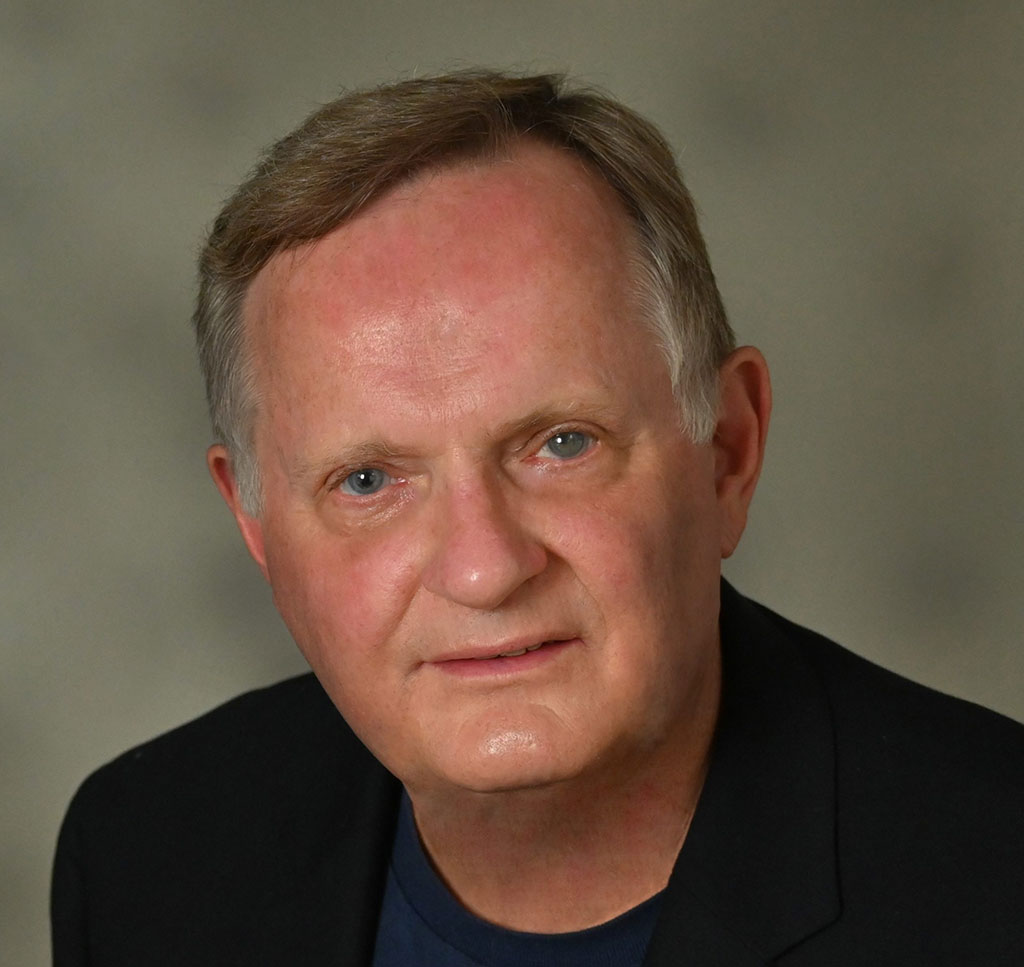
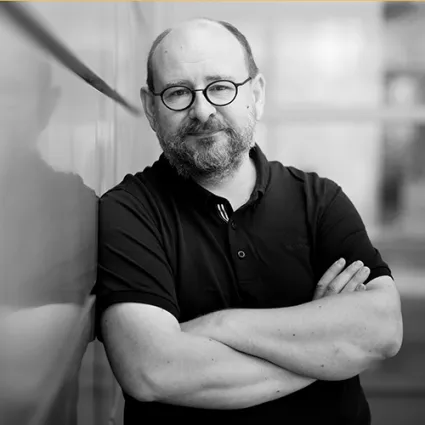
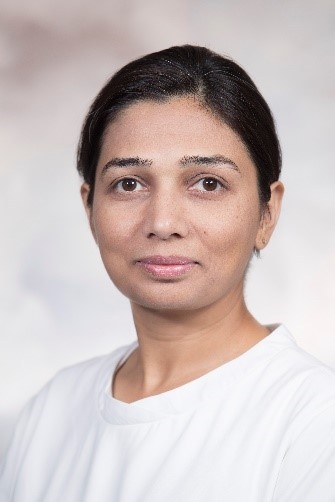
Del Siegle is the Lynn and Ray Neag Endowed Chair for Talent Development at the University of Connecticut's Neag School of Education. He holds concurrent roles as Director of the National Center for Research on Gifted Education (NCRGE) and the Renzulli Center for Creativity, Gifted Education, and Talent Development. He earned his Ph.D. in Special Education (Gifted and Talented/Educational Psychology) from UConn in 1995, following earlier degrees from Montana State University. His research focuses on gifted education equity, underachievement, and technology integration. Notable publications address barriers to underserved student access in gifted programs and teacher bias in identification processes. He has authored influential textbooks, including Education of the Gifted and Talented . Dr. Siegle has led national organizations like NAGC and AERA’s Giftedness SIG. Awards include the 2021 NAGC Founder’s Memorial Award and 2014 Montana AGATE Friend of AGATE Award. His work spans policy advocacy, teacher training, and program development, aiming to enhance equity and excellence in gifted education. Education: Ph.D., Special Education (Gifted & Talented/Educational Psychology), University of Connecticut, 1995 M.Ed., Curriculum (Gifted & Talented Education), Montana State University, 1989 B.S., Elementary Education (Mathematics), Montana State University, 1983 His research articles span gifted identification strategies, underachievement interventions, and technology-enhanced pedagogy. He advises numerous doctoral students focusing on gifted education equity and policy. Dr. Siegle directs programs like the Three Summers Program (GCT@UConn) and collaborates on initiatives such as Project BUMP UP to address systemic inequities in gifted education.
Dr. Masato Kikuchi is an Associate Professor of Japanese in the School of Modern Languages at Georgia Tech. He holds a PhD from the University of Pittsburgh (1995), an M.S. in Intercultural Communication (1982), and a B.A. from International Christian University (1979). His research focuses on instructional technologies for language acquisition, particularly leveraging virtual worlds like Second Life for immersive Japanese learning. He has developed platforms such as the 'Sky Platform at EduNation III,' exploring 3D visualization for grammar concepts and comparative studies on 3D vs. 2D language learning tools. Dr. Kikuchi teaches advanced and intermediate Japanese courses, specializing in CALL (Computer-Assisted Language Learning), technical translation, and intercultural communication. His work emphasizes integrating technology into language education, including courseware design for online and hybrid learning environments. Recent projects include software for virtual world-based communicative practice and research on NMT (Neural Machine Translation) as a pedagogical tool. His publications span conference proceedings, courseware development, and software tools like the 'Understanding Written Japanese' CD-ROM series. He actively presents on topics such as virtual world design, information gap exercises, and Japanese course design. His research aligns with Georgia Tech’s focus on STEM-integrated language education and international collaborations.
Samir Bali is a Professor of Physics at Miami University's College of Arts and Science. He joined Miami in 2000 and holds a Ph.D. in Physics from the University of Rochester (1994) and a B.Sc. in Physics from Lucknow University (1986). His research focuses on experimental quantum optics, quantum metrology, and ultra-cold atom physics, particularly in optical lattices and electromagnetically induced transparency. He is a core member of the Macklin Quantum Information Sciences (MQuIS) Group and the SQuInT network. Bali teaches graduate courses in electromagnetism and quantum mechanics, as well as undergraduate physics courses and advanced labs in lasers and optics. His lab (Kreger 115) explores phenomena like light slowing, magnetometry, and novel quantum technologies. He actively engages in physics outreach, demonstrating concepts through experiments like ping-pong cannon demonstrations for school students. His work bridges fundamental research with applications in nanolithography and quantum computing. Education: Ph.D., University of Rochester (1994); B.Sc., Lucknow University (1986) Lab Affiliations: Bali Labs, MQuIS Group, SQuInT Network Outreach: Regular school visits with interactive physics demonstrations Research emphasizes transport properties of ultra-cold atoms in optical lattices, stochastic resonance, and optical sensing in turbid media. Recent studies probe quantum random walks and non-Brownian transport dynamics. Collaborations include undergraduate and graduate students in building advanced laser systems and vacuum setups.
Professor Karl Bernhard Friedrich serves as Universitätsprofessor and Chair of Metallurgical Process Engineering and Metal Recycling at RWTH Aachen University's Faculty of Georesources and Materials Engineering. He leads the Institute for Metallurgical Science and Electrometallurgy (IME), with his office located in Building 1401, Room 108 at Intzestraße 3 in Aachen. His leadership extends to numerous EU-funded research initiatives focused on sustainable metallurgy and circular economy principles. Professor Friedrich's research interests span metallurgical process engineering, metal recycling, extractive metallurgy (pyrometallurgy and hydrometallurgy), battery recycling technologies, lithium recovery processes, and vacuum metallurgy. His work emphasizes resource efficiency and sustainable practices in metal production and recycling, with particular focus on developing environmentally sound processes for electronic waste and battery recycling. The institute under his leadership has pioneered several innovative recycling concepts for lithium-ion batteries and electronic scrap. Analysis of his recent publications reveals a strong focus on battery recycling technologies, particularly lithium recovery from spent batteries through both pyrometallurgical and hydrometallurgical routes. His research group has developed advanced processes for black mass treatment, slag valorization, and metal recovery optimization. The work demonstrates increasing integration of digital technologies and multi-objective modeling in metallurgical process development. Honorary doctorate from Montanuniversität Leoben (2025) recognizing outstanding scientific achievements and commitment to promoting young scientists Long-standing collaboration with Montanuniversität Leoben through the Aachen-Leoben Workshop for non-ferrous metallurgists Professor Friedrich actively supervises numerous doctoral students and has established several collaborative research programs including the DFG priority program 'engineered artificial minerals,' and doctoral programs 'circular electronics' and 'circular e-cars.' His institute maintains strong industry connections, with growing demand for TBRC and VAR trial campaigns. The institute recently commissioned a new large-scale arc furnace and is preparing for leadership transition in early 2027. The IME under Professor Friedrich's leadership operates extensive research facilities focused on vacuum metallurgy, pyrometallurgy, and hydrometallurgy. The institute collaborates with industry partners through the GDMB Zinc & Lead Technical Committee and participates in numerous European research networks. Current research activities focus on developing sustainable processes for battery recycling, electronic waste treatment, and critical metal recovery with emphasis on circular economy principles.
Rick Rodriguez serves as Associate Professor of English in the Weissman School of Arts and Sciences at Baruch College, City University of New York (CUNY), where he teaches core literature courses including Survey of American Literature I, Great Works of Literature II, and Ethnic Literature across multiple semesters from 2013 to Spring 2025. His academic credentials include: Ph.D. in English from Loyola University Chicago M.A. in English from Florida International University B.A. in English from Florida International University Rodriguez specializes in 18th-19th century American literary studies with critical focus on sovereignty, revolutionary movements, and transnational connections between U.S., Cuban, and Caribbean contexts. His work interrogates how concepts of immunity and political authority manifest in literary texts, particularly examining racial formations and postcolonial perspectives within canonical and marginalized narratives. This research intersects with broader themes of globalization, ethnic identity, and the literary construction of revolutionary subjectivity. His publication trajectory reveals consistent engagement with sovereignty studies across American literary history, evolving from Poe's political philosophy (2012) to Hawthorne's utopian visions (2025). Key thematic threads include Cuban-U.S. literary entanglements (evident in multiple 2016-2019 works), the servant's subversive agency in postcolonial texts, and reconceptualizations of revolution through sovereignty frameworks. Professional recognition includes: Academic Leave (Fall 2020) from WSAS Office of the Dean Global Themed Freshman Learning Community Course grant with teaching release (Weissman College, 2016) Rodriguez maintains active service commitments as Department Curriculum Committee Chair, English Department Executive Committee member, and faculty organizer for events like the Student Poetry Event. His committee work spans honors admissions, Latinx literature searches, and cross-school collaborations with Zicklin Business School. While no formal research grants are documented, his 2020 academic leave indicates institutional support for scholarly development. No laboratory facilities, research teams, or collaborative scientific infrastructure are referenced in his professional profile.
Shelley Roff serves as Associate Professor of Architecture and Planning within the Margie and Bill Klesse College of Engineering and Integrated Design at The University of Texas at San Antonio (UTSA). Her academic appointment bridges historical scholarship with contemporary architectural discourse through rigorous analysis of pre-industrial built environments. Dr. Roff's research fundamentally challenges patriarchal narratives in architectural history by excavating women's contributions to medieval and early modern construction. Her work demonstrates how female laborers, merchants, and property owners shaped urban landscapes across Spain, Catalonia, and colonial territories through meticulous examination of tax records, guild documents, and material artifacts. This feminist reclamation of architectural history reveals complex gendered economies in construction trades while analyzing how urban prosperity narratives masked socioeconomic disparities. Analysis of her publication trajectory since 2009 shows consistent methodological innovation, evolving from case studies of specific cities (Barcelona, Valencia) to broader theoretical frameworks for understanding gender in global architectural history. Her scholarship increasingly incorporates comparative colonial perspectives while maintaining primary focus on Iberian contexts, with recent work interrogating how women navigated restrictive social structures to participate in building processes. Her scholarly impact is recognized through prestigious awards: Bogliasco Fellowship (2019) from the Bogliasco Foundation for advanced research in humanities Fulbright U.S. Student Program (1995) supporting international research with the U.S. Department of State While the source material provides no details about doctoral advisees or current research grants, Dr. Roff's sustained publication record in leading architecture/history venues indicates active mentorship and research leadership. Her work with the Virtual Archive of Medieval Barcelona project demonstrates commitment to digital scholarship methodologies that preserve and reinterpret historical architectural data for contemporary pedagogy.
Prof. Dr. Birgit Krawietz is a distinguished Professor at the Institute for Islamic Studies within the Department of History and Cultural Studies at the Free University of Berlin. Her academic work spans multiple disciplines within Islamic Studies, with particular focus on Islamic law, cultural history, and the intersection of religion with contemporary social practices. She actively supervises doctoral students and serves on important academic committees including as Chair of the Doctoral Committee of the Department of History and Cultural Studies and as a member of the Advisory Board of the Orient-Institut-Beirut (OIB). Her research interests encompass a diverse range of topics including Islamic normativity, Salafism, body and sport studies, and regional studies of the Arabian Gulf and Türkiye. Krawietz has established herself as a leading scholar examining how Islamic legal traditions interact with modern practices, particularly in areas like sports, medical ethics, and consumer culture. Her work often explores the tension between traditional Islamic jurisprudence and contemporary social transformations. Analysis of her recent publications reveals a consistent scholarly trajectory examining Islamic legal traditions through cultural and anthropological lenses. Her work demonstrates particular strength in analyzing bodily practices within Islamic contexts, from oil wrestling traditions in Turkey to medical ethics and sports regulations. She has made significant contributions to understanding how Islamic legal traditions adapt to modern contexts, particularly in the Gulf region where traditional practices intersect with rapid urbanization and globalization. Prof. Krawietz has supervised numerous doctoral projects covering diverse topics including Islamic jurisprudence regarding non-Muslims, theology in the Shafi'i school, and the recited Qur'an. Her academic leadership extends to organizing conferences and workshops, including upcoming events like the "South-South Comparativism" conference scheduled for June 2025. She has also served as co-editor for multiple significant publications that have shaped contemporary discourse in Islamic Studies. Her teaching portfolio demonstrates engagement with both foundational Islamic legal concepts and contemporary applications, including courses on human body modifications in Islamic jurisprudence, food regulations, and space construction in Islamic contexts. Her academic influence extends beyond Berlin through her membership in the Deutsche Arbeitsgemeinschaft Vorderer Orient (DAVO) and her participation in international scholarly networks.
Carl Wilén is a Postdoctoral Fellow in Human Rights Studies at the Department of History, Faculty of Humanities and Theology, Lund University. He is also affiliated with Sophiapol (Sociologie, Philosophie et Anthropologie Politique) at Université Paris Nanterre. Since spring 2023, he has been conducting research on human rights with a particular focus on the Haitian Revolution. Wilén completed his PhD in Sociology in 2022 with a dissertation titled Interpreting the Haitian Revolution: From the Rights of man to Human Rights . His academic journey reflects a deep engagement with critical theory and historical analysis of political concepts. His research interests span Marxist and non-Marxist critique of right, the history and contemporary status of human rights, the Haitian Revolution, Marxist theory, social movements, revolution theory, and methodological issues relating to ideology critique. His work consistently examines the relationship between universal political forms and social content, particularly focusing on how revolutionary movements shape contemporary understandings of human rights. Wilén's scholarship reveals a strong commitment to understanding the historical roots of current human rights frameworks while critically examining their limitations and contradictions. His publication record demonstrates significant scholarly output with a clear thematic progression. Beginning with foundational work on the Haitian Revolution and its connection to human rights discourse, his research has expanded to examine broader questions about the relationship between neoliberalism and human rights, the critique of legal forms in Marxist theory, and the theoretical underpinnings of revolutionary movements. His 2025 publications continue this trajectory with sophisticated analyses of Pashukanis's work and the universality paradigm in Haitian revolutionary studies. Wilén serves on the editorial boards of the journals Röda rummet and Fronesis , demonstrating his active engagement with academic publishing and scholarly debate. His teaching experience spans sociology at undergraduate and graduate levels, psychology master's programs, teacher education, and instruction on the history and theory of science for natural science students. His current research projects include 'Human rights and the Haitian Revolution: Rights, inequality and movement texts' (2023-2026) and 'Pashukanis & Critique of Right in the Twenty First Century' (2024), reflecting his ongoing commitment to advancing critical scholarship in human rights and Marxist legal theory.
Lars Hallnäs is an Associate Professor in Logic at Stockholm University and affiliated with the Department of Design, Academy of Textiles, Technology and Economics at the University of Borås. He holds a doctorate in theoretical philosophy with a thesis in mathematical logic and has been an active composer since 1970. Doctorate in Theoretical Philosophy (Mathematical Logic) Education at Malmö Academy of Music, Royal Academy of Music in Stockholm, and Instituut voor Sonologie, Utrecht University His research spans mathematical logic (proof theory, normalization) and design disciplines (interaction design, smart textiles, artistic research). He explores intersections of technology, philosophy, and textile aesthetics, including concepts like slow technology and expressive design. Key trends in his publications include proof-theoretic foundations (1980s-2020s), artistic research methodologies (2010s), and textile-technology integration (2000s-2020s). Notable contributions address definitional reflection, wearable interactions, and sustainability theology. He served as Chair of the Swedish Research Council's Committee for Artistic Research (2016-2018) and coordinated the EU-funded ArcInTexETN network under the Marie Skłodowska-Curie programs. He supervises doctoral students in design research, though specific names are not provided.
Beat Rechsteiner is a Senior Lecturer and Postdoctoral Researcher at the Institute of Education, University of Zurich, specializing in educational processes within schools. He serves as Project Lead for the SNSF Research Project R2 (Regulation of Routines in Teaching Development) and contributes to theoretical and empirical research on teacher collaboration, school improvement, and social network analysis. His work emphasizes self-regulated learning, instructional capacity, and adaptive strategies for educational challenges. Doctoral Program in Education (University of Zurich, 2018–2022) Master’s in Educational Science (University of Zurich, 2014–2018) Secondary School Teacher Training (Zurich University of Teacher Education, 2005–2009) His research focuses on: Teacher collaboration networks and their impact on school improvement Professional development dynamics through experience sampling Brokerage mechanisms in educational change Adaptation of routines during crises (e.g., pandemic effects on math competencies) Recent publications highlight trends in social network analysis, school reform, and collective regulation. Key themes include boundary-crossing activities, data-driven school development, and stress management in collaborative environments. Awards include the GRC Travel Grant (2022). He actively reviews for journals like Teaching and Teacher Education and Journal of Educational Change , participates in international exchanges (University of Antwerp), and teaches graduate courses on systematic reviews, school improvement routines, and educational research.
Professor Luke Connal is a full professor at the Research School of Chemistry at the Australian National University (ANU), where he leads the Connal Group. He joined ANU in 2017 after serving as a Senior Lecturer at the University of Melbourne. Currently, he holds an ARC mid-career industry fellowship and serves as the chair of the Royal Australian Chemical Institute (RACI) polymer division. Professor Connal is also an associate editor for the Royal Society of Chemistry journal "Molecular Systems Design and Engineering" and co-founder of two spin-out companies focused on polymer technologies. Professor Connal received his Bachelor of Chemical Engineering and PhD in polymer chemistry from the University of Melbourne, Australia. Following his doctoral studies, he completed a post-doctoral position with Professor Frank Caruso at the University of Melbourne, developing new techniques for the self-assembly of polymers. He then held a joint Sir Keith Murdoch postdoctoral Fellowship and Australian Linkage International Fellowship at the University of California, Santa Barbara, working with Professor Craig Hawker. Professor Connal's research focuses on the development of molecular design concepts to create new materials for diverse applications, including artificial skin and tissues, sustainable polymers and surfactants, additive manufacturing electronics, and water harvesting. His core competencies center around advanced polymer design, self-assembly, and catalysis . His group explores four main research themes: Catalysis, Functional Materials and Interfaces, Soft Matter, and Supramolecular Chemistry . They develop innovative materials such as enzyme-inspired polymer catalysts, smart polymers for 3D printing, and polymer electrolytes for energy storage applications. Analysis of Professor Connal's recent publications reveals a strong focus on developing biomimetic materials and responsive polymers. His work bridges fundamental polymer chemistry with practical applications in environmental remediation, healthcare, and sustainable technologies. A notable trend is the increasing emphasis on CO2 capture technologies through enzyme-inspired catalysts and hydrogel systems. His group has also made significant contributions to 3D printing of functional materials , particularly self-healing gels and pH-responsive polymers. The research demonstrates a consistent trajectory toward creating smart, responsive materials with applications addressing global challenges in sustainability and healthcare. David Syme Research Prize (2020) Grimwade Prize in Industrial Chemistry (2019) Professor Connal actively supervises multiple PhD students including Lilian Boton, Jason Buchanan, Sandra Jestin, Saif Rahaman, Peidong Shen, Ming Li Tan, Moki Thanusing, and Jekaterina Viktorova. His current research is supported by several significant grants including projects on sustainable and compostable plastic alternatives, multimaterial 3D printed antenna arrays, developing vitrimers as next-generation reusable plastics, multi-material 3D printing, and smart materials for atmospheric water management. These projects demonstrate his commitment to translating fundamental polymer research into practical solutions for environmental and technological challenges. The Connal Group at ANU operates at the intersection of polymer chemistry and materials science, developing innovative solutions across multiple domains. Their laboratory work focuses on creating new polymers with applications spanning artificial skin development, sustainable packaging alternatives, atmospheric water harvesting, and advanced electronics. The group's unique approach combines biomimicry principles with cutting-edge polymer synthesis techniques to create materials with precisely controlled properties. Current projects include developing strong and self-healing polymer materials for biological applications, expanding 3D printing capabilities for functional materials, creating fully recyclable or compostable plastics, and designing thermoresponsive polymer desiccants for sustainable water harvesting.
Sergey Glebov is Professor of History at Smith College with a joint appointment in the History Departments of Smith and Amherst colleges. His academic work centers on the intellectual, political and cultural history of the Russian empire and Soviet Union, particularly examining ideologies of imperial expansion, Russian nationalism, and Russia's nationalities. He maintains an active scholarly profile with numerous publications and serves as a founding editor of Ab Imperio: Studies in New Imperial History and Nationalism in the Post-Soviet Space . Glebov's research interests focus on the history of the Russian Empire in Siberia, the Far East, and North America, with particular attention to interactions between native peoples and imperial structures, and the history of missionary activities and scholarly exploration. His work on the Eurasianist movement connects reimaginings of Russian imperial space with the emerging structuralism in interwar Europe, creating important theoretical bridges between Russian intellectual history and broader European thought. His scholarly output demonstrates consistent engagement with themes of imperial subjecthood, colonialism, and post-colonial theory, particularly examining how these concepts apply to the Russian imperial context. Glebov frequently collaborates with other leading scholars in the field, as evidenced by his co-authored publications with researchers like Ilya Gerasimov and Marina Mogilner. Major Publications: From Empire to Eurasia: Politics, Scholarship and Ideology in Russian Eurasianism, 1920s – 1930s (2017) Between Europe and Asia: The Origins, Theories and Legacies of Russian Eurasianism (2015, co-edited) Region v istorii imperii: istoricheskie esse of Sibiri (2013) As an active member of the academic community, Glebov maintains regular office hours for students and continues to produce significant scholarly work, with publications extending through 2023. His research contributes substantially to our understanding of Russian imperialism, Eurasian identity, and the complex relationship between center and periphery in imperial systems.
Pedro Neves Rito is an Associate Professor at the Department of Communication and Art within the School of Education at the Polytechnic Institute of Viseu, where he has been teaching since 2007. His teaching focuses on web programming, creative programming, microcontroller programming, sensors, and ICT training for pre-school and primary school teachers. He is also a member of the CI&DEI Research Group and has served as Coordinator of the Information and Communication Technologies Area since 2022. His educational background includes: Doctorate in Information Technologies and Systems from the University of Minho (2015) Master's degree in Multimedia in Education from the University of Aveiro (2007) Degree in Computer Engineering from the Instituto Superior de Engenharia de Coimbra Numerous professional certifications including Adobe Certified Expert in Dreamweaver CS3 and Flash CS3 Rito's research spans multiple innovative areas at the intersection of technology and education. His primary interests include the adoption and diffusion of technologies, creative programming and application development, video game design, and tangible interfaces. He has extensively explored how gamification techniques can enhance learning experiences, particularly in programming education, and has investigated the potential of augmented reality in educational contexts. His work often focuses on practical applications for classroom settings, especially for pre-school and primary school teachers. His recent publications show a strong trend toward integrating artificial intelligence in educational game design, with particular emphasis on STEAM education and programming concepts. He has conducted systematic reviews on the educational potential of video games and developed frameworks for designing educational mobile video games. His research consistently emphasizes practical implementation strategies for educators, with a growing focus on AI applications in educational settings. Rito actively supervises numerous graduate students across various programs, particularly in Arts, Multimedia, and Education fields. He has led and participated in multiple research projects including "dEweB - Digital Era: WEB 3.0 and beyond," "Smart City Kids Lab," and "Eco-sensors4Health." His work demonstrates a commitment to applying technology innovations in real educational settings through practical implementation and teacher training.
Dr Mahsheed Ansari serves as a Senior Lecturer in Islam and Contemporary Islamic Studies and Higher Degrees Research Coordinator at the Centre for Islamic Studies and Civilisation at Charles Sturt University. She also holds positions as a Research Fellow at the Centre for Religion and Ethics and Society (CRES) at Charles Sturt University and as a sessional Law lecturer at Western Sydney University. Her academic career spans teaching, research supervision, and community engagement focused on Islamic studies and Australian Muslim communities. Ansari holds a double degree in Law and Arts from Western Sydney University, a Master of Arts in Arabic and Islamic Studies from Sydney University, and a PhD in Historical Studies and Islamic Studies from Monash University. Her educational background provides a strong foundation for her interdisciplinary work bridging legal, historical, and religious studies. Her research explores multiple facets of Islamic intellectual history, theology, philosophy, and ethics, with a particular focus on the historical and cultural presence of Islam and Muslims in Australia. She has developed significant expertise in oral history methodologies to capture Muslim heritage, particularly through her Australian Muslim Heritage Project. Her work often examines the intersection of Islamic thought with contemporary social issues, including prophethood debates, Muslim women's experiences, and interfaith relations in the Australian context. Through her book Modern Debates in Prophecy and Prophethood in Islam: Muhammad Iqbal and Said Nursi (2023), she has contributed to contemporary theological discourse on Islamic prophetic tradition. Analysis of her recent publications reveals consistent thematic development across three main trajectories: historical and theological studies of Islamic thought (particularly regarding prophethood and Islamic modernism), Australian Muslim history and identity formation, and contemporary social issues affecting Muslim communities including gender, trauma, and political representation. Her work demonstrates increasing interdisciplinary engagement, moving from purely theological studies toward sociological, historical, and public policy applications. Ansari has received multiple research grants supporting her work on Australian Muslim history, including funding from Charles Sturt University ($1,700 in 2023, $14,500 in 2019, $15,000 in 2017-2018), the Islamic Foundation for Education & Welfare ($12,000 in 2023, $22,000 in 2017-2019), Cumberland Council ($8,000 in 2019), and the Public & Contextual Theology Research Project Grant ($9,500 in 2019, $25,000 in 2017-2018). As Higher Degrees Research Coordinator at CISAC, she supervises PhD candidates including Carol Mroue researching Islamic spirituality in post-traumatic growth for Australian Muslim women and previously supervised Mukesh Chander's work on citizenship issues. She has also co-supervised research on transnational Islamic movements and online religious education. Her teaching portfolio includes subjects on Islamic spirituality, women in Islam, Muslims in Australia, and Islamic morality across undergraduate and postgraduate levels. Her current research focuses on the Australian Muslim Heritage Project and Muslim Pioneers Project, particularly documenting Dr Ashfaq Ahmad's contributions to institutional development of Islam in Australia. These projects represent significant community-engaged scholarship that bridges academic research with cultural preservation efforts.
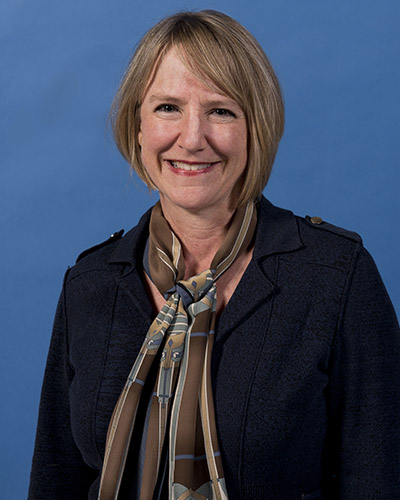
Tehseen Raza serves as a Lecturer in the Department of Electrical and Computer Engineering within Clemson University's College of Engineering, Computing and Applied Sciences. She joined the faculty in 2020, holding a Ph.D. in Electrical and Computer Engineering from Purdue University (2010) and a B.S. in Electrical Engineering from the University of Engineering and Technology, Lahore, Pakistan (2001). Her educational background includes: Ph.D. in Electrical and Computer Engineering, Purdue University, 2010 B.S. in Electrical Engineering, University of Engineering and Technology, Lahore, Pakistan, 2001 Dr. Raza's research spans cutting-edge domains in nanoscale electronics and education. Her primary interests include: Semiconductor Devices Spintronics Nanoelectronics NanoEducation Electronics Microelectronics Her foundational work on NEGF-based tight-binding models for magnetic heterostructures during her Ph.D. directly informs her current investigations into spin-polarized transport and magnetic tunnel junctions. Analysis of her 15 most recent publications reveals a strong interdisciplinary trajectory blending theoretical modeling with educational innovation. Key research thrusts include quantum transport in magnetic heterostructures (particularly Fe/MgO/Fe systems), nanoscale memory devices using graphene contacts, and the development of computational tools for nanotechnology education. Her work consistently bridges fundamental physics with practical applications in spintronics and nano-education. Scientific Awards: No awards listed in available documentation Regarding academic mentorship and funding, the available information does not specify any graduate students under her supervision or details about research grants. Her teaching portfolio demonstrates significant contribution to core electrical engineering education through courses in Semiconductor Devices, Circuit Analysis, Microelectronics, and Electromagnetic Theory. No dedicated research laboratories or specialized teams are mentioned in the provided materials, though her publications indicate collaborative work in computational nanoelectronics and educational tool development.