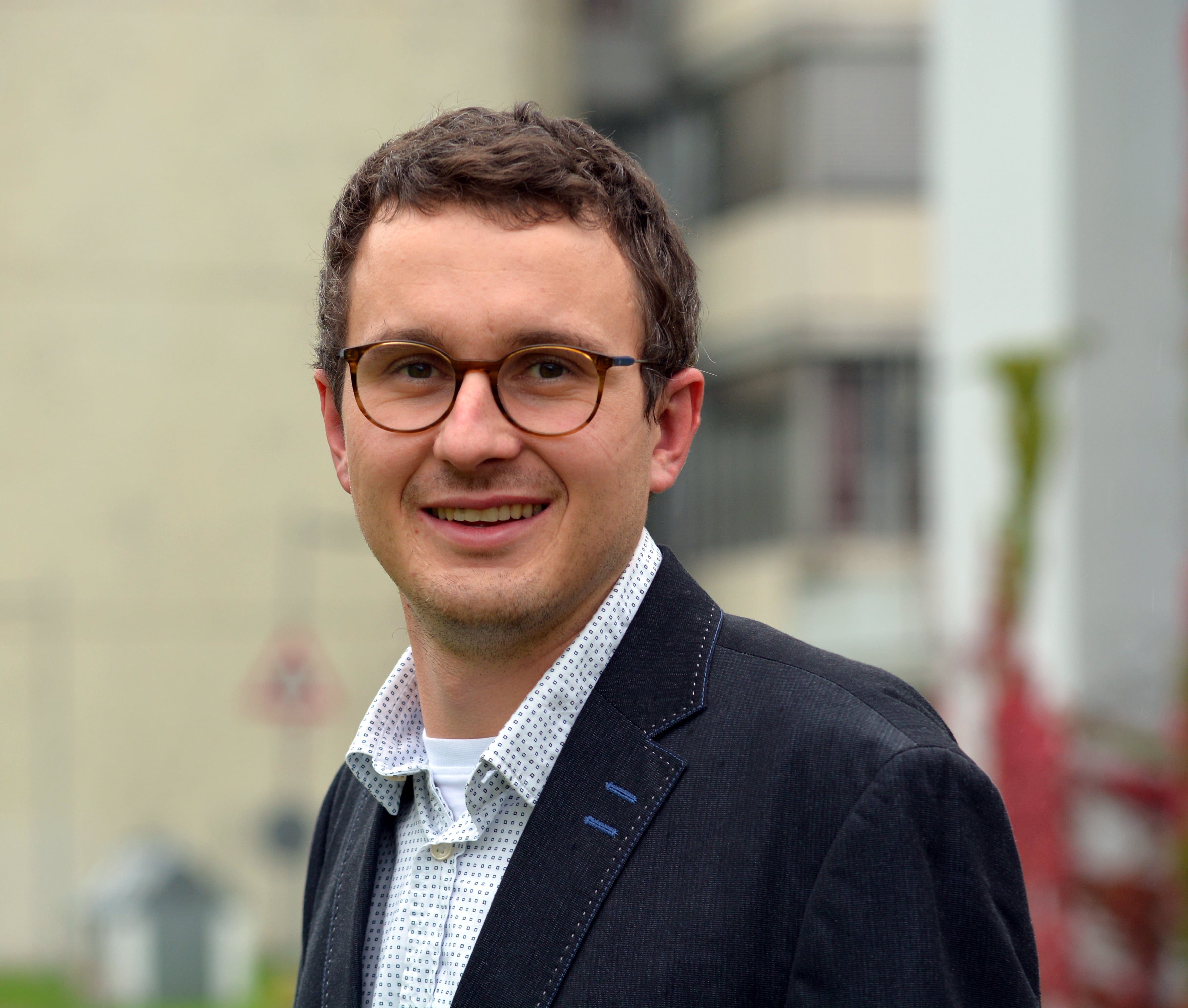
Lukas Kühne is an Assistant Professor (Juniorprofessor) at Bielefeld University's Faculty of Mathematics. His research focuses on the intersection of combinatorics, algebra, and geometry, with specializations in hyperplane arrangements, matroids, polytopes, and computational methods. He actively contributes to software development for combinatorial mathematics, including the Oscar module for matroids and the CountingChambers.jl package. Education: PhD from Hebrew University of Jerusalem (2017-2020), Master's from University of Bonn (2014-2017), and Bachelor's from TU Kaiserslautern (2011-2014). His work has been supported by grants such as DFG SPP 2458 and SFB-TRR 358. Research interests include experimental methods in combinatorics, geometric realizability of matroids, and applications of discrete mathematics in algebraic geometry. Recent work explores simpliciality in arrangements, cosmological polytopes, and algorithmic approaches to hyperplane arrangement properties. Teaching responsibilities include courses on Linear Algebra, Discrete Mathematics, and Finite Reflection Groups. He organizes conferences such as the 'Dive into Research: Simpliciality in Arrangements and Matroids' and has participated in international workshops on combinatorial algebraic geometry.
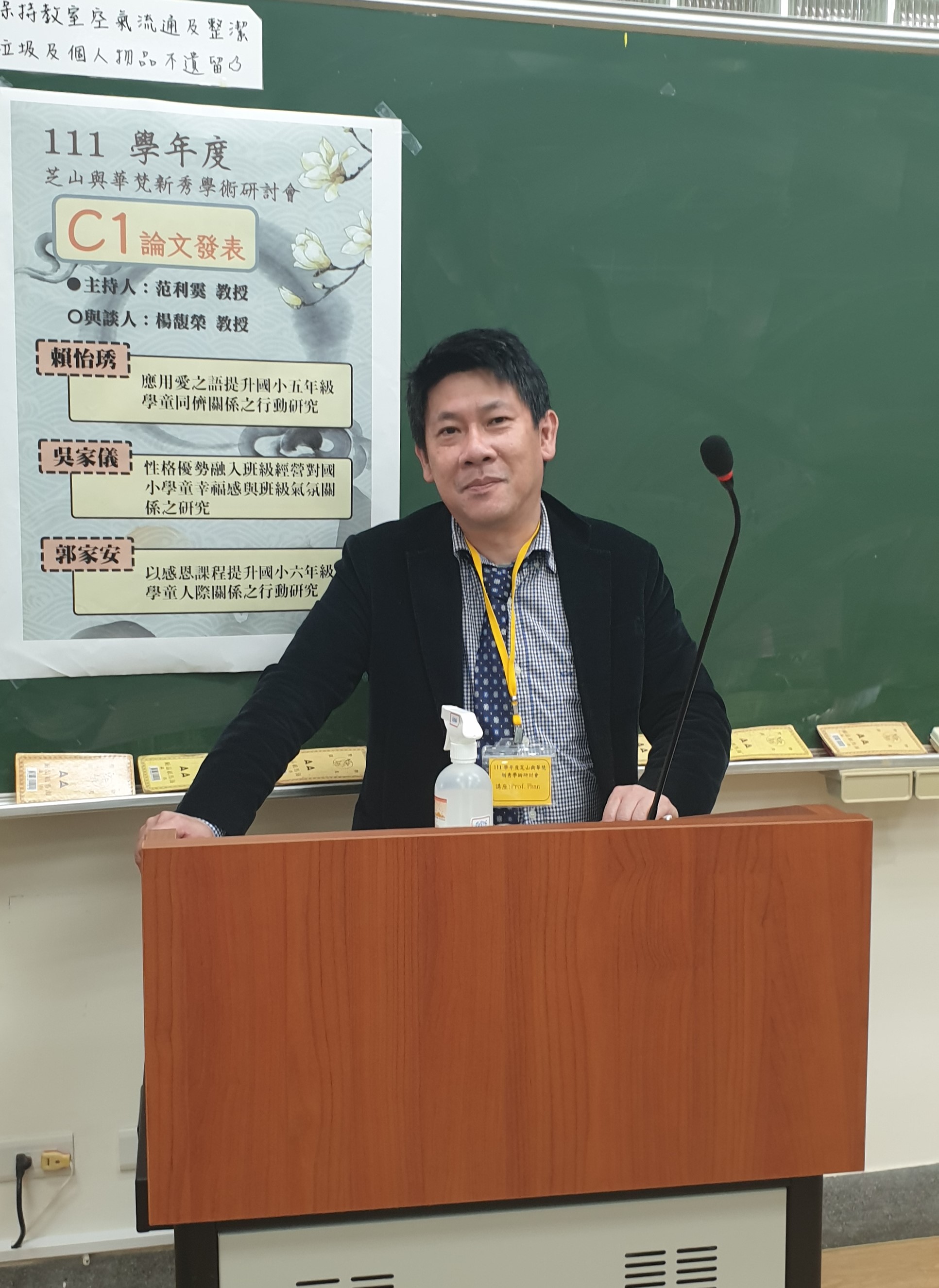
Huy P. Phan is a full Professor in the School of Education at the University of New England (UNE), Faculty of Humanities, Arts, Social Sciences and Education. His academic expertise spans educational psychology, positive and holistic psychology, life and death education, cognitive load theory, and trans-mystical psychology. He completed his Ph.D. in Educational Psychology at the University of Sydney and has since become a leading international scholar in his fields. B.Ed (Mathematics) (Hons, Class 1), University of Sydney, Australia Ph.D. in Educational Psychology, University of Sydney, Australia Professor Phan's research is deeply interdisciplinary, integrating cognitive, motivational, philosophical, and sociocultural perspectives. His primary interests include cognitive load theory , optimal best practice , holistic and positive psychology , life and death education , mindfulness and meditation , and trans-mystical experiences . He has developed several original theoretical frameworks, such as the Framework of Achievement Bests , the Life + Death Education Framework , and the Multifaceted Model of Mindfulness , which have advanced understanding in education and psychology. His recent publications reflect a strong trend toward integrating existential, philosophical, and humanistic dimensions into educational psychology. He emphasizes methodological rigor, employing longitudinal, quasi-experimental, and philosophical designs, often using advanced statistical techniques like latent growth modeling and structural equation modeling. His work bridges theory and practice, aiming to improve teaching, learning, and well-being across diverse educational and cultural contexts. Professor Phan has been recognized as being among the top 3.5% of researchers worldwide by citation impact and was nominated for the ARC College of Experts in 2019. His contributions helped elevate UNE’s Excellence in Research for Australia (ERA) rating in Educational Psychology to 4, indicating international competitiveness. He actively mentors early-career researchers and students from diverse backgrounds and has led significant academic initiatives, including the development of new degree programs such as the Bachelor of Education (K–12). He serves on editorial boards of major journals including Frontiers in Psychology , PLOS One , and Teaching in Higher Education . His consultancy work extends to institutions in Taiwan, Indonesia, and Malaysia, focusing on instructional design, motivation, and holistic education. Professor Phan leads an active research program with ongoing projects on teacher well-being , cognitive load and instructional design , and life and death education . He is currently developing a unifying model of human agency that integrates life, death, and transcendence, reflecting his broader vision of advancing interdisciplinary and cross-cultural understanding of the human condition.
Viktor Levandovskyy is a Visiting Professor at the Institute of Mathematics, Faculty of Mathematics and Natural Sciences, University of Kassel, Germany. He previously held the position of Assistant Professor at RWTH Aachen University and has been a postdoctoral researcher at the Research Institute for Symbolic Computation in Linz, Austria. His research focuses on Algebra, Computer Algebra, and Non-commutative Gröbner Bases , with significant applications in differential equations, symbolic computation, and control theory. His work bridges theoretical mathematics with practical algorithm development and software implementation. His recent publications demonstrate a strong trend in non-commutative algebraic computations , particularly in developing and applying Gröbner basis techniques for free algebras and Ore localizations, often implemented within the Singular computer algebra system. His work spans pure algebra (e.g., the Dixmier Conjecture) to applied symbolic methods (e.g., structural optimization). Co-editor, Journal of Symbolic Computation, Special Issue on Symbolic Computation and its Applications (2012) Co-editor, Journal of Symbolic Computation, Special Issue on Non-commutative Gröbner Bases and Applications (2007) Levandovskyy has led significant software development projects, most notably the Plural and Letterplace subsystems of Singular. He has advised students and led research teams, contributing to a network of over 5,700 reads and 769 citations. His work involves extensive collaboration with researchers in algebra and computer science. He is actively involved in the computer algebra community, presenting at major conferences like ISSAC and MTNS, and his research continues to advance algorithmic methods in non-commutative algebra.
Louis-Noël Pouchet is an Associate Professor in the Department of Computer Science at Colorado State University, with a joint appointment in the Electrical and Computer Engineering department. He leads research in high-performance computing, focusing on polyhedral compilation, performance portability, and hardware-software co-design. His research interests include polyhedral compilation, iterative and adaptive compilation, machine learning for compilers, performance-oriented domain-specific languages, energy-aware program optimization, and high-level synthesis. He develops compiler technologies to optimize and parallelize code for heterogeneous platforms, with applications in scientific computing and embedded systems. The 15 most recent publications highlight a strong focus on compiler optimization for high-performance systems, particularly using the polyhedral model. Key themes include data locality, parallelization, vectorization, memory access optimization, and performance modeling. His work spans both theoretical advances in program transformation and practical implementations in tools like PoCC and PolyOpt. Member, Center for Domain-Specific Computing (NSF) Member, DSL Technology for Exascale Computing (DoE) Lead, Polyhedral Compilation Research (NSF and Intel ISRA) Former member, Platform-Aware Compilation Environment (DARPA) He teaches courses on polyhedral compilation and has developed widely used software tools such as PoCC, PolyBench/C, and PolyOpt/C. His research is supported by major funding agencies including NSF, DoE, and Intel.
Dr. David Easdown is a Lecturer at the University of Sydney , affiliated with the Algebra Research Group and the Sydney University Tertiary Mathematics Education Group. His research focuses on algebra, particularly combinatorial semigroup theory, aligning with the university's Research Strengths in 'Understanding the Universe' and 'Cultivating Scientific Capability'. He has co-authored numerous publications in journals like Journal of the Australian Mathematical Society and Semigroup Forum , and contributed to educational conferences on mathematics teaching. Research Interests Combinatorial Semigroup Theory Biordered Sets in Algebra Mathematics Pedagogy Summer School Educational Models Teaching Contributions Dr. Easdown has taught Math1002 Linear Algebra and served as a Deputy Head of School. He has explored innovative examination design and the role of proof in mathematics instruction. Publications His recent work spans inverse semigroups, educational studies comparing summer and term-time mathematics programs, and pedagogical strategies for linear algebra. Notable collaborations include research with L.M. Shneerson and Neil Saunders.
Dr. Thomas Huettemann is a Senior Lecturer at the School of Mathematics and Physics , Queen's University Belfast, affiliated with the Mathematical Sciences Research Centre. His research focuses on homological algebra and graded algebra, with significant contributions to algebraic K-theory, homotopy theory, and polynomial extensions. Huettemann's work bridges topological methods and graded algebraic structures, particularly in finite domination and Novikov homology. His publications highlight trends in algebraic K-theory , graded rings , and homotopy invariants . Key subfields include non-commutative localization, chain complexes, and cohomological techniques. Scientific Awards : Dissertationspreis der Westfälisch-Lippischen Universitätsgesellschaft (2000) Huettemann has supervised projects like Toric methods in homotopy theory (2009–2011) and actively participates in international conferences, including the 36th Annual Meeting of the Irish Mathematical Society (2023).
Daniel Grier is an Assistant Professor at the University of California, San Diego in the Computer Science and Engineering and Mathematics departments. His research focuses on quantum complexity theory , particularly near-term quantum computing paradigms and proving quantum advantage over classical systems. PhD in Computer Science from MIT under Scott Aaronson Postdoc at the Institute for Quantum Computing (University of Waterloo) B.S. in Computer Science and Mathematics from University of South Carolina His work spans quantum algorithms , complexity theory , and quantum simulation , with notable contributions to BosonSampling , Clifford circuits , and classical shadow tomography . He has developed open-source tools like gridCHP++ , a C++ stabilizer simulator for planar quantum circuits. Publications highlight collaborations with researchers including Scott Aaronson , David Gosset , and Luke Schaeffer , covering topics such as quantum query complexity , quantum simulation efficiency , and quantum-classical separations .
Eliana Duarte is an Assistant Professor in Probability and Statistics at Universidade do Porto, where she conducts interdisciplinary research at the intersection of statistics, algebraic geometry, commutative algebra, and combinatorics. Her work focuses on algebraic and geometric methods in statistical modeling, particularly in discrete models, graphical models, and tensor product surfaces. Her research interests include Algebraic Statistics , Graphical Models , Discrete Statistical Models , Toric Varieties , Implicitization , and Polynomial Systems . She applies algebraic techniques to understand the structure of statistical models and their maximum likelihood estimators, with recent work on decomposable models, polytree learning, and rational linear precision in higher-dimensional polytopes. The trend in her recent publications (2016–2024) reflects a consistent focus on the algebraic foundations of statistical models, combining symbolic computation with geometric insight. Her work spans pure mathematical theory and applications in causal inference, microbiome modeling, and geometric design. Key themes include the use of syzygies, toric fiber products, and virtual resolutions in modeling and implicitization. Scientific Awards: No awards listed in the provided text. Advising and Grants: Dr. Duarte advises graduate students in statistics and algebraic methods, although specific advisee names are not listed. She is involved in multiple research projects related to algebraic statistics and probabilistic modeling. While no specific grants are mentioned, her sustained publication record suggests active research funding. Labs and Teams: No specific laboratory or research team name is provided in the text. However, her collaborative publications indicate active participation in interdisciplinary research networks, particularly in algebraic statistics and computational geometry.
Fabio Mogavero is an Associate Professor in Theoretical Computer Science at the Department of Electrical Engineering and Information Technology, Università degli Studi di Napoli Federico II. His research spans formal specification, verification, and synthesis of systems, with a strong focus on logics, automata, games, and database theory. Ph.D. in Computer Science, Università degli Studi di Napoli Federico II, 2011 M.Eng. in Computer Science Engineering, Università degli Studi di Napoli Federico II, 2007 B.Eng. in Computer Science Engineering, Università degli Studi di Napoli Federico II, 2005 His primary research interests include formal verification, temporal and strategic logics, automata over infinite structures, decidability, and database theory—particularly bag semantics. He has made significant contributions to the theory of parity and mean-payoff games, strategy logic, and SHACL/RDF validation. His recent work explores fragments of first-order and monadic second-order logic, and he actively publishes in top venues such as LICS, ICALP, and IJCAI. The most recent articles highlight a sustained focus on logical characterizations (e.g., automata-theoretic models for temporal logics), game-solving algorithms, and foundational database theory, especially around SHACL and multiset semantics. His work bridges theoretical computer science with practical formal methods. Scientific Awards and Recognition: Erdös number at most 3 (via Erdös → J.H. Spencer → M.Y. Vardi → F. Mogavero) Fabio Mogavero has served on the program committees of major conferences including IJCAI, AAMAS, ECAI, and LICS. He has co-edited proceedings for the Strategic Reasoning (SR) and OVERLAY workshops. He has collaborated with leading researchers such as Moshe Y. Vardi, Orna Kupferman, and Michael Benedikt. He has held postdoctoral and teaching positions at the University of Oxford and Università di Verona. He is actively involved in the theoretical computer science community through conference organization and editorial work. He maintains research collaborations across Europe and the U.S. and continues to contribute to foundational and applied aspects of logic in computer science.
Niccolò Veltri is an Assistant Professor in the Department of Software Science at Tallinn University of Technology, Estonia. He is a member of the Logic and Semantics research group and co-organizes the Theory Seminar (TSEM). His primary research interests lie in Type Theory , Programming Language Semantics , Formalization of Mathematics , and Categorical Proof Theory . His work emphasizes rigorous formalization using proof assistants, particularly Agda, to develop and verify complex logical and computational systems. The recent publications highlight a consistent focus on foundational aspects of logic and computation. Key themes include the formalization and metatheory of substructural and non-commutative logics (e.g., Lambek calculus, skew monoidal categories), the use of focusing for proof normalization, the semantics of process calculi (CCS, π-calculus) in guarded and cubical type theories, and the constructive treatment of coinductive data and final semantics. The consistent use of Agda for formalization is a hallmark of his research output. No scientific awards were mentioned in the provided text. Niccolò Veltri advises several PhD students, including Michel Smykalla, Ioannis Andreou, Andrea Laretto, Michele De Pascalis, Philipp Joram, and Cheng-Syuan Wan, often in collaboration with Tarmo Uustalu and Fosco Loregian. There is no mention of specific grants in the provided text. He is a core member of the Logic and Semantics research group at the Institute of Computer Science, Tallinn University of Technology, which drives his collaborative research and the organization of the Theory Seminar (TSEM).
Eijiro Sumii is a Professor at the Graduate School of Information Sciences, Tohoku University, where he has been employed since May 2014. Previously, he served as an Associate Professor at the same institution from May 2005 to March 2014, and as an Assistant Professor in the Department of Computer Science at the University of Tokyo from April 2001 to March 2003. He has also held research positions at the University of Pennsylvania under Professor Benjamin C. Pierce. Dr. Sumii's research focuses on the theoretical foundations and practical applications of programming languages and type systems. His work spans multiple domains including process calculi, partial evaluation, security foundations, and functional programming. He has made significant contributions to the field through his development of MinCaml, an educational compiler, and his Japanese translation of the seminal work "Types and Programming Languages" by Benjamin Pierce. His recent publications demonstrate a consistent focus on programming language theory, with particular emphasis on type systems for security applications, partial evaluation techniques, and functional programming paradigms. The publications reveal a trajectory moving from foundational theoretical work toward more applied security and distributed systems research. Dr. Sumii is highly active in the academic community, having served on program committees for major conferences including ICFP, POPL, PLAS, and ESOP. He has organized numerous workshops and conferences, including serving as program chair for ICFP 2016 and FLOPS 2014. He is the organizer of the PEPT (Partial Evaluation and Program Transformation) mailing list, which serves as an important forum for researchers in this specialized area. His leadership extends to membership in the Global Young Academy since May 2015 and the Young Academy of Japan since November 2010, where he served as Secretary from February 2015.
Prof. Janusz Frączek is a faculty member at Warsaw University of Technology, holding the academic rank of Professor. His research focuses on computational mechanics, kinematics and dynamics of multibody systems, robotics, and biomechanics. University: Warsaw University of Technology Academic Rank: Professor Contact: janusz.fraczek@pw.edu.pl | New Aviation Building, room 322 Research Interests: Computer methods in mechanics Kinematics and dynamics of multibody systems Robotics Biomechanics Teaching Activities: Dynamics of Multibody Systems Surveying and experimental techniques Theory of Machines and Mechanisms I Article Trends: The 15 most recent publications emphasize computational mechanics, robotics, Hamiltonian frameworks, and optimization. Topics include redundant constraints, parallel computing, nonholonomic systems, and augmented Lagrangian methods.
Dietrich Burde is an Associate Professor at the Faculty of Mathematics , Department of Mathematics , active since 1993. His research focuses on Lie algebras , algebraic structures , and representation theory , with significant contributions to post-Lie algebras , nilpotent and semisimple Lie algebras , and Zassenhaus conjectures . His recent work includes classifications of characteristically nilpotent Lie groups , post-Lie algebra structures , and counterexamples to the Zassenhaus conjecture . He explores connections between affine actions , crystallographic structures , and commutative post-Lie algebras . The keywords from his publications highlight his expertise in Mathematics , Lie Theory , Group Theory , and Algebraic Structures . His subfields include Rota-Baxter Operators , Semisimple Decompositions , Reductive Groups , and Nilpotent Extensions .
Antonio Algaba Duran is a Professor at the Higher Technical School of Engineering within the University of Seville , specializing in Applied Mathematics at the Center for Advanced Studies in Physics, Mathematics, and Computing . His research focuses on dynamical systems , nonlinear differential equations , and bifurcation theory , with significant contributions to the analysis of nilpotent singularities , homoclinic/heteroclinic orbits , and chaotic behavior in systems like the Lorenz , Chen , and Lü systems . Education : PhD from University of Seville (1996), thesis on Hypernormal forms and bifurcations in flat and three-dimensional systems , supervised by Emilio Freire Macías and Estanislao Gamero Gutiérrez. Research Highlights : 131+ publications since 1998, including 2 preprints Developed algorithms for normal forms and nonlinear time transformations to analyze canard explosions and homoclinic bifurcations Key work on Z2-symmetric systems , inverse integrating factors , and geometric criteria for centers Collaborators : Cristóbal García, Alejandro J. Rodríguez-Luis, Manuel Merino, Estanislao Gamero, and others. His scientific work spans applications in electronic circuits, biological systems, and physical models, with a focus on structural stability , analytic integrability , and global bifurcations .
Susana Ladra González is a Researcher at the University of A Coruña , affiliated with the Faculty of Computer Science and the Department of Computer Science and Information Technology . Her work focuses on Data Compression, Data Structures, Bioinformatics Algorithms, Databases, Data Mining, and Information Retrieval . Over 3 research six-year terms Supervised 2 doctoral/master's theses Research Trends : Recent publications span Data Warehousing , Blockchain Analysis , COVID-19 Wastewater Surveillance , Genomic Data Analysis , and Business Intelligence Applications across healthcare, sports, and environmental domains. Grants : Principal Investigator in projects funded by the Spanish Foundation for Science and Technology (FECYT) , European Union , Ministry of Science and Innovation , and regional agencies like the Galician Innovation Agency . Education & Supervision : Directed theses on topics including Blockchain Analysis , Data Warehousing , and Genomic Surveillance , with students such as Noelia Trigo Tasende and Fernando Silva Coira .