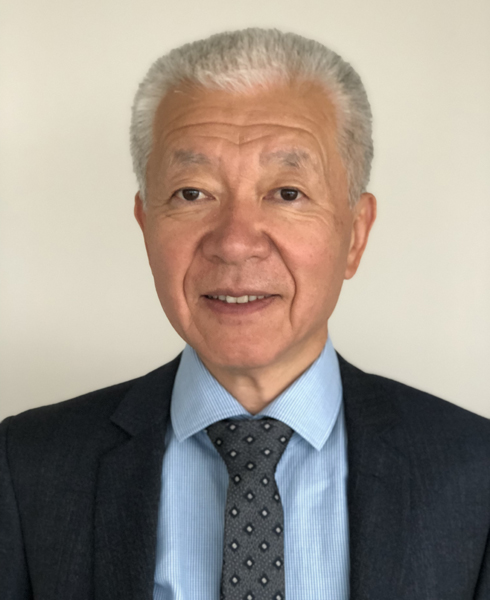
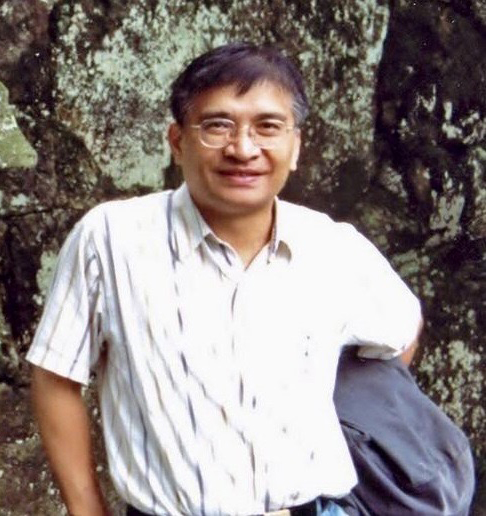
Zhang Yi-Cheng is a Full Professor of Theoretical Physics at the University of Fribourg, Switzerland, since 1992. His academic career includes visiting professorships at Nordita (Denmark) and INFN (Italy), and postdoctoral research at Brookhaven National Lab (USA). He specializes in interdisciplinary fields such as Econophysics , Statistical physics , and Complex network sciences , focusing on applications in financial markets, social systems, and global trade networks. His research explores topics like market dynamics, network structures, and algorithmic ranking systems. Notable awards include the 2011 Honorary Director of the Complexity Sciences Research Center and recognition as a 2011 Chinese '1000 Talents' awardee . His work bridges physics-based methodologies with socio-economic systems, addressing challenges in information-driven economies and networked societies. Zhang has contributed to influential studies on ranking algorithms, percolation theory in networks, and the interplay between economic complexity and trade. His interdisciplinary approach has led to advancements in understanding systemic risks, market inefficiencies, and the role of information in shaping global economic interactions.
Rupert Wimmer is a Professor at the Institute of Wood Technology and Renewable Resources of the University of Natural Resources and Life Sciences, Vienna. He serves as an Editorial Board Member for journals like Frontiers in Chemistry and Wood and Fiber Science , and has been a Review Editor for ISRN Forestry (2009–2018). His work bridges wood science , renewable materials , and dendrochronology , with a focus on 3D-printed bio-composites , triboelectric wood processing , and climate reconstruction . His research spans Biocomposites: Innovations in lignin-based materials , wood-plastic composites , and fully recyclable wall systems . Wood Technology: Studies on surface activation , mechanical properties , and dust reduction during machining. Dendrochronology: Climate history analysis via tree rings and wood chemistry . The most recent articles explore circular economy in construction, electrostatic wood treatment , and drought proxies , reflecting his interdisciplinary approach. Awards include Rudolf Sallinger S&B Innovation Award nominations (2018, 2019) German Study Prize for Wood Materials Research (2010) Fellow of the International Academy of Wood Science (2005) He has supervised over 74 theses, including Roman Myna (2025) on innovative dust reduction and Raphaela Hellmayr (2024) on wood-based circular bioeconomy . Grants from EU , FFG , and Fonds zur Förderung der wissenschaftlichen Forschung fund his work. Collaborations span institutions in Australia, Germany, and the Czech Republic.
Christoph Dellago is a full Professor of Computational Physics at the Faculty of Physics of the University of Vienna, where he has been a faculty member since 2003. He currently serves as Director of the Erwin Schrödinger Institute for Mathematics and Physics, Head of the Computational and Soft Matter Physics Group, and Project lead of EuroCC Austria - National Competence Centre for Supercomputing. Previously, he served as Dean of the Faculty of Physics (2009-2012) and Coordinator of the Doctoral College Advanced Functional Materials (DCAFM). Full Professor, Faculty of Physics, University of Vienna (2003-present) Director, Erwin Schrödinger Institute for Mathematics and Physics (2017-present) Head, Computational Physics and Soft Matter Group (2024-present) Coordinator, Doctoral College Advanced Functional Materials (DCAFM) Austrian Representative, Council of CECAM Dellago received his PhD in Physics from the University of Vienna in 1996, followed by postdoctoral research at UC Berkeley as a Schrödinger Fellow of the Austrian Science Foundation. His research focuses on developing computational methods to study rare events in condensed matter systems, particularly transition path sampling methodology for simulating nucleation, chemical reactions, and biomolecular reorganizations. He has pioneered the application of machine learning to molecular structure recognition and potential energy surfaces. Recent work examines self-assembly of nanocrystals, biopolymer folding, aqueous interfaces, phase separation in alloys, thermo-polarization, cavitation, and freezing phenomena. Analysis of Dellago's recent publications (2023-2025) reveals a strong emphasis on machine learning applications in computational physics, particularly neural network potentials for simulating water interfaces, crystal defects, and phase transitions. His work bridges traditional statistical mechanics with modern computational techniques, creating powerful tools for studying complex dynamical processes that occur on timescales far beyond conventional molecular dynamics simulations. The publications demonstrate increasing integration of machine learning with rare event sampling methods, reflecting the cutting-edge direction of computational statistical mechanics. Förderpreis der Stiftung Futura zur Förderung junger Südtiroler im Ausland (1997) The Raymond and Beverly Sackler Prize in the Physical Sciences (2005) UNIVIE Teaching Award of the University of Vienna (2014) Dellago leads an active research group with multiple PhD students and postdocs, focusing on computational statistical mechanics. His group develops trajectory-based sampling methods and machine learning approaches for molecular simulation. He has secured significant funding through EuroCC Austria and various research platforms including the Research Platform Accelerating Photoreaction Discovery and the Research Platform Erwin Schrödinger International Institute for Mathematics and Physics. His research has been supported by numerous grants enabling advanced computational infrastructure for high-performance simulations. The Dellago Group operates within the Computational and Soft Matter Physics division at the University of Vienna, with strong connections to the Research Network Data Science. The group collaborates extensively with international research institutions and maintains close ties with the Erwin Schrödinger Institute, which Dellago directs. Their research environment combines theoretical physics, computational chemistry, and machine learning expertise to tackle fundamental questions in condensed matter physics and soft matter systems.
Robert Peharz is an Assistant Professor at Graz University of Technology, where he leads research at the Institute of Machine Learning and Neural Computation. His work focuses on probabilistic machine learning, with particular emphasis on tractable probabilistic models, causality, and neurosymbolic AI. Education and Career PhD from TU Graz (Austria) in 2015 Postdoc at Medical University of Graz Postdoc and Marie-Curie Individual Fellow at University of Cambridge (2017-2019) Assistant Professor at Eindhoven University of Technology (2019-2021) Current: Assistant Professor at Graz University of Technology Research Interests Peharz's research spans multiple areas of artificial intelligence with a focus on making probabilistic reasoning both theoretically sound and practically efficient. His work addresses fundamental challenges in tractable probabilistic inference and learning, probabilistic circuits as a unified framework for deep generative models, Bayesian causal inference, and neurosymbolic AI combining sub-symbolic and symbolic approaches. His research has applications in cybersecurity, healthcare, and energy systems. Research Projects VENTUS (2024-present): Physics-informed, probabilistic and causal machine learning for wind energy systems NEO DNA (2023-present): DNA-based data storage systems using computer vision and probabilistic ML VanillaFlow (2023-present): AI-guided development of novel vanillin-based molecules for redox flow batteries Bilateral AI : Cluster of Excellence focused on Broad AI combining sub-symbolic and symbolic AI approaches Awards and Recognition Finalist for TUG's Excellent Teaching Award (2023) for all 3 of his courses Marie-Curie Individual Fellow at University of Cambridge Academic Service Peharz is actively involved in the academic community through conference organization and reviewing: Area Chair: UAI (2022), ECML/PKDD (2022) Senior Committee Member: UAI (2021), IJCAI (2019, 2020) Reviewer for major conferences including ICML, NeurIPS, AAAI, IJCAI-ECAI Teaching and Mentorship Peharz supervises multiple PhD students working on diverse projects at the intersection of machine learning, causality, and neurosymbolic AI. His current advisees include Sepideh Adamiat, Irina Dobrianski, Johannes Exenberger, Giacomo Di Gobbi, Tim d'Hondt, Christian Toth, and Thomas Wedenig. Previous students include Alvaro Correia, Martin Trapp, and David Montalvan.
Antonio Plaza is a Full Professor at the University of Extremadura, Spain, and Head of the Hyperspectral Computing Laboratory. With over 600 publications, he is a leading expert in hyperspectral data processing and parallel computing of remote sensing data. He serves as IEEE Fellow and has received numerous accolades, including the 2019 Excellent Teaching Award and multiple Highly Cited Researcher recognitions. Research Interests : His work bridges Hyperspectral Image Analysis , Medical Imaging , and High-Performance Computing . Recent projects focus on 3D anatomical modeling, AI-driven surgical tools, and deep learning applications for aortic dissection segmentation. Scientific Awards : 2019 Highly Cited Researcher (Geosciences) 2015 IEEE Fellow 2019 Excellent Teaching Award 2018 Highly Cited Researcher (Cross-Field) 2002 Best PhD Dissertation, University of Extremadura Editorial Leadership : Served as Editor-in-Chief of IEEE Transactions on Geoscience and Remote Sensing (2013–2017) and held multiple committee roles in IEEE GRSS. His articles reflect a shift from remote sensing to medical imaging, with a focus on Aortic Dissection Segmentation , Skull Reconstruction , and AI-driven Medical Tools .
Katharina Kaiser is affiliated with TU Wien's Fachbereich Software Services. She specializes in medical informatics with a focus on computerized clinical guidelines and healthcare system optimization. Her work bridges temporal data analysis, information extraction from clinical texts, and workflow modeling in medical contexts. Key areas: Clinical decision support systems, guideline implementation frameworks, temporal logic in healthcare processes Notable contributions: Development of TimeML-based clinical guideline modeling, heuristic methods for condition-action sentence identification Her research emphasizes semantic enrichment of medical documents and interactive visualization tools for therapy planning and patient data correlation. Collaborations include the PROTOCOL project and ReMINE deliverables in adverse risk management.
Bodo Wilts is a Professor at the University of Salzburg in the Chemistry and Physics of Materials department. His research focuses on biophotonics , structural color , and photonic nanostructures in biological systems, particularly insects and beetles. Education Habilitation in Physics, University of Freiburg (2020) PhD in Physics, Rijksuniversiteit Groningen (2013) Diploma in Physics, University of Göttingen (2009) Research Trends Wilts’s recent publications highlight interdisciplinary work bridging biological optics , nanotechnology , and biomimetic materials . Key themes include: Photonic networks in insects (disordered vs. ordered structures) Self-assembly of block copolymers for advanced materials Applications of structural coloration in diagnostics and sensing 3D imaging of photonic nanostructures using X-ray tomography Projects Ra-Dia-M (2025–2026): Label-free SERS diagnostics for melanoma cells Unraveling butterfly scale morphogenesis (2022–2026): Genetics and biomechanics of butterfly scales High-aspect ratio optical structures (2024–2025): Simulation and characterization of optical metamaterials Activities Keynote on Dis/ordered photonic networks in insects (2024) Lectures on Multifunctional colors and nanostructure formation (2024) Presentations on Amorphous photonic networks (2023–2024)
Torsten Hoefler is a Full Professor of Computer Science at ETH Zurich, Switzerland, with an adjunct appointment in Electrical Engineering. He previously held roles at the National Center for Supercomputing Applications (University of Illinois at Urbana-Champaign) and Indiana University. Full Professor of Computer Science, ETH Zurich (2020–present) Adjunct Professor of Electrical Engineering, ETH Zurich (2020–present) Member at Large, ACM SIGHPC Executive Committee (2013–present) Leadership roles in the MPI Forum and Blue Waters project His research focuses on performance-centric system design , with emphasis on scalable networking, parallel programming models, and performance modeling. Key contributions include the Slim Fly network topology, Data-Centric Python framework, and innovations in parallel graph computations and RDMA-based systems. Recent publications span topics like LLM training networks , quantization geometry , chiplet interconnects , and AI-driven climate modeling , reflecting his interdisciplinary approach combining HPC, AI, and hardware-software co-design. ACM Gordon Bell Prize (2019) ERC Consolidator Grant (2020) IEEE TCSC Award for Excellence (2019) SIAM SIAG/SC Junior Scientist Prize (2012) Latsis Prize of ETH Zurich (2015) He has received multiple best paper awards at top conferences (SC10, SC13, SC14, SC19, IPDPS'15, HPDC'15, OOPSLA'16) and contributed to MPI-3 standardization.
Tim Schrabback is a Full Professor at the Institute for Astro- and Particle Physics , Faculty of Mathematics, Computer Science and Physics, University of Innsbruck . He leads research in extragalactic astrophysics, focusing on weak gravitational lensing, galaxy clusters, and cosmology through major international collaborations such as the Euclid Mission , eROSITA , DES , SPT , and HSC . His research interests include: Observational cosmology using galaxy clusters Weak and strong gravitational lensing Dark energy and large-scale structure X-ray and Sunyaev-Zel'dovich cluster surveys Machine learning applications in astrophysics Calibration of space-based instruments His recent publications (2023–2025) span high-impact journals including Astronomy & Astrophysics , Physical Review D , and Monthly Notices of the Royal Astronomical Society . The work emphasizes cosmological parameter estimation , cluster mass calibration , systematic error mitigation in weak lensing , and multi-messenger cosmology . A strong trend is the integration of data from optical, infrared, X-ray, and microwave surveys to constrain models of dark energy and modified gravity. Scientific contributions include: Leading roles in Euclid’s weak lensing and cluster science working groups Co-authorship on foundational Euclid mission papers Key contributions to eROSITA all-sky survey analysis Development of shear calibration techniques using deep learning Mass calibration of galaxy clusters via weak lensing He actively participates in advising and collaborative research, working closely with postdocs and early-career scientists such as Sebastian Grandis , Florian Kleinebreil , Henrik Jansen , and Lukas Linke . He has secured access to major datasets and leads analysis efforts in joint cluster cosmology programs. His public engagement includes frequent outreach lectures on astrophysics and telescope observation, particularly through the annual Astronacht events at the University of Innsbruck. He has also contributed to media interviews on cosmological tensions and galaxy cluster physics. He leads or participates in several research labs and teams: Euclid Weak Lensing Science Working Group eROSITA Cluster & Cosmology Working Group Institute for Astro- and Particle Physics Observing Team Alpine Cosmology Collaboration
Werner Goebl is a Professor of Music Acoustics and Head of the Department of Music Acoustics – Wiener Klangstil (IWK) at the University of Music and Performing Arts Vienna (mdw) in Vienna, Austria. He leads research in music performance science, acoustics, and technology, with a particular focus on piano performance mechanics and ensemble coordination dynamics. His research spans multiple interconnected domains: Music Acoustics and the 'Wiener Klangstil' (Viennese Sound Style) Piano performance techniques and finger movement efficiency Ensemble synchronization and coordination in musical groups Motion capture analysis of musical performance Digital musicology and music encoding standards Human-computer interaction in music performance Recent publications reveal a strategic shift toward digital musicology and web-based tools for music analysis, particularly through the mei-friend project for Music Encoding Initiative (MEI). His work increasingly combines traditional music acoustics with cutting-edge digital humanities approaches, focusing on ensemble coordination, body motion in performance, and creating accessible digital resources for music scholarship. The TROMPA project (Towards Richer Online Music Public-domain Archives) represents a major European collaboration to enhance access to music resources. Dr. Goebl's research has been supported by significant funding including: Austrian Science Fund (FWF) projects including 'Achieving Togetherness in Ensemble Performance' (P32642, 2020-2023) H2020 Research and Innovation Action 'TROMPA' with a budget over 3M€ (2018-2021) Multiple previous FWF projects on ensemble synchronization and piano performance Erwin-Schrödinger Fellowship at McGill University (2006-2008) He leads the Department of Music Acoustics – Wiener Klangstil (IWK) which houses several specialized laboratories: Acoustic Laboratory with anechoic room Slow Motion Lab Performance Science Lab CEUS Computer Wing with Motion Capture and Eye tracking network
Reinhard Neugschwandtner is an Associate Professor at the Institute of Agronomy , University of Natural Resources and Life Sciences, Vienna . His research focuses on sustainable crop production, soil science, and precision agriculture in Pannonian climates. Key projects: Agri-photovoltaic systems, digitalization in agriculture, drought-tolerant legumes, autonomous robotics in crop technology Leadership roles: Project leader in 8+ research initiatives since 2014 Research Interests : Dr. Neugschwandtner specializes in: Soil health and earthworm ecology under different tillage systems Nitrogen dynamics in legume-cereal intercropping systems Digital tools for canopy parameter estimation and precision farming Life cycle assessment of agricultural practices Climate-smart crop management strategies Scientific Awards : Awardee of five prestigious honors including: Kardinal-Innitzer-Förderungspreis (2017) Klaus Fischer Innovationspreis für Technik und Umwelt (2016) Walter-Kubiena-Preis (2008) BISi Award (2003) Publications & Presentations : Over 171 publications and 102 presentations focusing on: Long-term tillage experiments Winter crop adaptation Intercropping efficiency Digital agriculture tools Soil nutrient dynamics
Günter Klambauer is a Professor at the Institute for Machine Learning , Johannes Kepler University Linz, and leads the LIT Artificial Intelligence Lab in Austria. His research bridges artificial intelligence with life sciences , focusing on deep learning applications in retinal imaging , drug discovery , and hydrological modeling . Affiliation: JKU Institute for Machine Learning & LIT Artificial Intelligence Lab Key Research Areas: Medical Imaging AI, Biological Sequence Modeling, Generative Models for Molecules, Time-Series Forecasting His recent publications highlight extended LSTM architectures (xLSTM) for biological sequence modeling, contrastive learning in retinal imaging, and in-context learning for low-data drug discovery. He has pioneered frameworks like TiRex for zero-shot forecasting and LaM-SLidE for spatial dynamical systems. Scientific Awards: Austrian Life Science Award (2012) Award of Excellence (2014) ELLIS Society Scholar (2020) Director, ELLIS Machine Learning for Molecules Discovery Program (2023) Professor Klambauer collaborates extensively on AI-driven biomedical projects , including retinal image analysis and antibody design, while advancing foundational neural network architectures for diverse domains from healthcare to climate modeling.
Mario Braun is an Associate Professor in the Department of Psychology within the Faculty of Social Sciences at the University of Salzburg. He has held this position since 2016, following his role as Assistant Professor at the same institution from 2011-2016. His research is conducted through the Neurocognition Lab, where he investigates the neural mechanisms underlying language and emotion processing. Dr. Braun's educational background includes a PhD in Psychology from Freie Universität Berlin (2006-2009) and a Psychology diploma from Philipps Universität Marburg (1993-1998). Prior to his current position, he served as Scientific and Managing Director of the Dahlem Institute for Neuroimaging of Emotion at Freie Universität Berlin (2009-2011), and held leadership roles in neurocognitive laboratories at both Freie Universität Berlin and Catholic University Eichstätt-Ingolstadt. His primary research interests focus on the processing of written language, particularly how phonology is processed in reading and how emotional content from printed words is extracted and represented by the brain. To investigate these questions, he employs various neurocognitive techniques including eye tracking, EEG, fNIRS, fMRI, TMS, and TES to identify brain regions involved in language and emotion processing as well as their temporal dynamics. His work bridges cognitive psychology, neurolinguistics, and affective neuroscience. Dr. Braun's recent publications demonstrate a strong focus on the intersection of language processing, emotion, and neurological conditions, particularly examining how these processes are affected in juvenile myoclonic epilepsy. His research combines theoretical models with empirical neuroimaging evidence to advance our understanding of cognitive and affective neuroscience across both typical and clinical populations. His scientific contributions include numerous publications in cognitive neuroscience and psychology journals, with recent work exploring structural gray matter predictors of literacy development, impaired semantic categorization during brain stimulation, and emotion processing in neurological conditions. His research often incorporates machine learning approaches and advanced neuroimaging techniques to uncover complex brain-behavior relationships. Dr. Braun leads the Neurocognition Lab at the University of Salzburg, where he continues to investigate the complex relationships between language, emotion, and brain function using cutting-edge neuroimaging and stimulation techniques while mentoring students and collaborating with international researchers in the field.
Diana Marin is a PostDoc Researcher at TU Wien's Institute of Visual Computing & Human-Centered Technology. She holds a BSc, MEng, and Dr.techn. (PhD) in technical fields. Her research focuses on computational geometry, point cloud processing, and distributed computing for large-scale datasets. She has contributed to projects like Distributed Surface Reconstruction and RE:STOCK INDUSTRY. Education: BSc, MEng, Dr.techn. (PhD) Her work emphasizes curve and surface reconstruction from unorganized point clouds, leveraging proximity graphs and distributed computational methods. Key projects include optimizing surface reconstruction for massive datasets and developing parameter-free algorithms for connectivity analysis. Her publications span topics like SING neighborhood graphs, Riemannian manifold curve reconstruction, and distributed processing techniques. She collaborates on projects such as PostDisaster and Mixed Reality Lab.
Chang Chin-Chen is a Chair Professor at the Institute of Information Engineering and Computer Science, Feng Chia University, Taiwan. He holds multiple prestigious fellowships, including IEEE Fellow (1998), IET Fellow (2000), CS Fellow (2020), and AAIA Fellow (2021). His research focuses on information security, cryptography, multimedia image processing, and algorithms. He has published hundreds of papers and 30 books, with over 40,340 citations and an h-index of 93 (Google Scholar). He has mentored 7 postdoctoral, 64 PhD, and 197 master’s students. Professor Chang has led numerous national and international projects, including collaborations with Taiwan’s Ministries of Science, Education, and Transportation. He founded the Chinese Information Security Association (CISA) and served as Editor-in-Chief of multiple journals. He has received over 20 major awards, including the Wolf Foundation Prize in Medicine (though likely a misattribution, as per text), and delivered invited talks globally at institutions like the Chinese Academy of Sciences and Stanford University. His contributions include pioneering work in steganography, e-business security, and neural network applications. He holds 17 patents and is a leader in advancing information security policies in Taiwan.