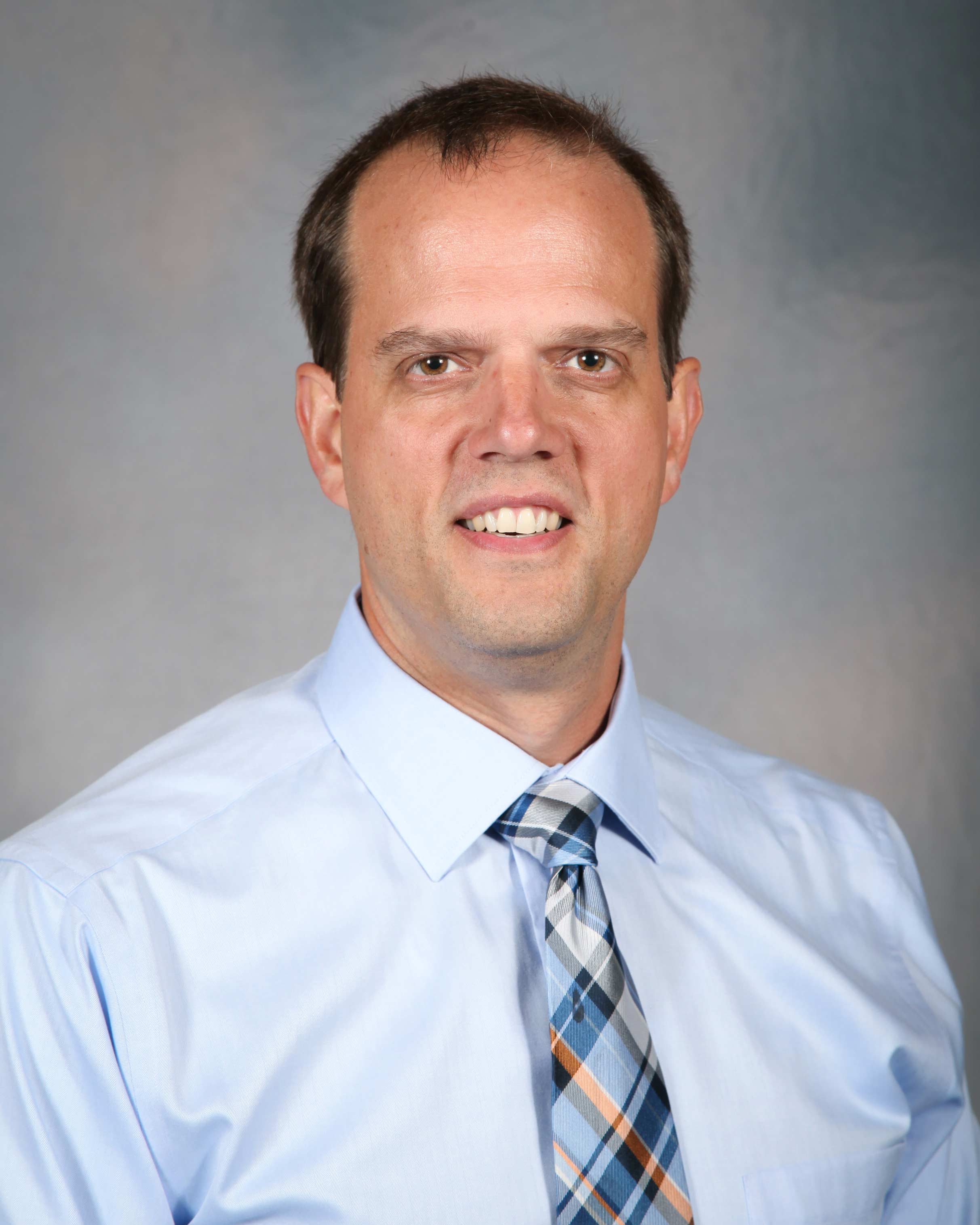
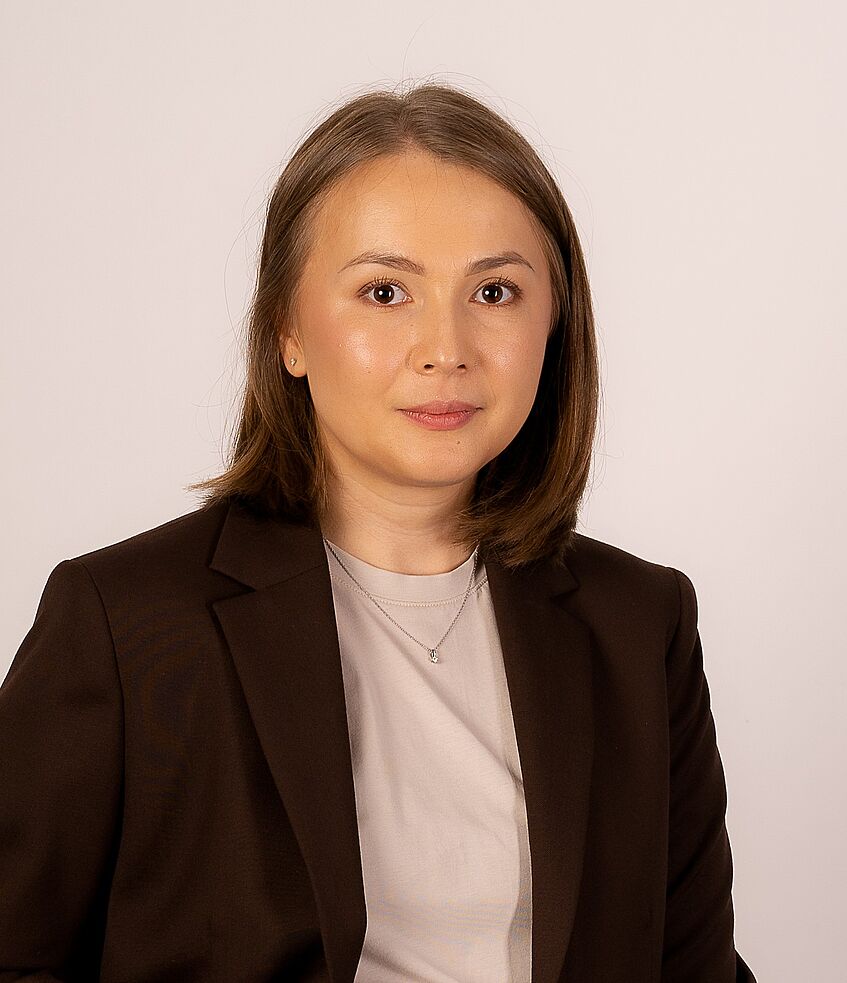
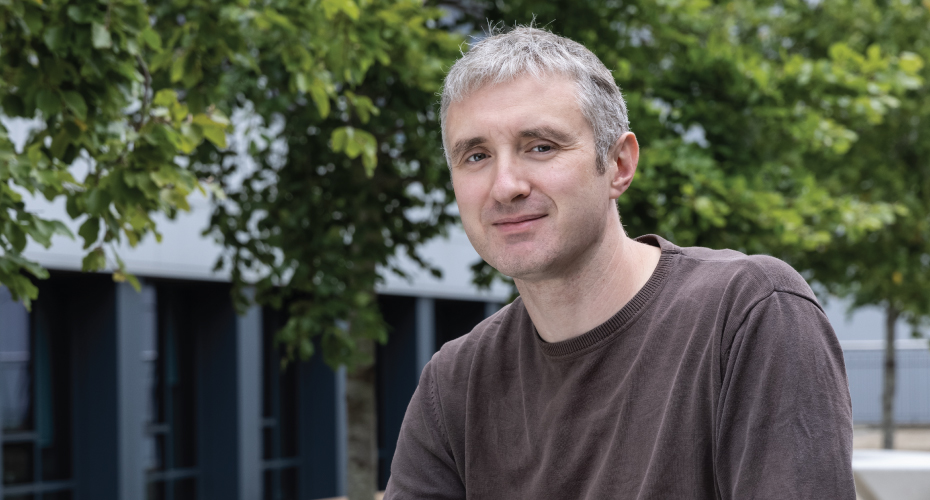
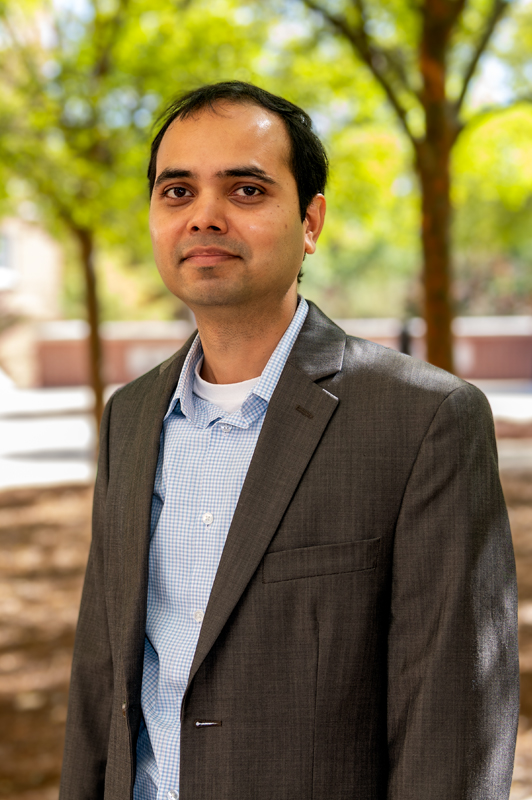
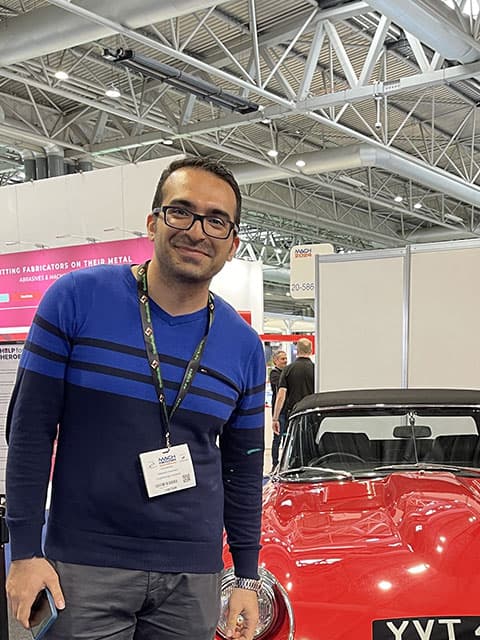
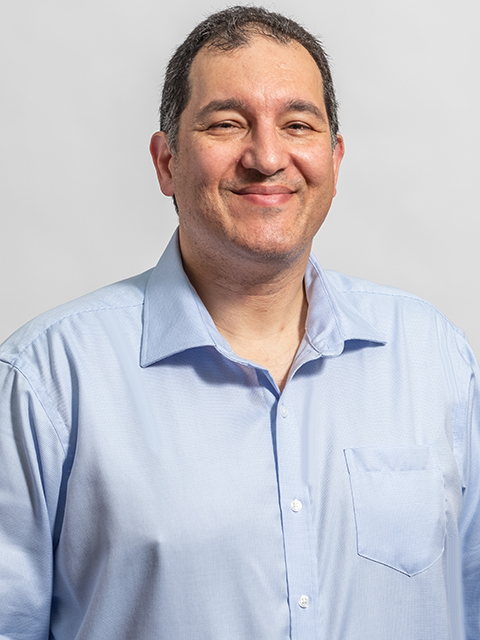
Panu Kiviluoma is a Lecturer at the School of Engineering , Aalto University , affiliated with the Department of Energy and Mechanical Engineering. His work bridges practical and theoretical aspects of mechanical systems, focusing on energy storage, robotics, and industrial safety. His research spans Mechanical Engineering , Energy Systems , and Mechatronics , with a strong emphasis on Sensor Technology and Automation . Recent publications highlight innovations in gravity energy storage, automated fiber coating, and rotor dynamics optimization. Selected publications from 2024 demonstrate expertise in designing mechanical systems for renewable energy, industrial safety, and educational robotics. All work aligns with interdisciplinary applications in mechanical engineering and sustainable technology.
Timothy Verstraeten is a postdoctoral researcher at the Vrije Universiteit Brussel , affiliated with the Engineering Technology Acoustics & Vibrations Research Group . His work bridges Wind Energy and Machine Learning , focusing on optimization, condition monitoring, and control systems for wind farms. Role: Researcher in acoustics, vibrations, and intelligent monitoring Key Projects: IOF Gear (2018–2023), Robust Fleet-Dedicated Reinforcement Learning (2017–2020) Research Interests include: Wind turbine operations (power prediction, balancing schemes) Reinforcement learning for hybrid energy systems and fleet control Condition monitoring using Gaussian processes and anomaly detection Deep learning for predictive maintenance and wake loss modeling Scientific Contributions show a focus on Wind turbines (100% Scopus), Farms (58%), and Reinforcement learning (37%), with recent publications on uncertainty quantification and hybrid energy systems. Award: ICTAI Best Student Paper (2018) He has supervised research proposals and presented at conferences like ACM E-Energy and Wind Energy Science, emphasizing control systems , power optimization , and structural health monitoring .
Jens Forssén is an Assistant Professor in the Department of Technical Acoustics , Vibroacoustics research group at Chalmers University of Technology . His work focuses on outdoor sound propagation , community noise , and urban acoustics , with a particular emphasis on the influence of meteorology , terrain , and soil properties on noise levels. Research Interests: Outdoor acoustics, urban soundscapes, road and train traffic noise, wind turbine noise, noise barriers, auralization techniques, and health impacts of environmental noise. Recent Trends: Analysis of low-frequency noise in urban environments, 3D noise mapping , digital twinning for urban design, and sonic crystal applications in noise reduction. Scientific Contributions: Publications on noise propagation models , auralization methods , traffic noise assessment , and health impact studies related to urban sound environments. Labs & Collaborations: Collaborates with the LISTEN project , SONORUS project , and HOSANNA project to develop urban noise mitigation strategies. His work includes partnerships with researchers like Wolfgang Kropp , Leon Müller , and Maarten Hornikx .
Mark Kimber is an Associate Professor in the Department of Nuclear Engineering at Texas A&M University. He serves as Director of the Undergraduate Program and has a research focus on experimental and computational thermal hydraulics, uncertainty quantification in turbulent flows, and two-phase heat transport systems. Ph.D., Mechanical Engineering, Purdue University – 2008 M.S., Mechanical Engineering, Brigham Young University – 2004 B.S., Mechanical Engineering, Brigham Young University – 2002 His research interests include: Experimental and computational thermal hydraulics Uncertainty quantification in isothermal and non-isothermal turbulent flows Two-phase heat transport Turbulence modeling Heat transfer optimization Nuclear reactor design Recent publications focus on nuclear reactor thermal management systems, turbulence modeling validation, and advanced heat exchanger design. Key trends include: CFD analysis of nuclear components Multiphysics modeling Thermal safety systems Neutronics coupling Energy transition applications Validation protocols Scientific awards: Faculty Development Award, Nuclear Regulatory Commission – 2009-2011
Dr. Abhijit Kushari is Professor and Head of the Department of Aerospace Engineering at the Indian Institute of Technology Kanpur. He holds a PhD from Georgia Institute of Technology and has been a faculty member since 2001, with prior experience as a Postdoctoral Fellow at Georgia Tech. His administrative roles include serving as Associate Dean of International Relations (2015-2017). Education: PhD in Mechanical Engineering, Georgia Institute of Technology (2000) MS in Aerospace Engineering, Georgia Institute of Technology (1995) B.Tech. (Honours) in Aerospace Engineering, IIT Kharagpur (1994) Research Interests: Dr. Kushari's research spans propulsion (rockets, gas turbines), combustion dynamics, liquid atomization, turbo-machinery flows, aeroacoustics, and fire suppression. His work integrates experimental and computational approaches to solve challenges in fluid-structure interaction and flow control, with applications in aerospace and energy systems. Publication Trends: His recent articles focus on jet acoustics, combustion efficiency, fluidic thrust vectoring, and compressor aerodynamics. Common themes include experimental validation of novel nozzle designs, biofuel combustion, and unsteady flow control, reflecting a strong emphasis on sustainable propulsion and aerodynamic optimization. Awards and Honours: Consulting Fellow, World Innovation Foundation Batch of 1970 Research Fellow, IIT Kanpur (2009-2012) Editorial Board roles: Scientific Reports (Nature), Journal of Rotating Machinery , Frontiers in Interdisciplinary Physics Propulsion Panel Member, Aeronautical R&D Board, DRDO Advising and Grants: He has supervised 8 PhD and 60 M.Tech. students in aerospace/mechanical engineering. Secured over ₹20 Crore in funding from DRDO, ISRO, DST, Pratt & Whitney, and others. Key projects include gas turbine combustor design, thrust vectoring systems, fire dynamics, and detonation modeling for defense applications. Laboratories and Teams: Leads advanced propulsion and combustion labs at IIT Kanpur, featuring facilities for spray characterization, thrust measurement, cascade testing, and fire suppression studies. Collaborates with international research teams and industry partners like GE Aviation.
Professor Sudhir Mishra serves as a faculty member in the Department of Civil Engineering at the Indian Institute of Technology Kanpur. With a PhD from the University of Tokyo, he has established himself as a respected academic in structural engineering with a particular focus on concrete structures and their durability. His research interests center around Durability and Deterioration of Concrete Structures , Non-Destructive Testing , and Concrete Materials . Professor Mishra's work bridges theoretical knowledge with practical applications in civil infrastructure, addressing critical challenges in construction material science. His publication record demonstrates a consistent contribution to civil engineering literature, with research spanning from fundamental material properties to advanced testing methodologies. His work on fiber reinforced polymers, neural network applications in concrete analysis, and structural vibration analysis represents the interdisciplinary nature of modern civil engineering research. Professor Mishra maintains active communication through his official university email and is accessible to students and colleagues at his office in Room 303C of the Western Laboratory Extension at IIT Kanpur.
Patrick Brewick is an Assistant Professor in the Department of Civil and Environmental Engineering and Earth Sciences at the University of Notre Dame. His research bridges data analytics, mechanics, and computational modeling to address challenges in structural resilience and material behavior under extreme conditions. Ph.D., Columbia University (2014) M.S., Civil Engineering and Engineering Mechanics, Columbia University (2010) B.S., Civil Engineering, University of Notre Dame (2009) Professor Brewick’s work focuses on transforming noisy or incomplete data into accurate predictive models. Key research areas include: System Identification : Uncovering physics of seismic protection systems. Uncertainty Quantification : Developing Bayesian frameworks for model calibration. Damage Detection : Identifying nonlinear structural transitions. Microstructural Modeling : Investigating corrosion and material heterogeneity. Hybrid Modeling : Balancing high- and low-fidelity simulations. Wind Energy Applications : Using distributed fiber optics for turbine monitoring. His publications span disciplines like structural mechanics, materials science, and biomedical engineering, emphasizing multi-fidelity approaches and probabilistic methods. Current projects address infrastructure resilience against climate change, naval structural reliability, and microstructural impacts on corrosion. The Brewick Group collaborates extensively, offering open-source tools and inviting partnerships. Students in his lab, such as Ph.D. candidates Reza Farzad and Jichuan Tang , explore cutting-edge applications in structural dynamics and material modeling. Before Notre Dame, Prof. Brewick conducted research at the U.S. Naval Research Laboratory, focusing on predictive modeling for heterogeneous systems, including marine structures and brain tissue mechanics.
Toma Susi is an Associate Professor at the University of Vienna's Faculty of Physics, leading the Physics of Nanostructured Materials group. With a doctorate from Aalto University (2011) and a FWF Lise Meitner fellowship (2013-2015), they now focus on atomic-scale materials engineering through electron microscopy and computational modeling. PhD in Materials Science (2011, Aalto University) FWF Lise Meitner Fellow (2013-2015, University of Vienna) ERC Starting Grant recipient (2017) for atomic precision materials engineering Research spans: electron beam manipulation of 2D materials, defect engineering for novel properties, and multislice simulations in microscopy. Collaborative projects include ATMEN (Atomic Precision Materials Engineering) and open science initiatives. Key article trends: Electron microscopy for atomic-scale characterization 2D materials (graphene, MoS2, hBN) under irradiation Computational methods for STEM/TEM simulations Open science tools (abTEM, GPAW) Scientific awards: ERC Starting Grant (2017) FWF Lise Meitner Fellowship Current projects: Time-dependent neutralization of highly charged ions Positronium interferometry ATMEN (Atomic Precision Materials Engineering)
Nadiia Gumerova , PhD, is a researcher at the Institute of Biophysical Chemistry under the Faculty of Chemistry at the University of Vienna , Austria. Her work focuses on polyoxometalate chemistry, including targeted synthesis, structural analysis, and biomedical applications. She has published extensively on aqueous speciation, metal-substituted polyoxometalates, and their interactions with proteins and biological systems. PhD in Inorganic Chemistry (2014), Donetsk National University Post-doctoral fellow (2019–present), University of Vienna Lise Meitner fellow (2017–2019), University of Vienna Her research interests encompass polyoxometalate design, structural transformations in biological environments, and development of bioactive materials. Recent work includes studies on vanadate-protein interactions, antibiotic activity of Preyssler-type clusters, and enzyme inhibition by polyoxotungstates. Publications (15 most recent) highlight trends in polyoxometalate speciation under varying ionic strengths, biomedical applications of Anderson-Evans and Keggin-type derivatives, and structural insights into metal-substituted tungsten clusters. Keywords span Inorganic Chemistry , Biochemistry , and Materials Science . Grants include the FWF Meitner Program M2203 (2017–2019) and FWF Stand-Alone Project P33927 (2021–2023). She collaborates with the RompelLab and contributes to interdisciplinary projects applying inorganic chemistry in biological contexts.
Dr Kevin Nolan is a Researcher at the UCD School of Mechanical and Materials Engineering , University College Dublin, specializing in fluid dynamics , aerosol transmission , and medical engineering . His work spans surgical safety , renewable energy systems , and microfluidic technologies , with a focus on real-world applications like infection control and wind turbine aerodynamics . Recent research includes modeling surgical smoke leakage , developing standards for face coverings , and analyzing wind turbine blade erosion using advanced fluid dynamic techniques. Collaborations with Mater Hospital , Cisco Systems , and NUI Galway highlight the interdisciplinary impact of his work. Key contributions: Schlieren optical technique for visualizing airflow, European standard development for community face coverings Current projects involve IoT-based air quality monitoring , 3D facial mapping for mask design , and reducing dead spots in air purification Publications address gas leaks in laparoscopy , reusable cloth mask efficacy , and flow friction dynamics , with a strong emphasis on computational fluid dynamics (CFD) and practical mitigation strategies across medical and engineering domains.
Emmanuele Parisi is a Researcher at the Polytechnic University of Turin , affiliated with the Department of Applied Science and Technology (DISAT) and the Crystallization & Crystal Engineering Laboratory . His research spans Inorganic Chemistry , Materials Science , and Crystal Engineering . Co-author of cutting-edge studies on coordination polymers, MOFs, and cocrystallization techniques Supervises multiple PhD students in Chemical Engineering Teaching collaborator in courses like Green plants design and Industrial Chemistry for Circular and Bio Economy Research Focus : Parisi's work centers on designing functional inorganic and hybrid materials with applications in catalysis, gas adsorption, and surface property modulation. His 2025 publications highlight advancements in CuI coordination polymers for triazole synthesis, computational workflows for cocrystallization, and Ag-S MOFs for H2S/iodine capture. Earlier work (2024) explores high-pressure material dynamics and food-grade crystal engineering for emulsion stabilization. Academic Contributions : As a teaching collaborator, he contributes to interdisciplinary curricula spanning Electronic Engineering, Aerospace Engineering, and Computer Engineering. His supervised PhD students conduct research in areas such as chemical engineering and materials optimization.
Dr. Nek Sharan is an Assistant Professor in Auburn University's Department of Aerospace Engineering. His research focuses on fluid-structure interactions, computational fluid dynamics (CFD), and high-order numerical methods for aerospace applications. Current projects include: DOD-funded studies of rotor performance in adverse environments; plume-surface interactions for spacecraft landings; and flow-induced vibrations of 3D structures. Dr. Sharan develops innovative CFD techniques including high-order cut-cell methods and overset grid approaches for complex flow simulations. He holds a Ph.D. in Aerospace Engineering from the University of Illinois at Urbana-Champaign and has contributed to computational methods for shock-dominated flows, turbulent mixing, and aeroacoustics.
Sina Akhbari is a Research Associate in the field of Digital Manufacturing for Robotic 3D Concrete Printing & Milling at Loughborough University. He holds a PhD in Mechanical Engineering from the University of Tabriz, Iran (2021), where his doctoral research focused on kinematics and trajectory generation of multi-DOF parallel robots. He previously served as an Adjunct Lecturer at the Department of Mechanical Engineering, University of Tabriz (2018–2024), and co-supervised PhD students there. Sina also worked as a part-time CAD/CAM engineer at ModelSazi Tabriz Ltd. (2009–2021), blending academic research with industry experience. Education: PhD in Mechanical Engineering, University of Tabriz, Iran (2021) Ranked 4th in Iran’s National PhD Entrance Exam (National Organization of Educational Testing) Research Interests: He specializes in robotic systems, parallel kinematics, additive manufacturing, and sensor-based control. His work emphasizes trajectory optimization, real-time control systems, and energy efficiency in industrial applications. Recent projects include developing low-cost motion firmware for parallel robots and enhancing tactile sensor integration in robotic grippers. Awards: Outstanding academic achievement: 4th rank in Iran’s national PhD entrance examination Advising & Labs: Current role: Co-supervisor of PhD students at University of Tabriz Laboratory affiliation: DAV 0.042 Intelligent Automation Researchers Industry Link: His industry experience at ModelSazi Tabriz Ltd. informed his research on CAD/CAM integration and practical manufacturing challenges.
Ashraf El-Hamalawi is an Associate Professor and Group Leader of the Geotechnical and Geomatics Group, specialising in engineering modelling and geotechnical systems. He holds a PhD from the University of Cambridge and is a Fellow of the Higher Education Academy (FHEA). His research focuses on numerical methods (FEM, BEM, DDA) for geotechnical challenges, soil-structure interaction, and infrastructure sustainability. Key areas include weather-driven deterioration of clay embankments, adaptive mesh refinement, and SCADA systems for construction monitoring. Education: BEng (Hons) in Engineering, PhD (Cambridge) Professional Affiliations: MASCE, MCGS, PE Research interests span geotechnical engineering, computational mechanics, and infrastructure asset management. He develops predictive models for slope stability, clay embankment degradation, and wear analysis in offshore structures. His work integrates advanced sensing technologies for non-destructive testing and environmental monitoring, including ammonia detection and landmine identification. Publications emphasize long-term infrastructure deterioration, numerical modelling frameworks, and sustainable retrofitting. His contributions to converged network systems and mobile collaboration tools in construction enhance industry practices.
Erol Tutumluer is the Abel Bliss Professor and Director of International Programs in the Department of Civil and Environmental Engineering at the University of Illinois. His research focuses on transportation geotechnics, pavement engineering, and geosynthetic applications. He leads projects on railway ballast durability, recycled materials, and sensor-based infrastructure monitoring. Tutumluer has pioneered the use of bender element sensors and deep learning for assessing geotechnical materials. Key research areas include pavement resiliency, geogrid stabilization, and material characterization via advanced testing methods. He has developed innovative solutions for sustainable infrastructure using recycled plastics and AI-driven analysis. Tutumluer has received the Francis C. Turner Award (2024) and IGS Award (2023) for contributions to geotechnical engineering. Directed over 375 research outputs since 2021 Collaborated on projects across multiple countries Developed the I-BALLAST and I-RIPRAP software tools His work integrates laboratory experiments, field monitoring, and computational modeling to address challenges in transportation infrastructure longevity and environmental adaptability.