
Dr. Leendert van Maanen is an Associate Professor at the Department of Experimental Psychology, Utrecht University, where he studies cognitive mechanisms underlying information processing and decision-making. His research focuses on developing and validating computational cognitive models, with applications in human-machine interaction and cognitive neuroscience data analysis. Research Themes: Cognitive Modeling, Decision-Making, Human-Centered Artificial Intelligence, Applied Data Science Labs: Leads the COBRA (Cognitive and Behavioral Research in Artificial Intelligence) lab His work spans three levels of cognitive integration in AI: model development, human-machine deployment, and neural data analysis. Recent projects include cognitive strategy detection, digital twin user modeling, and neural event detection using multivariate time series. For collaborations and publications, see leendertvanmaanen.com or Utrecht University Research Portal.
جستوجوی استاد و پژوهشگر
استاد راهنما، استاد دانشگاه یا پژوهشگر مناسب برای مسیر پژوهشیتان را پیدا کنید و با او ارتباط بگیرید.
نمایش ۴۶-۶۰ از ۱۱۰ استاد راهنما
اطلاعات این پروفایلها از صفحات عمومی دانشگاهها جمعآوری شده و ممکن است بهروز نباشد.
Jiawei Guoمشاهده پروفایل
پژوهشگر
Jiawei Guo is a researcher at National Central University's Department of Electrical Engineering. His work spans multiple disciplines including machine learning, computer vision, and computational physics. Key affiliations: National Central University, Taoyuan, Taiwan Research focus: Neural network applications in energy systems, underwater depth estimation, and mobile app security His research integrates physics-informed neural networks for solving complex engineering problems and adversarial transformers for pattern detection in acoustic signals. Recent publications demonstrate expertise in 3D modeling , multimodal reasoning , and privacy-compliant software analysis . Article trends show strong emphasis on diffusion models for medical imaging, spatial-temporal analysis for Gaussian processes, and data pruning techniques for efficient computation. While no formal awards are listed, his collaborative work appears in top venues including ACL , ICML , and IEEE Access .

Amy Dengمشاهده پروفایل
استادیار
Amy Deng is an Assistant Professor at the Department of Mathematics and Computer Science, Eindhoven University of Technology (TU/e). Her research focuses on machine learning and data mining applications in social sciences and e-commerce, emphasizing explainable and robust AI techniques for temporal data analysis. She leads the Data Mining research group, contributing to advancements in graph neural networks, domain generalization, and societal event forecasting. Her work integrates causal reasoning, spatiotemporal modeling, and graph-based approaches to address challenges in event prediction and dynamic knowledge representation. Recent projects include developing adaptive normalization techniques for non-stationary time series and contrastive learning methods for graph homophily analysis. Research Interests: Machine Learning, Data Mining, Explainable AI, Temporal Data Analysis, Social Event Forecasting Labs/Teams: Data Mining Group at TU/e Education: Not explicitly listed in available texts, but affiliated with TU/e's academic programs in computer science and data science. Publications highlight contributions to graph neural networks (e.g., SimGCL), causal event modeling, and robust forecasting frameworks. She currently teaches courses on Generative AI Models, aligning with her research in advanced AI techniques.
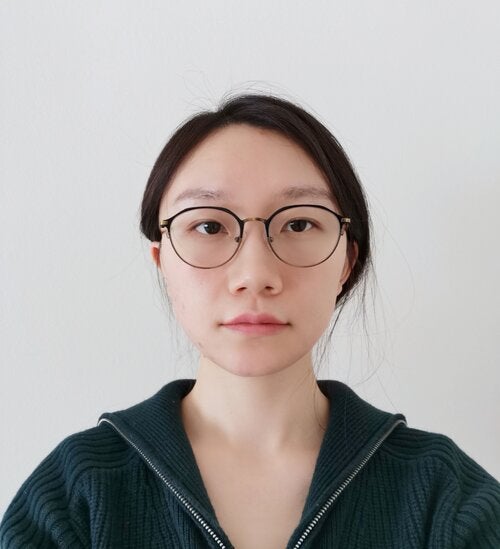
Susu Zhangمشاهده پروفایل
استادیار
Susu Zhang is an Assistant Professor in the Department of Statistics and Department of Psychology at the University of Illinois Urbana-Champaign (UIUC). Her research focuses on advancing statistical and psychometric methods for educational and psychological assessments, particularly addressing complex behavioral data analysis. She holds a Ph.D. in Quantitative Psychology and MS in Applied Mathematics from UIUC, alongside BAs in Psychology and Mathematics from Bryn Mawr and Haverford Colleges. Key research areas include latent variable modeling, response time analysis, diagnostic classification models, and longitudinal learning models. She has received prestigious awards such as the Alicia Cascallar Award (NCME 2022) and multiple Excellent Reviewer recognitions. Her work emphasizes practical applications in large-scale assessments like NAEP, with a focus on students with disabilities and learning differences. Teaching responsibilities include courses like STAT 428 (Statistical Computing) and PSYC 490 (Measurement and Test Development Lab). She actively collaborates on grants, including an IES-funded project analyzing NAEP mathematics data to understand test-taking behavior. Her lab develops tools like the Item Response Warehouse, an open repository for educational measurement datasets. Recent publications highlight methodological advancements in compromised item detection, MCMC convergence diagnostics, and digital tool impacts on mathematics performance. She emphasizes bridging measurement theory with machine learning through initiatives like MxML surveys.
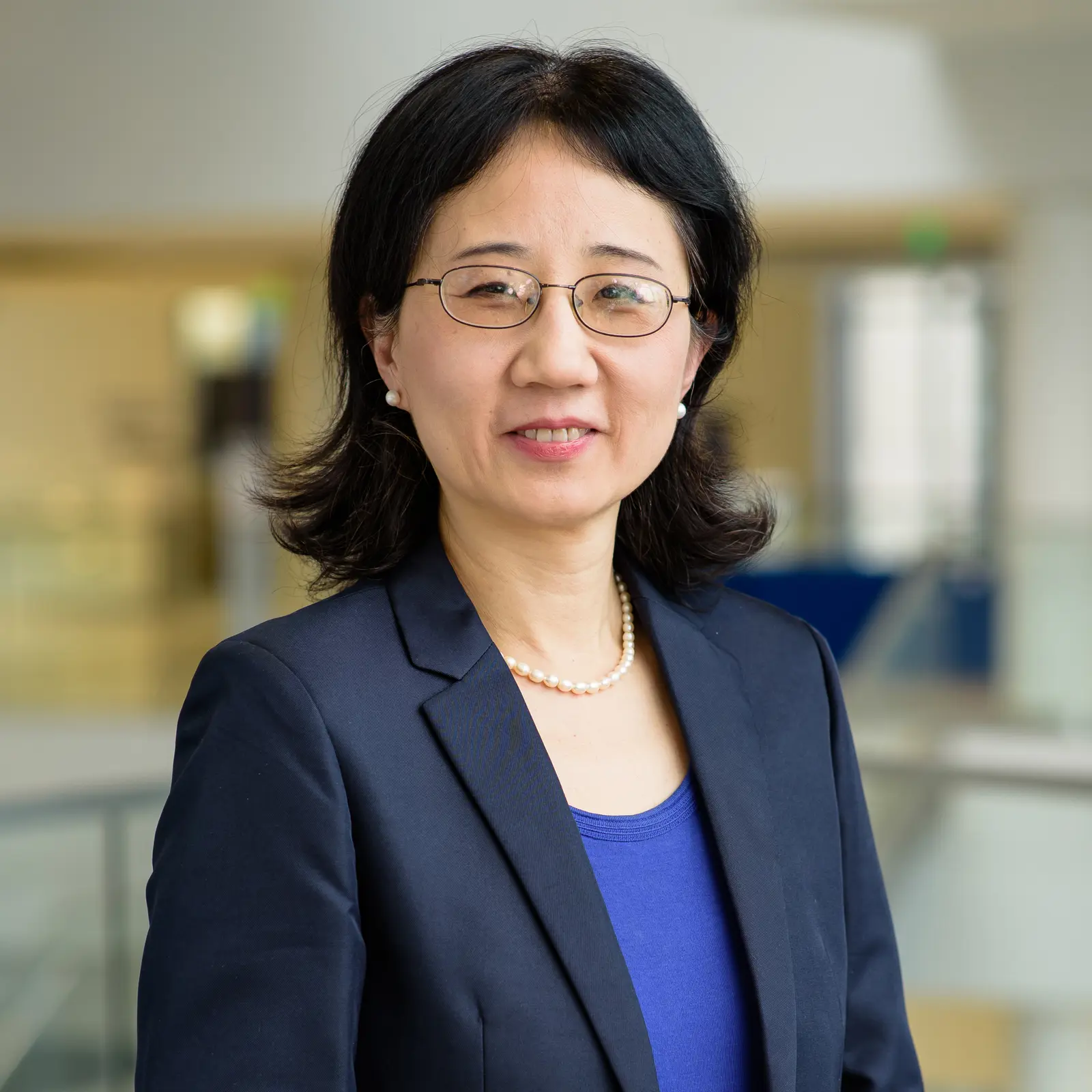
Cindy Chenمشاهده پروفایل
دانشیار
Cindy Chen serves as Department Chair and Associate Professor at the Miner School of Computer and Information Sciences within the Kennedy College of Sciences at the University of Massachusetts Lowell. Her academic journey includes a Ph.D. in Computer Science with specialization in Database and Knowledge Base Management from UCLA (2001), an MS in Computer Science from UCLA, and a BS in Space Physics from Peking University. Ph.D.: Computer Science (Database and Knowledge Base Management), University of California at Los Angeles (2001) MS: Computer Science, University of California at Los Angeles BS: Space Physics, Peking University - Beijing, China Her research spans spatio-temporal databases, data mining, cloud computing, and social network analysis. Early work focused on spatio-temporal data models and query languages , evolving into cloud data warehouse optimization and social network mining (particularly online dating behavior), then advancing to high-dimensional indexing , knowledge graph querying , and recent innovations in temporal database granulation using Allan Variance techniques for CAV friction modeling. Current work integrates database systems with autonomous vehicle infrastructure and real-time urban analytics. Her publication timeline reveals a transition from foundational spatio-temporal database systems (1998-2008) to cloud/social applications (2008-2015), then to granulation techniques and CAV systems (2015-present). Key domains include XML databases, skyline queries, social trend discovery, and friction data modeling for autonomous vehicles. Dean's Fellowship (1998) Dean's Fellowship (1999) Dr. Chen has secured significant research funding including the UMASS Transportation Center grant for an Interactive TMC Decision Support Tool (2008) and a UML Healey Grant Award for Spatio-Temporal Knowledge Discovery in Nuclear Physics (2008). Her collaborative projects span transportation systems, nuclear physics applications, and autonomous vehicle infrastructure. She actively advises on database curriculum development and serves as department chair overseeing academic operations.
Jianbo Jiaoمشاهده پروفایل
دانشیار
- Computer Vision
- Machine Learning
- Healthcare AI
- +۷ مورد دیگر
Jianbo Jiao is an Associate Professor in Computer Vision and Machine Learning at the School of Computer Science, University of Birmingham, where he leads the MIx (Machine Intelligence + x) research group. Previously, he was a Postdoctoral Researcher in the Biomedical Image Analysis (BioMedIA) group and Visual Geometry Group (VGG) at the University of Oxford, working on the SeeBiByte and VisualAI projects. MSc from Peking University (2015) PhD in Computer Science from City University of Hong Kong (2018), supported by Hong Kong PhD Fellowship Scheme Visiting scholar at Beckman Institute, University of Illinois at Urbana-Champaign (2017-2018) Dr. Jiao's research focuses on Computer Vision, Machine Learning, Healthcare AI, and AI for Science. His work primarily investigates learning representations in open-world scenarios by exploring auxiliary information from multiple modalities (image/video, speech/audio, text/NLP, depth/stereo, gaze/saliency, motion) and reducing dependency on supervision through self-supervised, weakly-supervised, and semi-supervised learning approaches. His group has made significant contributions to multimodal learning, medical image analysis, and 3D vision. His recent publications demonstrate strong trends in multimodal learning, medical AI applications, and 3D computer vision. The research spans fundamental computer vision tasks like segmentation and scene understanding while addressing practical challenges in healthcare and scientific domains. Notably, there's significant focus on making vision systems more robust to distribution shifts and requiring less labeled data. Amazon Research Award recipient (2024) Royal Society Short Industry Fellow Best Paper Award at MICAD 2024 Best Paper Award at MICCAI 2024 ASMUS Workshop Best Presentation (Runner-Up) Award at MICCAI 2024 ASMUS Workshop Best Paper Award at ECCV 2022 Medical Computer Vision Workshop Multiple Outstanding Reviewer Awards from top conferences Dr. Jiao serves as Associate Editor for The Transactions on Machine Learning Research (TMLR) and IEEE Transactions on Circuits and Systems for Video Technology (T-CSVT), and has been actively contributing to the community as Area Chair for NeurIPS, ICML, ICLR, and ACM MM. His MIx group has secured multiple research grants including the Amazon Research Award for the PCo3D project on Physically Plausible Controllable 3D Generative Models. Current PhD students include Isaac Akintaro, Hao Ai, and Kangning Zhang. The MIx group maintains active collaborations with industry partners including Amazon and Meta, and has developed notable datasets such as 360+x for panoptic multi-modal scene understanding and DyMVHumans for dynamic human modeling. Their research bridges fundamental computer vision with practical applications in healthcare, physics, chemistry, and other scientific domains.
John Wangمشاهده پروفایل
دانشیار
Assoc Prof John Wang is an Associate Professor at the School of Information and Communication Technology , Griffith University. His work spans Data Management and Analysis (graph, text, spatial-temporal data), Machine Learning , Knowledge Representation , and Algorithm Design . He has published extensively in top venues like ACM Transactions on Database Systems , IEEE Transactions on Knowledge and Data Engineering , and conferences including SIGMOD , VLDB , and ICDE . Appointments : Member of the Institute for Integrated and Intelligent Systems (2003–2024). Education : PhD in Computer Science (Griffith University, 2003). His research has led to real-world implementations in Graph Data Processing , including techniques for shortest distance queries and temporal reachability. He actively contributes to program committees of conferences like VLDB and ICDE , and his funded projects include "Developing Soil Knowledge..." (ACIAR, 2024–2029) and "Harnessing Social Media..." (QLD Inspector-General, 2020). Recent publications focus on Graph Indexing , Causality Detection , and Spatial-temporal Querying . Examples include optimizing road network queries (2023), 2-hop labeling for shortest paths (2021), and geospatial skyline algorithms (2020). Co-authored works appear in venues such as IEEE Transactions on Knowledge and Data Engineering and Neurocomputing . Consultancy : Delivered commercial research on pandemic-related data analytics (2020). Supervision : Mentored 15+ PhD/Master’s students, including projects on deep learning, data leakage prevention, and XML querying. Teaching : Directed programs like Graduate Certificate in Information Technology and Diploma of Information Technology .
Michelangelo Ceci is a full professor at the Department of Computer Science, University of Bari, Italy. His academic career spans over two decades with significant contributions to data mining and machine learning research. He has established himself as a leading figure in the European data mining community through his extensive publication record and leadership roles in major conferences. Dr. Ceci's primary research interests focus on data mining and machine learning, with particular emphasis on multi-relational data mining, text mining, spatial data mining, spatio-temporal data mining, and semi-supervised/transductive learning. His work bridges theoretical foundations with practical applications across diverse domains including social network analysis, financial technology, healthcare informatics, and environmental monitoring. His research demonstrates a consistent trajectory toward increasingly complex data structures and more sophisticated modeling techniques. The most recent publications reveal several key trends: a growing focus on explainable AI systems, increased application of graph-based methods for spatio-temporal data, expansion into biomedical applications particularly in microbiome analysis, and development of robust methods for anomaly detection in cryptocurrency and social networks. His work increasingly integrates multiple data sources and perspectives through multi-view learning approaches. Dr. Ceci has served on the program committees of major international conferences including IEEE ICDM, IJCAI, ECMLPKDD, SIAM SDM, ECAI, ISMIS, PAKDD, DEXA, and ACM SAC. He has held editorial positions with journals such as IJSNM, IJDATS, and Journal on Advances in Intelligent Systems, and has been actively involved in organizing conference tracks and workshops. His research has been supported through significant projects including serving as national coordinator of FP7612944 MAESTRA and coordinator of a research unit in the PONREC project Vi-POC. He has participated in numerous national (PRIN-COFIN 2001, 2009) and international research projects (IST-1999-20882: COLLATE). Dr. Ceci has also contributed to the academic community through mentoring PhD students and early-career researchers, though specific names of advisees are not documented in the available information.
Hanchen Wangمشاهده پروفایل
پژوهشگر ارشد
Hanchen Wang is a Postdoctoral Research Fellow at Stanford AI Lab and Genentech, working under Jure Leskovec and Aviv Regev. He holds a PhD in Computer Science from Cambridge University completed in 3 years under Joan Lasenby, and a BS in Physics from Nanjing University where he was valedictorian. His research bridges artificial intelligence and biomedical discovery, with appointments spanning both academic and industry settings. Wang's research focuses on AI for Science , particularly developing autonomous agents for biomedical discovery. His work spans multi-omics analysis , spatial transcriptomics , live-cell imaging , and perturbation assays , with applications in cancer therapeutics , autoimmune diseases , and neurological disorders . He has pioneered multiple AI agent frameworks including Biomni (a general-purpose biomedical agent), SpatialAgent, and PerTurboAgent for specialized biological discovery tasks. His publication record demonstrates significant impact across both computer science and biology venues, with first-author papers in Nature , Nature Biotechnology , and NeurIPS . His research has been deployed by Anthropic, Amazon Web Services, and Genentech, and featured in Nature , The Economist , and DeepMind communications. Chan Zuckerberg Initiative Faculty Applicant Bootcamp participant UCSF Gladstone Institute Trainee-to-Tenure Track Program member OpenAI Researcher Access Program recipient Multiple conference travel awards Wang actively mentors early-career researchers including PhD students from institutions like CSHL, MIT, Harvard, and KAIST. He serves as Area Chair for ICLR 2026, organizes workshops on AI for Science at major conferences, and gives invited talks at leading institutions including Harvard, Yale, and the Broad Institute. His research is supported by Genentech internal funding ($500k/year) and OpenAI resources.
Arnav Jhalaمشاهده پروفایل
دانشیار مدعو
Arnav Jhala is an Adjunct Associate Professor in Engineering Graduate and Professional Programs at Duke University , with a research focus on Artificial Intelligence , Narrative Planning , and Interactive Digital Entertainment . He holds an A.B. from Gujarat University (India) (2001), M.S. (2004), and Ph.D. (2009) from North Carolina State University . Research Interests: AI-driven narrative systems, computational creativity, camera control in games, and interdisciplinary applications of AI in education and health. Notable Contributions: Pioneering work in procedural narrative generation, affective game design, and visual analytics for storytelling. Recent Publications: Focus on reward shaping for autonomous agents, collaborative creative systems, and urban space perception analysis. His collaborations span institutions like Duke University, North Carolina State University, and industry partners in game development. Current work explores real-time strategy game AI, narrative comprehension models, and adaptive educational technologies.
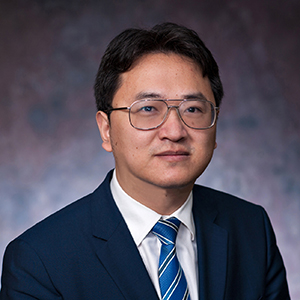
Professor Yang Zhang is a faculty member at American University's School of International Service (SIS), where he teaches courses on Bottom-Up Politics, Contentious Politics, Empire and Imperialism, Global and Comparative Governance, and Research Design Seminar. His academic work bridges sociology, political science, and historical analysis with a regional focus on China. His educational background includes Ph.D. and M.A. degrees in Sociology from the University of Chicago, and M.A. and B.A. degrees from Tsinghua University in China. He is fluent in Mandarin. Ph.D. and M.A. in Sociology, University of Chicago M.A. and B.A., Tsinghua University Professor Zhang's research spans comparative historical sociology, political sociology, contentious politics, social networks, sociology of knowledge, philosophy of social sciences, and social theory. His primary focus examines large-scale religious and ethnic rebellions in the Qing Empire, state building in late imperial China, political conflicts during China's reform era using elite conversational network analysis, and environmental governance in contemporary China. He has developed innovative approaches to studying causality, contingency, counterfactuals, comparison, and falsificationism in historical analysis. His scholarly publications demonstrate consistent productivity with articles appearing in top journals including American Journal of Sociology, Theory and Society, Journal of Historical Sociology, Mobilization, and Voluntas. His work shows increasing methodological sophistication, moving from traditional historical analysis to network-based approaches for understanding elite politics, while maintaining strong theoretical grounding in social theory and philosophy of science. Distinguished Contribution to Scholarship Article Award (Honorable Mention) from Collective Behavior and Social Movements Section of ASA (2024) Charles Tilly Article Award from ASA's Comparative-Historical Sociology Section (2022) William Cromwell Award for Outstanding Teaching (2021) PhD Mentor Award (2024) As an educator, Professor Zhang has received significant recognition including the William Cromwell Award for Outstanding Teaching in 2021 and the PhD Mentor Award in 2024. He serves as a consulting editor for the American Journal of Sociology and as an executive committee member of the Social Science History Association. His media presence is substantial, with commentary on Chinese politics appearing in major international outlets including Associated Press, BBC, Bloomberg, CNN, The Economist, Financial Times, New York Times, Reuters, and Washington Post.
- Spatial Data Science
- Artificial Intelligence (AI)
- Geographic Information Science (GIScience)
- +۷ مورد دیگر
Krzysztof Janowicz is a Professor at the University of Vienna and Head of the Department of Geography and Regional Research. Previously, he held full professorships at the University of California, Santa Barbara (UCSB) and Pennsylvania State University. He directs the Research Network Data Science and is Editor-in-Chief of the Semantic Web journal. His research focuses on Spatial Data Science, GeoAI, and knowledge graphs, emphasizing the integration of semantic and data-driven approaches. Education includes a PhD in Geoinformatics from the University of Münster and postdoctoral work at the Institute for Geoinformatics. Teaching includes courses on spatial data science, cartography, and geoinformatics, such as field trips to Scotland and North America. He leads projects like the KnowWhereGraph, a large-scale geo-knowledge graph for interdisciplinary applications. His work addresses AI sustainability, geographic diversity evaluation, and privacy in geospatial AI. He has directed UCSB’s Center for Spatial Studies and contributed to disaster risk management frameworks through ontologies like HIP.
Maria Orlowskaمشاهده پروفایل
عضو هیئت علمی
- Workflow Management
- Database Systems
- Data Mining
- +۳ مورد دیگر
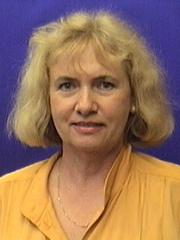
Honorary Professor Maria Orlowska is affiliated with the School of Electrical Engineering & Computer Science at the University of Queensland. Her research focuses on workflow systems, database integration, data mining, and wireless sensor networks. She has contributed extensively to collaborative business process technologies, flexible workflow modeling, and RFID data management. Her work spans theoretical foundations in process constraints, distributed systems, and practical applications in enterprise integration and real-time data analytics. Key research areas include workflow exception handling, multidatabase integration methodologies, and optimization of dynamic processes. Her studies on sensor networks address routing algorithms and telemetry systems. She has collaborated on projects involving smart shop floors, e-learning platforms, and spatial data management. Notable contributions include methodologies for business contract compliance and service-oriented architecture advancements. Publications emphasize interdisciplinary applications of computer science principles, with a focus on real-world system implementations. Her work bridges theoretical computer science with practical engineering challenges in distributed environments.
Birgit Gysinمشاهده پروفایل
پژوهشگر
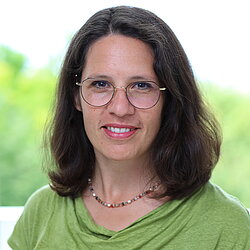
Birgit Gysin is a researcher and academic member of the Mathematics II Department and the Institute of Mathematics II at Ludwigsburg University of Education. Her work focuses on mathematics education in primary schools, particularly in designing learning-promoting environments and analyzing learning dialogues among children in mixed-age classrooms. She actively contributes to teacher training programs and supports initiatives for mathematically gifted children. Educational Background: PhD thesis: 'Arithmetisch-geometrische Probleme und Entdeckungen in ihrer Bedeutung für das mathematische Lernen in der Grundschule' (Supervised by Prof. Dr. Jens Holger Lorenz and Prof. Dr. Edeltraud Röbe) - 2006 Scientific paper for Second State Examination: 'Die Bedeutung geometrischer Vorerfahrungen für Lernprozesse' (2002) Scientific paper for First State Examination: 'Visual aids in initial arithmetic instruction' (Supervised by Prof. Dr. Jens Holger Lorenz and Prof. Dr. Silvia Wessolowski) - 1999 Research Interests: Interdisciplinary research on learning conversations in children Design of task and teaching cultures to foster learning in primary mathematics Support programs for mathematically gifted children Publications Overview: Her research highlights mixed-age classroom dynamics, learning dialogues, and practical educational strategies. Key themes include mathematical literacy development, resource-based learning, and innovative teaching approaches in primary education. Teaching & Engagement: Teaches courses at Ludwigsburg University of Education, including upcoming summer 2025 offerings Active in teacher training and curriculum development initiatives Labs/Teams: Involved in designing educational materials and supporting cross-disciplinary pedagogical projects.
Haitao Wang is a prominent researcher affiliated with the Chinese Academy of Sciences, specifically with the Institute of Automation and State Key Laboratory of Management and Control for Complex Systems in Beijing. His research spans multiple disciplines including artificial intelligence, computer vision, engineering systems, and geospatial information processing. With extensive publications across top-tier journals and conferences, he demonstrates significant academic impact in both theoretical and applied research domains. Wang's research interests focus on the intersection of artificial intelligence and practical engineering applications. His work in machine learning includes developing novel algorithms for distance selection, corrosion prediction models for oil and gas infrastructure, and domain-specific large language models for geological applications. In computer vision, he has made contributions to building pattern recognition, image restoration techniques, and UAV-based environmental monitoring systems. His engineering research spans fault diagnosis systems, precision mechanical design, and human-robot interaction frameworks. Analysis of his recent publications reveals a strong trend toward integrating large language models with specialized domain knowledge, particularly in geological applications (GeoProspect) and robotic task reasoning (Double-Feedback). His work increasingly focuses on practical applications in high-risk industries, emergency response systems, and environmental monitoring, demonstrating a shift toward solving real-world problems with AI technologies. His scientific contributions demonstrate excellence across multiple domains, though specific awards are not documented in the provided information. The breadth of his collaborative work across different institutions and research areas highlights his interdisciplinary approach and academic leadership. Wang's research group appears to be involved in numerous projects related to AI-driven decision support systems, particularly in nuclear safety and emergency response scenarios. His recent work on human reliability analysis frameworks suggests active involvement in high-stakes application domains where human-machine collaboration is critical.