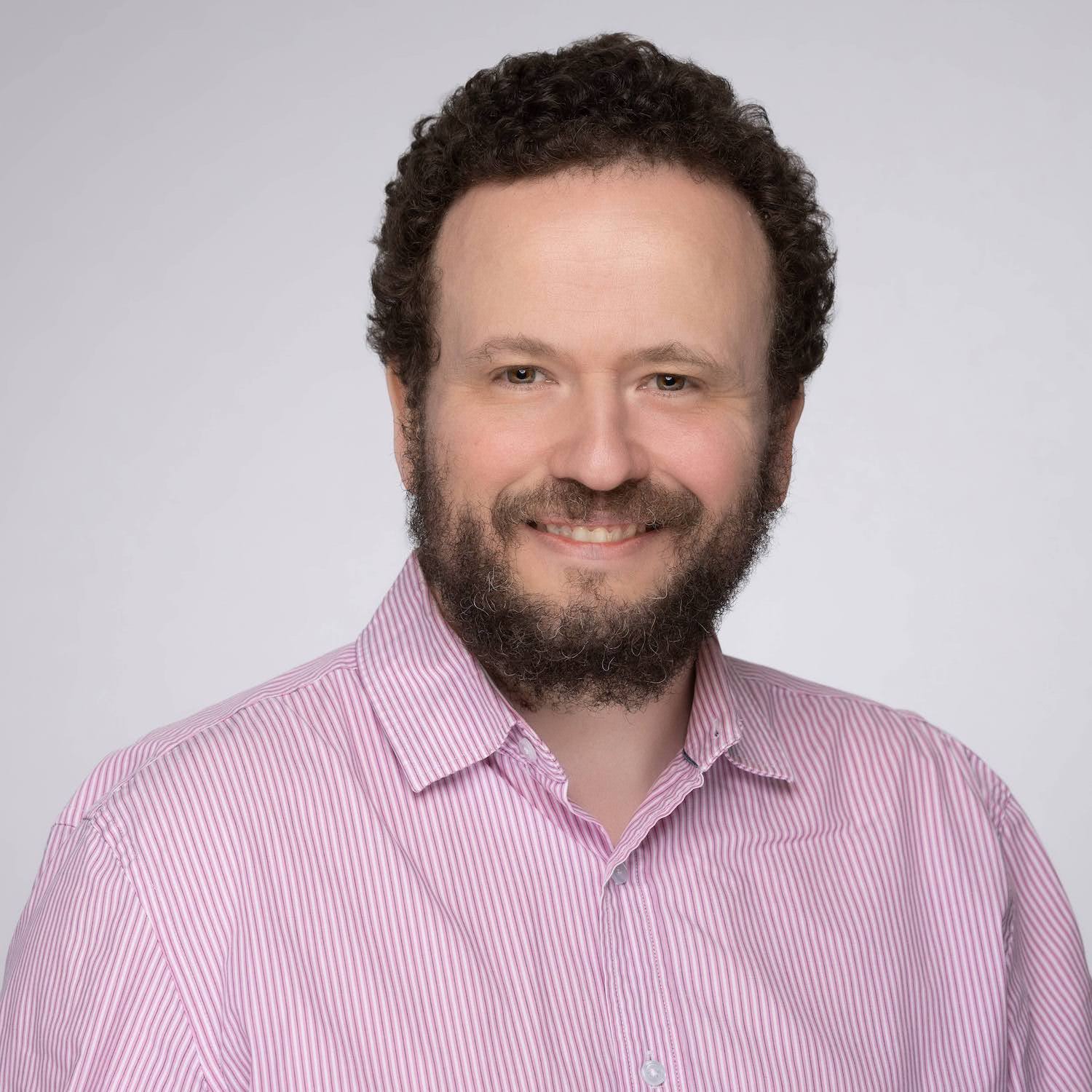
Wenxian Yang is a Professor of Renewable Energy Engineering at the Department of Engineering, School of Computing and Engineering, University of Huddersfield. His research focuses on renewable energy systems, including offshore wind turbines, thermoelectric materials, battery technology, and condition monitoring. He has contributed significantly to the UN Sustainable Development Goals related to affordable and clean energy. His work spans mechanical systems, hydrodynamics, and machine learning applications for fault diagnosis and energy harvesting. Key research areas include optimizing floating offshore wind turbine stability, improving lithium-ion battery performance and diagnostics, and developing advanced algorithms for structural health monitoring. Yang has published extensively, with over 130 peer-reviewed articles and an h-index of 42. He is actively involved in collaborations on tidal energy systems, biomimetic blade designs, and smart monitoring solutions for renewable energy infrastructure. His recent studies address challenges in offshore foundation scour mitigation, thermal management of batteries, and adaptive neural network models for predictive maintenance. Despite his prolific output, no specific awards or grants are explicitly listed in the provided text. Yang is currently accepting PhD students in renewable energy engineering and related interdisciplinary fields.
Maurice Chacron is a Professor in the Department of Physiology at McGill University. His research focuses on understanding how neurons process sensory information, particularly in weakly electric fish. He investigates mechanisms like population coding, neuromodulation (e.g., serotonin), and the neural basis of perception in sensory systems. His laboratory integrates behavior, in vivo electrophysiology, and computational modeling to link cellular processes to systems-level behavior. Chacron holds a Ph.D. from the University of Ottawa and leads the Computational and Systems Neuroscience Lab at McGill. Research interests include learning and memory, feedback pathways, and how sensory systems adapt to natural stimuli. His work highlights the importance of neural heterogeneity and synchronization in coding behaviorally relevant signals. Notable projects involve studying electrosensory midbrain neurons, vestibular pathways in macaques, and the role of serotonin in modulating sensory responses. Chacron's recent publications emphasize optimized coding strategies, fractional-order neuromorphic elements, and neural substrates for self-motion perception. His lab's work is published in top journals and reviewed in specialized topics like electrosensory systems and thalamic processing.
Neil Tsang is the Curriculum Lead for Civil Engineering at Coventry University's CEES School of The Environment. His work focuses on advanced concrete materials, structural behavior under cyclic loads, and fire engineering. He holds a Doctorate from Imperial College London (1993–1997). Research interests include fiber-reinforced concrete sensor applications, aging effects on prestressed structures, and soil-structure interactions in integral bridges. Education: PhD in Civil Engineering from Imperial College London (awarded 1999). His academic contributions span mesoscale modeling of concrete beams, fire resistance of post-tensioned slabs, and thermal creep in prestressing steel. Collaborations include studies with institutions like the University of Hong Kong and FIB (International Federation for Structural Concrete). Research highlights include experimental validation of concrete behavior under fire conditions and numerical modeling of granular material dynamics. Professional activities include editorial roles in academic conferences and participation in international engineering symposiums.
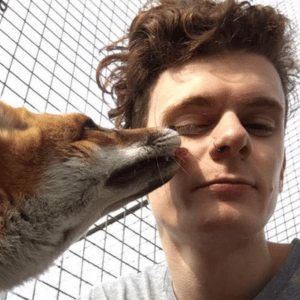
Eamonn Wooster is a Postdoctoral Research Fellow at the Gulbali Institute of Charles Sturt University, specializing in environmental science. He holds a PhD in Behavioral Ecology from the University of Technology Sydney (2022) and a BSc (Hons) in Environmental Science (2017). His research focuses on predator-prey interactions, disturbance ecology, and the role of animal cognition in shaping ecological dynamics. He was awarded the Gulbali DECRA Track Postdoctoral Fellowship to investigate how disturbances reshape species interactions in changing environments. Education: PhD in Behavioral Ecology, University of Technology Sydney (2018–2022) Bachelor of Science (Hons) in Environmental Science, 2013–2017 Research Interests: Behavioral ecology and predator-prey dynamics Climate change impacts on species interactions Disturbance ecology and ecosystem resilience Urban and macroecological systems Notable Awards: Gulbali DECRA Track Postdoctoral Fellowship (2022–present) Collaborations and Grants: Contributed to large-scale wildlife monitoring projects in Australia Participated in the International Society for Behavioural Ecology Conference (2024) Labs/Teams: Active member of the Gulbali Institute’s Environmental Science team, collaborating on projects related to biosecurity, salinity management, and urban ecological solutions.
Ramy Shaltout is an Assistant Professor at the CEES School of The Environment. His expertise spans railway engineering, mechanical systems, and sustainable transportation infrastructure. He holds a PhD in Mechanical Engineering from the Polytechnic University of Valencia (2013) and a Postgraduate Certificate in Academic Practice from Coventry University (2023). His research focuses on aerodynamic noise reduction in high-speed trains, railway track dynamics, and smart infrastructure solutions. BSc Mechanical Power Engineering, Zagazig University (2006) MSc Mechanical and Material Engineering, Polytechnic University of Valencia (2010) PhD Mechanical Engineering, Polytechnic University of Valencia (2013) Postgraduate Certificate in Academic Practice, Coventry University (2023) His research interests include vehicle-track interaction, nanomechanics, and renewable energy systems. Recent work addresses challenges in smart railway stations, aerodynamic noise modeling, and fire safety in passenger rolling stock. He leads the Transport Safety and Security project (2024–2025) and has held roles at The German University of Cairo (2019–2011) and Newcastle University (2014–2016). Grants: Principal Investigator for Transport Safety and Security (2024–2025) Advising: Accepting PhD students in rail engineering and sustainable systems
Assoc. Prof. Osman Şimşek is an academic at Gazi University's Faculty of Technology, Department of Civil Engineering. He has held academic positions since 1985, starting as a Research Assistant and advancing to Associate Professor in 2018. His research focuses on construction materials, sustainable building technologies, and recycled materials in concrete. He has supervised over 40 theses and authored/co-authored numerous publications in SCI-indexed journals. Education: PhD: Cukurova University, Agricultural Structures and Irrigation (1993) MSc: Gazi University, Building Education (1988) BSc: Gazi University, Building Education (1983) Research Interests: Developing sustainable construction materials using recycled aggregates, fly ash, perlite, and nano materials. Specializes in concrete durability, alkali-silica reaction mitigation, and energy-efficient construction techniques. His articles explore topics like foam concrete from construction waste and geopolymer composites. He has conducted funded projects on vacuum-processed concrete and polyester-reinforced pavements. A member of review boards for national journals and has served as a jury in doctoral defenses at universities like Kırıkkale and Afyon Kocatepe. Managed departments at Gazi University's Faculty of Engineering between 1993–2013 and held non-academic roles as a technical expert for Turkey's Construction Industry Employers' Association (INTES) and the Ministry of Justice.
Dr. Yanhai Du is a Professor at Kent State University's College of Aeronautics & Engineering, where he leads the Fuel Cell Research program and directs the Sustainable Energy Lab and Metal 3D Printing Lab. An internationally recognized expert in solid oxide fuel cells (SOFCs), he has secured over $5M in research funding and authored 170+ publications. Education: PhD Materials Science, University of Waikato (2004) MSc Materials Technology, University of Waikato (1998) BSc Ceramics, Xi’an University of Architecture & Technology (1983) Research Focus: His work spans SOFC materials, hydrogen production, additive manufacturing of energy devices, and sustainable systems. Recent innovations focus on tubular SOFC design, fuel desulfurization, and 3D-printed porous structures for improved electrochemical performance. Publications: Articles (2021-2024) showcase advances in fuel cell manufacturing, novel electrocatalysts, hydrogen storage, and carbon capture technologies, emphasizing scalable and sustainable energy solutions. Leadership: Administers cross-disciplinary labs, mentors graduate researchers, and develops industry partnerships to advance clean energy applications.
Katherine Setser is an Assistant Professor at the Department of Architecture and Interior Design, Miami University, since 2013. Her academic credentials include a Master of Science in Architecture from the University of Cincinnati and a Bachelor of Science in Housing & Interior Design from Miami University. Her research focuses on the intersection of interior design with health, safety, and welfare (HSW) implications, forensic performance analysis, professional ethics, building codes, and mixed methods research. She has contributed extensively to fire safety and life-safety standards through her work with the National Fire Protection Association (NFPA). Professional Contributions: Authored chapters in NFPA 101® Life Safety Code and NFPA 5000® Building Construction and Safety Code Developed NFPA 557, 556, and 555 standards for fire hazard evaluation Collaborated with NCARB and CIDQ on competency framework comparisons Scientific Awards: 2022 ASID National Design Luminary Award 2018 CIDQ International Louis S. Tregre Award Setser also maintains active roles in professional organizations, including leadership positions in CIDA and ASID, and serves as a regulatory consultant and invited speaker.
Ignacio Pérez Rey is a Postdoctoral Researcher at the University of Alicante's Department of Natural Resources and Environmental Engineering. His work focuses on rock mechanics, geotechnical stability analysis, and wildfire impacts on soil properties, combining experimental, numerical, and analytical methodologies. ORCID: 0000-0003-0883-7211 Scopus Author ID: 56178650200 University: University of Alicante Department: Natural Resources and Environmental Engineering Research interests include: Rock mechanics (frictional behavior, toppling stability, size effects) Geotechnical engineering (slope stability, tunneling in heterogeneous rocks) Wildfire-induced geotechnical changes in volcanic soils Machine learning applications for rock strength prediction Historical mining techniques and modern geomechanical analysis Interactive geological education methods Recent publications demonstrate a strong focus on: Failure mechanisms in dry masonry and rock structures Machine learning integration in geotechnical characterization Post-fire slope stability assessment Experimental validation of rock friction models 3D modeling of geological features Interactive teaching methodologies in civil engineering
Dr. Zaiyi Liao is a Professor in the Department of Architectural Science at Toronto Metropolitan University. His expertise spans building automation, computational modeling, fire safety, and sustainable building systems. He holds degrees from the University of Oxford (PhD), Hong Kong Polytechnic University (PhD), Tsinghua University (MASc, BArch), and is a Professional Engineer (PEng). Education: 2004 PhD, University of Oxford 2001 PhD, Hong Kong Polytechnic University 1990 MASc, Tsinghua University 1988 BArch, Tsinghua University Research focuses on structural safety monitoring for high-speed train shelters in China, self-sustaining architecture for agro-tourism, and cross-cultural building science integration. He teaches courses such as ASC 402 (Bodily Comfort Systems) and ASC 756 (Fire Safety in the Built Environment). Collaborations include industry partnerships in China addressing shared climatic and infrastructural challenges. His recent project in Yichang, China, demonstrated successful fusion of local architectural traditions with Canadian building science methodologies. Labs/Research: Affiliated with research groups focusing on building performance and sustainable design. Supervision: Open to graduate students in building science and architectural engineering.
Nenad D. Milošević serves as a Full Professor at the Faculty of Electronic Engineering, University of Niš, Serbia, appointed in 2023 within the Department of Telecommunications. His academic foundation spans three decades at this institution, reflecting deep institutional integration and expertise in wireless systems engineering. His educational milestones include: Bachelor's degree in Electronics and Telecommunications (1997) Master's degree in Telecommunications (2000) PhD in Telecommunications (2007) Professor Milošević's research program centers on wireless physical-layer innovations, with sustained contributions to spread spectrum techniques, interference mitigation, and mobile channel modeling. His work bridges theoretical signal processing with practical wireless implementations, particularly in frequency hopping systems for ad hoc networks and performance optimization under real-world impairments like carrier offset and atmospheric turbulence. This focus has yielded 20 impact-factor publications demonstrating technical depth across IEEE and IET venues. Analysis of his publication timeline reveals evolving specialization: early work (1997-2002) established core methodologies for interference rejection in DS-SS/QPSK systems, while recent efforts (2012-2018) address next-generation challenges including 4G/5G experimental platforms, M-distributed FSO channels, and mobile-to-mobile Weibull fading statistics. This progression underscores consistent relevance to contemporary wireless infrastructure demands. He currently leads one national research project, though specific grant details remain unspecified in source materials. No scientific awards or student advisement records are documented in the provided CV. As a core faculty member within the Telecommunications Department, he operates within the Faculty of Electronic Engineering's structured research ecosystem, which includes dedicated laboratories for wireless communications, though explicit lab affiliations are not itemized in the source text.
Ida Maria Gieysztor Bertelsen is an Assistant Professor in the Department of Environmental and Resource Engineering at the Technical University of Denmark (DTU), specializing in Materials & Durability. Her research focuses on sustainable construction materials, waste recycling in building applications, and circular economy principles within the construction industry. She is actively involved in multiple research projects addressing environmental challenges through innovative material solutions. Dr. Bertelsen's research interests span across several interconnected domains of sustainable materials engineering. Her work primarily investigates the application of waste materials in construction, with specific expertise in clay bricks, cementitious binders, and earth construction materials. She explores how recycled clay brick powder, sewage sludge ash, and other industrial byproducts can be effectively integrated into building materials without compromising structural integrity. Her fingerprint analysis reveals strong expertise in Polyethylene Fiber Engineering (100%), Polyethylene Material Science (93%), Clay Brick Engineering (81%), Compressive Strength Material Science (72%), Plastic Shrinkage Engineering (59%), and Fibre Reinforcement Engineering (43%). Her recent publication trends indicate a strong focus on circular economy solutions for the construction industry, particularly examining how waste streams like sewage sludge ash can be valorized in traditional building materials. Her research demonstrates how materials science principles can address sustainability challenges while maintaining technical performance requirements for construction applications. The interdisciplinary nature of her work bridges environmental engineering, materials science, and civil engineering to develop practical solutions for sustainable construction. Dr. Bertelsen is actively involved in research funding and project leadership. She serves as Principal Investigator for the project "Influence of inorganic binders in earth construction materials and its recyclability" (2024-2027) and co-PI for "Genanvendelse af nedknust teglaffald i mørtel og beton" (2020-2024). She also supervises PhD research, notably serving as supervisor for Feldthus, F. B.'s doctoral work on "Valorization of sewage sludge ash in clay bricks" (2023-2026). Additionally, she contributes to the larger "AshCycle" project focused on "Integration of Underutilized Ashes into Material Cycles by Industry-Urban Symbiosis" (2022-2026). Her work significantly contributes to multiple United Nations Sustainable Development Goals, particularly those related to sustainable cities and communities, responsible consumption and production, and climate action. Through her research on recycling waste materials into construction products, she addresses critical environmental challenges while developing practical engineering solutions for the building industry.
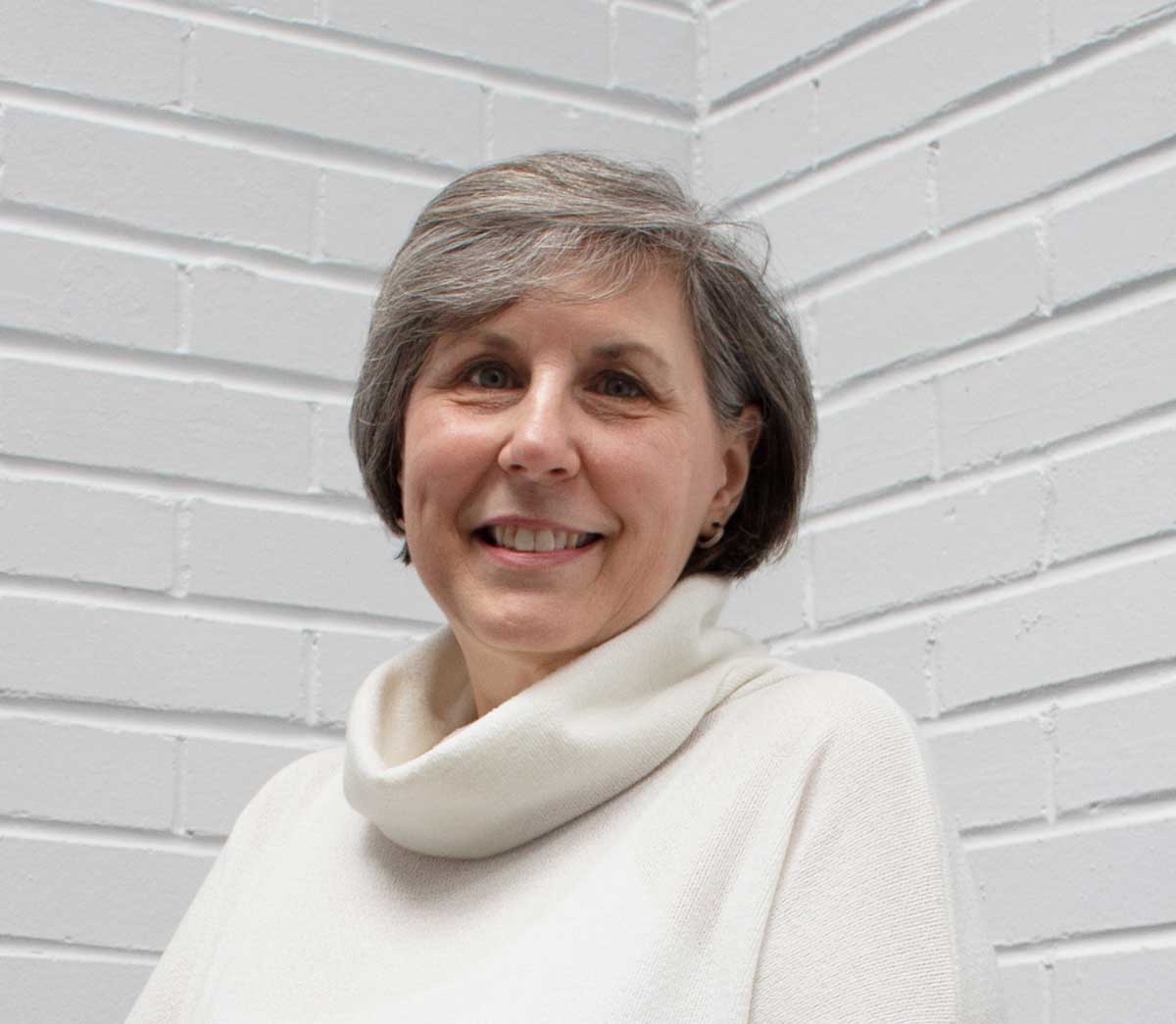
Jennifer Keenahan is an Associate Professor in the School of Civil Engineering at University College Dublin. Her research focuses on Computational Fluid Dynamics (CFD) applications in the built environment, including wind analysis for urban safety, thermal comfort, fire safety, and sustainable infrastructure design. She holds a B.E. (Civil Engineering, 2011) and PhD (2014) from UCD, with industry experience at Arup in bridge engineering and CFD consulting. Her academic roles include Head of Teaching and Learning in Civil Engineering, Programme Director for the Dual Columbia-UCD ME in Civil Engineering, and Module Coordinator for structural engineering courses. She is actively involved in pedagogical innovation, such as integrating animation/video tools into teaching and promoting inclusive learning through UDL initiatives. Research interests span CFD validation for wind tunnel tests, seabed scour assessment, floating offshore wind dynamics, and eco-engineered coastal defenses. Notable awards include the 2023 Teaching and Learning Award and 2022 Infrastructure Asset Management Prize. She leads multiple grants, including the €4M DETECT project for coastal zone management and DECC-funded bridge safety studies.
Dipl.-Ing. Monika Oswald is affiliated with the Department of Security Studies at the University for Continuing Education Krems. Her research focuses on fire safety regulations, evacuation strategies, and structural design for emergency scenarios. She has contributed to publications such as the Fire Protection and Occupational Safety Yearbook 2016 and presented at conferences like the 11th Fire Protection Conference. Her work emphasizes harmonizing fire protection standards in Austria and understanding human behavior during evacuations. Contact: monika.oswald@donau-uni.ac.at, Campus Krems, Tract L, 1st Floor, Office 1.112.
Teofil Florin GĂLĂȚANU is an Associate Professor at the Faculty of Civil Engineering, Department of Civil Engineering, Transilvania University of Brașov. His research focuses on steel structures, structural design modeling, and the behavior of steel structures under fire conditions. He has authored a textbook on metal structural joints and contributed to peer-reviewed journals in heat transfer analysis, fire-resistant materials, and composite infrastructure components. His work spans numerical simulations, experimental testing of structural joints, and fire safety engineering. Selected research highlights include studies on welded joints post-fire exposure, cold-formed steel connections, and sandwich composite manhole covers. His publications blend theoretical analysis with practical applications in civil engineering and materials science.