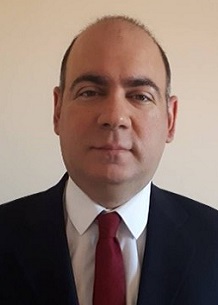
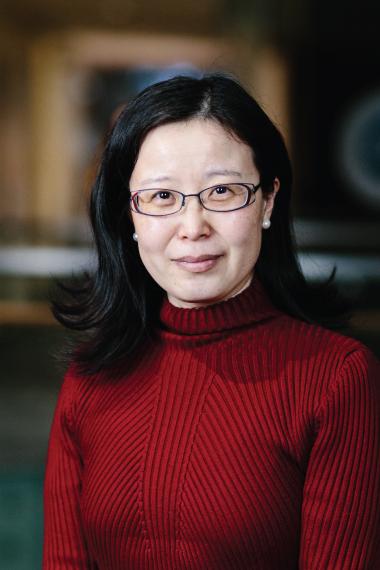
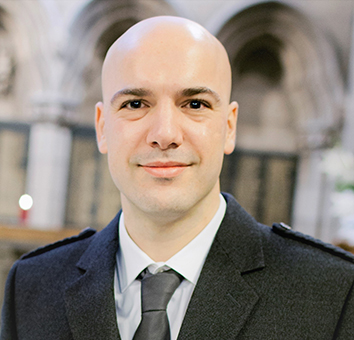
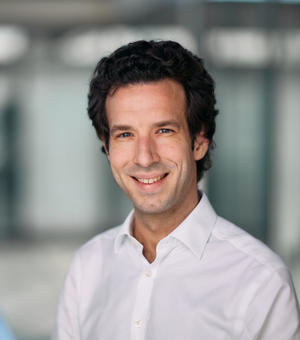
Giovanni Angelini is an Associate Professor in the Department of Economic Sciences at the University of Bologna. His research focuses on macroeconometrics, time series analysis, forecasting methodologies, and quantitative sport economics. He holds a permanent position and is affiliated with the Department of Economic Sciences, contributing to both academic research and teaching in economics. Research interests include advanced econometric techniques for analyzing macroeconomic trends, climate change impacts on public perception, and applications of stochastic models to tourism and sports economics. Notable recent work explores price competition dynamics in tourism, extreme event forecasting using Poisson autoregressions, and the identification of structural economic shocks via proxy-SVAR approaches. His publications span topics like DSGE model validation, uncertainty spillovers in the Euro area, and forecasting methodologies in cryptocurrency markets. He is actively engaged in methodological advancements in structural vector autoregressions and bootstrap testing for macroeconomic models.
Dr. Dimitrios Stafylas is an Assistant Professor of Finance at the University of York's School for Business and Society, with prior roles as Lecturer at Aston Business School and Doctoral Researcher at the University of York. He holds an MBA, MSc in Net-Centric Information Systems, and advanced teaching certifications including a PGCert in Learning & Teaching and Senior Fellowship of the Higher Education Academy. His research focuses on empirical finance, including investment funds, asset pricing, corporate finance, market efficiency, and behavioral finance. He has supervised five PhD students and actively contributes to academic committees, including roles in the FEBS Conference Scientific Committee and as Associate Editor at the European Journal of Finance. Dr. Stafylas has presented at numerous international conferences, such as the FEBS Conference, Computational Statistics Conference, and EFMA Conference. His publications span journals like the British Journal of Management, Studies in Nonlinear Dynamics & Econometrics, and the European Journal of Finance. He has also served in various administrative roles, including Deputy Head of the Board of Examiners (Management) and Programme Director for the MSc in Finance. Dr. Stafylas teaches courses in Corporate Finance, FinTech, Asset Pricing, and Behavioral Finance, reflecting his expertise in both academic and practical financial disciplines. Awards: Senior Fellow of the Higher Education Academy PGCert in Learning & Teaching Certified Management and Business Educator Key Research Themes: Hedge Fund Performance Analysis Portfolio Diversification Strategies Cryptocurrency Market Dynamics Managerial Behavior in Investment Funds Academic Services: Ad-hoc referee for journals including the European Journal of Finance and International Review of Financial Analysis External Ethics Reviewer (University of Sheffield) PhD Examiner and Competition Judge for finance projects His work bridges theoretical finance with practical applications, addressing topics like fund manager mobility, cryptocurrency diversification, and China’s equity fund dynamics. Dr. Stafylas continues to engage in interdisciplinary research, contributing to both academic discourse and industry practices through his extensive network and conference engagements.
Yiguo Sun is a Professor of Economics and University Research Leadership Chair at the University of Guelph, Department of Economics and Finance. She specializes in econometrics, focusing on semi-/nonparametric methods for panel data, non-stationary time series, and spatial regression models. Her research addresses issues such as investment dynamics, social interactions, and threshold effects. She holds a B.Sc. and M.Sc. from Hebei Normal University, an M.A. from the University of Guelph, and a Ph.D. from the University of Toronto. Awards include the CBE Senior Research Fellow (2018-2021) and University Research Leadership Chair (2022-2025). Education: B.Sc. in Mathematics, Hebei Normal University (1993) M.Sc. in Mathematics, Hebei Normal University (1996) M.A. in Economics, University of Guelph (1997) Ph.D. in Economics, University of Toronto (2002) Research Interests: Dr. Sun’s work centers on advancing econometric methodologies, particularly in nonparametric and semiparametric frameworks. Key areas include: Threshold regression models and their applications in inflation dynamics and social interactions Spatial econometrics and panel data analysis Nonlinear estimation techniques addressing endogeneity and measurement error Economic growth and natural resource nexus Recent Contributions: Her 2024 paper on investment-uncertainty relationships introduced a novel estimator addressing endogeneity and measurement bias. The 2023 Social Threshold Regression advanced peer effect analysis through a spatial Durbin framework. Recent articles explore spatial spillovers in trade policies and Canadian inflation dynamics using threshold models. Awards: University Research Leadership Chair (2022-2025) CBE Senior Research Fellow in Spatial Econometrics (2018-2021) SSHRC Insight Grant (2022-2025) Grants & Advising: She leads SSHRC-funded projects on social networks and measurement errors in finance. Supervised students include Delong Li (investment dynamics), Chaoyi Chen (threshold estimation), and Hui Xiao (model averaging). Research teams focus on econometric theory and applied policy analysis. Labs/Teams: Active in the University of Guelph’s CBE research community, collaborating with Thanasis Stengos, Emir Malikov, and international scholars on spatial econometrics and nonlinear methods.
Professor Dimitris Korobilis holds the rank of Professor of Econometrics at the Adam Smith Business School, University of Glasgow. He previously served as Professor of Finance at the University of Essex. His roles include directing the MSc in Data Analytics for Economics and Finance, co-ordinating the annual ASBS Summer School in Empirical Macroeconomics, and leading the macroeconomics research cluster. Education: PhD in Economics from the University of Strathclyde (2010). Research focuses on applied statistical inference in macroeconomic and financial data, emphasizing Bayesian methods, machine learning, and high-dimensional modeling. Notable contributions include developing algorithms for macroeconomic forecasting and policy analysis, with applications at institutions like the IMF and ECB. His work bridges econometric theory and practical policy tools. Teaching includes courses on Econometrics, Statistical Machine Learning, Time Series Forecasting, and Bayesian Data Analysis. Advises PhD students exploring topics like DSGE models and Bayesian microeconometrics. Publications span over 30 peer-reviewed articles in top journals such as the Journal of Econometrics and Journal of Business & Economic Statistics, with a focus on Bayesian VAR models, factor analysis, and macroeconomic risk monitoring.
Ferre De Graeve is an Associate Professor at KU Leuven's Faculty of Economics and Business, where he holds significant administrative roles including Head of the Education Commission for Economic Sciences and Program Director for the Master of Advanced Studies in Economics. He maintains active memberships in key faculty councils and program committees. His research focuses on structural relationships in macroeconomics with emphasis on: Monetary policy transmission mechanisms and central bank strategies Macro-financial linkages and non-linear dynamics in financial markets Sectoral shock identification and spillover effects across industries Econometric modeling of business cycles and inflation dynamics Government debt composition and fiscal-monetary policy interactions De Graeve's recent publications demonstrate a strong methodological focus on Vector Autoregression (VAR) techniques applied to macroeconomic problems, with particular attention to financial stability, interest rate dynamics, and sectoral interdependencies. His work consistently bridges theoretical models with empirical analysis using advanced time-series approaches. He has supervised multiple PhD students in macroeconomics research, including dissertations on monetary policy, structural macroeconometrics, and macro-financial interactions. His teaching portfolio includes graduate courses in Advanced Macroeconomics, Economics of Money and Finance, and Mathematical Analysis for Macroeconomic Problems.
James Duffy is an Associate Professor of Economics at Corpus Christi College, University of Oxford. His research focuses on macroeconometrics, addressing challenges in inference and identification for strongly dependent time series. Research areas: nonlinear cointegration, nonparametric methods, structural VAR robustness, and identification in macroeconomic models Affiliation: Department of Economics, Corpus Christi College Contact: james.duffy@economics.ox.ac.uk
Professor Liangjun Su is a distinguished academic in econometrics, currently serving as the C.V. Starr Chair Professor at Tsinghua University's School of Economics and Management. He has held positions at Peking University and Singapore Management University, contributing extensively to nonparametric econometrics, panel data analysis, and machine learning applications. PhD in Economics, University of California, San Diego (2004) Master of Economics, University of California, Riverside (1999) Bachelor of Engineering Economics, Xi'an Jiaotong University (1994) His research focuses on advanced econometric methodologies, including: Nonparametric and semiparametric techniques High-dimensional panel data models Machine learning integration in econometric analysis Interactive fixed effects and latent group structures Recent publications highlight his work on: Dynamic panel models with interactive fixed effects Specification testing and structural changes High-dimensional factor models and FAVAR estimation Classifier-Lasso applications for hidden heterogeneity Scientific recognition includes: Fellow of the Journal of Econometrics (2014) Multa Scripsit Award, Econometric Theory (2014) Senior Fellow, Rimini Centre for Economic Analysis (2020-2026) Lee Kuan Yew Research Award (2011) Actively involved in academia, he serves as Co-Editor of Econometric Theory and on editorial boards of multiple journals. His team is currently recruiting postdoctoral fellows for research on high-dimensional metrology and machine learning applications in economics.
Andrea Civelli is an Associate Professor in the Department of Economics at Bentley University. He holds a Ph.D. from Princeton University (2010) and previously served as Associate Professor at the University of Arkansas, with visiting roles at UT Austin and NC State University. His industry experience includes senior economist work at blockchain firm Algorand. His academic credentials include: Ph.D. in Economics, Princeton University (2010) M.A. in Economics, Princeton University (2005) B.A. in Economics, Bocconi University (2002) Research spans Empirical Macroeconomics , Monetary Economics , Banking , International/Development Macro , Economic Policy Uncertainty , and Cryptocurrency . He integrates VAR models with cross-sectional, experimental, and spatial methods for multi-dimensional economic analysis. Recent publications (2022-2025) examine cryptocurrency dynamics under policy uncertainty, economic growth measurement, Indonesian urban sprawl, and experimental decision-making. Works appear in top journals including Review of Economics and Statistics and Economic Journal . Active research projects: Urban Sprawl and Health Outcomes in Indonesian (2024) - CHB Health Initiative Seed Funding Measuring the Value of a Blockchain Ecosystem (2024) - FAC 24/25 Grant As department faculty, he mentors economics students while collaborating internationally, leveraging blockchain expertise from his Algorand industry role.
Dr. Valeriu Moldoveanu is a Scientific Researcher I and Head of the Theoretical Physics and Computational Modeling Group at the National Institute of Materials Physics in Romania. His career spans theoretical physics research with significant contributions to quantum transport phenomena in nanostructures and hybrid quantum systems. His academic background includes graduate studies at the Faculty of Physics, University of Bucharest (1993-1998), a Master Degree in Condensed Matter Physics (1998-2000), and a PhD in Theoretical Physics completed in 2004 through a cotutelle program between Universite de la Mediteranee Aix-Marseille II and University of Bucharest. His doctoral research was supervised by Prof. Gheorghe Nenciu and Prof. Francois Bentosela. Moldoveanu's research focuses on quantum transport in nano-devices and hybrid quantum systems, particularly nano-electromechanical systems, cavity-embedded quantum dots, and color centers. His theoretical work combines configuration interaction methods, density functional theory, and generalized master equation formalisms to address complex many-body problems in mesoscopic physics. Recent publications demonstrate continued active research in cavity quantum electrodynamics with nanostructures, single-molecule magnets, and non-equilibrium transport phenomena. His scholarly achievements include the prestigious Radu Grigorovici Prize of the Romanian Academy awarded in 2010. He has led significant research projects such as 'Electron-vibron coupling effects in driven nano-electromechanical systems' (PCE-Idei, 2017-2019). Throughout his career, Moldoveanu has maintained strong international collaborations, conducting research at institutions including Technion Institute in Israel, Aalborg University in Denmark, Bilkent University in Turkey, and the Science Institute in Reykjavik, Iceland. He has also contributed to academic education through teaching positions at the University of Bucharest and Universite de Toulon et du Var in France.
Andreas Fagereng is a Professor of Finance at BI Norwegian Business School and a Senior Researcher at Statistics Norway. He serves as Co-director of the Centre for Household Finance and Macroeconomic Research (HOFIMAR) and is a member of the Research Policy Network on Household Finance at the Center for Economic Policy Research (CEPR). His academic career spans prestigious institutions including Statistics Norway, Norges Bank, and the European University Institute. Dr. Fagereng earned his PhD in Economics from the European University Institute in 2012 and his MSc in Economics from the University of Oslo in 2007. His research focuses on household finance and macroeconomics, particularly examining wealth inequality, consumption behavior, and the relationship between household financial positions and economic outcomes. His work frequently utilizes detailed Norwegian administrative data to investigate asset allocation patterns, investor behavior, and household responses to economic shocks. His extensive publication record reveals consistent themes in analyzing how households respond to income fluctuations, the heterogeneity in returns to wealth across different population segments, and the intergenerational transmission of economic advantage. Dr. Fagereng's research employs sophisticated methodologies including natural experiments, panel data analysis, and structural modeling to address fundamental questions in household finance. Among his notable recognitions is the prestigious ERC Starting Grant for his project 'Inequality in 3D – Measurement and Implications for Macroeconomic Theory (3D-In-Macro)' (2020-2025), which supports his innovative work at the intersection of micro-level household data and macroeconomic theory. Dr. Fagereng's research has significant policy implications for understanding wealth distribution dynamics, designing effective economic stabilization policies, and improving macroeconomic models that incorporate household heterogeneity. His collaborations with leading researchers worldwide have positioned him at the forefront of the growing field examining the connections between household financial decisions and broader economic outcomes.
Dr. Aubrey Poon is a Senior Lecturer in Econometrics at the School of Economics, University of Kent, with affiliated researcher positions at Örebro University (Sweden), Centre for Applied Macroeconomic Analysis (Australian National University), and UK Economic Statistics Centre of Excellence. He completed his PhD in Economics from the Australian National University in 2017. His primary research focuses on Applied Macroeconometrics , specializing in Bayesian estimation methodologies including: Mixed-frequency analysis techniques Non-linear state-space modeling Quantile regression frameworks Macroeconomic forecasting systems His work has been featured in prominent outlets including The Economist and New York Times. Publication analysis reveals strong thematic consistency in econometric innovation, with recent works emphasizing: Advanced Bayesian VAR methodologies International financial market interconnections Macroeconomic tail risk quantification Regional economic nowcasting techniques The research demonstrates growing sophistication in handling high-dimensional data structures and missing data problems across global economies. Dr. Poon maintains active research collaborations across multiple international institutions focusing on macroeconomic measurement and policy analysis.
Dr. Dan Zhu is a Professor in the Department of Econometrics and Business Statistics at Monash University. She holds a PhD in Financial Mathematics and Actuarial Science from the University of Melbourne's Economics department. Her research focuses on numerical methods for sensitivity analysis, financial mathematics, Bayesian analysis, and stochastic dynamical systems optimization. She has led multiple research projects including 'Efficient Bayesian Markov chain Monte-Carlo for Ultra-High-Dimensional Time Series' (2025) and contributed to initiatives like the 'Carer payments assessment process' (2024–2025). Key areas of expertise include Bayesian VAR models, macroeconomic forecasting, and financial risk analysis. Her work frequently addresses computational challenges in high-dimensional statistical models, with applications to policy analysis and financial engineering. Notable collaborations span institutions including CSIRO Data61 and the Australian Research Council. Dr. Zhu’s recent research emphasizes structural analysis of vector autoregressions, quantile-based forecasting methods, and the integration of climate variables into macroeconomic risk frameworks. Her methodologies have advanced sensitivity analysis techniques critical for robust policy evaluation and financial decision-making.
Xavier Begaud is a Professor at Telecom Paris within Institut Polytechnique de Paris, affiliated with the Communications and Electronics (Comelec) Department of the Information Processing and Communication Laboratory (LTCI). He joined Telecom Paris in 1998 and led the RF & Microwave group from 2013 to 2017, currently serving as a core member of the Radio Frequency and Microwaves (RFM²) research team. His work bridges theoretical and applied electromagnetics with strong industry collaboration. Educational background: B.S. in Telecommunication, University of the South, Toulon-Var (1988) M.S. in Optics, Optoelectronics and Microwaves, Institut National Polytechnique de Grenoble (1989) Ph.D. in Electronic and Communications, University of Rennes 1 (1996) Habilitation in Electrical Engineering, Pierre and Marie Curie University (Paris 6) (2007) His research centers on advanced antenna systems with emphasis on metamaterial applications. Key areas include wideband/dual-polarized antenna design, transformation optics for radiation control, and radar absorbing materials (RAM) development. Current work targets 5G/6G communication systems, UAV detection radar, and space applications requiring lightweight electromagnetic absorbers operating from GHz to millimeter waves. He employs numerical methods for modeling antennas over artificial magnetic conductors and defected ground structures. Analysis of recent publications reveals three dominant trends: (1) Metasurface-enabled beam steering for multi-band 5G antennas, (2) Ultra-wideband metamaterial absorbers using composite materials for space/naval applications, and (3) EMF exposure reduction in mobile devices through metamaterial integration. His group consistently applies transformation optics to manipulate radiation patterns and develops multi-sector absorbers with oblique incidence tolerance. Scientific Awards No specific awards, fellowships, or medals were documented in the source material. Advising and Grants Though individual students aren't listed, his supervision is evidenced by 250+ publications. He chaired Meta’12 and AES 2012 conferences and co-edited books on ultra-wideband antennas. Current grant activities include the NF-PERSEUS project (2023-2024) for 6G research and past Orange contracts (2013-2014) developing low-exposure wireless components for D4.1/D4.2 reports. Labs and Teams RFM² (Radio Frequency and Microwaves) research team at LTCI COMELEC Department specializing in communications systems Key development of SAFAS (Self-Complementary Connected Antenna Array with Low Signature) for stealth applications Active collaboration with CNES, DGA, and ONERA on radar-absorbing composites
Mario FORNI is a Full Professor at the Department of Economics "Marco Biagi" at the University of Modena and Reggio Emilia. His primary research focus is on econometrics with specialization in time series analysis, dynamic factor models, and structural VAR methodologies. His work spans both theoretical developments and empirical applications to macroeconomic policy analysis. Professor FORNI's research interests center on advanced econometric techniques for analyzing macroeconomic phenomena. His work particularly emphasizes the identification and measurement of structural shocks in macroeconomic systems, including supply and demand shocks, monetary policy shocks, and uncertainty shocks. His research has made significant contributions to understanding the nonlinear transmission of financial shocks, the asymmetric effects of monetary policy, and the role of news versus uncertainty in business cycle fluctuations. His methodological innovations often involve frequency domain analysis and high-dimensional factor models. Analysis of his recent publications reveals a consistent focus on developing and applying structural econometric methods to understand macroeconomic fluctuations. His work frequently combines dynamic factor models with structural VAR approaches to address identification issues in macroeconometric analysis. A notable trend is his development of methods to distinguish between different types of shocks (supply vs. demand, news vs. uncertainty) and to analyze their asymmetric effects on the economy. His research has important implications for monetary and fiscal policy design. Professor FORNI teaches several advanced courses including Time Series Econometrics, Data Analysis, and Introduction to Microeconomics. His teaching emphasizes both theoretical foundations and practical applications using statistical software. His courses for the 2025 academic year include Data Analysis for the Master's Degree in Data Analysis for Economics and Management, and Time Series Econometrics for the same program. His office is located at via Berengario, 51, office 35 west, and he holds student reception hours on Fridays from 11 am to 1 pm. His research is well-documented through his ORCID profile (0000-0003-0256-8735), which lists numerous publications in top econometrics and macroeconomics journals.
Lawrence Christiano is the Alfred W. Chase Professor of Economics at Northwestern University's Weinberg College of Arts & Sciences. He holds a PhD from Columbia University (1982) and has been a faculty member since 1992. His research focuses on monetary and fiscal policy responses to business cycle shocks, combining empirical model estimation with optimal policy computation. He is a Fellow of the Econometric Society and a research associate at the National Bureau of Economic Research. Education : PhD in Economics, Columbia University, 1982 MSc in Econometrics/Mathematical Economics, London School of Economics, 1977 MA and BA in Economics/History, University of Minnesota, 1975/1973 Research Interests : Macroeconomics, monetary policy design, business cycle analysis, applied time-series econometrics, and financial market dynamics. His work emphasizes policy-relevant modeling for central banks and the computational methods needed to address economic instability. Awards & Honors : Fellow of the Econometric Society (2001) AEJ Best Paper Award (2017) for 'Understanding the Great Recession' Keynote speaker at multiple international conferences (e.g., Bank of Canada, Swiss National Bank) Advising & Grants : Extensive National Science Foundation grants; advisor to central banks including the Federal Reserve, European Central Bank, and IMF. His work has informed policy frameworks globally. Labs/Teams : Leads research initiatives in quantitative macroeconomics and policy modeling at Northwestern's Department of Economics.