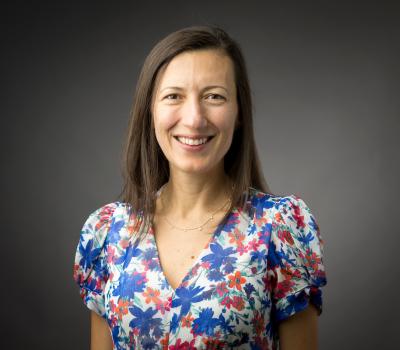
Dr. Bhavna Sharma is an Associate Professor and Director of the Chase L. Leavitt Master of Building Science Program at the USC School of Architecture. Her work focuses on decarbonization, bio-based materials innovation, and sustainable healthcare infrastructure. She leads the Keck USC Sustainable Healthcare Initiative (KUSHI) to advance environmentally conscious healthcare systems. Dr. Sharma holds a Ph.D. in Civil and Environmental Engineering from the University of Pittsburgh, with additional degrees in Art History and Architecture. Her research spans structural systems optimization from material harvesting to building-scale applications, emphasizing bio-composites like bamboo and timber. She co-chairs USC's Presidential Working Group on Sustainability, contributing to Assignment: Earth climate goals. Courses taught include seismic design, structural systems, and building science integration. Key research areas include lifecycle assessment in healthcare, seismic-resistant designs, and interdisciplinary standards for non-conventional materials. Her work bridges material science, architectural practice, and policy to address global sustainability challenges.
Dr. Yelda Turkan is an Associate Professor in the School of Civil and Construction Engineering at Oregon State University, where she leads research in automation, computer vision, and machine learning for sustainable infrastructure. She holds a PhD from the University of Waterloo and dual BS degrees in Civil Engineering and Geomatics Engineering from Istanbul Technical University. Her work focuses on leveraging lidar, digital twins, and BIM to improve construction operations and decision-making in the built environment. She has secured over $4M in grants from NSF, FHWA, and other agencies, and currently leads the NSF Convergence Accelerator-funded 'Deep Reality' project for AI-driven infrastructure management. Education: Ph.D., Civil Engineering, University of Waterloo, 2012 M.S., Engineering Informatics & Remote Sensing, Istanbul Technical University, 2006 B.S., Civil Engineering (double major in Geomatics Engineering), Istanbul Technical University, 2005/2003 Professional Roles: Vice President, International Association for Automation and Robotics in Construction (IAARC) Chair, ASCE Computing Division Education Committee Associate Editor, ASCE OPEN Journal Her research emphasizes automation in construction quality control, infrastructure inspection via drones and lidar, and immersive education tools using VR/AR. Recent projects include automated curb ramp compliance analysis, wildfire impact modeling, and digital twin development for timber structures. She has published over 80 peer-reviewed articles and actively promotes computing integration in civil engineering education and professional practice.
SangHyung Ahn is a Lecturer at the School of Civil Engineering , University of Queensland (UQ), since 2017. He joined UQ as a postdoctoral research fellow in 2015 after earning his PhD in Civil Engineering (Construction Engineering and Management) from Purdue University, USA. Prior to his academic career, he worked as an assistant manager at Hyundai Engineering and Construction Co., Ltd. (2003-2007) and holds an MBA in international business from Hanyang University and a B.Sc in Civil Engineering from Korea University. Research Focus: Construction process modelling with virtual reality, decision support systems for construction, automation of data-driven simulation modelling, sensor-based operations analysis, and integration of Building Information Modelling (BIM). Teaching: Coordinates undergraduate courses Introduction to Project Management (CIVL3510) and Construction Engineering Management (CIVL4522) . Research Trends: His recent publications highlight interdisciplinary work in transportation engineering, structural design, and AI-driven simulation tools. Key themes include application of machine learning to car-following models, drone-based vehicle identification, and optimization of public transport systems using agent-based simulations. Supervision: Available for supervision, with completed supervision of PhD and Master’s theses on topics such as BIM-LCA integration, pedestrian trajectory analysis, and AI-driven driving behavior models.
Professor Andrea Frangi is affiliated with the Institute of Structural Engineering at ETH Zurich, where he leads research and teaching in Structural Timber Engineering , Hybrid Structures , and Fire Safety Engineering . Education: Dipl. in Civil Engineering (ETH Zurich, 1995), Ph.D. in Technical Science (ETH Zurich, 2001). His research interests focus on timber structures, hybrid systems, and fire safety. Recent work explores rate-dependent connections, adhesive bonding in timber-mortar composites, and fire resistance of cross-laminated timber. Notable publication trends include: Advancements in strip-reinforced timber beams and epoxy hybrid-adhesives . Fire safety studies on charring rates , compartment fires , and progressive collapse in timber structures. Material testing under cyclic loading , high-speed loads , and moisture exposure . He teaches courses such as Timber Structures I/III , Fire Science , and Structural Fire Design , and collaborates with organizations like Eurocode 5 committees and the International Association for Fire Safety Science.
Wesley McGee serves as Associate Professor of Architecture and Director of the Fabrication and Robotics Lab (FABLab) at the University of Michigan Taubman College of Architecture and Urban Planning. He co-founded Matter Design, a studio pioneering innovative applications of advanced manufacturing in architectural production across global contexts including the US, Europe, Middle East, and Australia. Education Bachelor of Science in Mechanical Engineering, Georgia Tech Master of Industrial Design, Georgia Tech McGee's research critically interrogates material production methods in architecture through robotics and digital fabrication, developing novel connections between design, engineering, and manufacturing processes. His work explores spatial-laminated timber systems, geometrically adaptive robotic workflows, and real-time fabrication-aware form finding to create material-efficient architectural solutions. His publications trend toward integrating computational design with physical construction, emphasizing topological optimization, adaptive robotic motion planning, and additive manufacturing techniques that reduce material usage by up to 46% compared to conventional systems. Scientific Awards Architectural League Prize for Young Architects & Designers Design Biennial Boston Award ACADIA Award for Innovative Research Architect Magazine R+D Award (multiple) McGee leads NSF Regional Innovation Engines semifinalist projects including Next-Generation Factory-Built Housing and secures University of Michigan grants for climate action initiatives. His Matter Design studio collaborates with architects, engineers, and artists on exhibitions like Climate Futures and SPLAM, advancing equitable city-making through material innovation. As FABLab Director, he operates a cutting-edge robotics facility where industrial tools are reconfigured for architectural production, mentoring students in courses like ARCH 581 (Advanced Robotics) and ARCH 702 (Robotic Engagement) while pushing boundaries in mass timber and glass fabrication.
Hua Ge is a Professor in the Department of Building, Civil and Environmental Engineering at Concordia University's Faculty of Engineering and Computer Science. She holds a Tier II Concordia University Research Chair in High Performance Building Envelope for Climate Resilient Buildings and leads extensive research in building science and climate adaptation. Her research focuses on wind-driven rain analysis , hygrothermal performance of building envelopes , advanced building facades , innovative wood-frame construction , and low-energy buildings . Current work examines climate change impacts on wind-driven rain loads, urban micro-climate effects, climate-resilient building envelopes, dynamic facades, and low-carbon healthy buildings. Her methodology combines large-scale laboratory testing, field monitoring, and computational modeling. Her 15 most recent publications demonstrate strong trends in nature-based climate resilience solutions , overheating risk mitigation in educational buildings , advanced hygrothermal modeling of wood-frame systems , and carbon sequestration strategies for buildings. The work spans multiple sub-disciplines including computational fluid dynamics, life cycle assessment, stochastic modeling, and field validation studies across Canadian climates. Tier II Concordia University Research Chair (CURC) in High Performance Building Envelope for Climate Resilient Buildings Professional Engineers of Ontario American Society of Heating, Refrigerating and Air-conditioning Engineers ASHRAE TC4.4 Building materials and building envelope performance (Subcommittee Chair) Professor Ge has supervised 42 graduate students (26 PhD, 16 MASc), including current advisees working on nature-based solutions, climate-resilient envelopes, and building integrated photovoltaics. Her research is supported by Concordia University Research Chair funding and collaborative projects with institutions like BCIT. She directs activities at Concordia's Building Envelope Test Facility and contributes to national standards through ASHRAE.
David Henderson is the Director of the Cyclone Testing Station (CTS) in the School of Engineering and Physical Sciences at James Cook University, Australia. He has over two decades of experience as a research engineer specializing in the performance of low-rise buildings under extreme wind conditions. He previously served as the CTS Research Fellow and Manager, and was seconded as a Postdoctoral Researcher at the University of Western Ontario, Canada, working on full-scale house testing under simulated wind loads. His work bridges engineering research, disaster assessment, and policy development. David's research focuses on wind engineering, structural resilience, and disaster mitigation. His key interests include cyclonic wind loading, internal and external pressure dynamics in buildings, fatigue failure of structural connections, and the vulnerability of housing to severe wind events. He has conducted post-disaster surveys across Australia and Canada, assessing damage from cyclones, tornadoes, and earthquakes. His research has direct applications in building codes, retrofitting strategies, and community risk reduction. The recent publications highlight a strong trend in understanding and mitigating wind-induced damage to residential structures, particularly through full-scale testing, modeling of pressure dynamics, and fragility assessment of roofing systems. His work spans experimental, theoretical, and policy-oriented domains, with a growing emphasis on climate change adaptation and community resilience. Topics such as internal pressure design, load sharing in roof frames, and retrofitting for wind resistance are central to his contributions. 14 research awards (specific names not listed) Active member of Standards Australia code committees Invited speaker at national and international conferences Media contributor on storm damage and building safety David has led multiple research projects funded by councils and agencies focused on extreme wind mitigation, data systems (SWIRLnet), and community risk reduction. While formal student supervision is not explicitly listed, he collaborates extensively with researchers such as John Ginger, Korah Parackal, and Daniel Smith. He has contributed to major studies involving wind load testing, housing vulnerability modeling, and climate adaptation planning. David is a key figure in the Cyclone Testing Station, leading its full-scale testing program and contributing to the development of software for controlled load and measurement systems. His team conducts wind risk assessments for communities and large installations, incorporating terrain analysis and retrofitting evaluations. The CTS serves as a national resource for wind engineering research and disaster resilience innovation.
Dr. Terje Haukaas is a Professor of Structural & Earthquake Engineering at the University of British Columbia (UBC), Department of Civil Engineering, Faculty of Applied Science. He holds a PhD and Master's from UC Berkeley (2003, 1999) and a bachelor's from the Norwegian University of Science and Technology (1996). His research focuses on probabilistic modeling, structural reliability, and earthquake engineering, with contributions to software development (e.g., FERUM, OpenSees). He teaches courses like Structural Analysis, Nonlinear Analysis, and Reliability & Safety. Education: PhD in Civil Engineering, UC Berkeley, 2003 Master's in Civil Engineering, UC Berkeley, 1999 Bachelor's in Civil Engineering, NTNU, Trondheim, 1996 Engineering Degree (Stavanger University College, 1994) and Technician Degree (Stavanger Technical College, 1992) Research Interests: Probabilistic mechanics and reliability analysis Seismic vulnerability and risk assessment Software tools for finite element analysis (FERUM, OpenSees) Timber engineering and structural optimization Awards & Recognition: UBC Killam Teaching Prize (2016) President of CERRA (2015–2019) Keynote/Semi-plenary speaker at major conferences (ICASP12, COMPDYN 2017) Student Appreciation Awards (Top Professor rankings) Grants & Labs: Recipient of grants supporting seismic risk research Developed computational frameworks for structural analysis
Markku Karjalainen is a Professor in the Department of Architecture at Tampere University's Faculty of Built Environment. With over 80 research publications spanning from 2016 to 2025, he has established himself as a leading expert in timber construction and wooden building systems in Finland. Professor Karjalainen's research primarily focuses on timber construction , particularly multi-story wooden buildings, dovetail wood construction techniques, and sustainable building practices. His work spans architectural design, structural engineering, fire safety, and environmental impact assessment of wooden structures. He has conducted extensive statistical analyses of Finnish timber residential buildings, examining construction practices from 1995 to the present. His research demonstrates a strong commitment to advancing wooden construction technologies while addressing practical challenges in fire safety, structural performance, and building physics. Analysis of his recent publications (2023-2025) reveals a consistent focus on dovetail construction techniques for mass timber elements, with numerous studies examining structural performance, fire properties, and air permeance. His work bridges theoretical research with practical applications in the construction industry, particularly in Finland where wooden multi-story construction has seen significant growth. Karjalainen's research often involves international collaboration, with studies comparing practices across different countries and examining global perspectives on timber construction. His scholarly output demonstrates a methodical progression from basic statistical analysis of building practices to increasingly sophisticated investigations of specific construction techniques and their performance characteristics. This evolution reflects both his growing expertise and the maturation of timber construction as a field of academic inquiry.
Michelle Laboy is an Associate Professor in the School of Architecture at Northeastern University, with affiliate appointments in Civil & Environmental Engineering and the School of Public Policy and Urban Affairs. She holds a Master of Architecture and Urban Planning from the University of Michigan (2005) and a Bachelor of Science in Civil Engineering from the University of Puerto Rico (2001). Her research focuses on transdisciplinary design methods that integrate socio-ecological systems with built environment resilience, emphasizing material circularity and long-term sustainability. Key projects include the Boston LightWells initiative and Common SENSES, which explore community-driven solutions for urban resilience. Laboy has received prestigious awards including the Latrobe Prize (2017 and 2022) and Excellence in Teaching (2020). She co-founded FieLDworkshop, a design research practice addressing ecological and cultural regeneration in cities. Her work bridges architecture, engineering, and policy through projects funded by NSF, DOE ARPA-E, and Autodesk. Research themes include green infrastructure planning, climate-resilient building systems, and participatory modeling for equitable urban development. Laboy has authored/co-authored books such as *The Architecture of Persistence* and over 30 peer-reviewed articles in journals like *Journal of Industrial Ecology* and *Journal of Architecture*. Her teaching spans comprehensive design studios and systems integration courses, emphasizing transdisciplinary collaboration. Education: MArch/MUP, University of Michigan, 2005 BSc Civil Engineering, University of Puerto Rico, 2001 Key Awards: 2022 Latrobe Prize (AIA College of Fellows) 2020 Excellence in Teaching Award (CAMD) 2017 Latrobe Prize (AIA College of Fellows) Grants & Projects: Principal Investigator: Boston LightWells (Autodesk/ Boston Groundwater Trust) Co-PI: Community Resilience in Extreme Temperatures (Northeastern) DOE ARPA-E grant for carbon-negative timber construction Laboy’s practice, FieLDworkshop, operationalizes research into built projects ranging from residential designs to urban-scale interventions. Her scholarly contributions highlight the interplay between technical innovation and social equity in achieving sustainable urban futures.
Daniele Casagrande is an Assistant Professor of Wood Engineering at the University of Trento, Italy, and an Adjunct Professor of Structural Engineering at the University of Ottawa, affiliated with the Faculty of Engineering and the Department of Civil Engineering. His expertise lies in the seismic performance and structural dynamics of timber-based systems. Education: Ph.D. in Civil and Mechanical Structural Systems Engineering, University of Trento, Italy Postgraduate Diploma in Seismic Behavior of Structures, University of Trieste, Italy M.Sc., University of Trento, Italy BASc., University of Trento, Italy His research focuses on the seismic behavior of timber structures , including dynamic response, timber connections under cyclic loading, hybrid wood-steel systems, and the development of simplified analytical and numerical models for lateral load analysis. He has contributed to innovative designs for post-emergency timber housing and conducted full-scale vibration table tests and laboratory experiments on shear walls and mechanical connections. Daniele is actively involved in international standards development, serving on the Italian Committee on Timber Structures and contributing to the revision of Eurocode 5 and the timber chapter of Eurocode 8 . He currently leads a working group within the COST CA20139 action on holistic design of tall timber buildings, focusing on accidental load scenarios. Professional Engagement: Member, Italian Committee on Timber Structures Working Group Leader, COST CA20139 (Accidental Loads in Tall Timber Buildings) Collaborator in national and international research projects (e.g., University of Ottawa and National Research Council of Italy) Participant in professional training courses and seminars for civil engineers He has published in peer-reviewed journals and conference proceedings, with research impacting both academic and practical applications in structural timber engineering.
Samuel Leder is a doctoral researcher at the Institute of Computational Design and Construction (ICD) under the Cluster of Excellence IntCDC at the University of Stuttgart. His work focuses on the integration of robotics and architectural design, particularly in developing distributed robotic systems for timber construction. He has been actively involved in research projects such as RP 19-1 – Robotic Kinematic System for Parallel Construction and RP 19-2 – Co-Design for Distributed Cooperative Multi-Robot Systems . Additionally, he serves on the Equal Opportunity Commission at ICD. Bachelor of Design in Architecture (summa cum laude), Washington University in St. Louis Bachelor of Applied Science in Systems Science and Engineering (magna cum laude), Washington University in St. Louis MSc in Architecture via the Integrative Technologies and Architectural Design Research (ITECH) program, University of Stuttgart Samuel’s research explores the synergies between agent-based modeling , robotic systems , and architectural design . His work aims to create minimal robotic machines capable of constructing complex spatial assemblies, particularly with timber structures . He investigates the co-design of robots and the structures they build, emphasizing modular systems and kinematic behaviors . Recent publications highlight advancements in digital twins , adaptive assembly , and human-robot collaboration for timber construction. The 15 most recent articles reveal trends in collective robotic construction , agent-based modeling , and material-robot interaction . These works emphasize timber fabrication , modular systems , and interactive simulation for large-scale construction tasks. Key sub-fields include adaptive assembly , cyber-physical systems , kinematic control , and human-guided robotics . Scientific Awards: German Academic Exchange Service (DAAD) Award for Outstanding Achievement Deutschlandstipendium Samuel’s research is conducted within the ICD at University of Stuttgart , where he collaborates on the Wood Building Systems for Distributed Robotics associated project. His work bridges architecture , robotics , and computational design , aiming to redefine on-site construction methodologies through innovative robotic systems.
Morten Birkved is a Professor at the Department of Green Technology, University of Southern Denmark, and Head of SDU Life Cycle Engineering. He leads the SDU Climate Cluster and actively contributes to research on Life Cycle Assessment (LCA) , Circular Economy , and Environmental Sustainability . His work spans cross-disciplinary collaborations in Denmark and internationally. Education: M.Sc. in Environmental Chemistry, PhD in Sustainable Development His research interests focus on integrating LCA with circular economy principles, analyzing environmental impacts of construction materials, and developing sustainable solutions for agriculture and energy systems. Recent projects include microbial protein production, green fuels in shipping, and biorefineries for organic waste valorization. Recent publications highlight 2025 advancements in: Eco-design strategies for buildings Hybrid wastewater treatment systems Carbon-storing asphalt pavements Comparative LCA of housing typologies These studies emphasize Denmark as a case study region and leverage both parametric and probabilistic modeling approaches. Scientific Awards Recipient of SCC Fast Track Prize (2025) Teaching & Supervision Supervised PhD research on circular agriculture and plastic circularity Lectured on chemical processes and environmental impacts since 2019 Labs & Projects Coordinates EU-funded initiatives like FLAVOURFERM (plant-based fermentation) and AgriLoop (circular agriculture) Develops microbial platforms for waste-to-protein conversion Advances biostimulants for sustainable agriculture
Brian Solan is a Lecturer in Foundation Engineering at the Belfast School of Architecture & the Built Environment, Ulster University. His expertise spans foundation engineering, structural engineering, and environmental resilience, with particular focus on infrastructure stability under extreme conditions. Dr. Solan received his education at: Regional Technical College Dundalk (now Institute of Technology) - Civil Engineering studies beginning in 1986 Queen's University Belfast - BEng Honours (1st Class) in June 1991 Queen's University Belfast - PhD in Structural Engineering in 1996 Dr. Solan's research interests center on foundation engineering and infrastructure resilience. His work examines working platform design, traffic loading of infrastructure structures, implementation of Eurocode 7 standards, and the impact of extreme weather flooding on historic arch structures. He has expanded his research into environmental engineering, particularly wastewater treatment and sustainable methods for removing contaminants from water systems. His interdisciplinary approach bridges traditional civil engineering with contemporary environmental challenges, addressing critical infrastructure needs in the face of climate change. Dr. Solan's recent publications demonstrate a shift toward environmentally focused research while maintaining his foundation in structural engineering. His work increasingly addresses the intersection of infrastructure engineering and environmental sustainability, with particular attention to wastewater treatment technologies, emerging contaminants, and climate change adaptation for built heritage. This evolution reflects broader trends in engineering research toward more sustainable and resilient infrastructure solutions. Dr. Solan has received recognition for his work, including: Adrian Long Award (December 3, 2020) Royal Society Travel Scholarship for collaborative work with Professor Robert Ettema at the University of Colorado Dr. Solan has been actively involved in research funding and collaboration. He served as Principal Investigator for the 'Short-span bridge scour under submerged flood flow conditions' project (2015-2017) and was a Co-Investigator on the 'Infrastructure Compromise Avoidance' project (2018-2020). His research has attracted funding supporting both structural engineering and environmental sustainability initiatives. He contributes to the academic community through peer review activities, including for the Proceedings of the Institution of Civil Engineers - Ground Improvement journal. Dr. Solan maintains professional affiliations with the Institution of Engineers of Ireland and is a graduate member of the Institution of Structural Engineers. His work contributes to UN Sustainable Development Goals related to clean water and sanitation, sustainable cities and communities, and climate action. His research bridges traditional engineering disciplines with contemporary environmental challenges, positioning him at the intersection of infrastructure resilience and sustainable development.
Behrooz Yousefzadeh is an Associate Professor in the Department of Mechanical, Industrial and Aerospace Engineering at Concordia University, Montreal. He leads the Wave and Vibration Engineering (WAVE) Lab, affiliated with the Applied Mathematics Lab of Quebec’s Centre de Recherches Mathématiques (CRM) and the Concordia Institute of Aerospace Design and Innovation (CIADI). His research focuses on nonlinear dynamics, mechanical metamaterials, architectural acoustics, and elastic wave propagation in periodic systems. His work bridges engineering, applied physics, and mathematics, with applications in vibration analysis of turbomachinery and novel wave-steering materials. Research Interests Mechanical vibrations and nonlinear dynamics Elastic wave propagation and metamaterials Stability analysis and architectural acoustics Nonreciprocal wave phenomena in spatiotemporally modulated systems Publications & Trends Recent work emphasizes nonreciprocal dynamics in modulated materials, phase-preserved wave steering, and defect engineering in periodic systems. Key contributions include experimental validation of nonreciprocal wave propagation and computational methods for nonlinear system analysis. Over 25 peer-reviewed articles highlight advancements in metamaterial design, parametric instability, and coiling fluid dynamics. Scientific Awards Best Paper Award at the International Symposium on Optomechatronic Systems (2014) Advising & Grants Supervised 6 students to completion (PhD/MASc). Active in securing research funding through collaborative projects with CRM, CIADI, and industry partners. Organized sessions at major conferences like SIAM, ICTAM, and Phononics. Labs & Collaborations WAVE Lab explores cutting-edge topics including: nonlinear wave steering, acoustic black holes in timber structures, and coiling patterns in fluid mechanics. Collaborations span applied mathematics, materials science, and aerospace engineering.