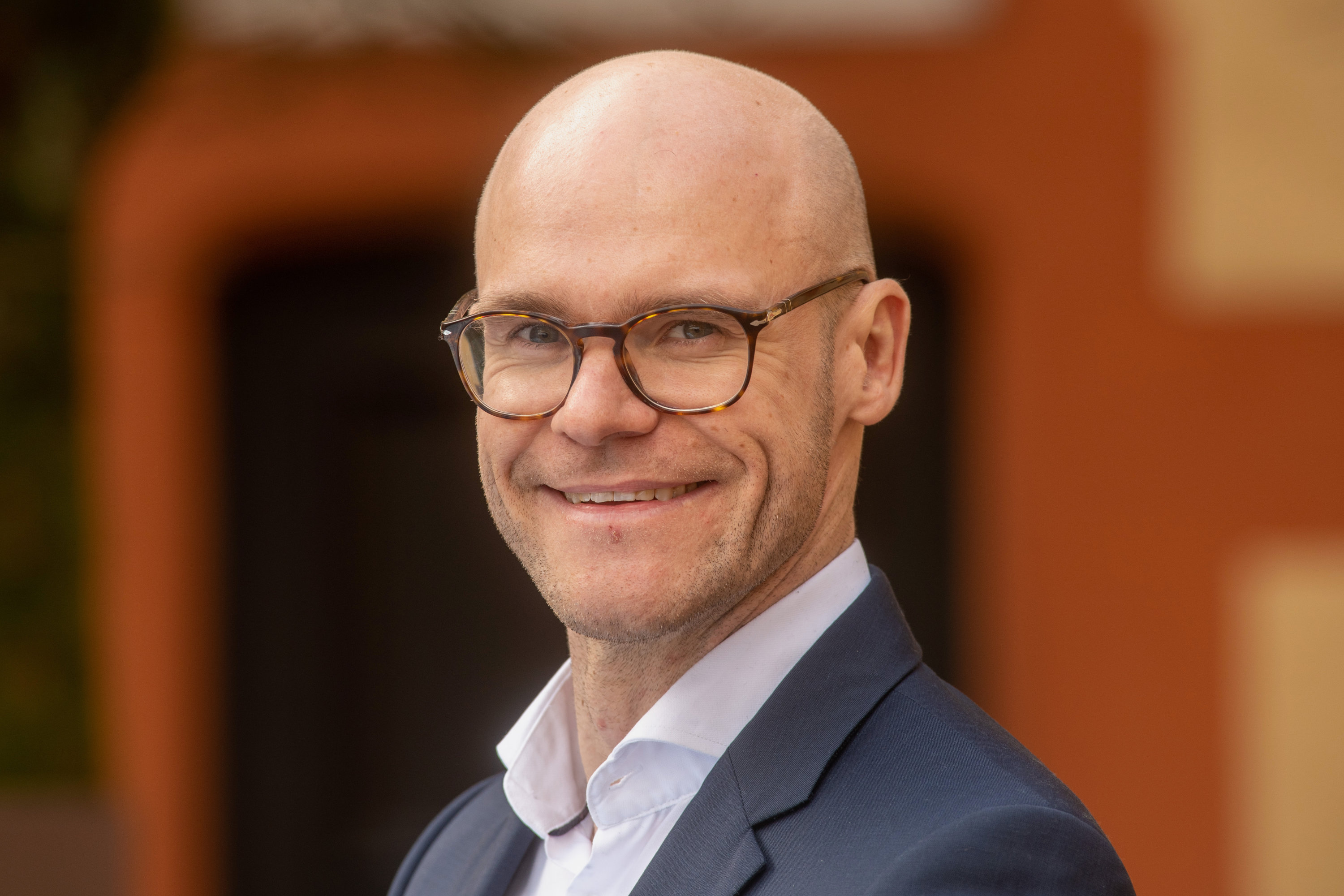
Professor Bingunath Ingirige holds a Chair in Urban Resilience and Adaptation at the Centre for Disaster Resilience (CDR), School of Science, Engineering and Environment (SSEE), University of Salford. With extensive experience in climate change research and disaster risk management, his work spans multiple international projects focusing on flood adaptation, urban resilience, and community-based climate strategies. He collaborates with stakeholders across public and private sectors to develop practical solutions for climate vulnerability challenges, particularly in Sri Lanka, Bangladesh, and the UK. Professor Ingirige's educational background includes: BSc (Hons) in Civil Engineering from University of Moratuwa (1991-1994) MBA (Management of Technology) from Asian Institute of Technology, Thailand (1997-1999) PhD from University of Salford (2000-2004) PG Cert in Higher Education Practice and Research from University of Salford (2004-2005) His research focuses on climate change adaptation with particular emphasis on urban resilience and economic models of climate change. He investigates how future climate change projections impact economic sectors and livelihoods, especially in vulnerable communities. His work examines resilience measures within community settings involving small businesses, public and private sectors, and NGOs. He studies collaborative engagement processes to develop effective flood adaptation strategies and business continuity plans in the face of climate variability and change. Professor Ingirige's approach integrates technical, social, and economic dimensions to create holistic resilience frameworks. An analysis of his recent publications reveals a strong focus on climate change adaptation, flood management, and resilience building across multiple geographical contexts. His work spans theoretical economic modeling of climate impacts, practical flood risk management strategies, and community-based approaches to disaster resilience. There's a clear pattern of international collaboration, particularly with institutions in Sri Lanka, Bangladesh, and Malaysia. His research often employs mixed-method approaches, combining quantitative analysis with participatory techniques to understand the socio-economic dimensions of climate change impacts and develop context-specific adaptation strategies. Professor Ingirige's professional recognition includes: Member of the Royal Institution of Chartered Surveyors (MRICS) Fellow of the Higher Education Academy (FHEA) Editorial Board Member of Buildings (MDPI) Editorial Board Member of Real Estate Journal Professor Ingirige has led and contributed to numerous significant research projects including UKRI/GCRF funded TRANSCEND project (2019-2023), EU Horizon 2020 funded EU-CIRCLE project (2015-2018), and EPSRC funded Community Resilience to Extreme Weather (CREW) project (2008-2011). He has served as external examiner for universities including Birmingham City University, Western Sydney University, and UCLAN, and provided consultancy for organizations like the British Council. His work has secured funding from diverse sources including UKRI, EU, RICS Research Trust, and Royal Academy of Engineering. He has also co-organized workshops and established international collaborations, including Memorandums of Understanding between University of Salford and Sabaragamuwa University of Sri Lanka. Professor Ingirige works within the Centre for Disaster Resilience (CDR) at the University of Salford, which operates under the Built and Human Environments research center. His collaborative network extends internationally with strong partnerships at University of Moratuwa in Sri Lanka and Bangladesh Agricultural University. His interdisciplinary teams span engineering, environmental science, social sciences, and policy analysis to address complex climate resilience challenges through integrated approaches that consider both technical and social dimensions of adaptation.