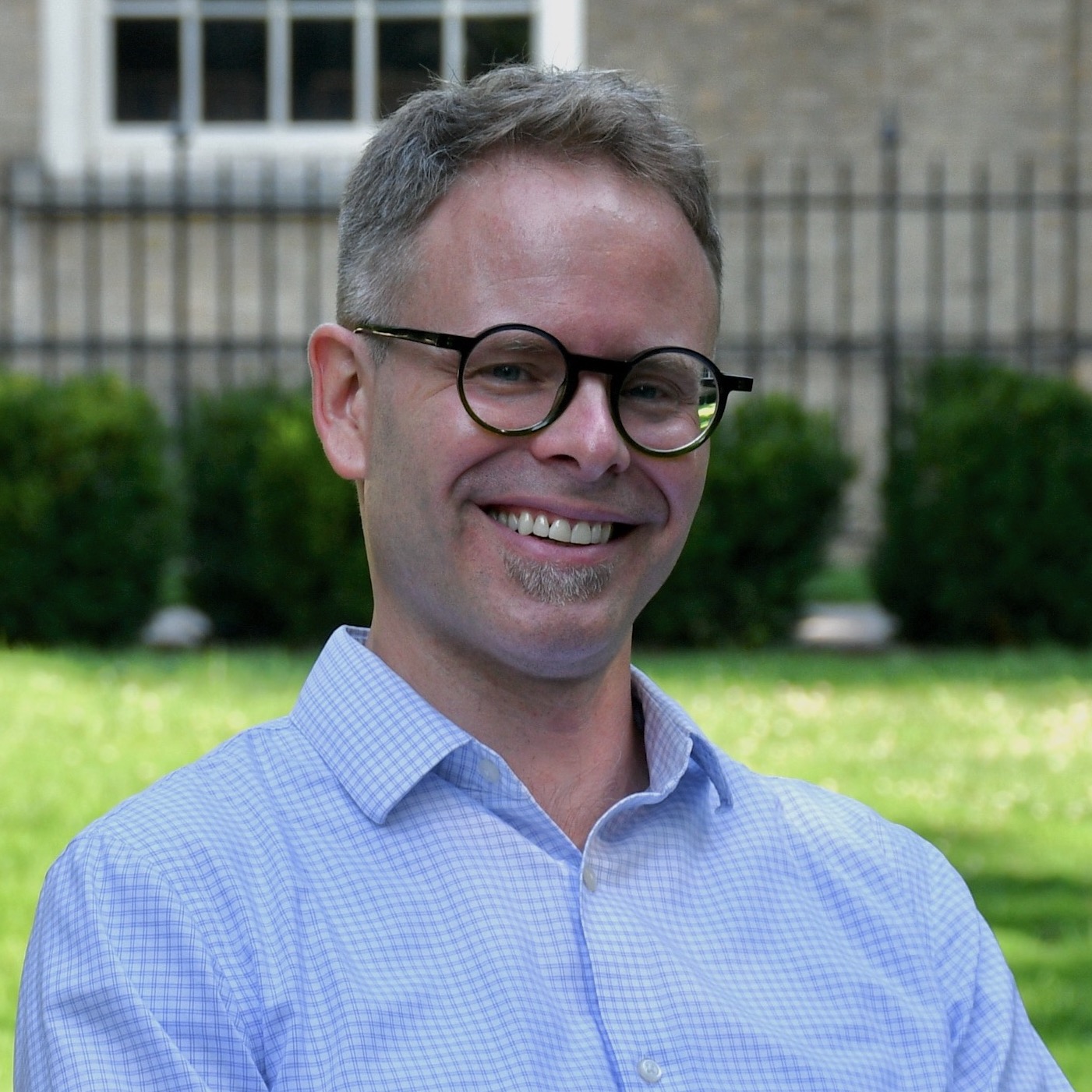
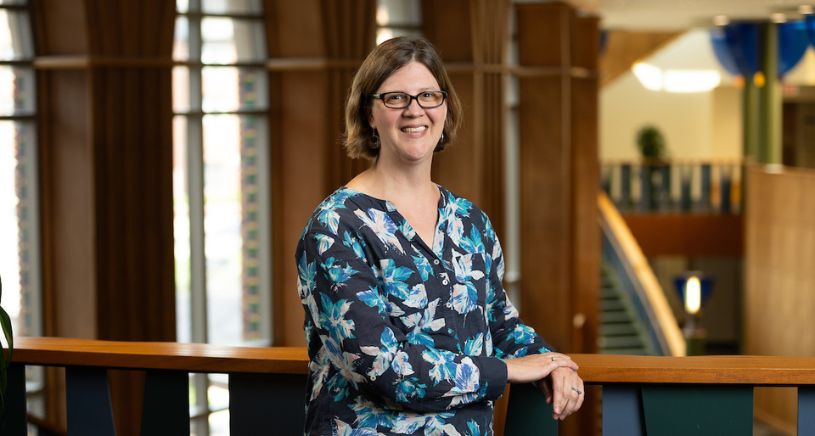
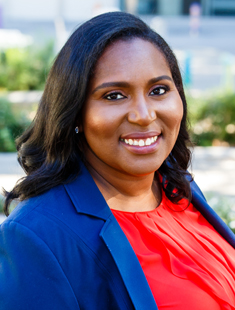
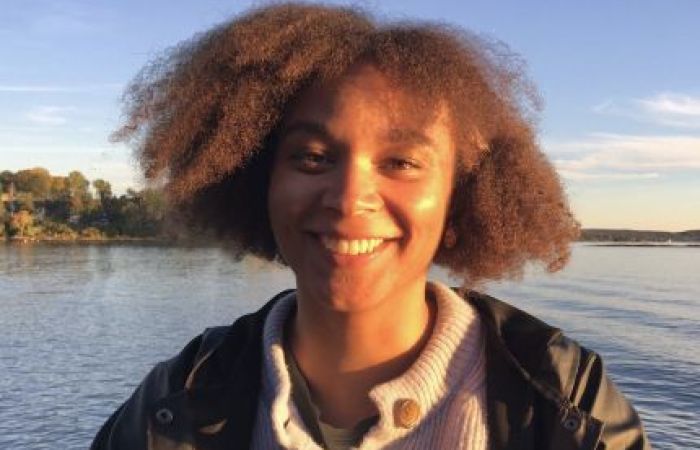
Jan Doering is an Assistant Professor at the University of Toronto, specializing in sociological research related to colonialism, racialization, indigeneity, qualitative methods, and urban sociology. She is based at 17126 - 17th floor, 700 University Ave, Toronto, and can be contacted at jan.doering@utoronto.ca. Research Interests Colonialism and its contemporary impacts Racialization processes in modern societies Indigeneity and cultural identity Qualitative research methodologies Urban sociology and community dynamics Gender discrimination and workplace experiences Academic Contributions Her work explores the intersections of race, gender, and urban politics, analyzing how discrimination narratives resolve ambiguity (e.g., islamophobia in Quebec) and investigating responses to uncertain gender bias in workplaces. Recent publications examine community resistance to redevelopment, racialized crime perceptions, and the complexities of diversity in integrated neighborhoods.
Trica Danielle Keaton is the Evans Family Distinguished Professor of African and African American Studies at Dartmouth College. She is an interdisciplinary social scientist whose research and teaching explore evidence-based responses to enduring societal questions about racialization, particularly Black (intentionally lowercase) racialization in the U.S., France, Europe, and beyond. Her work examines the consequences of this longstanding process and how individuals and communities actively resist and refuse those consequences. She is also affiliated with the Departments of Sociology and Film & Media Studies at Dartmouth. Professor Keaton earned her Ph.D. with distinction in Education (Sociology of Education and African Diaspora Studies) from the University of California, Berkeley in 2001. She also completed doctoral studies in Sociology at École des Hautes Études en Sciences Sociales in Paris, France. Her educational background includes an M.A. in Applied Linguistics (Language Policy and Immigration in France) from UCLA, an M.A. in French from Middlebury College, and a B.A. in Linguistics and French from UCLA. Her research interests center on Black experiences in France and Europe, examining anti-Blackness, racial profiling, and the politics of race-blindness in French society. She explores how Black communities navigate and resist structural racism while creating cultural expressions through cinema, literature, and art. Her work bridges sociology, African diaspora studies, and film studies to analyze the transnational dimensions of Blackness and the connections between African American and African European experiences. Professor Keaton's publications reveal consistent engagement with French society's relationship to race and Blackness, analyzing how French republican ideals of colorblindness obscure ongoing anti-Black racism. Her work spans multiple disciplines including sociology, African diaspora studies, cultural studies, and film studies, with particular attention to French banlieue cinema and representations of Blackness in French media and public spaces. She examines both historical patterns and contemporary manifestations of anti-Blackness across transnational contexts. Evans Family Distinguished Professor of African and African American Marie-Skłodowska-Curie Actions Fellow of the European Commission French Institute for Advanced Study (FIAS) / Iméra Fellow 2024-25 Professor Keaton founded and directs Dartmouth's Afro/Black Paris Foreign Study Program, a biennial program that takes students to explore Black experiences in France through experiential learning. The program includes courses on Afro/Black Paris, French museums and the African diaspora, and French language instruction. Students engage with Black French communities through museum visits, jazz clubs, hip-hop workshops, culinary experiences, and travel to regions like Dordogne to visit Josephine Baker's Chateau. The program has been described by students as 'life-altering' and 'the most rewarding experience' of their Dartmouth careers. Through the Afro/Black Paris program, Professor Keaton has created immersive educational experiences that connect students with prominent Black creatives and scholars in the Francophone world. The program emphasizes that 'every space is a classroom,' taking learning beyond traditional academic settings into museums, cultural events, and community spaces throughout Paris and beyond.
Carissa Froyum serves as Interim Head of the Department of Social Work and Professor of Sociology at the University of Northern Iowa's College of Social & Behavioral Sciences. Her dual appointment bridges social work administration and sociological scholarship, with recognition including the 2019 CSBS Faculty Service Award and multiple teaching honors such as the 2016 United Faculty Emerging Leader Award and 2011 University Book and Supply Outstanding Teaching Award. Her academic foundation includes a Ph.D. from North Carolina State University (2007). This training underpins her methodological rigor in qualitative research and theoretical contributions to understanding social structures. Froyum's research program critically examines how emotions function as capital in reproducing social inequalities, particularly at the intersections of race, gender, and class. She investigates emotional labor among professionals of color, the socialization of low-income Black girls, and volunteerism dynamics, consistently employing microsociological perspectives. Her work reveals how marginalized groups navigate and resist structural constraints through identity work and community engagement, with strong implications for social justice interventions. Analysis of her 2010-2019 publications shows persistent focus on embodied inequality mechanisms, evolving from foundational work on Black girls' emotional socialization to contemporary explorations of volunteer sympathy and street-level gender projects. Key thematic threads include racialized emotional labor, intersectional identity formation, and methodological innovations for studying children's perspectives on inequality. Her significant scholarly impact is reflected in these awards: Faculty Service Award, CSBS 2019 United Faculty Emerging Leader Award, 2016 Award for Excellence in Teaching in the Liberal Arts Core, 2016 University Book and Supply Outstanding Teaching Award recipient, 2011 College of Social and Behavioral Sciences Outstanding Teaching Award for Untenured Faculty, 2011-2 Through editorial leadership of the Handbook on the Sociology of Gender (2018) and multiple editions of Inside Social Life, Froyum has shaped sociological curricula and mentored emerging scholars. Her teaching portfolio innovations, particularly in race-conscious pedagogy, demonstrate commitment to translating research into educational practice. While specific grant details aren't provided, her methodological contributions to interviewing children about inequality suggest externally funded research initiatives. As Interim Head of Social Work, she provides administrative leadership bridging academic sociology and professional social work training, though the materials don't specify dedicated research labs or teams. Her ongoing editorial projects and administrative role indicate continued scholarly engagement with contemporary inequality frameworks.
Brandon M. Terry is the John L. Loeb Associate Professor of the Social Sciences at Harvard University, holding appointments in the Department of African and African American Studies. He co-directs the Institute on Policing, Incarceration, and Public Safety at the Hutchins Center for African and African American Research, focusing on race-crime-justice intersections. His educational trajectory includes foundational training at elite institutions: PhD in Political Science and African American Studies, Yale University (2012), with Ford Foundation Predoctoral Fellowship and Sterling Prize MSc in Political Theory Research, University of Oxford (Michael von Clemm Fellowship) AB in Government and African and African American Studies, Harvard College (magna cum laude) Terry's research synthesizes political theory, history, and African American Studies to examine civil rights movement historiography, Black nationalist thought, and the political philosophy of figures like Martin Luther King Jr. and Malcolm X. His work interrogates the normative significance of historical narratives while engaging 19th-20th century continental philosophy, aesthetics, and the sociology of hip-hop culture. His publication record reveals consistent thematic focus across two decades: rigorous analysis of African American freedom struggles through philosophical and historical lenses, with increasing attention to contemporary applications regarding crime, policing, and political theology. Articles demonstrate methodological innovation blending political theory, literary analysis, and historical scholarship. Major scholarly recognition includes: Sterling Prize (Yale) Ford Foundation Predoctoral Fellowship APSA Foundations of Political Theory Best Paper Award National Conference of Black Political Scientists Alex Willingham Award Edmond J. Safra Center for Ethics Fellowship (2017-18) While specific advising details remain unpublicized, Terry actively mentors through Harvard's academic structures and public intellectual engagement. His leadership at the Hutchins Center drives collaborative research on systemic racism in criminal justice systems, connecting academic scholarship with community initiatives through partnerships like Embrace Boston.
Dr. Tatiana Heise serves as Senior Lecturer in Hispanic Studies at the University of Glasgow's School of Modern Languages and Cultures. Her research focuses on Latin American culture with special emphasis on Brazil and the Southern Cone, examining cinema's role in reconstructing collective memories of traumatic socio-political events through her Leverhulme Trust-funded project 'Memories of the Dictatorship'. Her academic credentials include: PhD from the University of Leeds MA in Sociology of Contemporary Culture from the University of York MPhil in Sciences of Communication from the University of São Paulo Dr. Heise's research centers on Latin American Culture and Society, Memory Studies, Film Studies, and Ecocriticism, with significant contributions to political cinema, documentary activism, and sociology of cinema. Her work explores how film processes historical trauma and constructs national identities across Brazil, Chile, and Argentina. Analysis of her 15 most recent publications reveals consistent thematic focus on post-dictatorship memory, gendered political violence, and national identity construction in Southern Cone cinema. Her 2024 monograph synthesizes transnational memory frameworks while earlier works establish foundational connections between Brazilian road movies, music documentaries, and sociopolitical commentary. Her scholarly recognition includes: Leverhulme Trust Research Fellowship (2017-2018) for 'Memories of the Dictatorship' Carnegie Trust Grant (2016) for Brazilian postdictatorship cinema research CAPES Scholarship (2003-2004) from the Brazilian government As an academic supervisor, Dr. Heise currently guides PhD candidates Boudiaf, Hamid (Kabyle language preservation) and Campello Gramelius, Misha (feminine writing in Clarice Lispector's works), with prior supervision spanning cultural identities, Argentine cinema, political film, and Ecocriticism. She has secured major research funding from UK and Brazilian institutions while collaborating with cultural organizations including Havana-Glasgow Festival and IberoDocs. She leads the 'Memories of the Dictatorship' research team examining cinematic memory reconstruction across the Southern Cone, while maintaining active partnerships with Scottish cultural festivals that showcase Latin American film and arts.
Lisa Karlsson Blom is a researcher affiliated with the Institute for Research on Migration, Ethnicity and Society (REMESO) and the Department of Culture and Society (IKOS) at Linköping University. Her research focuses on critical whiteness studies, examining how Swedish whiteness interacts with race, racism, and anti-racism within the context of 'Swedish exceptionalism.' Primary research on normative whiteness and anti-racist practices Interdisciplinary work connecting class, race, and societal structures Contributions to ethnographic social work and qualitative methodologies Her recent publications analyze the tensions and everyday experiences within anti-racist movements, emphasizing the evolving visibility of white identity and structural barriers to anti-racism. She is also connected to the Swedish Research Council's Graduate School in Migration and Integration.
Ethan Katz is an Associate Professor in the Department of History and Jewish Studies at the University of California, Berkeley . His scholarly work bridges modern European history with Jewish Studies, focusing on Jewish-Muslim relations, colonialism, Holocaust memory, and secularism. PhD (2009), MA (2005) in History from University of Wisconsin-Madison BA (2002) in History and French, Summa Cum Laude , Amherst College Research spans four key areas: Jewish-Muslim dynamics in France, Jews in colonial societies, Holocaust resistance narratives, and secularism debates. His upcoming special issue Jews and Muslims in France Before and After Charlie Hebdo (with Jonathan Judaken) continues this engagement. His academic work has been recognized with awards like the J. Russell Major Prize (2016), American Library in Paris Book Award (2016), and National Jewish Book Award (2015). Current projects include a Holocaust-focused book Freeing the Empire and co-editing When Jews Argue (2023-2025), exploring intersections between academic and traditional Jewish study. ebkatz@berkeley.edu 2227 Dwinelle Hall, UC Berkeley
Dr. Brigit McWade is a Lecturer in Medical Sociology at Lancaster Medical School, Lancaster University. She is an elected member of the Medical Schools Council's Equality Diversity and Inclusion Alliance and has made significant contributions to medical education through her research on social inequalities, mental health, and EDI initiatives. Her educational background includes: PhD in Sociology (July 2014) MA in Sociological Research Methods (Distinction) BA in Sociology (1st class with honours) PGCert in Academic Practice (2024) Fellow of the Higher Education Academy (2020) Dr. McWade's research expertise centers on interdisciplinary qualitative health research concerning social inequalities and mental health, neurodiversity and disability, and intersectionality. A central interest within this area is the theoretical and political significance of socio-cultural representations of the lived experience of health and wellbeing, and their role in challenging oppression and instigating social change. Since her appointment, she has built a research program focused on making significant impact in medical education at all levels, which directly influences the quality of healthcare provision delivered by future doctors. Her work spans across understanding structural barriers in medical education, examining representations of mental health in society, and developing inclusive pedagogical approaches that address racism and other forms of discrimination in healthcare contexts. Her scholarly output demonstrates a consistent focus on the intersections between mental health, social justice, and medical education. The trends in her publications reveal a growing emphasis on practical applications of sociological theory to improve medical education, particularly around EDI (Equality, Diversity and Inclusion) initiatives. Her recent work has increasingly centered on widening participation in medical education, examining structural and financial barriers that prevent students from diverse backgrounds from succeeding in medical school. Earlier publications focused more on theoretical aspects of madness, mental health recovery, and disability representation, but have evolved to directly address medical education contexts. Dr. McWade's notable achievements include: Being one of the lead authors of the national guidance "Active Inclusion: Challenging exclusions in medical education" for the Medical Schools Council Fellow of the Higher Education Academy (2020) Contributing to Lancaster University's Race Equality Charter submission As a doctoral supervisor, Dr. McWade leads impactful research projects addressing critical issues in medical education and healthcare. She currently supervises Eleanor Vowles (full-time, Lancaster Medical School) on "Structural and financial barriers to success in medical education" and Ros Brunwin (part-time, Sociology) on "From Madness to Meaning: Unpicking the reality behind psychosis." She previously supervised Steven Maxwell, whose project "Human Subjects: A novel of novellas" passed forthwith in 2024 with AHRC funding. Her supervision portfolio reflects her commitment to addressing structural inequalities in healthcare and medical education through rigorous scholarly inquiry. She has also secured significant funding for her research, including an ESRC 1+3 scholarship for her doctoral studies and involvement in FHM PhD Studentship projects. Dr. McWade is actively involved in multiple research groups and initiatives, particularly the Interdisciplinary network in culture, health, ethics and society. She contributes to the Medical Schools Council's EDI Alliance and leads Widening Participation and EDI initiatives at Lancaster Medical School. Her collaborative approach is evident in her extensive teaching across multiple disciplines including Social Theory, Media Theory, Cultural Theory, Gender & Women's Studies, Science & Technology Studies, Biomedicine & Ethics and Qualitative Research. She also participates in numerous academic activities including editorial roles for journals like Social Theory and Health, Culture, Medicine and Psychiatry, and Disability and Society.
Ann Werner is a Professor of Musicology at Uppsala University , with a primary focus on gender studies, popular music, and media analysis . She also holds an Associate Professor position in Gender Studies at Södertörn University , where she explores gender equality and equity in the music industry . Dr. Werner serves as Director of Studies for the undergraduate program in musicology and teaches courses on popular music, music ethnology, and gender theory . Research Interests : Feminism in music, digital streaming platforms, gender equality in creative industries, and algorithmic culture. Projects : Led studies on organizational work environments in artistic professions , gender in European conservatory education , and music streaming culture . Publications : 15+ peer-reviewed articles analyzing gender in music education , algorithmic mediation , and cultural resistance in music , with recent work on #MeToo’s impact on performing arts and neoliberal marketing in conservatories . Networks : Active in Nordic gender equality research networks and collaborative projects across Sweden, Russia, and Lithuania .
David Jansson is a Professor of Cultural Geography at Uppsala University's Department of Human Geography, serving as Director of Doctoral Studies. A dual citizen of Sweden and the United States with Ålandic roots, he previously taught at Vassar College (New York) before earning his PhD in Human Geography from Pennsylvania State University in 2005. His work bridges cultural, political, and critical race geographies. Education: Bachelor's in Psychology, Cornell University (1989) Master's in Human Geography, Pennsylvania State University (2001) PhD in Human Geography, Pennsylvania State University (2005) Research Focus centers on geographic identity production through spatial and discursive processes. Key projects include: Internal Orientalism – examining 'Self' and 'Other' dynamics in U.S. Southern identity Åland Migration Studies – analyzing language, culture, and belonging in Ålandic diaspora Automobility & the Swedish folkhem – linking transportation systems to collective identity Exceptionalism Critique – comparing U.S. and Swedish national narratives Visual Resistance – exploring antiwar protest through corporeal politics Publication Trends show interdisciplinary engagement with internal orientalism, migration theory, automobility, and critical race studies. Recent work (2022-2024) expands to plantation logics in Europe, post-Anthropocene spatial futures, and memory politics at museums. Scientific Awards & Grants Åland 75th Anniversary Foundation Cultural Fund for Sweden and Finland Swedish Cultural Foundation William Thuring Foundation Stiftelsen Margit Althins stipendiefond Stiftelsen Emilie och Rudolf Gesellius fond Advising includes current PhD candidates Doron Eldar and Peter Jakobsen, plus six former students. He led a 2010 museum exhibition at Ålands Museum to disseminate Åland migration research findings to public and governmental audiences.
Nancy L. Fleischer, PhD, MPH is an Associate Professor at the University of Michigan School of Public Health, specializing in epidemiology. She co-directs the Center for Social Epidemiology and Population Health and the Certificate in Social Epidemiology. Her research focuses on social and policy determinants of health equity, particularly tobacco control policies, structural racism, and post-COVID-19 recovery. She collaborates with the Michigan Department of Health and Human Services on the Michigan COVID-19 Recovery Surveillance Study (MI CReSS) and participates in the Center for the Assessment of Tobacco Regulations. Education: PhD in Epidemiologic Science (University of Michigan, 2010), MPH in Epidemiology and Biostatistics (UC Berkeley, 2006), BS in Chemistry (University of Minnesota, 1999), BA in Spanish (University of Minnesota, 1999) Her research examines how tobacco control policies affect health disparities, structural racism's impact on birth outcomes among Black women, and longitudinal associations between tobacco use and cardiovascular/respiratory diseases. She employs mixed-methods approaches, including population-based surveys and multistate Markov models. Recent publications (2023-2025) analyze discrimination's role in substance use disorders, tobacco policy effectiveness, long COVID dynamics, and sociodemographic disparities in tobacco use. Her work spans nicotine replacement therapies, structural racism indicators, and public health interventions.
Timothy W. Farrell, MD, AGSF, is Presidential Endowed Chair in the Division of Geriatrics, Professor of Medicine, and Associate Chief for Age-Friendly Care at the Spencer Fox Eccles School of Medicine, University of Utah. He concurrently serves as Physician Investigator at the VA Salt Lake City Geriatric Research, Education, and Clinical Center (GRECC). Education A.B., Philosophy – Dartmouth College M.D. – University of Massachusetts Medical School Residency in Family Medicine – Brown University/Memorial Hospital of Rhode Island Fellowship in Geriatrics – Brown University/Rhode Island Hospital Research Fellowship in Geriatrics – Brown University/Rhode Island Hospital Research Interests Dr. Farrell’s scholarly work centers on age-friendly health systems , medical ethics , transitions of care , interprofessional education and practice , and the ethically complex care of unrepresented older adults . He has led national position statements on socially isolated elders and on ethical allocation of scarce resources during the COVID-19 pandemic, and he actively opposes ageism through local, regional, and national initiatives. Publication Themes Across more than 40 peer-reviewed articles since 2007, three dominant themes emerge: (1) innovation in geriatric care delivery and age-friendly health-system transformation; (2) ethical, policy, and equity challenges—especially for unrepresented or marginalized older adults; and (3) interprofessional education models that prepare the healthcare workforce to meet the complex needs of an aging population. Scientific Awards & Honors Presidential Endowed Chair in Geriatrics, University of Utah HRSA Geriatric Academic Career Award (GACA) Fellow of the American Geriatrics Society (AGSF) Fellow, University of Utah Academy of Health Science Educators 2016–17 Emerging Leaders in Aging Leadership Scholar (Tideswell/AGS/ADGAP) Leadership, Grants, & Advising Dr. Farrell chairs the American Geriatrics Society Ethics Committee and co-chairs the AGS Tideswell Leaders in Aging Special Interest Group. He co-PIs the CDC-funded “Specialty Societies Advancing Adult Immunization” AGS sub-award via CMSS. From 2016 to 2021 he directed the University of Utah Health Interprofessional Education Program, leading its successful 2021 application to the Institute for Healthcare Improvement for Age-Friendly Committed to Care Excellence Status. While specific advisee names are not listed, his extensive mentorship is reflected in numerous co-authored papers with trainees across medicine, nursing, social work, and public health. Laboratory & Clinical Teams At the VA Salt Lake City GRECC, Dr. Farrell works within a multidisciplinary team of geriatricians, nurses, pharmacists, and social scientists to design, implement, and evaluate innovative care models for older veterans. His University of Utah team supports the Age-Friendly Health Systems initiative, embedding the 4Ms framework (What Matters, Medication, Mentation, Mobility) across inpatient, ambulatory, and post-acute care settings.
Jamilia Blake is Professor of Health Behavior in the School of Public Health at Texas A&M University and a Licensed Psychologist with extensive interdisciplinary research experience. She has served as co-Principal Investigator on federal grants from NIH, OJJDP, and NIJ, focusing on child and adolescent disparities through collaborative teams spanning social psychology to environmental health. Her educational credentials include: PhD in Educational Psychology from The University of Georgia MEd in Educational Psychology (with distinction) from The University of Georgia BS in Psychology with Sociology minor (Cum Laude) from The University of Georgia Dr. Blake's research critically examines racial/ethnic health and educational disparities through interdisciplinary frameworks, with core expertise in peer-directed aggression, bullying, and victimization of marginalized youth , exclusionary school discipline , and mental health disparities . Her work develops evidence-based school health interventions targeting systemic inequities, particularly for Black girls and immigrant populations. Recent scholarship demonstrates increasing focus on intersectionality, border-region educational dynamics, and antiracism training in school psychology. Analysis of her publication trajectory reveals consistent emphasis on school discipline disparities, with growing attention to intersectional identities (especially Black girls), border-community dynamics, and structural racism in educational systems. Her work bridges public health, criminology, and psychology to address the school-to-prison pipeline through data-driven policy solutions. Major recognitions include: American Psychological Association Division 16 and Division 45 Fellowships Presidential Impact Fellow at Texas A&M University (2018-2021) NIH Career Development Award from National Center on Minority Health and Health Disparities (2010-2013) Past President of Society for the Study of School Psychology (2024) As a funded researcher and mentor, Dr. Blake has secured significant federal support through NIH, OJJDP, and NIJ grants, emphasizing interdisciplinary collaboration to address complex disparity issues. She currently chairs the Health Behavior Promotion and Tenure committee at Texas A&M (2023-2025), driving strategic initiatives in research and faculty development while maintaining active licensure as a Health Service Psychologist. Her leadership extends to directing interdisciplinary research teams that integrate social, psychological, and environmental perspectives to develop equitable school policies. This collaborative approach has positioned her as a key contributor to national conversations on dismantling systemic barriers for marginalized youth through evidence-based interventions.
Hazal Budak-Kim is a Researcher at the Department of Gender & Diversity Studies , Institute of Social Sciences, Christian-Albrechts-University of Kiel , Germany. Her work focuses on: Migrant self-positioning in sports Urban refuge spaces Gender-body relations Qualitative methodologies Research contributions include: Co-editor of Transformation Processes in the City as a Place of Refuge (2022, Springer VS) Key publications on anti-Muslim knowledge production in sports Intersectional analysis of structural discrimination (EMMD project) She has organized workshops like the European Forum on Integration (2019) and teaches courses on urban sociology and qualitative methods. Current projects include the KUSS instrument for migration-sensitive oncology care and EMMD (Federal Anti-Discrimination Agency funded).
Dr. Lioba Hirsch is a Lecturer in Social Anthropology at the School of Social and Political Science, University of Edinburgh. Her interdisciplinary research sits at the intersection of anthropology, geography, and history, focusing on antiblackness and colonialism in global and domestic health contexts. She has held a Wellcome Trust Research Fellowship (2021–2024) for her project 'Care, Infrastructure and Antiblackness: The Making of Biomedicine in a Sierra Leonean Hospital' and previously worked as a Research Fellow at the Centre for History in Public Health, London School of Hygiene and Tropical Medicine (2019–2021). Education: PhD in Geography and Global Health, University College London (2019) MSc in Political Sociology, London School of Economics (2013) BA in Political Sciences, Sciences Po Paris (2011) Her research explores the colonial and antiblack entanglements of Western biomedicine, with a focus on West Africa (particularly Sierra Leone), the 2014–16 EVD outbreak, and institutions like Médecins Sans Frontières. Her work draws on Black Studies and postcolonial theory to interrogate global health institutions. Scientific Awards: Wellcome Trust Research Fellowship in Humanities and Social Science (2021–2024) Dr. Hirsch contributes extensively to institutional DEI processes and has experience as a development worker in Zambia (2013–2015). She is currently on research leave until November 2024, working remotely on her Wellcome-funded project.