Dr. Binbin Weng is an Gerald Tuma Presidential Associate Professor in the Department of Electrical and Computer Engineering at the University of Oklahoma. He holds joint faculty fellow positions with IREES and DISC, and directs the Micro- and Nano-fabrication labs. His research focuses on nanophotonics, mid-infrared optoelectronics, and quantum-inspired photonics, with applications in chemical sensing, renewable energy, and IoT systems. Education: B.S. in Physics, Xiamen University M.S. in Semiconductor Physics, Zhejiang University Ph.D. in Electrical and Computer Engineering, University of Oklahoma Research Interests: Nanophotonic device design and simulation Non-Hermitian PT symmetry and topological photonics Mid-infrared optoelectronic devices Polariton-phonon-photon interactions NDIR gas detection SERR chemical detection Awards: NSF CAREER Award (2021) Grants: $4M DOE grant for methane emission monitoring systems $1.5M NSF PIRE grant for clean energy research $0.25M USGS grant for SERS-based chemical sensors Labs: Nanophotonics Laboratory Micro- and Nano-fabrication labs
Matt Allen is a Professor in the Department of Mechanical Engineering at Brigham Young University (BYU), within the College of Engineering. He previously held faculty positions at the University of Wisconsin-Madison in the Engineering Physics Department, progressing from Assistant to Associate to Full Professor. His research group, the BYU Structural Dynamics Research Group, is actively engaged in experimental and analytical studies of complex dynamic systems. Ph.D. and M.S. in Mechanical Engineering, Georgia Institute of Technology (2005) B.S. in Mechanical Engineering, Brigham Young University (2001) Postdoctoral Appointee, Sandia National Laboratories (2005–2006) Dr. Allen’s research centers on structural dynamics, with a strong emphasis on nonlinear dynamics , experimental mechanics , and vibrations . His team develops innovative methods to characterize and model systems where traditional modeling fails—such as structures with large deformations, frictional joints, or complex interfaces. Key research thrusts include nonlinear normal modes, substructuring for nonlinear systems, damping characterization in bolted joints, and test-based model updating. His work bridges engineering structures and biomechanical systems, such as human gait dynamics. The research publications reflect a consistent focus on nonlinear structural dynamics , experimental system identification , and model validation . Trends show increasing integration of computational methods like harmonic balance and reduced-order modeling with experimental data, particularly for spacecraft, aircraft, and mechanical joints. The work is highly interdisciplinary, intersecting mechanical, aerospace, and civil engineering. Dominick J. DeMichele Award, Society for Experimental Mechanics B. J. Lazan Award, Society for Experimental Mechanics NASA NESC Group Achievement Award for work on nonlinear joints in the MPCV Young Investigator Award, Air Force Office of Scientific Research Dr. Allen has advised numerous graduate students, many of whom appear as co-authors on publications. He has secured over $3.3 million in research funding as principal investigator, with total project funding exceeding $5.5 million when including funds managed by collaborators. He is actively involved in professional service, including editorial roles for Experimental Mechanics and Experimental Techniques , and leadership in the Society for Experimental Mechanics. He teaches core courses in dynamics, vibrations, and modeling at both BYU and previously at UW-Madison. He leads the BYU Structural Dynamics Research Group, which focuses on developing experimental and analytical tools for understanding complex dynamic behavior in engineering and biological systems. The group emphasizes rigorous validation, interdisciplinary collaboration, and real-world application in aerospace, automotive, and biomechanical domains.
Erik Damgaard Christensen is a Professor and Head of Section in Fluid Mechanics, Coastal and Maritime Engineering at the Department of Civil and Mechanical Engineering, Technical University of Denmark (DTU). His research is central to coastal and offshore hydrodynamics, with strong expertise in breaking waves, wave-structure interactions, and offshore wind turbine foundations. His research interests include Fluid Mechanics , Coastal and Maritime Engineering , Computational Fluid Dynamics (CFD) , Sediment Transport , Shoreline Development , and Wave Loads on Offshore Structures . His work applies advanced numerical modeling and experimental analysis to solve real-world coastal engineering challenges. The recent publications indicate a strong trend towards sustainable offshore energy systems, environmental protection (e.g., microplastic retention), and innovative coastal defenses such as artificial reefs. His work integrates high-fidelity simulations with practical applications in offshore wind and marine ecosystems. Scientific Contributions and Projects: Coordinator of EU 7th Framework Project MERMAID Involved in major projects: SASME, DELOS, Safe Offload, SBWI, SDWED, FIELD_AC, FMK, MSBWI Active in research on turbulence in plunging breakers and flow in porous marine structures He has supervised several PhD students, including Y. Zhai, K. D. Göral, and Z. Wei, and is actively involved in advising and collaborative research. His external roles include former Head of Innovation at DHI (2007–2010) and prior positions as Hydrodynamics Specialist and Coastal Engineer at DHI from 1996 to 2010. His laboratory and research team focus on computational and experimental hydrodynamics, with strong links to DTU’s coastal engineering facilities and international collaborations in offshore and coastal research.
Dr. Sue L. Niezgoda is a Professor in the Department of Civil Engineering at Gonzaga University's School of Engineering and Applied Science. She holds a Ph.D. from The Pennsylvania State University and is a licensed Professional Engineer. Her work emphasizes water resources engineering, with a focus on stream restoration, hydraulic modeling, and sustainable infrastructure. Education: Ph.D., Civil and Environmental Engineering, The Pennsylvania State University, 2004 M.S., Civil and Environmental Engineering, The Pennsylvania State University, 1998 B.S., Civil and Environmental Engineering, The Pennsylvania State University, 1997 B.A., Engineering and Physics, Elizabethtown College, 1996 Dr. Niezgoda's research centers on river and stream restoration, particularly the use of natural solutions like beaver dam analogs, risk and uncertainty assessment in design, and low-impact development technologies such as permeable pavements. She advocates for experiential learning, integrating field projects into her courses to engage students in real-world engineering challenges. Her teaching includes Fluid Mechanics, Watershed Modeling, and Stream Restoration. Her recent publications reflect a strong trend in applying process-based, risk-informed approaches to stream restoration, with increasing emphasis on monitoring, education, and professional standards. She has contributed significantly to the development of a national body of knowledge for stream restoration certification. Professional Affiliations and Leadership: ASCE Environmental and Water Resources Institute (EWRI), Hydraulics and Waterways Council, River Restoration Technical Committee Board of Directors, River Restoration Northwest Active contributor to American Society for Engineering Education (ASEE) Dr. Niezgoda has advised numerous undergraduate students on research projects related to stormwater, stream monitoring, and pavement systems. She has led externally funded research initiatives, including the Sharp Avenue Permeable Pavement Feasibility Study for the City of Spokane. She is also an experienced instructor of professional development courses on hydrology, hydraulics, and restoration modeling. She is currently on sabbatical during the 2024–2025 academic year but remains an active researcher and educator.
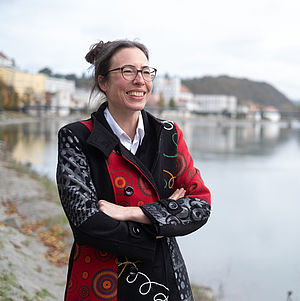
Professor Christine Schmitt is a Chaired Professor of Physical Geography with a focus on Human-Environment Research at the University of Passau since April 2021. She contributes to international policy consulting and serves on advisory boards including the German Society for Tropical Ecology (gtö) and BayWISS Joint Academic Partnership Life Sciences and Green Technologies. Previously, she was a Senior Researcher at the Center for Development Research (ZEF) of the University of Bonn. Current Affiliation: University of Passau Prior Affiliation: Center for Development Research (ZEF), University of Bonn Her research spans vegetation geography, global change, and sustainable development, emphasizing tropical mountain forests and human-environment interactions. She analyzes climate change effects on biodiversity, carbon storage, and ecosystem services across East Africa and Europe. Recent publications highlight her work on tropical forest carbon stocks (2021 Nature ), agroforestry dynamics in Ghana and Myanmar, and community-based conservation strategies in Ethiopia and Kenya. The 15 most recent articles reflect her focus on biodiversity patterns , land-use conflicts , and climate adaptation frameworks . Maria von Linden Fellowship (2019-2020) IPBES Expert (2014) Global Forest Expert Panel on REDD+ (2012) Professor Schmitt supervises doctoral students including Kerstin Hikel (seed dispersal in Kenyan forests) and Su Mon San (remote sensing in Myanmar). Her lab integrates vegetation surveys, remote sensing, and interdisciplinary methods to address conservation challenges.
Mahmut GÜLER is a Professor in the Department of Public Administration at Trakya University's Faculty of Economics and Administrative Sciences. He has been serving at Trakya University since 1997, progressing from Research Assistant to Assistant Professor (2005), Associate Professor (2010), and Full Professor (2016). He also holds administrative positions as Quality and Strategy Development, Application and Research Center Director since 2016 and Academic Structure Strategy and Planning Commission Member since 2017. Education: Bachelor's Degree in Public Administration from İnönü University (1992) Master's Degree in Public Administration from Trakya University (1995) PhD in Public Administration and Political Science (Urban and Environmental Sciences) from Ankara University (2005) Professor GÜLER's research focuses on public administration, local governance, and urban development. His work examines metropolitan governance structures, municipal finance systems, strategic planning in local governments, and the relationship between urbanization and regional development. He has conducted extensive research on Turkey's metropolitan municipality system, particularly analyzing the implementation of Law No. 6360 and its effects on local governance. His publications demonstrate a consistent interest in democratization of local administration, citizen participation in municipal decision-making, and adaptation of local governments to global challenges. His scholarly output shows a clear trajectory from theoretical explorations of urban rights and local democracy to increasingly applied research on metropolitan governance reforms, municipal service delivery, and strategic planning in Turkish municipalities. Recent work has focused on practical implementation challenges of Turkey's metropolitan municipality system. Key Projects: Trakya University 2016-2020 Strategic Plan (2016-2017) European Local Government Autonomy Condition and New Regulations in Metropolitan Areas in Turkey (2016) Responsibility of Municipalities for Urban Transportation in Turkey (2015) Strategic Planning and Regional Public Satisfaction at Trakya University (2017) Professor GÜLER has held various administrative roles including Deputy Head of Department (2008-2009) and currently serves as Director of the Quality and Strategy Development, Application and Research Center. He has contributed significantly to academic conferences and symposiums, particularly on local governance issues in Turkey and the Balkans region.
Gianni Barucca is a Full Professor at the Polytechnic University of Marche within the School of Engineering . His research focuses on experimental materials physics, particularly in advanced nanocomposites and their applications in biomedical, environmental, and electromagnetic fields. Current affiliation: Polytechnic University of Marche Scientific sector: PHYS-03/A - Experimental Physics of Matter and Applications Contact: Via Brecce Bianche 12, SIMAU department, phone 0712204754 His work spans magnetic nanomaterials , plasma-assisted surface engineering , and sustainable technologies for wastewater treatment and biomedical devices. Recent studies include hybrid ferrite nanostructures, radiopaque 3D-printed filaments, and eco-toxicological impacts of UV filters. Selected 2024-2025 research trends include: Development of 3D-printed carbon electrodes for sustainable wastewater treatment Enhancement of titanium alloys for biomedical applications via ion implantation Creation of hard/soft magnetic nanocomposites for EMI shielding and spintronics Environmental impact analysis of 'eco-friendly' nanomaterials
Professor Tracey Rogers is a distinguished academic at the University of New South Wales, Faculty of Science, School of Biological, Earth and Environmental Sciences. Her research focuses on marine mammals and their adaptation to changing environments, with particular expertise in Antarctic wildlife, predator-prey interactions, and wildlife communication. Her research interests span marine mammal ecology, behavioral ecology, evolutionary biology, and animal behavior. Professor Rogers leads the MammalLab at UNSW, conducting cutting-edge research on various marine mammal species including whales, seals, and dolphins. Her work combines field observations, bioacoustic analysis, and physiological studies to understand how mammals overcome environmental challenges. Professor Rogers's publication record shows a strong focus on marine mammal vocalizations, Antarctic ecosystems, and conservation biology. Her recent work has increasingly incorporated advanced analytical techniques for studying large audio datasets and examining physiological responses to environmental change. 2015: Finalist Australian Academy Science, Nancy Millis Medal 2011: Finalist Eureka Prize People's Choice Science Award 2011: Finalist Eureka Prize Animal Protection, Research & Innovation 2008-2010: Ambassador, Australian Institute of Policy & Science Tall Poppy Program 2009: F.G. Wood Memorial Prize, International Society Marine Mammalogy 2007: Research Award, Australasian Association of Zoological Parks & Aquaria 2005: NSW Tall Poppy Award Professor Rogers has successfully supervised over 20 PhD students to completion, with many now holding prominent positions globally in academia, government agencies, and conservation organizations. She currently supervises five doctoral candidates working on diverse projects related to marine mammal acoustics and ecology. She is an active participant in Scientists in Schools and conducts workshops at the Powerhouse Museum and Taronga Conservation Society Australia.
Professor Brenda Dvoskin serves as a faculty member at Washington University in St. Louis School of Law, teaching Feminist Legal Theory and Torts while pioneering research at the intersection of sexuality, technology, and legal frameworks. Her work critically examines digital consent architectures, privacy invasions, and participatory governance models in online environments. Her academic credentials include: S.J.D. from Harvard Law School (2023) LL.M. from Harvard Law School (2018) Law degree from Torcuato Di Tella University, Argentina (2015) Dvoskin's research synthesizes feminist legal theory with digital rights advocacy, focusing on how algorithmic systems impact sexual autonomy and privacy. She investigates the structural failures in content moderation systems that perpetuate gender-based harms while developing frameworks for trauma-informed digital consent protocols. Her scholarship bridges theoretical legal analysis with practical interventions in platform governance. Analysis of her 2022-2025 publications reveals three dominant trajectories: (1) deconstruction of 'safety' narratives in Big Tech feminism, (2) forensic examination of democratic deficits in platform governance, and (3) development of counter-surveillance methodologies for sexual privacy violations. These works consistently challenge technocratic solutions while centering marginalized experiences in digital policy design.
Ping-Sheng KOH is a Professor at ESSEC Business School's Singapore Campus in the Department of Accounting and Management Control. Previously, he held positions at Hong Kong University of Science and Technology (2006-2016). His research spans accounting, corporate governance, finance, and strategic management, with focus areas including R&D reporting, corporate social responsibility, and innovation valuation. Research Interests: Dr. KOH's work examines financial disclosure practices, innovation measurement, and corporate strategy impacts. Key themes include the interplay between institutional investors and financial reporting, litigation risk mitigation through CSR, and strategic alliance effects on market analysis. Awards: Best Paper Awards in Corporate Social Responsibility (2025) and Financial Accounting (2017) Multiple teaching excellence recognitions including the Michael G. Gale Medal (2014) Research grants like the CY Initiative of Excellence (2019)
Professor Amy Conley Wright serves as Director of the Research Centre for Children and Families at the University of Sydney's Faculty of Arts and Social Sciences, where she holds a professorship in Child and Family Social Work. She is an active member of both the Sydney Centre for Healthy Societies and Sydney Policy Lab, contributing to interdisciplinary research initiatives focused on vulnerable populations. Her academic leadership extends to editorial roles, including former associate editor for the journal Child & Family Social Work . Dr. Conley Wright earned her PhD and Masters of Social Welfare from UC Berkeley and completed her undergraduate studies in Child Development & Public Policy at Boston University. Her educational background provides the foundation for her interdisciplinary approach to child welfare research. Her research program spans multiple critical areas in child and family welfare, with particular focus on child protection systems, permanency planning, and cultural connection for children in out-of-home care. She employs diverse methodologies including surveys, case file reviews, interviews, focus groups, and administrative data analysis to examine complex family dynamics. Her work on disability inclusion within child welfare systems has generated significant policy impact, particularly regarding the intersection of disability services and out-of-home care. Analysis of her recent publications reveals consistent thematic focus on permanency planning, cultural connection for diverse children in care, and innovative approaches to maintaining family relationships. Her research demonstrates strong interdisciplinary collaboration across social work, law, sociology, and criminology fields, with increasing emphasis on digital technologies for maintaining family connections and improving service delivery. SOAR Fellowship (2019) Professor Conley Wright has successfully secured millions in research funding from diverse sources including the Australian Research Council, NSW Government, and Australia's National Research Organisation for Women's Safety. She currently supervises PhD candidate Meredith MCLAINE, whose research examines judicial interpretation of the 'realistic possibility of restoration' test in NSW Children's Court proceedings. Her collaborative approach extends to working with government agencies, non-profits, and international partners on child welfare initiatives. As Director of the Research Centre for Children and Families, she leads a multidisciplinary team conducting cutting-edge research on child protection systems, adoption practices, and family support services. Her work with the Institute of Open Adoption Studies has significantly influenced policy development in this specialized area, while collaborations with international partners in Taiwan have expanded understanding of intercountry adoption dynamics.
Nikita Divissenko serves as Assistant Professor in the Department of International and European Law at Utrecht University's Faculty of Law, Economics and Governance. He coordinates the Master's Programme 'Law and Technology in Europe' and co-teaches 'Law of Market Technologies', bridging legal scholarship with digital finance innovation. His academic credentials include a 2022 PhD from the European University Institute (EUI), complemented by dual LLM degrees in International, European and Comparative Law (EUI) and European Law from Leiden University (cum laude). Prior to Utrecht, he worked as a research associate at the Florence School of Banking & Finance. Divissenko's research centers on regulatory adaptation to disruptive technologies , with expertise spanning Law and Technology , Digital Finance , and Market-State-Society Interactions . His work critically examines demand-side regulatory frameworks for fintech innovations including crypto-assets, open banking, and BNPL services within EU legal structures. This scholarship employs empirical and comparative methodologies to assess regulatory effectiveness across financial sectors. Analysis of his 2020-2025 publications reveals a cohesive trajectory toward future-proof regulatory paradigms that balance innovation with consumer protection. Key themes include demand-conscious regulation, financial integration challenges, and the evolving role of state-market relationships in digital finance. His research demonstrates increasing influence through citations in crypto-asset regulation (5 citations) and significant Mendeley readership (20+). As an active member of the RENFORCE research group on EU Internal Market Law Regulation and Enforcement, Divissenko contributes to collaborative projects on financial integration while shaping next-generation legal education through his Master's program leadership.
Dr. Lawrence A. Gordon is the EY Alumni Professor of Managerial Accounting and Information Assurance at the University of Maryland's Robert H. Smith School of Business. He holds affiliate appointments at the Institute for Advanced Computer Studies (UMIACS), the Maryland Cybersecurity Center, and serves as faculty in the ACES program within UMD’s Honors College. Ph.D. in Managerial Economics from Rensselaer Polytechnic Institute Former faculty at McGill University and University of Kansas Visiting Scholar at Columbia University Dr. Gordon is a pioneer in cybersecurity economics and creator of the Gordon-Loeb Model , which establishes that optimal cybersecurity investment typically should not exceed 37% of expected breach losses. His research spans: Economic frameworks for cybersecurity investment Risk management and capital allocation Information sharing mechanisms Performance measurement systems Contingency theory in accounting systems His work has been extensively cited in Science , The Wall Street Journal , and Financial Times , with over $14M in grants from NSF, NSA, and DHS. Key publications include: Managing Cybersecurity Resources: A Cost-Benefit Analysis (McGraw-Hill, 2006) Capital Budgeting: A Decision Support System Approach Scientific recognition includes: 2007 Congressional Testimony on cybersecurity economics 2016 NSA Best Scientific Cybersecurity Paper Competition Ranked among world's most influential accounting researchers Teaching interests include: Managerial Accounting Cybersecurity Economics Capital Budgeting Systems Global Business Technology Integration As a consultant to IBM, U.S. GAO, and other organizations, he specializes in: Performance measurement optimization Information security investment strategies Capital budgeting processes Cost management systems
Jacob T. Bradt is an Assistant Professor of Business, Government and Society at The University of Texas at Austin's McCombs School of Business, with a courtesy appointment in the Department of Economics. His research applies insights and methods from industrial organization and public economics to environmental, energy, and climate policy questions. Dr. Bradt maintains an active research agenda focusing on policy evaluation, market dynamics, and economic impacts of environmental interventions. Dr. Bradt's research interests center on environmental and energy economics with particular focus on climate policy mechanisms, flood risk assessment, and technology adoption. His work often employs structural economic modeling and empirical analysis to evaluate policy effectiveness. He investigates how market structures, consumer behavior, and government interventions interact in environmental contexts, with recent work examining solar industry dynamics, flood protection infrastructure, and behavioral interventions in insurance markets. His research bridges theoretical economic frameworks with practical policy applications. Analysis of Dr. Bradt's publications reveals consistent focus on environmental economics with increasing emphasis on climate adaptation and energy policy. His recent work (2024-2025) demonstrates sophisticated methodological approaches to policy evaluation, particularly in technology subsidies and climate resilience infrastructure. The research shows progression from theoretical frameworks to increasingly policy-relevant applications, with strong emphasis on empirical validation of economic models. His work consistently addresses real-world policy questions with rigorous economic analysis. Dr. Bradt has maintained productive research collaborations, particularly evident in his co-authored work with scholars like Joseph E. Aldy and Frank Pinter. His GitHub activity shows regular updates to research code and replication materials, indicating commitment to research transparency and reproducibility. His work spans multiple domains within environmental economics while maintaining methodological rigor and policy relevance.
Dr. Ulrich Zierahn-Weilage is an Associate Professor at the Utrecht School of Economics , Utrecht University , and a Research Associate at the ZEW – Leibniz Centre for European Economic Research in Mannheim, Germany. He is affiliated with the CESifo Research Network and Global Labor Organization (GLO) . His work addresses the intersection of digitalization , globalization , and labor market dynamics, with a focus on regional economic disparities and skill-based wage effects . Primary Affiliation : Utrecht University School of Economics Secondary Affiliation : ZEW – Leibniz Centre for European Economic Research Research Networks : CESifo, GLO Research Interests : Consequences of digitalization and globalization for labor market careers Regional economic disparities and agglomeration effects Methodological Expertise : Applied econometrics Causal inference Machine learning Quantitative data analysis Publication Trends : Recent work examines technological change (2016-2025), emphasizing automation risks , minimum wage spillovers , and skill adaptation to digitalization. Key themes include labor market institutions , task reconfiguration , and policy implications for open societies. Supervision and Funding : Supervised PhD candidates Cäcilia Lipowski (graduated 2024) and Sarah McNamara (in progress) Research funded by H2020 project GI-NI and Horizon project SkiLMeeT , focusing on technology-driven skill transformation and digital-green economic transitions